
At a couple of points in this indie trailer one wonders if the filmmakers have seen a Western, much less carefully taken note of their tropes, dialogue, etc.
At a couple of points in this indie trailer one wonders if the filmmakers have seen a Western, much less carefully taken note of their tropes, dialogue, etc.

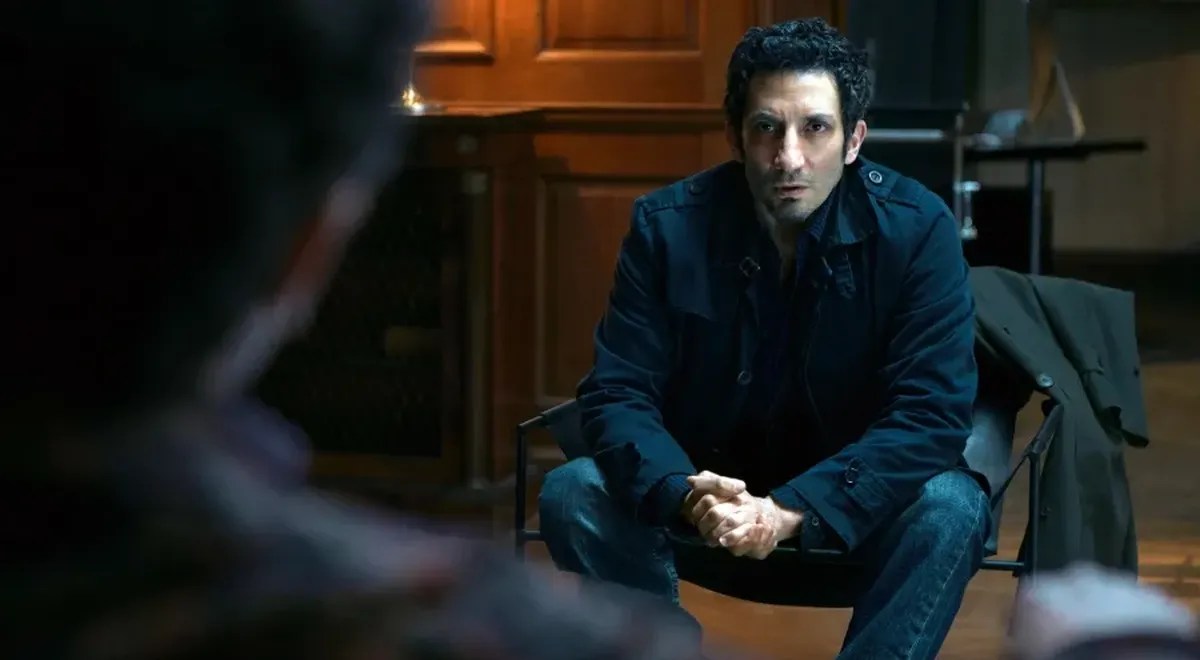

One of the singular pleasures of traveling “Around the World with Netflix” is tumbling into a new mystery thriller from down Argentine Way.
The genre’s practically a cottage industry down there, with “Blood Will Tell (La Misma Sangre),” “Black Snow” and others rolling out, a couple of winners per year suggesting a pretty good batting average in the genre.
The latest from director and co-writer Sebastián Schindel (“The Crimes that Bind”) is a sinister, twisty adaptation of a novel by Guillermo Martínez, who wrote “The Oxford Murders.” Well-acted and downbeat, “The Wrath of God” touches on issues of personal justice and “divine” revenge, all spinning out of a sexual harassment case and ensuing “mysterious” deaths involving a famous writer.
The frame of the story is an incident after a public reading by the novelist Kloster, played by veteran leadning man Diego Peritti with a sort of imperious, “Just give me my due” haughtiness. He’s summoned to an upper balcony of the opera house where he was reading, and once there, somebody dies.
In the film’s long flashback story, we go back years, to when Kloster had a “scribe,” Luciana (Macarena Achaga), a beautiful young coed to whom he’d dictate his fiction, the scribe as “muse,” Kloster says, just the way Henry James wrote his best fiction.
She was also a scribe for aspiring novelist Esteban Rey (Juan Gervasio Minujín of “The Two Popes”) at the time. And then, one day, a line is crossed.
Luciana went from being an indispensable member of a household, friend to Kloster’s little girl and a great help to his highly-strung ex-ballerina wife, to exile who seeks the help of a lawyer.
Rey and Kloster also had history, with one writer seeking the help and approval of the other, and publishing nasty criticism of him when that wasn’t forthcoming.
In the fictive present, Luciana is convinced that Kloster is “murdering my family, one at a time,” that he’s been engaged in this pursuit for a decade, and that the hard-drinking reporter that Rey has become should investigate and expose this “monster.”
Is she right? Flashbacks within the flashback take us to the various deaths and show “coincidences” that put Kloster — in her mind, at least — in the proximity and almost certainly responsible for them.
“No one would ever this huge celebrity would commit murders,” she protests, in Spanish with subtitles or dubbed into the language of your choice if you’re not a Spanish speaker.
Rey is already struggling to write about a string of arsons allegedly tied to Chinese real estate speculation, has been burned by Kloster before and is reluctant. But he starts to report, write and wonder.
Encounters between reporter and accuser and reporter and the accused are fraught and puzzling. Who is telling the truth? Is Rey a clever enough journalist to sort that out?
The “suspicious” deaths pile up, secrets are revealed and we can’t decide if we’re dealing with a paranoid young woman or a cunning, patient killer who figures he has his reasons.
“The Wrath of God” doesn’t really stick the landing with its religious metaphor, the gray area between “Vengeance is mine, sayeth the Lord” and “Nope, I’m taking care of this myself.” Not to me, anyway.
And the story’s messaging is evil in the touchiest sense. Are we to root against the pretty woman whose crime was making an accusation with merit, and got a settlement for it?
That’s kind of the implication as we ponder what might very well be a clever author of genre fiction who might be getting away with murder, a sort of “Talented Mr. Ripley” point of view.
“Wrath” is a downbeat thriller, with only the deaths and a couple of interrogations/debates setting off big sparks. But it’s smart, rewards the attentive viewer and still manages to trip one up about what’s coming, what to expect and what we might be guessing wrong.
And the leads, each playing flawed characters with self-righteous points of view, are especially good at keeping us guessing.

Rating: TV-MA, violence, sexuality
Cast: Diego Peretti, Juan Gervasio Minujín and Macarena Achaga
Credits: Directed by Sebastián Schindel, scripted by Pablo Del Teso, Sebastián Schindel, based on a novel Guillermo Martínez. A Netflix release.
Running time: 1:38
It’s accepted wisdom that people age out of going to the movies. So stories about a demographic that’s abandoned the cinema are unfairly but justifiably rare. But the multiplex’s loss in the streaming cinema’s gain.
Case in point, the laugh-out-loud charmer “Jerry & Marge Go Large,” which pairs up AARP-eligible Annette Bening and Bryan Cranston for a folksy, funny “true story” about small town folk who figure out a way to beat the lottery.
This Paramount+ winner is a niche movie created by niche specialists David Frankel, who directed “The Devil Wears Prada,” and screenwriter Brad Copeland, who got his big break with “Wild Hogs” way back when.
Jerry is freshly-retired from the cereal plant in Evart, Michigan, a “numbers” guy whom Kellogg’s has put out to pasture. He’s all set to “help around the house” with his high school sweetheart Marge, maybe take up fishing, since his family just pitched in to buy him a bass boat.
But Marge sees trouble on the horizon. “I’ve waited 40 years for it to be ‘just us,’ and so far, we suck at it!”
One fishing fiasco and a whole lot of “just under foots” later with Marge, accountant Steve (Larry Wilmore) and everybody else in town that he’s on a first-name basis with later, Jerry stumbles across “a flaw” in one of the lottery games being pitched nationwide.
A cute running gag in Copeland’s screenplay? Everybody Jerry talks to about this, or merely gets into “numbers” with, lets their eyes glass over. That includes their kids, bank teller Mindy, and most alarmingly, their accountant, given a breezy “What, me worry?” air by Wilmore.
Jerry frets and fidgets and tests his “flaw” theory, and frets some more in a crisis of confidence after it doesn’t work out. But damned if he doesn’t figure out the flaw in his theory, and double down. It isn’t until the game is dropped in Michigan but continued in Massachusetts that Jerry finally has to fess up to Marge.
Their first road trip has them pick the perfect, sleepy remote convenience store, run by a lazy, compliant clerk (Rainn Wilson). As the game is “gamed” by large numbers of individual tickets purchased, he lets them run the purchase/printing machine on their own.
“Can you show us how it works?”
“Youuuu’ll figure it out.”
From there, it’s just a matter of time before they get friends and neighbors in their aging, dying little town involved, before they start to “do good” with the cash, that they run afoul of some privileged Harvard nerds who’ve made the same discovery and fall under the gaze of The Boston Globe, which put Catholic priests in jail, and surely won’t let this “scandal” pass unnoticed.
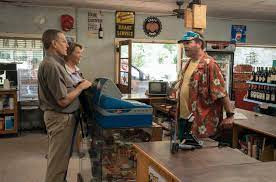
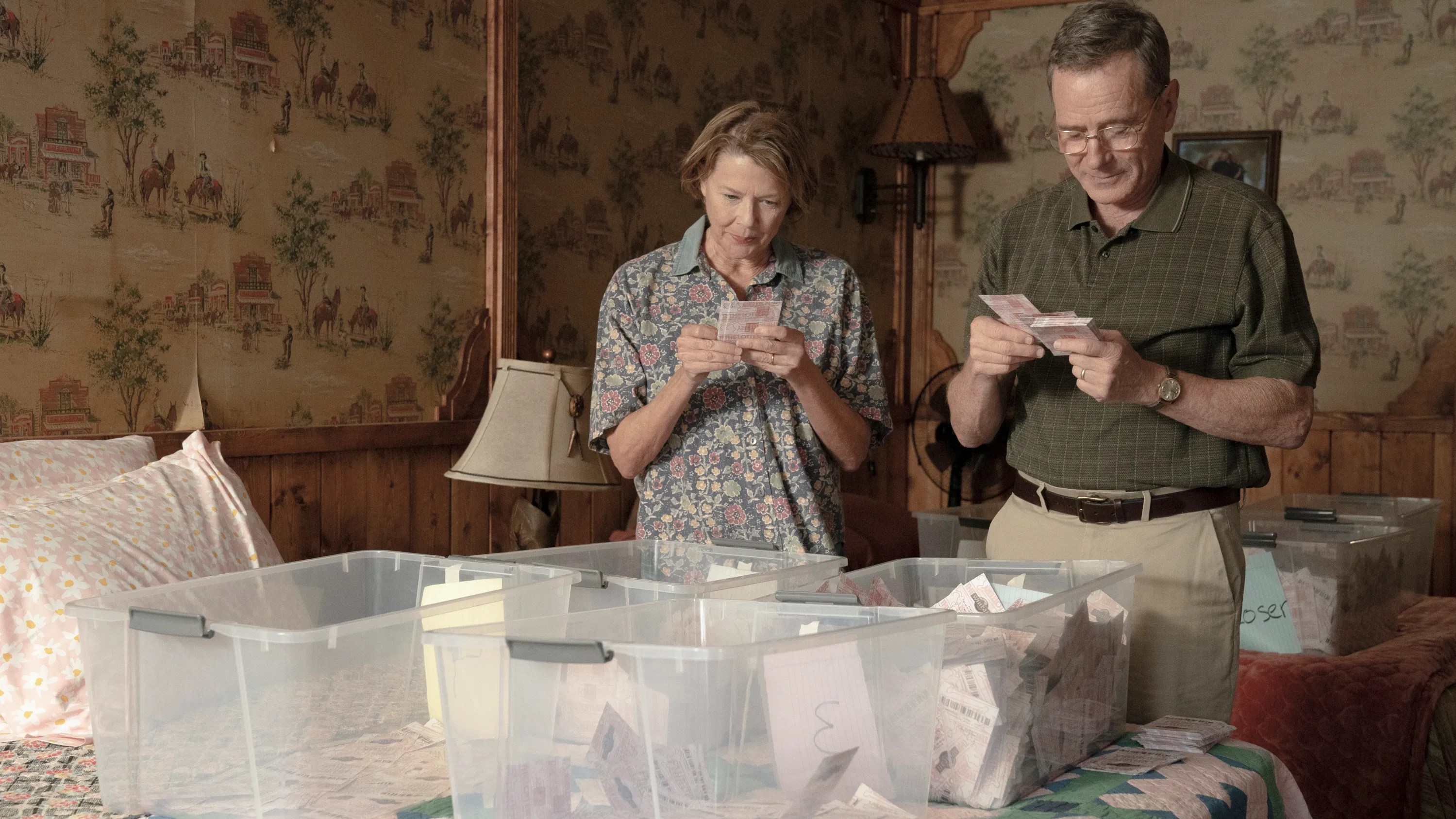
The laughs are strictly low-hanging fruit. The montages — of ticket buying, ticket sorting and road-tripping — set to classic rock (Springsteen, The Who), and the romance, of course, is rekindled as these two small-town folks, taking care to play by the lottery and IRS rules, milk this blunder for all that they can until their secret gets out.
Cranston makes Jerry affably nerdy, scowling at math problems, shocked to realize he’s always paid more attention to them than the wife and kids who didn’t share his mania.
Bening could play this warm, sexy retiree’s wife in her sleep, and simply refuses to do so.
The once-edgy Wilmore’s rarely cast as “cute,” which pays off. And Wilson merely has to show up to give the story blue collar credibility and make every line a laugh line.
The screenplay finds (invents) villains and makes the most of them in the most predictable way. Giving smartass rich kid Tyler (Uly Schlesinger) lot’s of “Look at you two, just like ‘Up'” and “Benjamin Button” and “back on the farm/drive the tractor to the store” lines is a no brainer, but it pays off.
Movies like “Jerry & Marge” can easily be faulted for not trying terribly hard, but that can be the ugly duckling beauty in them. This one doesn’t show strain because it doesn’t have to. The charm and the humor are obvious, our investment in their plight easy and the bad guys perfectly hissable.
Like its protagonists, here’s a movie that isn’t aiming for The Jackpot. They’re just reaching for a pleasant, humorous return on investment, and damned if they don’t get it.
Rating: PG-13 for some language and suggestive references
Cast: Bryan Cranston, Annette Bening, Larry Wilmore and Rainn Wilson
Credits: Directed by David Frankel, scripted by Brad Copeland, based on an article by A Paramount+ release.
Running time: 1:36
The fascist lampooning stage sensation cones to this big screen — and Netflix — Dec. 13.
Looks “Oliver Twisted.” A distaff “Pink Floyd’s The Wall.”
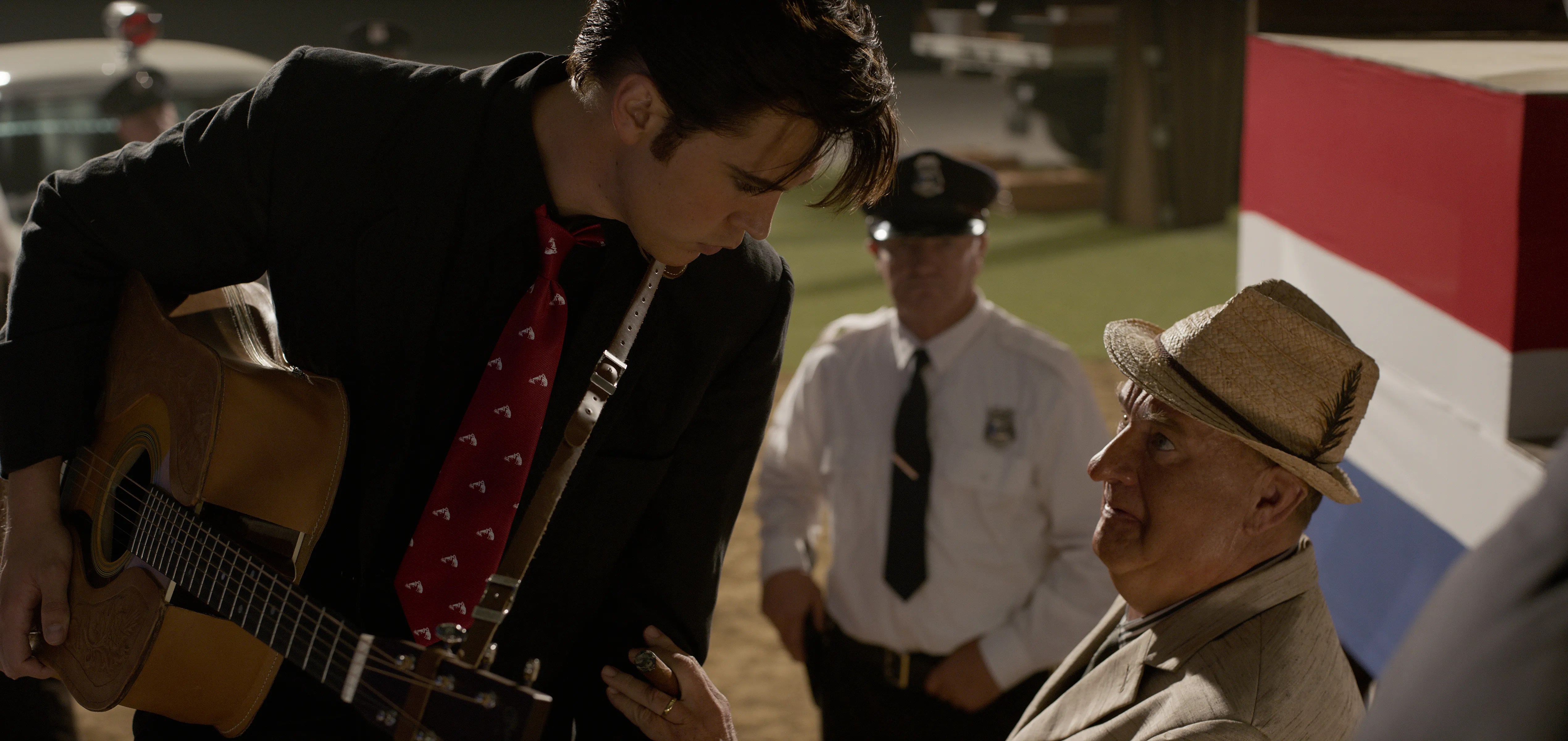
Baz Luhrmann’s “Elvis” is the “Titanic” of musical biographies, a fantasia on its subject that synthesizes all that we know and much that we feel and wish about its iconic subject in a swirl of images, impressions and sounds surrounding Elvis Presley’s meteoric rise and tragic fall.
It’s a slick surface gloss that conflates timelines and bends history to its will, playing up the cultural appropriation of “a white man singing like a Black man” as something that can be celebrated within its revolutionary, culture-shifting context.
By telling this story through the filter of the greatest carnie “snow-man” of them all, the Dutch scoundrel who billed himself as “Col. Tom Parker,” the script plays up a Deal with the Devil without a “Crossroads.” And while that fits with the narrative of Elvis as County Boy Savant, this isn’t an idiot Elvis. He has more agency than his most venal biographers suggest, less than the most worshipful could hope.
Glancing at the Mason-Dixon Lines reviews of this epic, it’s obvious the film is dividing along cultural schisms similar to those infamous “Elvis” stamps of the last century. Some are going to grouse that the racial liberties are too generous, that leaving out the “grooming” of the rock star turned U.S. Air Force enlistee who met his future bride Priscilla when she was 15, and that there’s no peanut butter’n’banana sandwiches of “Fat Elvis,” that the picture doesn’t go deep enough.
To that I’d add that I’d have preferred more real archival audio and news footage — especially of the news events that Forrest Gump’d past Presley’s Mid-Century Modern life — and the limited star power in the supporting cast is worth a quibble.
But for a casual fan or a fanatic, this is an immersive “Elvis” worth embracing — art and artful and Luhrmann unconventional, a “Bourne” thriller blur of impressions and jogged memories hanging on two titanic performances — Tom Hanks as a twinkling/conniving Tom Parker and veteran bit player Austin Butler (“Once Upon a Time…in Hollywood”) in a breakout turn as The Once and Future King.
Casting Hanks was the masterstroke. His lovable persona softens the villainy of Parker and lets us reclaim the unlikely partnership — with all its missteps, blunders and penny-ante pettiness — that made Elvis Presley a Culture Disrupter for the Ages.
“It don’t matter if you do ten stupid tings, if you do vun smart vun,” Hanks purrs in the Colonel’s dropout Dutch.
In focusing on Parker’s memories and his self-serving point of view, the film skips by Red Letter Dates in Elvis’s history — meeting Sam Phillips (Josh McConville, a near dead-ringer) and “the boys,” Scotty Moore, Bill Black and D.J. Fontana, Presley’s original rockabilly band. There’s no “Sam and Elvis discover his sound” or much emphasis at all on recording work, no “Elvis screen test,” “Elvis dating Natalie Wood” and making a movie with Ann-Margret.
What is new and thrillingly fresh is seeing the impact the guy had on audiences, particularly the shrieking and swooning females, whose mothers has shrieked and swooned over “Frankie” Sinatra, through the jaundiced sparkle of chancer Parker’s eyes.
Framed within Parker’s late life infamy and illness, a sick old man traveling through his past, Scrooge-like, in a hospital gown, the story blows up in a brilliant first act as Parker, managing Canadian Country crooner Hank Snow, adds this “sensation” to the tour at the behest of Snow’s hip son (Kodi Smit-McPhee), to the growing befuddlement of the “I’ve Been Everywhere (Man)” composer Snow (David Wenham of “300,” terrific).
To the carny barker Parker, here was the latest thing, an electrifying phenomenon who only needed “a snow man” like himself to pull off the ultimate “snow job” on the rubes — America’s pop-music mad youth.
“Ve are a team” Parker stresses to Presley, from their first “no lawyers needed” contract (Helen Thompson and Richard Roxburgh plays Gladys and Vernon Presley) to the “worked him like a mule” Vegas years and Presley’s bloated, addicted and lonely downfall.
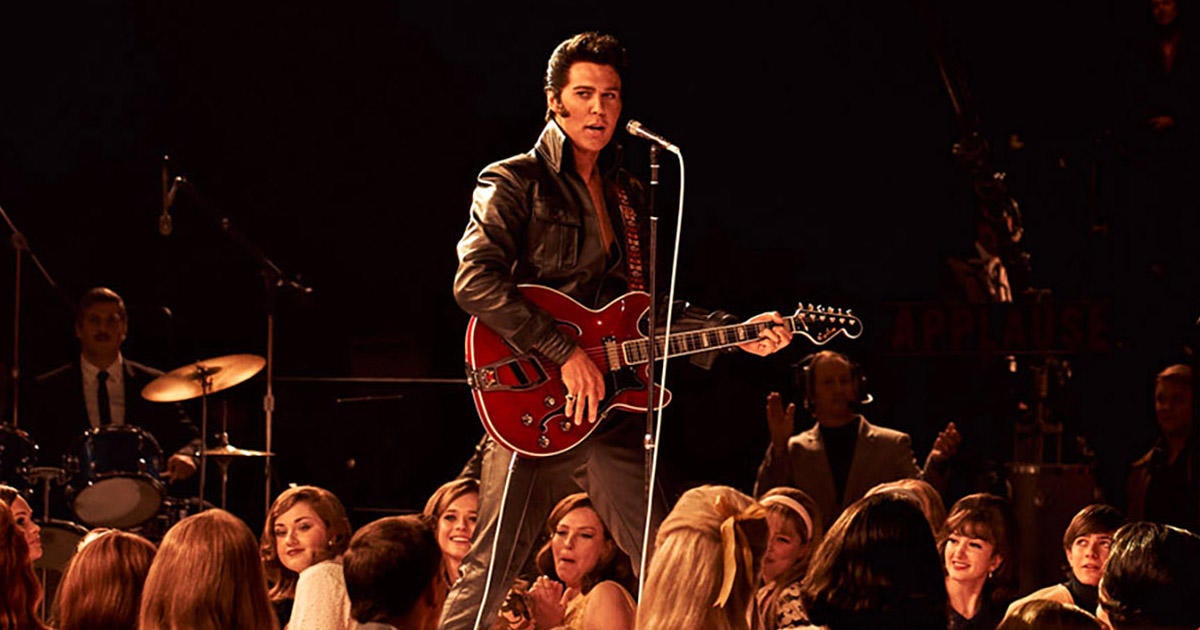
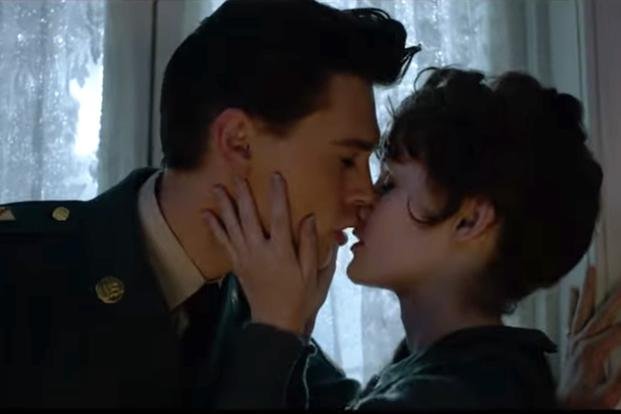
Luhrmann weaves a collage of sights, sounds and (sometimes archival footage) memories to skim over events that Parker wouldn’t have had first-hand knowledge of — the kid’s childhood exposure to the Blues and Black Gospel singing tent revivals, his working poor connection to African American culture, his first breaks and his early meetings with the under-age Priscilla (Olivia DeJonge).
The early acts sprint by as Parker recalls on-stage moments when Presley figured out his hold on the audience, the blowback as racist politicians and media folk tried to sanitize and whitewash his act and create a “New Elvis,” and Presley’s self-aware moment of revolt, on stage at a charity performance, that cemented his status as a legend-in-the-making and hero to a generation.
Maybe it’s Baz and not the Col. who figures the influence and mentorship of B.B. King (Kelvin Harrison Jr., fatherly, canny and wise) was key. Perhaps that’s wishful thinking or exaggerated, but like every assertion in this time-and-event conflating musical, it’s factually defensible.
Luhrmann never lets us forget that he’s the guy who made “Moulin Rouge!” tarted-up “Romeo + Juliet” and contemporized “The Great Gatsby,” using showy IMPORTANT MOMENT graphics, split screens and dissolves and superimpositions to put Butler in situations and “events,” or simply have the iconic Elvis morph into this fictional Butler Elvis. The soundscape is similarly multilayered, with hip hop and blues joining Presley hits in a glorious collage.
Butler, as Elvis, gets across how electric the “comeback special” was, and Luhrmann and the screenwriters make certain how determined Parker was to blow it.
But the filmmaker identifies enough with Parker in that he serves up a hustler/showman’s story of Elvis, the truth sprinkled with a generous dusting of humbug.
Butler manages to capture the look and mimic the sound of Presley to an uncanny degree. The playfulness, vulnerability and naivete are here, while the lifelong lack of sophistication, the “country boy” corniness, is downplayed. He’s very good, not quite Kurt Russell TV-movie Elvis magnetic, but close.
Hanks, transformed by makeup and prosthetics into a roly poly, cigar-chomping con artist, uses his “loveable” baggage wisely, letting us see the darkness and appreciate the devilment in the old rascal Parker.
And who’s to say that the villain’s point of view isn’t worth hearing out? “I didn’t kill Elvis, I made Elvis,” makes sense, especially within the long, sad history of American celebrity that goes sour, fame that devours and adulation that drives icons to their early graves.
“Elvis” works, often brilliantly and always beautifully, a musical bio-pic that’s a little bit “Ray” and “I Walk the Line,” with hints of “Get on Up” “Judy” and “Rocket Man.” It can be frustrating, like the man himself. And who’s to say if its appeal won’t be limited generationally, racially or geographically?
But it doesn’t matter if you’re in the “Fat Elvis,” “‘Hunka Hunka Burnin’ Elvis” or even “racist Elvis” camp. Luhrmann’s here to remind us all of the myth, the moment and the man who seized it and shifted world culture like few figures in history, and of the oddball Dutchman, the not-exactly “silent” partner who made it all happen, sometimes in spite of himself.

Rating: PG-13 for substance abuse, strong language, suggestive material and smoking
Cast: Tom Hanks, Austin Butler, Olivia DeJonge, Helen Thomson, Kelvin Harrison Jr., Luke Bracey, Kodi Smit-McPhee, Richard Roxburgh and David Wenham.
Credits: Directed by Baz Luhrmann, scripted by Baz Luhrmann, Sam Bromell and Craig Pearce. A Warner Brothers release.
Running time: 2:39


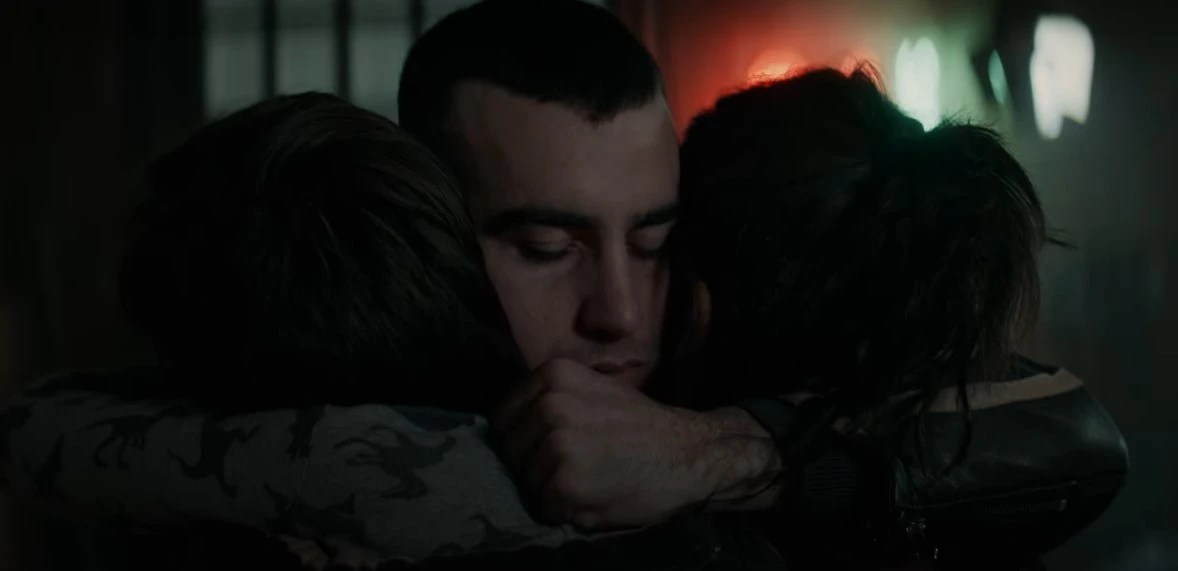


The motorcycle chase scenes are the stars of the Spanish drug courier-by-bike thriller “Centaur (Centauro).”
Alex Monner (“A Thief’s Daughter, “”Bajocero”) has the title role. Rafa is a Catalan motocross rider who never-quite-made-the-transition to track racing, thanks to inadequate rides.
He’s got the nerve. He’s so bonded-to-the-bike he could be Motaur, that centaur/motorcycle in American TV ads for bike insurance.
Thirtyish and aging out of the sport, he gets one last chance to try out for a Honda team in Barcelona. Team director Regina (Patricia Vico) believes in him.
But wouldn’t you know it, he shows up to pick up his kid only to find baby mama Natalia (Begoña Vargas) has gotten beaten up and robbed. Seems she was holding some drugs for a dude when other dudes showed up.
Sure, she’s acting all “OVER” him. But Rafa, who isn’t that far removed from the streets himself, finds himself “negotiating” with the Colombian Carlos (Edgar Vittorino) to get her out of her fix.
Next thing he knows, Rafa is racing from the docks of Marseilles to drops in Catalonia, dodging cops on both sides of the French and Spanish border, a “two month” job to repay her debt at night, a forklift operator job on the Barcelona docks by day, and damn — those racing team tryouts against much younger guys.
He’ll need some “help” just staying awake.
“Centaur” hews close to the genre formula — rough guy, trying to be legit, dragged into “the life” by somebody else’s mistake, and not nearly tough enough to fight, threaten or trick his way out of it.
Or is he?
The cast is OK, with Vittorino menace incarnate as Carlos, and Carlos Bardem even scarier as the Colombian’s Spanish lieutenant.
But again, the picture lives or dies on wheels, and the track scenes, with chase cars, drone shots and the like, are terrific. Eventually, the street chases and races measure up, too. Eventually.
It isn’t until the late going — as street protests put Rafa on a dirt bike because riots, police lines and street bonfires or not, that darned cocaine has GOT to get through — that the chases jump to the Next Level.
The script takes its predictable third-act turns, and less predictably and disappointingly, starts copping out and copping out hard well before the final cop-out at the end.
Bikers will pick over the riding sequences more than I would. What I found a letdown was this strictly-formula thriller going soft, just when it was getting mean.

Rating: TV-MA, violence, drug abuse, sex, nudity, profanity
Cast: Àlex Monner, Edgar Vittorino, Begoña Vargas and Patricia Vico.
Credits: Directed by Daniel Calparsoro, scripted by Yann Gozlan. A Netflix release.
Running time: 1:29
Let’s see what the fuss is about.
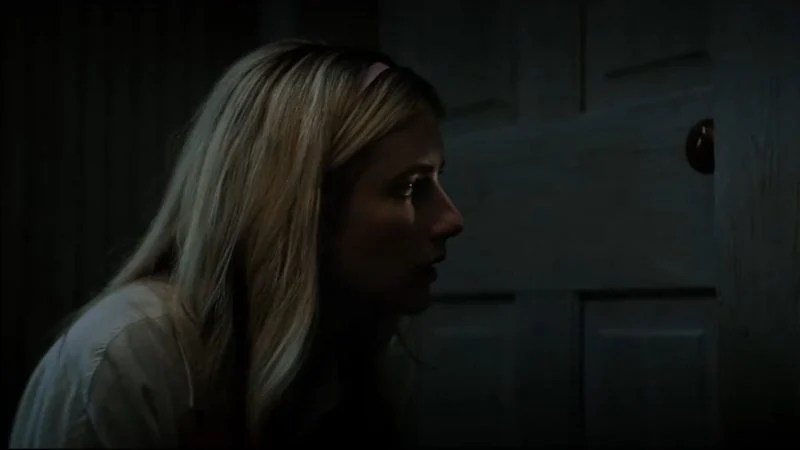


There’s an almost magical acting moment early in the haunted house thriller “Abandoned.” It’s a scene in which new mom Emma Roberts, playing a new mom with post-partum depression that’s keeping her from bonding with her baby.
She picks the toddler up and regards him, and he regards her. There’s a mutual curiosity in what turns into something of a stare-down. You can feel a bit of “What am I missing here?” in her eyes as baby Liam gawks back with whatever emotion you want to read into a baby’s eyes. Sure, it’s almost certainly a happy accident on the set, but working with babies, you take what you can get.
Whatever subtlety Roberts brings to that moment, and a few others, are essentially wasted in this tepid tale of a young city couple — John Gallagher Jr. plays the husband — who ignore the warning signs and make their “escape to the country” in a house full of red flags.
I mean, how many real estate agents would keep the place’s ugly “murder suicide” history in mind, and even have the crime-scene photos on hand when she’s asked that question they all hate answering (honestly)?
“Why’s it been on the market so long?”
Sara’s “I don’t mind a little haunting” isn’t exactly what we’d expect her to say. But this house and its history, and the creepy neighbor (Michael Shannon) next door, are sure to harsh her “change of scenery” mellow.
Only it doesn’t. Not really. Roberts’ mother is meant to lose her wits, not knowing if she’s seeing things that cannot be, if she will never connect with her baby before whoever or whatever’s in this house threatens that baby or takes little Liam away.
Roberts doesn’t make that journey as an actress. Any suspense, rising sense of terror and manic reaction to her veterinarian husband’s underreaction to the house’s shenanigans and over-reaction to her disinterested mothering, is missing.
Horror movie acting is a particular skill, an Oh-MY-GOD buy-in that she’s got to accept before we buy in to her in this role and by extension, this movie. Roberts shows no sign of having that skillset.
The Erik Patterson and Jessica Scott script is laughably generic, and even the potentially alarming moments are given a cut-rate handling by director Spencer Squire, who hopefully resented the fact that the production didn’t even have money for spectral effects.
The “ghosts” are just actors in a little more makeup than the leading lady, who never convinces us she’s that scared of them or anything going on in this not-exactly-“Abandoned” house.
Is that meant to be a pun, Mom abandoning her kid? I don’t know, any more than I can make heads or tales out of bland husband Alex’s pig farmer client concerns, a subtext that doesn’t have enough correlation to what’s going on at home to merit inclusion.
An interesting cameo by Paul Schneider, as a psychotherapist who makes house calls, might be the movie’s “tell.”
The character seems annoyed at being there, quick to judge Sara and quicker to suggest medication.
Is he talking to her, or to us?

Cast: Emma Roberts, John Gallagher Jr., Paul Schneider and Michael Shannon.
Credits: Directed by Spencer Squire, scripted by Erik Patterson and Jessica Scott. A Vertical release.
Running time: 1:41
Out there and against the “Don’t say gay” grain of American political bigotry of the moment.
Whistling through the graveyard audacity at its finest?
Sept. 30.

 Movie Nation