Next Screening? Let’s hope “Nope” is a “Yup”

The Netherland in Ranch Country design suggested by the trailers make this feel like yet another Jordan Peele genre-transcending horror “event, which “Get Out” most certainly was and “Us” never quite managed to be.

The streaming series “Lovecraft Country” has it’s admirers. But aside from getting Spike Lee back to being his best by producing his “BlackKklansman,” Peele could use a blockbuster. We’ve been watching trailers for this thing forever, and as they’re previewing it on an Imax screen, expectations are high.

Great moment for Keke Palmer, and let’s hope it’s a great movie.

Posted in Reviews, previews, profiles and movie news | Comments Off on Next Screening? Let’s hope “Nope” is a “Yup”

Netflixable? A Spanish “Stand by Me” on Steroids — “Live is Life”

Throwing in a mewling infant is a bit much.

Granted, I was far enough into the sentimental Spanish coming-of-age melodrama that I thought, “You can’t do a knockoff of ‘Stand By Me’ without a body,” when lo and behold one appears. Then a second.

But in “Live is Life,” the bodies are of “Trainspotting” drug addicts. And stumbling across them, this “Stand Buy Me” gives half a thought to becoming “Five Teens as a Baby.”

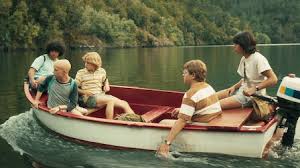
Considering our 1985 15 year-olds are always wrestling with everything from a held-back-a-year report card to cancer, bullying and a desperate desire to kiss a girl, trespassing, vandalism, petty theft and grand theft boat — with a grand theft tractor to come — the baby is obviously one melodramatic flourish too many.

But the baby, its care, feeding and protection is given little thought in this get-it-all-in screenplay. Considering all the other issues, plot elements and dangling threads this Dani de la Torre (director) and Albert Spinosa (script) film has to deal with, that’s a wise de-emphasis. Just not as wise as leaving the infant out.

A bracing open introduces us to “Rodri,” short for Rodrigo (Adrián Baena), a kid fleeing a pack of goons — the school handball team, if you can believe that — in Alcorcón, a suburb of Madrid. He escapes into the old taxi his dad drives for the family’s summer vacation in the mountains of Galicia.

There, among the terraced vineyards where his grandparents live is where Rodri re-connects with his summer running mates.

There’s “The twins,” Alvaro and Maza (Juan Del Pozo, Raúl del Pozo). One is constantly going on about how good he is at karate, the other tells frank jokes about dying in between sharing details of the chemo that took his hair. Bespectacled richer kid Garriga (Javier Casellas) is the one with all the best soccer trading cards, all the fireworks he can carry and his pudgy heart set on kissing this girl from class. Soso (David Rodríguez) has a job, which helps his family, something that’s necessary since his father fell off a roof at work and has been in a coma.

Wow. And you thought telenovelas were a Mexican thing, and aimed at middle-aged women.

As Midsummer Night is here, they decide to undertake a quest, to camp out on a mountain top, locates flowers of this rare “Breath of the Earth” plant and make a healing potion out of it.

A lie to this or that parent, stuff a boomerang and a canteen in a backpack, and they’re off on this summer’s “great adventure.

Rodri’s parents, who don’t even believe he’s being bullied, are easy enough to fool. But bullying follows this kid like a bad debt. A pack of local motorbike hooligans called “The Sioux” have already run him off the road. They will be one of the many obstacles the guys have to overcome on their distracted, meandering quest.

But first they’ve got to stop at “The Templars,” a Medieval tomb where they tell lies, sip cola and chant “All together always” like the little nerds they just might be.

Our screenwriter wrote the Spanish version of “The Red Band Society,” about the sick kids in a hospital cancer ward, and an earlier boy-bonding melodrama, so he’s an old hand at getting the details right — starting with that magical tune that has all of Europe singing along in the summer of ’85.

No, I don’t remember the Austrian group Opus or their big hit “Live is Life,” but screenwriter Espinosa does, and the film has an almost-production number moment with everybody in a traffic jam singing along to it, some of them even getting out of their cars.

But the first sign that this coming-of-age dramedy is overreaching is the entire village full of problems that these five kids are wrestling with, and the second is their elaborate and not wholly believable plan to distract, sabotage and bike past The Sioux and Mr. Mullet (Jon López) their gang leader.

The journey takes days, and we see little evidence the lads brought much to sustain them on their odyssey. They prank locals, break into this or that place and generally follow the longest distance between two points to reach their goal.

Getting shot at by what I assume are pellet guns, an afternoon of drinking, bravely taking the shortcut through the sketchy side of one town they pass through — there are a lot of legs to this journey and a lot of scenes that don’t really move the plot forward.

The geography of this trek is a joke, as are the boat, etc., that they pick up along the way to help them complete it.

As the five boys get distracted, so do we, and all these promising story elements are introduced and left undeveloped. The kids hide, what, a cola stash into the crypt of a dead Templar? That’s a “sacred place” that maybe could have played a bigger part in their “crew” or “fellowship,” ennobling their quest. Develop that, and leave some of the other clutter out.

The sentimental moments include hugs and tears and some frank talk about death and living like today’s your last day — at 15.

“Living only teaches you to let go of what you have (in subtitled Spanish, or dubbed into English). “What matters is choosing kindness.”

“Live if Life” is original only in the number of movies it cribs from. But it isn’t “Stand By Me,” it’s not really “Five Teens and a Baby,” and it sure as shooting isn’t “Goonies.”

Schmaltz aside, I enjoyed this enough to recommend it up until it took that second act turn towards a baby, a teen party and all the stuff that had to be stuffed into the third act because of everything introduced in the first two.

Espinosa tosses all these balls in the air, and de la Torre (“La Sombra de la Rey,” aka “Gun City”) doesn’t really do justice to any of them.

Rating: TV-MA, violence, teen drinking, images of drug abuse, profanity

Cast: Adrián Baena, Juan Del Pozo, Raúl del Pozo, Javier Casellas, David Rodríguez and Jon López

Credits: Directed by Dani de la Torre, scripted by Albert Espinosa. A Netflix release.

Running time: 1:49

Posted in Reviews, previews, profiles and movie news | Comments Off on Netflixable? A Spanish “Stand by Me” on Steroids — “Live is Life”

Movie Review: Katie Holmes and Jim Sturgess experience the and downs of a Pandemic Romance — “Alone Together”

Katie Holmes “Alone Together” is the latest, almost certainly not the last of the “pandemic makes strange bedfellows” dramas and romances inspired by and filmed during lockdown.

Tenderly-conceived, tastefully-directed, handsomely-mounted and prestigiously-cast, its a drama that runs up against the wall of over-familiarity and the ceiling of expectations. Even without being the umpteenth version of this sort of film to come out, it’s pretty bland going.

Holmes plays a New York journalist, unpanicked by the looming lockdown because her long-time boyfriend has booked them an AirBnB in the country to ride out this “two week” global shutdown.

But while the Manhattan streets may be poetically empty and her cell charged so that she can take care of a few last details, there are roadblocks. The subways aren’t running. She gets a message that her beau is staying to take care of his parents, instead of escaping to the country. One long Lyft-ride later, there’s no key at the AirBnB.

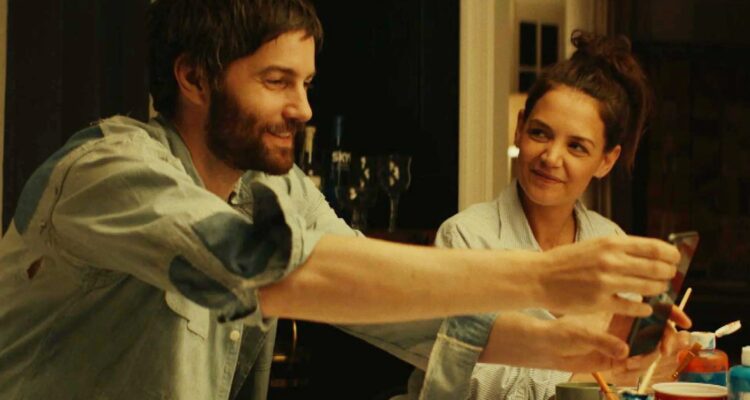
And then the door opens and there’s a stranger already booked in the roomiest two story/one-bedroom/single-bath in the history of American suburban housing. June’s litany of complaints and snap judgements about Charlie (Jim Sturgess) prompt that pithiest of New York privilege put-downs.

“Upper West Side?”

A simple act of kindness later, she’s got a place to crash. He’ll “take the couch.”

What are the chances that a New York food critic and a motorcycle restorer can find Love in a Time of COVID?

Holmes, who has grown up on films sets, turns out to be an almost effortlessly graceful screen storyteller. As with her directing debut (“All We Had”), the polish is here even if the source material lacks much bite.

She layers her story with historical details we all remember, from the little moments of humanity among even hardened, crusty New Yorkers (not the panhandlers, alas) and the daily news briefings from bluff Governor Andrew Cuomo which play as the audio backdrop to their isolation, to the nightly symphony of pots and pans played by the locked-in of many cities around the world, showing appreciation for medical workers and demonstrating “I’m still here” to their neighbors and themselves.

The “end” of lockdown is boiled down to a single image — a discarded mask on a New York city street.

Our writer-director stages a reprise of her finest big screen performance in talking her “Pieces of April” co-star Derek Luke into sharing the screen with her again, this time as the lover “who doesn’t want to be with me in the middle of a f—-g pandemic.”

She landed Sturgess and Oscar winner Melissa Leo to play his character’s mother.

But what’s missing here the friction that would make this compelling, or at least something beyond passably interesting. It’s a mistake Shakespeare made Job One for all romances and rom-coms when he wrote, “The course of true love never did run smooth.” The conflict here is muted, brushed-aside and papered-over.

Sure, it’s cute that the only place these two folks trapped together can find to serve them (take out, eaten in his ancient Mustang II in the parking lot) is McDonald’s. We all figured that out quickly enough. Making too little out of the fact that a vegetarian food critic is reduced to that is a laugh or two missed.

There have been big budget/big star versions of this sort of story that didn’t work any better than Holmes’ directing debut. But that’s little consolation. At this point, if it’s not as edgy, funny or romantic as “Seven Days,” there’s not much point to any “Alone Together” tale.

Rating: R, for language (profanity) and adult situations

Cast: Katie Holmes, Jim Sturgess, Derek Luke and Melissa Leo

Credits: Scripted and directed by Katie Holmes. A Vertical release.

Running time: 1:41

Posted in Reviews, previews, profiles and movie news | Comments Off on Movie Review: Katie Holmes and Jim Sturgess experience the and downs of a Pandemic Romance — “Alone Together”

Movie Review: Brit Comic Catherine Tate unleashes “The Nan Movie

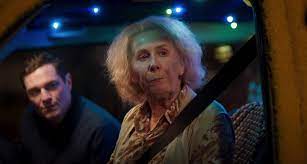
Carol Burnett and Vicki Lawrence had “Mama’s Family,” Tyler Perry had “Madea.” Brit comic actress Catherine Tate’s “Nan,” a character from her self-titled sketch comedy series, is pitched somewhere in between, a crude and coarse vulgarian who must be pushing 90 and simply must have her own way.

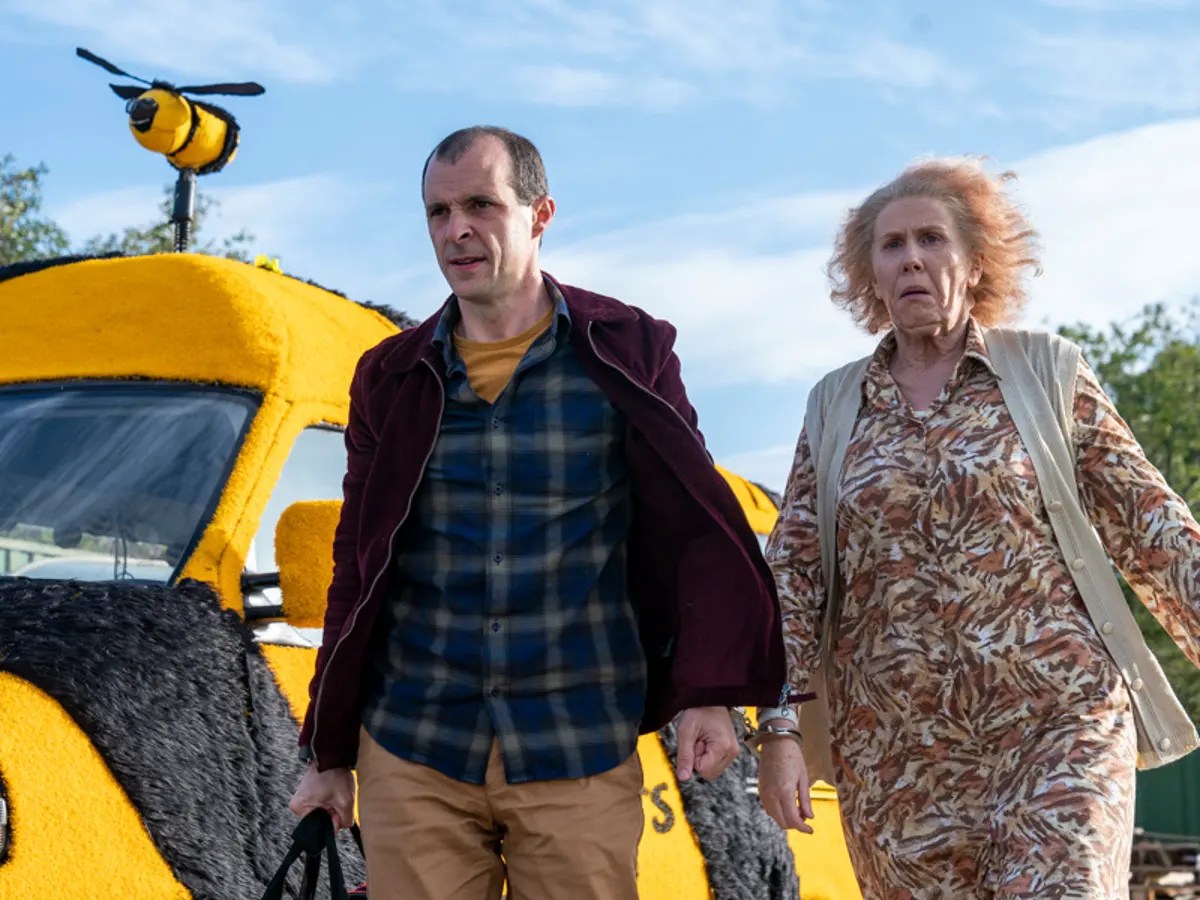
“The Nan Movie” takes the character out into the open air and on a road trip up the UK, over to Ireland and further “over” to “The Island off’a Ireland,” a quest comedy that drags the old crank to see her “dying” sister one last time.

The locals hated this urine-soaked/fart-scented farce when “Nan” played in Limeyland. But on this side of The Pond, it’s a curiosity that might appeal to a certain sort of Anglophile — someone anxious to maintain one’s ear for “Oy!” and “O, ‘ello sweet’art” cockney English and interested in what comic sacred cows they’re slaughtering Over There these days.

OK, maybe that’s just me.

“Nan” is a shambolic, episodic pig of a film, snuffling about for comic truffles via the braying, screeching cackle of Tate at her Nanniest. It has no “credited” director, and therein lies a story, we fear.

But there are a few chuckles and giggles here and there as Tate, in old age makeup that takes her nowhere near the pushing-100 Joanie Taylor would need to be to have been born when her dad drove a horse-drawn wagon for work and she was old enough to date an American GI during World War II.

Nan bursts onto the screen in a walking, charming and insulting ramble through her local street market with her grandson, Jamie (Matthew Horne, who was on “The Catherine Tate Show” and the earlier “Catherine Tate’s Nan” TV movie).

She coos and compliments food vendors, tossing and dismissing their offerings the moment their back is turned. She spies a statue of a man she admired and ruthlessly haggles for it.

“Why do you have a statue of Robert Mugabe,” her neighbor wants to know?

“IS it? Shame. I thought it was Trevor McDonald. E’S my FAVORITE!”

Jamie is an animator whose latest hustle is an arts and crafts van that visits rehab centers — “Crafts Undo Negative Thinking,” it’s called. Pay no mind to the acronym that creates, luv.

Nan isn’t keen on her neighbors, whom she’s decided are “naturalists” (nudists) thanks to the organic produce she sees delivered there. And that letter from her sister mixed in with the unpaid bills and summons in her mail doesn’t move her. Nelly is dying? So?

“Miserable old ‘ore, went to live on an island off of Ireland. The END!”

But Jamie figures she needs to see her and that he can trick the tippling, loud and obnoxious old bat into taking a road trip. And there’s our movie.

Nan interrupts her club, pub and rave-crashing hijincks and her renewal of hostilities with nemesis Mahler (Niki Wardley, another veteran Tate co-star), who is now “a traffic warden” (meter maid/traffic cop) to tell the story of how she and Nelly (Katherine Parkinson) grew up and fell out.

Yes, there was a GI involved, and “oy, ‘e was Black!”

‘Ave you ever met Al Jolson?” is the first question that pops into WWII Joanie’s head. By the time she’s old enough to be a “Nan” she’s a lot more politically correct. About the stories her father used to tell about magical creatures he encountered growing up in Ireland, for instance.

“A’course ye can’t say LEPRECHAUNS no more. Just say ‘Irish.'”

The humor is based on elderly bodily function issues, a few sight gags that never quite become pratfalls and a sort of aged Brexiteer tone-deafness about race (not really), cross-dressing (think Izzard, Eddie) and animal rights activism.

“Violent, angry and dangerous — everything you’d want in a vegan!”

I have a high tolerance for any road trip comedy set in Britain and/or Ireland, but the jokes here go over like a fart at a funeral, only less funny. A running gag about Nan’s infatuation with the “Shabooya! Roll Call!” call and response game is a non-starter, and it’s not alone. Animated (by “my Jamie”) interstitials covering chunks of the road trip, stuff that would require sets and stunts etc. that they didn’t want to bother with, are meant to look like they were amateurishly-filmed with face-contorting cell phone apps and simply do not play.

There’s a chuckle or two from drunkenly telling the traffic warden “Glad you’ve maintained that snap-on ‘airdo. Looks like a LEGO ‘at, don’t it?”

Is Nan aware she’s drunk and disorderly?

“Are you aware how much like k.d. lang you look?”

But that’s about it, dear. Whatever comic gold there was in there character was mined out long ago. Movies like “Nan” remind one that Madea had no more luck outstaying her welcome than Nan does.

Rating: unrated, profanity, scatological humor

Cast: Catherine Tate, Matthew Horne, Katherine Parkinson, Jack Doolan, Parker Sawyers and Niki Wardley

Credits: Directed by Josie Rourke (uncredited), scripted by Catherine Tate and Brett Goldstein. A Screen Media release of a Warner Brothers film.

Running time: 1:35

Posted in Reviews, previews, profiles and movie news | Comments Off on Movie Review: Brit Comic Catherine Tate unleashes “The Nan Movie

Netflixable? Young and Beautiful and lost in the “Doom of Love”

The dreamy, scenic and sweet “Doom of Love” has the look and feel of something truly novel — a Turkish slacker romance.

But this Around the World with Netflix bauble about a young man cast adrift when his start-up obituary advertising company fails, who then falls for a singer and goes on tour with a band, unfolds like a story far more ancient. It’s more “hippie” than slacker.

It’s too slow, and while the pacing underscores the low-heat/slow-to-heat-up and chaste nature of the romance it also makes the general pointlessness of “Doom” an albatross it never quite shakes.

We meet handsome young Firat (Boran Kuzum) just as his company’s imploding. Two hundred and ten people a day might die in Istanbul, but there’s no obituary advertising money in that, he realizes.

Broke and drowning in debt and obligations, his friend and employee Melba (Seda Turkmen) suggests a solution. Her hustling, wheeling/dealing husband (Gürhan Altundasar) is rolling in cash, thanks to Bitcoin.

Ssssshhhh. Don’t tell her. That’d spoil the fun.

All Firat needs to do is tag along on their trek to this festival down the gorgeous Anatolian coast that they’re going to, and make a pitch.

But the “festival” turns out to be a yoga/meditation retreat, filled with meditative and lovely yoga instructors who make the attendees question “effort” and “struggle” and a lot of the things entangling their lives and impeding their spiritual growth and general happiness.

And once Firat spies the stunning singer hired to entertain at the event, the theatrical, romantic Lidya (Pinar Deniz), he’s converted. Or hooked. He has to know that no mere career will be fulfilling after this, not without this new light in his life.

One pharmaceutical sales job later, he stumbles into Lidya and her accompanist Yusef (Yigit Kirazci) again. Must be “fate,” Yusef offers. Or it will be, once they meet a third time. Firat makes damned sure that third meeting happens, and next thing we know he’s on the road with them as a traveling companion, adoring groupie and eventually, self-taught drummer.

It’ll only be a matter of time, a pretty LONG time, before he and Lidya have a meeting of the minds, and lips.

But there’s a framing device hanging over this young and wandering and living off love and music idyll. The film’s opening scene has Firat waking up from a months-long coma. Something happened and our love trio was shattered by it, and pandemic or not, the awakened Firat is going to get to the bottom of it.

The resolution of that mystery is both intriguing and this meandering movie’s undoing.

Turko-Lebanese singing TV actress Deniz is the draw here — a transfixing and seriously sensual stage performer whom Firat would have to be blind not to tumble for. Her many performances of folky, poppy love songs on their “tour” bring something new about Turkey and Turkish cinema to audiences in other parts of the world — sexiness.

Her presence and the lovely polish that TV director Hilal Siral brings to the production gives “Doom of Love” a mesmerizing quality that makes it worth checking out, even as the Yilmaz Erdogan (“Vizontele”) script lapses into maudlin melodrama and inane and obvious plot twists.

There’s a subtext here that’s also worth considering, at least for a Western viewer, and that’s the film’s youth culture themes. Generational angst about the uncertain present and financially and psychically treacherous future is a universal thing.

“We become the people we want to be,” Lidya preaches (in subtitled Turkish, or dubbed into English), probably repeating something she absorbed at the yoga retreat.

“Happiness is not a process, it’s a moment,” Yusef declares.

It’s the sort of thing you could hear in many corners of our increasingly unsettled and dangerous world, and all echoing the of the youth culture of the “Tune in, turn on and drop out” 1960s. “Doom of Love” reaches for the film that signaled that 1960s moment, “Jules and Jim,” and never grasps it.

But in any event, Erdogan, part of a large Turkish acting, writing and filmmaking clan (Related to the Turkish president? I don’t know.) has tapped into something existential and topical in a movie that never really goes anywhere otherwise.

Rating: TV-14, some violence

Cast: Boran Kuzum, Pinar Deniz, Yigit Kirazci and Musa Uzunlar

Credits: Directed by Hilal Siral, scripted by Yilmaz Erdogan. A Netflix release.

Running time: 1:40

Posted in Reviews, previews, profiles and movie news | Comments Off on Netflixable? Young and Beautiful and lost in the “Doom of Love”

Movie Review: “The Bride in the Box”

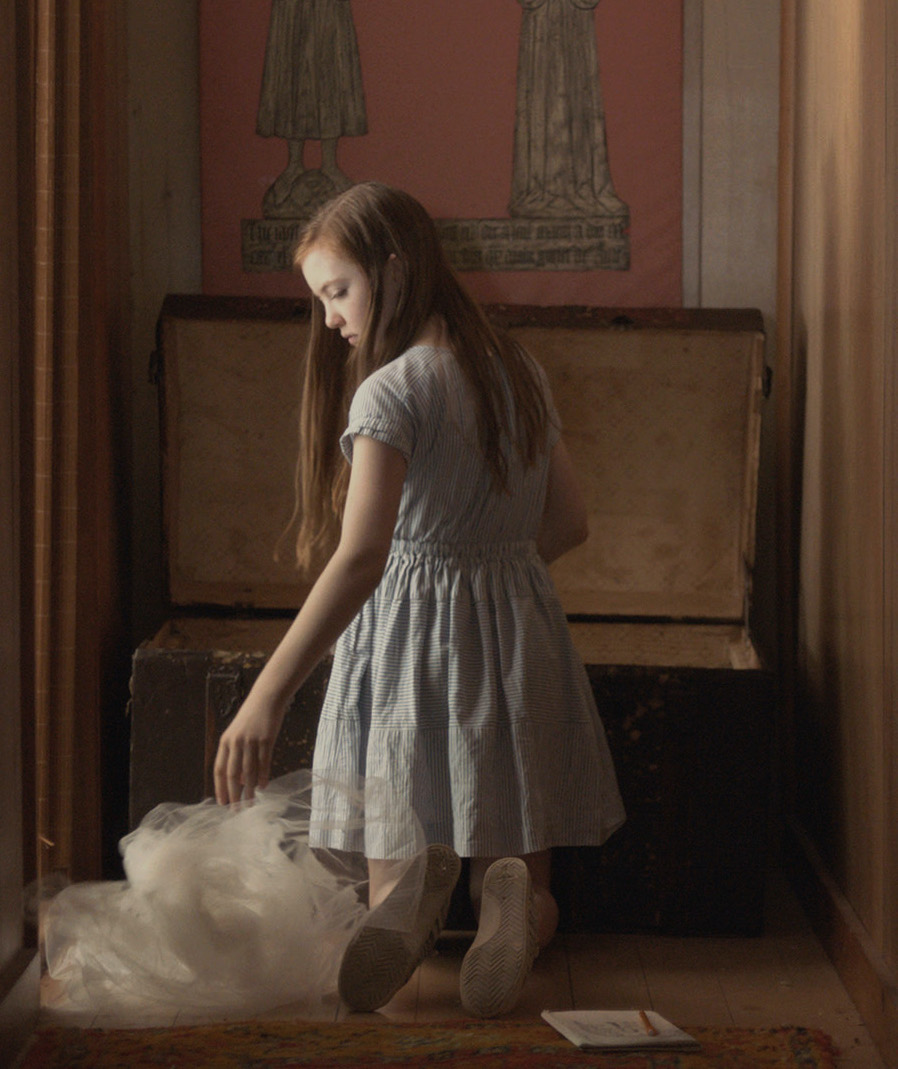
A huge humpbacked steamer trunk takes second billing in “The Bride in the Box,” a new horror film. As I once spent a few years buying, restoring and re-selling such trunks, I was keen to see any movie that might have been more accurately-titled “The Trousseau in the Trunk.”

OK, some of that’s true. I have restored and sold such trunks, one or two to the “Wizarding World” theme park attraction at Universal Orlando. Top tip? Don’t buy premade replacements for the leather straps that rot away on this preferred luggage of 19th and early 20th century immigrants taking steamer passage to America. Measure the brass end loops that hold them on the trunk, and buy old belts that will fit at your local thrift store and cut them to size using the original loops.

But that’s my ONLY interest in this thoroughly uninteresting, not-remotely-scary horror tale. Yours?

The debut feature of writer-director Doug Bost stars veteran bit players Victor Verhaeghe and Carolyn Baeumler and Acadia Bost, who is — I’m guessing — the director’s daughter. They play a family splitting apart on a summer vacation in scenic, sunny Maine.

Husband Don is morphing into the primary child-rearer, thanks to a rageholic fit that got him fired from his job, not that his wife knows this. Heather is off TV acting in New York, leaving Don and daughter Iris to check into their rental house in Winter Harbor without her.

The house has this locked trunk in it. The rental property is run through an antique shop, where Iris stumbles across a post-WWII journal of a frustrated bride-to-be. And that’s where she also stumbles into an aged wedding dress, pitched by the the pale-as-death clerk (Tammy Faye Starlight).

You know what they say about wedding dresses, the pale one tells the 10-year-old. “You don’t pick it. It picks you.”

Next thing we know, Iris is talking to something or someone inside that old trunk. She’s hiding that dress, and sticks and twigs under the bed. She’s begging Daddy to play the “wedding” game, something that annoys the heck out of Mom (whom Iris calls by her first name). And not for the reasons you might expect. With Dad playing the preacher and the groom, it’s a game that leaves Mom out.

Don’s “Little girls have been marrying their daddies for centuries” is no reassurance to her, or us.

Honestly, is there anything promising in a story about a little girl who becomes possessed by a long dead would-be bride, who might have somehow wound up trapped in a trunk? The bits about how Iris will “need” such a dress “soon enough” from the locals are rural Red State icky, and only scary in a “Handmaid’s Tale” sense.

The adults may have their shouting matches, but there’s nothing in the child’s performance to make us fear for her and nothing in the way the film was written, shot and edited builds suspense or hints at terror.

With no jolts, no frights, zero effects and zero flair for shooting a sequence, scene or single take in a way that rattles or unnerves the viewer, “Bride in the Box” runs up against Big Question.

Why did they bother?

Rating: unrated

Cast: Victor Verhaeghe, Acadia Bost, Carolyn Baeumler and Tammy Faye Starlite

Credits: Scripted and directed by Doug Bost. A Random Media release.

Running time: 1:26

Posted in Reviews, previews, profiles and movie news | Comments Off on Movie Review: “The Bride in the Box”

Movie Preview: Kate Bosworth and Emile Hirsch check into “The Immaculate Room”

A single set sci-fi/psychological “experiment” take, testing its subjects in a white on white “cage.”

Aug. 19, things get messy in “The Immaculate Room.”

Posted in Reviews, previews, profiles and movie news | Comments Off on Movie Preview: Kate Bosworth and Emile Hirsch check into “The Immaculate Room”

Netflixable? Egyptian thriller solves “The Crime (El Gareema)” in the most convoluted way possible

Today’s Around the World with Netflix trip is a jumbled, over-reaching thriller from Egypt creatively-titled “The Crime.” A sort of death-bed confessional/morality tale that an old man tells of his murderous past, it shows more ambition than skill in its meandering, clumsy narrative.

Ahmed Ezz is Adel, an old man haunted by his past and tormented by nightmares from it. He awakens each day at a mental hospital, asking after his son Hussein. One day, a kindly psychotherapist makes a call, Hussein (Mohamed Al Sharnuby) shows up, and Adel proceeds to unburden himself.

The ghost of his late wife is after him, and has been for years. Nada (Menna Shalabi) was cheating on him and mixed-up in the drug trade in the 1970s, “just after the war (Yom Kippur War, maybe?).” Adel had a lot of businesses back then, most of them legit.

“I did it all for you,” he insists to Hussein (in Arabic with English subtitles). “Everything I built will be yours.”

Hussein isn’t buying it.

“You’re a curse. You destroyed everyone.”

A string of very long flashbacks then take us back to that time as the film struggles to decide if it’s a straight-up murder mystery, a drug-deal-gone-wrong thriller or a ghostly horror tale, with victims of Adel turning up at his door, in his car trunk or even in the hospital to this very day.

Nada’s disappearance had a cop (Maged El-Kidwani) on the job, investigating the one and only suspect. Her family is sure Adel did it, and scenes that show Nada carrying on at parties and manipulating one and all suggest her shady side.

But what happened to her?

Writer-director Sharif Arafah (“18 Days”) sets up a “What is real?” and “What’s just in Adel’s head?” quandary, and manages that storytelling trick well enough, at least some of the time. He gets carried away and trips himself up in ways that make the plot harder and harder to follow with nonsensical twists delivered by his unreliable narrator, the crazy old man sort of admitting his misdeeds, sort of blaming his late wife for them as he does.

The police point-of-view thread in the story is poorly-developed, and the big shoot-out scene is executed in ways both clever and nonsensical. We see our narrator ducking and running from room to room dodging gunfire as edits show us those shooting at him picked off, one after the other, seemingly by some grassy knoll phantom gunman.

A vigorous re-edit would salvage some scenes. A vigorous re-write might help others.

“The Crime” shows promise in its production values and performances. But mystery-thriller problem-solving is one of the cinema’s toughest skills to master, and this mystery doesn’t solve enough of its problems in ways both surprising and logical to come off.

Rating: TV-MA, violence, smoking

Cast: Ahmed Ezz, Menna Shalabi, Maged El-Kidwani and Mohamed Al Sharnuby.

Credits: Scripted and directed by Sharif Arafah. A Netflix release.

Running time: 2:06

Posted in Reviews, previews, profiles and movie news | Comments Off on Netflixable? Egyptian thriller solves “The Crime (El Gareema)” in the most convoluted way possible

Series Preview: Jon Bernthal pretties up for “American Gigolo” in series form

Producer Jerry Bruckheimer (“Top Gun”) milks another ’80s property for a little extra cash for his dotage in this Showtime (Of course.) series adaptation of the movie.

Rosie O’Donnell, Gretchen Moll, Wayne Brady and a 1960s Jaguar E-Type co-star. Sept. 9.

Posted in Reviews, previews, profiles and movie news | Comments Off on Series Preview: Jon Bernthal pretties up for “American Gigolo” in series form

Netflixable? The long ripples of a South African massacre wash over “Jewel”

A dreamy South African parable of a bloody past coming back to haunt the present, “Jewel” never actually takes us into the infamous Sharpeville Massacre of 1960. This Around the World with Netflix story is about the ripples of pain that pass through history, a great wrong impacting generations, reopening wounds and spreading trauma.

A group of mostly-white tourists take in the town and its memorial decades after it happened. One woman, Tyra (Michelle Bote) seems most keenly interested in Sharpeville, taking scores of photos but generally dissatisfied with the depth — or lack of it — of the history related by their tour guide.

She sees women dressed in white praying at the spot where 69 peaceful protesters were gunned down by the Apartheid police state’s uniformed goons, and is struck by one in particular. This vision of a woman, Siya (Nqobile “Nunu” Khumalo), simply must let her take her picture. She simply must become Tyra’s personal guide to the river, the town and the event she wants to experience.

Tyra’s in love…or some sort of white privilege lust.

Siya takes care of her diabetic grandmother (Connie Chiume of “Black Panther”) and tries to give the fiftysomething white woman the brush off. She has a man, after all. And Tshepo (Senzo Radibe) is a politically-aware man-friend with benefits. He isn’t going to like the white woman’s attentions. And when he hears why she’s come — her father used to be a Sharpeville cop and was stationed there when the massacre occurred — he is further outraged by this “white woman shooting black people…with her camera.”

The dreamy part of director and co-writer Adze Ugah’s film is the talk of how the past impacted the present, the lives cut-short, the grandmother Tshepo grew up without. Siya’s grandmother frets over what happened over half a century ago (the film’s “present” is uncertain) and what it might be doing to the younger generations.

And we fret over the movie’s shortcuts, the ways it artfully avoids taking Tyra into the terror she wants to learn about and instead focuses on an unlikely love triangle in the present, which it also shortchanges.

The acting is rather better than the script they’re working with, with Khumalo, Chiume and Radebe standing out.

I was hoping for something like “Sankofa.” But this film, which never really grapples with the Sharpeville Massacre history or the invented love story, contents itself with immersing characters in the river for their epiphanies and encounters with fate.

“Jewel” never amounts to more than a lovely but abbreviated, symbolic failure, a movie with ambition which loses its nerve in the end, and in the middle, too.

Rating: TV-MA, violence, sex, profanity

Cast: Nqobile “Nunu” Khumalo, Michelle Botes, Connie Chiume, Senzo and Senzo Radebe

Credits: Directed by Adze Ugah, scripted by Glenrose Ndlovu and Adze Ugah A Netflix release.

Running time: 1:22

Posted in Reviews, previews, profiles and movie news | Comments Off on Netflixable? The long ripples of a South African massacre wash over “Jewel”