
Movie Review: Extrapolating the perverse “Crimes of the Future”

For the past few weeks, I’ve been fuming at boutique distributor Neon, which was waffling on whether or not to preview screen “Crimes of the Future” in my market, or anywhere near me.

Coupled with a general lack of advertising, this latest outing in oddity from David Cronenberg seemed more likely to be one of those movies that “escapes” rather earns a decently-promoted release.

But after seeing it, I feel the poor marketers’ pain. Sure, they should have pitched this as a horror mindf–k, something the cognoscenti would know to look for and be sure to find. Everybody else? “Hard pass” is putting it politely.

Cronenberg’s dark and cynical vision is “Crash” stripped of the eroticism and extrapolated into the not-distant-enough future. There are nods to his “Videodrome” and “Dead Ringers,” too, for those Deep into the Cinema of David.

It alternates between challenging and unpleasant, and is just dull enough to blur the line between the two.

“Crimes” is a story of a world in which the human senses have been wholly-dulled, with pain and much illness banished and sensations in general in retreat. “Performance Art” has replaced podcasting as people’s mania for attention hasn’t abated. Entropy and cultural decay are reflected in the weathered, abandoned or long gone-to-seed settings (the exteriors were shot in Greece). Surgery has turned faddish, and the human body seems to be evolving in ways that don’t bode well for our survival.

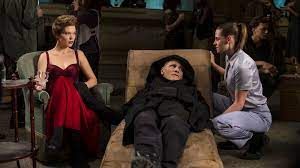
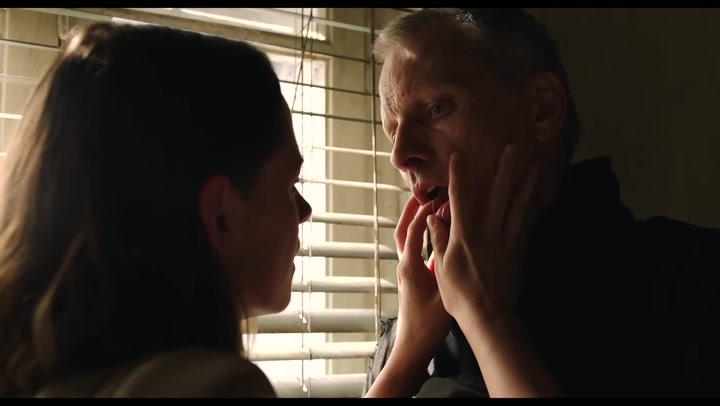
Saul Tensor, played by Cronenberg muse Viggo Mortensen (“A History of Violence”) is a celebrated artist cowled and masked in black, a man who grows tumors by accident, removes them by design — often in public, with the aid of his former doctor, now lover/performance art partner Caprice (Léa Seydoux) — and “catalogs” them, which has earned the interest of the unfunded National Organ Registry, staffed by Wippet (Don McKellar) and his assistant Timlin (a breathless, whispery Kristen Stewart), who is a Saul Tensor fangirl, it turns out.

Tensor’s “making art out of anarchy” created in his body, Caprice declares. His Accelerated Evolution Syndrome makes him notorious.

That’s why Lang Dotrice (Scott Speedman) also eyes him with interest. “Evolution” interests Dotrice, especially since we’ve seen his odd little boy (Sozos Sotiris) smothered by his disturbed and with good reason mother (Lihi Kornowski).

Tell him to “come fetch the corpse of that creature he calls a son,” she tells an intermediary.

Cronenberg’s return to science fiction after a 20-year-plus vacation from the genre serves up his trademark nauseating surgery, sickening eating/vomiting scenes and lots and lots of (mostly) female nudity. The exotic technology displayed in these abandoned-bunker sets, where some live, some work and performance artists perform, is insectoid and under-explained, leaving us to figure out why FutureFolk need the assistance of a rocking, rolling and spoon-feeding exoskeleton chair to eat.

This long-shelved script takes the plastic-choked, notoriety-obsessed and increasingly insensate present into “end game” territory. The world we have is headed towards a future like this, Cronenberg seems to be saying, when old laws and punishments don’t fit new crimes and perversions of humanity.

Well, that’s MY interpretation and I’m sticking with it.

Welket Bungué plays a New Vice cop on the case of what Tensor and Caprice are about, and what he suspects the mysterious Lang Dotrice has in mind for himself and “the corpse of that creature he calls a son.”

That’s a lot of exposition, and it doesn’t cover every character or very many of the situations set up here. The movie’s like that, filled with explanations, begging for still more, and struggling to find something interesting to do with this universe he’s created.

Mortensen is intense, quiet and reflective, Stewart more mannered than usual — her character is practically dry-humping the idea of self-injury as “art” and showmanship — and Seydoux is loving, supportive and naked, which is kind of her thing as well.

Movies that make you come to them are, by definition, thought-provoking. But aside from concentrating and grasping at any actor, character or plot wrinkle that might let us “into” Cronenberg’s world and thought processes, there isn’t anything here that invites, entertains or even titillates.

The “outrage” the picture generates isn’t so much directed at the state of things now dooming us to the state of things depicted here, with the “humanity” of humans somehow at stake. It’s more of the icky, gooey, “What revolting thing HASN’T David Cronenberg shown us in “Scanners,” “Naked Lunch,” “The Fly” and so on?

Which makes most of this review superfluous, when all I really want to say about “Crimes of the Future” is “Yeah? And?”

Rating: R for strong disturbing violent content and grisly images, graphic nudity and some language

Cast: Viggo Mortensen, Léa Seydoux, Kristen Stewart, Don McKellar, Lihi Kornowski, Welket Bungué and Scott Speedman.

Credits: Written and irected by David Cronenberg. A Neon release.

Running time: 1:45

Posted in Reviews, previews, profiles and movie news | Comments Off on Movie Review: Extrapolating the perverse “Crimes of the Future”

David Cronenberg can always count on the Canadian audience to show up

The line for the 1130am showing of “Crimes of the Future” starts here, in the parking lot of Raleigh, NC’s Cinemark Grande. Apparently.

Posted in Reviews, previews, profiles and movie news | Comments Off on David Cronenberg can always count on the Canadian audience to show up

Movie Review: There’s a Beast in this Dutch Bog — “Moloch”

Ancient corpses uncovered in a bog haunt the residents near it in “Moloch,” a gloomy, suspenseful thriller from the Netherlands.

Director and co-writer Nico van den Brink makes his feature filmmaking debut an exercise in menacing a mother and her child in a house on the edge of a bog, where archeologists are exhuming preserved but gruesome corpses from many centuries ago.

How might that lead to present-day assaults on the nearby house of an old woman, her daughter and granddaughter?

Consider the title, used in earlier films and on a current TV series. There’s a folk legend celebrated in this town that revolves around an Old Testament entity and practice, something the locals still celebrate and commemorate for some reason.

Where is “Moloch” mentioned? Why, in that scariest and most problematic Book of Leviticus, of course.

Young widow Betriek (Sallie Harmsen) is OK with the researchers now digging holes in the peat. She’ll even help translate — and sugar coat — any concerns the townsfolk have with this team, led by a non-Dutch speaker, Jonas (Alexandre Willaume).

But a couple of things give the viewer pause.

The film’s opening scene is of Betriek as a child — trapped in the basement of the house at the bog’s edge she now lives in — as her grandmother is brutally murdered upstairs. And the blood dripping through the floorboards and even oozing from the walls suggests that was something more supernatural than just a “simple” brutal murder.

And then there was the mysterious “bag man,” a homeless fellow who took to digging his own hole in the bog not far from the archeologists, and died in it.

When Betriek sees something in the shadows outside her mother’s house, her divorced dad (Fred Goessens) is alarmed, even if her mother (Anneke Blok) isn’t. When that “something” turns human and makes his way inside, one of the research team waving a knife and screaming “I’m sorry, I’m SORRY, they’re MAKING me do it,” the jig is up.

The buried might not want to be dug up.

Betriek’s reaction is a mixture of shock and deja vu, and considering the peril — surviving a knife attack, knowing her own past trauma — the most unbelievable thing in the movie might be that she’s not grabbing her child and fleeing, and insisting her mother join them.

There’s a flirtation between Jonas and this laywoman who knows more about this mystery than she’s letting on. Betriek lashes out over not being taken seriously, and lashes out in ways that suggest she’s been triggered by the current trauma reminding her of the past.

As the scientists consider the state of the corpses they dig up and one reads of the traditions they think these corpses might connect to, children act out the folk legend on stage, a clever bit of illustration that advances the plot and foreshadows the finale.

The attacks themselves are the film’s big jolts, more hair-raising than the threat of them, although the apparitions Betriek is seeing would give anybody the willies and send stronger women or men into therapy.

“Moloch” has a fairly conventional plot with story beats and a resolution that will have the ring of familiarity to anybody who’s ever seen a horror film based on a folk tale. But van den Brink and his crew bathe this beast in a gorgeous murky gloom that sets the tone.

And in Harmsen, he’s cast someone well-suited to let us see Betriek’s lighter moments are but occasional respites from a brooding memory of a horrific past, and a dazzling beauty who beguiles and puzzles the scientist ostensibly there to study corpses, but wondering how this stunning blonde connects to them.

How striking is Harmsen? She was gorgeous enough to be a replicant in “Blade Runner 2049.” There’s nothing for it but to admit you can’t take your eyes off her.

Her casting is a major draw in a thriller that would still be interesting, in a genre-appreciating way, without her, lifting this spooky-spirits-of-the-bog tale out of the gloom and into something harrowing enough to feel real.

Rating: unrated, graphic violence

Cast: Sallie Harmsen, Anneke Blok, Fred Goessens, Noor van der Velden and Alexandre Willaume.

Credits: Directed by Nico van den Brink, scripted by Daan Baker an Nico van den Brink. An XYZ Films release on Shudder.

Running time: 1:39

Posted in Reviews, previews, profiles and movie news | Comments Off on Movie Review: There’s a Beast in this Dutch Bog — “Moloch”

Classic Film Review: Lloyd Bridges and Barbara Payton are “Trapped” in Noirland (1949)

Anybody familiar with his early work has to realize that casting Lloyd Bridges (1913-1998) as a hero was something of a waste. Tough “good guys” are a lot less interesting that tough guy villains as his treacherous deputy turn in “High Noon” proved.

That’s why he was so hilarious in the “Airplane!” and “Hot Shots” movies. Tough can be taken over the top, and boy did he ever. Rewatch his elderly exercise guru on “Seinfeld” and watch Jerry struggle to not break character. “Over the top” came entirely too naturally for Beau and Jeff’s dad.

“Trapped” is a darker-than-dark noir whose Feds-always-get-their-man messaging is so heavy-handed it borders on parody. Voice-over narration repeatedly pounds-home the dogged determination of the Secret Service, chasing down the source of bogus $20 bills, and “the good guys” in the film are so wired (literally) into the underworld types they’re pursuing that they can seem omniscient.

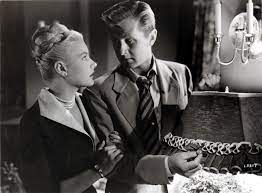
But a young Bridges, Barbara Payton (“Kiss Tomorrow Goodbye”) in her breakout role and director Richard Fleischer (“Narrow Margin,” “20,000 Leagues Under the Sea,” “Fantastic Voyage”) managed to turn out a memorable, brisk thriller that is the epitome of the genre the French later labeled “film noir.”

A compact, tightly-framed and efficient opening scene establishes that there are counterfeit $20 bills in circulation as a little old lady is stricken to learn the money she’s passing at a bank is bogus, and that she’s out $20. A hectoring narrator lectures her and us that “people need to learn” to spot funny money, because it costs us all.

The Secret Service, the agency overseeing currency crimes, recognizes the bill as “the old Stuart note,” and somebody is dispatched to check out its printer. “His address is still Atlanta.”

That’s where the counterfeiter’s in jail. Tris Stewart (Bridges) stands out not just because he’s been allowed to keep his sportscoat, black shirt and dress pants in prison. He’s a cynical smartass. How is he responsible for fresh phony $20s?

“You figure I been, uh, floating’em out the window?”

Somebody has his old printing plates, and they’re going to need him to track them down. An elaborate ruse of an “escape” is engineered, with Stuart affecting a real escape by punching out the agent assigned to shadow him.

Bridges is instantly credible as a tough guy thanks to his commitment to the realistic violence of this opening brawl. He slaps around law enforcement and others like he’s auditioning for “Airplane.”

Stuart is on the lam, tracking down his “cigarette” girl girlfriend, Meg (Payton), passing herself off as Laurie Fredericks out in LA. She’s got the attention of another suitor (veteran character actor John Hoyt, oily and vile even early in his career). But it turns out the charmless mug Johnny Hackett is also a Fed.

They’ve been watching Meg/Laurie. They even have her apartment wired. The film follows them as they track Tris and Meg through LA’s underworld, through old associates, to find those $20 bill printing plates.

The conventional story and its docu-drama treatment aside, the thing that grabs your eye straight off is old school cinematographer Guy Roe’s velvety contrast lighting design and put-it-on-a-poster framing. It’s startling to see a B-movie from that era — and with Eagle-Lion distributing “Trapped,” “B-movie” can seem a tad generous — this gorgeous. A few years later, Roe somehow found himself in Japan with Raymond Burr filming the original “Godzilla” with the A-bomb lizard-obsessed Japanese.

The screenplay by Earl Felton and George Zuckerman is a primer in noir hard-boiled. If there’s a pithier noir one-liner than “No cream, Sugar,” and a better guy to deliver it than Bridges, I’ll eat my fedora.

Payton suggests the star she might have become in her grit-beneath-the-beauty, stand-by-her-bad-man performance.

“Trapped” isn’t one of the greats. But Bridges and Payton, Fleisher and Roe turn this Secret Service recruiting docudrama into something special. They pack a lot of story, a set piece fight or two and flinty shootout finale into a tight, era-appropriate 78 minutes that could teach modern screenwriters, especially those trapped in the slow, soap-operatic cliffhangers of “streaming series,” a thing or two about storytelling economy.

Rating: unrated, violence

Cast: Lloyd Bridges, Barbara Payton, John Hoyt, Russ Conway, James Todd and Robert Karnes

Credits: Directed by Richard Fleischer, scripted by Earl Felton, George Zuckerman. An Eagle-Lion release on Tubi, Amazon, other streamers.

Running time: 1:18

Posted in Reviews, previews, profiles and movie news | Comments Off on Classic Film Review: Lloyd Bridges and Barbara Payton are “Trapped” in Noirland (1949)

Movie Preview: Kevin Hart has to become Torturer Woody Harrelson — “The Man from Toronto”

And you thought Canadians were nice. Well, aside from the hockey players and seal killers, I mean.

Here’s Woody, playing a torturer/killer from you-know-where, and of course Kevin Hart’s the EveryLittleMan confused for him who has to pretend he enjoys this sort of thing.

As do we all.

June 24, right after my Netflix subscription lapses. Could be funny, although sick and twisted and hammy seem safer bets.

Posted in Reviews, previews, profiles and movie news | Comments Off on Movie Preview: Kevin Hart has to become Torturer Woody Harrelson — “The Man from Toronto”

Netflixable? An Egyptian “Fish Out of Water” comedy set in the U.A.E. — “Emergency Travel”

A wealthy, 60ish husband is getting nagged by his wife in their United Arab Emirates mansion. She’s heard of a husband who built a mosque in loving tribute to his late wife.

Doesn’t her husband love her that much?

“Great,” he says. “I have land and I’m ready to start building.” Pause. Smirk. “The rest is on you!”

And there it is, ladies and gentlemen and Albert Brooks and anybody else “Looking for Comedy in the Muslim World” — a marriage joke complete with set-up, punchline and laugh, all in Arabic and courtesy of the Egyptian comedy “Emergency Travel.”

It’s a broadly-played and simple “fish out of water” farce about mistaken identity, miscommunications, a search for a “father I never knew” and Egyptian bumpkins suddenly ensconced in oil money luxury.

Habib Ghuloom is the lead, playing a mouthy, not-wholly-broke Cairo “Doctor…” of computer, cell phone and vacuum cleaner repairs.

“There’s nothing wrong with your vacuum,” a complaining customer is told after passing on his spouse’s excuse for dirty floors. “There’s something wrong with your wife. You should marry another one, or just replace her!”

The jokes are corny and old-fashioned and way out of date, by Western standards, which explains the film’s G-rating.

A friend’s “business opportunity” has them wondering where they can round up some cash. “Maybe ask your Dad” over in the Arab Emirates, the friend suggests. Nope. Dad’s dead.

But later, “Doctor” Faris hears a confession from his late mother’s sister, Aunt Shushu (Badria Tolba). The father he never met “isn’t dead.” His mom only told him that as the final lie in a long-running effort to “shame” the man who never supported them.

There’s nothing for it but for Faris to fly to Abu Dhabi and find his father, based on sketchy instructions the flaky aunt passes on. And when those fail, there’s nothing for it but Aunt Shushu to fly over and “help.”

There is barely a laugh in a whole mistaken for a “real” doctor and expert on “The Common Arab Market” idea (Doctor Faris decides to LOUDLY wing it when asked for a “presentation”) that begins with an airport limo pickup and ends with Faris kicked out of an out-of-his-league luxury hotel.

He’s always griping “What Indian film is this?” as if his comic complications could only come from the country whose comedies most easily translate for the Arab world.

The search has a few “Around the World with Netflix” examples of what passes for comedy in Egypt and the Arabic.Middkw East m. One possible prospect for the long lost Dad lists his wives, one of whom is Chinese.

“When you married the China woman, did you BREAK her by accident?”

Aunt Shushu just howls at her own knee-slapper.

I got a little chuckle out of the “Beverly Hillbillies” third act, when they’ve finally located the rich man and proceed to upset his posh lifestyle with their modest, working poor ways. Aunty is “corrupting” and teaching lost-dad’s daughters how to properly pick, court and marry a man, when their father would rather do the picking for them.

Much ululating and laughing ensues at the old fashionwd old man’s expense.

There isn’t enough comedy that translates and travels in this Egyptian effort. But its general lightheartedness sets you up to be pleasantly surprised with the occasional out-of-nowhere giggle.

Rating: TV-G

Cast: Habib Ghuloom, Issa Arab and Badria Tolba

Credits: Scripted and directed by Nasser Al Tamimi. A Netflix release.

Running time: 1:20

Posted in Reviews, previews, profiles and movie news | Comments Off on Netflixable? An Egyptian “Fish Out of Water” comedy set in the U.A.E. — “Emergency Travel”

Movie Review: British crooks and a cook learn “The Score”

Imagine Beckett’s “Waiting for Godot,” staged and cast by gangster-obsessed Martin McDonagh and set to the music of Morrisey, imitating the work of Jonathan Larson.

That’s my best shot at describing “The Score,” Malachi Smyth’s debut feature about two mobsters waiting for a “meet,” with one of them falling in love and singing duets with the waitress at the remote cafe where things are about to, as they say, “go down.”

The structure has a tried and true sturdiness to it — tensions rising and tempers flaring as an annoying, impulsive tough guy and his meaner partner get on each other’s nerves about the dangers to come. The execution is novel, fascinating and just musically/romantically entertaining enough to not totally muck up the suspense that’s built in.

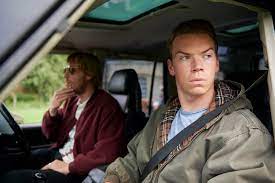
Will Poulter (“The Revenant”) and Johnny Flynn (“The Outfit,” “emma.”) play the criminal minds waiting for some sort of cash split. Troy (Poulter) is a brute who fancies himself a an English wit. He prattles on about words with multiple meanings — “sacked” and the like.

This “score” they’re about to make might involve “settling old scores.” And as the opening split-screen sets up their meeting and their goals makes clear, this “score” will be musical, as every now and then characters break into song — sometimes solo, sometimes in duets, occasionally acapella, often accompanied by offscreen musicians.

Troy’s brother is in prison. He kept all the money he and Mike (Flynn, who also composed the music) had from their “jobs.” Now, there’s some sort of split involving third parties whom Troy has never met.

The younger Troy has problems following the most basic instructions — “Stay here,” Keep quiet,” “Keep a low profile.” Guys like him always have to remind others “I’m not stupid.” He starts a brutal brawl waiting at the pumps at a rural gas station while hotheaded Mike “Mikey” is bullying the clerk inside into undercharging for this, making an exception to the “restroom isn’t for customers,” etc.

Troy further drifts off script when they arrive at the secluded diner where their “handoff” is slated to happen. The sassy, sexy clerk, cook and waitress (Naomi Ackie of “Small Axe” and “The Corrupted”) smarts off about him being “a poet” thanks to his word play. What’s your name? Troy?

“It’s classic,” he says.

“You mean classical,” she says, correcting him for the second or third time in their first conversation.

“You like telling people what they mean, don’t you?”

As Mike insults and glares at “Gloria,” bullying her into changing the diner’s rules just for him, Troy is falling into her smile and sense of style.

Every musical has its “check in” or “check out” point for viewers who are indifferent to the art form. When Troy and Gloria exchange lyrics in their first flirtation/courtship duet, the viewer faces that moment of truth. I went with it.

“I’m burning for thee,” he sings. “Run run run through me,” she replies. “Have a care to fill this vessel of your heart.”

He is smitten. She is smitten. She is wary of this embittered, testy tough guy Troy is paired up with — “He has the air of a wife-beater.” But as they sing in a beached rowboat out back, we get a sense Troy just might change his plans and his destiny for Gloria.

Everybody does his or her own singing, with Ackie and Flynn having the most interesting, soulful voices and Poulter holding his own.

The tunes are pleasant enough, depending on your taste, and no more memorable than most of the melodies Glen Hansard wrote for “Once,” or the vast majority of the work of “Rent’s” Larson or Lin-Manuel you-know-who.

They complement the story and heighten the emotions or the drama, which is all the songs need to do here.

Such “meets” to settle a “score” have a limited number of ways they can come out, but Smyth manages a few surprises in between the tried and true tropes. No, he’s no Martin McDonagh (“In Bruges,” “Three Billboards Outside Ebbing, Missouri”) or John Michael McDonagh (“The Guard,” “Calvary”), or even a Guy Ritchie.

But then, none of those tough guy filmmakers has had the nerve to set one of their mob-influenced morality plays to music, have they?

Rating: unrated, violence, profanity

Cast: Will Poulter, Naomi Ackie, Johnny Flynn, Lydia Wilson and Lucian Msamati

Credits: Scripted and directed by Malachi Smyth. A Gravitas Ventures release.

Running time: 1:40

Posted in Reviews, previews, profiles and movie news | Comments Off on Movie Review: British crooks and a cook learn “The Score”

Movie Review: An anime delight — “Fortune Favors Lady Nikuko”

A tweenaged girl growing up in a beautifully-cluttered and weather-worn Japanese coastal village narrates the story of her mother, and her life with her, in the delightful “Fortune Favors Lady Nikuko,” an anime coming-of-age confection based on a YA novel by Kanako Nishi.

Director Ayumu Watanabe (“Space Brothers,” “Children of the Sea”) serves up a bubbly, touching tale of a skinny and pretty child learning to love and more importantly appreciate her mercurial, roly poly single mom and the life’s she’s had raising her.

To hear Kikuko tell it, her over-the-top, over-eater waitress/cook mother has been something of the town character every place they’ve lived. Kikuko is prepubescent, she tells us, but mature for her years. A fortune teller on TV makes her wonder about how her mother Nikuko’s “fate was sealed” by past lives, because her current one is something of a tale of woe.

There was “The Casino Dealer, “The Bar Tender,” “The Married Man” and “The Novelist” — men who used Nikuko, borrowed money from her and left her holding the bag, over and over again.

Mom traveled from a small village to Osaka, Nagoya, Yokohama, Tokyo and beyond, working until she was “worn out” at bad jobs, often working to pay down debt some feckless man left with.

They wound up in their current town, with Mom a fixture at Uwogashi’s Grill, serving “Meat, meat, meat MEAT” and rice or noodles dishes to the ravenous working class customers. They live on a rusting houseboat. And at school, Kikuko dreads any occasion that will expose her classmates and their families to this barrel-shaped barrel of fun who raised her.

Mom is fond of puns of many varieties, most of which don’t translate that well (“Fortune Favors” is in Japanese with English subtitles). But her very name is a pun. There’s “meat” in it.

What will a maturing Kikuko figure out about Mom’s life, via clues and hints related in flashbacks, that will explain her struggle and their current lot?

The sight gag above tips us as to Watanabe’s approach here. He’s taking just a little inspiration from Miyazaki’s “My Neighbor Totoro,” about the best friend a child could have, but a “friend” who’s something of a puzzlement.

Nikuko is a walking sight gag who morphs, in her daughter’s mind, into a chocolate Michelin Mom force of nature in her moods — bouncing, twirling, grinning constantly, entertaining customers, loud and not shy about her unchecked appetites.

Food and its prep are a big part of the animation — French toast for breakfast, “Meat Spag” (spaghetti) from a can, “meat meat Meat, MEAT” grilled, broiled or boiled.

Does that explain Kikuko’s thinness, her constant stomach aches? How is a girl who is “sweet on” a shy, face-making boy in class ever to get a boyfriend with a mother like this, she wonders?

The film has frankly adult suggestions about pieces of Nikuko’s past, not just her menial jobs, but connections with exotic dance clubs and sex work.

But “Fortune Favors” suggests that when a child’s old enough to care about and ask frank questions about her or his parents’ past, they’re old enough to understand them.

The physical comedy might appeal to younger viewers just getting hooked on anime. Nikuko’s rotund shape has its graceful and clumsy moments such as when she’s romping through the local aquarium until she practically passes out from joy, and a penguin squawks “DEATH to you ALL” in judgment.

Yet the ideal audience for this film is going to skew older, better able to appreciate the themes and the higher-end anime art that Watanabe and his team achieved.

Rating: PGish

Cast: The voices of Shinobu Ôtake, Cocomi, Natsuki Hanae, Ikuji Nakamura

Credits: Directed by Ayumu Watanabe, scripted by Satomi Ohshima, based on a novel by Kanako Nishi. A GKids release.

Running time: 1:37

Posted in Reviews, previews, profiles and movie news | Comments Off on Movie Review: An anime delight — “Fortune Favors Lady Nikuko”

Netflixable? Van Damme doesn’t say a word in “We Die Young”

Jean-Claude Van Damme’s career second wind, the one that showed up when he turned out to be pretty darned good at playing himself, a washed-up action star, in “JCVD,” has pretty much run its course.

He got a short-lived TV series and about a dozen years of B-movies out of that 2007 resuscitation. Watching him fade to black all over again has been painful for him and for us.

“We Die Young” is a new nadir, even for the star of too many awful “Kickboxer” sequels to count. It’s a reckless, ridiculous and borderline racist thriller about a silent man who fights against the infamous disgraced-ex-president/Fox News-hyped MS-13 gang to help a couple of kids escape Washington, D.C.

A gang leader even complains about his fears of “MAGAs” in one scene, just so you know the American-born Israeli documentary filmmaker Lior Geller’s politics.

Still, he films a nervy hand-held camera chase or two, and other unnecessary handheld and jumpy sequences to try and animate this corpselike thriller.

With a script that requires Van Damme to act without his voice — he plays a combat veteran managing his pain with legal and illegal drugs, “speaking” through a text-to-talk phone app — Geller pretty much reduces his star to an unemotional, inert supporting player.

That gives Geller free rein to dive into every Latin gang stereotype under the sun as we see a young drug runner Lucas (Elijah Rodriguez) try to save his even younger brother (Nicholas Sean Johnny) from that “life” and the influence of Shakespeare-quoting Salvadoran gang leader Rincon.

David Castañeda of “The Umbrella Academy” and the “Sicario” sequel plays Rincon with a flat menace that works for a scene or two, and bores for more that follow.

“I wasn’t always the biggest drug dealer in D.C.,” he tells his 14 year-old star delivery boy. “But I was the one who shot them!”

The story takes place over a couple of days on the “bad side” of D.C., with young Lucas, our narrator, scrambling to save his annoying sibling Miguel from being “jumped in” to the MS-13.That entails a group beat-down that the kid may survive, with a membership that follows that will almost certainly kill him.

As we’ve seen the boy persist in pursuing this, Lucas’s protests are to no avail, and make less sense than he thinks.

“It’s too late for me, but you’re smart.” No, he isn’t.

Van Damme’s drugged, battle-scarred veteran works in a body shop and is something of a neighborhood character — a soft touch for beggars, a pity case for a single mom (Joanna Metrass) who befriended the bullied, often-stoned “chavalo” in the ‘hood.

Events conspire to put Lucas, dragging his little brother, in the path of Daniel the Mute as the siblings try to escape Rincon and his minions.

We follow the kids mostly, identifying with their plight. Van Damme is just here for some sort of third act rescue, and is both misused and under-utilized in the process.

Geller embraces several racist Latin and Black tropes as he serves up his plate of ultraviolence. Rincon is a poorly-sketched-in character who loses the “color” invented for him (Shakespeare spoken through a face full of tattoos) and gives way to a lieutenant (Charlie MacGechan) who is less interesting, if more menacing.

The climax is a pitiless slaughter that suggests a “kill’em all, let Jesus sort’em out” ethos.

Still, the car and foot chases sparkle, even if the blur of edits undercut every other action beat, never letting the eye settle on an actor, an action or an emotion.

Rating: R for violence, language and some drug material

Cast: Jean-Claude Van Damme, David Castañeda, Elijah Rodriguez, Joanna Metrass, Nicholas Sean Johnny and Charlie MacGechan

Credits: Scripted and directed by Lior Geller. A Lionsgate film on Netflix.

Running time: 1:32

Posted in Reviews, previews, profiles and movie news | Comments Off on Netflixable? Van Damme doesn’t say a word in “We Die Young”

Netflixable? Cheese has a new flavor — “Interceptor”

Man, you know times are hard at Netflix when it all comes down to this.

“Interceptor” is the marquee new release on the embattled streamer this week, a cheesy C-movie polished up to look like a B.

It’s about terrorists about to fire Russian nuclear missiles at the U.S., and a lone Army officer holding out at a missile interceptor station that’s under assault.

The premise might be one a lot of us can buy into — treasonous sellout American conservatives in league with the Russians. In this fictional future, #MoscowMitch, More Rubles Rand and the disgraced and treasonous former president aren’t in the picture, but “topical?” Close enough.

Elsa Pataky of the “Furious” and sometimes “Fast” franchise, and Luke Bracey (“Point Break,” the junky remake) are the stars.

And truth be told, I could have gone along with it — missile shield stations attacked, cities targeted for destruction, right wing grievance airing by the attackers with no identification of the Future Koch suckers financing the whole enterprise. It’s a version of an early ’80s all-star TV miniseries of some repute — “World War III” — with no stars.

Then, with Captain Collins (Pataky) barricaded in the launch control center of a floating mid-Pacific interceptor base, almost everybody else slaughtered by a hilariously overstaffed and treasonous “cleaning crew,” a ninja drops in. And Spanish-accented Captain Kickass must take him out to save us all…for now.

The sheer absurdity of the moment overwhelms the cornball tough-talk dialogue.

“Let millions of Americans die? I don’t you realize why someone joins the Army.” “Today, America dies in a PAROXYSM of FEAR!” “If you’re gonna kill me, just KILL me. No ‘mansplaining!'”

Worst of all, the ninja check-out scene happens in the first act, early in “Interceptor.” The dung flows downhill from there.

The brawls are decently-staged, and Pataky holds her own in them. She’s no MMA veteran or Noomi Rapace, but she’s a credibly compact combatant.

Bracey fights to hide his Oz accent, but oddly-chosen/oddly-pronounced words do him no favors.

The “messaging” — about the reasons her captain has been exiled to this outpost, the sorts of grievances the far right buys into on behalf of the far rich, Russian bad intent, etc — is broadly laid out and laid on thick.

But Australian novelist turned novice-director Matthew Reilly has no sense of screen pace –NONE — and no willingness to acknowledge the absurd in situations, set-pieces or dialogue.

“Did you just stab that dude in the eye with your GUN?

Throwing huge amounts of money at filmmakers and stars for overblown B-movies was obviously unsustainable for Netflix. “Bright,” “Triple Frontier,” “The Old Guard,” “Extraction” and “Extinction,” wholly-financed or even purchased at a cut-rate price when theatrical studios realized their misguided product wasn’t worth releasing, is a quick way to go broke. It’s also a quick way to lose subscribers when the house “brand” is “makes decent teen romances, but uniformly crappy action pics.”

One fears that this “brand” is further tarnished by business-model-that-works C-movies like “Interceptor.” A cut-rate cast, green director and a script so bad it wouldn’t attract betters actors or directors is no way to rebuild public confidence in your business, or its “Netflix Original” movies.

Rating: TV-MA, graphic violence, profanity

Cast: Elsa Pataky, Luke Bracey, Mayen Mehta, Zoe Carides, Aaron Glenane and Marcus Johnson

Credits: Directed by Matthew Reilly, scripted Stuart Beattie and Matthew Reilly. A Netflix release.

Running time: 1:39

Posted in Reviews, previews, profiles and movie news | Comments Off on Netflixable? Cheese has a new flavor — “Interceptor”