


A chewy comeback role is the ultimate gift to an accomplished actor who never quite caught fire or who got older while producers and studio execs kept getting younger.
Think of what Tarantino did for Travolta, Pam Grier or Robert Forster, what “Stranger Things” meant for Winona Ryder or “The Whale” managed for Brendan Fraser.
Steven Soderbergh had just transitioned from “indie” cinema icon (“sex, lies and videotape”) to mainstream hit-maker (“Out of Sight”) as a director when he brought “The Limey” (1999) to life at boutique distributor Artisan.
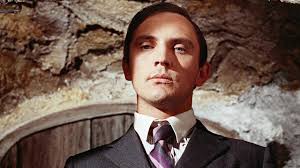
A simple, bluff and brutal thriller without a lot of mystery to it became the star vehicle Terence Stamp never really had in his ’60s debut years, when “The Collector” and “Modesty Blaise” might have made him, but didn’t.
Stamp, who passed away this week at 87, passed on “Alfie,” which made his former roommate Michael Caine a superstar. He was supposedly considered a replacement for Sean Connery as James Bond.
But what never happened back then came to him with the career-extending showcase that was “The Limey,” making him a Cockney ex-con bashing and shooting his way through Los Angeles in search of answers about his daughter’s death.
Soderbergh, working from a Lem Dobbs (“Dark City,” “The Score”) script, had a tale about a “villain” as the Brits like to call him who got his start in the ’60s. Who better to renew our acquaintance with London in the ’60s than Stamp?
Stamp was one of the famous faces of ‘Swinging London.” He dated Julie Christie and other starlets of the day. His younger brother, Chris Stamp, managed mod-era rockers The Who, who earn a needle-drop (“The Seeker”) in “The Limey.”
Stamp, with that fixed, blue-eyed stare that could suggest menace or masked despair, would be our fish-out-of-water proxy, a man of violence out for revenge in a city where money and power insulated the powerful from accountability.
And he’d be our introduction to the already-faded world and rhyming, coded slang of Cockney.
“I’m gonna ‘ave a butcher around,” Wilson, his character says, puzzling any Angelino who hears him. “Butcher’s hook,” he explains. “‘Look’ around.”
Luiz Guzman, getting one of his biggest breaks, plays Eduardo, the ex-con who befriended Jennifer, the daughter who died, supposedly in a car crash, and who wrote to Wilson back in Britain about her death.
“He’s my new china,” Wilson says by way of introducing “Ed” to others. Another puzzled look. “China plate. Mate.”
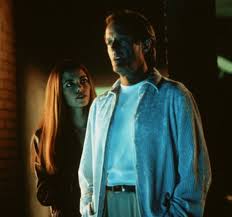
Wilson and his “new china” will use any name Ed can come up with to get Wilson closer to Terry Valentine, Jennifer’s much older record-producer boyfriend. The slick, oily and 60something Valentine is played by Peter Fonda, fresh off “Ulee’s Gold” and leaning into his own “comeback.”
Wilson gets in over his head, busted up by the first thugs he meets. But they let him live, which turns out to be a mistake.
He chats up LA voice coach Elaine (Lesley Ann Warren) who knew Jennifer and who provides us a peek at show biz back in the day. And before we know it, our Limey has shown up at Valentine’s designer hilltop mansion for a party and given some thought to how he’s going to kill this guy whom he’s sure had everything to do with Jennifer’s death.
But prison taught our Cockney to “make a choice” about what actions to take, to realize “when it matters, and when it doesn’t.”
There’ll be no public execution of the tanned, imperious Valentine in public. Oh no. That’d be too easy, “china.”
Continue reading












 Movie Nation