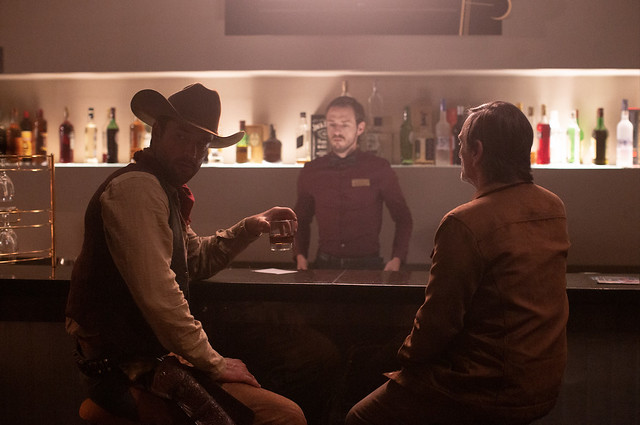
Movie Preview: Jon Hamm answers the call, “Confess, Fletch”

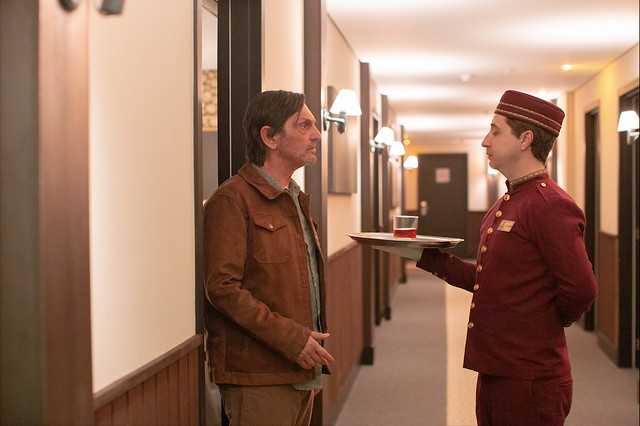
Cute take on the novels that became a Chevy Chase franchise way back in the day — until nobody wanted to work with Chevy Chase any more.

This is another Gregory McDonald book, about murders and art theft, very cinematic and whodunnit and all that.

Jon Hamm and John Slattery, together again?

Sept. 16, in theaters and Paramount +.

Posted in Reviews, previews, profiles and movie news | Comments Off on Movie Preview: Jon Hamm answers the call, “Confess, Fletch”

Classic Film Review: The First “Last of the Mohicans” (1920)

All the Twitter talk about Michael Mann’s “Heat” prequel novel and when it might be turned into a film has had me quipping “I’m holding out for his ‘FIRST of the Mohicans'” more times than the joke can stand.

I mean, I am a big fan of “Heat.” But I love Mann’s “Mohicans.” It’s his best film, the definitive version of the novel on the big screen, and as epic today as it was when he finished recreating 1750s New York in the forested mountains of North Carolina in the early ’90s.

Stumbling across the first screen version of James Fenimore Cooper’s novel “The Last of the Mohicans,” and recalling that it was co-directed by Clarence Brown and his silent cinema mentor, Maurice Tourneur, was another attraction. I researched and wrote about Brown when I worked at a newspaper in Knoxville, Tennessee, home of Brown’s alma mater, the University of Tennessee.

The theater at UT is named for Brown, one of the school’s more esteemed alumni. He was Garbo’s favorite director and the filmmaker who gave us her “Flesh and the Devil,” “Anna Karenina” and “Anna Christie,” as well as “The Yearling,” “National Velvet” and “Intruder in the Dust.” His papers are archived there, and oral history interviews with this major figure in the early cinema are as fascinating to listen to as seeing his copies of his scripts, one with the letters “GG” and a number scribbled after it.

He’d scribbled Greta Garbo’s phone number on the margins of his working copy of “A Woman of Affairs (1928).”

I tend to shy away from silent films this old. They’re primitive, too close to the nickelodeon era in story and pictorial sophistication. Movies from 1925-1929 are far more visually interesting because the language of the moving image had been mastered and the great filmmakers of the day relied less on dialogue and more on the acting, images and editing to tell their stories.

But earlier films are fun for any film buff to watch simply because we see cinema language and “tricks” being invented.

Unlike the best of the four films and two TV series based on Cooper’s book, this “Mohicans” centers on the Huron villain, Magua, something as obvious as the fact that they cast the biggest star in that role. Wallace Beery was a decade away from gaining screen immortality thanks to the boxing weeper “The Champ,” and he’s makes an imposing if racially-incorrect Magua, here.

It’s not that the story is told from his (somewhat understandably) treacherous point of view. But he dominates the film, drives the action and plays to the prejudices of the day — the Native warrior hellbent on avenging himself on the English, and taking an English maiden for his “squaw.”

Natty Bumppo, aka “Hawkeye,” the colonial scout at the center of the novel (renamed Nathaniel Poe for the Daniel Day-Lewis/Michael Mann film) is very much in the background here and played by Harry Lorraine. Hawkeye even takes a back seat to his friends, the two title characters as well, Chingachgook (Theodore Lorch) and his son, Uncas (Alan Roscoe).

It’s not a love story, which is why Mann’s masterpiece relied on invention and the script of the ’36 version of “Mohicans.” But anybody familiar with the 1992 film (all the films are simplified versions of the book) will recognize the story beats, the French and Indian War combat and the kidnappings. Two daughters (Barbara Bedford, Lillian Hall) of an English officer (James Gordon) are escorted INTO the middle of a combat zone to be with their father, and are instead ambushed, kidnapped, rescued left behind when the men run out of ammo only to be pursued to a cliffside final confrontation.

This was Brown’s second outing as a credited director, and we catch the occasional striking image and glimpses of compositions that would turn up in later films. Mostly, though, the process shots — masking the camera to create the illusion of looking out from inside a cave, etc — and everything else we see here were boilerplate tricks of the trade as it was practiced then.

The inter-titles carry an awful lot of the storytelling here, and they’re assubtle as they generally were at the time.

 “Even in a wilderness, gently bred women somehow maintain the grace and dignity of life.”

The dialogue snippets are just as arch.

“The Hurons are on the war path. They have drunk the firewater of the French, and have listened to lying tongues.”

 “You! – the daughter of Colonel Munro! – admiring a filthy savage!”

The Hurons are depicted as wild-eyed-with-drink beasts and the Brits as too prissy to have an answer to fighting them. But the women have agency and a little pluck, Magua possesses a sort of brute nobility and Chingachgook and his son are the iconic doomed heroes, the noblest of all.

The production design is a joke, with the slapped-up wooden frontier forts of the day rendered as carved-stone edifices. The flat, washed-out light of Southern California seems as wrong as the barren mountains and dusty/rocky peaks where some of the action is set. Only the forested scenes shot in and around Big Bear Lake feel right, and the soundstage “cave” and single timber blockhouse and fort interiors aren’t bad.

The acting is better than average, heralding a new, subtler era and separating it from the broad pantomime of the cinema’s first decades.

Boris Karloff is in the background of some scenes, uncredited and a decade away from stardom.

Even though this landmark film has been added to The National Film Registry, it’s hard to find a print where the color scale matches from sequence to sequence. Look at the photos posted above to see what I mean. Different prints in different states of aging were pieced together in the restoration of the film.

The score on the version I watched all the way through — I’ve stopped by it, channel surfing, on TCM before but never stayed with it — is decorated, inappropriately, with Mendolssohn’s “Italian Symphony.” The definitive restoration is rarely streamed or broadcast.

But this “First of the Mohicans” is still worth watching just to see where cinema once was and where it would eventually go, into old growth forests, breathlessly sprinting along with Oscar winner Daniel Day-Lewis in a story of action, adventure and life-and-death romance symbolically capturing America as its founding myth was being written.

Rating: unrated

Cast: Wallace Beery, Barbara Bedford, Lillian Hall, Alan Roscoe, James Gordon, Henry Woodward, Theodore Lorch and Harry Lorraine.

Credits: Directed by Clarence Brown and Maurice Tourneur. Scripted by Robert Dillon, based on the novel by James Fenimore Cooper. An Associated Producers release now on Tubi, Amazon, other streamers.

Running time: 1:13

Posted in Reviews, previews, profiles and movie news | Comments Off on Classic Film Review: The First “Last of the Mohicans” (1920)

Movie Review: Martial Artist learns the Secret Power of Weed from “The Smoke Master”

The classic handicap of any “stoner comedy” is the expectations the filmmakers often put on the audience. If you’re coming to a stoner comedy, what you want out of it and what they need out of you is kind of…baked in.

Ask Dave Chapelle.

So as hopeful as one might be that the phrase “kick ass kung fu kush comedy” might be deployed when considering the screwy charms of “The Smoke Master,” that’s over-selling it — by a bit, if you’re inhaling whilst watching it, by a lot if you’re not.

It’s a spoof of old school (’70s vintage) Honk Kong kung-fu quest thrillers of the Bruce Lee era. A lot of characters you might not expect to know and speak Chinese mull over “The Three Generations Curse” and fear The Triads.

But it’s Brazilian, which is funny. And the non-native Chinese speakers sound like they’re going at it phonetically. Which is funny. The Brazilian hero must travel to find “The Smoke Master” and learn the martial arts of cannabis kung fu, in Chinese or Portuguese with English subtitles.

“When the smoke surrounds you, you can touch and feel the whole universe!” “When you release the smoke, you BECOME the smoke!”

Who’re you quoting, oh great teacher? Confucius? Bruce Lee?

“Bob Marley!”

Again, funny.

The brawls are entertaining as well. But, if you’ll pardon the pun, far too much of this farce is nothing more than a drag. And I’m not talking about the cute trick of having the actor who plays The Smoke Master (Tony Lee) also play a dragon lady empress of the Triads.

Daniel (Thiago Stechinni) and Gabriel (Daniel Rocha) are brother martial artists in São Paulo, minding their own business, studying with Master Abel (Cléber Colombo) and enjoying the occasional joint, when all these Euro-accented or English-speaking hoodlums start in on them.

The Triads have been Westernized, another Bruce Lee era touch — having Occidental villains.

A prologue hints at what might be going on, something totally out of their hands. Back in the early ’70s, their martial arts and marijuana-loving ancestor was betrayed and hit with The Three Generations Curse. No male in their family will live past 27 for three generations!

Does the hulking gang leader Caine (Tristan Aronovich) know or care about this? Probably not. He’s just into busting heads and ruling the local underworld via his fists and feet and those of his minions.

When the more-skilled and far taller Daniel takes on most of Caine’s gang and is hospitalized for his trouble, it is up to callow Gabriel to travel to into the boondocks, asking everyone he knows, “Do you know where ‘The Smoke Master’ lives?”

Once they meet and the kid is rejected until he passes a persistence test to show he’s serious, the training begins. The training turns out to be more about mastering Mary Jane and her friends than martial arts. The pupil must learn to use the smoke and BE the smoke — and help finish off this bazooka-sized blunt and then master the munchies — before he’s ready to go home and set wrong things right.

“The smoke goes wherever it pleases.”

Most of the players take this all ever-to-seriously, which should produce more laughs than it does. But I cackled more at a few bits of out-and-out buffoonery, the stoner student clowns Zuang and Zhan, the obligatory “cat fight” throw down in the middle of the Big Finale.

Almost everything about this one hints at a funnier movie than “Smoke” turns out to be, from the goofy, Home Shopping Network show (or PBS grilling series) title to clouds of exhalations that decorate many scenes that aren’t as amusing as the filmmakers seem to think.

“The worst kind of blind mind is the one who smokes and does not inhale!”

It turns out, “inhaling” is a precondition for appreciating this.

Rating: Unrated, violence, sexual situations, profanity, and lots and lots of “lighting up.”

Cast: Daniel Rocha, Tony Lee, Thiago Stechinni, Luana Frez, Michelle Rodrigues and Cléber Colombo

Credits: Scripted and directed by Andre Sigwalt and Augusto Soares. A Raven Banner release.

Running time: 1:43

Posted in Reviews, previews, profiles and movie news | Comments Off on Movie Review: Martial Artist learns the Secret Power of Weed from “The Smoke Master”

Movie Preview: Don DeLillo’s epic novel “White Noise” lures Driver, Baumbach and a big check from Netflix

A classic, National Book Award-winning, satiric, career-launching post-modern novel, the film version reunites director Noah Baumbach and his “While We’re Young/Marriage Stories” star Adam Driver, and gives Driver his first Middle Aged Man role, that of a death-obsessed college professor and Hitler expert.

It’s about media, conspiracies, universal paranoia, violence and more than a few ’80s obsessions rendered in razor strokes that slice and skewer.

Oscar bait? “Coming soon.”

Posted in Reviews, previews, profiles and movie news | Comments Off on Movie Preview: Don DeLillo’s epic novel “White Noise” lures Driver, Baumbach and a big check from Netflix

“Live and Let Die,” because they don’t make Bond pictures like this anymore, baby

I think about this bit of stuntman derring do every time I see “Beast,” or any digital lion, bear, gator, croc or dog on the screen.

You think it’s more faked than it actually was. Nuh-uh.

Posted in Reviews, previews, profiles and movie news | Comments Off on “Live and Let Die,” because they don’t make Bond pictures like this anymore, baby

Movie Review: Stallone, the AARP Action Superhero — “Samaritan”

As it drifts on well past its expiration date, the great Schwarzenegger/Stallone rivalry still has its unfinished business. Until now.

At long last Sly Stallone has his “Last Action Hero,” an action pic — in this case a superhero story without a comic book origin or fanbase — that pairs the star up with an ever-grinning kiddie sidekick. It’s more modest and not as over-the-top dreadful as Arnold’s Nadir. The sins of “Samaritan” are being so dull and generic as to barely be worth making, much less watching.

In Granite City, Atlanta’s best simulation of Apocalyptic Detroit (which isn’t saying much), the superheroes who dueled for hearts and minds and supremacy were the feuding brothers Nemesis and Samaritan. Nemesis died, and supposedly, so did his less-evil twin.

Little Sam (Get it?), played by Javon ‘Wanna’ Walton, is an impoverished tween — OK, 13 — who could go either way in the Big Book of Life. He’s hanging with would-be hoodlums, pitching in on bait-and-burgle jobs at the local bodega for dreadlocked Reza (Moises Arias). But Sam idolizes Samaritan and tags dumpsters and walls with the late superhero’s logo.

He even pesters the leading “Samaritan’s not dead” conspiracy theorist (Martin Starr), who has a MUCH more ornate “connect the dots” wall chart of “clues” about where the muscle man might have got to in the back of his bookstore.

Sam’s latest theory is that his neighbor, Joe the Garbage man, a loner in a hoodie, must be The Big S. That comes after Joe clobbers a gang that comes for the kid and takes a knife to the hand and doesn’t flinch.

“I just pick up garbage for a living,” the old man with “Rocky” reflexes grouses.

When a local gangster on the rise (Pilou Asbæk) sets out to acquire the sledgehammer (Uh oh. Call a lawyer.) and mask of the late Nemesis, Joe the Garbage man and his ever-grinning shadow have to take a stand.

Stallone is still a convincing man of action. A little editing, a bit of stuntman assistance, and he still comes off as a scowling brawler who can be baited into a fight, and who won’t stop until the corpses are stacked like firewood.

The script, with the reluctant “troglodyte” “loner” hero, leery of any city that’d “let a coupl’a genetic freaks” run it, lets down the side here.

It’s hard to buy into the “Who comes to help the helpless?” mythos when the whole villain’s Master Plan plays like something that dates from the “Dick Tracy” era — the 1940s comic strip, not the ’80s movie.

The effects are good enough, but there’s a lack of wit and ambition here that just reeks. That’s what you get when you figure out, early on, that no one builds action franchises around 76 year-olds. The novelty of this feeling like a one-off should be an asset, but it isn’t.

Still, Stallone got another chance to do what he’s done since MGM/UA made him a star way back in 1976 — carry a picture with his face and his fists. Pity it had to be his “Last Action Hero,” but it had to happen eventually.

Rating: PG-13 for strong violence and strong language

Cast: Sylvester Stallone, Javon ‘Wanna’ Walton, Pilou Asbæk, Dascha Polanco, Jared Odrick, Sophia Tatum and Moises Arias

Credits: Directed by Julius Avery, scripted by Bragi F. Schut. An MGM release on Amazon Prime.

Running time: 1:42

Posted in Reviews, previews, profiles and movie news | Comments Off on Movie Review: Stallone, the AARP Action Superhero — “Samaritan”

Movie Preview: “Deus,” sci-fi about “the greatest mystery that’s ever faced the human race”

A god sphere in orbit around Mars? Let’s see what’s in it come Sept. 13.

Posted in Reviews, previews, profiles and movie news | Comments Off on Movie Preview: “Deus,” sci-fi about “the greatest mystery that’s ever faced the human race”

Movie Review: Boyega and Williams light-up a timely bank-hostage-heist, “Breaking”

There’ve been so many bank-hostage thrillers that it’s pretty much a thriller genre all its own. And as such, it’s very hard to make one that stands out from the crowd.

The phrase “as you’ve never seen him before” was long ago worn out by Hollywood hype masters, mainly because it’s compact enough to stuff on the top of a movie poster.

And as a film critic, it’s not necessary advisable to slap the label “soulful” on an African American actor, even when it fits, even when talking about the actor’s final film.

But “Breaking” breaks free of its genre thanks to some terrific performances.

John Boyega is so startling and mercurial in the leading role, playing a Marine Corps vet who holds up and holes up in a bank, claiming his has a bomb, just to let satisfaction of the VA and a crushing student loan trap, that I forget the actor inside the character. This is Boyega as we’ve “never seen him before.”

And as a disrespected, passionate and compassionate police hostage negotiator, the late Michael Kenneth Williams reminds us that we could almost retire the term “soulful” as it pertains to acting with his performance.

This “true story” happened in Marietta, just outside of Atlanta. We meet Brian Brown-Easley on a good-bad day. He’s able to get his little girl (London Covington) on his phone for a warm, what-to-name-the-puppy-I’m-getting-you chat. But he runs out of minutes before he can talk the child into giving the phone to his ex (Olivia Washington).

He’s got a room in a local fleabag motel, but gets a “You paying, or leaving?” dig from the manager.

We sense the desperation. And him looking at that Wells Fargo branch across the street has us worried. Sure enough, he ponders his options and marches in. He eyeballs the cameras inside and thinks some more.

He withdraws a little cash from the chatty, over-sharing clerk (Selenis Leyva, good). And then he passes her a note, says he has a bomb, holds up what looks like a detonator, and asks, with increasing insistence, her to dial 911.

It’s the delay in her getting through, seeing the other bank staff (Nicole Beharie plays the nervous/nervy manager) quietly usher customers and staff out, that sets finally sets him off for the first time.

“I need the FIRE trucks. I need the NEW CAMERAS! I need the X-MEN!…Don LEMON!”

Whatever we think this guy is up to, this disturbed “off your meds” fellow, who just held up a woman who knows everything about him because she took money from his account to give it to him, has his own agenda.

He wants some help with the VA. He needs them to stop garnishing his account for student loan payments.

Abi Damaris Corbin, who also directed, and Kwame Kwei-Armah construct a script around an almost comical lack of urgency from first responders, a cavalier “What are you wearing?” from a 911 operator who figures she can pass on to law enforcement who to shoot, and a lot of folks — inside and outside of the bank — who know what a nightmare the VA, student loans and American policing have become, and sympathize with their unstable captor.

Has the bank manager every been robbed before? What happened?

“They arrested the guy.”

“Musta been white!”

Boyega can overdo the “triggered” thing, flipping out at sudden noises or due to simple paranoia. But he’s good and wonderfully relatable as the lead.

Williams is sharp, deflated and a bit irked (his specialty) as a hostage negotiator poked by SWAT (Jeffrey Donavan, playing the latest in a long line of jerks), forced to sit back and wait until Brown-Easley calls the ex, and a WSB reporter (Connie Britton) BEFORE he can introduce himself and commence negotiations.

The upshot of all that is a feeling of familiarity that the genre inspires, but which this film lightly trips up, here and there.

“Breaking” isn’t “Dog Day Afternoon” or “Inside Man” because it isn’t as good or as original as those two classics of the genre. But Boyega, Williams and Beharie make this well worth our while, a tense and empathetic hostage thriller that could be literally — one last cliche coming — “ripped from today’s headlines.”

Rating: PG-13 for some violent content, and strong language.

Cast: John Boyega, Nicole Beharie, Selenis Leyva, Jeffrey Donovan, Connie Britton, Olivia Washington and Michael Kenneth Williams.

Credits: Abi Damaris Corbin, scripted by Abi Damaris Corbin and Kwame Kwei-Armah. A Bleecker St. release.

Running time: 1:43

Posted in Reviews, previews, profiles and movie news | Comments Off on Movie Review: Boyega and Williams light-up a timely bank-hostage-heist, “Breaking”

Movie Preview: German ballerina ignores taboos as she saves her “Grand Jete” for her son

A German language drama about incest?

Fall is here. Sept. 20, from the aptly-named Altered Innocence distributor.

Posted in Reviews, previews, profiles and movie news | Comments Off on Movie Preview: German ballerina ignores taboos as she saves her “Grand Jete” for her son

Movie Review: A proud distiller watches Mexico’s “Tequila Boom” and her dreams go bust — “Dos Estaciones”

Men in wide sombreros and long-sleeved shirts that fend off cuts from the sharp leaves harvest agave plants in the opening scene of “Dos Estaciones” (Two Stations), an intimate drama about a family business and hopes beyond it facing the trials of the farmer/distiller’s lot in life.

Things are percolating along at the Coleman Spirits distillery, which María presides over like a matriarch to-the-business born. She doesn’t have to say “We’re like family” here for it to be understood as she works among men and women she’s known all their lives.

María, sturdy, fiftyish and “mannish,” as people used to say, is followed as she purposefully walks the fields, the factory floor, supervises the packaging of the tequila and even samples it with her meals. She (Teresa Sánchez) is friendly but keeps the “boss lady” distance necessary to run a small business. If the tortillas get cold at lunch, she isn’t shy about barking at the cook.

But this queen of all she surveys seems lonely. The work she’s hurled herself into has deprived her of everything else. We can see it as she almost melts when Tatín (Tatín Vera) massages her scalp as María gets “the usual (in Spanish with English subtitles)” haircut — short and unfussy and butch.

The business she is watching like a hawk has problems. “Plague” is wreaking havoc with the crops. Agave takes five years to mature, and the virus is hitting other farms nearby. María may have the hacienda and modernish factory and plenty of dependent employees. But her truck won’t start and the staff is on reduced wages, so “the tequila boom” has hit a rough patch.

And then, socializing with her oldest and most trusted employee’s family, a pretty young woman with bookkeeping/office experience, Rafaela (Rafaela Fuentes), hits her up for a job. We’ve seen the state of the business, but as María hears her out, we sense that this is a hire she needs and wants, a possibility of something more than somebody to get her business affairs in order.

Director and co-writer Juan Pablo González brings a documentarian’s eye to the life and world of agave growing, harvesting and fermenting in and around a tiny town in Jalisco, Mexico. The labor is timeworn, and there are working-class pleasures like informal horse races down a dirt road behind town. We see the co-dependence of an eco-system centered around the local distilleries and the denial that María settles into over the dire state of affairs she faces — plague, flash floods, shifting suppliers, bills piling.

Sánchez is the center and heart and soul of the film, mostly poker-faced even as she starts acting-out at employees who have to move on when she can’t pay them, grinning only when she’s doing donuts in the dry dirt in a pickup truck she borrows, trying to impress Rafaela with the lands, the crops she’s diversified into and the foresight she once had.

González made a film of muted tones and emotions, a movie that pulls you in as he makes you come to it. Little things like waiting a good, long while before identifying María by name, never IDing Rafaela and Tatín, even as he lets the story follow the hairdresser for a few scenes make us focus, but also can be frustrating as you make sense out of why we’re seeing this side of Tatín.

“Dos Estaciones” has the feel of a docu-drama, even if there seems to be little sign that this small story is being writ large. Norteamericanos haven’t lost their taste for margueritas, after all. It’s the detail, the sense of small lives closed off and growing more isolated that makes this film worth watching.

Rating: unrated, profanity

Cast: Teresa Sánchez, Rafaela Fuentes and Tatín Vera

Credits: Directed by Juan Pablo González, scripted by Ilana Coleman, Ana Isabel Fernández and
Juan Pablo González. A Cinema Guild release.

Running time: 1:39

Posted in Reviews, previews, profiles and movie news | Comments Off on Movie Review: A proud distiller watches Mexico’s “Tequila Boom” and her dreams go bust — “Dos Estaciones”