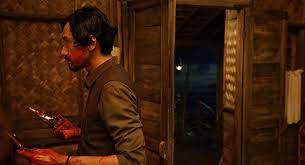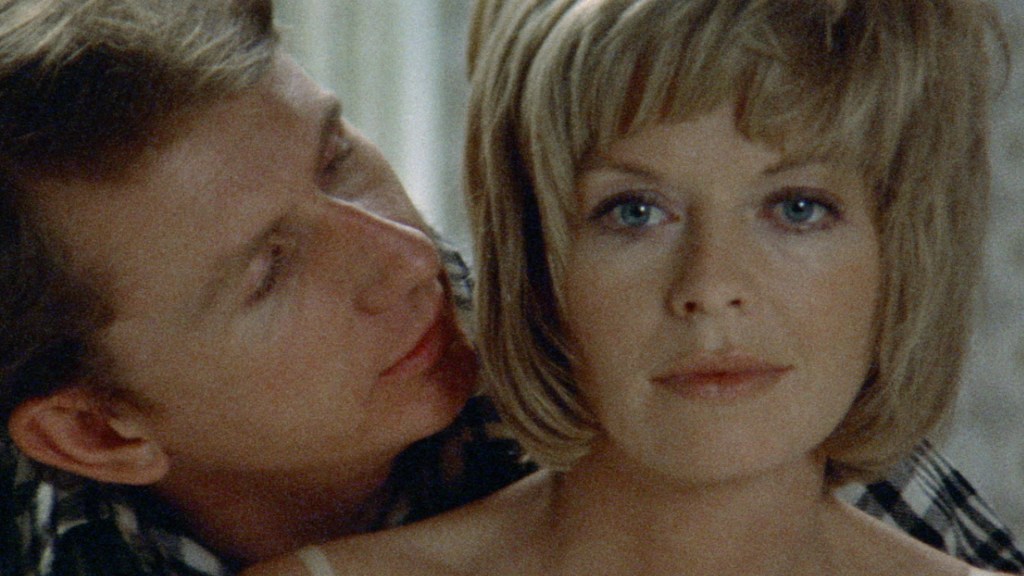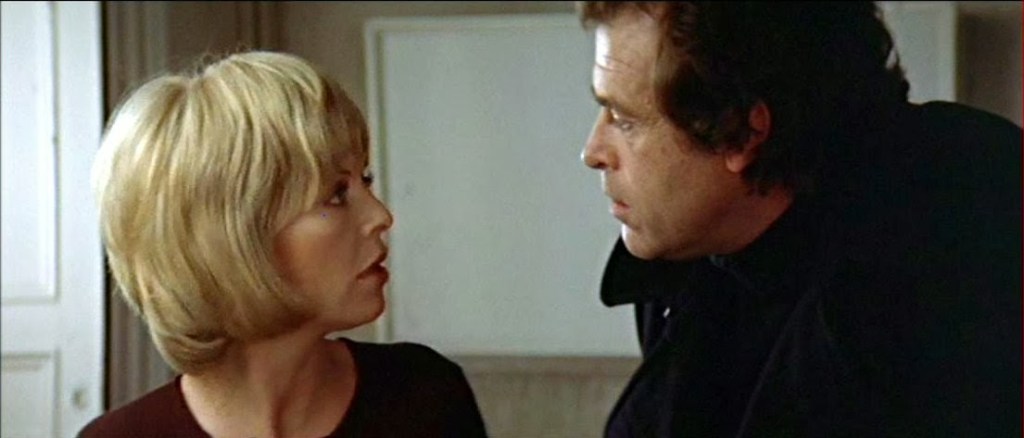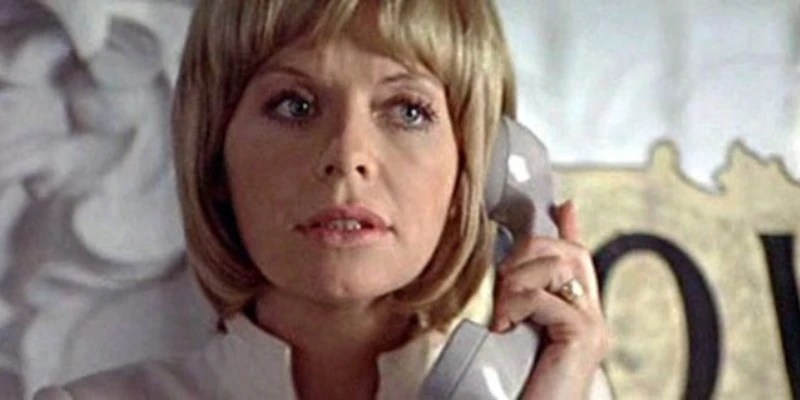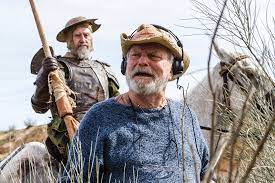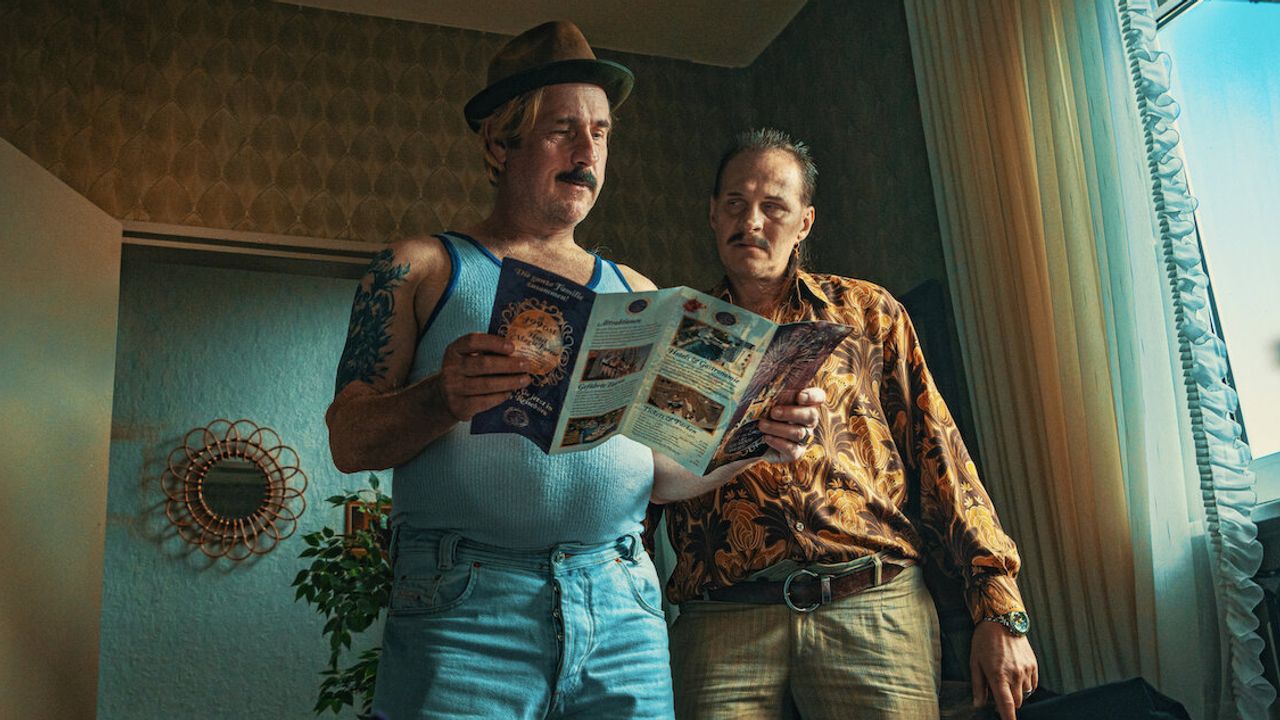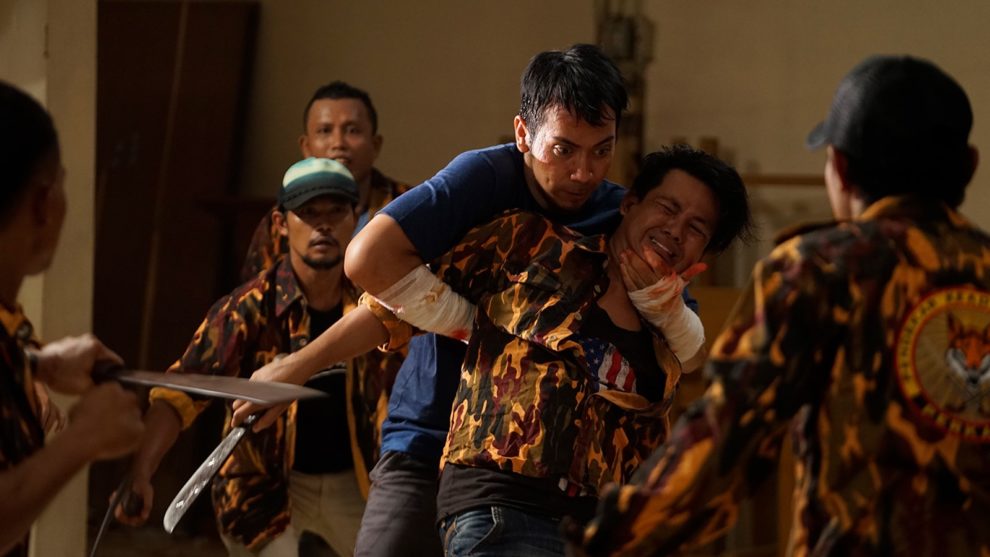
Movie preview: Park chan-wook’s “Parasite” follow up, “Decision to Leave”

A sinister, seductive thriller, this one opens in the US Oct. 14.

Posted in Reviews, previews, profiles and movie news | Comments Off on Movie preview: Park chan-wook’s “Parasite” follow up, “Decision to Leave”

Will John le Carré  fans ever get our “Tinker Tailor” sequel, “Smiley’s People?”

As some John le Carré  fanatic has uploaded “Smiley’s People” to Youtube (Does Paramount still own this series?), I’ve allowed myself the luxury of revisiting it for the first time since it aired on British and US TV in 1982.

This mini-series, based on a le Carré novel that served as a sequel to “Tinker Tailor Soldier Spy,” was the last great leading man role of Sir Alec Guinness, and makes a grand showcase for one of Britain’s most revered actors. Flush with “Star Wars” money, he’d taken on ensemble work in the British TV “Tinker Tailor” (1979) with the promise of an even bigger showcase to come with the sequel.

“Smiley’s People” turned into an acting master class, and the gold standard for “real” espionage thrillers, films or TV series, to follow. From its opening gambit to the “Bridge of Spies” finale, this is as good as spy thrillers get.

As buttoned-down, retired from the service (“The Circus,” as the characters called British Intelligence, MI6) introvert George Smiley, Guinness impresses and holds our attention and interest for six episodes, some five hours of TV performance.

Smiley is patient and guarded, attentive and quiet — keeping his cards to himself. He is conscious of blending in, commanding when need be, but plainly a weak older man who needs to avoid putting himself in peril or overplaying his hand. He is class conscious above his station, demanding and never once saying “Thank you” to a former contact, subordinate, hireling or waiter.

Ditched by a faithless wife who took up with a Soviet mole in his office, he should be shamed and he lets us see how hard it is to keep his poker face when former colleagues drop her name. Which they do, even though they summon him out of retirement when an old contact, an Eastern European expat (Curd Jürgens) asks for him, and is promptly murdered on his way to a meeting.

Smiley must figure out what his long-retired network of aged cold warriors have stumbled into, and why it was worth it for his longtime nemesis, the Soviet spy master Karla, to kill them off to cover his tracks.

When “Tinker Tailor” was filmed and became an Oscar-nominated hit in 2011, everyone, including star Gary Oldman, assumed that a sequel would be forthcoming. But even though the project is still listed as “in development,” there doesn’t seem to be any great impetus to making it.

“Tinker” was first a terrific TV showcase for some of the best British character actors of their era — Guinness, Ian Bannen, Beryl Reid, Ian Richardson, Alexander Knox. The same could be said of the film version, which featured Oldman and Oscar winner Colin Firth and Toby Jones, Ciaran Hinds, Benedict Cumberbatch and Mark Strong.

“Smiley’s People” was also a veritable embarrassment of riches in that regard — with Guinness, the great German actor Jürgens, Eileen Atkins, Michael Byrne, Michael Lonsdale, Bill Paterson, Michael Gough (future “Alfred the Butler”) and relative newcomers Patrick Stewart and Alan Rickman turn up in single scene roles.

As no espionage picture or series of the era would be complete without him,
As former spy Otto, Vladek Sheybal has a curiously small role (basically as a corpse). His inclusion gives this series THREE Bond villains.

Could this be the reason “Smiley’s” hasn’t been adapted? The only other holdover from the other novel/series and film is Smiley’s former subordinate Peter Guillam (Michael Byrne on TV), played by Cumberbatch in the “Tinker” movie, a superstar now, and far pricier than Oscar winner Oldman.

David Dencik, who plays the Eastern European British agent Toby Esterhase, would probably love for this sequel to happen. Toby is a key and colorful centerpiece to “Smiley’s People.” And there’s a great part for anyone taking the Lonsdale role, that of a compromised and interrogated Russian.

Lonsdale, Jurgens and Sheybal are your three Bond villains, BTW.

Another issue is that telling any Cold War story outside of the Bond context doesn’t readily lend itself to diversity in representation. The racist, classist Britain of the ’60s, ’70s and ’80s can’t have had many gentleman spies from racial minorities. The film of “Tinker Tailor” underscores that. While that might be the true history, or the whitewashed version, ignoring a huge chunk of the potential viewing public plays into marketing and limits such films’ viability.

James Bond got around this with his usual panache. The Bond pictures often had African American, Latin and Asian characters in beefy support roles, and the New Britain was brilliantly represented in the even more diverse Daniel Craig Bond films.

But one has to figure the biggest barrier to putting “Smiley” on the screen is the novel itself. The TV version has a nice autumnal gloom about it, but was almost written with pedestrian “TV” filmmaking in mind. As related on the series’ IMDb page, British radio hosts would go on air and joke about “What the hell” was actually going on in the series after each cryptic installment,  tickling le Carré, who always went for subtle.

The story starts slow and slows down some more before the pieces start popping into place and the trap is set.

This is why I prefer movies to long-form TV or streaming series. A lot of chaff could be whacked out of this for clarity and pacing purposes. There is a 100-125 minute movie in this spy yarn. You just have to be willing to cast familiar faces to help the viewer keep up and willing to whack out some of the texture as you speed things up.

Smiley goes looking for the elusive Otto in a derelict German marina and homeless encampment. The patience of that scene has stuck with me since I first saw it — lots of questions and menacing evasions — before Smiley finally gets to see his man. It is slow enough to savor, but easily twice as long as it needs to be.

With the passage of time, the momentum for doing a big screen version of “Smiley” may be gone. Paramount co-produced the TV series, but Focus/Universal did the big screen “Tinker” and has the rights, although perhaps they’ve lapsed. The author le Carré has died in the interim, and the multiplex universe is so changed that maybe streaming is a safer bet now.

But with Bond in between Bonds and Bourne out to pasture and the Russians back to being history’s villains, I dare say there’s an appetite for this sort of story. Heaven knows I want to see it, and before Oldman’s too old to play Smiley and before Cumberbatch reaches his rich, fat and happy “I’m cutting back” years.

And if not, there’s still the original series, a slowly unfolding puzzle and espionage touchstone as far as great screen acting is concerned.

Posted in Reviews, previews, profiles and movie news | Comments Off on Will John le Carré  fans ever get our “Tinker Tailor” sequel, “Smiley’s People?”

Movie Review: Morose McElhone’s Makeover on Malta — “Carmen”

Plum parts for film actresses over 50 have always been in criminally short supply, and roles “with legs,” as Susan Sarandon likes to say — with romantic, sexual subtexts — are even rarer.

So the great British beauty Natascha McElhone makes the most of such a unicorn in “Carmen,” a sad-eyed last chance romance set on the scenic isle of Malta. In the title role, she impresses and sometimes dazzles as a downcast local figure of fun, the village priest’s sister who “never smiles and never speaks,” so the locals gossip.

Always dressed in black, always seated at the back of mass, she has been her older brother’s housekeeper since he joined the priesthood. But what’s she to do when he dies?

God never abandons the faithful, the smug bishop tells her, taking care to not use the word “church.” She’s got to move out for the new priest — returning to Malta from abroad — and the new priest’s caretaker sister.

“In prayer you can find your way.”

With no family, no money, no friends and no home, Carmen wanders the streets with her lone suitcase in silence, utterly at a loss. She overhears lover’s quarrels and flashes back to some romantic trauma from her past. She sees the local hooker bow and accept her affectionate catcalls, notes how much the village policeman naps. And she ‘s in the shadows when the new priest’s sister, a local (Michela Farrugia) moves into the rectory, and fights with her lover (in Maltese and English), who wants to take her away from all this.

The lover, the church bellringer, breaks the clapper on the bell as he storms off. And Rita, like Carmen, finds herself alone.

But there are places within the church to hide. A purloined set of keys means she can take a nap in the confessional. When locals duck in, thinking the new priest has arrived, Carmen starts hearing the women’s complaints, darkens her voice (not much), and doles out homespun, blunt advice.

Your dead weight husband won’t leave? “Cook him the same meal, morning noon and night.” The offering box starts to fill up as word gets around.

Carmen may have found her calling. But surely Rita’s going to catch on to this. Eventually.

Maltese actress turned director Valerie Buhagiar (“The Anniversary”) does three things with great elan here. She showcases the beauty of her rocky island home. She gives her leading lady free rein. And she trips up expectations time after time in this quirky 1980s period piece.

A street vendor selling capers from his donkey cart flirts with quiet Carmen with Zorba-like enthusiasm.

“A person can get sick keeping their love to themselves!”

That’s not what the movie’s about, him courting her and leading her back to life. We never see him again.

The whole fake priest in the confessional bit is cute, but more a means to an end. The backstory of a lost love/forbidden love dating from “the war” has more import, but isn’t really the meat of the movie either.

Buhagiar keeps things on the cusp of fantasy as Carmen’s distant past and recent past and simple survival (we wonder how she eats) aren’t fussed over. She just is, and she’s overdue for a makeover. Maybe that cute younger pawn shop operator (Steven Love) in the capital city of Valetta can help.

McElhone mopes in the early scenes and shimmers through the later ones, even as she suffers. “Carmen” becomes a veritable Maltese fashion shoot at times.

But shortcuts and missing details aside, it’s never less than charming and a grand showcase for a busy and beautiful actress whose best roles are on TV (“Hotel Portofino,” “Designated Survivor”) these days.

Rating: unrated

Cast: Natascha McElhone, Michela Farrugia, Steven Love

Credits: Scripted and directed by Valerie Buhagiar. A Good Deeds Entertainment release.

Running time: 1:28

Posted in Reviews, previews, profiles and movie news | Comments Off on Movie Review: Morose McElhone’s Makeover on Malta — “Carmen”

Movie Preview: “Please Baby Please,” a lurid Queer Period Noir with Andrea and Demi

This one promises to stand out, a 1950s “Sin City” noir about gangs and gay men and Andrea Riseborough and Demi Moore as a couple of tough broads.

Oct. 28.

Posted in Reviews, previews, profiles and movie news | Comments Off on Movie Preview: “Please Baby Please,” a lurid Queer Period Noir with Andrea and Demi

Documentary Preview: “The Last Band on Stage,” Chicago

Musical road warriors Chicago, who have toured for half a century and faced their first enforced year not touring thanks to COVID, this one hits select cinemas Sept. 30.

They used to travel with The Beach Boys, who’ve been around in some form even longer.

Posted in Reviews, previews, profiles and movie news | Comments Off on Documentary Preview: “The Last Band on Stage,” Chicago

Movie Preview: Lil Rel and Josh Berner are “Bromates”

Snoop Dogg produced this Oct. 7 buddy comedy. Inhaling might help.

Posted in Reviews, previews, profiles and movie news | Comments Off on Movie Preview: Lil Rel and Josh Berner are “Bromates”

Movie Review: Neapolitan mobster lives through a day as “The Mayor of Rione Sanita”

Remember that sequence of scenes in “The Godfather” in which Don Corleone receives visitors who come to ask for favors, make complaints and request justice?

That’s basically the plot for Eduardo Filippo’s play, “Il sindaco del Rione Sanità,” “The Mayor of Rione Sanità.” Director Mario Martone (“The King of Laughter”) may take us to a club, a street shooting and out of doors for more action in the third act. But the film he serves up is a maddeningly talky morning, noon and early evening of a Neapolitan mobster — Antonio Barracano — granting audiences to assorted petitioners on his turf and dealing with the sorts of nonsense a mob boss must contend with because only he can dispense justice in this lawless underworld.

Francesco Di Leva plays Don Antonio, a charismatic and fit 40something who has such a hard time sleeping that his underlings fear disturbing him with whatever goes on in the wee hours in his world or in his Vesuvius villa in the hills overlooking Naples.

Two of his young toughs (Ralph P., Armando De Giulio) joke around about who’s stepping on whose toes, and laughingly pull their pistols in the alleys outside of the club where they grinned and played macho. Joking or not, one dude gets shot, and the villa’s doctor (Roberto De Francesco) has to stitch somebody up.

The don’s wife (Daniela Ioia) comes home late, and the don’s mastiffs attack her and maul her. Somebody’ll have to break the news to the boss that his beloved dogs sent his wife to the emergency room.

The doctor is held in virtual involuntary servitude and wants to travel and visit his brother in America. The don may smile and joke around about who he will ask to “greet” him (in Italian with English subtitles) in the U.S. But that’s a threat. And that trip? No dice.

This man with a debt, that one with a beef with his rich baker father, approach. A young pregnant woman is here with her boyfriend, another petitioner, all of them wanting the favor of/a favor from Don Antonio, whom one and all know is a “sincere man,” a reasonable man, if not someone to be trifled with.

The fact that one hand is bandaged up speaks volumes. The way the don wears his hoodie and does sit-ups — boxer-style — lets us know he’s tough. And he’s smart. The two pot-shot taking underlings get a good beatdown — with his good hand — when they come to beg his forgiveness.

“He has his own take on the law,” his wife admits as the doctor tries to get her on board the idea of sending those dogs into quarantine.

The little bits of action are well-handled. The setting is less striking than the dimly lit office of Don Corleone, but interesting in a “This is how the Naples mob lives” way. But the movie’s theatrical origins — stagey and talk-talk-talkie– weigh it down and render it too boring to justify an investment of two hours.

“Basta,” as the Italians say. Enough is enough. Give us some ACTION.

Rating: unrated, violence, profanity

Cast: Francesco Di Leva, Daniela Ioia, Roberto De Francesco, Ralph P., Armando De Giulio and Francesco Di Leva.

Credits: Directed by Mario Martone, scripted by Mario Martone and Ippolita Di Majo, based on the play by Eduardo De Filippo. A Film Movement release.

Running time: 1:57

Posted in Reviews, previews, profiles and movie news | Comments Off on Movie Review: Neapolitan mobster lives through a day as “The Mayor of Rione Sanita”

Movie Review: “Acid Test” is totally Base-ic

The tamest movie ever made about dabbling in LSD and Riot Grrrl culture has to be “Acid Test,” a non-prescription sleep aid of a movie.

Here’s a PG rated treatment of an R-rated subject.

It’s about a high school senior rebelling against her conservative, Harvard alum dad by being hesitant to become a “legacy” applicant to his alma mater. Nothing says “Viva la REVOLUCION!” like attacking the patriarchy on your Harvard admission essay.

 Juliana Destefano is Jennifer, wearing the Harvard hoodie and all-in on her father’s (Brian Thornton) dream of her following him into the Ivy League and all the doors it could open for her. We meet her at her pre-admission meeting with a counselor, follow her and her kid brother to the movies with Dad and pick up on the dynamic of her home life. Mom (Mia Ruiz) is Latina, and that’s another leg-up for getting into Harvard.

It’s 1992 in Texas, and her senior year begins with civics class focusing on the election — lots of Clinton, Bush and Perot news coverage in montages — and “Hamlet.” Does Dad, who doesn’t seem all that unreasonable at first, know what he’s doing when he quotes “To thine own self be true” to Jennifer?

It turns out she’s not sure of her life direction. Her BFF Drea (Mai Le) is headed to UT-Austin. That gives Jennifer her first second thoughts. Then they duck out to catch a live show and are introduced to estrogen-powered punk rock and the Riot Grrrrl Manifesto.

“What is a girl?” Jennifer wonders. Here, in Bikini Kill pamphlet form, is an answer.

“BECAUSE I believe with my wholeheartmindbody that girls constitute a revolutionary soul force that can, and will change the world for real.”

Next thing we know “straight edge” Drea is debating her supposedly straight edge pal’s decision to accept a tab of acid from the flirtatious hunk Owen (Reece Everett Ryan). Everything that follows — the shift in Jennifer’s music tastes, the decision to lop off her hair, the “SLUT” magic marker tattoos she and Drea don to join the Riot Grrrl scene, sex with Owen — flies in the face of Drea’s seemingly sound advice before that first tab is dropped.

“Rich kids are the worst!”

The club scenes, capturing what I assume are real bands in real performance, are shot and edited so flatly that you’d swear we were seeing a Three Tenors show.

The acid trips are no-budget DIY dull, the “romance” isn’t remotely romantic and the character’s story arc isn’t A-to-Z, passing through a hell of self-discovery. It’s A to B. Yawn.

Writer-director Jennifer Waldo grew up in DC and went to USC, so whatever “memories” she was tapping into for this just-short-of-“true” story (per the opening credits) are seriously mild-mannered.

She must’ve forgotten that “acid” added or not, “Riot Grrrl” is more than a haircut and a bit of magic markering.

Rating: unrated, drug content, profanity

Cast: Juliana Destefano, Brian Thornton, Mia Ruiz, Reece Everett Ryan and Mai Le.

Credits: Scripted and directed by Jennifer Waldo. A Giant Pictures release.

Running time: 1:43

Posted in Reviews, previews, profiles and movie news | Comments Off on Movie Review: “Acid Test” is totally Base-ic

Movie Preview: A Senegalese “Nanny” faces trauma and “presence” in the New York family that hires her

A thriller that turns horrific?

Nov. 23 in theaters, Dec. 16 streaming.

Posted in Reviews, previews, profiles and movie news | Comments Off on Movie Preview: A Senegalese “Nanny” faces trauma and “presence” in the New York family that hires her

Movie Preview: Orson Welles and New York’s best African Americans actors take on “The Scottish Tragedy” — “Voodoo MacBeth”

A small distributor backs a little known cast that takes on the sensation of 1930s Broadway, Welles’ Haitian set “Voodoo Macbeth.”

Oct. 21.

Posted in Reviews, previews, profiles and movie news | Comments Off on Movie Preview: Orson Welles and New York’s best African Americans actors take on “The Scottish Tragedy” — “Voodoo MacBeth”