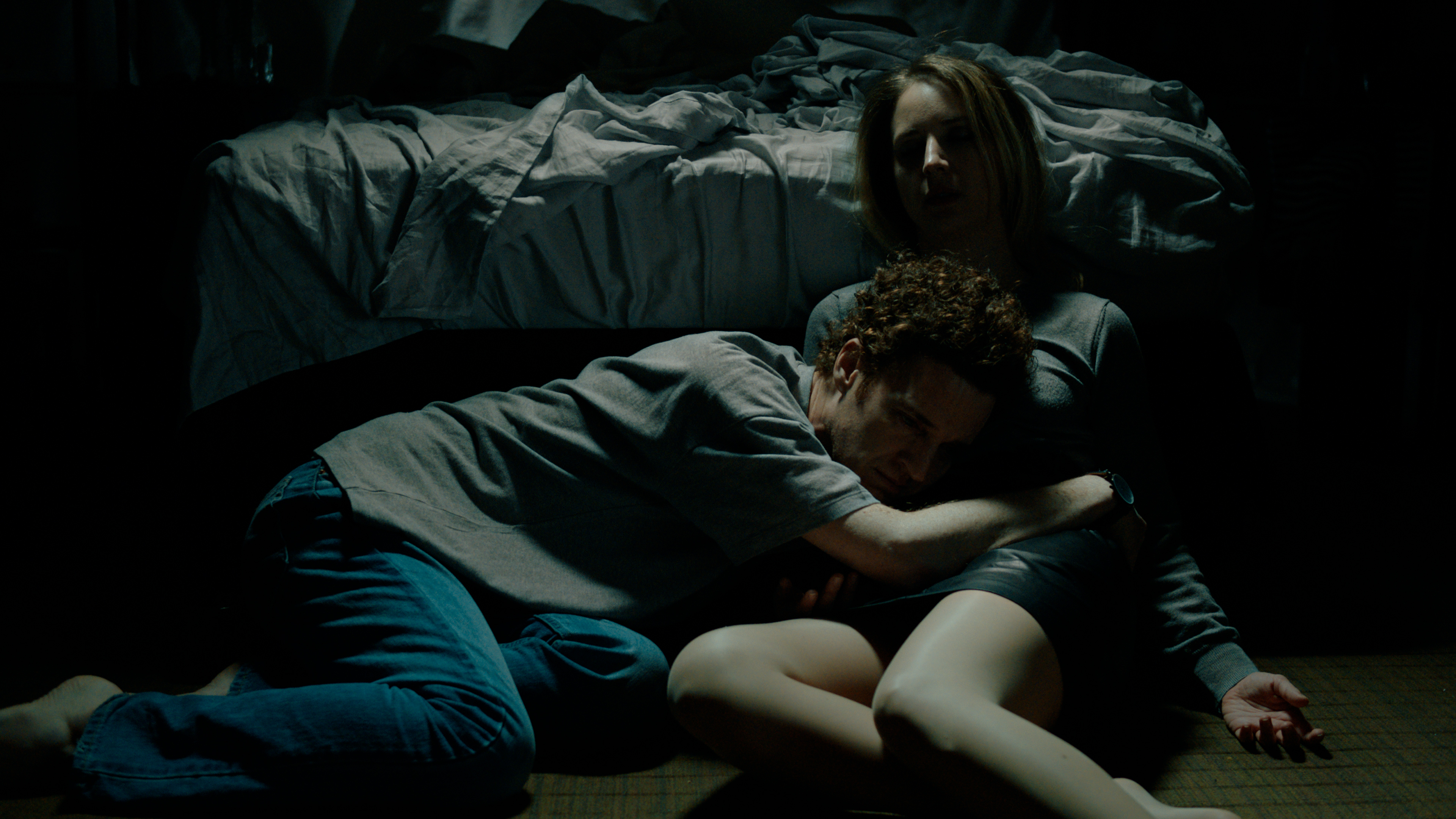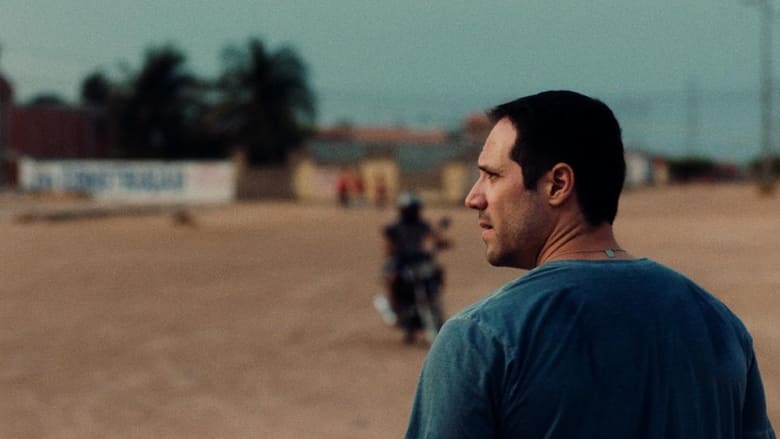
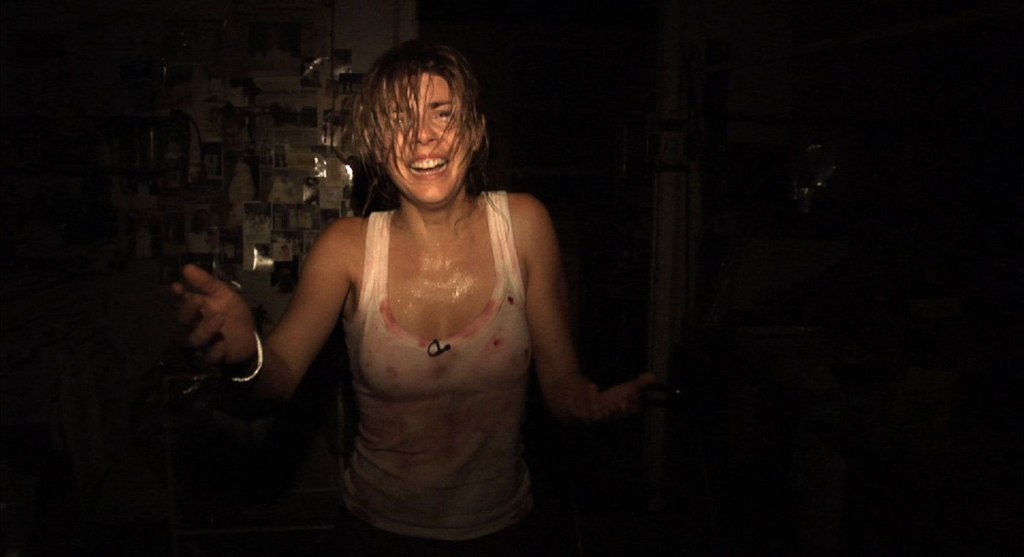

Documentary Review: “The Found Footage Phenomenon”

You think you know the “original” “found footage film?” You’re wrong if you think that was “The Blair Witch Project,” the breakout blockbuster in the genre, still probably the most profitable film ever made.

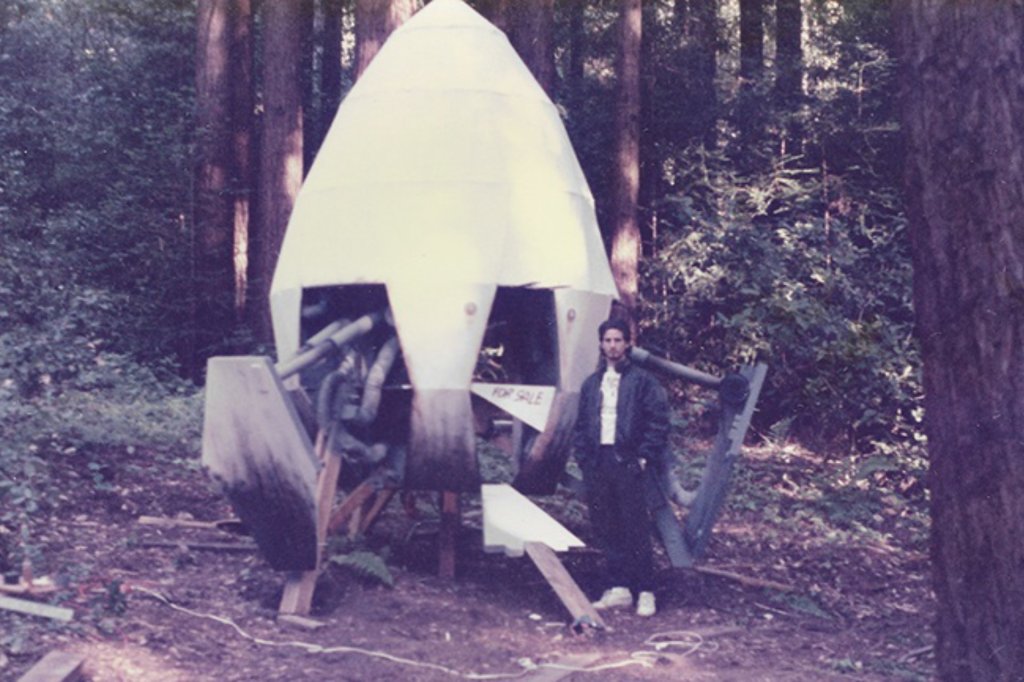
But no, that “first” would be “The McPherson Tape,” a micro-budget and for years little-seen alien abduction thriller shot, VHS “home movie style” and turned into movie back in 1989.

In the documentary “The Found Footage Phenomenon,” now on Shudder, we learn that fact, and that the term “found footage” wasn’t coined until years after “Blair Witch,” which came out ten years after “McPherson.” “Blair Witch” co-director Eduardo Sanchez mentions that before the label, “we just called it ‘POV cinema,’ ‘first person cinema'” and the like, before horror’s version of the “mockumentary” got a label all its own.

A lot of filmmakers and the occasional author/expert on the phenomenon that gave us “Paranormal Activity” and its many sequels and imitators show up here to talk about “the camera as another character” and of the “fake” genre of frights “supposedly shot in the real world,” and the communal “lie that we all share in while we watch” these films.

“Diary of the Living Dead” is mentioned, in which George A. Romero tried to make his mark as one of the godfathers of the genre (there are “first person” sequences in his “Night of the Living Dead”), and a lot of the pre-history of this “faddish” phenomenon is laid out, placing the films within the horror tradition of “Dracula” and Steven King’s “Carrie,” literary “first person” horror using letters/reports/court filings about supernatural things that “really happened” as a literary device.

The “snuff cinema” of “Mondo Cane” and grisly imitations like “Cannibal Holocaust” led to the BBC “sanctioned” (a “presenter” starred in it) “Ghostwatch” and a camera crew capturing (fake) “first person murders” of “Man Bites Dog.” They all owe something to bits of 1960’s Michael Powell shocker “Peeping Tom,” which is folded into this documentary that becomes a blur of talking heads and a drone of repeated points hammered home, a bit of back and forth among filmmakers about who-did-what-first in this or that corner of horror and leading to too-short snippets of the actual films.

“Found Footage” is interesting in so far as it sets certain records straight, but overloading it with interviews means there’s a lot of talk about how the confluence of video-then-phone cameras capturing shocking bits of post-9/11 reality and the spike in screen violence thanks to late ’60s/early ’70s coverage of The Vietnam War. But devoting any time here to the tenuous connection the genre might have with snuff films seems a serious case of mission creep. Most of these films aren’t really “shockumentaries,” even if they’re a somewhat dubiously legitimate antecedent to their existence.

Precious little is done with how such films achieve their effects, and how those effects mimic “home movies” and Youtube “reality” and heighten their impact with fans.

What co-directors Sarah Appleton and Phillip Escott have filmed is a collection of testimonials making their case, a lot of people talking up essential, historic entries in the genre, and a staggering amount of repetitious visual clutter and chatter.

Cut one third of the interviews out, let Alioto, Sanchez and a few others give detailed accounts of what they were trying to achieve and why, and show lots of footage of the filmmakers doing what they set out to do and experts commenting on the context of the times, the tech, etc., and you’d have a more watchable, more focused film.

Rating: unrated, horror violence, some profanity

Cast: Interviews with Eduardo Sanchez, Patrick Brice, Alexandra Heller-Nicholas, Dean Alioto, Shellie McMurdo, Aislin Clarke, Lance Weiler, Stephen Volk, many others.

Credits: Scripted and directed by Sarah Appleton and Phillip Escott. A Shudder release.

Running time: 1:41
Posted in Reviews, previews, profiles and movie news | Comments Off on Documentary Review: “The Found Footage Phenomenon”

Movie Preview: Netflix gets in the Queen Latifah business with a road-trip thriller — “End of the Road”

Chris Bridges plays her brother, a family “homeless” and on their way to Houston when they cross paths with a drug deal gone wrong.

Interestingly, Chris isn’t the only guy named Bridges in the trailer. Jeff’s brother Beau is a sheriff.

Sept. 9.

Posted in Reviews, previews, profiles and movie news | Comments Off on Movie Preview: Netflix gets in the Queen Latifah business with a road-trip thriller — “End of the Road”

Movie Review: Canadians stumble into mayhem on a “Camping Trip”

My stars, those Fuica brothers love their slo-mo. And 360 degree pans.

And illogical plotting. And really bad dialogue.

“Is…he dead?” “What does it LOOK like, genius?”

And they’re learning to love self-distributing their handiwork. Apparently.

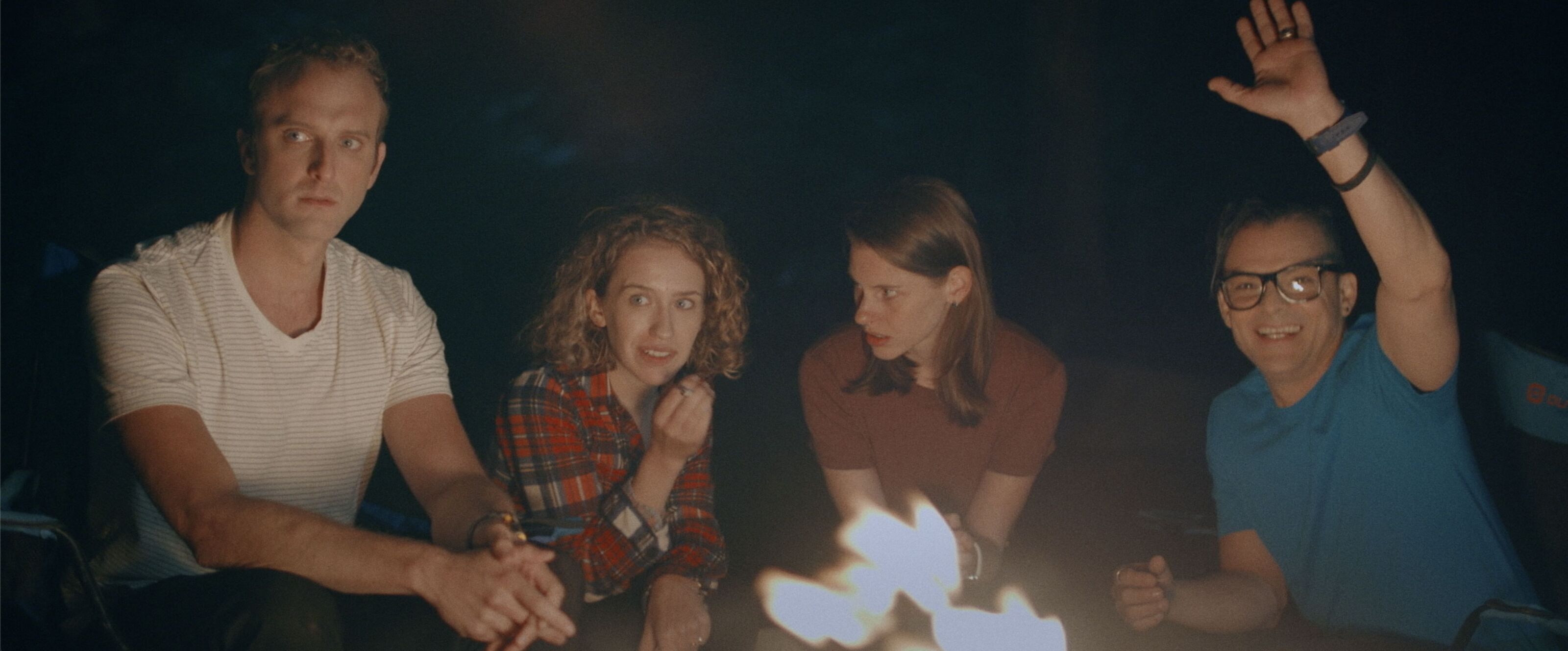
“Camping Trip” is a bloody-minded and hilariously-illogical thriller about two swinger couples — those darned Canadians, always having more fun than the rest of us — who stumble across a pile of (Canadian) cash while on a COVID camping trip in some remote camping/canoeing friendly park.

Boisterous, impulsive Ace (Alex Gravenstein) and French (or something) accented Coco (Hannah Forest Briand) are hooking up — mid-lockdown — with partying suburbanites Polly (Caitlin Cameron), she of the Aussie (I think) accent, and Enzo, played by writer and co-director Leonardo Fuica, a Chilean-Canadian trying to sound Italian.

Once in the woods, they paddle, practice archery and “swing” until they stumble across a body, because some vaccine researcher (Ben Pelletier) has chosen these woods as the perfect place to make a buy from a couple of thugs (Jonathan Vanderzon and Michael D’Amico).

That meeting place is as illogical as the thugs killing the “doc” without getting paid, as illogical as the cover story burly Orek (D’Amico) feeds the once-happy campers about “staying the night” with them, as absurd and ugly as everything that happens next.

The Fuicas have been making movies for years (“La Run” wasn’t their first, and it came out in 2011) and yet much of what we see here has a new-to-film-school “Play with jump-cut montages and dissolve montages, let’s-see-if-we-can-stage-a-360-degree-pan and how MUCH slo-mo is too much?” naivete.

It’s all as “off” as the Fire Island hairdresser haircut “swinger” Enzo rocks and the weird, seemingly put-on accents of almost everybody.

This “Camping Trip” is the oddest blend of “Look what we’ve learned now” showing off and rank filmmaking incompetence I’ve seen in ages.

Rating: unrated, graphic violence, sex, nudity

Cast: Leonardo Fuica, Caitlin Cameron, Alex Gravenstein, Hannah Forest Briand, Ben Pelletier, Jonathan Vanderzon and Michael D’Amico.

Credits: Directed by Demian Fuica and Leonardo Fuica, scripted by Leonardo Fuica. A Fuica Films release.

Running time: 1:46

Posted in Reviews, previews, profiles and movie news | Comments Off on Movie Review: Canadians stumble into mayhem on a “Camping Trip”

Movie Preview: She’s older, and even creepier and coming for you FRIDAY — “Orphan: First Kill”

Good to see Julia Stiles again, love to see more of her. Isabelle Fuhrman still brings the scary.

In theaters and streaming Friday.

Posted in Reviews, previews, profiles and movie news | Comments Off on Movie Preview: She’s older, and even creepier and coming for you FRIDAY — “Orphan: First Kill”

Movie Preview: Josh Duhamel is a “Bandit” taking tips and loans from Mel Gibson in this heist picture

Minot, North Dakota’s finest — Josh Duhamel — is the master of disguise, a Michigan “Bandit” who robbed every bank in Canada, more or less. Elisha Cuthbert’s the woman who has his attention, Mel G is the old crook full of backing cash and sage advice.

Not sure of the release date. Quiver has it. Maybe now?

Posted in Reviews, previews, profiles and movie news | Comments Off on Movie Preview: Josh Duhamel is a “Bandit” taking tips and loans from Mel Gibson in this heist picture

Movie Review: The Shifting Power Dynamics of a hook-up on “Zero Avenue”

As “pick-ups” go, it’s odd and “classic New York” at the same time.

He’s spotted her entering a cafe. He follows her in and starts with a spiel — “first time in New York,” “left my bag on the train,” etc.

She’s skeptical, on her guard, and sarcastic.

“Where are you from, 1985?“

He calls her “beautiful,” backpedals into “not objectifying you.” Off-putting or charming? It’s hard to decide.

But something tells her to lead him where he needs to go. When that turns out to be upstairs, to her apartment in a hotel, we think we’ve got it.

Dominatrix? Sex worker? Role playing?

“What’s your name?” “I haven’t DECIDED yet.”

And snce the opening titles of “Avenue Zero” have faintly sinister incantations about saffron in them, we sense that something supernatural is coming. Vampires? Demons?

Rarely has a thriller started with more intriguing power dynamics — a shifting “Who’s playing whom?” puzzle — only to utterly abandon its mystique as it gives up its secrets.

An economical indie — basically a two-hander with a single set, and fantasy flashbacks that look more stage theatrical than soundstage-set — this Daniel Frei film, scripted by co-star Braeson Herold, is thin on explaining its characters, heavy on cryptic monologues and agrammatical declarations.

“Saffron cleanses the soul from impurities!” Oh? And it’s “of” not “from.”

The leads — Herold plays Joshua, Allison Siko is “Veronica,” the sex worker — click well enough. But her professional caution flies out the door the minute she stops counting red flags about this “John” whose response to “birthday” sex is bleeding out of his eyes. There’s no buying in to her suddenly discovering she “cares.”

The third act is nonsense contrived to deliver the Big Reveal, which is neither big nor revealing.

And all this talk about the magical/dangerous powers of saffron had me craving Paella Valenciana.

Rating: unrated, violence, sexual situations, blood

Cast: Braeson Herold, Allison Siko

Credits: Directed by Daniel Frei, scripted by Braeson Herold. A Gravitas Ventures release.

Running time: 1:18

Posted in Reviews, previews, profiles and movie news | Comments Off on Movie Review: The Shifting Power Dynamics of a hook-up on “Zero Avenue”

Book Review: Viola Davis describes her journey, “Finding Me”

Viola Davis was just eight years old when she saw the TV movie that changed her life.

The landmark film, “The Autobiography of Miss Jane Pittman” was broadcast for the first time in 1974. And even though “our television set” “did not work,” her family had another one that did, sitting on top of it. It was one of those somewhat rare nights when the Davis family’s electricity was on at 128 Washington St. in Central Falls, Rhode Island.

You want an object lesson in why “representation” matters in film, entertainment and other media?

“A woman who looked just like MaMama (how her siblings addressed their mother) came on television…and something magical happened.”

Davis relates that epiphany right in the middle of the horrific opening chapters of “Finding Me,” her new memoir about growing up painfully poor and not just Black, but “dark skinned” Black, not just abused but molested, neglected and ashamed of all of it, and herself.

Whatever glories were to follow, a child who — as she repeatedly reminds us — “didn’t have the words” for what she was facing or the willingness to share them all through a wrenchingly wretched childhood, had just gotten her first taste of who and what she wanted to be.

Tony, Oscar and Emmy trophies — “Doubt, “The Help,” “Fences,” “Ma Rainey’s Black Bottom,” and TV’s “How to Get Away with Murder” and “The First Lady” — widely recognized as one of the finest actresses of her generation, all spun out of a movie she saw on TV.

As she notes in her caption to a photo of her and “Pittman” star Cicely Tyson on the set of Davis’ own TV show, “How to Get Away with Murder” in “Finding Me,” “I secretly used every opportunity to hold and kiss her” every time they worked together.

“Finding Me” is a brutally frank memoir of the “Everyone’s the Hero of Their Own Story” school that Oprah Winfrey popularized. Davis describes the vicious beatings her racehorse-groom father gave to her mother, herself and her siblings, her traumatized and neglectful first-baby-at-15 mother and the PTSD of sexual abuse in a small town in an era when perverts were half-tolerated as town “characters,” who touched little girls, and worse.

“Acting up” and acting out at school, often unwashed because they hadn’t been able to pay their water bill, smelling of urine from years of bedwetting and having no access to soap, a shower or the ability to wash her clothes, it’s a miracle this child didn’t grow up and remain a headcase for the ages.

An Upward Bound acting workshop one summer in her early teens helped Davis “feel seen” and find her tribe, people who accepted her and shared their “everybody’s going through something” stories in this taxpayer-funded outreach program that so many credit with saving their futures.

Davis discovered she wasn’t “ugly” after growing up in a place where the N-word was hurled her family’s way on a daily basis. She started to shed her “shame” and come into the light.

But the “shame” and self-image issues she keeps coming back to in “Finding Me” still weigh on her and drive her art. She was years past college and Juilliard when I first interviewed Davis, just as her breakout movie — the film adaptation of “Doubt” — was rolling out. And what I remember about that chat was her obsession about was how “ugly” her signature crying scene was in that movie, “boogers and all,” as she jokingly put it.

Reading this memoir — which will make you wince or even grimace more than once — seems to explain that, the lifelong test that brought her to that moment, the shame that any less than flattering screen moment might instill, all those decades later.

It’s a terrific book whose brutal candor in description, interior terrors and unfiltered language puts a great artist in therapy, confessing her truth to the reader. And if you’re a little rattled by its first two words — profanities that she’d mastered at eight years old — that’s kind of the idea.

“Finding Me,” by Viola Davis. HarperOne Books, 291 pages, $28.99.

Posted in Reviews, previews, profiles and movie news | Comments Off on Book Review: Viola Davis describes her journey, “Finding Me”

Movie Review: A Quaint and Queer Romance from Brazil — “Private Desert”

The most remarkable thing about “Private Desert,” about a cop discovering that the Internet crush he’s traveled 1400 kilometers to meet is transgender, is that cast and crew were able to get it made in the increasingly reactionary Brazil of today.

Director and co-writer Aly Muritiba’s melodrama is slow — 29 minute-long PROLOGUE slow — formulaic, dated and obvious considering “The Crying Game” opened 30 years ago north of the equator. But tender performances might reward those patient enough to sit through its scenic, formulaic and dramatically-limited longueurs.

Daniel (Antonio Saboia) is a cop under suspension when we meet him. Muscular and bored, he’s stuck taking care of his mute and aged father, whom he calls “Sergeant” because he was in the force before him. Daniel’s trying to show remorse, trying to keep his sanity and desperate to hear from Sara, a lover he’s apparently met online.

If she’s not picking up the phone, what hope do his texts and then sexts have?

When the reasons for his suspension close in around him, he imposes on his kid sister (Cynthia Senek) to care for their father and hits the road, motoring from Curitaba in the south the coast to Sobradinho in the north. That’s where Sara lives.

Muritiba’s script is intent on keeping two secrets, at least one of which anybody with a pulse will figure out. The first time distressed, lovelorn cop Daniel reaches Sara’s voice mail, most viewers will hear her voice and wonder, “Has he sized up Sara’s Adam’s Apple?”

The other “secret” is why Daniel has been suspended from the force, the nature of the crime that is receiving media coverage and the blunt threat of a “trial,” or so his superiors tell him. Has Sara heard of this suspension? Is that why she’s so hard to find?

As Daniel shows her photograph around town and even puts up fliers seeking her, we’re reminded that cops make the best stalkers. And then we start to see things from Sara’s point of view.

Sara (Pedro Fasanaro) lives with a disapproving grandma (Zezita Matos) and under the cagey protection of hairdresser BFF Fernando (Thomas Aquino). By day Sara is Robson, a very young man with bad skin and a job at a produce distribution warehouse. By night, the wig, heavy makeup, dress and Sara come out and she hits the club.

What’s going to happen when cross-country Romeo cop, on the run from his ugly problems, finds out? Will he even have the chance, if Sara’s grandma finds out first and consults her homophobic fundamentalist pastor?

The story Muritiba tells is naturally fresher and more of a novelty in Brazil. One can feel the film’s unstated political subtext, something verified by the fact that Brazil’s film industry selected this scenic and slight drama for Best International Feature consideration last Oscar season.

The thin story is adorned with that long prologue, which fleshes out Daniel’s situation and lets us guess-between-the-lines the nature of his offense, and then puts him on a striking cross-Brazil road trip.

Sara’s double life is far more interesting and produces the movie’s most poignant moment. It stands out because for a movie that promises passion and tension, there’s precious little of that, and the performances — plaintive though they are — don’t turn up the heat.

North American and European viewers can be forgiven for seeing this drawn-out if sometimes sexy melodrama as a tad quaint, right down to the tune that might become “their song” if these two can ever get it together, in or out of “the club.”

When a gay-friendly bar is playing Bonnie Tyler’s performance of Jim Steinman’s “Total Eclipse of the Heart,” it’s hard not to notice that most everything we see unfold was high stakes and “new” and just-then-losing-its-taboo here when back when that song first came out — in 1983.

Rating: unrated, sex, nudity

Cast: Antonio Saboia, Pedro Fasanaro, Cynthia Senek, Zezita Matos and Thomas Aquino.

Credits: Directed by Aly Muritiba, scripted by Henrique Dos Santos and Aly Muritiba. A Kino Lorber release.

Running time: 2:02

Posted in Reviews, previews, profiles and movie news | Comments Off on Movie Review: A Quaint and Queer Romance from Brazil — “Private Desert”

Movie Preview: Mississippi Burning and Not Learning — The murder of Emmet “Till”

A crime still in the news thanks to the malicious backwardness of one state.

Coming to theaters in October.

Posted in Reviews, previews, profiles and movie news | Comments Off on Movie Preview: Mississippi Burning and Not Learning — The murder of Emmet “Till”

Documentary Review: A Town’s Jewish Populace Erased, Preserved in “Three Minutes: A Lengthening”

The ancient town of Nasielsk still sits just over 30 miles north of Warsaw, Poland, its population roughly the same that it’s been for over a hundred years — just over 7400.

But a huge number of its citizens were hauled away in just two days of December of 1939, when Germans and German sympathizers rounded up the thousands of Jews there and shipped them off, the vast majority of them transported to their doom.

In 2009, Glenn Kurtz stumbled across a cracked, shrunken and decaying roll of film that his grandfather David shot there and left behind in his home in Palm Beach Gardens, Florida. In the summer of 1938, he’d just bought the Kodak movie camera, and David and his wife Lena, who’d emigrated to the United States from Poland and prospered in Brooklyn, returned to Europe for a “Grand Tour” — Paris, Amsterdam, Zurich, Warsaw — and the towns Lena and David grew up in.

Just 13 months later, Nazi Germany and Soviet Russia invaded and dissected Poland, beginning World War II in Europe. Warsaw and everywhere else Lena and David visited in Poland was forever changed, or in some cases, obliterated.

When grandson Glenn Kurtz started digging into the anonymous, unidentified vacation film, he eventually figured out where this three and a half minutes of footage was shot — his grandfather’s hometown, Nasielsk. Donating the film to the United States Holocaust Museum, where it was restored and posted online, Kurtz investigated and put out feelers, and slowly started piecing together some of what we see in those three and a half minutes or so — the trees, the Synagogue, a market, the Mezuzah boxes hanging next to each door in of the buildings in the square. After four years of digging and a few lucky tips, he wrote an acclaimed book about the lost world these grainy, faded images from the past preserved.

Dutch filmmaker Bianca Stigter uses that footage — and pretty much just that footage — for her fascinating forensic documentary about Kurtz’s research, “Three Minutes: A Lengthening.” Stigter parses the film as it unspools over and over again, a collection of often poorly-framed shots of streets, with lots of locals — many of them kids — smiling and crowding themselves into the frame. She pauses for freeze-frames and zooms in as Kurtz, never seen on camera, relates what he, the Holocaust Museum’s Steven Spielberg-backed preservationists and effects restoration specialists did to try and figure out what this store was, how that face could be rendered sharper.

A historian, a couple of survivors and children or grandchildren of survivors speak as the footage became known enough for word to get around and for faces to be identified. We hear about the button factory and the hierarchy of Jewish society there, symbolized by the sorts of caps boys from different classes wore.

And actress Helena Bonham Carter, in voice-over narration and performing the translated questions of the filmmaker, ponders the mystery, breaks down the chemistry of celluloid from that era and notes that reds still show up in the faded footage because “the color red fades the slowest.”

She muses about how unmoored we are when we can’t place where some piece of film is from, the context we reach for and the “absence” that footage like this preserves, doomed people with no idea of their fate, smiling in a place about to be forever changed, scarred by war and genocide.

Many faces remain unidentified, their families wiped-out, and the few survivors left are unable to recognize everyone. Apparently no attempt was made to find non-Jewish elders of the town to see if others could be identified. But as historical accounts of the mass deportation recited here make clear, Polish prejudice was at its ugliest during that December, 1939 roundup. And the town was further depopulated when a thousand non-Jewish Poles were deported a year later as Nasielsk became home to a German forced labor work camp.

There are also no clips of the town as it looks today, just images of a model of the square where these three minutes were filmed used to show “this is what it looked like.” That omission leaves the viewer as lost as Kurtz was when he first looked at what his grandfather had filmed and not labeled. We must wait for explanations, and watch and re-watch the footage for clues and context.

Like the even more impersonal documentary “From Where They Stood,” which investigates and recreates Holocaust photographs of sites now crumbled or overgrown, the impression “Three Minutes” leaves is that it’s more probing than moving, more of a mystery to be unraveled than an emotional journey into who and what were lost. It’s still quite worthwhile as history and as a meditation on tragedy and the nature of filmed memory.

Stigter has taken Kurtz’s research and his grandfather’s restored footage and turned those “Three Minutes” into something of a flickering filmed “In Memoriam,” letting us hear a bit about the Kurtzes, moments from history and anecdotes from life in Nasielsk and the people whose existence has been wiped from memory, save for this snippet of a family’s vacation film taken just before disaster struck.

Rating: PG (Holocaust anecdotes)

Cast: Glenn Kurtz, Maurice Chandler, and Helena Bonham Carter

Credits: Scripted and directed by Bianca Stigter, inspired by the book “Three Minutes in Poland: Discovering a Lost World in a 1938 Family Film.” A Neon release.

Running time: 1:12

Posted in Reviews, previews, profiles and movie news | Comments Off on Documentary Review: A Town’s Jewish Populace Erased, Preserved in “Three Minutes: A Lengthening”