BOX OFFICE: “Lyle” underwhelms, “Amsterdam” tanks, “Smile” grins out another win

Not an epic weekend for the first kids’ film since the over-performing “League of Super Pets,” which is destined to fall just shy of $100 million (under $94) thanks to having zero competition save for lingering “Minions” money for a month and a half.

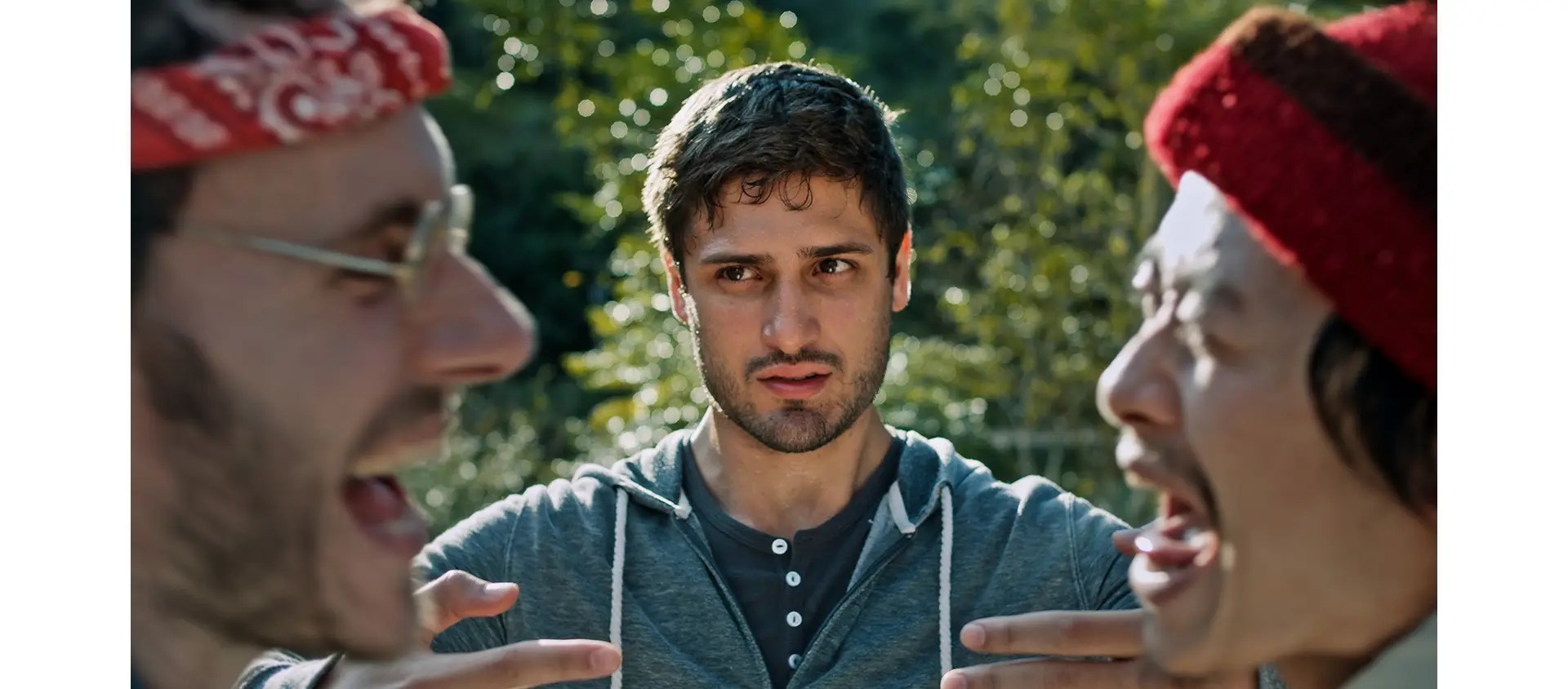
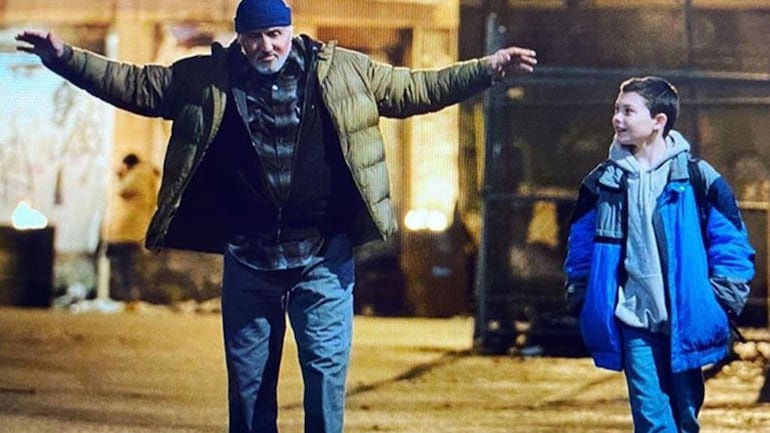
Lyle Lyle Crocodile” is charming, earning just enough critical endorsements to entice parents but plainly not enough parents as it checked in with an $11.5 million opening

“Smile,” the seriously sinister but not nearly as scary as “Barbarian” horror tale that opened last weekend held onto audience share and interest and attention as it pulled in $17.6 million, a mere 22% drop off from its $22 million or so opening.

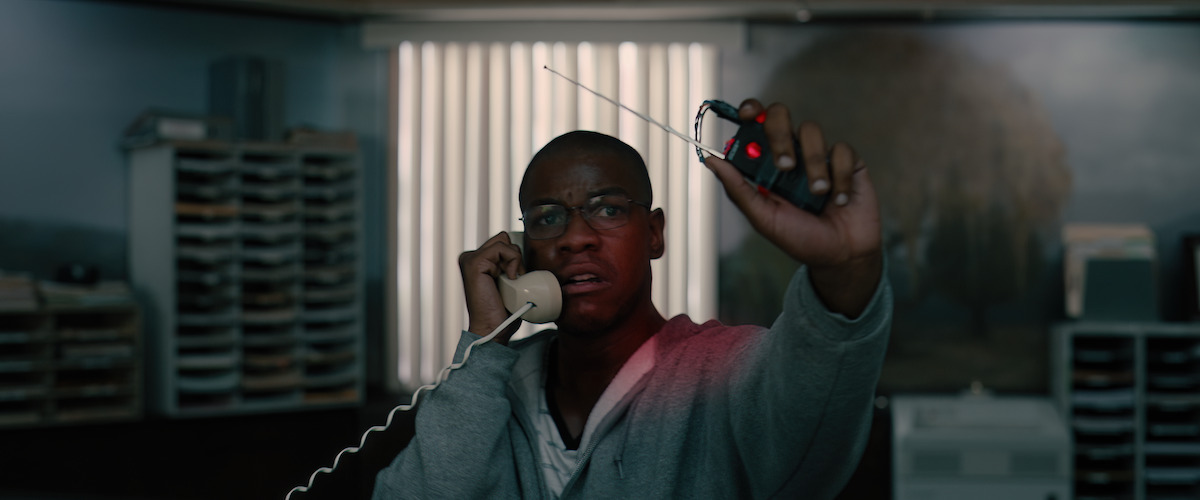
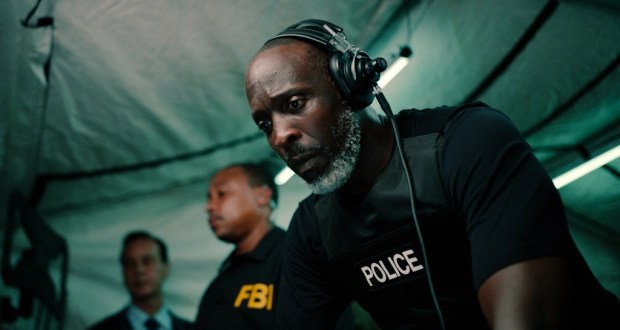
“Amsterdam” checked in with a $6.5 million opening, which means it’ll be the last time (after “Joy” preceded it) that we’ll see anybody give David O. Russell Margot Robbie and two Oscar winners money ($80 million budget? Really?) for an epic that isn’t quite.

Speaking of bombs, “Don’t Worry Darling” tailed off and fell well behind “The Woman King” on its second weekend of release, $3.475 second week that also saw it shed hundreds of screens.

“Woman King” has cleared the $53 million mark, with another $5 million+ weekend ($5.3).

“Avatar” has earned another $23.3 million, and counting, with its re-release, warming audiences up for the long-LONG awaited sequel.

“Bros” is disappearing faster than you can say “Has Lindsay Graham seen it yet?”

“Top Gun: Maverick” rejoined the top ten, edging “Bullet Train.”

Something called “Terrifier 2” ($825K) also sucked some of the horror BO away from “Barbarian,” which managed a mere $2.18, over $36 all-in and already way behind “Smile.”

Posted in Reviews, previews, profiles and movie news | Comments Off on BOX OFFICE: “Lyle” underwhelms, “Amsterdam” tanks, “Smile” grins out another win

Movie Review: Bullied teen finds his purpose and his voice — “Rite of the Shaman”

“Rite of the Shaman” is a well-intentioned filmed homily about the righteous path for an aspiring holy man to take in his teens, when he’s still learning how to process grief, compartmentalize life’s many struggles and deal with bullies.

It’s entirely too touchy-feely and squishy to grapple its subject in a compelling and meaningful way.

The writing lacks subtlety, with the clumsiest “let’s jam all the backstory and exposition into this one monologue” I can remember. The acting is uneven — tepid to unpolished.

But as we see a kid who has stopped speaking after losing his father and shaman grandfather lash out — in his own way (Google reviews of businesses, online complaints about a teacher) — we’re shown the ripple effects of hurt, something this boy Kai (Tyrell Oberle) will learn from, change and make amends.

Kai is a soulful boy at one with nature, wandering the mountains near his Utah home, communing with the owl and connecting with the plants. He has a way with them, which the lady (Kim Stone) who runs the local nursery has picked up on. His enthusiasm for living things extends to biology class, where not speaking doesn’t keep him from being the star pupil.

But at home, Kai is coping with another impending loss. His mother (Janice Spencer-Wise) counsels and questions him from her sickbed. Is she going to die, too?

Flashbacks show us the lessons and simplistic meaning he should take from his mother’s Gaelic heritage and his father and grandfather’s Viking lineage. As this comes from his late shaman grandfather (James H. Martin), we assume Kai doesn’t need Ancestry.com to confirm this.

And as the boy was given the hippy, crystal-cleansing, sage-burning, spirit-animal-loving name of “Kai,” shaman does seem like a viable life path, ordained at birth or not.

Kai has a cute girl he swaps emails with at home and notes with at school. And as sick as his mother is, he still has time to wander the mountains.

But add bullying on top of everything he’s dealing with, and he just snaps. His silent lashing-out spreads all over his world. Can he center himself, see the damage and find a way to undo it?

The sometimes sappy dialogue — “I miss the sound of your voice, my son.” — an-inspiration-a-day advice dispensed from flashbacks and heavy-handed folk ballad/melodramatic strings score weigh on this otherwise feather-light movie and hamper any self-actualization messaging.

Yes, it slips into tie-dyed “insipid” and that gets in your head and permeates the film to such a degree that it infects the language you have to use to review it.

But the couple who directed and wrote the film (Alicia Oberle Farmer, John D. Farmer) as a star vehicle for I assume their son (Tyrell Oberle) at least deliver a sweet undertone that atones for some of these shortcomings, if not all of them.

Rating: unrated, PG-worthy

Cast: Tyrell Oberle, Janice Spencer-Wise, Lauren Holdt, James H. Martin and Kim Stone.

Credits: Directed by Alicia Oberle Farmer, scripted by Alicia Oberle Farmer and John D. Farmer. A Gravitas Ventures release.

Running time: 1:09

Posted in Reviews, previews, profiles and movie news | Comments Off on Movie Review: Bullied teen finds his purpose and his voice — “Rite of the Shaman”

Movie Preview: Netflix makes a comedy about the last video store in the chain that they killed — “Blockbuster”

How meta is that? Not “Facebook” Meta, but…meta.

Randall Park? Funny. JB Smoove? Funny.

The young and funny and cute surround them.

Nov. 3.

Posted in Reviews, previews, profiles and movie news | Comments Off on Movie Preview: Netflix makes a comedy about the last video store in the chain that they killed — “Blockbuster”

Next screening? Shakespeare’s great romantic tragedy gets a Disney Rom Com treatment — “Rosaline”

Ok, it’s Disney owned Twentieth Century/Hulu project.

And there’s a hint of Netflix teen Rom com edge to it. Jokey, flippant, combining plays and eschewing the Bard’s poetry. Cute. With a gay BFF and an f bomb.

It premieres as a streaming event next week. Cute cast.

Posted in Reviews, previews, profiles and movie news | Comments Off on Next screening? Shakespeare’s great romantic tragedy gets a Disney Rom Com treatment — “Rosaline”

Classic Film Review: A Canadian Gem from Kershner and Robert Shaw, “The Luck of Ginger Coffey” (1964)

Images that stick in the mind in “The Luck of Ginger Coffey,” an Irish immigrant’s tale set and shot in a wintry Montreal, often involve the snow, the icy streets.

Robert Shaw was not yet a big star. He’d played a blond Bond heavy in “From Russia With Love,” and worked in supporting roles in film and slightly bigger parts on British TV — often playing roles in large cast Shakespeare adaptations. “A Man for All Seasons,” “Battle of the Bulge,” “Battle of Britain” and “Jaws” were in the future.

And here was director Irvin Kershner, a TV and small feature film veteran years away from “The Eyes of Laura Mars” and “The Empire Strikes Back,” working on an indie dramedy north of the border and sending his British stage-trained star dashing in front of cars and in one scene, a city bus he plans to catch on slushy, icy streets which could easily have gotten Shaw killed.

Even with union drivers behind the wheel of assorted vehicles, virtually nothing on the road in 1964 would have stopped on ice in time to prevent Spielberg from having to find somebody else to embody Captain Quint ten years later.

“The Luck of Ginger Coffey” is a lighthearted, monochromatic tragedy with an Irish-Canadian lilt. It’s about a ne’er do well immigrant, an Irish Army veteran with no college degree, little command of French in the bi-lingual city and a grossly inflated idea of what he should be doing for a living.

“Public relations,” he figures. “Newspaper reporter,” maybe “sales.”

“A man of my type, you’ve got to have the right class of job.”

He’s out there looking, and dropping by the “YM” for a run, an exercise class and a swim. But what his wife Vera (Mary Ure) thinks he’s doing is buying tickets for a passage home. She and daughter Paulie (Libbie McLintock) have even started packing. Well, Vera is. Paulie kind of likes it here, snow and all.

Redheaded “Ginger” — his real name is so pedestrian he only uses the initials “J.K.” — is a hale fellow, well-met type, already with several friends in Montreal, an endless supply of leads for jobs and a ready reason for quitting every single one of them. He wants something with prestige and the promise of promotion.

“With a man my age, there’s no future to that” he tells the ever-patient employment counselor. He’s 39, and it seems the only actual career he has is lying to Vera, exaggerating his prospects, dodging the French-speaking landlord and taking every “might be something here” as a promise of employment.

When he finally tells Vera he didn’t buy the tickets because he’s tapped-out, her look is the picture of deflated despair, too crushed to be enraged. She’s ready to give up on Canada, and maybe ready to give up on Ginger. Their prospects, as immigrants and a couple, are dire.

But he and his mate Joe (Tom Harvey) bluff him into a gig with the Montreal Tribune, whose blustery editor (Liam Redmond, a hoot) admires the man’s “cheek” and puts him on the proofreading team. The only lies he can tell Vera about this good fortune are the nature of the job, and its pay.

At least he doesn’t have to accept the pitch from another pal, who figures Ginger’s “too stuck-up to get into a uniform and get a little dirt between your fingers” delivering diapers, and picking up bags of dirty ones. But we’ll see about that.

Irish-Canadian novelist Brian Moore adapted his own novel for this script, usually a bad move. But it makes for a spry and whimsical dash through the life of a rascal with the gift of the gab and a real talent for lying.

Kershner & Co. wanted Richard Harris for the title role, but when Harris took Peckinpah’s “Major Dundee” instead, they lucked into landing real-life husband and wife Shaw and Ure. They’d only been married a year or so when they made this, and they give their scenes a lovely, lived-in and earthy romance.

Vera is slow to figure out she’s being fooled and that doesn’t augur well for how fast she’ll forgive. The marriage is on the rocks before Ginger can conjure up convincing fibs or hype to put her off a tad longer.

A proofreading job — “But they’ll be promoting me to reporter!” — pays a pittance, not enough to keep them housed and fed in Montreal.

Shaw’s Ginger never lets us see desperation, but he is the picture of short-attention-span impatience, a guy whose “luck” seems to be making the worst decisions, thoughtlessly gambling on this or that “break” coming through, struggling to talk his way past a manager who wants a “JUNIOR” sales associate, not a fast-talking 39 year-old fantasist.

Kershner gives us a lovely portrait of early ’60s Montreal in his many establishing shots, and documents the world of two endangered industries — newspapering, and diaper services — in this intimate slice of life dramedy. But he takes care to keep the focus on his stars in big close-ups (a trademark) and immaculate compositions.

Little did anybody know how these various worlds were about to change back then. There’s a lot to love here, much of it unintentionally nostalgic as this “bad luck” story’s present day would soon be the cute and quaint Montreal of the past. Cinematographer Manny Winn was coming off her Eastmancolor epic “Tom Jones,” and paints her gritty Quebecois tableaux in shades of grade here.

Moore’s script and the casting of supporting roles — an Irish editor at the paper, French Canadian landlords and cops, beery “ink-stained wretches” on the almost all-male newspaper staff where everyone calls the boss “Hitler” behind his back — takes a delight in capturing that world.

“Ginger” and his grinning, blarney-accented bluster give us a little of the same hope Vera clings to whenever things start going Coffey’s way. And like her, we cringe a bit as we wait to see how Coffey will screw things up.

But not as much as we cringe every time we see nimble Robert Shaw just miss this taxi, that impatient Canadian motorist, truck or bus on footing that is never less than slippery, never more than an on-set accident waiting to happen, which thankfully it never had.

Rating: unrated, mild violence, alcohol abuse, public urination gag

Cast: Robert Shaw, Mary Ure, Liam Redmond, Tom Harvey, Leo Leydon and Libbie McLinktock.

Credits: Directed by Irvin Kershner, scripted by Brian Moore, based on his novel. A Continental Release streaming on Tubi, Amazon, etc.

Running time:

Posted in Reviews, previews, profiles and movie news | Comments Off on Classic Film Review: A Canadian Gem from Kershner and Robert Shaw, “The Luck of Ginger Coffey” (1964)

Movie Preview: The trenches of World War I, recreated in Buffalo — “Bunker”

This cast isn’t household names, the behind the camera talented somewhat unheralded as well, and the look?

This can’t be the first time someone thought of Buffalo as *No man’s land.”

Sorry. Too easy.

Look for “Bunker” early next year.

Posted in Reviews, previews, profiles and movie news | Comments Off on Movie Preview: The trenches of World War I, recreated in Buffalo — “Bunker”

Movie Review: Dario Argento’s “Dark Glasses”

There’s got to be some truth to the myth that the phrase “an acquired taste” was first applied, in Italian, to that guru of gore Dario Argento and eventually translated into English.

Which makes his latest, “Dark Glasses,” something of a puzzle. It’s one of the most conventional thrillers we’ve ever seen from the creator of “Deep Red,” “Demons” and “Suspiria.” Sure, it’s gory. The opening murder in this serial killer story is practically a beheading. But the plot, characters and deaths served up are pretty damned humdrum by Argento standards.

A guy in a van is running around, wearing a mask and killing Roman prostitutes. But one victim, Diana (Ilenia Pastorelli) is tough enough and lucky enough to survive his assault, which ended in a car crash that he caused. It left Diana blind and a little boy (Andrea Zhang) orphaned.

The killing spree started the evening after a solar eclipse, so Diana was already in “Dark Glasses (Occhiali Neri)” due to a careless glance. Now, she can’t see at all. She’s assigned a seeing-eye Alsatian and a “trainer” (Asia Argento).

The tactless/hapless cops (Mario Pirello plays the lead detective) are wondering “Did he have it in for you?” (in Italian with English subtitles) owing to her line of work, which just gets Diana’s back up. As she struggles to learn this new life, she guiltily goes to see the little boy whose parents were killed when she was rammed into their car.

When little Chin (Zhang) flees Catholic school, it’s Diana he tracks down. Great. The blind woman’s circle of potential victims just grew again. Because you know the murderer is coming for her.

Argento may stay on brand with this film, with a few gory moments amid its violence. But he’s rarely tamed things to the point where they’re pro forma, dull and preordained.

He takes us point by point through an unexciting escalation of perils Diana and Chin face as they flee their fates. He somehow manages to achieve a fine denouement. And then he ruins even that with a sappy epilogue.

Maybe he’s mellowing in his 80s. But in casting his daughter, one more time, at least he gave Anthony Bourdain fans what they want.

Rating: unrated, graphic bloody violence, sex work, nudity

Cast: Ilenia Pastorelli, Asia Argento, Andrea Zhang, Mario Pirello and Andrea Gherpelli.

Cast: Directed by Dario Argento, scripted by Dario Argento and Franco Ferrini. A StudioCanal film on Shudder.

Running time: 1:26

Posted in Reviews, previews, profiles and movie news | Comments Off on Movie Review: Dario Argento’s “Dark Glasses”

BOX OFFICE: It’s “Smile” vs. “Lyle,” as “Amsterdam” underwhelms

Kids movies opening during the school year typically don’t do much business on “preview” Thursday nights. So let’s make as much out of the low numbers “Lyle Lyle Crocodile” scored this Thursday.

And Deadline.com, the best source for early box office data, is notorious for underestimating children’s films’ Saturday takes.

So “Lyle” is probably heading towards something like parity with “Smile,” which is earning at a $13-17 million second weekend take. They’re getting their data from Sony, which knows it isn’t Pixar, and may be lowballing it. “Lyle” should very well clear $15, but we’ll see. $11-12 says Deadline, as of Sat. AM.

Parents have been waiting for a good family film to take the kids to, which explains the otherwise inexplicable run of the animated “Super Pets” hit. Reviews haven’t been bad — not dazzling, but not bad. I found “Lyle” endearing, cute and charming.

“Smile” has taken almost all of the superior horror thriller “Barbarian” money, and is closing in on the $50 million mark already, clearing that by the middle of next week.

“Amsterdam” I called “a hot mess.” And I wasn’t alone. Most critics were impressed with the all-star cast and the messaging of this convoluted 1930s mystery built around sinister real-life events that almost overtook America and had their way with much of the rest of the world. But David O. Russell occasionally swings and misses (Remember “Joy?” “I Heart Huckabees?”) and most certainly did here with a cluttered, confusing, info-packed picture that aims for laughs if often doesn’t land.

It’ll manage $7 million, tops, unless word REALLY gets around.

“The Woman King” and “Don’t Worry, Darling” are still battling for third and fourth places, with “King” still destined for a higher overall take when all’s said and done, but narrowly trailing “Darling” because “King” has been in theaters longer.

“Bros” still isn’t doing much business. Billy Eichner blames “some parts of the country” not wanting to see a gay romance, and he could very well be right. But a film with zero star power — he’s not exactly a household name in “flyover country” — and little in the way of warmth as it seeks to show off the first “true” gay rom-com, R-rated to boot, had a lower upside than the studio figured and word of mouth isn’t going to broaden its appeal. It plays for the urban populace it represents and the gay audience it’s about — well, some of those audiences, anyway — and that’s that.

As always, I’ll be updating these figures later Saturday and into Sunday.

Posted in Reviews, previews, profiles and movie news | Comments Off on BOX OFFICE: It’s “Smile” vs. “Lyle,” as “Amsterdam” underwhelms

Movie Review: A Japanese soldier refuses to give up, “Onoda: 10,000 Nights in the Jungle”

Tales of Japanese soldiers who refused to surrender at the end of World War II long ago entered the realm of legend, and even became a punchline as the decades passed and the myth of the “fanatics” still holding out in the Philippines approached the realm of the ridiculous.

But every so often a new “survivor” turned up, on into the 1970s, giving this bizarre, almost laughable “devotion to duty” a moment in the spotlight of cold, hard reality.

“Onoda: 10,000 Nights in the Jungle” is an epic-length story of one of the last holdouts. This French production is slightly sentimentalized, perhaps for the Japanese marketplace, but grimly realistic in its depiction of the moral dilemma such men faced as evidence grew that they were fighting a war that was over. And that they were “fighting” against civilians they were robbing, terrorizing and even murdering.

“Onoda” is framed in the 1974 “present,” as the aged Hiroo Onoda (Kanji Tsuda) is pondering a young Japanese man who makes overtures to him via a barracks ballad he used to know in his youth, a song the young man plays on a bulky newfangled cassette player on the edge of the jungle. “Onoda” allows us to contemplate, along with authorities at the time, what combination of “evidence” will convince Onoda to approach these strangers reaching out to him, directly. In the three decades since World War II ended his actions on the Philippine island of Lubang have become notorious, and the Japanese government has identified who the man out there sabotaging crops and killing farmers is.

The bulk of French director Arthur Harrari’s saga is set in the life Onoda lived up to that point, his recruitment in the last year of the war, when some were accepting the fact that Japan was losing, but were sure that by sacrificing themselves and making the cost of attacking the Japanese home islands too daunting and too great, they might win a negotiated peace.

Young Onoda (Yûya Endô) had longed to become a pilot, but wasn’t keen on the pitch to become a kamikaze. Add that to the fact that he was afraid of heights and he wouldn’t need to sacrifice himself to serve the Homeland and the Emperor.

A mysterious Major Tanaguchi (Issei Ogata) assures Hiroo that “there are other ways to be proud,” in Japanese with English subtitles. He has picked up on Hiroo’s hesitation at every suggestion that he “die for your emperor.” Tanaguchi is starting a “secret program” that will train Lt. Onoda how to “think for yourself,” for a type of war that will entail “lies, treason, humiliation,” where nothing Onoda does will be considered “off limits.”

Best of all for Onoda, “You are forbidden from killing yourself.” He was to fight, hide and keep his unit actively engaged, because eventually, “three years, five years, however long it takes, we will come back for you.”

It’s shocking to learn that these hold outs weren’t just random, dogged Japanese fighting men fanatically dedicated to fight to the death. They were trained to do it, specialists being sent to the still unconquered smaller islands of the Philippines archipelago well into 1945. Much of the fascist Japanese leadership believed the battle on their home islands would go on for years, and that their fanatical refusal to surrender would break the Allies’ will, even at that late stage of the war.

That’s a fascinating insight that “Onoda” brings to light, adding belated evidence to the moral dilemma of dropping atomic bombs on Japan to make them quit.

But on Lubang in the Philippines, Lt. Onoda and his men do not quit, and they are very slow to figure out Japan did. He arrives just before the American assault on Lubang begins, a pedantic untested unconventional combat expert who irritates his future comrades and even usurps command from the ailing captain ostensibly in charge. When the the shelling starts and Americans come ashore, the suicide boats some have been training to pilot are destroyed and Onoda leads his tiny cadre of survivors into the jungle to begin their guerilla war.

Harari and his cast play out the shifting stresses caused by spending years hiding in caves where they had stashed caches of arms and food, wearing their uniforms threadbare as they steal food and destroy that which they can’t carry with fire, “smoke signals” that will tell the Japanese military that they’re still carrying the fight to the enemy.

There are quarrels and fights among their ever-shrinking ranks. They’re told “the war is over” more than once. Some start to question who it is they’re shooting.

“What if we killed people we’re not longer at war with?”

The acting is good across the board, but the emphasis here is on story, logistics — how they were able to stay in the field for so long — and the moral dilemma of men who have to know, by the time they’re hearing rock’n roll on captured radios, that they’re murdering civilians.

The “secret glory” they were promised is a lie. The permission to wage war on their own terms and not according to Western civilization’s morality, common throughout the Japanese Army, eats at some of them.

That makes “Onoda” unlike any other World War II treatment of Japanese fighting men to ever play in the West, a grim condemnation of “orders” and those whose existence has narrowed down to “just following” them.

Rating: unrated, graphic violence

Cast: Yûya Endô, Kanji Tsuda and Issei Ogata

Credits: Directed by Arthur Harari, Arthur Harari, Vincent Poymiro and Bernard Cendron. A Dark Star release.

Running time: 2:46

Posted in Reviews, previews, profiles and movie news | Comments Off on Movie Review: A Japanese soldier refuses to give up, “Onoda: 10,000 Nights in the Jungle”

Movie Review: Maika Monroe faces a monster with her “Significant Other”

A meteor streaks through the opening credits, strikes in the woods of the Pacific Northwest, and a hiking couple must contend with what crawls out of it in “Significant Other.”

So what can co-writers/directors Robert Olsen and Dan Berk throw at us that will surprise, shock, amuse and delight from that all-too-familiar set up? Aside from Maika Monroe (“It Follows”) and Jake Lacy (“Obvious Child”)?

Not a whole lot, it turns out. And not much that adds up to anything novel.

Monroe and Lacy play a troubled couple heading into the woods for a hiking/camping trip. He’s big on mansplaining. She’s taking pills for anxiety attacks and trying to tamp down her many fears for this new experience. He minimizes what she’s going through, as a way of reassuring her.

“Nothing scary about it…You’re not going to regret this.”

When she answers his teasing with “You’re a disgusting monster,” we’re supposed to go, “Oh, so THAT’s what foreshadowing is!”

As if the kid at the diner in Portlandia’s version of “Deliverance” asking “Did you see the red star come down?” wasn’t lesson enough.

Berk and Olsen try their best to upend expectations, sometimes even tripping over their own movie’s “rules” and logic. Somebody has an encounter. Somebody says “I haven’t been feeling myself.”

SOMEbody feels the need to explain her or himself to the “significant other” and the audience –after the tentacled alien has taken over his or her body. That’s easily the most absurd scene in a thriller that takes a turn towards dark comedy without bothering to get the “thriller” part right first.

Monroe hasn’t been pigeon-holed into this genre, but she hasn’t broken free of it, either. Lacy’s presence prefigures the movie’s attempted turn towards the comical. They don’t quite work as a couple, partly because he’s been around even longer than her, and she still sounds like a teenager. That makes the age-gap in the relationship seem ickier than it might have on paper (she’s 29, he’s 37).

A clever (and foreshadowed) touch or two notwithstanding, in the end, the filmmakers’ attempts at misdirecting the viewer’s expectations fail and the movie’s endless “on the nose” characters, moments and lines of dialogue overwhelm it.

“Nothing scary about it” about covers it.

Rating: R, for violence, gore and (profanity).

Cast: Maika Monroe, Jake Lacy

Credits: Scripted and directed by Dan Berk and Robert Olsen. A Paramount+ release.

Running time: 1:24

Posted in Reviews, previews, profiles and movie news | Comments Off on Movie Review: Maika Monroe faces a monster with her “Significant Other”