
People keep messing with John Wick. He keeps killing them off.
If they haven’t learned by March 24, they never will.
People keep messing with John Wick. He keeps killing them off.
If they haven’t learned by March 24, they never will.
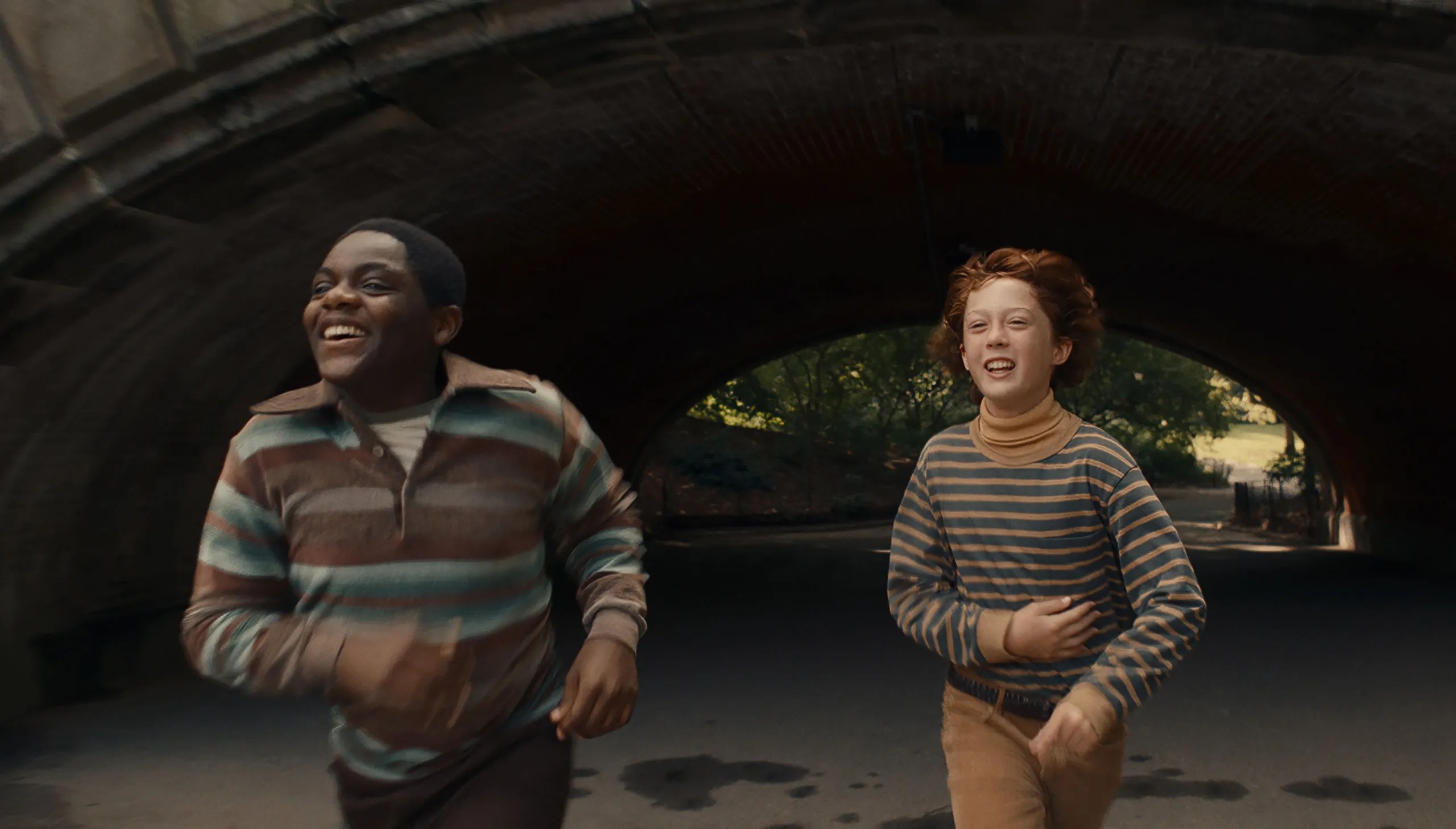
You can hand it to director James Gray, who gave us “The Immigrant,” “Ad Astra” and “The Yards,” for presenting a portrait of a childhood which he himself seemed to make “troubled.”
His autobiographical “Armageddon Time” will prove to be an interesting contrast to Steven Spielberg’s more star-crossed “Fabelmans” childhood. Mainly because the hero is a self-absorbed, distracted jerk who has to go through some things to have a prayer of being a better person.
But it’s an oddly unaffecting odyssey, and that’s only partly due to its obnoxious sixth grade aspiring artist/protagonist Paul Graff, played by Michael Banks Repeta.
There’s messaging about the discrimination and escape-from-death his family faced in Europe — convoluted, disorganized recollections delivered with warmth or vehemence by Oscar winner Anthony Hopkins as the kid’s doting grandpa. But the overall feel of the film is disconnection and distance.
Set in 1980, Gray goes out of his way to show these New York Jews mocking Reagan and shaking their heads over the direction the country takes in electing him. Members of the Trump family are involved in the private school young Paul is shipped off to when his disinterest, attempts at public classroom comedy and carrying on with his “held back” Black classmate James (Jaylin Webb, quite good) cause him to fail.
“Armageddon” plays like a semi-organized collection of anecdotes, not really pointing towards an epiphany. It’s a little “Basketball Diaries,” a smidge of “The Graduate” and a heaping helping of Barry Levinson’s far more sentimentalized childhood reverie “Avalon,” which was also built around lots of extended family dinners. Here, those are full of bickering, joking and acting out.
Paul is picked on by his older brother (Ryan Sell), indulged by the mother (Anne Hathaway, quite good) who has him in public school for principled and selfish reasons. She’s works, is president of the PTA, and wants to run for school board. Paul’s dad (Jeremy Strong), an appliance repairman, runs hot to cold. He’s got finite limits to just how much nonsense he’s going to put up with from his kids.
Paul refers to his family as “rich” to his classmates. They’re not. He’s a finicky eater, and leaps from the table in the middle of a family dinner he’s rejected to call in an order of Chinese dumplings over his mother’s money complaints and his father’s rising ire that ends up exploding in front of the whole family.
The film can feel like an attempt at atonement by its writer/director. If he was like this as a kid, that’s an interesting shame to carry around with you.
All Paul wants to do is draw. Caricaturing his new teacher, Mr. Turkeltaub, as a turkey, may get a laugh. But that’s what puts him in the “problem” category with his older classmate James.
Next thing we know, they’re ducking out of a class trip to the Guggenheim — where Paul is quite taken with the Kandinskys — to cruise the subway.
Paul picks up on something about James. He’s singled-out in class for abuse by a teacher who has lost interest in helping him, perhaps out of racism. Paul identifies with this, and his grandfather’s lessons about the pogroms grandma fled and the discrimination he didn’t escape when they left Europe. The kid kind of, sort of, takes his first steps towards being a “mensch.”
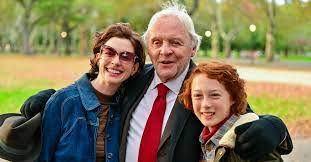
There’s not a lot that’s novel in these recollections. Even his beats-him-with-a-belt father repeats a credo that generations of parents have tried to live up to. Dad doesn’t want his distracted, “in the clouds” kid to be “just like” him.
“I want you to be a whole lot better than me.”
We don’t need someone meant to be Trump patriarch Fred lecturing the newcomer at Forest Manor Prep that “Your respect for the uniform reflects your respect for the school,” or hear another Trump (Jessica Chastain) point out that these private scion of the (mostly) elite are destined to earn, innovate and rule everybody else.
Young Repeta manages a sort of insecure cocksureness at times. He’s not great in the part, more of a placeholder, someone to bask in everybody else’s light whenever he’s paired up with any other character.
Kids smoking a J in the boys’ room, parents quarreling over a “bad” kid, playing hooky, that one teacher who encourages you, life and death and a future destined to be ruined, Paul faces some hard truths about himself as he shows sympathy but can’t fight his indulged, destructive impulses.
Not all of “Armageddon Time” — it takes its title from Reagan selling a TV interviewer that Evangelical Right talking point about immoral “end times” — is recycled sentiment. But it feels certainly feels that way. And the fact that it comes out just ahead of filmmaker Spielberg’s 1960s similar but but more starry-eyed childhood remembered, “The Fabelmans” just underscores that.

Rating: R, Some Drug Use Involving Minors|profanity
Cast: Michael Banks Repeta, Anne Hathaway, Jaylin Webb, Jeremy Strong, Tovah Feldshuh and Anthony Hopkins.
Credits: Scripted and directed by James Gray. A Focus Features release.
Running time: 1:54


“One Piece Film: Red” practically redefines the phrase “eye candy” when it comes to Japanese anime. A colorful cornucopia that pushes the shadings palette, it’s a musical fantasy action adventure so stuffed with characters that you pretty much have to be Japanese to keep all, or at least some of them straight.
That’s what happens when you adapt a manga and get 15 films out of it — visual dazzle and character clutter that leaves the narrative comically incoherent Nipponese nonsense.
I dare say fans will find pleasure in the ongoing brawl between pirates and the straw hats and in Uta the singer’s power pop, so Shakira-stylized that she mesmerizes all who hear her. I’m tempted to source the soundtrack, but I traded my MX5, and the whole point would be to listen with the top down and soak in the stares of everybody who stops next to me at a traffic light.
In this One World fantasy, there is but one government and its most important branch just might be the Navy. They’re the ones charged with contending with pirates. It may be a high tech civilization offering pop show spectacles that would put Lizzo, Taylor and Gaga to shame. But seafaring is still done under sail. Call it “sail punk” fantasy, because steam punk is ruled out.
Uta’s (Kaori Nazuka) putting on this epic show when assorted piratical factions set out to singer-nap her, mid-concert. The straw hats, including childhood chum Luffy (Mayumi Tanaka) set out to foil them. Flashbacks show their childhoods, with Uta’s craving for stardom separating them, eventually.
There are other intrigues and wrinkles in the plot, but they take a back seat to a stadium full of characters. A talking bear, what looks like Hello Kitty’s uncle and a hulking talking and tusked blue beast wearing an Elvis suit (“fat Elvis” era) stand out from the pack.
But there are others — Nami, Shanks, etc. — who are part of the story’s continuum and take on their tiny pieces of the puzzle to move this two hour chiaroscuro cartoon to its climax.
It’s all rather psychedelic in look and feel, not so much a film a newcomer to the series plumbs for meaning. Let it wash over you as spectacle that can be a tiny window to another culture.
For instance, there’s this telling line, served up after we’ve spent much of the movie watching Uta sing via a sort of boots-eye-view, looking up her skirt. She’s not alone in getting the anime lads’ attention. Nami (Akemi Okamura).
“I can almost see Nami-san’s PANTIES!”
No, that isn’t in every anime film. But don’t get me started on Miyazaki.
Film series produced by Hollywood take some pains to make each movie stand alone by giving the viewer enough information and ongoing narrative recap to let it make sense. Japanese anime isn’t bound by those rules. Whatever the simplest throughline of the thread is, “One Piece” makes just enough sense to grab hold of, but not enough to recommend to anyone not already immersed in this world.
About 15 minutes of its dazzling visuals and vapid narrative is enough. But if you doubt this distinctly Japanese art form isn’t making its mark, check out the box office of this film, and take note of the trailer for the next “Puss’in Boots” movie from Hollywood. It’s loaded with anime approaches to fights, action and over-the-top wackiness.
Rating: PG-13 for violence, suggestive material, profanity
Voice Cast (Japanese version): Kaori Nazuka, Mayumi Tanaka,
Akemi Okamura, Shûichi Ikeda, many others
Credits: Directed by Gorô Taniguchi, scripted by Tsutomu Kuroiwa, based on a manga by Eiichiro Oga. A Crunchyroll release.
Running time: 1:55
Well, tonight’s scheduled screening of “Bones & All” got canceled because the publicist who handles that title is in Miami, even though Orlando and Tampa theaters won’t be closed by a tropical storm that blows a bit and rains a bit. Guess it was just easier to cancel them statewide.
So I’ll catch up with this Focus Features under promoted James Gray “personal” movie instead.
No quiet quitting for me.
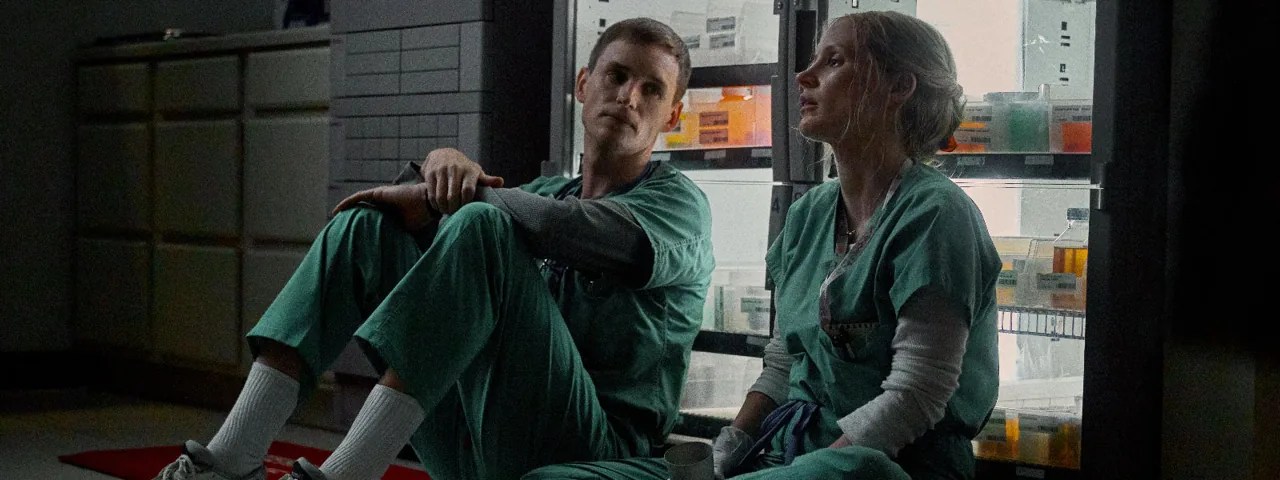
Not every “mystery thriller” needs to have much of a mystery about it to work. But none can get by without that “Eureka,” aka “Oh (snap)” moment. And in “The Good Nurse,” that’s a doozy.
This true story, with some minor alterations, provides an acting showcase for two of the best, Oscar winners Jessica Chastain and Eddie Redmayne. They both play nurses, but only one of them is “good.” And the “aha” here is when one figures out how the other one is killing patients in their hospitals, and has done so in hospitals all over Pennsylvania and New Jersey.
Danish filmmaker Tobias Lindholm, who gave us “The Hunt” and “Another Round,” serves up a slow, deliberate story of empathetic caregivers and CYA-fixated hospital administrators, of a nurse who has become an angel of death and of dogged cops who struggle to make a case when they’re being stonewalled by the institutions where these deaths happened and continue to happen.
Chastian is Amy Loughren, a single mother of two with the overnight shift at her hospital and a secret she needs to keep for a few more months. Amy has a dangerous heart condition, and she won’t be covered by her employers’ insurance until she’s been on this job for a full year.
She is, in many ways, nursing’s ideal — talking to the coma cases, comforting family, bending the rules to make a bad situation a little easier.
Charlie Cullen also calls patients by their first name, also seems to go the extra mile when it comes to compassion. He learns Amy’s secret and he keeps it and pitches in to help her finish her trek to the “insured” finish line.
“I’m gonna help you get through this.”
But we’ve seen a “code” he was involved in at a previous hospital. And when a patient he and Amy share on their shift dies as well, we — if not she or anyone else — can do the math.
Veteran character actor Noah Emmerich and Nnamdi Asomugha (“Sylvie’s Love,””Crown Heights”) enter the picture as two cops summoned, by state health dept. mandate, to investigate what the euphemism loving “risk manager” (Kim Dickens) labels “an unexplainable incident.”
Somebody died. The hospital did a mortality report, and now, almost two months later, they’ve had to inform the police.
“The Good Nurse” has two villains — a killer and a parade of (mostly unseen) corporate suits who cover up the deaths. The film is about catching one and trying to work around or confront the other.
Administrators circle the wagons, cops lose their tempers and the title character struggles to reconcile what she’s going through, her judgement of the friend and colleague with what she’s learning.
Redmayne gives us a “quiet type” version of “the banality of evil,” not giving much away, even in the eyes. Lindholm spends little screen time showing his point of view.
Chastain has more to play and makes her character’s conflicts empathetic and understandable. This guy is saving her life and her job. He can’t be…or can he?
The police procedural element of “Good Nurse” is the most potentially riveting, and damned frustrating. But justice has proven to be a slippery thing in America in recent years, with lawyers flinging up road blocks and villains running out the clock so that even good cops can’t nab the guilty.
Lindholm’s patience with this material kind of outlasts ours. There needs to be more flesh on the bone to justify the two hour running time. The dead spots show.
And with an accompanying documentary also coming out, we can judge for ourselves if there were opportunities missed in giving the feature film treatment to this notorious case.

Rating: R (profanity)
Cast: Jessica Chastain, Eddie Redmayne, Kim Dickens, Nnamdi Asomugha and Noah Emmerich.
Credits: Directed by Tobias Lindholm, scripted by Krysty Wilson-Cairns, based on the book by Charles Graeber. A Netflix release.
Running time: 2:03
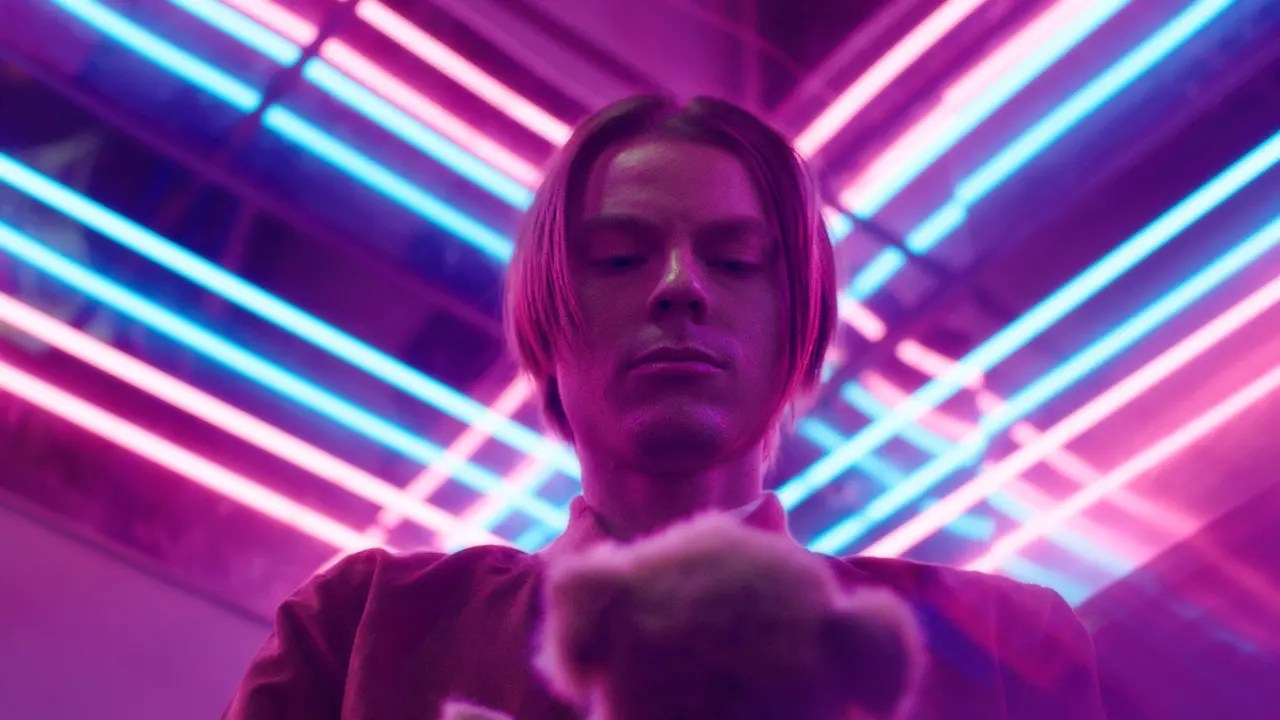
The band Lord Huron has produced, I guess, this trippy feature film inspired by their album “Vide Noir.” And for the record, the music’s pretty cool, kind of twangy “Twin Peaks” ethereal, unmoored in time, fitting for a pseudo-psychedelic film noir set in 1960s LA.
The movie? It’s best summed up by the phrase “interesting failure.” It has a great look, some striking scenes, a pretentious, pedestrian story that crawls by performed by something short of the most compelling cast every assembled.
Too mean? Hey, I’m a big David Alan Grier fan, too!
Victor Mascitelli plays Buck, a mop-topped young man who wakes up woozy and filthy, lying in the dirt amidst the detritus of whatever was in his 1967 Chevy Impala — a map, a pocket knife, a Voice-o-Gram 45 rpm disc that he recorded with his best gal back home in Detroit.
As Buck has awakened in the dark in the dust on the edge of the desert outside of LA, we can guess the story without the need for any hard-boiled film noir voice over narration.
There’s a dame. Her name is Lee (Ashleigh Cummings). She’s a singer. And in over-edited quick-cut flashbacks, we hear her wondering if Buck is ever going to get her out of Detroit.
News flash — he didn’t. News flash — she left. That’s how he wound up in LA. And we’re guessing, that’s how he got himself beaten up and left for dead, “Black Brained” into a near stupor by the mob guy who got Lee’s attention and got Lee studio time to cut an album.
The narrative takes us through the events that led to this dumping in the dust, sections of story given chapter titles — “The Emerald Star,” “Whispering Pines” etc., mostly taken from Lord Huron song or album titles — because that’s something Tarantino did and every green screenwriter figures it’s the only way to organize a script.
Buck bumps into a psychic, assorted thugs, a mobster who notes his name “sounds like the stuff legends are made of,” a ’60s street gang banger, musicians and even a dead singer that he hallucinates as fronting a band he’s listening to in a not-quite-swank nightclub.
He picks up clues. And he keeps hearing about this hot new drug, “Vide Noir,” the best way to escape, “obliterate the self,” all that jazz.
Buck’s the sort of anti-hero who takes a licking and keeps hunting down Lee. Buck’s a guy who’d never roll into LA without his old hunting rifle in the back seat, or that buck knife in his pants in case he gets clobbered and locked in the trunk of his own Impala.
The best scene has him crashing a recording session set up for Lee, pretending to be a replacement player and not even trying toftake his way through reading sheet music or playing his learn-by-ear acoustic guitar. The Great D.A. Grier is the session producer.
But even that scene plays as flat, under-developed and kind of amateurish. Mascitelli’s IMdb page is all “additional crew” and “camera and electrical equipment” credits, which is obvious from his performance.
Without a compelling, believable lead, someone who can come off as naive and out of his depth, but who just might have inner resources he calls on to “save my Lee,” give us emotions showing he longs for her, fears for her and faces down his own fears to find her, “Vide Noir” devolves into some pretty set pieces that might grab the eye and set up as classic genre moments, but wither and die thanks to the performances.
The production design is cool, the cutting and staging are sharp. But the movie that comes out of all that doesn’t play.
So maybe I’ll give the record a listen.

Rating: unrated, violence
Cast: Victor Mascitelli, Ashleigh Cummings, Kanya Iwana, Todd Stashwick and David Alan Grier
Credits: Directed by Ariel Vida, scripted by Ben Schneider. A Yellow Veil production, a 1091 release.
Running time: 1:36
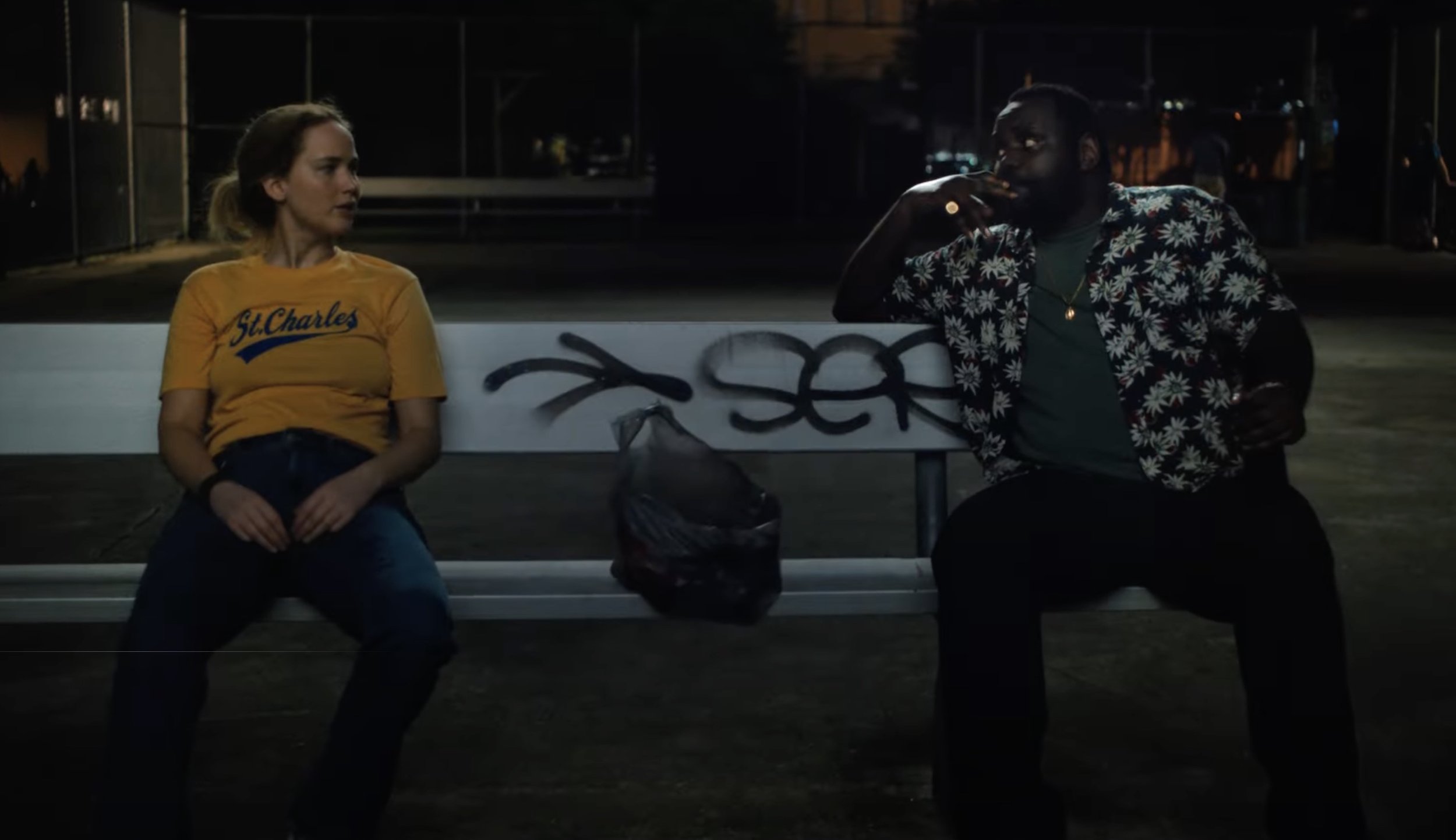
She’s a veteran of the Afghanistan occupation, recovering from problems physical and mental, finishing up physical therapy for one, taking “‘don’t shoot yourself in the head’ kind of medicine” for the other.
He’s a sad-eyed mechanic with a prosthetic leg.
They’re just two broken people dealing with hurt, loss and grief in the town she couldn’t wait to get out of, the one that’s home to his every memory, good or bad — New Orleans.
“Causeway” is an intimate, downbeat character drama that pairs up Oscar winner Jennifer Lawrence and Brian Tyree Henry of “Widows” and TV’s “Atlanta” for a story of reflection and regret and the slim chance of making a connection that might lead each out of the hole they’re trapped in.
Not a lot happens, and some of what does is predictable in that “This is the point where the conflict kicks in” formulaic indie drama sort of way. But it’s very well-acted and its somber tone gives it heart and gravitas that the leads cash in on, time and again.
Lawrence is Lynsey, whom we meet in a wheelchair, somewhat shellshocked and in the care of a kindly widowed retiree (Jayne Houdyshell) who took up home nursing, and taking in patients, after caring for her late husband for years.
“What a miserable life” is all unfiltered Lynsey can blurt out when hearing that.
She’s got physical therapy to master, and memory issues and other PTSD symptoms. It takes time just to get her to a point where she can go “home.” And when she gets to the house she grew up in, her got-the-date-wrong mother (Linda Edmond) isn’t at home, telling us this is how Lynsey was raised — indifferently. Lynsey is “back,” but only for a “visit.” She can’t wait to get out…again.
It’s only when she borrows the family’s ancient pick-up that she meets someone she’s willing to have a conversation with. That would be James, the mechanic who looks over the aged, under-maintained Chevy Scottsdale she’s limped in with under a cloud of smoke.
James has a limp, too. He’s compassionate and easygoing and “interested” in ways that may go beyond the fact that she’s beautiful. She’s finally got someone she can talk to without opening the chat with her condition. And he gets to have a conversation with an attractive, smart and pretty woman.
The chief virtue of this Lila Neugebauer film — she directed the fine Netflix series “Maid” — is how lived-in these characters feel. Nobody takes on a N’awlins accent, but Lawrence has little trouble finding her way back to working class in this role. Her line-readings have a dry, flat quality that make us wonder what’s happened to Lynsey, what drained her and made Lynsey how she is.
Henry’s easy-going way with a line, a gesture or a suggestion from somebody else keeps him near the top of Hollywood stars most anybody’d love to have a beer with. James responds to someone he can have a sensitive conversation with like a man relieved of a burden. He, like she, has “secrets” and pain that we can see even if we don’t know the specifics.
It’s a little surprising that it took three screenwriters to conjure up what connects these two — a city and the shared music and history that comes with it. Somebody figured out she’d need to grab the first job that presents itself — cleaning pools, and found things to do with that. Somebody else probably figured out James’ real agenda.
“Causeway” is slight but immersive, warm with the occasional chill and engaging in ways two very good actors can manage with just the barest bones of a story and a scattering of secrets to give away, one pained revelation at a time.

Rating: R (profanity), smoking
Cast: Jennifer Lawrence, Brian Tyree Henry, Linda Edmund and Stephen McKinley Henderson.
Credits: Directed by Lila Neugebauer, scripted by Otessa Moshfegh, Luke Goebel and Elizabeth Sanders. An A24 Film on Apple+.
Running time: 1:34

The “Black Panther” movie in which we say goodbye to the character as he once was and the actor who played him might rightly be expected to be a journey through grief.
But while Ryan Coogler’s “Black Panther: Wakanda Forever” manages some grace notes and touches on some of the way stations of such a journey, it’s much more concerned with new threats, greater violence, world expanding and new eye candy. This is “fan service” that isn’t as much service to the fans as you’d expect.
The most moving remembrance of the late Chadwick Boseman is in the re-configured Marvel comics flip-book logo at the beginning of the film, something echoed — almost as an afterthought — in the finale.
Boseman’s loss may hang over this impressive, grim and bloody sequel. But his spirit is sorely missed in a movie that’s never less than heavy going, even as it delivers big action beats above and below the sea, testy confrontations in tight close-up and realistic underwater footage that might get an approving nod from no less than James Cameron, should he deign to check it out.
We don’t really get to mourn Boseman/Black Panther, not in any emotional way. A funeral service in a forest, a procession that is an attempt at African upbeat (New Orleans without the brass bands), a bit of the Queen’s speech here, a mention there. The catharsis of grief is missing.
And nobody in this cast, working with this “show something new” sequel even gets to attempt to provide the lighter touch Boseman brought to this universe. Without that or grief, the film plays as kind of flat, lacking highs or lows that move us or move the needle.
All the futuristic medicine at Wakanda’s and Princess Shuri’s (Leititia Wright) disposal cannot save the stricken, off camera King T’Challa. The loss is acknowledged movingly but briefly by his mother, Queen Ramonda. A brief funeral, a brisk procession and the realization that this isn’t enough cannot allay the grief or force the film to take the time to address.
A Black Pantherless Wakanda is under threat. The Americans (Richard Schiff), French and others at the UN let the tiny but all-powerful kingdom know how much they covet the magical mineral in this Marvel universe — vibranium.
“You perform civility here,” the Queen hisses, warning that Wakanda will “protect our resources.
But there might be another source of the vibranium. Lake Bell plays a scientist running a deep sea drilling project whose possible strike of the Mother Lode is interrupted when they’re attacked from beneath the waves.
Mermaids sing a siren’s song, luring workers and commandos to their deaths. Mermen and Merwomen spill blood without hesitation.
When the world assumes Wakanda did this to protect its monopoly, Shuri and General Okoye (Danai Gurira) must get to the bottom of this act of war and deal with the hitherto unknown Atlanteans and their leader, Namor (Tenoch Huerta of “Sin Nombre” and “The Forever Purge”), hear their story, figure out their beef and decide whether these menacing mer-Mayans are friend or foe.


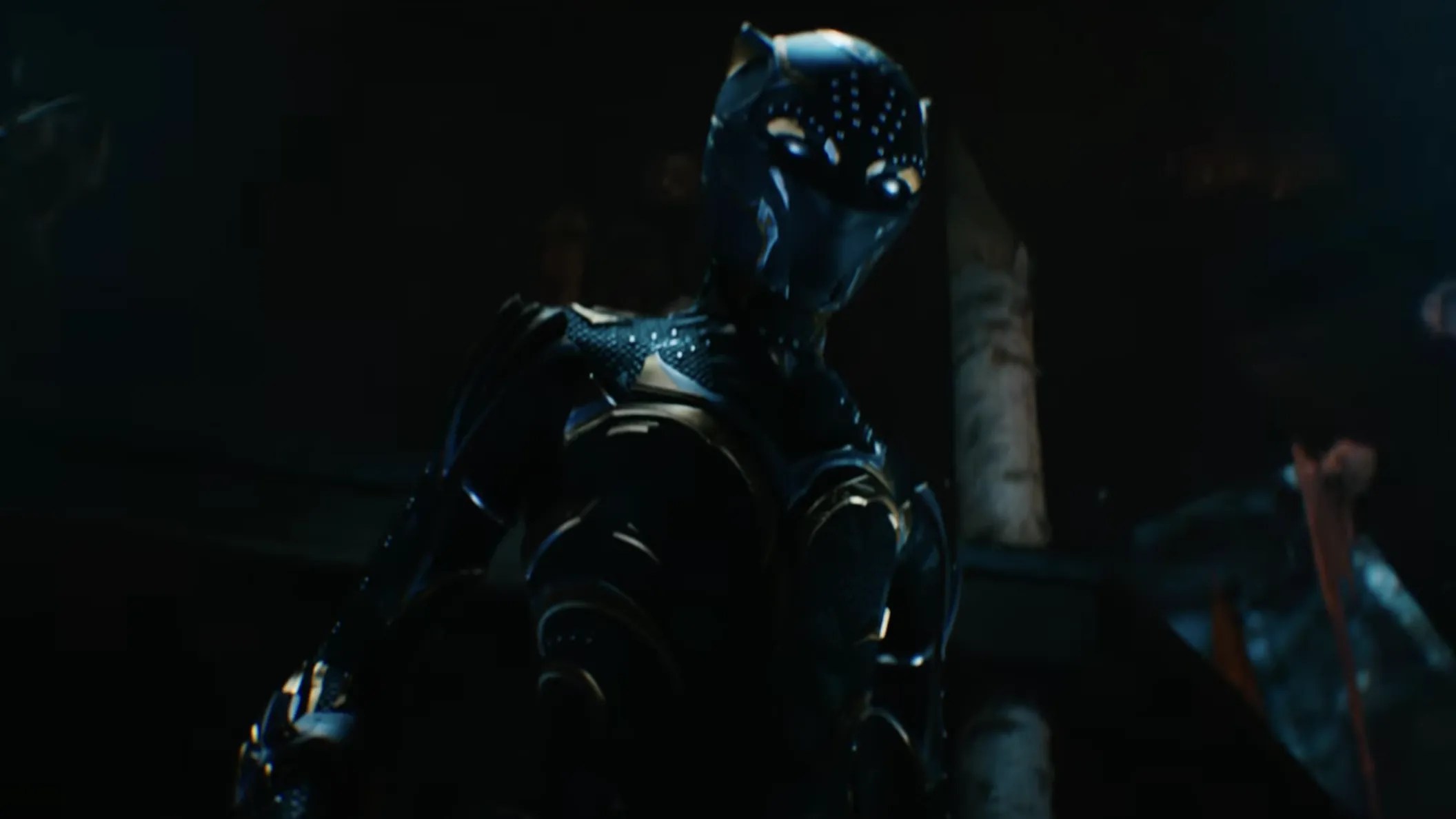
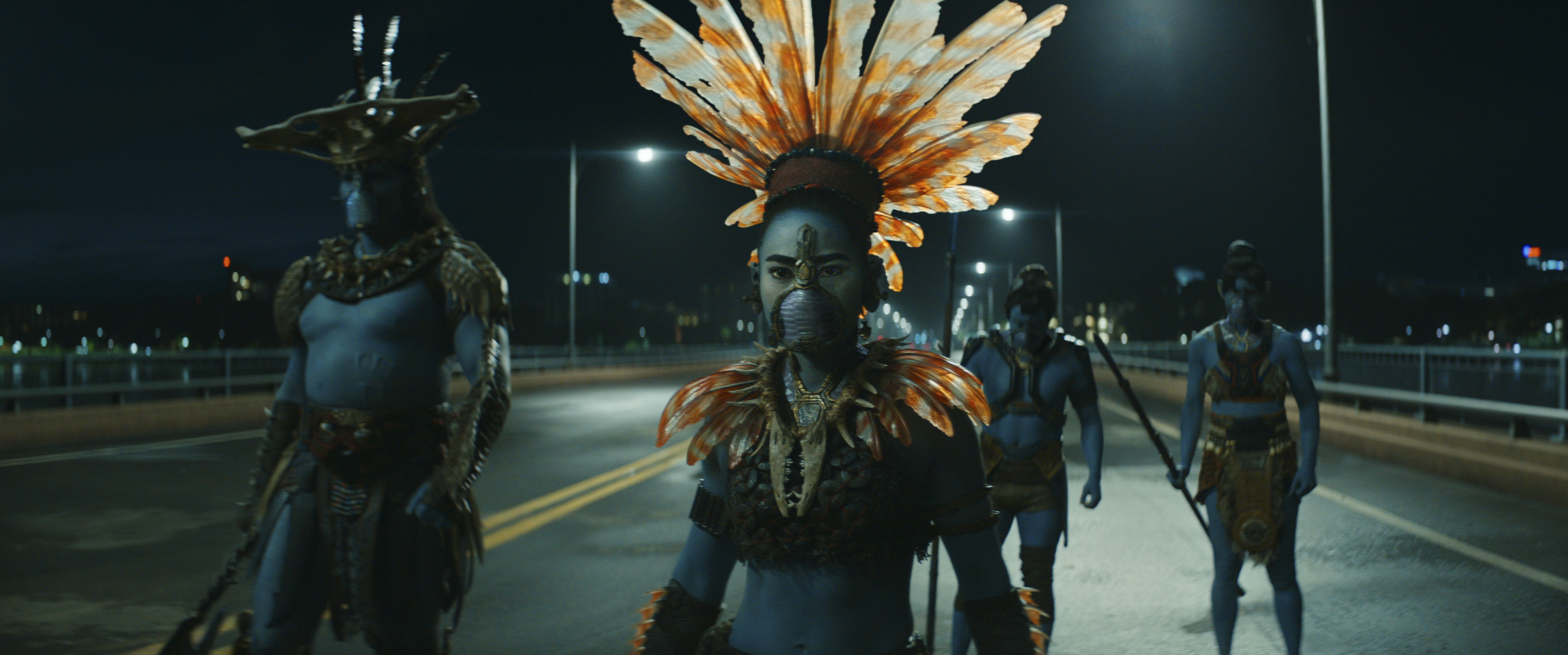
Finding somebody to give Wakanda an evenly-matched foe to struggle against in this sequel was always going to be tricky. Bringing in The Sub-Mariner (never so-named here) and his pre-Colombian/escaped-the-Spanish civilization expands this corner of the Marvel universe and embraces — just enough — the broader racial representation that made “Black Panther” not just a hit, not just a cause, but a phenomenon.
But I doubt we see the Wakanda end zone and post-dunk salutes that spread of their own accord when the first film came out.
And while Huerta is striking and wonderfully menacing in the part, there’s little about this addition to the franchise that suggests this inclusion will be any sort of cultural draw.
Truth be told, the movie’s just not much fun. No, funerals aren’t supposed to be, but even that feels neglected in the script’s dogged march into war and showing off new Wakandan tech and its Atlantean counter-tech. The conflict seems contrived, more something “we need for this movie to have an impetus” than anything that feels particularly organic.
If you cast Julia Louis Dreyfus as the CIA chief and even she has trouble finding an intended laugh, that’s on you. And the CIA agent played by Martin Freeman fares no better this time out.
Wright is solid but less than wholly inspiring as the willowy princess who must carry the mantle of the franchise, something that doesn’t seem a huge problem until you throw her into scenes with Oscar winner Lupita Nyong’o, who is gifted with more screen presence and gravitas. Bassett is at her fiercest and Winston Duke the only lighthearted player in the lot.
Dominique Thorne plays the pawn in this new struggle, an American college kid/Wakanda fangirl whose inventions are allegedly triggering all this new strife. Aside from the character’s “Macguffin” like function in the plot, she is simply here as a surrogate for the audience, a “fan” who gets to mix it up in Wakanda’s latest struggle. Pausing to admire her vintage Dodge Challenger might be fan friendly, but it’s one of many ways this picture finds to stop and clumsily restart.
Pacing is something of a problem, as Coogler has to zip from location to location and always give us a long screen graphic — first in Wakandese, or Atlantean script, then tediously translated into English — to identify Haiti, the Yucatan Peninsula, etc.
As I’ve mentioned in many reviews of films of this ilk over the years, this isn’t my favorite genre. Unlike the somewhat better “Black Panther,” this installment was always going to be more somber thanks to the loss of its star. What the film lacks is the will to make that loss heartbreaking.

Rating: PG-13 for sequences of strong violence, action and some language.
Cast: Angela Bassett, Letitia Wright, Tenoch Huerta, Danai Gurira, Winston Duke, Martin Freeman, Julia Louis Dreyfuss, Richard Schiff, Lake Bell and Lupita Nyong’o
Credits: Directed by Ryan Coogler, scripted by Ryan Coogler and Joe Robert Cole, inspired by the Marvel Comics characters. A Marvel Studios release.
Running time: 2:41
This latest taste of a murder mystery set during a murder mystery weekend plays up the ensemble more than Daniel Craig. Norton and Janelle Monae and Kate Hudson and reaction screams from Kathryn Hahn, Bautista…they all get their moments. .
Of course it looks fun.
Nov 23 on Netflix.

 Movie Nation