BOX OFFICE:;”Black Panther 2″ buries “Black Adam” –$180 million opening

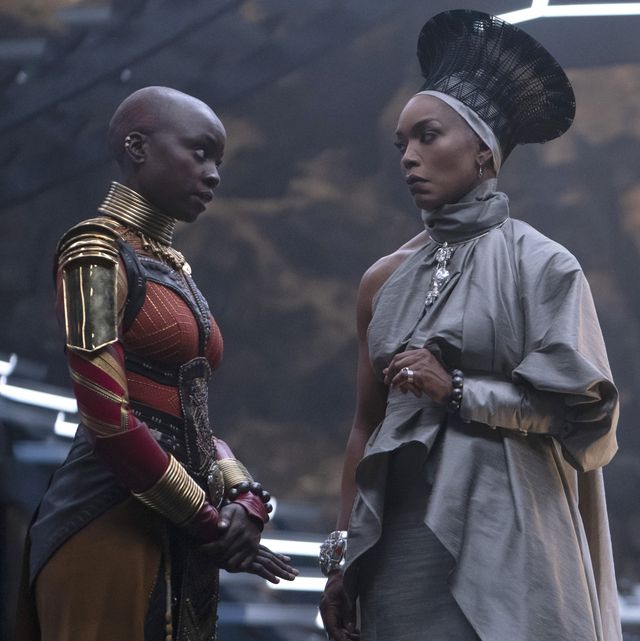
For those keeping score at home, “Wakanda Forever” earned more its opening weekend at the domestic box office than “Black Adam” has made ($145 million) in a month.

“Smile” cleared the $100 million mark, “Ticket to Paradise” cleared the $50 million mark and by next weekend, “Lyle Lyle Crocodile” will have earned over $75 million.

Data from Box Office Mojo and @BoxOfficePro. Illustration from @BoxOfficePro.

Posted in Reviews, previews, profiles and movie news | Comments Off on BOX OFFICE:;”Black Panther 2″ buries “Black Adam” –$180 million opening

Movie Review: Korean Chaos as rival agencies go on a Murderous Mole “Hunt”

“Byzantine” is the word we use to describe insanely-complicated and sometimes murderously murky political situations. But the literal back-stabbers of the Eastern Roman Empire had nothing on the mess that was Korean politics during South Korea’s dictatorships, coups and assassinations era, the late 1970s and early ’80s.

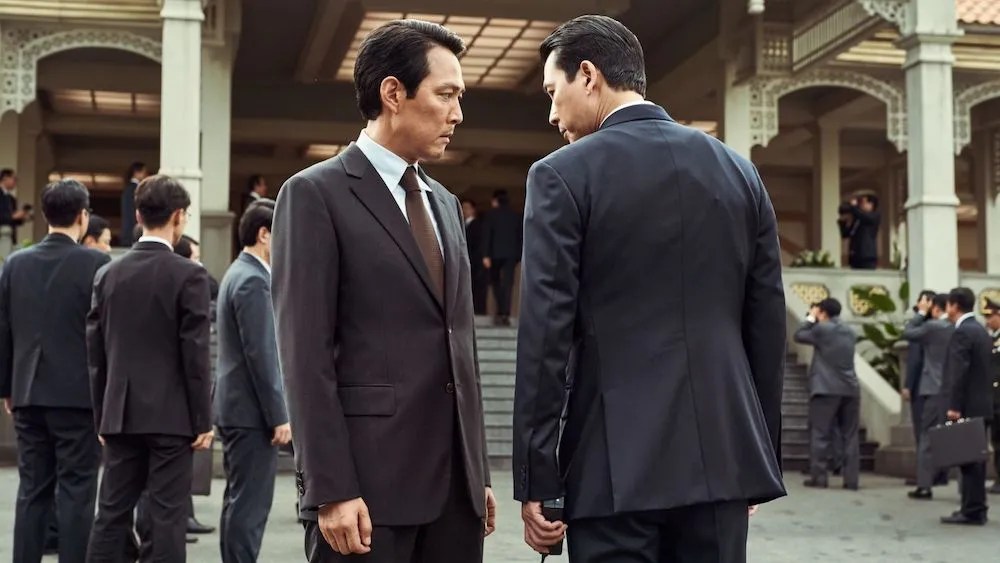
“Squid Games” star Lee Jung-jae has conjured up a seriously over-the-top, byzantine, violent and fictional thriller inspired by those wild and bloody times. He wrote, directed and stars in “Hunt,” a chaotic and engrossing mystery built around that evergreen of the espionage and political intrigue genre, the hunt for a “mole” in Korean intelligence agencies.

Notice I used the plural there. God knows how many entities and their legions of field agents cross paths and cross swords (not literally) in this veritable civil war among competing agendas between rivals with competing suspicions.

Lee stars as Park Pyong-ho, a top level agent with the KCIA when we meet him. It’s not until he’s present at an attempted assassination of his country’s increasingly dictatorial and murderously repressive president during a visit to Washington that he crosses paths with his domestic security counterpart, Major Kim (Jung Woo-sung).

That attempted-hit on the president and assorted other operations that are lethally compromised tell both men, and their higher-ups, that this “mole” they’ve been wondering about is real. They cannot accept this or that fall guy that the thoroughly corrupt government, whose corruption leaks into every agency in it, puts forth.

As each plunges into the arrests, brutal interrogations and spy games with North Korean agents and defectors to find and catch the spy in their ranks, each has plenty of good, solid reasons to suspect the other of being the mole, or helping cover that mole’s activities.

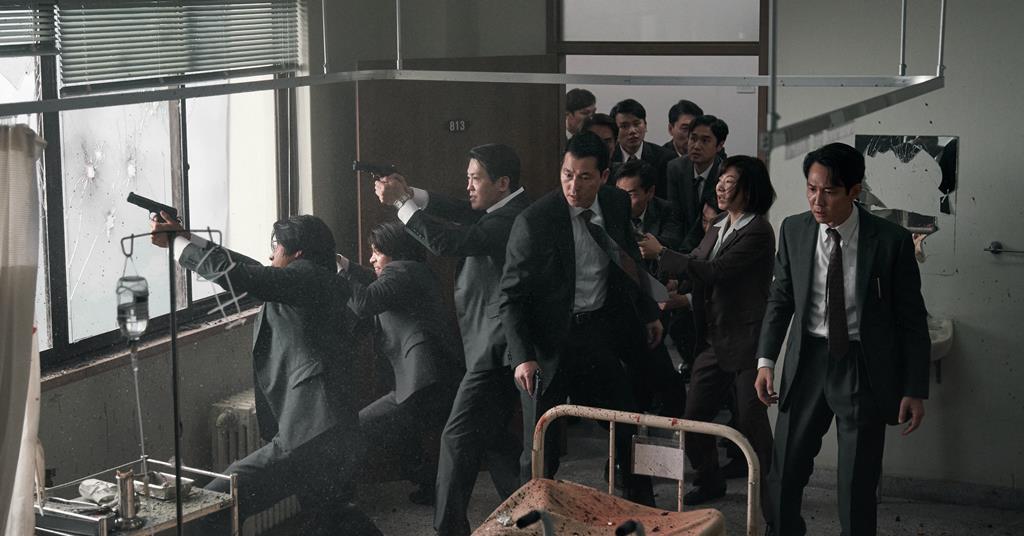
Lee scripts and stages epic shootouts and attempted hits in D.C., Seoul and Tokyo as each agent, moving further up the ladder, engages in tit-for-tat reprisals and provocations in their game of “Tinker Tailor Soldier Spy” with each other.

Lee makes Park the hotter of these two hotheads, the one that bellows the most credible threats and the quickest to resort to violence. But Park is troubled by what all this means to the safety and stability of his country even as he ruthlessly orders this or personally carries out that. Jung plays the more guarded and in some ways, the more frightening character, the one who won’t hesitate to do what he thinks needs to be done.

Go Yoon-Jung plays a college girl caught up in campus protests against the fascist regime, a young woman Park keeps getting out of jail. “Honey trap,” the other spies wonder. And “He’s not my father,” she explains. Another mystery to puzzle out.

One thing I’m often struck by in Korean action cinema is the sheer human scale of the productions. It’s not just the zombie movies that are filled with teeming masses. Lee treats us to huge, crowded protests broken up by legions of savagely motivated riot police, competing armies of agents trying to shove past each other to access this official or that wounded agent with secrets they need, fighting to get into his hospital room.

Chaos and mayhem are all around as the manipulative U.S. CIA section chief (Paul Battle) emphasizes that America’s limited concerns are “stability,” and no so much how South Korea achieves it.

One of Park’s field recruits tells him a joke (in Korean, with English subtitles). What do you call war in space?

“Star Wars.”

What do you call a war that never quite turns hot?

“Cold War.”

And what’s the name for a war without end?

“Korean War!”

It’s so — here’s that word — “Byzantine” that “Hunt” can be a tad hard to follow. But even that adds to its immersive qualities. Hand-held cameras plunging into brawls, tear gas, chasing assassins and North Korean spies from dead drops to booby-trapped hideaways, the viewer is overwhelmed much the way ordinary Koreans must have been back then and to some degree, even now, with an armed if starving neighbor to their north bent on their destruction.

But that’s what life amid Byzantine intrigues is like.

Rating: unrated, graphic violence and lots of it

Cast: Lee Jung-jae, Jung Woo-sung, Jeon Hye-jin and Go Yoon-Jung

Credits: Scripted and directed by Lee Jung-jae. A Magnolia release.

Running time: 2:06

Posted in Reviews, previews, profiles and movie news | Comments Off on Movie Review: Korean Chaos as rival agencies go on a Murderous Mole “Hunt”

Classic Film Review: Bicycles, Blue Collar Bloomington and Ciao bella! — “Breaking Away”

Back in the ’80s, I was helping my “sourdough” housemates set up for a poker game in a place I rented up Kodiak, Alaska way.

And then “Breaking Away” came on the satellite dish TV. As I settled in to watch it, I started talking it up. One by one, the other guys finished what that they were doing and joined in. None of them had seen it.

Other players arrived, wound-up and ready for some poker and a few Kodiak “slammers,” (tequila and 7-Up and don’t get me started on that). But they started watching, too. Whatever this 1979 Peter Yates dramedy holds for women, or members of minority groups unrepresented on the screen in those less diverse times, for blue collar white guys, it was instant nostalgia in its day, cinematic comfort food about paths taken and not taken, the endless possibilities of youth and the limits of small town — even a college town — life.

After the film ended and the drinking and money-losing started, I noticed how everybody’d picked up catch phrases.

Have a snack. ” It’s I-ty food. I don’t want no I-ty food.”

A straight, Jack high. MY pot. “Refund? REFUND!”

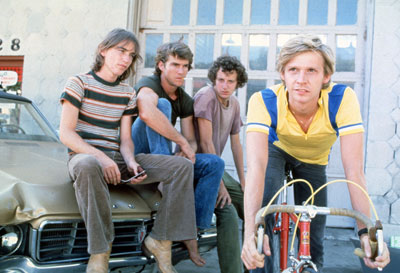
People tuned in to this minor hit’s magic right from the start. I remember Midwesterner Roger Ebert raving up this tale of Bloomington, Indiana on his TV show when “Breaking Away” came out. And as the years passed the nostalgia for a nostalgic-when-it-was-new movie endured. Entertainment Weekly did a cute cover story with the four young actors it helped launch — Dennis Christopher, Daniel Stern, Jackie Earle Haley and Dennis Quaid — 35 years later posing for a shot in their “Cutters” shirts.

Looking at it now, it’s obvious that even what it was selling back then was a sort of romantic, idealized and alcohol-free vision of white male post-high school youth, and perhaps it was set in still-seriously-segregated Indiana for a reason. Because that helped sell it.

But four sons of stone-cutting quarry workers, men who’d given their kids some piece of the middle class life with their labor, struggling to figure out what to do with the extra choices their parents passed on to them, that story still resonates as it always did. It’s still magical.

Christopher plays Dave Stohler, 19ish and utterly obsessed with cycling. This was pre-Greg LeMond, pre-US TV coverage of the Tour de France. A few different-drum kids of that era got into bicycle racing (including me), but Dave has gone off the deep end. He’s so into “The Italians” who battled the French and Belgians for dominance of the sport back then that he’s learning Italian, speaking Italian to his indulgent mother (Barbara Barrie) and utterly dismayed Dad, played by the great Paul Dooley.

Buon giorno, papa!

“I’m not “papa.” I’m your god-damned father. She’s your god-damned mother…That’s MY cat! His name’s Jake, not Fellini! I won’t have any “eenie” in this house!”

Dave’s only got room for one obsession at a time, so his life is as aimless as his running mates. Mike (Quaid, in his break-out performance) used to be a jock and is facing 20 with the growing knowledge that his best years and most of his possibilities are behind him. Cyril (Stern) is a quizzical wit who might not be witty enough to compete with the real wits at college, should he try to get in. And Moocher (Haley) is short, short-tempered and barely keeping it together, living on his own in a house his father’s trying to sell from Chicago, where the old man is job hunting. Moocher may have to settle down to get even the tiniest taste of security. He’s touchy about that, too

Over the course of this late summer/early school year, they’ll tangle with snobby Indiana U. college kids, who look down their noses at “cutters.” They’ll swim in an abandoned quarry, goof around and hang as “the four musketeers” as long as they can. They’ll support Dave’s cycling dream. Dave will fall in love with a coed (Robyn Douglas at her most winsome) and trick her into thinking he’s an Italian exchange student.

Eyes will open, idealism will fade or change course and dialects. And they’ll race as a team at the Indiana University Little 500, a fraternity system relay race with bicycles sprinting around a running track.

Great films burn themselves into the memory selectively. It’s scenes and sketches of characters we remember. Director Yates — who also did “Bullitt,” for Pete’s sake — scores Dave’s cycling moments to Felix Mendelsohn’s “Italian Symphony,” including one thrilling bit where the kid is drafting behind a highway trucker. Dave serenades Kathy, aka “Katerina,” with an aria, “M’appari Tutt’s Amor” from Flotow’s opera “Martha.” Cyril hilariously accompanies Dave on guitar, but that doesn’t break the spell this scene casts.

A generation of guys learned the value of the Big Romantic Gesture from that moment.

In the years since first seeing the film, on a single screen at the Lyric Theatre in Blacksburg, Va. (another college town, a lot like Bloomington), I’ve never turned down the opportunity to interview any of its principals.

Stern expanded on his comical/quizzical turn to become the voice of “The Wonder Years” and a menace on “Home Alone.” The last time I interviewed Quaid was for “The Rookie,” as he traveled full circle back to being the convincing jock he’d been on screen just starting out.

Haley, a scene-stealer as the All World tween jock of “The Bad News Bears,” became a generational icon of a different stripe, a fanboy and fangirl favorite thanks to “Watchmen” (the movie, which he also stole) and a turn as Freddy Krueger in “A Nightmare on Elm Street” reboot. We joked about how, of all the guys in “Breaking Away,” he was the most natural looking on a bike, even if it was over-sized for him. Yeah, the shortest guy in the film was the real jock. And a badass.

One thing that collectively stands out about this crew is how well Yates cast them. You can see Christopher getting the hang of the bike as the film progresses, never quite mastering “form.” But they mesh and make us believe they’ve been friends forever, and that their time together is destined to end.

Yugoslav immigrant Steve Tesich, who scripted “Eyewitness” and “The World According to Garp,” as well as the cycling drama “American Flyer,” tapped into a lot of Americana and Midwestern land grant university truisms here. But his European point of view brought cycling into the story and to America’s heartland, destined to become home to the first U.S. riders to gain glory in the sport in the ’80s and ’90s — LeMond from Wisconsin, Andrew Hampstead from North Dakota, where I took classes in grad school from his mother.

The label “classic film” can be a consensus view, as “Breaking Away” is, or a wholly personal one. It’s easy to imagine whole generations not tuning in to its wavelength, not relating to its white, Midwestern college/townie nostalgia. But the bones it is built on are universal — post-high school ennui, confusion, seeing the limits of your life for the first time, losing yourself in “escape” and self-delusion, dating over your head.

Transplant “Breaking Away” to the Latino southwest or Asian Northwest or an urban African American environment, find some obsession to take the place of bicycle racing, and the themes, teen angst and comradery would still resonate. The generational “I want you to do better than me” messaging translates into any culture. We see a bit of “Breaking Away” in the derivative recent coming-of-age drama “Armageddon Time,” about growing up working class Jewish in New York, for instance.

That’s what makes a classic.

The lifelong passions it engendered for some of us — bicycles, Mendelssohn and movies with Big Romantic Gestures? Those are just a bonus.

Rating: PG, a fistfight, profanity and smoking

Cast: Dennis Christopher, Dennis Quaid, Robyn Douglas, Daniel Stern, Barbara Barrie, Jackie Earle Haley and Paul Dooley.

Credits: Directed by Peter Yates, scripted by Steve Tesich. A 20th Century Fox release.

Running time: 1:41

Posted in Reviews, previews, profiles and movie news | Comments Off on Classic Film Review: Bicycles, Blue Collar Bloomington and Ciao bella! — “Breaking Away”

Movie Review: A spinning ball that leads to nothing — “The Friendship Game”

One takes on mind-reading duties when confronted by a moody but confused and generally chills-and-thrills-free horror film like “The Friendship Game.” However it came out, it’s often helpful to consider what they had in mind and what the filmmakers were going for.

This has “Ouija/Hellraiser” overtones as a mysterious dodecahedron is pitched by a little old lady at a “church flea market.” You play the game to find out who “your true friends are.” The horror formula this derives from dictates that a group of pals — four here — are tested by the demonic puzzle, one by one, and come up short.

Make the deaths creative, make the mystery something one person figures out before the others. So yeah, “Ouija,” “Hellraiser,” “Jumanji” without the fun, etc.

Somehow, director Scooter Corkle fails to find the frights in this. And it’s not like Damien Ober’s script sets anybody involved up for success.

Kaitlyn Santa Juana plays Cotton, the pink-haired teen relishing her last summer with her pals, tempted by the “true friends” test pitch of the helpful horror movie crone. She even offers a word of warning with a smile.

“If your friendship doesn’t survive it, neither will you!

So gather round Souze (Peyton List), Courtney (Kelcey Mawema) and Robbie (Brendan Meyer). Put your fingers on the weird magic ball, and when asked, confess “your true desire.”

What happens when you lie to the magic 12 (sided) ball? Just you wait.

The story shifts back and forth in time, telling us each player’s experience and point of view. We get variations of the same story four times.

These two are hooking up. Those two might have in the past. This one loves her drugs. That one and this one want to flee this flea market town for the big city together.

But Cotton’s gone missing. What can be done?

The script doesn’t play by any hard and fast horror “rules.” The fates never seem deserved, no matter what sins against one’s friends one has committed.

And there’s this loner younger teen (Dylan Schombing) who seems to be watching or privy to what’s going on with them via webcams, video files and — I don’t know, magic?

Even the simplest plot can seem complicated when those filming it have their own difficulties figuring out what goes where and when and why they’re doing it.

The big knock about “Friendship Game” is the most basic one. Despite a shadow version of a character launching an attack from a car’s back seat, despite others being sucked into video screens, or seeing the horrors of the future through a funhouse mirror, nothing here manages a fright or a laugh.

The cast may be game, and a scene here or there benefits from List’s professional skills. She’s a “Diary of a Wimpy Kid” alumna and veteran of TV’s “Cobra Kai.” With 60 credits to her name, she knew more about what she was doing than anybody else on set.

But a performance that’s a bit better than the script was never going to save this “game.”

Rating: unrated, violence, sex, drugs

Cast: Peyton List, Kaitlyn Santa Juana, Kelcey Mawema, Dylan Schombing and Brendan Meyer

Credits: Directed by Scooter Corkle, scripted by Damien Ober. An RLJE release.

Running time: 1:27

Posted in Reviews, previews, profiles and movie news | Comments Off on Movie Review: A spinning ball that leads to nothing — “The Friendship Game”

BOX OFFICE: All Hail Wakanda! $175-$190 million U.S opening devours ticket sales

A big opening night and burly holiday Friday numbers are pointing to another Marvel blockbuster, this one good enough to make cinema owners remember pre COVID bottom lines.

Huge HUGE opening. Deadline.com is saying $190 million in North America is within reach.

Nothing else in the top ten matters, no overseas market where this is opening expects it to underperform –$300 million worldwide by midnight Sunday.

It may not turn out to be the culture shifting phenomenon that “Black Panther” was, but business is business. No time to mourn while there’s money to be made, and all that.

That kind of BO could underwrite a lot of real Chadwick Boseman murals, all over.

I’ll update this Sunday as more data is released.

Posted in Reviews, previews, profiles and movie news | Comments Off on BOX OFFICE: All Hail Wakanda! $175-$190 million U.S opening devours ticket sales

Movie Review: A “lost gem?” Affleck, Weisz, McGowan and…baby-faced Nick Offerman in the re-edited “Going All the Way” (1997)

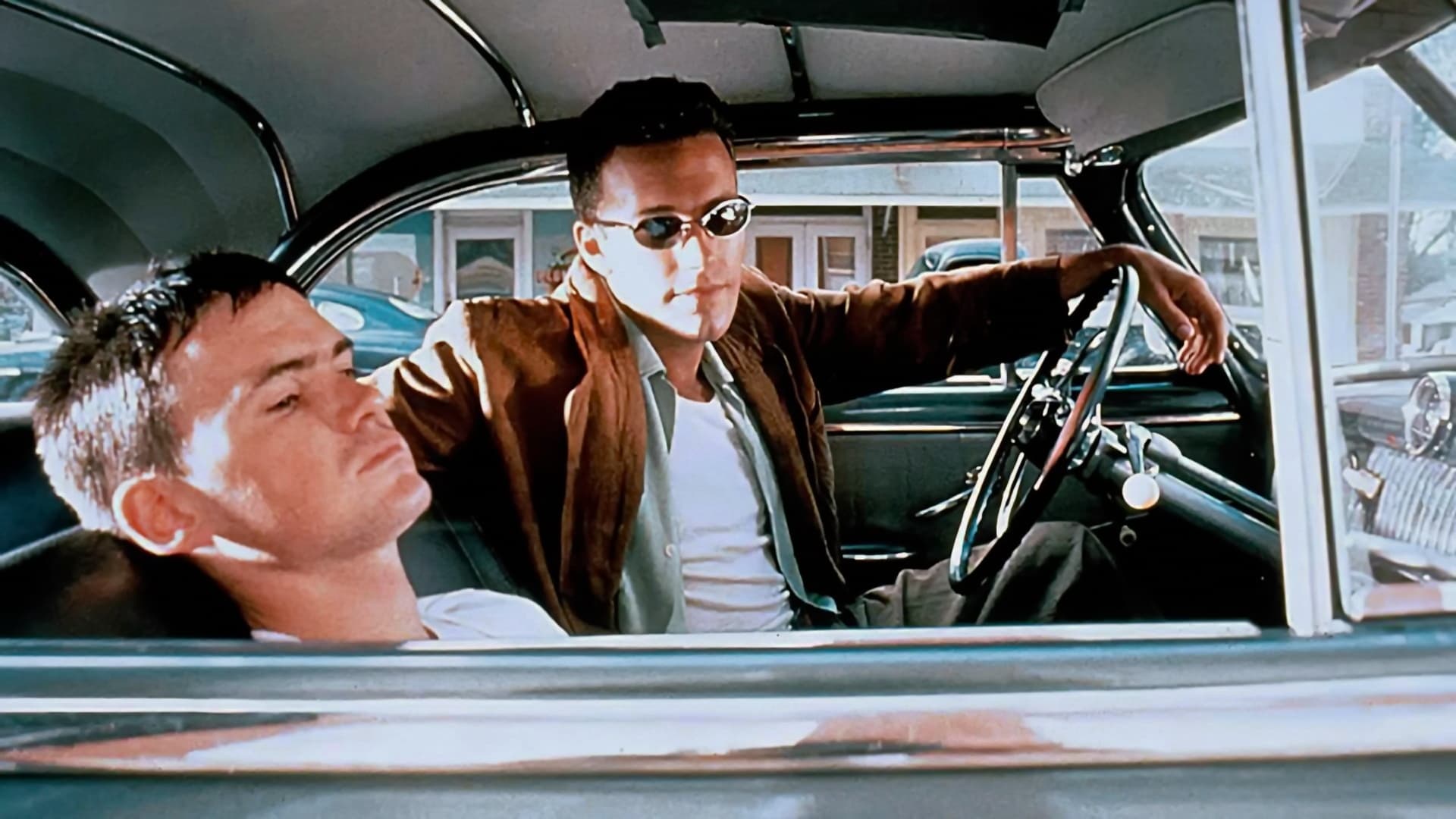
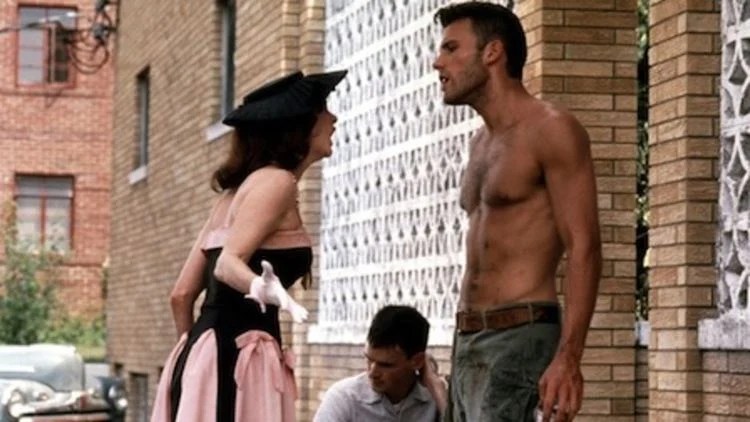
Re-edited for a “director’s cut” or not, 1997’s “Going all the Way” is best appreciated as an all-star-from-before-they-were-big-stars artifact of ’90s cinema. It’s a post-Korean War period piece with a couple of future Oscar winners — Ben Affleck and Rachel Weisz — rising starlet Rose McGowan and damned if that isn’t baby-faced Nick Offerman there as one of the jocks that Affleck’s character hung out with back in the day.

It’s fun seeing one and all in the bloom of youth, and catching a couple of Oscar nominees — Lesley Anne Warren and the late Jill Clayburgh — going at it as mothers of returning soldiers with competing ideas of who they should be and who should be their friends in the only film these two would make together.

Based on a seminal novel by Dan Wakefield, who wrote the screenplay, “Going All the Way” is a little “Catcher in the Rye,” a bit of “Breaking Away” (also set in Indiana, with a swimmin’ at the quarry scene) and a whole lot of Deep Thoughts and homoerotic subtext mixed in with a kind of “Best Years of Our Lives” disillusionment with coming home “a changed man.”

The film came out to indifferent reviews in 1997, and I can’t recall ever seeing it or whether it had the insipid/meant to be ironic voice-over narration hanging over its 103 minutes.

“Sonny felt weirdly removed from what was going on,” we can plainly see and and yet an unnamed narrator adds redundantly.

If that was added for this “50 minutes of never-seen footage” re-edit by director Mark Pellington (“Arlington Road,” “The Last Word,” “The Mothman Prophecies”), that uh, didn’t help.

And judging from this trudging, indulgent exercise in navel-gazing, I’d say the last thing it needed to be was 20+ minutes longer. There is no pace at all to this re-edit. Artful montages, fever dreams of our hero (Jeremy Davies, the kid GI “translator” of “Saving Private Ryan”) imagining this or that direction his life might take after serving his country, lots of establishing shots of 1950s Midwestern life cluttered with random images of traffic lights, borrowing tropes from better films and a stultifying self-seriousness burden a movie whose 1970 source novel had lots of ironic laughs.

Well, there is a fight/ that plays as a half speed rehearsal version and not a final take. I laughed at the incompetence of that.

Davies and Affleck play two GIs who connect on the train home to Indianapolis. “Gunner” (Affleck), the handsome, popular ex-jock is the one who recognizes “Sonny,” the classmate nobody knew who used to photograph all Gunner’s big games. Gunner reaches out, makes grand assumptions about how smart, philosophical and sage Sonny must have been to “stand back and observe” all the nonsense all the popular kids were obsessed with back then.

Sonny, whose Korean War was spent in military PR in Kansas, doesn’t correct Gunner, but we can guess that the popular jock is WAY overstating the depth of the nebbish opposite him. Gunner’s life was changed by visits to Japan, including one spent recovering from a war wound. His horizons expanded. Sonny? That hasn’t happened to him, yet. But he does feel a certain unease at his future.

And now that they’re “Back Home Again in Indiana,” Gunner makes Sonny his new drinking buddy and wingman.

As Sonny struggles to work up anything enthusiasm for his beautiful and adoring high school girlfriend (Amy Locane), skirt-chasing Gunner drags him out to museums, bars and and dances and fills his ears with the sounds of zen — “riddles” delivered in boorish monologues about Japan.

The jocks may want to bask in Gunner’s company once more, but he’s higher-minded than that. And all Sonny can do is fend off the babying his church lady mother (Clayburgh) still insists on and fret over just how much Gunner likes him for himself, or if Gunner’s figuring out the empty shell Sonny’s always been.

The one actually funny episode of their bromance is when Gunner grows a beard, and even his flirty floozy of a mom (Warren, as another “Victor/Victoria” vamp) wonders if he’s become a “communist” and if this nerdy photographer is the reason that happened.

Offerman plays one of the jocks who insists this “unclean” bearded weirdo he used to know should not be allowed in the country club pool. It’s a masterful condensation of 1950s conformity, bigotry and hysteria and it plays.

You can’t say that about much of the rest of the film. Longer does not mean “clearer” or more concise, more immersive or more of anything except scenes that reveal how much Affleck has grown as an actor since then and why Davies — last seen in “The Black Phone” — never became much of a star.

Weisz shimmers off the screen as an exotic Jewish classmate whom Gunner’s mom and the local anti-Semites don’t approve of, and McGowan sizzles, probably the last time one could see her in this bombshell light before a sexual assault unleashed personal demons that dog her and shape her psyche and reputation to this day.

Pellington? This was his debut film, after getting his start in music videos. Judging by his mostly colorless (I liked “Arlington Road,” didn’t hate “The Last Word”) subsequent output, this isn’t a movie “ruined” by a studio or a writer with final cut or anything of the sort. He made it as good as he could manage in 1997. And taking another shot at it 25 years later doesn’t improve it.

But see it for the glories of young stars about to take over Hollywood. Because it’s hard to figure out another reason to get all the way through this version of “Going All the Way.”

Rating: R, sex, nudity, alcohol abuse, some violence, profanity

Cast: Jeremy Davies, Ben Affleck, Amy Locane, Jill Clayburgh, Rachel Weisz, Rose McGowan, Nick Offerman and Lesley Anne Warren

Credits: Directed by Mark Pellington, scripted by Dan Wakefield, based on his novel. An Oscilloscope Labs re-release.

Running time: 2:06

Posted in Reviews, previews, profiles and movie news | Comments Off on Movie Review: A “lost gem?” Affleck, Weisz, McGowan and…baby-faced Nick Offerman in the re-edited “Going All the Way” (1997)

Movie Review: “Dylan & Zoey” talk out their trauma

Long before there was “mumblecore,” the sudden discovery that movies could be about conversation and almost nothing else, there was the theatrical “two hander.”

Plays like “Night, Mother” and “Frankie and Johnny in the Clair de Lune” and “True West” and “Waiting for Godot” and “Same Time Next Year” are the true antecedents of a film like “Dylan & Zoey,” a talking, downbeat two-hander about two childhood friends reuniting, discussing their lives and confessing their “issues.”

It’s not bad, as any film grappling with adult subjects and trauma automatically has a certain license and indulgence from the viewer. There’s an acting highlight or two.

If it fails — and it does– that falls on the depressing familiarity of those “issues” and performances that don’t elevate the tragic material often enough to wholly engage us. The pathos is subdued. The humor, what attempts there are at it, barely merits a smile. The whole plays as flat, never quite hitting a high, never remotely touching bottom.

Dylan, played by co-writer Blake Scott Lewis, is a writer and cartoonist working in LA. Zoey (Claudia Doumit) is the old friend who keeps photos of their good times together and long history on her phone, but has a hard time calling him up to let her know she’s in town.

They haven’t quite achieved “‘Happy birthday’ text message” separation, he notes. But their connection is long dormant. We wonder if her “here for a wedding” story is true. We wonder what the nature of their relationship was. We wonder what old wounds are about to be opened.

But we don’t wonder long. As their chat turns to chatter we pick up on his “28 year old virgin” status, which eliminates the thought they might have been a couple. And the moment he says “I’m no longer Catholic” we guess why that might be. That turns out to be one of the film’s few attempted dark jokes.

“I was an altar boy for six years. Why not me?”

No, he wasn’t molested in church. That happened closer to home.

And lest we think the sexy, sexual and sexually blunt Zoey is just here for the empathy, we learn about her rape, which of course Dylan knows all about.

Lewis, co-writing with director Matt Sauer, puts the two friends in a day and night-long conversation, sends the two out to a club and comes to conclusions that any sentient viewer will see coming a mile off.

The shared trauma wasn’t what connected them, which might have been interesting. As hers came much later, that moves that subtext into the realm of scripted “hook” or “gimmick.”

Doumit — of TV’s “The Boys” — has an exotic Lake Bell vibe about her, and scores when Zoey picks up Dylan’s ukulele and sings an adorable self-analytical tune that uses the styles of famous painters to describe her self-criticism, self-worth and state of mind. She doesn’t have enough to play to make this character interesting. A bit coarse, a little vulgar, maybe over-compensating due to her trauma, but maybe not.

Lewis, an actor, writer and director with TV credits for series I’ve never heard of (“In the Moment” aired or streamed where?) has written himself a character with a big trauma scarring his psyche, but plays the guy so blandly it’s hard to make the jump from sympathy to empathy.

Two-handers became popular “Let’s create work for ourselves” film projects during the pandemic, and some of those (“7 Days” for instance) turned out great. This has that a couple of bar/nightclub scenes, which suggest it could have been made late in the lockdown.

It’s sensitive enough. But with or without those lockdown confines, there just isn’t enough of a story arc to engage us, not enough going on and going wrong to make their stories 80 minutes worth of compelling.

Rating: unrated, sexual situations, profanity

Cast: Blake Scott Lewis, Claudia Doumit

Credits: Directed by Matt Sauter, scripted by Matt Sauter and Blake Scott Lewis. A Gravitas Ventures release.

Running time: 1:22

Posted in Reviews, previews, profiles and movie news | Comments Off on Movie Review: “Dylan & Zoey” talk out their trauma

Netflixable? Put that Pedal to the Metal for “Lost Bullet 2”

Perhaps I was too hasty to write off Renaults. Mais oui?

It’s also pretty obvious France has found its answer to Jason Statham. His name’s Alban Lenoir. Did you see “Lost Bullet?” Yeah. That putain de mère, right there.

I knew ten minutes into its sequel that I was going to break my years-in-newspapering rule to never park profanity in a review. But Gawd DAMN. Have you seen this “Lost Bullet 2” on the Netflix?

It picks up the action right after — and then a year and a half after — our rogue cop Lino (Lenoir) recovers from the near-death-experience that was the case that got his brother killed in the original film — drug smuggling across the Spanish border. Lino’s taken advantage of France’s civilized leave-from-work rules to heal his wounds, move into his car and go a little crazy.

But he’s hellbent on protecting his brother’s widow, Stella (Anne Serra) from the mob that murdered his sibling.

Four bad guys break into her house. There’s no time to call the working police. Lino barges in and proceeds to pummel and torture one of them — bones snapping, the works — in front of two others who say nothing but who HAVE to be thinking, “Damn I did not sign UP for this!” With every savage injury, Lino stares down the other two, daring them to stop him, giving them every chance to do what any sane thug would do.

RUN.

But they never do.

Writer-director Guillaume Pierret doesn’t change things up much from the first film, going just a little — ok a LOT — over the top in Lino’s obsession with revenge, and his “modifications” to his battering-ram-armed Renault 21 Eurobox.

What our writer-director serves up is near non-stop action, adhering to a couple of hard and true action film truths.

Number one, fistfights and no-holds-barred brawls are better than shootouts, every time. Shoot outs are for creaky old action stars who have lost their fastball.

Truth number two, why crash ten Renaults when France is full of them? Why not 100?

“Lost Bullet 2: Back for More” relentlessly serves up a brutal fight, then a pulse-pounding chase, then another fight, another chase and on and on.

It is pure action mayhem and it is a breathless, jaw-dropping hoot.

Lino is still trying to get to the mastermind who killed his brother. His former partner and immediate superior Julia (Stéfi Celma) isn’t hearing it. Her boss (Pascale Arbillot) won’t have it.

There must be dirty cops involved. And the mob has its own killers on the case. Lino thinks this goon Marco (Sébastien Lalanne) can either lead him to the Big Cheese, or simply accept his just deserts — getting beaten to death.

Shot in the arid South of France near the Spanish frontier, Pierret finds narrow roads for chases, scary spots for road blocks and whole sixpacks of Renaults — cop cars, SUVs, etc. — to blow up.

Stripping the plot down to such basics isn’t for everyone. But these are fights with real violence and obvious bodily consequences, car crashes that are as outlandish and physics-defying as anything you’ll see in your average comic book movie.

There’s nothing obviously digital going on here, kids. The French have long been aces when it comes to car chases.

If you like your fights righteously brutal and head-buttingly realistic and your car chases Vin Diesel free, this is the thriller for you.

You don’t have to see the first film to follow the second, because honestly, plot points went right out of my head right after watching “Balle perdue,” as they titled it in France. But if you haven’t, check out “Perdue” one, take a while to catch your breath, and dive straight into “2.” There’s nothing like’em on Netflix.

Rating: TV-MA, violence, and lots of it

Cast: Alban Lenoir, Stéfi Celma, Sébastien Lalanne, Diego Martín, Anne Serra, Pascale Arbillot

Credits: Scripted and directed by Guillaume Pierret. A Netflix release.

Running time: 1:39

Posted in Reviews, previews, profiles and movie news | Comments Off on Netflixable? Put that Pedal to the Metal for “Lost Bullet 2”

Movie Review: A Child’s Eye View of a family in crisis –“Manifest West”

Life in the city wasn’t working for them, so the Hayes family pulled up stakes and moved to “the mountain.”

Here, there’s no “job” for mom or dad, no bus ride to school for their two daughters.

We make the rules, now,” is Dad’s explanation and their creed.

Sister Mary is young enough to roll with it all. But tweenage Riley is taking this all in, accepting that they’re “pioneers” until she starts to understand what she doesn’t understand, acting out until she figures it out.

“Manifest West” is an engrossing, surprisingly serious portrait of a family in crisis. Whatever the Hayes clan hoped to get from abandoning the city, going “off the grid,” depending on themselves and their fellow grid-shedding neighbors, Riley, played by Lexy Kolker in a breakout performance, could be the one who figures it all out.

This wasn’t a conscious, measured choice. It was a Hail Mary pass, a move made out of desperation. Whatever self-sufficient dreams Dad — played by Milo Gibson in perhaps his best performance yet — had, he’s brought them there because he didn’t know what else to do.

Mom (Annet Mahendru of “The Walking Dead”) isn’t well. And whatever everybody else brought into the woods with them, that isn’t changing her condition or the strength of the single thread holding this family together.

Co-writers/directors Joe Dietsch and Louie Gibson gave us the “Most Dangerous Game” variation “Happy Hunting,” and graduate from the primal and visceral to something subtler and more sophisticated with this thriller with a hint of “Leave No Trace” about it.

The Hayes find themselves in a community of supposed like-thinkers. But Riley sees what we see — free range kids lashing out at this lifestyle, attitudes towards guns and authority that range from adult to infantile — and a world that tests the worthy and prepared, and the medicated, cityfied, unschooled and stressed equally.

Movies with a mental illness subtext always have a glib grasp of their malady, but our writer-director team keep that in the background, minimizing this common shortcoming.

Milo Gibson, brother of co-director Louie — both of them sons of Oscar-winner Mel Gibson — shows us the fears of a man out of his element, struggling to keep it together but increasingly frazzled and paranoid about his role as family provider and protector.

Mahendru manages a subtle enough version of wife Alice’s mental struggles. Michael Cudlitz plays a neighbor who reminds us that not everyone who uses firearms is a nut, and allows us to underestimate him with a performance of sober depth.

But young Kolker, of TV’s “Shooter” and “Agents of S.H.I.E.L.D” is our guide into the psyche of a tween trying to turn into a teen amongst the other kids in this world. Riley makes her own mistakes, flunks her own tests, comes to her own conclusions and might very well have her own mental issues thanks to the consequences of her family’s move, her father’s actions and her own response to them. And Kolker lets us see it all, and read just what is sinking in, what her next wrong move might be with us worried for her all along the way.

Rating: unrated, violence, teen drinking, profanity

Cast: Milo Gibson, Lexy Kolker, Annet Mahendru and Michael Cudlitz

Credits: Scripted and directed by Joe Dietsch and Louie Gibson A Samuel Goldwyn release.

Running time: 1:31

Posted in Reviews, previews, profiles and movie news | Comments Off on Movie Review: A Child’s Eye View of a family in crisis –“Manifest West”

Veterans Day, 2022, Canaveral National Cemetery

Posted in Reviews, previews, profiles and movie news | Comments Off on Veterans Day, 2022, Canaveral National Cemetery