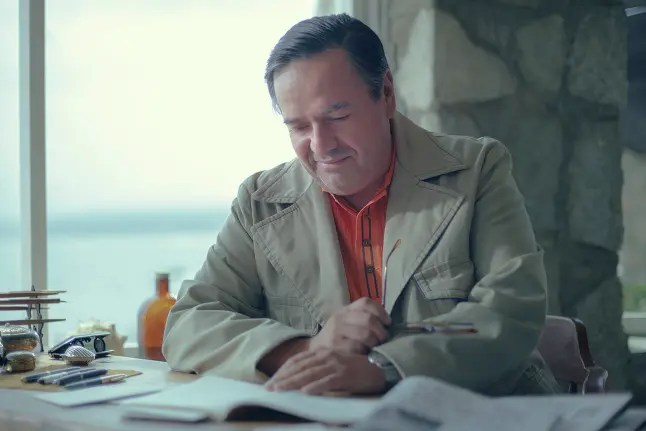
Netflixable? “Delivery by Christmas” gets a little lost along the way

A lot of charm and potential cuteness gets lost in the holiday shuffle and stumbling structure of “Delivery by Christmas,” a light and what could have been more amusing seasonal romantic comedy from Poland.

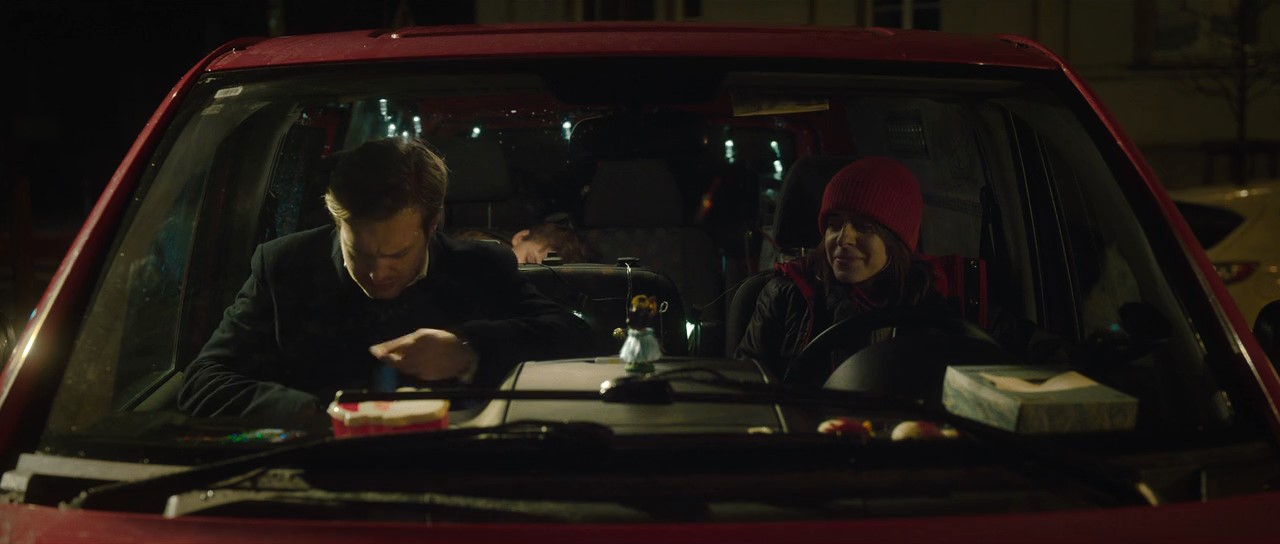
A lot of packages get delivered to the wrong addresses right before Christmas. And the plucky single-mom delivery lady (Monika Frajczyk) finds herself stuck with an irate customer as passenger (Piotr Pacek) as she scrambles to undo everything the mistaken deliveries have led to.

The gist of what goes wrong in Aleksandra Kulakowska and Maciej Prykowski’s farce is that word “scrambles.” The film has no pace because the script shifts us back and forth in time, “a few hours earlier” usually. Every time we see how this or that delivery mistake had consequences, the picture pauses as it struggles to find what’s funny in those situations.

And every time we step away from our mismatched co-drivers, our investment in them as a couple drops and the stakes get lower.

Marysia (Frajczyk) is so harried at this time of year that she has to drag her pre-schooler (Franciszek Krupowicz) along on deliveries. That’s how he stumbles into Krzysiek (Pacek), a legal exec trying to get some contracts finished before the holiday.

The movie’s “meet cute” is poor little Maks running off to a restroom and realizing he’s too short to manage the man-sized urinals in Krzysiek’s office building. So Krzysiek helps, and finds himself stuck and distracted by a child fascinated by the paper shredder in his office. When Mom finally retrieves him, he’s already made a mess, so she owes Krzysiek a favor.

That’s how she’s arm-twisted into picking up his grandmother’s ring from Krzysiek’s grumpy, practical-joker grandfather (Zdzislaw Wardejn), who sends him a prank gift instead. So much for Krzysiek proposing to his live-in girlfriend on Christmas Eve.

Marysia manages to accidentally offend her new boss, a hard-drinking, unhappy loner, who drunkenly sabotages all her deliveries as revenge. She’s got to make all those botched packages right on Christmas Eve as she A) tries to track down Maks’ present, in transit and B) has to cope with Krzysiek, who for some reason won’t go over and collect the damned ring in person and straighten out this business with his grandfather like an adult.

Over a long, harried day — with repeated pauses to either revisit the original delivery or show us what “really” was dropped off, and how that boo-boo shook up the various folks on the receiving end — the two of them will motor hither and yon in a diesel delivery van as most of Poland stays home and begins celebrating.

“Delivery,” titled “Jeszcze przed swietami” in its original Polish (watch with subtitles or dubbed into English), has a guy get a sonogram photo, learning he’s a dad-to-be, throwing his family into a tizzy and him into a tailspin. Another gets a sex statue intended for someone a woman is trying to come on to, and so on.

And every time the picture stops to tell us those detour stories — only one of which is truly funny — the main narrative thread is left dangling and the romance-to-be is paid short shrift.

Frajczyk (“Leave no Traces”) and Pacek (“Bridget Bardot Forever”) are decent enough performers. Their low energy turns here point to a screenplay and structure that never generates the friction that leads to heat in a romantic comedy.

If the filmmakers had told this story in order, they might have picked up on how the picture lacks the pacing it takes for comedy to work. The filmmakers might also have realized that some of their side trips should have wound up on the cutting room floor.

Some passages engage, and many more just stumble along, halting the film’s flow as they needlessly and charmlessly delay this “Delivery by Christmas.”

Rating: TV-MA, sexual situations

Cast: Monika Frajczyk, Piotr Pacek, Franciszek Krupowicz

Credits: Directed by Aleksandra Kulakowska and Maciej Prykowski, scripted by Alexsandra Kulakowska, Maciej Prykowski and Maria PulawskaA Netflix release.

Running time: 1:37

Posted in Reviews, previews, profiles and movie news | Comments Off on Netflixable? “Delivery by Christmas” gets a little lost along the way

Movie Preview: Skarsgard, Mia Goth and Cleopatra Coleman get lost in the “Infinity Pool”

A trippy trip of a picture from Neon and directed by a Cronenberg, but not THAT Cronenberg. Check it out.

Posted in Reviews, previews, profiles and movie news | Comments Off on Movie Preview: Skarsgard, Mia Goth and Cleopatra Coleman get lost in the “Infinity Pool”

Movie Review: A Pretty Influencer finds out what it means to be “Shook”

“Shook” is a half-hearted attempt at a moral parable wrapped in a standard-issue “She’s all alone” and “She has to complete all these tasks/puzzles/challenges” horror film.

It’s a gimmicky thriller hung on the “influencer” hook. Seems like every other film has that marketing fad tied into its story some how, and not just Hollywood.

A beauty vlogger (Genelle Seldon) is the curtain-raiser here, a vapid living doll who has an accident with her not-toilet-trained puppy as she’s being interviewed on yet another red carpet.

The most ingenious gag in director and co-writer Jennifer Harrington’s film might be having the camera pull back to show just how “fake” “red carpet” events are these days. This isn’t a movie premiere, an “exclusive” party or fundraiser. No, it’s just a backdrop, lighting and fake celebrities interviewed by a fake interviewer on a 20 foot swatch of carpeting, all of it ginned up for online consumption.

But cleaning herself up in the bathroom — down to her Spanx — is where this makeup influencer runs afoul of “The Southland dog killer.” Only the dog gets away this time, and influencer Genelle is the one who gets it.

That invites a whole lot of online tributes from her fellow red carpet mavens, with #MakeupByMia (Daisye Tutor of “Come as You Are” and “Funny Story”) winning the virtue signaling sweepstakes by skipping a live-streaming event to dog-sit for her sick sister Nicole.

Big sister (Emily Goss) cared for their mother while busy-busy Mia was “in school” and sharing her pretty girl life online for cash and Internet fame. Now, little sis is giving something back to her sickly sister.

But she can’t focus on her self-promoted good deed and the dog in peace because she’s constantly logged-on, badgered by her partying influencer pals Lani (Nicola Possner) and Jade (Stephanie Simbari), with Jade very much a threat to hook up with Mia’s “super-hot” beau, Santi (Octavius J. Johnson) if she does join in their promotional party.

That’s when the friend request and the text messages start to come in from the stalker next door. That’s when Nicole asks to see a photo of her beloved pug before bedtime, and Mia can’t instantly provide it. Because Chico has disappeared.

Mia finds herself juggling calls, getting a more and more creepy vibe from this neighbor and growing more and more concerned about the missing dog.

It isn’t long before the calls turn menacing, everybody in Mia’s world seems to be in peril, and no, she cannot call the cops, even if 911 picked up by the 25th ring.

“Why are you DOING this?” never gets an answer, but all will become clear as this villainy grows murderous and the inevitable “explanations” flood into the third act.

You know how these things are constructed — texted threats, “voice changer” apps, harder and grimmer “challenges” facing our “good girl” branded heroine.

Tutor isn’t bad, but the way the plot set-up is scripted and acted by her co-stars gives away too many secrets too early. Long review short — ok, LESS long — “Shook” is a gimmicky ticking clock horror thriller, some of whose gimmicks work, with that ticking clock never quite driving the action as fast as one would like.

A little urgency here and there, a heroine’s believable panic and terror over the grisly dilemmas she finds herself facing, lashed to some seriously lame payoffs to the assorted mysteries keep “Shook” on shaky, not scary ground.

Rating: unrated, graphic violence

Cast: Daisye Tutor, Emily Goss, Nicola Possner, Stephanie Simbari, Octavius J. Johnson and Genelle Seldon

Credits: Directed by Jennifer Harrington, scripted by Alesia Glidewell and Jennifer Harrington. An RLJE film released on Shudder.

Running time: 1:29

Posted in Reviews, previews, profiles and movie news | Comments Off on Movie Review: A Pretty Influencer finds out what it means to be “Shook”

BOX OFFICE: “Wakanda” wins its fifth straight weekend — Will it be its last?

Data and graphic from @boxofficepro.

Posted in Reviews, previews, profiles and movie news | Comments Off on BOX OFFICE: “Wakanda” wins its fifth straight weekend — Will it be its last?

Movie Review: An Italian in Witness Protection doesn’t take to “Paradise”

At some point the administrator in charge of a Sicilian witness protection program has to admit to the slushie vendor who witnessed a Mafia hit and was spirited off to the Swiss Italian alps that yes, the hitman our witness fingered turned state’s evidence. Yes, he had to be put into protection as well. And yes, they did send him to the same tiny village our slushie vendor will never be able to ply his trade in.

And yes, they uh, gave him the same last name.

“Are you SH—–g me?” is funny in English, or Italian with English subtitles.

Well, you know how Italians do things, the administrator shrugs, and we all have a chuckle at the oxymoron Amanda Knox remembers as “Italian justice.”

That’s the gist of “Paradise,” or “Paradise: Una nuova vita,” a deadpan Italian farce in the tradition of most every other “witness protection” comedy — from “Sister Act” and “My Blue Heaven” to “Lillehammer” and “The Family.” There’s a little “fish out of water,” a bit of made man “bull in a china shop” mayhem, and that fateful day when the mobsters figure out where our heroes are and come looking for them.

Vincenzo Nemolato plays Alfio, whose life running his pushcart business forever changed when a sicario (hitman) decided to carry out his latest contract right in front of him, barely noticing he was there.

The cops want Alfio’s testimony, but his gorgeous, pregnant Sicilian wife (Selene Caramazza) counsels “schtum.” Keep quiet. It is the way they do things in mafiosa-land. “Trust your family, not ‘them.'”

“NO,” he mans up. He will do this for themselves, for their unborn child, their non-mobster neighbors and their way of life. He will go into witness protection, and Lucia, you’ll join me. Right? Right?

Alfio is spirited off the some place alpine and moved into a disused apartment building called “Paradise.” Lucia remains behind. And the mob makes a big show, rolling around their small town in a pickup with loudspeakers on the roof, playing music to get everyone’s attention, tossing an empty coffin in front of their apartment.

Alfio’s earned a mob funeral. He’s just not dead yet.

Things aren’t going great up where the snowy season really cuts into slushie sales. Our witness, renamed Calogero (a nakedly Sicilian name, apparently) tries to fit in, joining the parish priest’s (Branko Zavrsan) folk dancing troupe, catching the eye of fetching blonde single mom barmaid Klaudia (Katarina Gas).

And then this grizzled, serious-looking fellow (Andrea Pennacchi) shows up. Could he be? No, surely not. Paranoid Calogero makes frantic calls to his contact, who brushes off his concerns. So our hidden witness must take matters into his own hands.

I mean, Mr. Menacing Stalker Vibe has ALSO moved into the Paradise, after all.

Maybe Alfio can get some shotgun lessons from Klaudia. Google “Ways to kill somebody without a gun” on the Italian Internet. Practice “Are you talkin’ to ME?” in front of the mirror.

Director Davide Del Degan and screenwriter Andrea Magnani manage plenty of amused chuckles, with a couple of decent belly laughs in this over-familiar laugher. Nemolato, who has a clown’s features, something played-up when Alfio dyes his curly hair reddish, has done his share of thrillers and plays it pretty straight, which makes his double-takes land.

Pennacchi looks and sounds like a seasoned, salt-and-peppered killer, which allows his “secrets” to pay off comically.

And the picture practically skips by, with a little scenery, a little local color, some goofy costumes and dancing and a hint of bloody menace hanging over it all.

“Paradise” doesn’t reinvent “witness protection” as a comic concept. But it get the basics just right, which is enough to recommend it.

Rating: unrated, a bit of shooting

Cast: Vincenzo Nemolato, Selene Caramazza, Andrea Pennacchi, Katarina Gas

Credits: Directed by Davide Del Degan, scripted by Andrea Magnani. A Film Movement+ release.

Running time: 1:25

Posted in Reviews, previews, profiles and movie news | Comments Off on Movie Review: An Italian in Witness Protection doesn’t take to “Paradise”

Netflixable? A Chilean lad looks for love lessons from Neruda and his “Burning Patience”

“Burning Patience” is a Chilean romance that comes to your Netflix queue saddled with some baggage.

You have to ignore the fact that this is the third film based on the very same source material. The Chilean screenwriter and novelist Antonio Skármeta first scripted a Chilean film titled “Ardiente paciencia” (“Burning Patience”) in 1983, and turned it into a novel in 1985.

You have to get around memories of Michael Radford’s Oscar-winning film 1994 “Il Postino/The Postman,” about a simple Italian postman learning how to express the poetic language of love from Chile’s greatest poet, Pablo Neruda. You must erase any thought of how the story was reset on a sleepy sundrenched Italian island, Neruda during his exile years. And you have to forget French actor Philippe Noiret’s charismatic, bemused and blustery turn as the poet in that film, and the sad, simple turn that earned Massimo Troisi a posthumous Oscar nomination — he died before “The Postman” came out.

That’s a lot to forget. But if you can, you can take this latest version, a lightly charming romance, on its own terms.

Here, as in the novel, it’s a Chilean story with Chilean settings and that famed politician, diplomat and poet — and hated communist in some quarters — living on Isla Negra. Pablo Neruda (Claudio Arrendondo) might have Nobel Prize thoughts in the back of his mind (he’d win two years after this film’s summer of ’69), but mainly he’s hoping to spend his last years writing. Instead, he’s being recruited, possibly even drafted to run for president of Chile. And he’s being distracted by this kid, Mario (Andrew Bargsted), a fisherman who becomes a postman with but one patron to deliver to. This lad wants to woo the fair newcomer in town, Beatriz (Vivianne Dietz) with his words. He could use some help.

This version of Mario is just out of his teens, not “simple,” merely under-schooled and unworldly, telling his father he has no interest in carrying on the family fishing tradition. Whatever he plans to do with his life, first he needs a job. The post office is hiring.

“Are you a mailman?”

“No. But I have a bicycle.”

That’s how he lands the gig, a postman with but one special client to deliver to, a great poet he’s always interrupting in thought as he gazes at the sea or writing at his desk.

That new waitress turns Mario’s head every time he passes her at the hostel and cantina she and her mother (Paola Giannini) have taken over. He stares at lovely Beatriz, and Beatriz stares back at lovely Mario. Too bad her mother isn’t having it.

Her efforts to keep them apart inspire him to write Beatriz love poems. But he has the cheek to plagiarize Neruda. This is Chile, chico. EVERYbody knows Neruda. By HEART.

That’s a cute conceit, the way so many people know their poet/activist. He drew crowds in the hundreds of thousands to his readings, which doubled as political events. And Beatriz knows his words when Mario’s passing them off as his in his letters.

The actor playing Neruda looks a bit like the famous poet, and if you watch this in Spanish (with subtitles) and not in dubbed English, Arrendondo does a good job of getting across the florid phrasing of a great poet, if not all of his charisma.

But I dare say even if you’ve never read the book or seen “Il Postino” you’ll realize that there needs to be a lot more comical exasperation over the constant interruptions. Noiret gave Neruda a cuddly, irritable edge, the first person Mario must win over before even thinking about wooing Beatriz.

That’s missing here, and sorely missed.

But letting the love story between two poets take center stage kind of works. She catches him in his lies (plagiarism) and they exchange notes, with a young nun passing them back and forth as Beatriz poetically puts Mario down and challenges him to write and create and express himself like a real poet.

“Your smile spreads like a butterfly on your face,” is a good start.

The funniest stuff here is the mother who just isn’t having this. In a movie about young love, poetry and a great poet’s intervention, it’s the disapproving mom who gets the best lines.

“All men who first touch you with their words will go much further with their hands later!”

“Rivers carry stones. Words carry PREGNANCIES!”

Our beguiling leads ensure that we’ll maintain interest as they move beyond the nun-o-grams and start passing messages along on the dedication line of the local radio station. But will her mother finally figure out a way to keep her treasure from marrying a postman?

Director Rodrigo Sepúlveda (“My Tender Matador”) and screenwriter Guillermo Calderón separate their film from the earlier and better British-directed Italian version. But they never improve on it, and their movie seems almost self-consciously aware of that.

“Burning Patience” is not nearly as winning and bowl-you-over romantic as “Il Postino,” but it works well enough at times and it finishes wonderfully. The acting is generally good, with Giannini the stand-out. If our Neruda had been more bluff and blustery and larger than life, this could have really been something special.

Rating: TV-14, suggestions of sex

Cast: Andrew Bargsted, Vivianne Dietz, Claudio Arredondo, Paola Giannini, Rodolfo Polgar, Trinidad González, Pablo Macaya and Amalia Kassai.

Credits: Directed by Rodrigo Sepúlveda, scripted by Guillermo Calderón, based on the novel by Antonio Skármeta. A Netflix release.

Running time: 1:30

Posted in Reviews, previews, profiles and movie news | Comments Off on Netflixable? A Chilean lad looks for love lessons from Neruda and his “Burning Patience”

BOX OFFICE: Another apocalyptic weekend, as nothing new makes any noise and “Wakanda” waves a slow “Good-bye”

The prestige pictures are supposed to be showing up and making some box office noise on this, the second weekend of December.

But “Empire of Light” won’t manage much, “The Whale” isn’t opening wide and “Spoiler Alert” is neither a contender nor anything anybody’s heard about, a movie that “escaped” rather than was released by those cinema smugglers at Focus Features.

“Avatar” is on the way, and until it gets here, nothing but empty cineplexes as “Wakanda” makes a decent $11 million, “Violent Night” pulls in another $8, “Strange World” bombs and “The Menu” and “Devotion” fail to stop the bleeding.

I don’t know if a big Netflix rollout of “Pinocchio” and a bigger push for “Glass Onion” would have made a difference or not.

“Avatar 2” should have been a Thanksgiving movie, theater owners would be right to argue.

When all the tickets sold add up to $37 million, Hollywood’s lack of product is a death sentence for your local cineplex.

Posted in Reviews, previews, profiles and movie news | Comments Off on BOX OFFICE: Another apocalyptic weekend, as nothing new makes any noise and “Wakanda” waves a slow “Good-bye”

Classic Film Review: Frankenheimer and Peck learn what Johnny Cash meant when he sang “I Walk the Line” (1970)

The last time I interviewed screen legend Gregory Peck, I had the temerity to ask if there were any “regrets” among his 58 on screen credits.

He didn’t hesitate. “McKenna’s Gold,” he said. Something about the unpleasant ensemble experience, the silly story, the odd action beats, riled him decades after making it. And he didn’t want to dwell on it.

So I did two tactful things, as one should when meeting a screen idol of one’s youth. I dropped it. And I didn’t contradict him. Because while the cheesy action epic “McKenna’s Gold” wasn’t anybody’s idea of an awards’ season contender, and there are some who ridiculed his Nazi turn in “The Boys from Brazil,” “I Walk the Line” might be the consensus selection “worst film” of those who followed Peck’s long and storied career.

The vague memories of my parents taking it in on TV, being Johnny Cash fans, are all that’s stuck with me about it through the decades. But being a John Frankenheimer completist, I thought I’d take another look.

It’s a 1970 film parked squarely in the highly-paid doldrums of Frankenheimer’s career, years removed from “The Manchurian Candidate” and “The Train,” coming after “The Gypsy Moths” and the disastrous “The Extraordinary Seaman.” According to Peck, Frankenheimer skipped town before editing “I Walk the Line” to go make an Omar Shariff bomb titled “The Horsemen” overseas. He later made the “French Connection” sequel, the terrorism blockbuster (and bust) “Black Sunday,” and didn’t really salvage his reputation until 1998’s “Ronin,” after first reaching the very bottom, thanks to “The Island of Doctor Moreau.”

Frankenheimer had Alvin Sargent, already an acclaimed screenwriter (“The Sterile Cuckoo”) and bound for Oscar glory in the late 70s (“Julia”) and early ’80s (“Ordinary People”), the man entrusted with two Tobey Maguire “Spider-Man” sequels in the 2000s.

And he had an Oscar winning star twice as old as his leading lady, a tall, thin and heroic actor hitting the end of his leading man years, wholly miscast as a “righteous” but restless rural sheriff facing an existential crisis, and temptation, in the form of a hillbilly moonshiner’s daughter stereotype played by Tuesday Weld.

It’s a Cracker Gothic Tennessee tale, similar to the grittier and even more stereotypical “Lolly-Madonna XXX” which came out a few years later, neither of them great films but the latter outing much more exciting and watchable.

Sheriff Tawes is introduced, staring mournfully out over a Jenkins Co. dam and reservoir (Gainesboro, Tenn. was the location), pondering the past and staring at the ever-narrowing confines of his future. He lives with his aged father, tween daughter and a chatty wife (Estelle Parsons) whom he barely speaks to.

And then he pulls over some joyriding rednecks, a boy recklessly at the wheel with his older sister (Weld) cackling at their hijinks. Maybe the sheriff notes what’s in the bed of that 1940s Ford pick-up. Maybe he’s distracted by the pretty 20something. But her widowed father (Ralph Meeker, in fine form) is all questions when she gets home and confesses.

“Did he TOUCH you? Did he WANNA touch you?” And most importantly, “Did he see the SUGAR?”

Alma and her kin are moonshiners. And veteran character actor Meeker lets us see the wheels spinning as he turns over in his head how he can turn that “attention” to their advantage.

An oily, lazy and officious “Federal” Internal Revenue man (Lonny Chapman) is in town, a “revenuer” looking for moonshiners. The drawling, shifty and ever-spitting deputy (Charles Durning) is eager to help. The sheriff? That just got a bit more complicated.

“People here just try to survive, that’s all. Some make a little moonshine, don’t really harm nobody.”

His lust might be getting the better of him, not that Peck was ever that good at playing lust. But something’s blinded him, because anybody watching this can see the honey trap he’s walking into and the line he hasn’t walked, not since we first met him, contemplating ways to get out of this backward hellhole.

Southern stories like this turned up in the ’60s and ’70s, often dealing with race (“In the Heat of the Night”) or some florid Tennessee Williams vision of a decayed, corrupt South where even the “local characters” could no longer fit in.

The Eastern half of Tennessee was never plantation country, so “race” in the film is limited to a single slur. Even today, Gainesboro, Tennessee is 94% white. We never see a Black face.

The accepted rural white Southern tropes of “Deliverance” are here, in montages of the old, the barely-above-the-poverty-line locals and the tumbledown houses. We never see evidence of how “without this still, we ain’t got nothing,” because even with this still, the McCain family has nothing — an abandone kid house they may rent, a derelict grist mill where they hide the still.

That lowers the stakes, which are pretty low to start with. There isn’t much to this script, based on a Madison Jones novel. Which is one reason Columbia Pictures bought the rights to a few Johnny Cash tunes to give this a timeless, tragic folk song narrative quality — the title tune, “Flesh & Blood,” etc.

Peck does what he can, and Weld, Meeker, Parsons and Durning carry more than their share of the load, seeing as how little Sheriff Tawes says and how blind he is to what’s coming.

And in the end, we’re left with the frustrating feeling that we still haven’t seen what this movie is and is about.

Blame Peck. Bame Frankenheimer, who really lost his mojo through most of the ’70s and all of the ’80s. A few good lines of dialogue don’t absolve Sargent, either.

It must have been a relief to any and all the survivors of “I Walk the Line” when “Walk the Line” came out and erased this black mark from internet searches, a “classic” that never was.

Rating: PG-13, violence, a racial slur, one sexual situation

Cast: Gregory Peck, Tuesday Weld, Estelle Parsons, Charles Durning and Ralph Meeker.

Credits: Directed by John Frankenheimer, scripted by Alvin Sargent, based on a novel by Madison Jones. A Columbia release on Tubi, Amazon, etc.

Running time: 1:37

Posted in Reviews, previews, profiles and movie news | Comments Off on Classic Film Review: Frankenheimer and Peck learn what Johnny Cash meant when he sang “I Walk the Line” (1970)

Netflixable? Will this union be saved, or savaged by “The Marriage App?”

“The Marriage App” is an Argentine rom-com — in Spanish with subtitles, or dubbed into English — about the Great Mystery of Marriage, or as the writer Tom Robbins once put it, “how to make love stay.”

Rocio Blanco’s script cycles through any number of romantic comedy/marriage movie tropes in a sometimes interesting but in the end kind of heartless effort to throw “there’s an app for that” this eternal question.

It opens with a “meet cute” that leaves us with more questions than it answers. He (Juan Minujín) tears the door off her (Luisana Lopilato) new car just as she’s getting into it.

Here’s what we learn about Federico. He’s careless, disorganized and distracted — “self-absorbed.” He’s going to dental school but has no intention of buying into that “boring” line of work. He’s not only looked away and caused a crash, he’s let his insurance inspire. And he says “I swear” that he’ll do this or that to make things good, as if it’s his favorite “get out of jail free” crutch. He’s a screwup who doesn’t own-up or face the consequences of the moment.

Second worst of all, he turns this calamity into a come-on. He asks her out. Worst of all? That’s the fact that furious Belen, despite all logic, agrees to go out with him.

All we learn about her is that she’s beautiful, has enough hair for three or four women, and has a temper.

And they lived happily ever after, right?

“The Marriage App” picks up their love story 14 or so years later, when he’s a distracted, self-absorbed dentist who cancels appointments and does little or nothing around the house to make life work for her and their two children.

Belen, co-owner of an upscale toy shop, coddles their almost-ignored kids and puts up with a lazy, lying housekeeper. Because she’s learned to lower her standards, thanks to Federico, maybe?

A double date with a “troubled” couple (her sister and brother in law) who’ve brought back the romance is what tips them off about Equilibrium, a smart watch app company that monitors behavior via a lot of tech magic, and rewards relationship-positive actions — help, thoughtfulness, attention to the others’ sexual needs — with “miles.” You pile up the miles for yourself and get personal, special treats.

It’s a pretty obnoxious and obviously game-able set-up bound to be manipulated by someone who wants to “win” — i.e., get something they want such as a toy, a trip or a sexual fantasy — just by making a point of pretending to think of the other person first.

Federico starts gaming the system because he wants to go with his cooking club buddies to a competition in Cancun. Belen gets wise and games the app to fight back.

Will this marriage make it to its next 3000 mile service visit?

The premise is clever, and sets us up for a sort “The Gift of the Magi” punch line. But that’s a norteamericano short story, and I guess they don’t know O. Henry that far south. Nothing remotely as interesting is introduced to a narrative that plays increasingly like a sitcom episode padded out to 100 minutes.

Lopilato and Minujin aren’t bad actors. But they’re playing a “couple” I didn’t believe in from the start, and whose self-involved, vindictive and manipulative behavior strips any reason to root for either of them separately or both of them as a couple.

What’s more, director Sebastián De Caro and screenwriter Blanco pull their punches so that this never turns as dark and edgy as it might have become. And doing that robs “The Marriage App” of ever really making its point, if it ever had one.

They had the germ of a good idea, gimmicky as it is. They didn’t do nearly enough with it.

Rating: TV-MA, f-bombs, adult situations

Cast: Luisana Lopilato, Juan Minujín and Cristina Castaño

Credits: Directed by Sebastián De Caro, scripted by Rocío Blanco. A Netflix release.

Running time: 1:41

Posted in Reviews, previews, profiles and movie news | Comments Off on Netflixable? Will this union be saved, or savaged by “The Marriage App?”

Movie Review: A Neapolitan Thespian in Winter — “King of Laughter”

“The King of Laughter,” director and co-writer Mario Martone’s screen biography of the comic actor and playwright Eduardo Scarpetta, finishes with a flourish. Late in life, the famed parodist, played by Toni Servillo, is in court, defending himself against charges of plagiarism by a playwright whose work he spoofed for laughs.

Scarpetto, a major figure in Italian theatrical history and already local legend in his native Naples, puts on the performance of a lifetime, “playing” to the judges, attorneys and audience, rolling his Italian “r’s” and putting on the Ritz as a poor man wronged and a great artist defamed.

And you think, “Damn, Mario Martone. Why didn’t you get to this earlier?”

First, we had to get a GENEROUS helping of Scarpetto’s work on the stage in an opening act that quotes extensively from one of the productions in his repertoire, a show seen from on-stage, where Scarpetto seems to have most of his family performing with him, and backstage, where the seamstress and others in his family wait in the wings for their cues, babysitting those too young to join the act.

But the play in question either doesn’t translate (in Italian with English subtitles), or simply doesn’t amount to anything modern audiences outside of Calabria would go for today. It climaxes with a messy meal that turns into a near food fight.

The film’s middle acts get into the true messiness of Scarpetta’s life. Yes, he and his brood live in a mansion on a hilltop, a residence famed because he paid for it with the take of one show — Villa La Santarella. On the face of it he’s had carved “Hear I laugh” as his address.

The big man in his 60s needs that huge house. He keeps three families, two of them, with other relatives, under that roof. His wife, Rosa De Filippo (Maria Nazionale) has three children, including his son Vincenzo (Antonio Lubrano), whom his wife says is the product of a fling with the then-king of Italy. Eduardo nicknames him “King’s Son” and rides him harder than his other children, and he rides most of them pretty hard — slaps for missed cues and harder slaps for blown lines. Then, there’s his child with the company’s costumer, Rosa’s niece Anna (Chiara Baffi). But his “official” newest mistress is the younger and prettier Luisa (Christiana Dell’Anna), who has three children by him.

None of the illegitimate children have been told their “Uncle” is their papa. All the adults interact freely, comfortable with what’s going on, with only Luisa feeling awkward at this ridiculous arrangement.

“In this house, we don’t know what embarrassment is,” Rosa reassures her.

So much time is spent establishing this large brood, showing how Eduardo adapts their repertoire — old favorites, new parodies, etc. — to fit which kid is “ready” to be brought into the act — that Martone doesn’t get to the meat of this movie until right about the time many viewers would be inclined to bail.

“Ok, WHO is this kid? And who is that woman?”

“The King of Laughter” is about Scarpetta’s shark-jumping moment. An old hoofer who made his fortune with plays that drew in the masses and the upper classes, he’s facing a new proletarian art form for actors, cinema (briefly glimpsed). And it’s right at this moment that he gambles, cap-in-hand, with a dramatic playwright (Paolo Pierobon) whose tragedy we’ve seen Eduardo watch, stifling his delighted grins and chuckles as he sees how “The Daughter of Iorio” coup be twisted into a cross-dressing farce, “The Son of Iorio.”

We get a taste of the funnyman’s age-old desire to be accepted and taken seriously, fawning as he interrupts Don D’Annunzio mid-orgy (apparently) to get his approval, his blessing and his written permission to parody his work.

Not that this has been legally required up to now. And not that the written permission is given. We, unlike Cavaliere Scarpetta, smell a trap.

Servillo, of “Il Divo” and “The Hand of God,” is in grand form here, every inch of him the wealthy, self-made and overdressed star. At times, especially in that finale, we can see what the Italian public would have seen back then — a comic who is funny in his bones.

But “The King of Laughter,” “Qui rido io” in Italian, is in many ways as messy as the personal and professional life who is its subject. Martone gets bogged down in the family melodrama and drags out that first act’s play (Wasn’t there a funnier one to sample?) so much that he wears down our interest in what’s going on.

Taking the company on the road? Sure. Snippets of others shows, classic bits and characters? Why not?

It’s all the soap operatic “You need to make a will” melodrama of the guy’s many families that bog it down. The bright bits make one believe there’s a brisk, pointed and poignant movie in this — one that clocks in a good 30 minutes shorter than this “King” demands.

Rating: unrated, adult situations

Cast: Toni Servillo, Maria Nazionale, Cristiana Dell’Anna, Chiara Baffi and Paolo Pierobon

Credits: Directed by Mario Martone, scripted by Ippolita Di Majo and Mario Marton. A Film Movement release.

Running time: 2:13

Posted in Reviews, previews, profiles and movie news | Comments Off on Movie Review: A Neapolitan Thespian in Winter — “King of Laughter”