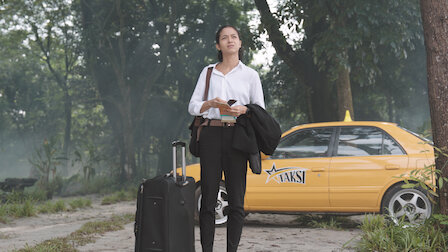
Netflixable? Homeless, aged “Togo” crosses drug dealers in his corner of Montevideo

Uruguayan filmmaker Israel Adrián Caetano gives an old Hollywood formula a fresh workout in “Togo,” a tale of a homeless old man that the local toughs underestimate at their own peril.

This Around the World with Netflix title is a tight, downbeat story as compact as its seaside Montevideo location. And while its ending may seem revenge-thriller cut and dried, we’re left wondering as the closing credits roll.

Whatever he used to be, Togo (Diego Alonso, quite good) has let his world shrink to a single city block, “my block,” in which he collects tips for directing shoppers into the compact parking lot of the local supermercado. The security guard at the market and a lot of neighbors feed him, as well. To them, he’s “looking out” for their barrio, keeping an eye on things.

He sleeps in between the roots in a tiny park that consists of a single tree, right across the street from the beach. He walks with a cane, moving slowly. But with this little bit of cash coming in, the donated meals and folks looking out for him, Togo’s got the day-to-day living business down, sharing his tips with the more organized fellow in a wheelchair who handles the next block over.

The delicate balance of their lives is tipped over when the local drug dealers kill one of their own on his block. And then there’s the apparently well-cared-for teen who shows up, drunk, slumming it as “homeless” by choice.

There’s a lot of symbolism in her name, Mercedes. Plainly she (Catalina Arrillaga) is somebody’s child, somebody fairly well off. And now her acting out against her disinterested parents has brought her under foot, a nuisance Togo can’t shake, but can’t abandon.

“I live here and I work here,” he protests. When she says she could do his “work,” they make a bet, which he assumes will get rid of her. “Everything I have” vs. everything she has to prove she can’t “guide cars” into the parking lot without screwing up.

Of course she loses, and then tries to limit what she’s paying out. Nothing doing. But as he goes through her backpack, he stuffs the money she just gave him back into it, notices everything else in it, and scolds her.

“Why do you want to live on the streets? You even have a credit card!”

“Togo” is about him finding out about her and us finding out about him, his tragic story, his secret, and the ways he will be tested when the drug dealers aren’t satisfied with killing one of their own. They want this block for themselves, as cover for their dealing.

Caetano, a veteran of Uruguayan TV, paints his picture with local color and casts this relationship in mournful tones. A neighbor dies in his apartment, alone, and the only way anybody realizes this is the smell.

“He needed her more than she needed him,” Togo says of the man, whose wife left him some time earlier. When a shocked Mercedes does what teens do when confronted with death, asking Togo if he’s ever thought of killing himself, she’s asking for we viewers as well.

“You don’t talk about dying when there’s death around,” Togo counsels.

The third act of this film turns more towards straight Hollywood revenge melodrama, but as predictable as it is, it still plays. The villains are well-cast and the fighting-back action beats scripted, shot and edited with professional flair.

With “Togo,” Caetano and his veteran South American cinema bit-player tell an intimate redemption tale with just enough turns away from formula to make it interesting, and a setting North Americans almost never see on screen — Montevideo by the sea.

Rating: TV-MA, violence, drug abuse

Cast: Diego Alonso and Catalina Arrillaga

Credits: Scripted and directed by Israel Adrián Caetano, A Netflix release.

Running time: 1:35

Posted in Reviews, previews, profiles and movie news | Comments Off on Netflixable? Homeless, aged “Togo” crosses drug dealers in his corner of Montevideo

Movie Preview: Cartels, crazed-killers and a kidnapping have Frank Grillo ready to burn down “Little Dixie”

Well-cut trailer, gives us the flavor but doesn’t give away the whole plot.

DEA agent dad’s kid is kidnapped? Things just got even more serious.

Feb. 3, “Little Dixie” explains itself.

Posted in Reviews, previews, profiles and movie news | Comments Off on Movie Preview: Cartels, crazed-killers and a kidnapping have Frank Grillo ready to burn down “Little Dixie”

Classic Film Review: “2001: A Space Odyssey,” Still Trippy after all these Years (1968)

One of the duller stretches between the combat sequences and alien life showcase moments of “Avatar: The Way of Water” gave me a few minutes to ponder what other movies produced visuals this stunning, this far beyond the Hollywood state-of-the-art of their era.

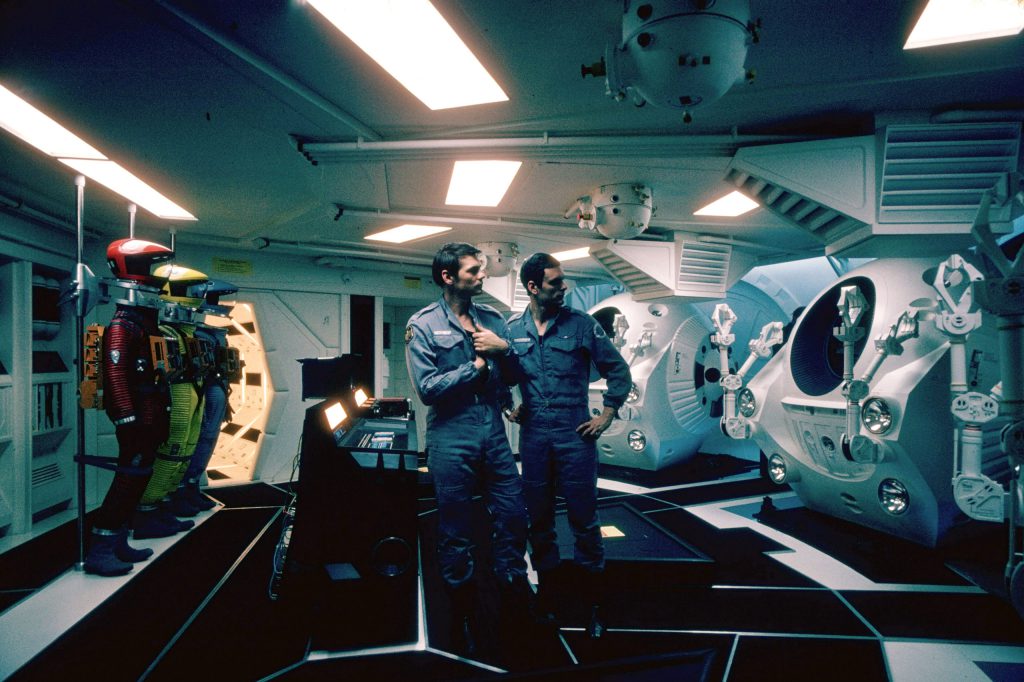
And that instantly brought to mind “2001: A Space Odyssey,” a landmark of science fiction cinema, a quaint artifact of the 1960s and undeniably one of the most beautiful, majestic films of all time.

It has been analyzed, parsed, investigated and written about more than virtually any other movie of its era. As a teen I devoured books on it and the obsessive eccentric who made it, Stanley Kubrick. So much had to be invented — effects tricks and low-light celluloid camera lenses — so much imagined, extrapolating from our “Space Race” present to thirty-three years into the future.

The new documentary “Jurassic Punk” brings “2001” to mind as well, as it is about the next era of Hollywood effects innovation — the transition from “optical effects” and camera tricks and hand-made models to computer generated effects. “2001” was the breakthrough film that allowed “Star Wars” to come to thrilling life less than a decade later. “The Abyss,” “Terminator 2” and “Jurassic Park” brought us to “Avatar.”

There was not much in the way of computer-generated-imagery in the era when computers were all mainframes with less versatility and utility than your average smart phone of today. Watching “2001” now, I was struck by how modern the graphics still seem, even if the switches and keyboards and mostly-cathode-ray-tube screens give away how dated the film is.

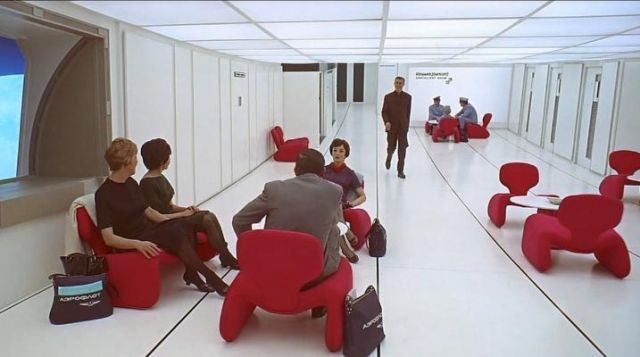
Back in 2018, the fiftieth anniversary of its release, writers revisited “2001” to note how much of “the future” it predicted actually came true. No, we still haven’t colonized the moon. Paying passenger space flight was and is still in its infancy and Pan Am is long dead and gone. But the astronauts on board the spermatozoa-shaped Discovery One spaceship bound for Jupiter can communicate and watch videos from tablets. And every so often, the design flourishes of “2001” — from its shimmering spaceport Hilton airport lounge to the suits the space bureaucrats wear to meetings to discuss what astronaut miners have found in the lunar crater named Tycho — make a comeback.

What connects “2001” to the latest “Avatar” most directly are the shimmering, pristine images put on the screen. Kubrick went for “accuracy” when depicting the pitch-blackness of space, and its silence. But every meticulously-designed, made and filmed model in “2001” is beautiful to behold. From the sleek Orion spaceliner that brings Dr. Haywood Floyd (William Sylvester) to a huge rotating and not-quite-finished space station, to the rotund, large lunar transport capsule/lander that gets him to the lunar base and the hovering shuttle bus that takes him to the crater where they’ve found an ancient black monolith, Discovery One and its EVA pods, everything we see in space is just eye-popping and elegantly conceived.

It took Ridley Scott and “Alien” to imagine space as a worked-in/lived-in environment, with ships that have to last for decades and decades, that would conserve energy and not be lit up like a new car showroom, repairs never quite finished, grime and decades of use and machinery that sweats and creaks and shows its wear.

The future tech in “The Way of Water” reflects that “Alien” sensibility — gear and vehicles built for combat and use in adverse conditions. Nobody’s spending the money to put white paint on anything traveling the cosmos or used to pacify and exploit alien worlds.

“2001” begins with “The Dawn of Man,” an ape overture that sees the first black monolith arrive to pass on the knowledge of tools and willingness to commit violence to the pre-human apes, played by actors in thin, facially-expressive ape suits.

Here’s the big difference between the apes of “2001” and the striking motion-captured CGI version in the recent “Planet of the Apes” franchise — moist, expressive and distinctly human eyes. Animation can make their movements more chimp like, but in ape suits or motion-capture leotards, humans are still “playing” these sentient simians and computing power still can only manage a convincingly sinister glower as far as the eyes go.

Kubrick’s depiction of his and Arthur C. Clarke’s “first contact” sequence is near seamless blend of soundstage footage edited into stunning 70mm or Cinerama -filmed natural vistas. But the edits used to depict the passage of time are simple Dawn of Cinema blackouts, and the money moment in this sequence is an old-fashioned slow-motion montage of apes learning to use thighbones and sticks as weapons to kill game and eat meat and get strong enough to overwhelm the ape tribe that took their water hole.

The “Dawn” sequence gives way to the “2001” present day. A scientist/technocrat (Sylvester’s Dr. Floyd) travels to the moon, ostensibly on a near-routine visit, to help a “council” come to a decision about what to do with this discovery of an alien-made object (monolith) buried beneath the lunar surface.

Kubrick and Clarke correctly predicted that America and Russia would still be at odds, even in an era of space cooperation. “We are not alone in the cosmos” would just be another secret they have to keep from the ideological rival spacefaring power, which also has a presence on the moon.

When this black lunar monolith is exposed to sunlight for the first time in many millennia, it beams a signal to the vicinity of Jupiter. That’s why the Discovery One — huge, modular, its segments linked by girders — was built and/or repurposed for a trip to Jupiter, with most of its crew in cryo-sleep and only two astronauts (Keir Dullea and Gary Lockwood) awake during the long passage as the computer HAL 9000 (mesmerizingly voiced by Douglas Rain) runs the ship for them.

What could go wrong with that?

Kubrick’s biggest culture-shifting coup might have been musical, turning Richard Strauss’s tone poem “Also Sprach Zarathustra” into an epoch underscoring cliche. Even Elvis stole it. Hell, here’s the trailer to the Margot Robbie “Barbie” movie sending it up. But in “2001,” this audio punchline is still a thrilling effect every time one watches and hears it.

To this day, you hear that thunderous piece used as an overture under the first stunning shot of planets aligning as the title “2001: A Space Odyssey” appears and you are overwhelmed with the idea that this isn’t just a movie. It’s an event.

Kubrick’s use of Johann Strauss waltzes to underscore the middle lunar act’s spaceflight scenes gives them a timelessness, even if then and now the music has a hint of “cute” and “quaint” about it. Fifty years and counting later, and we’ve got the “Guardians of the Galaxy” cruising to Blue Swede’s “Oooga Chugga” song, “Hooked on a Feeling.” Progress.

The quiet of conversations throughout “2001” seems an extrapolation of what Tom Wolfe later labeled “The Right Stuff” — the cool professionalism astronauts needed to bring to even the most dire situations. One moment that seems terribly retro in the limited talk and communications in the film is guessing that even in the distant future, Earth to spaceship conversations would be in the clipped, sing-songy staccato of a 1960s NASA CapCom (Frank Miller), speech designed for clarity in an age of staticky analog radio communications between noisy planes and combat radio command centers, or Mercury, Gemini and Apollo capsules and “Houston.”

And that head-trip third act, when an astronaut has proven to whoever or whatever made those monoliths that he had the “Right Stuff” to get to Jupiter — including displaying the cold-bloodedness needed to kill a murderous computer — is still “out there,” mysterious, non-narrative and non-verbal and not exactly nonsensical. But indulgent, to be sure.

In the 1960s, movies were freer to just immerse you and move you along, with or without waypoints on a narrative. Can you imagine a corporate-owned studio giving a James Cameron the cash to tell a “story” this obscure, symbolic and opaque today? Aside from Netflix, which may have spent its way out of the “indulge great filmmakers” stage of its adolescence? That’s why Cameron saddled “Avatar” with its colonialism narrative and combat focus.

As anyone who goes down the Stanley Kubrick rabbit hole knows, you can’t get too deep into Kubrick and cannot see “2001” too many times. Like “Citizen Kane” and the great works of Kurosawa, Godard and a few others, there’s something new to pick up on and pick at every time you watch it.

I hadn’t seen the film in many years. Kubrick strikes me as a filmmaker one can outgrow, but still come back to. But every time I revisit it I’m reminded of every other time I’ve seen it, from childhood (left to myself to watch it in the lone cinema in my grandmother’s town of Franklin, Va.), college (a Unitarian church screening in Roanoke, Va.), a 70mm revival showing in the ’80s, that first DVD copy. And every time, something new or a different angle to seeing it presents itself.

These days, I’m still inclined to think that third act is more obtuse than it needed to be. But “2001” stands taller and taller over the years in one last important regard, one that the gorgeous-looking “Avatar: The Way of Water” summons up.

Kubrick, production designer Tony Masters, cinematographer Geoffrey Unsworth and their crew made a thing of great beauty, one of the most stunning movies ever filmed in color. It took half a century of digital improvements and 3D enhancements for James Cameron’s latest “Avatar” to even merit a comparison.

Rating: G

Cast: Keir Dullea, Gary Lockwood, William Sylvester, Ed Bishop Margaret Tyzack, Vivien Kubrick and the voice of Douglas Rain

Credits: Directed by Stanley Kubrick, scripted by Stanley Kubrick and Arthur C. Clarke. An MGM release available on Amazon, Tubi and BluRay.

Running time: 2:29

Posted in Reviews, previews, profiles and movie news | Comments Off on Classic Film Review: “2001: A Space Odyssey,” Still Trippy after all these Years (1968)

Movie Review: Hollywood at its Whore of “Babylon” peak

Damien Chazelle’s “Babylon” is the movie viewing equivalent of being assaulted by a hot mess, perhaps the hottest hot mess you’ve ever met.

Even as it’s shouting at you and unpleasant, even when you’re most aware that “this will never work out,” you’re bowled over, marveling at how “hot” this mess is.

A sordid, seamy fantasia on Hollywood’s “pre-Motion Picture Code” era of unsafe sets, unsafe drugs and unsafe and uninhibited sex, it is over three hours of every unsavory story you’ve ever read about those freewheeling, scandalous years. Names of stars and would-be stars have been changed, but if you know the lurid lore of 1920s “Babylon” you’ll have some idea of who’s who, and who is doing what to whom.

Nicknamed “Babylon” long before Kenneth Anger’s scandal-mongering expose “Hollywood Babylon” was published, the director who gave us “La La Land” sets out to show us the “real” Hollywoodland. He yanks aside the curtain of just how “Gatsby on Steroids” crazy it all was — decadent, drugged up, oversexed, unpoliced and Prohibition Era drunk.

And if you thought the shock-to-the-system that the coming of “talkies” heralded was no scarier and crueler than “Singin’ in the Rain” depicted it, friend are you in for an awakening.

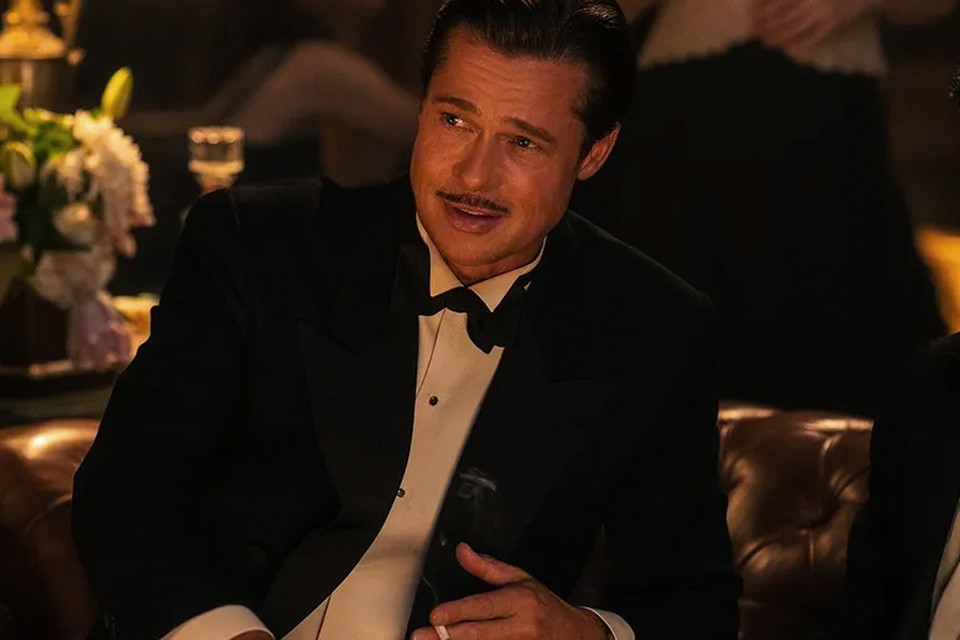
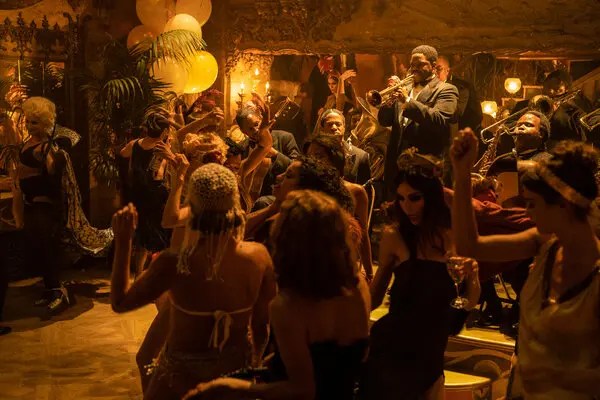
Brad Pitt stars as Jack Conrad, a mustachioed John Gilbert type at the very top, aside from his latest wife (Olivia Wilde) cussing him out and dumping him as he swaggers into the latest 1926 baccanale, the sort of hedonistic no-holds-barred soiree a studio chief (Jeff Garlin as a Weinstein Golden Age type) would throw back then, a boozy/druggy party filled with hot jazz, hot stars and even hotter wannabes.

Jack is jaded, over doing the old costumed epic nonsense so popular with studio execs. He pretentiously talks up “the art,” wishes he could make films more like those coming from Europe, and reverently references architecture as if has mastered that art, too. Which sounds a lot like Brad Pitt.

Margot Robbie is Nellie LaRoy, a would-be EveryStarlet and uninhibited wild child who shows up drunk, wrecks whoever’s roadster she rolls up in, and proceeds to flash it and “work it” in search of her moment of discovery.

“Honey, you either ARE a star, or you ain’t. You don’t ‘become one.'”

Jovan Adepo of “Fences” and “Overlord” is “hot jazz” virtuoso Sidney Palmer, a Louis Armstrong type who faces less racism in Hollywood than perhaps he would in the rest of the country, until that humiliating moment when he figures out these white folks don’t know how to light and photograph Black folks. They want him to cover his face in burnt cork so that he looks like the rest of his band.

And the film’s fourth distinct point of view is of the Mexican immigrant Manny (Diego Calva of Netflix’s Mexican series “Unstoppable”). Manny is just a guy bamboozled into getting an elephant to this party and is perhaps the most iconic Hollywood “type” of all. He’s a fixer. He’s that person on the studio lot or on location who takes an assignment, a whim or a wish by those in charge and by God makes it happen. He gets that elephant to that party, kids. Damn straight he does.

There’s always a place in show business for a can-do hustler like Manny. Jack picks up on Manny’s superpower. Directors, studio chiefs, and everybody in between will be just as impressed as he rises up the food chain. But at that party, Manny bumps into Nellie and is smitten by this hot mess in a way that’s going to last this entire three hour and eight minute epic.

Labeling “Babylon” itself a “hot mess” doesn’t just refer to the stars and starlets misbehaving as if there’s no tomorrow — because as we see, people were killed in on-set accidents, drunkenly driving home from parties, overdosing on drugs and alcohol or sexually assaulted by the perverts prowling such parties. Careers ended in a lot of ways, and the end was too often terminal when the dreams were this big and the fall could be that steep.

Chazelle accentuates the ugliness, opening the film with projectile pachyderm pooping and as many shots of bombshell du jour Margot Robbie vomiting as her contract allows. It’s a movie that positively reeks of sweat and sex and vomit and desperation.

As the thunderous jazz score by “La la Land” composer Justin Hurwitz pins you to your seat in that cacophonous, roiling opening act, it really does feel as if Chazelle is assaulting both the senses and the sensibilities of anybody willing to be plunged into this inferno.

We go to the set of a Medieval epic, and note that out there, in a Los Angeles with less development and more wide open spaces, multiple scenes and multiple pictures are being shot in the same valley, at the same time. Actors stagger in straight from that party and are greeted with a different sort of shouting, extras-wrangling bedlam.

One can’t help but wonder if that experience wasn’t shared by the players in this film about making films, finding your way through managed mayhem. Pitt is grand as the sage veteran of the work and the scene. Robbie is carnal chaos incarnate, and the only way she and Nellie can get through this is by crowd surfing the riot Chazelle is staging and filming.

For me, the first sign of genius is when the second act begins. The overnight revolution that “The Jazz Singer” forced on Hollywood — “talking” and singing pictures — turns riotous, rowdy moviemakers into frazzled “QUIET on the SET!” Nazis. All are enslaved by this new god, the microphone. “Babylon” turns chillingly quiet.

In one brilliant and agonizing sequence, the now-established B-movie star Nellie must endure take after take of an inane under-scripted scene with no comic payoff, struggling to bring some life via some “acting,” but forced to hit her mark and say her line in the precise spot underneath the heavy microphone, no matter what.

A camera operator, condemned to run the noisy contraption inside of a suffocating soundproof booth, gasps in protest. An assistant director blows his top and Nellie loses it as well as one and all worry if this new way of doing things won’t just take the freedom and “fun” out of their work. It could put anybody who can’t adapt out of a well-paying, ego-and-vice-feeding job.

There’s just so much to take in that even the gossip columnist (Jean Smart, venomous and costumed like silent cinema era Gloria Swanson) has trouble keeping up.

Red Hot Chili Peppers icon Flea plays a mobsterish studio “fixer.” Lukas Haas is a wealthy Angelino producer pal of Jack’s given to falling for every starlet who crosses his path and Tobey Maguire is the kind of mobster who gets rich in such dens of iniquity, supplying every vice — drugs, sex and gambling credit.

Famous names like William Randolph Hearst, his paramour actress Marion Davies and MGM wunderkind Irving Thalberg (Max Minghella) flit in and out. Li Lun Li is Lady Fay Zhu, an R-rated chanteuse and silent film titles-writer who happens to be stunning. She is Chinese-American and a lesbian, a woman with all sorts of barriers to making a name for herself once sound comes in and the production code changed employment conditions via contracts with “morality” clauses.

“Babylon” wears out its welcome before it brings these stories to their logical and/or grim conclusions. But for a film fanatic, it grows more fascinating the further we get away from that soundtrack-on-stun/eyes-scorching opening act.

It compares to Tarantino’s “Once Upon a Time…in Hollywood” in glorious ways, and excessive, crude and coarse ones.

For all its fictionalized 1926-34 “history,” the Hollywood period Chazelle really summons up here is the late’40s and early 1950s, when desperate film studios were first confronted with the cathode ray tube TVs flooding America.

“Make it BIGGER” became the mantra. “Make it LOUDER. And in STEREO.”

“Babylon” is gorgeous and grotesque, huge, noisy, and unlike anything else we’ve seen or heard on screen this year. Like “Avatar: The Way of Water,” this isn’t just a movie, it’s an event. And big screen events, even the hot messes, aren’t meant to be watched on Netflix on your iPhone.

Rating: R for strong and crude sexual content, graphic nudity, bloody violence, drug use, and pervasive language.

Cast: Brad Pitt, Margot Robbie, Diego Calva, Jean Smart, Jovan Adepo, Li Jun Li, Jeff Garlin, Flea, Olivia Wilde, Lukas Haas and Tobey Maguire

Credits: Scripted and directed by Damien Chazelle. A Paramount release.

Running time: 3″08

Posted in Reviews, previews, profiles and movie news | Comments Off on Movie Review: Hollywood at its Whore of “Babylon” peak

Movie Preview: Zach Braff directs Florence Pugh and Morgan Freeman, a tale of “A Good Person”

Molly Shannon is among the co stars in this sentimental dramedy from an actor/director a long way from his “Garden State” breakout film.

This looks sweet. Interesting to see Pugh in this guise.

March.

Posted in Reviews, previews, profiles and movie news | Comments Off on Movie Preview: Zach Braff directs Florence Pugh and Morgan Freeman, a tale of “A Good Person”

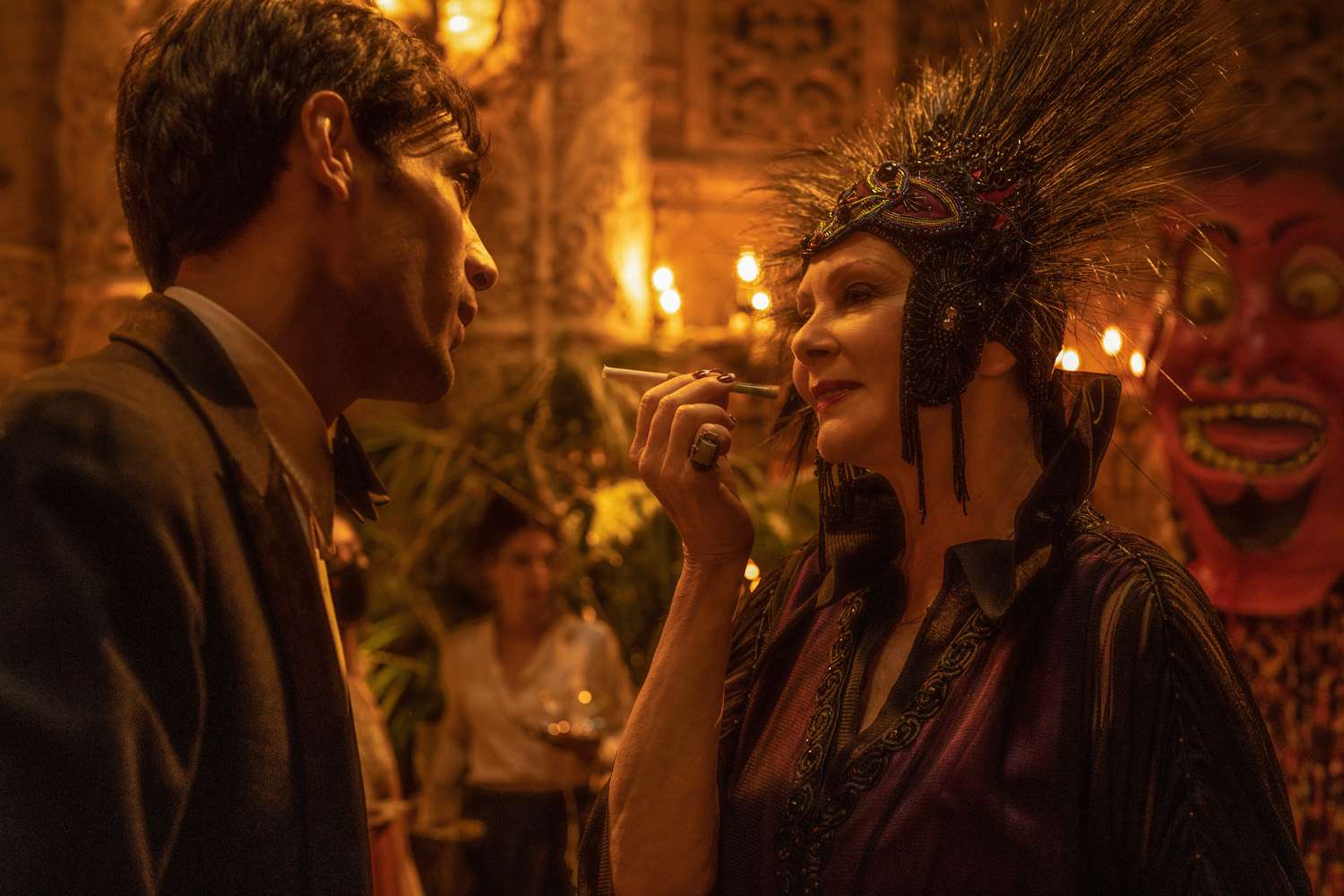
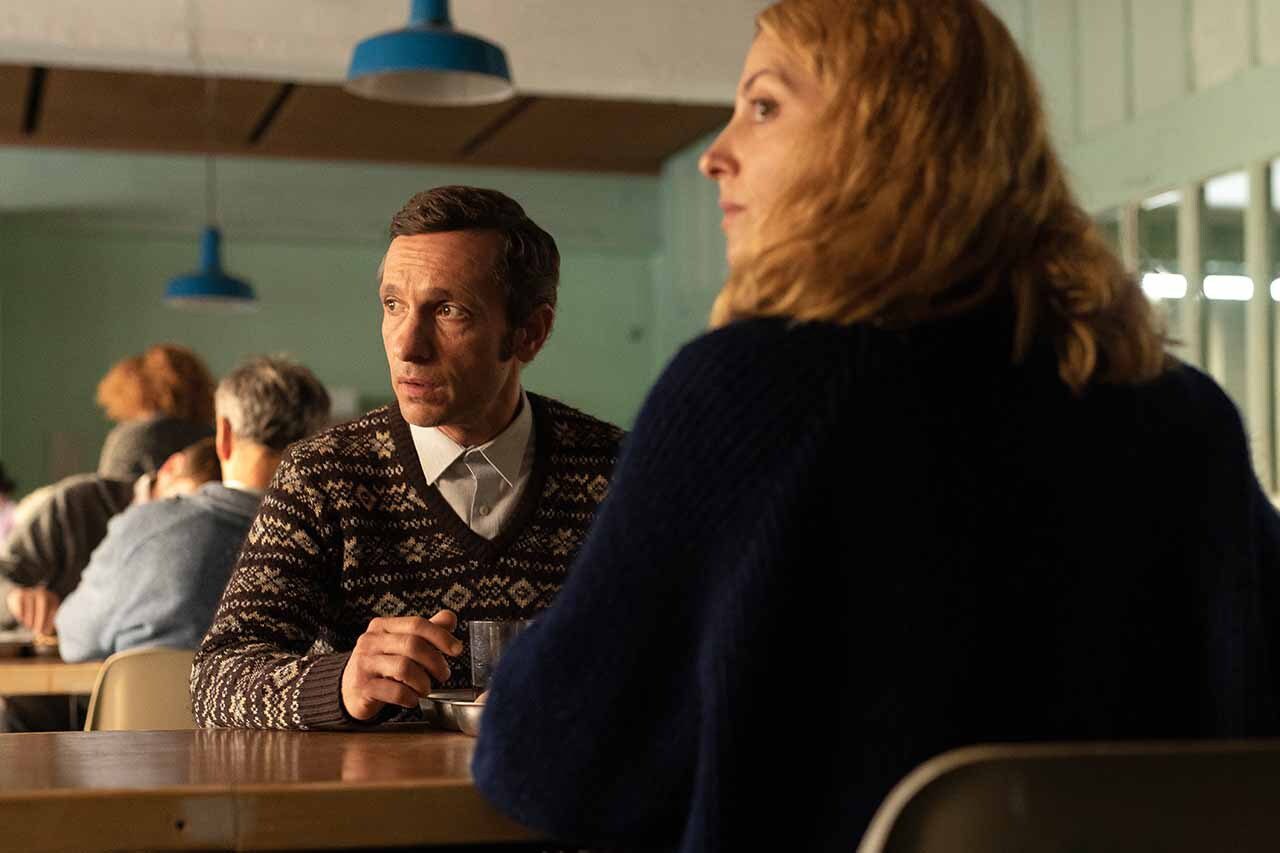
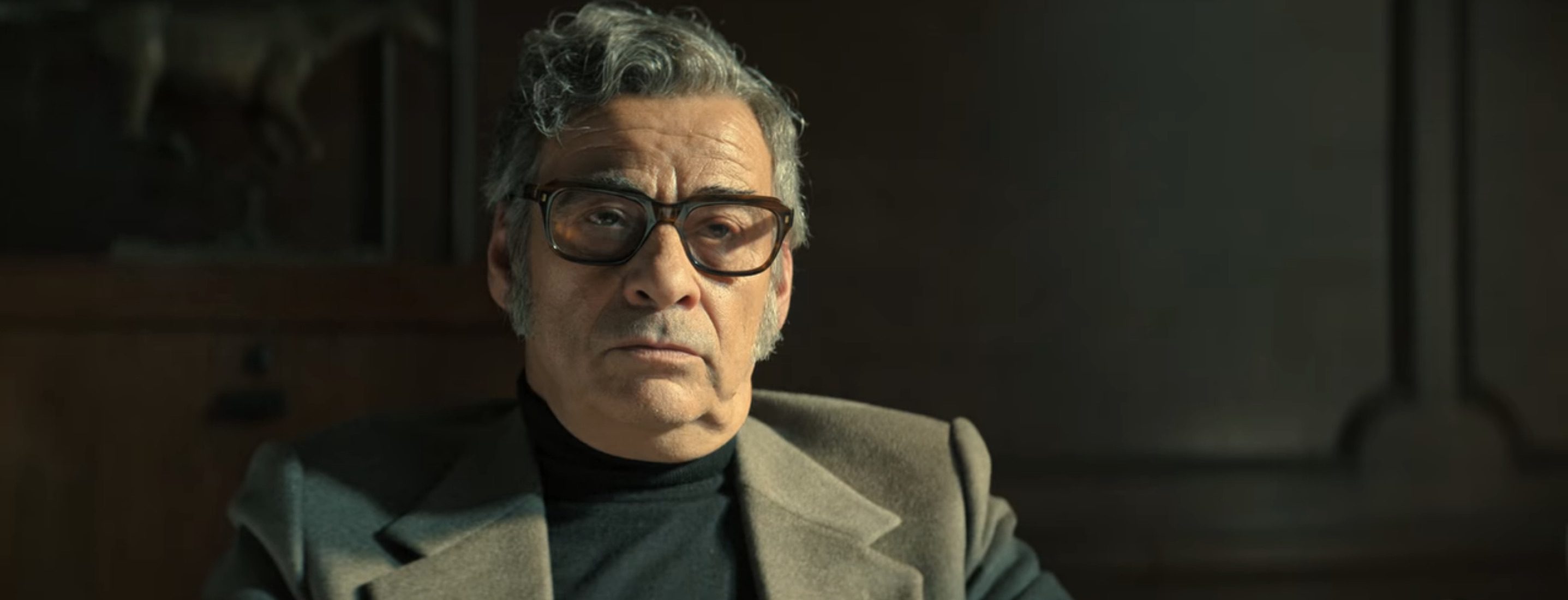
Netflixable? “God’s Crooked Lines” lead in a very familiar direction

“God’s Crooked Lines” is a modestly complex hybrid thriller, a blend of “Who is telling the truth, who is gaslighting whom?” and “Is this real or is this in my head?” stories, naturally set in a mental institution.

A good measure of such a movie is how often it makes us guess wrong and how invested we remain in it to the very end. Clocking in at a mini-series length two and a half hours, this Spanish production falls short of the mark in both regards.

But Spanish director and co-writer Oriol Paulo, who gave us “Mirage” and the Netflix series “Inocente,” stages some fine set-pieces and creates a properly gloomy tone for this Around the World with Netflix mystery about a woman who claims she’s gone undercover to investigate a crime at a mental hospital, an asylum whose doctors dismiss that as the ravings of a rich woman who poisoned her husband.

As we meet Alice Gould (Bárbara Lennie of “Petra”), she’s riding to the Our Lady of the Fountains Hospital at the behest of the man driving her. He lost a son there, she later says. And she’s an experienced investigator who has agreed to go inside, find out what the saner inmates are saying, and poke around in the archives to see if the staff is covering something up.

That’s her story, that she’s “voluntarily” committed herself here to that end. But the hospital doctors maintain that she tried to poison her husband, that she’s “very dangerous” and “unstable” and a “masterful liar” (in Spanish with subtitles, or dubbed into English).

There’s no argument over whether she’s beautiful, which she is, or that she’s a natural redhead, which she isn’t. We see her roots growing out within days of her arrival.

Another fact left dangling as “Alicia,” as the informal staff insists she go by, is rich. So, she’s a…gentleWOMAN detective, like Benoit Blanc of the “Knives Out” mysteries?

That’s Netflix, beating a clever idea to death.

It’s about 1980, and we see Alice investigate, ask questions and try to befriend the more sentient inmates like the special privileges oddball Ignacio (Pablo Derqui) and keep at least some of the staff in the loop, or out of it until she can meet with the director of the place, Dr. Alvar, who is privy to her investigation.

But when he (Eduard Fernández) finally shows up, he contradicts her, punches holes in her story and makes us question if she’s a reliable narrator of her own life. Has she been “legally kidnapped,” sent here by a greedy husband out to steal all her assets, with perhaps inside help from the hospital? Or is she the “masterful liar” Dr. Alvar bluntly claims she is.

There are deaths inside the hospital in this story, a tale told out of order in some places to throw us off the scent. An escape attempt leans on that almost fool-proof “How to get yourself out of a hostage situation” trick — fire.

The cops are involved, and skeptical. The staff seems divided. And the inmates are either helpful or chillingly out to molest or murder her. So she says. So she might think.

A few scenes pop, but the entire enterprise played as low-heat to me, with little suggestion this woman is crazy, or alarmed that she might wind up trapped inside an insane asylum by a plot that’s tripped her up.

The stakes are neither high nor low, as we don’t know what is real and what isn’t and Alicia’s part in that.

The shuffled order of the storytelling robs the picture of pacing and urgency. The only reason to make this a period piece, aside from a few jabs at Freud and sexist Spain circa 1980, are to deny our heroine cell phone access, I guess.

The plot may meander a bit, following “God’s Crooked Lines” as it does. But in this hemisphere, at least, we see this handsomely mounted but tepid tale’s finish line an hour or more before everyone in the cast.

Rating: TV-MA, violence, profanity

Cast: Bárbara Lennie, Eduard Fernández, Loreto Mauleón, Pablo Derqui and Antonio Buíl

Credits: Directed by Oriol Paulo, scripted by Oriol Paulo and Guillem Clua. A Netflix release.

Running time: 2:34

Posted in Reviews, previews, profiles and movie news | Comments Off on Netflixable? “God’s Crooked Lines” lead in a very familiar direction

Documentary Review: “Turn Every Page” celebrates a great biographer, his ever-patient editor and the history they’ve made together

A documentary, five years in the making, about the slow-footed race-against-time to finish an epic “three volume” biography of Lyndon Johnson’s fifth and final volume before the researcher/author and his editor pass away from very old age is nobody’s idea of an easy sale — not to a film distributor, nor to most filmgoers.

Even the title — “Turn Every Page: The Adventures of Robert Caro and Robert Gottlieb” — seems ironic, if not oxymoronic. “Turn every page” and “adventures?”

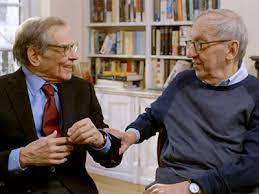
But filmmaker Lizzie Gottlieb (“Romeo Romeo” was hers), daughter of 90something editor Robert Gottlieb, has produced a filmed appreciation not just of her father and the Pulitzer Prize-winning Caro and their epic final collaboration. It’s a film about a decades-long deep dive into “power” in America and a monument to a sort of life-long collaboration we will never see again.

“Turn every page” was a discipline passed on to Caro, he recalls in the film, by his New York Newsday (newspaper) editor Alan Hathaway. As Hathaway promoted Caro to investigative reporter, the trait he noticed in Caro’s research was his thoroughness. “Turn every page” when you’re digging into something, Hathaway preached.

This process, this degree of care and determination to nail down facts and expand a story as much as need be in order to write something unimpeachable and definitive is what “Turn Every Page” celebrates.

When we see a recent Caro visit to the LBJ Presidential Library in Austin, Texas, later in the film, he notes that when he first started researching the life, rise to power, triumphs and failings of Johnson, there were “thirty-two million pages” of documents, letters, telegrams and records there. “Now, it’s forty-five million.”

And if you’re as dogged and exacting as Caro, that’s a reading challenge you have to accept, even as he passes his 87th birthday. Because if you want to answer conclusively whether or not Johnson stole the 1948 Democratic Senate primary in Texas, you have dig just that deep.

Lizzie Gottlieb, who interviews the two men — although, at Caro’s insistence always separately — takes care to present their achievements together and as individuals.

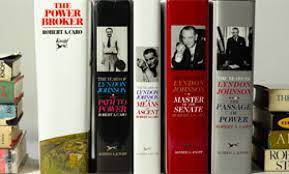
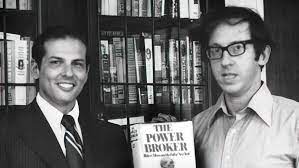
Caro is known for his LBJ books and the massive tome that preceded them, 1974’s “The Power Broker,” about New York toll road authority chief Robert Moses.

An opening montage of many pundits, experts and politicos appearing on Zoom call TV appearances, shows this book on the bookshelves in the background of their home offices, “a credential,” Lizzie Gottlieb narrates, not unlike a diploma hanging on the wall. If you want to understand “power” in America, this thousand-plus page tome is essential reading to this very day.

It’s a book that shows how Moses, “never elected” to any political office, wielded power in New York city and environs, “rebuilt” and re-imagined the city, both for convenience and as an aid to future growth and quality of living. And as Moses, whose toll roads/toll bridges position gave him staggering sums to work with, repaid favors and curried favor with politicians and real estate and construction tycoons, he literally bulldozed communities and those who lived in them.

Caro learned his mission wasn’t just to study power, how it was obtained and exercised, but to understand and impart to readers “the effects of power on the powerless.” And that’s one reason this book endures and sits on so many book shelves of those who observe American politics and policy. It speaks to generations far beyond its publication date because some things never change.

For instance, I’m writing this review of “Turn Every Page” in Florida, which — whatever its other idiosyncrasies, quirks and right wing politics — leads the nation in the number of miles of toll roads, run by the same sort of authority that made Robert Moses all-powerful. Who does that authority actually work for? Caro gave us the answer.

Gottlieb’s Dad is “the Dumbledore of publishing,” who turned his assertion that he is “a better reader than anybody else” into a career that saw him guiding the works of Caro, Toni Morrison, Salman Rushdie and legions of others to press, zeroing in on details, from punctuation and character development to plot.

At one point, we see him touring a bookstore with his grandson, pointing out books that he edited. He picks up Joseph Heller’s “Catch-22” and tells the kid and us of how he talked Heller out of “Catch-18” as a title.

The two contemporaries, Jewish New Yorkers, are giants of their professions, “Turn Every Page” reminds us. How they manage to work together, their debates over what to edit out, what to change and when or when not to use “semicolons” make for a fascinating dive into that process for any reader who sees this film.

We see Caro note how many words he writes or rewrites every day, the old fashioned “carbon copy” he makes of every typed page and his not-wholly-haphazard way of storing these backups. We learn that he and his actress and research back-up wife, Tony-nominated actress Maria Tucci, moved to Texas for three years. That’s how Caro made great progress in researching Lyndon Baines Johnson, learning about the hard Hill Country childhood that shaped the president who passed Medicare, Medicaid, The Voting Rights Act and landmark civil rights legislation as part of his “Great Society” agenda. It’s where Caro got a handle on a giant figure so “insecure” that he stumbled into Vietnam, and the many other traits and missteps that mar Johnson’s “ends justify the means” legacy.

Gottlieb, who has done quite a bit of writing of lighter (shorter) non-fiction and biographies, who ran The New Yorker for a spell, and had time to be heavily involved in the running of The New York City Ballet, comes off as more whimsical, acknowledging and mocking his ego and accommodating his filmmaker-daughter, cracking that “I was a good Dad” as they sit for another interview.

What emerges is an affectionate portrait of these two and their collaboration, perhaps with some of the rougher edges rubbed off, perhaps not as deep a dive as Lizzie Gottlieb herself would have liked. It’s still an amazed appreciation of what they’re attempting to finish, late in life, a fifth Johnson book that will, like the Moses volume, be the last word on a seminal figure in American history, another manipulator of American political power and the things a better-informed-electorate will learn about this country just by reading these books.

Rating: PG

Cast: Robert Caro, Robert Gottlieb, Ina Gottlieb, Maria Tucci, Bill Clinton, Conan O’Brian and Lizzie Gottlieb

Credits: Directed by Lizzie Gottlieb. A Sony Pictures Classics release.

Running time: 1:52

Posted in Reviews, previews, profiles and movie news | Comments Off on Documentary Review: “Turn Every Page” celebrates a great biographer, his ever-patient editor and the history they’ve made together

Netflixable? Indonesian Mayhem delivered by “The Big 4”

Wise and honorable is the action filmmaker who credits her or his fight choreographer right up front in the opening credits.

That’s true in Hollywood, Seoul, Hong Kong or Jakarta, as today’s Around the World with Netflix offering proves.

Director and co-writer Timo Tjahjanto (“The Night Comes for Us”) knows who butters his Roti Gambang. Muhammad Irfan did stunts in the martial arts cops-vs-mobsters epics, “The Raid” movies, two of the most violent films ever made. If brawls with fists, feet, machetes and machine guns are ballet, Irfan is their Balanchine.

“The Big 4” is a jokey, insanely-bloody Indonesian action pic worth watching for the jokes — which translate well enough — and some epic throwdowns. The plot is over-the-top and borderline nonsensical, and the body count is staggering — with too many minions slaughtered by gunfire, the lazy way out even in the “John Wick” movies, for my taste.

But the mayhem this potential Indonesian action franchise serves up between the slow stretches is first rate and well worth a look.

The opening gambit is a raid on an orphanage run by a charitable foundation. A nun drops off a little boy, who is shocked to see orphans in cages, penned up for something nefarious. The mouthy teenager Pelor is about to fill him in when he’s grabbed, taken off and slapped on an operating table.

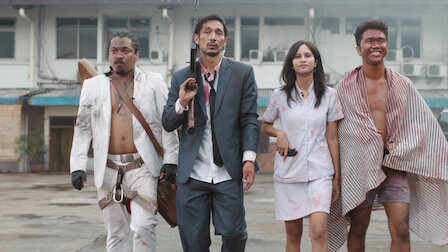
But just before Pelor’s total-organ-donation begins, a couple of badasses who have infiltrated the place open up on organ thieves and legions of billy-club-wielding henchmen. Pelor (Kristo Immanuel) was the “bait” who got in first, and when his older accomplices Topan (Abiman Aryasatya) and Alpha (Lutesha) arrive, #timesup.

Jenggo (Arie Kriting), the meditating sniper, serves as their reinforcement. And “Pops” (Budi Ros) is their leader and getaway van driver. He runs The Big 4, Jakarta’s most deadly vigilantes. He recruited this quartet as children and trained them to be the very best.

There’s got to be a child welfare law or two against that, and the old man’s new cop daughter Dina (Putri Murano) could probably cite it, chapter and verse. But on the day she becomes a cop, “Pops” Petrus is murdered. She starts hunting for clues about Dad’s secret life as his now-leaderless gang flees to the island of Bersi.

That’s where Dina finds them, and is herself pursued to the island by the hired guns of the sadistic Antonio (Mathrino Lio) and his bazooka-toting bombshell sidekick, Ale (Michelle Tahalea).

The funniest set piece of this gory romp comes right away, because Topan is now a slovenly desk clerk at the hotel Petrus always told his real kid — and his adopted hit squad — would be the perfect place to retire.

Topan has to book the annoying, hectoring Dina in a room — against his will — and play the meek stoner to the goons who show up trying to track her down. They notice him fumbling to turn the radio up, but they don’t get it.

He’s covering the sounds of the brawl and slaughter to come. He’s going to kill the goons. But he’d like to keep hotel guest Dina from being disturbed.

Dina slowly gets a clue about who the “real” villains are as Topan takes her to a jungle hut ashram where guru Jenggo is jovially cheating tourists, and to the village where Alpha is arms dealing as a one-woman “songstress,” portable karaoke slung over one shoulder, and the punk Pelor has acquired his first gun, a gold-plated pistol.

The fights, and I’m guessing there are half a dozen or so here, are brutal. But too many of them are kill-count shootouts, which have become so generic that if you can’t do better than “John Wick,” you’d best stick to other weapons — a blowgun, a bow and arrow, etc.

We come to such movies for the brilliant fight choreography, the ingenious ways the heroes find to get the best of the bad guys, one, two or twelve at a time. And we come for the cheesy trash talk (in subtitled Indonesian, or dubbed into English).

“Are you ready to DIE?”

“Let’s go HAND to hand, it you DARE!”

“The Big 4” never goes far wrong when action is the reason for the season. Tjahjanto and his team know how to frame, film and edit a good brawl, and a decent shoot-out, too. Having characters bicker and try to explain the illogical, getting all dewy-eyed over “family” and the film’s bungling, post-climactic finale — the filler that makes this 90 minute thriller clock in at 2:21 — are what hold “The Big 4” back.

Give fight choreographer Irfan the time to cook up more interesting ways to fight off the heavily armed and this would be a winner.

Rating: TV-MA, copious amounts of gory violence, profanity, more violence

Cast: Abimana Aryasatya, Putri Murano, Lutesha, Arie Kriting, Kristo Immanuel, Budi Ros, Mathrino Lio and Michelle Tahalea

Credits: Directed by Timo Tjahjanto, scripted by Timo Tjahjanto and Johanna Wattimena. A Netflix release.

Running time: 2:21

Posted in Reviews, previews, profiles and movie news | Comments Off on Netflixable? Indonesian Mayhem delivered by “The Big 4”

Movie Preview: Another ultimate Weather Disaster? “Firenado”

Opens in January, VOD and DVD in Feb.

Posted in Reviews, previews, profiles and movie news | Comments Off on Movie Preview: Another ultimate Weather Disaster? “Firenado”

Movie Preview: Adam Driver is a shipwrecked astronaut almost on his own in “65”

Well, at least they give away their big spoiler in the trailer.

Future ordnance unleashed against T Rex?

This is a rare straight up action pic for Driver, and looks very “Chariots of the Gods,” for those who remember the books of Mr. “Ancient Astronauts.”

March 10

Posted in Reviews, previews, profiles and movie news | Comments Off on Movie Preview: Adam Driver is a shipwrecked astronaut almost on his own in “65”