Netflixable? Stephen King’s all cuddly and on the line in “Mr. Harrington’s Phone”

“Mr. Harrington’s Phone” is a Stephen King adaptation that’s more fun for King fans to deconstruct and psychoanalyze than to experience as a movie.

The tale is in expert filmmaking hands, and “Blind Side” and “Saving Mr. Banks” writer-director John Lee Hancock renders a kind of bookish, old fashioned comfort food version of a mildly spooky and seriously derivative story. But it is noting all the King obsessions, personal history and soap boxes within it than make it worth watching.

It’s a story with bits of autobiography about it, an appreciation of great literature, the hominess and gloom of King’s beloved small town Maine, a testy prophecy about the great distraction of modern life — cell phones — with a distracted driver who gets his just deserts only to have someone he wronged realize, as a Robert Palmer song once taught us, “that revenge does not taste sweet.”

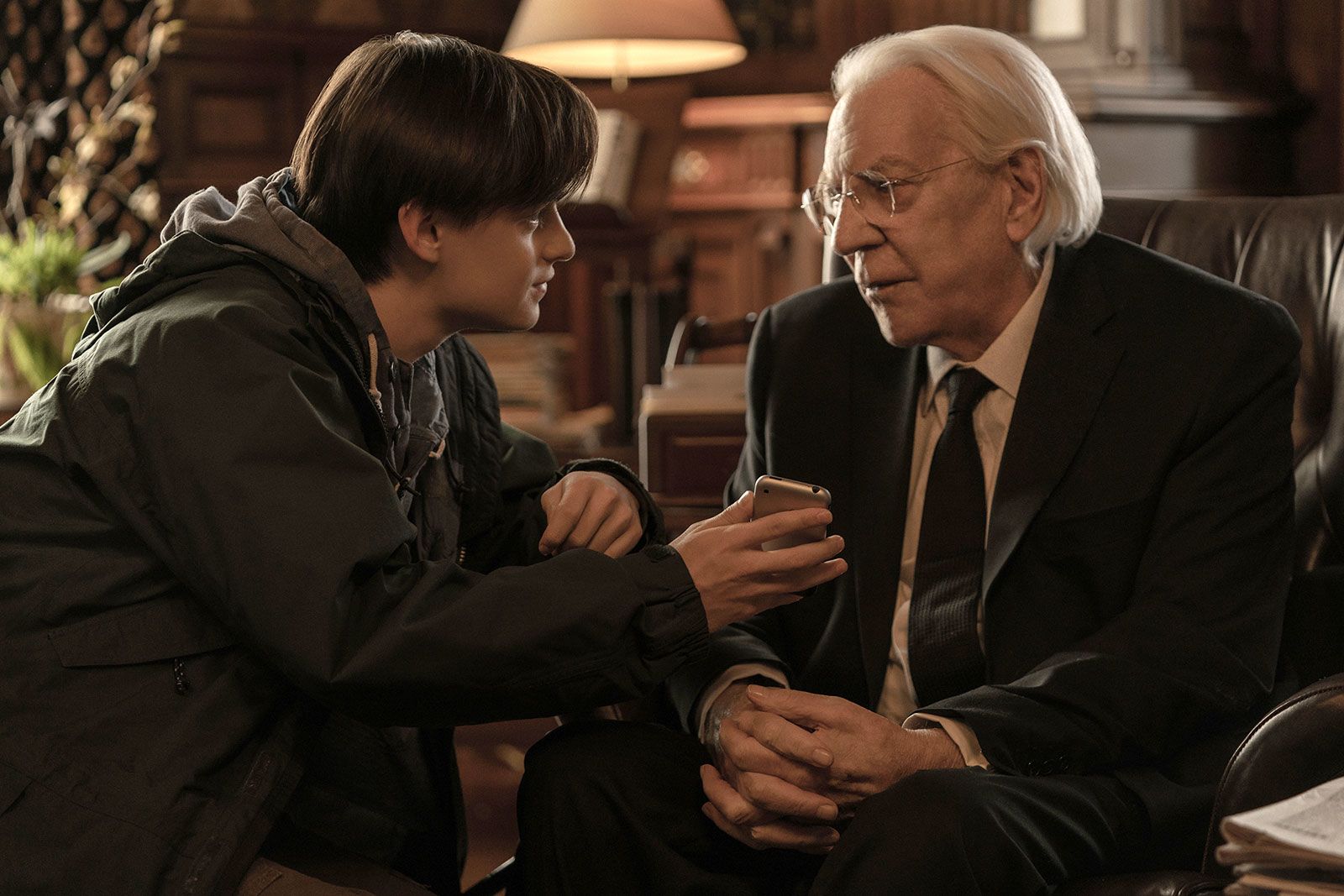
In it, a child (Colon O’Brien) shines when called upon to read in church, which gets the notice of a rich old man (Donald Sutherland) in the small town congregation. The kid’s newly-widowed father (Joe Tippett) agrees to let the boy come to Mr. Harrington’s Victorian mansion to read to him.

Years pass and the boy reaches his teens. Craig (Jaeden Martell of “It” and “St. Vincent”) has had quite the education, just reading Joseph Conrad, Charles Dickens, Upton Sinclair and Dostoyevsky and D.H. Lawrence’s “Lady Chatterley’s Lover” to Harrington, who often finishes such sessions by asking the boy what he got out of the book.

The kid, in turns, asks questions about Harrington’s solitary life, his life in finance and his “secrets.” Harrington passes on advice Thoreau gave, which he hasn’t really followed himself — “We don’t own things. They own us.”

Which is why he’s leery of accepting the gift of this new gadget, an iPhone, when the kid comes into some money thanks to Harrington’s largesse. Harrington has just enough time to get iPhone addicted, and inveigh against the addiction and all that the “free information” the online future portends, and to urge Craig to “dispatch enemies with haste” in whatever endeavor the aspiring teen screenwriter decides to pursue, before he dies.

He was old. He saw it coming, as did we. And the fact that the country music-loving millionaire got Craig to use “Stand By Your Man” as their ring-tone “handle” so that the kid knows he’s calling is something we can see from several miles off, as well.

This is a “phone calls from the dead” story. And that Tammy Wynette tune promises to be perfectly creepy when it signals a call from the grave.

Continue reading
Posted in Reviews, previews, profiles and movie news | Comments Off on Netflixable? Stephen King’s all cuddly and on the line in “Mr. Harrington’s Phone”

Classic Film Review: Downey Sr.’s “Putney Swope,” aging like fine…vinegar

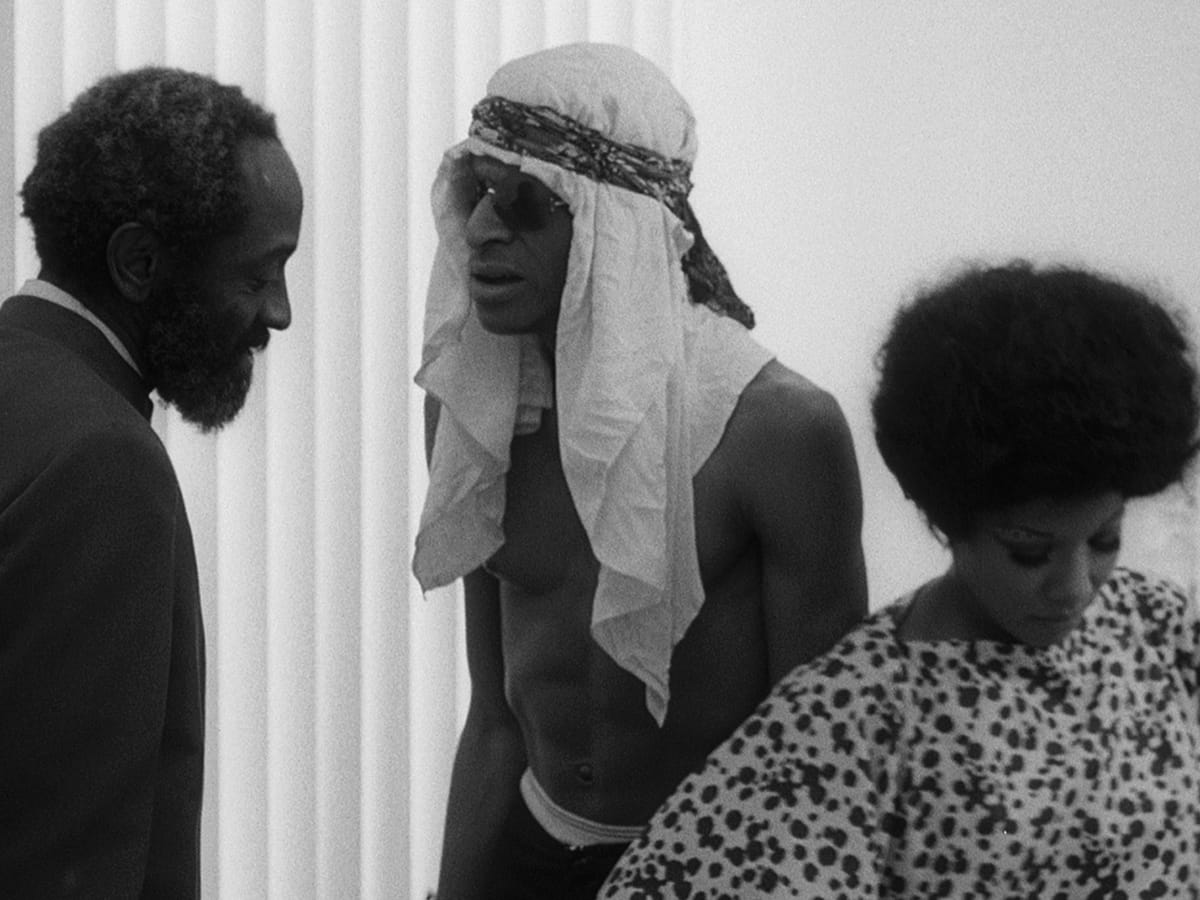
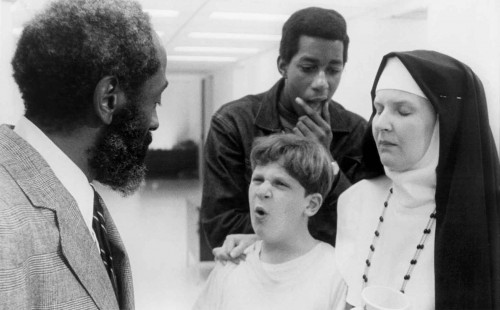
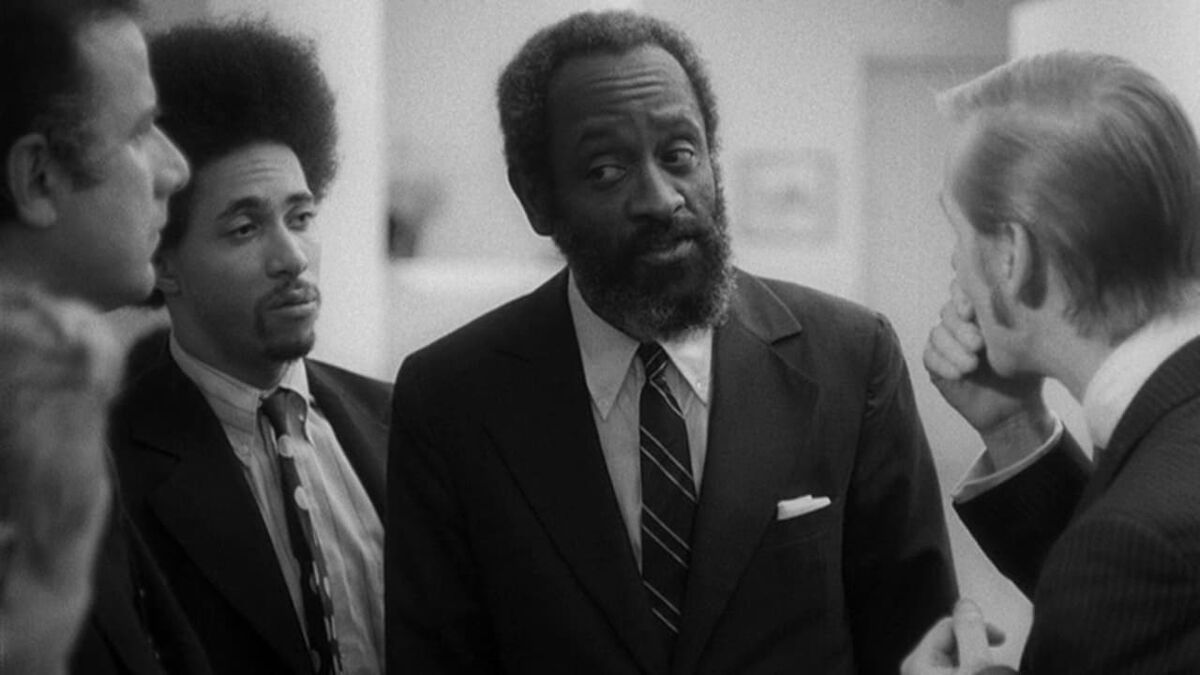
I remember seeing “Putney Swope” with an audience once, and I remember it landing laughs.

As that audience was at a whiter-than-white midwestern university film society, and this was some years ago, perhaps that’s telling. Robert Downey Sr.’s silly, broad and crude swipe at racism and Madison Ave. plays as an inside joke for insiders who are by and large outsiders of the experiences celebrated and skewered in it.

Seen today, what was funny in this energetic and flippant 1960s satire is occasionally still amusing. But the picture’s crude craft — part of its underground energy and appeal back then — just looks sloppy, glib and unknowing now.

The core concept is a clever one, although not as original as it is given credit for. Mainstream Hollywood films were always sending up “Mad Men” in the ’60s, generations before “Mad Men” became something worth taking more seriously. If a spoof made its way into a Tony Randall or Rock Hudson rom-com, you’re hardly dancing on the cutting edge.

It’s the racial component to this send-up that makes the film important.

The opening shot is bracing — a biker-vested white-haired geezer makes his NYC entrance by helicopter, skull and crossbones and Confederate flags flying from the open chopper door. He and his briefcase are escorted into the Elias agency and a board meeting. It turns out this freak is an academic consultant, a Ken Kesey “Merry Prankster” type.

“Beer,” he tells the ad-men, “is for men who doubt their masculinity,” which is why they consume so much of it in public, at sporting events.

That insight isn’t likely to help the Mad Men sell “the worst beer on the planet,” one of their clients. But there you go, thousands of dollars for a consultant, and this is what you get.

The agency’s aged founder (David Kirk) shows up, reminds them all of their job to “manipulate the consumer,” strokes out and dies. One subordinate keeps bellowing “How many syllables, Mario?” He thinks the seizure is a game of Charades.

While Elias’s corpse is still on the board room table, the power grab begins. Will the top job go to the senior man (Stan Gottlieb), to the son of the founder (Allen Garfield), somebody else? The bylaws say it has to be put to secret ballot vote. And that’s when this sea of white men outsmart themselves. Lots of them vote for the “token” Black man in their ranks (Arnold Johnson) thinking “no one else would vote for him.”

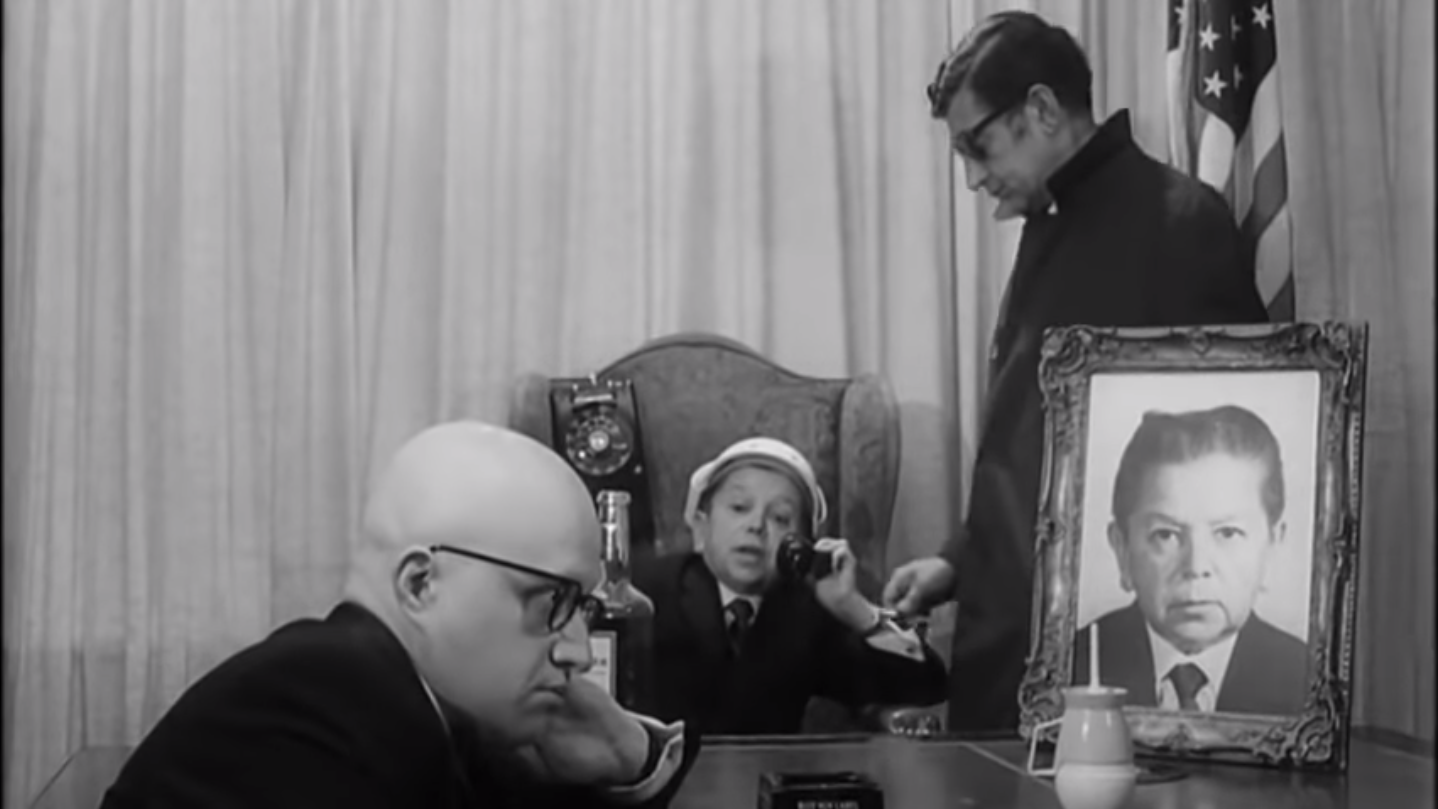
Thus does Putney Swope, formerly the firm’s music consultant, take over a giant agency and proceed to upend advertising. His promises not to change “much” notwithstanding, he immediately bans cigarettes and “war toys” advertising.

“Deny a young boy the right to have a toy gun, and you’ll suppress his destructive urges,” the agency man in charge of those accounts whines. “And he’ll turn out to be a homosexual. Or worse.

The ad-men’s banter is peppered with gay slurs, tapping into the public attitudes of the day.

But next thing we know, the newly-renamed “Truth & Soul” agency has run off most of its white execs. Let word be passed to Boss Putney that “there’s a bunch of lilies shooting a commercial in our studio,” and Putney brings the palace guard and half the office (almost all Black now) to storm in and stop whatever deceptive nonsense they’re committing to film.

Antonio Fargas, later to find fame as a pimp/informant to those ’70s hip cops “Starsky & Hutch,” is the office’s resident ranter, “The Arab.”

“Get on out! Yeah, no more taking pictures of no jive cans and jive bottles and skinny-legged broads with stockings on them. Get on out of here! We’re gonna have some greasy fingers and some chicken and all the beautiful things that people have – who have it! And you ain’t got it!”

Truth & Soul proceeds to upend advertising, mostly based on the gut-reactions and whims of its mercurial, Dick Gregory-as-Black-Revolutionary leader. Swope repurposes a foul-smelling window cleaner that they can’t sell as “a ghetto soft drink,” and lays down the law to clients, who line up in the agency entrance to beg for the Truth & Soul touch.

“We don’t need your ideas. We don’t need your advice. And we don’t need no ‘lames’ in the hallway!”

Downey sends up the high-handedness of white culture imposing itself on “The People” via advertising by having this crackpot “genius” flip the script and impose his off-color, off-topic commercials on the masses.

“Putney is confusing originality with obscenity,” one of his own Black executives admits.

There’s a bit of The Beatles movies of the era in the crackling banter of Q&A sessions with the Rolls-Royce driven Swope facing down a rabid press corps.

“Mr. Swope, did you sleep with your wife before you were married?”

“Not a wink.”

Continue reading
Posted in Reviews, previews, profiles and movie news | Comments Off on Classic Film Review: Downey Sr.’s “Putney Swope,” aging like fine…vinegar

Movie Review: Young Teens’ lives are upended, but Maybe “1-800-Hot-Nite” can help

A hormonal kid sees his parents and baby brother hauled off by the police and relies on his equally clueless peers and a phone sex operator for guidance in the unlikely one-night odyssey “1-800-Hot-Nite.”

It’s not exactly a breakout film for second time feature director Nick Richey (“Low, Low”), but it’s a gritty and sometimes surprising “coming of age” outing, if anything that momentous can happen in a single night. It’s a step up, and the kids are engaging actors and characters, and it leaves you will a little hope, always a nice way to finish.

Pals Tommy, O’Neil and Stevie are latchkey kids, wandering the night in a corner of SoCal where the working poor live within sight of the folks with pools and possibilities.

Tommy (Dallas Dupree Young) has gotten his hands on a credit card and has maybe the last phone booth in that time zone all picked out. They’re calling that sexy lady in all the free weekly back pages ads, Ms. 1-800-Hot-Nite.

Half-brothers O’Neil (Gerrison Machado) and Stevie (Mylen Bradford) crowd into the booth, all of them in a 12-14 age range. They don’t know how to use a credit card, much less how to talk to a phone sex operator. Not to hear them tell it.

“If there was a chick here right now, I’d…”

Yeah? You’d “what?”

Tommy struggles through a “ninety-nine cents a minute” conversation before the other two blow their cover. Their lack of game, and cluelessness about that lack, is obvious when they try and peep in on some local teen girls they know taking a hot tub break. Of course they’re “caught.”

The boys share stolen Vicodin, but in their plans to up the ante with some stolen beers Tommy finds himself bargaining with his equally irresponsible Dad (DaJuan Johnson) for the brews before bearing witness to a police raid that grabs all the guys at their poker game, including Tommy’s hated stepmom (Nicole Steinwedell).

Tommy and his “57 Posse” pals hot-foot it rather than letting Tommy fall into a welfare worker’s clutches. They’ve got a credit card, access to cash via one kid’s paper route money, big appetites and that 1-800-Hot-Nite number should they wonder how to proceed with the night, with a prospective romance or just with life.

Continue reading
Posted in Reviews, previews, profiles and movie news | Comments Off on Movie Review: Young Teens’ lives are upended, but Maybe “1-800-Hot-Nite” can help

RIP Mike Hodges, Brit director of Caine and Clive Owen thrillers and “Flash Gordon”

Mike Hodges, a British filmmaker of some repute who made key films in the careers of Michael Caine (“Get Carter”) and Clive Owen (“Croupier”) has died at the ripe old age of 90.

He did “The Terminal Man” and “Flash Gordon” and “Black Rainbow” and wrote screenplays and theatrical plays, a soft spoken man of letters who made some pretty hardboiled pictures.

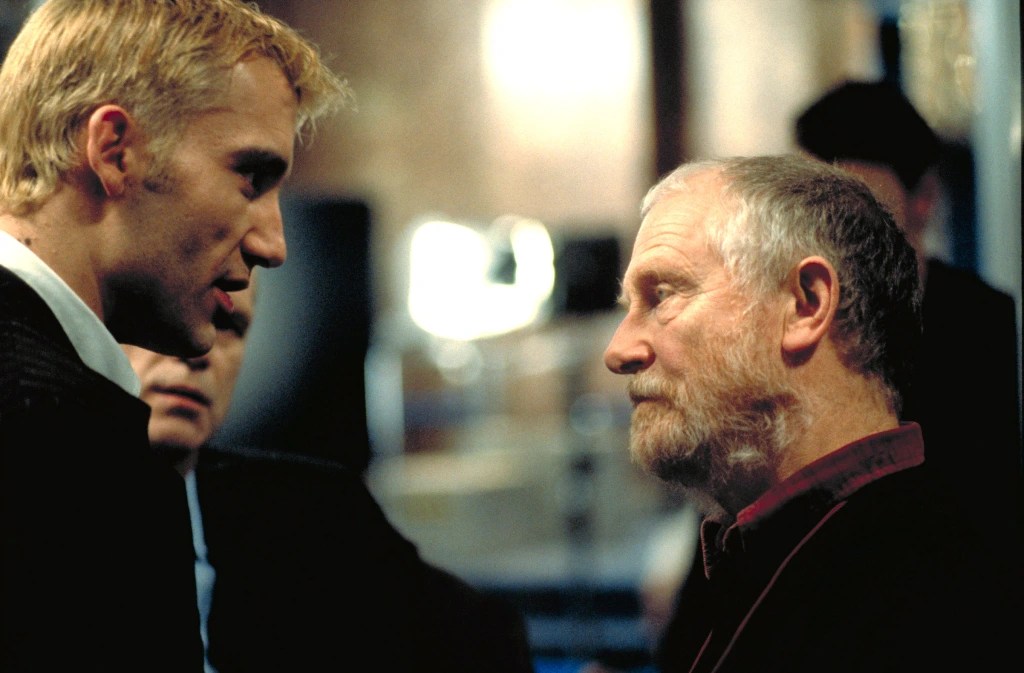
Here’s a shot of him with Owen, and below, an interview I had with him at the Toronto Film Fest in the early 2000s.

TORONTO — The courtly, elderly gentleman who opens the door to his hotel suite and promptly offers “Tea?” is not at all what we’d expect of the director of “Croupie”r and the down-and-dirty, new-to-video crime drama “I’ll Sleep When I’m Dead.”

Mike Hodges may be 72. But for some reason, you expect cigarettes, black leather sports coats and whiskey from a director with his track record. Instead, he’s in tweed for this late afternoon chat — tweed with a vest.

But there’s still a touch of the criminal underworld about him. The veteran British director — he had his big-screen big break with the gritty Michael Caine mobster vengeance piece, “Get Carter,” back in 1971 — has had a storied career, with both acclaimed films and ugly twists.

The studios came calling after “Get Carter,” which was recently named “Best British Film Ever” by the British Total Film magazine. But he quit “Damien: Omen II” in mid-production in 1978. He bad-mouthed “Flash Gordon” (1980) on its release, calling it “the only improvised $27 million movie ever made.” He turned down the cult hit “Miami Blues” and was relegated to TV in this country, before heading home to make the occasional low-budget drama in Europe (“A Prayer for the Dying,” 1987).

Until, that is, he “discovered” his friend Clive Owen, the star of Hodges’ comeback, 1998’s gambling-world film noir “Croupier,” who also stars in “I’ll Sleep When I’m Dead.”

Hodges’ “Croupier” made Owen a star. The director saw in his actor something he first saw in Michael Caine 30 years earlier.

“He’s got a real quality of stillness, like Eastwood, or Michael. Clive has this great analytical quality. He goes after scenes in a way that allows him to be that still. That’s an immense asset to have.”

In “I’ll Sleep When I’m Dead,” Owen plays Will Graham, the ex-gangster who left “the life” and dropped out of sight as a wandering laborer. His brother is murdered, and he comes back to find out why.

“It’s an older man’s picture than ‘Get Carter,'” Hodges says. “They have the same structure but a different outcome. I see the world differently, now. Carter doesn’t flinch from revenge. Will does.”

Hodges confesses to working a world-weary tone into his later work. He sees the end of his working career. He has his home in the country, a comfortable reputation and maybe the chance to do one or two more movies before he retires.

“I spent the entire ’80s making films I didn’t particularly want to make, just to survive,” he says. “You want to make something you believe in.”

Reviews of “I’ll Sleep When I’m Dead” have been mixed, with serious-minded critics, older ones especially, finding things to relish in its “autumnal essence,” as Andrew Sarris put it in The New York Observer.

“People will either love it or hate it,” Hodges says with a shrug and a smile. “I still trust the audience, trust their curiosity. Most filmmakers don’t.”

Posted in Reviews, previews, profiles and movie news | Comments Off on RIP Mike Hodges, Brit director of Caine and Clive Owen thrillers and “Flash Gordon”

The uproar over “Nepo Babies,” in and out of Hollywood

As the author of this New York Mag piece and its accompanying genealogy chart acknowledges, show business isn’t the only place nepotism exists in the American “meritocracy.”

An early direct encounter I had with that was lightly mocking, when in a newspaper film review of some movie rife with Hollywood nepotism, I compared the production to a Winston-Salem NC car dealer who brought his adult son into the biz and who let the heir do TV ads promoting discounts he was offering because he was “the boss’s son.” Then and now, I can’t imagine anything that would make me want to buy a car from some never-hustled-in-his-life joker whose chief qualification for his job was who his daddy is.

Needless to say, he lost his you-know-what over the implication that he hadn’t earned his place in life.

Hollywood “nepo babies” are the same way — born on third base, insisting they hit that triple themselves.

Hollywood has always been higher profile in the culture, and has always had this nepotism problem. A famous headline from 1930s Variety noted how David O. Selznick jumped to the top of the producer-wannabe pyramid by marrying Louis B. Mayer’s daughter.

“The Son-in-Law Also Rises,” Variety wrote. Now THAT’s a headline. Selznick would make films with Hitchcock and bring “Gone With the Wind” to screen. So he had a career. But he had a lot of help.

Paris Hilton? Nicole Richie? Every decade produces it’s most famous Nepo babies.

The Vulture piece in New York mag is wide-ranging and broad in its swipes, and funny to dig into. And the blowback from those outed is hilarious.

Lily-Rose Depp or Jack Quaid or that Platt kid or Uma Thurman’s daughter with Ethan Hawke, you got to start “on top,” or damned near it. People are going to raise eyebrows over your sudden stardom, especially if you don’t deliver.

O’Shea Jackson, Ice Cube’s son, preaches “embrace that s—,” and rightly argues that “it’s been happening for centuries.”

Yeah. Look at who rules “Britannia.” And has for 1000 years, one “chosen one” after another from assorted inbred dynasties of future hemophiliacs.

Maude Apatow, daughter of Judd and Leslie Mann, is pretty thin-skinned about being an ordinary looking young woman of at best ordinary talents about getting lots and lots of breaks.

Dakota Johnson to Lily AllenBuzzfeed sees “whiteness” in this tradition. Plainly Buzzfeed is not noticing how many Wayans or sons of Ice Cube or Denzel, sisters of Spike, etc., have been shoved down the viewing public’s throats.

The Guardian seems to think that this is “news” only because Gen Z is just now realizing that this crap goes on, that the game is “fixed,” that being related to a Kennedy, a Bush or the New York Giants-owning Mara dynasty — HELlllllooooo Rooney and Kate Mara — is a leg up in life that all the college loans you take out, all the degrees you pursue, even cheating to get into college, cannot match.

The Big List Vulture brought forth is, of course, far from being complete, just in terms of show business as a “birthright.” Sidney Lumet bought a daughter a screen credit before she married into the business and accepted that as her version of privilege. Aggravating Pauly Shore might not have become omnipresent on the screen in the ’90s had his mother Mitzi not run one of the most famous comedy clubs in America.

Stephen King‘s kids are getting shots at movies and publishing deals as if he’s passing down a family restaurant or car repair business to the next generation. The esteemed writer never looks like more of a “typist” than when he’s plugging the kids’ into his status.

Continue reading
Posted in Reviews, previews, profiles and movie news | Comments Off on The uproar over “Nepo Babies,” in and out of Hollywood

Netflixable? “Blade of the 47 Ronin” is just “Blade,” only sillier

Boy, the things fanboys will sit through just to see Japanese women in short skirts and knee-boots fight it out with samurai swords.

The things screenwriters have to do to set a samurai sword-fighting movie in cheap-to-film-in Budapest. The skills actors make themselves learn just to do a movie that they know will be pretty damned bad, based on the film it’s a sequel to.

“Blade of the 47 Ronin” is a cluttered, obtuse and nonsensical slice of samurai-and-sorcery nonsense that Netflix made as a sequel to a Keanu Reeves fiasco of a few years back, “47 Ronin.” I only gave it a watch because my first thought “Surely not.”

I mean, back when I reviewed the original film, I read up on the piece of 18th century Japanese history that this “legend” is based on. Needless to say, the new film’s three screenwriters didn’t do that.

This supernatural nonsense has more in common with “Blade” and “Highlander” and other sillier-than-sill action films about ancient feuds and battles between good and evil still playing out right under the noses of the modern world.

There’s this ancient busted sword, “the Tengu sword,” a “warrior blade” blended with a “witch blade” that must be reunited “to fulfill it.” That’s a direct quote. Fulfill…it’s destiny, its utility in the battle between ronin “warriors” and “witches?” Perhaps.

Only “the last descendent of the ’47 Ronin'” can accomplish this. Naturally, she (Anna Akana) has no clue about this, being an American in Budapest hustling stolen samurai antiquities and artifacts.

There’s a villain Yurei (Dan Southworth) covets the blade which he needs to carry out a conquest of evil over good. Something like that. Like all evil folks, his agenda’s murky.

Samurai and Onna-musha bugeisha — female “geisha” warriors (you learn something every day) — led by Lord Shinshiro (Mark Dacascos) must fight off legions of evil ninja to secure the blade and the “descendent” and keep the peace.

In Budapest, the ancient “crossroads between East and West,” where all the ronin, bugeishas, villains and their henchmen speak English, perhaps for the benefit of the smart-assed American woman who is their quarry, the one person who can stop all this with her inherited magic.

“Keep telling yourself that, Knockoff Hermione Grainger!”

No, she’s not having this and yes, she has noticed how the swordswomen of this Japanese underworld act, think and dress.

“Anything men can kill, we can kill better!”

Continue reading
Posted in Reviews, previews, profiles and movie news | Comments Off on Netflixable? “Blade of the 47 Ronin” is just “Blade,” only sillier

Movie Review: Recreating Whitney — “I Wanna Dance with Somebody”

The formula for a screen musical biography was already established by the time “Rhapsody in Blue,” which celebrated the brief, brilliant life of George Gershwin in a 1945 film that came out just a couple of years after his death.

Such movies typically hit the spine-tingling moments of epiphany, acts of creation that show us why a Gershwin, Tina Turner, Ray Charles or Elton John are remembered.

There will be the telling details of what formed them, that first inspiration, that first love or that abusive husband.

And we’ll see the artist’s sad end foreshadowed, or final triumph against the odds heralded.

Let the record reflect that you don’t have to deliver a “Ray” or “Walk the Line” every time out, recent films that set the bar high. You don’t have to spend Baz Luhrmann money and give us “Elvis.” All you have to do is recreate the joy an artist brought to people’s lives, and if they died too soon, remind us of the ache their passing brought to their fans and the culture.

“I Wanna Dance With Somebody,” the new Whitney Houston musical biopic, absolutely nails those fundamentals. Director Kasi Lemmons, who made “Black Nativity” and “Eve’s Bayou,” and BATFA-winning English actress Naomi Ackie (“Small Axe,” “The Score”) conjure up a lovely gloss of Houston’s meteoric rise and the music and made her, followed by her tragic fall.

It’s a little more “What’s Love Got to Do With It” and “Bohemian Rhapsody” than the most dramatically powerful films the genre has produced. But if you’re even a casual fan of “the greatest voice of her generation,” you cannot and should not miss it.

Anthony McCarten’s screenplay gives us a much more candid Whitney than Oprah and other TV interviewers or tabloids every did, starting with her first serious teen romance — with college basketballer Robyn Crawford (Nafessa Williams, superb) , who remained her confidante and paid “consultant” for the rest of her life. Even though we have to figure that the Houston family, which had a controlling hand in the production, rubbed some of the rough edges off her parents, and music impresario Clive Davis (Stanley Tucci at his most regal — perfect), another producer on the film, makes sure we realize Davis was her greatest champion — we’re still getting an intimate-enough portrait informed by Houston’s little-publicized sexuality.

Ackie and the late Whitney Houston share the singing duties, although even paying careful attention to the soundtrack, I was never sure I was hearing The Real Whitney’s distinct and BIG three-octave-range mezzo-soprano on tracks that if you were alive in America in the ’80s and ’90s, became a permanent part of your musical memory.

We see what an exacting taskmaster Whitney’s legendary but not-nearly-as-famous soul-singing mother Cissy Houston (Tamara Tunie of “Flight,” fiery and fun) was, drilling her daughter after church choir practice on breathing, projecting, getting the melody right, “enunciating” and learning to “tell a story” with a song.

“God gave you a gift. You’ve gotta use it right.”

And we watch Cissy feign illness so that her back-up singer daughter can take the solo in “Greatest Love of All” at a club date that the famous producer Davis was invited to attend.

“I think I might have just heard the greatest voice of her generation,” he supposedly declared that night, a legend repeated here. Davis will be her collaborator, finding her songs to consider, masterminding — always deferring to her tastes and wishes — a recording career for the ages.

We see the day Whitney met Robyn, the blind eye her parents turned to these “roommates” until stardom beckoned and her bossy, stern and power-tripping father (the splendid Clarke Peters of “Three Billboards” and “Da Five Bloods”) intervened.

“You get out there and be seen with young MEN!”

If Houston was unhappy, taking drugs for “a vacation” because she was being worked to death, some of misery might have been, the film suggests, caused by not having the freedom to be wholly herself. We see the drinks offered her at every turn from the beginning of her career, which the film underscores by having Houston herself let her co-dependent, unfaithful husband Bobby Brown (Ashton Hudson) off the hook for addictions.

Continue reading
Posted in Reviews, previews, profiles and movie news | Comments Off on Movie Review: Recreating Whitney — “I Wanna Dance with Somebody”

Movie Review: A Sweet Children’s tale Comes to Animated Life — “The Boy, the Mole, the Fox and the Horse”

“The Boy, the Mole, the Fox and the Horse” is a simply-animated, elegiac parable about a lost child and the friends he makes among the talking wildlife who try to help him. It’s based on a best selling book by British author and illustrator Charles Mackesy, who co-wrote and co-directed the film, ensuring that his pride and joy made it to the screen with a sense of seasonal melancholy, and its hopeful heart intact.

It’s fair to say that this “Charlie Brown Christmas” length film is pretty much an instant classic.

A young lad finds himself lost in the snowy woods one winter’s day. But he lucks into encountering a helpful, philosophical Mole. It’s just that being a mole, he’s near-sighted. And having an obsession, he’s a little thrown off by the snowscapes and snow and ice covered trees.

“Cake!” Mole exults, in Tom Hollander’s voice. “Oh,” he mutters, after they’ve tromped halfway up a hill. “It’s…a tree.”

The voice casting here is key, as Jude Coward Nicoll has a touch of the old-fashioned, angelic Every English Boy about him, Oliver Twist to Christopher Robin on down the line.

“What do you want to be when you grow up?” Mole asks of the boy.

“Kind.”

The Mole opines that this is a good ambition, as “kindness…it sits quietly beyond all things.”

They undertake an effort to get the lost boy home, endeavoring to find and then “follow a river” until they do. They have mishaps, missteps and accidents. But along the way, they meet a mole-craving Fox (Idris Elba) who gets caught in a snare. It is the Mole who frees him.

“I am not afraid, I am not afraid,” Mole vows. And as he frees the snarling carnivore, the Mole seizes a teachable moment.

“One of our greatest freedoms is how we react to things.”

The Fox will eventually perform an act that reveals his compassion, and kindness’s way of inspiring a “pay it forward” way of thinking. And when they meet a horse, the teaching continues.

“Asking for help isn’t giving up. It’s refusing to give up.”

Yes, it’s a tad treacly and pithy enough to produce many a profundity that would fit on a t-shirt or coffee mug, for those who haven’t finished Christmas shopping. It’s aimed at children eight or nine and under, lest you get carried away.

And if there’s a better message to send a child in a sweet, half-hour long holiday film than “You are loved. You bring this world things no one else does,” I’m sure I haven’t heard it.

Rating: G

Cast: The voices of Tom Hollander, Jude Coward Nicoll, Gabriel Byre and Idris Elba

Credits: Directed by Peter Baynton and Charlie Macskesy, scripted by Jon Croker and Charlie Mackesy. A BBC film on Apple TV+ release.

Running time: :34

Posted in Reviews, previews, profiles and movie news | Comments Off on Movie Review: A Sweet Children’s tale Comes to Animated Life — “The Boy, the Mole, the Fox and the Horse”

Movie Preview: THIS is what a trailer for a Modern Film Noir should look like — Hayley Law IS “Door Mouse”

Disappearances, a connection to the comic book world, a deadpan anti-heroine, a fangirl/fanboy fave or two in the cast.

Hayley Law (“Riverdale), Famke Janssen, Donal Logue, Keith Powers, with writer-director Avan Jogia as a heavy.

Jan 13.

Posted in Reviews, previews, profiles and movie news | Comments Off on Movie Preview: THIS is what a trailer for a Modern Film Noir should look like — Hayley Law IS “Door Mouse”

Next screening? “I Wanna Dance with Somebody”

The casting seems solid, even though there could only be one supernaturally beautiful woman with that one of a kind voice. She’s grown on me.

Could be emotional. They’re waiting late enough to show it and we just had an Aretha biopic a couple of months back.

But as musical biopics have been one genre Hollywood seems to have down cold, guarded optimism is out vow, right?

Posted in Reviews, previews, profiles and movie news | Comments Off on Next screening? “I Wanna Dance with Somebody”