
Movie Preview: Sally Hawkins convinces Steve Coogan, and then us that she can find “The Lost King”

A lady with a bone to pick about the villainous role history has assigned Richard III, thanks in large part to Wm. Shakespeare, decides she can find out where the fellow is buried.

Stephen Frears re-teams with Steve Coogan, his “Philomena” partner, for another tale of a plucky lady and her seemingly hopeless quest. Coogan co-wrote and co-stars in this one.

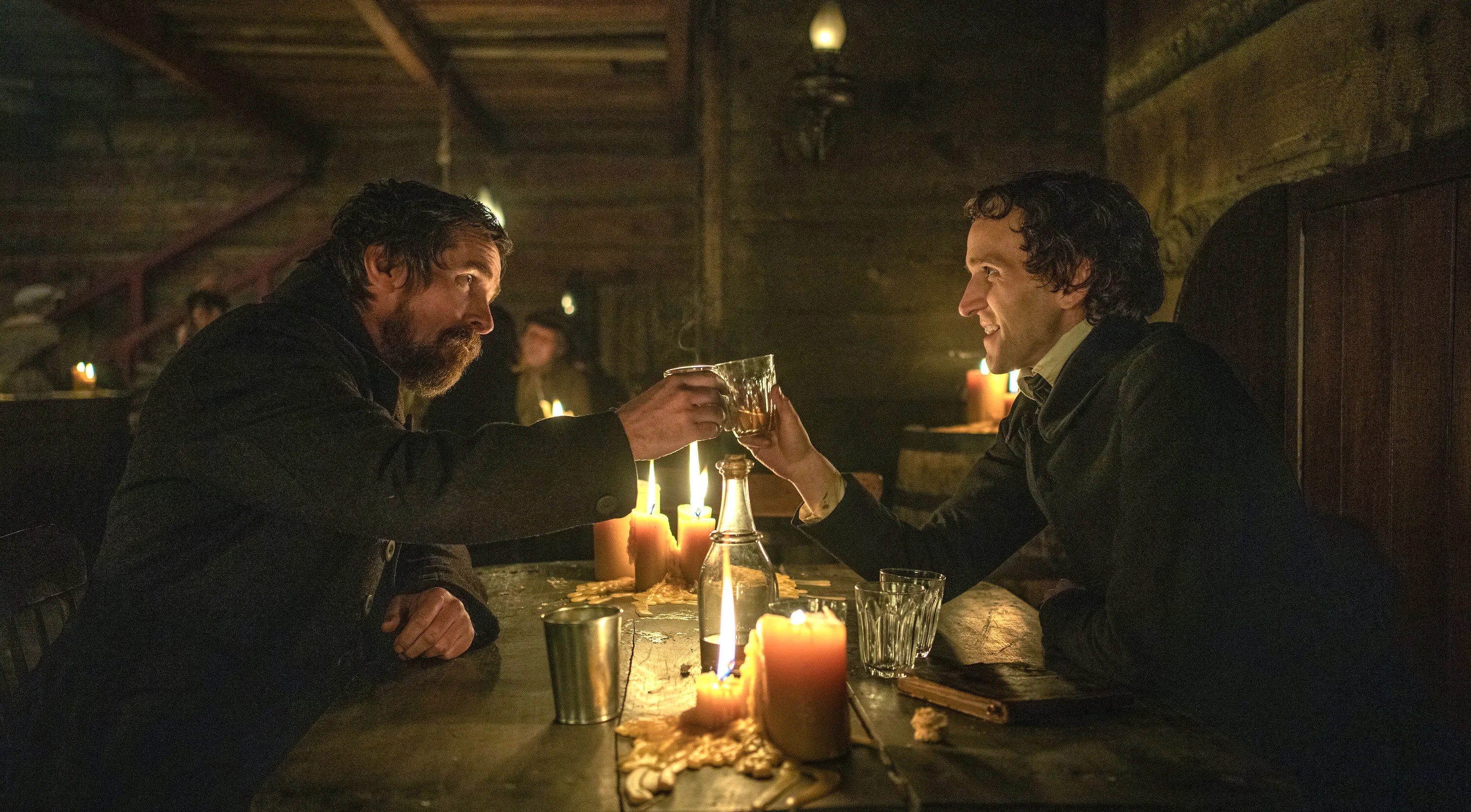
Harry Lloyd plays the ghost of Richard III, killed on Ambion Hill at the Battle of Bosworth Field, guilting our put-upon researcher (Sally Hawkins) into locating just where he might be buried.

IFC has this, which means we’ll get a good chance of seeing it in a cinema on this side of the pond. March is its US opening date.

Posted in Reviews, previews, profiles and movie news | Comments Off on Movie Preview: Sally Hawkins convinces Steve Coogan, and then us that she can find “The Lost King”

Movie Review: Allison Brie is Ms. Nuptials Interruptus, “Somebody I Used to Know”

By the time somebody on screen finally acknowledges that somebody else in “Somebody I Used Know” is doing “some Julia Roberts ‘My Best Friend’s Wedding’ s–t,” we’re already way ahead of her and this movie.

That halfway-mark give-away is amusingly-late and amusingly-obvious in this slightly-raunchier-but-no-edgier riff on the classic “I gotta break up ‘Mister Right’s’ nuptials” rom-com.

That’s the last time I get to use “amusingly” in this review. The film, cooked up by the wife-and-husband team of Allison Brie and Dave Franco, embraces its source material, even mimicking the whole “disrupt a wedding but face no consequences” flaw at the heart of “My Best Friend’s.” It’s just that the laughs are few and far between and the “heart,” so important to a good rom-com, is left out altogether.

The ever-engaging Brie plays a dogged reality TV producer-hostess who has mastered the art of using silence in post-show interview segments to get cast members of “Dessert Island” to weep and confess their heart’s desires and their unhappiness at not achieving them.

Ally has just finished another season of the sex-and-sinfully-good-desserts “contest” series when network brass (Zoe Chao and Sam Richardson) shows up to cancel it. Her agent (Amy Sedaris) is little comfort.

There’s nothing for it but to traipse home, to her single mom (Julie Hagerty) whom she has neglected back in touristy, scenic Leavenworth, Washington, a bit of the Swiss Alps in the Pacific Northwest.

Ally is “Miss Hollywood” to the locals who remember her. It turns out, her ex-beau (Jay Ellis) is one of those who remembers her. And in a big way. A magical night of getting reacquainted ends when Ally stumbles into Sean’s family, getting ready for his wedding.

Damn. No, his “My bad” or its equivalent doesn’t excuse it.

But after chatting up the groom’s caring-but-goofy brother (Brie’s “Community” co-star, Danny Pudi), she starts to think she has a chance, that despite what brother Benny insists, “It’s NOT too late.”

“I need to see this through!”

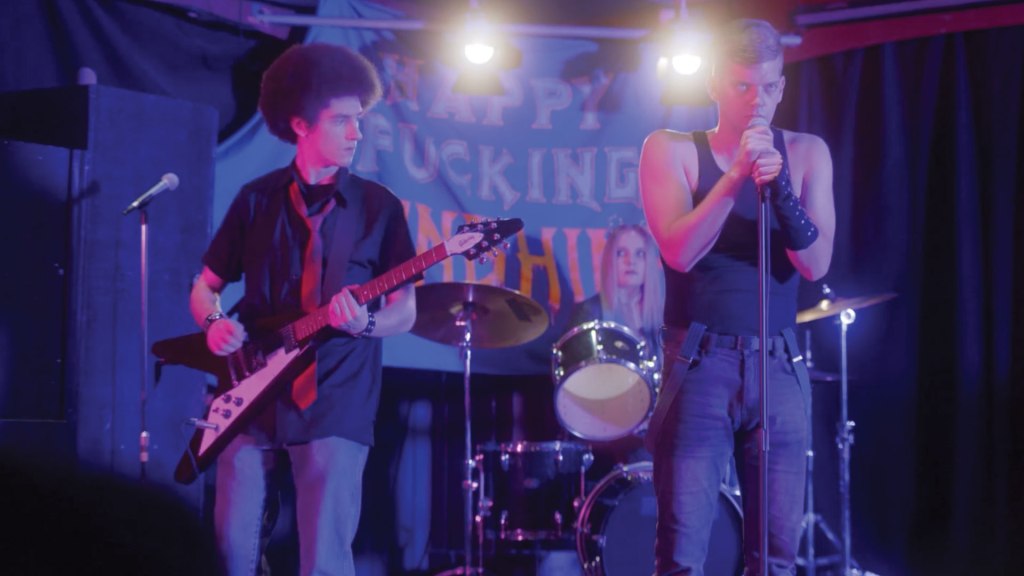
Kiersey Clemons plays the punk-rocker, non-binary bride-to-be, the one who makes that “My Best Friend’s Wedding” accusation. So, it’s “game on” with each muttering “That bitch” at the other’s moves and counter moves.

The “karaoke scene” from “Wedding” is reprised here as a dare that forces Ally to show everyone her way of rapping/singing DIY songs about a current situation, mentioning by name everybody in that moment with her.

It’s clever and cute — with Brie improvising new lyrics to “Semi-Charmed Kind of Life” by Third Eye Blind — even if it never comes close to the heart-touching delight of that “Wedding” moment. That kind of goes for the entire film.

Haley Joel Osment plays another sibling of Sean’s mostly-adopted family, a married goofball who’s all into dated Hollywood references (“The Office,” etc). He finds a laugh or two, as does Hagerty, playing a mom who has taken a lover and doesn’t interrupt their couplings just because her neglectful, self-absorbed adult daughter is visiting.

Everybody else? A lot of usually funny people are in this, but nobody has anything all that amusing to say or do. Wasting Chao, Richardson and Sedaris this way is a criminal offense.

Even Brie, leaning HARD into a sort of lovelorn-and-clueless Kristen Wiig characterization, has as much trouble finding laughs as she does grabbing hold of the heart of the movie.

The best scenes involve Ally questioning, deceiving and then bonding with Clemons’ “Cassidy.” That’s kind of sweet, but concentrating on that relationship at the expense of your supposed love connection, Sean, is a sign that you’ve pretty much missed the point. Or miscast.

And no, a big nude scene or two doesn’t “patch” this hole in the heart of your romantic comedy.

Rating: R for sexual content, graphic nudity, language throughout and brief drug use.

Cast: Allison Brie, Kiersey Clemens, Jay Ellis, Haley Joel Osment, Julie Hagerty and Danny Pudi.

Credits: Directed by Dave Franco, scripted by Allison Brie and Dave Franco. An Amazon Studios release.

Running time: 1:44

Posted in Reviews, previews, profiles and movie news | Comments Off on Movie Review: Allison Brie is Ms. Nuptials Interruptus, “Somebody I Used to Know”

Movie Preview: Affleck and Damon and Bateman and Viola as Michael’s mom reinvent sneakers –“AIR”

This Nike Air Jordan success story is slated for the first weekend in April, after March Madness, just as the NBA playoffs get rolling.

And yes, the trailer suggests it pushes all the right buttons. April 5, Be Like Mike.

Posted in Reviews, previews, profiles and movie news | Comments Off on Movie Preview: Affleck and Damon and Bateman and Viola as Michael’s mom reinvent sneakers –“AIR”

Classic Film Review: O’Toole & Co. send up the foibles of “The Ruling Class” (1972)

It bowls the viewer over with ham-fisted, theatrical excess, a grandiose exclamation point on the tail end of the Golden Age of screen satire.

Peter Barnes sees to it that his class-eviscerating theatrical talk-a-thon “The Ruling Class” makes it to the screen with the dagger still bloody, although the blood’s somewhat dry on the blade.

On the stage three years before Monty Python’s hilarious and pointed “Upper Class Twit of the Year” contest, on the screen a year or so after that was telecast, director Peter Medak’s not wholly stagebound, ever-so-quotable film version feels stodgy and stale, half a century later.

It’s not the content, the idea of sending up the inbred Etonian/Oxbridge/House of Lords Brits whose “born to rule” privilege is still with us, even though Britain is once again questioning those Hanoverian “Windsors” and the ermine-caped and coddled DNA’s “divine right of kings.” Barnes’ play earned a Nicholas Hytner/James McAvoy revival just a few years back.

The “classic” film? It’s something of a stiff. Built around a madness, heavy makeup and Bloody Marys turn by Peter O’Toole, it finishes with a savage flourish. But the two hours-plus bore that precedes that remains, as they say in the UK, “a bit much.”

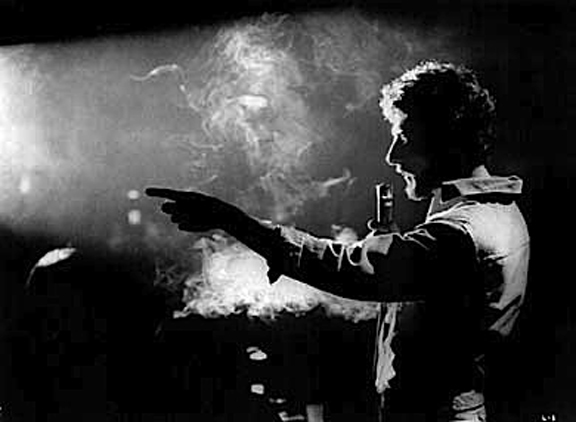
Lord Gurney (Harry Andrews), a widowed, titled nobleman and army veteran, dies during an accident that would have exposed the way he got his jollies, had that sort of thing ever become public. His autoerotic asphyxiation while in his dress uniform and cap — and a ballet tutu — goes awry. And just as he was planning to remarry and sire a fresh heir.

Why? The idea of his “mad” son inheriting the title, the seat in the House of Lords and the magnificent pile (Harlaxton Manor was the filming location) and estate is unthinkable to his brother Charles (William Mervyn), and Lord Gurney himself had to give some thought to protecting the family’s bloodline-based privilege.

But the lord gets-off in mysterious ways, and dies, with a big chunk of cash going to charity, a bigger one to his faithful manservant Tucker (Arthur Lowe), and everything else going to wayward Jack.

A man who has worn a monk’s habit, his hair and beard long and a beatific glow about his face for nearly ten years, who thinks he is Jesus “Mark II,” will become Jack Arnold Alexander Tancred Gurney, 14th Earl of Gurney.

Just don’t call him (O’Toole) “Jack.”

With Uncle Charles, his wife Lady Claire (Coral Browne), their nob of a son (James Villiers) and the obliging local C of E bishop (the great Alastair Sim) present, let the debate about the new lord’s “fitness” for his inheritance begin. How does his know he’s truly the Father, Son and Holy Ghost?

“Simple. When I pray to Him, I find I am talking to myself.

But but but…surely this cannot stand! Even having “Jack” explained to them by his “foreign” doctor (Michael Bryant) and others, can’t lessen the blow.

“Remember he’s suffering from delusions of grandeur. In reality he’s an earl, an English aristocrat, a member of the ruling class. Naturally, he’s come to believe there’s only one person grander than that: the Lord God Almighty Himself.”

This Jesus naps upon a cross and beams when he talks of love and blessings, the wonders of “His” world. He fails utterly to inspire his relatives to evolve into better people, or to give up their schemes to displace him, or at least marry him off so that another “heir” can be produced and he can be sent back to the “looney bin.”

“We think you should take a wife.”

“Who from?”

The manservant Tucker, more “outspoken” but still on the job after receiving his newly-won wealth, just shrugs at this latest upper class twit.

“Yes, he’s a nutcase. Most of these titled fleabags are. Rich nobs and privileged arseholes can afford to be bonkers. They’re living in a dreamworld, aren’t they, sir? Life’s made too easy for ’em. They don’t have to earn a livin’, so they do just what they want to.”

Director Peter Medak, a refugee from communist Hungary, may have had insights on this “Bolshie” satire of class and privilege. But he shows little flair for comedy or comic blocking. The film never breaks free from that “stagebound” feel. Every scene runs past its payoff with most of the first two acts playing as an endless succession of “let’s not get to the point/the good stuff just yet” prevarications.

There are occasional wacky breaks for a little song and dance, “The Varsity Rag,” public school songs and the like. They’re rather blandly translated to the screen.

The “He thinks he’s Jesus” joke is campy enough, but flogging it to death is a sin. What we stick around for is the fading hope that eventually this nutter will be “accepted” because “We understand each other perfectly. Breeding speaks to breeding.” Jack is just “a little eccentric, perhaps.”

And when he’s “accepted” we doubt he’ll have any trouble fitting in with his fellow “eccentrics” in the House of Lords.

With rank having its privileges, no effort will be spared to provide Jack with a “cure” via a fellow headcase who bills himself as “The High Voltage Messiah” (Nigel Green),.Charles’ mistress (Carolyn Seymour) will be persuaded to marry him.

Madness will be shrugged off, a murder will be covered-up thanks to great wealth’s ability to hide behind the Church and school connections and class. If that sounds dispiritingly “present day,” that’s kind of the point.

The film divided critics and awards groups in its day, but there’s no denying its impact. It was a flop. O’Toole would enter his own “years in the wilderness” that even the cult hit “The Stunt Man” couldn’t end. It would take “My Favorite Year” to truly begin his own third act.

Medak would never be entrusted with anything of this scale again. He’d go on to film “The Krays” and “Romeo is Bleeding” and a lot of American TV.

The movie they left behind, a production launched — mid-bender — when O’Toole secured the rights and could add it to his “Man from La Mancha” schedule, remains a curious and endlessly quotable artifact.

If the play’s as timeless as Hytner maintained it is, it’s a pity the director of “The Madness of King George” didn’t take a crack at making a film using his West End production as a jumping off point.

But perhaps he figured out what O’Toole, Medak and Barnes didn’t, way back when. This sort of talky, madcap-but-myopic satire only works on the stage, where the many pauses allow the many pithy punchlines to become laughlines and the live audience helps carry the load.

Rating: PG, innuendo, scatological humor

Cast: Peter O’Toole, Alastair Sim, Carolyn Seymour, Arthur Lowe, Coral Browne, William Mervyn, James Villiers, Michael Bryant and Harry Andrews.

Credits: Directed by Peter Medak, scripted by Peter Barnes, based on his play. An Avco Embassy release on Tubi, Amazon, etc.

Running time: 2:33

Posted in Reviews, previews, profiles and movie news | Comments Off on Classic Film Review: O’Toole & Co. send up the foibles of “The Ruling Class” (1972)

Movie Preview: Owen Wilson sends up Bob Ross? “Paint”

The names have been changed, but the PBS painter/mesmerizer and womanizer is plainly the inspiration for this one.

And if there is a comic actor who more embodies the phrase “Happy little clouds” (probably copyrighted, almost certainly not in the film), I’ve not seen him.

“Coming soon” from IFC.

Posted in Reviews, previews, profiles and movie news | Comments Off on Movie Preview: Owen Wilson sends up Bob Ross? “Paint”

Netflixable? A Wife and Mother flees her past and her present, to “Stromboli”

A woman’s troubled psychological journey begins at what might be her final destination in “Stromboli,” a Dutch self-help dramedy of the “Eat, Pray Love” variety, performed in English.

It’s a vigorously edited-down version of the novel by Saskia Noort, a Dutch writer known for thrillers, that touches on childhood trauma, adult guilt and what happens after the breaking point that sends our heroine — Sara — fleeing for a volcanic island escape.

A lightweight, hedonistic opening that suggests this “Eat Pray” will be reduced to binge drinking and boinking, pardon my English. But in short order we see that this isn’t “escape” for Sara (Elise Schaap of “Valentino”). it’s a mad, heedless flight. She’s running from something awful, and her flashbacks only hint at what that might be.

A drunken Sara acts-out on the ferry to Stromboli, which we gather she’s visited before. She’s climbing on the railings, and grabbing the snack bar cook for a rough-and-ready quickie back in the kitchen.

Staggering ashore, she renews her acquaintance with the old gent who rents her a cliffside cottage, and her friendship with his donkey, Gustav. She fills her mineral water bottle with vodka, staggers to the volcanic beach and all but dozes off between volcanic tremors.

A paler-than-pale British stranger (Tim McInnerny of “Notting Hill” and “Blackadder”) staggers up, and they strike up a brief, boozy friendship, one that ends when he returns to his “group.” Sara, meanwhile, has lost her bag — all her money, ID and phone. She has to break into the cottage, which she drunkenly trashes. That gets her kicked out, and there’s only so much pub crawling she can do on the barter system.

Awakening in a church, she is “rescued” by Jens (Christian Hillborg), who takes her home to his little hotel. It’s now a retreat for people looking for a sort of life-cleanse, a psychological detox in which giving up booze, etc., for their stay is merely “urged” not ordered.

Jens and Thandi (Neerja Naik) are gurus/counselors. This is where Harold (McInnerny) belonged, with Anna Chancellor, Pieter Embrechts, Taz Munyaneza and others in his “group.” Troubled Sara, dodging calls from the husband she insists she’s dumped, unable to reach her 14 year-old daughter, is added to the activities — group dance, group meals and role-playing group therapy.

You can guess some of what follows. Everybody has a secret shame/sorrow/regret. Some folks will “couple” up. And the role-playing that helps them come to grips with it is pretty traumatizing and extreme in nature. Some will have breakthroughs, but not before Sara acts-out some more — sleeping around, snorting this, insulting that.

The most impressive element to this Michiel van Erp film (“Open Seas” was his) is the way it shifts direction and tone so abruptly that it could give you whiplash. One minute, we’re staggering through the streets of town with Sara and the donkey Gustav enlisted as her pack animal, and the next she’s reluctantly falling into “let’s get to work on YOU.”

Unlike the novel, we don’t see what she went through that put her on that ferry, three sheets to the wind. Joining the story already in progress (in media res) makes it more interesting and more challenging. As Schaap makes a beguiling drunk, we buy in and start to figure out what’s going on.

Others may have more tolerance of “the process” that she finds herself immersed in, its self-help speak and discomfiting, lawsuit-inviting “shock therapy.” The picture wades into that and lost me, or at least lost my interest.

More could have been managed with the “eruption” metaphor that the Stromboli setting invites. Tremors, and all Sara and Harold can agree on is that if this is indeed “the big one,” no one will miss him and her daughter “will be glad” she’s gone.

I appreciated the film’s brisk, breezy way of introducing characters and getting down to business in “treating” their trauma. But I missed that lighter tone, which frankly would have suited the goofy nature of the therapy that Sara endures to get her to reveal and then let go of her “secret.” As “deep” as they wanted to treat this story, it’s never more than a facile, glib gloss of trauma and its treatment.

Mental health is no joke. But ways of treating it can be, and that’s the only kind of “closure” an 85 minute dramedy with sex and drugs and funny drunks and possibly unlicensed therapist “gurus” can provide.

Rating: TV-MA, violence, drug and alcohol abuse, sex, nudity profanity

Cast: Elise Schaap, Christian Hillborg, Anna Chancellor, Pieter Embrechts, Taz Munyaneza, Neerja Naik and Tim McInnerny

Credits: Michiel van Erp, scripted by Roos Ouwehand and Paula van der Oest, based on a novel by Saskia Noort. A Netflix release.

Running time: 1:25

Posted in Reviews, previews, profiles and movie news | Comments Off on Netflixable? A Wife and Mother flees her past and her present, to “Stromboli”

Movie Preview: Shannon, Kate Hudson, Don Johnson and Aja hit a Literary Festival upended by “A Little White Lie”

They call them “Reader’s Festivals,” “Book Festivals” and “Writer’s Festivals.”

They used to be organized by colleges and newspapers and the like — some still are. Such events can have a Chamber of Commerce appeal, pulling in readers from all over, filling hotels for readers who want to meet their idols and listen to them talk about “the craft” and read from their works.

I used to work at a university that ran a swell one, where I got to meet folks like McMurtry and Mailer and McInerny and Haley and Erdrich, and worked for a newspaper on the Fla. coast where I got to cover another, where the likes of Susan Orlean came to be feted.

Writers being writers, there were always mishaps, drunken revels, torrid tales and whatnot associated with them. Norman Mailer renting a car at the airport and getting lost between it and the University of North Dakota, Edward Albee cutting a wide swath through whatever college town he happened to be gracing with his presence, Harlan Ellison taking inspiration from the frigid wasteland of North Dakota and the dork recording his reading/lecture/stand-up show that night.

So there’s a LOT to draw from for this comedy, with Michael Shannon pretending to be a reclusive writer, Kate Hudson the festival organizer trying to keep this enterprise operating, Don Johnson, Zach Braff, Wendy Malick, M. Emmett Walsh, Aja, Da’Vine Joy Randolph and others caught up in the heady atmosphere of books and booze.

“A Little White Lie” opens Mar. 3.

Posted in Reviews, previews, profiles and movie news | Comments Off on Movie Preview: Shannon, Kate Hudson, Don Johnson and Aja hit a Literary Festival upended by “A Little White Lie”

Movie Review: A Grifter by Any Other Name? “Sharper”

As dark as “The Grifters,” as over-the-top as “The Sting,” “Sharper” is a fresh take on a time-tested genre, a “Who can you trust?” tale from the Land of the Big Con.

No, you’re never wholly sure of who’s grifting whom, sometimes to an eye-rolling degree. Maybe the opening image, of a Rolex watch being re-assembled, is a tad on-the-nose, previewing the profligate riches and the clockwork plot to come.

But an outstanding cast headed by Oscar winner Julianne Moore and fresh faces Justice Smith and Briana Middleton, and lifted by bring-it-all-home reliables Sebastian Stan and John Lithgow, make this a thoroughly entertaining winner about predators who make everybody they meet a loser.

An opening credit defines a “sharper” as “someone who lives by their wits,” and creates expectations for every character and every storyline to follow.

That opening “meet cute” in a bookstore? Is lovely “single and I like it” grad student Sandra (Middleton, of “The Tender Bar”) who she seems to be? Is bookstore manager Tom (Smith of the “Jurassic Worlds” and TV’s “The Get Down”) for real?

We watch their romance unfold and wait for a shoe to drop, that first “problem” that only somebody else’s money can solve. No, that’s not a particularly hard to guess secret. But the clockwork con is more of a vehicle for a series of engrossing character studies which follow.

Sandra’s back story is explored, as is Tom’s. Then we meet Max (Stan). And figure out his connection to “Madeline” (Moore).

All along the way, somebody’s playing somebody else. Someone is being groomed by a predator, someone else given a “make over” as part of a mentoring. Every connection is tenuous but essential to making this Rolex — OK “Fauxlex” — tick over.

Continue reading
Posted in Reviews, previews, profiles and movie news | Comments Off on Movie Review: A Grifter by Any Other Name? “Sharper”

Movie Review: A Journalist and a Cop change places in the “Line of Fire” (“Darklands”)

A single mom nags her teen son into getting up and out the door to school. As an Aussie, she’s got one ultimatum that works every time.

“No school, no ‘footie.'”

They arrive, and she stays on campus with him. She’s a cop, and this is where she’s assigned.

But today is the day that justifies why police are assigned to schools where gun rights overrule human rights, as far as kids are concerned. “Active shooter!”

Today is the day everyone finds out how Policewoman Samantha Romans (Nadine Garner) reacts in such a situation. She calls for backup, draws her firearm and freezes. She weeps and cowers as kids flee all around her.

Her own son is among the 20 killed. Is his death the beginning of her torment, or the culmination of it?

Actor-turned-director Scott Major and screenwriter Christopher Gist take a flier on coming to grips with how people respond to the shock and terror of life-threatening danger, and bury that in a far-fetched thriller, “Line of Fire,” which was titled “Darklands” when it was released Down Under.

They flip the script, making Samantha the victim in a scenario that is common in American gunlands, where gun manufacturers, gun lobbyists and gun fetishists bend cowardly politicians into accepting that “cops in the schools” is the solution to an unregulated, often-deranged civilian subculture awash in machine guns.

How do you make a policewoman the victim? Not just by explaining “how these things happen.” As Samantha’s superior throws her under the bus (“She let everyone down.”), harassing phone calls and shouted insults from drive-bys begin.

And then that villain of the right wing gun culture sticks her nose in. Jamie is a laid-off print journalist hellbent on returning to relevance by getting Samantha to talk. Jamie (Samantha Tolj) smacks her lips over the payday that will lead to, the web traffic she can gin up for her website. She will not take “No” for an answer.

Her persistence turns into the ugliest harassment imaginable — shaming, blunt assessments of how Sam is being perceived, lies about how “I understand guilt,” published online taunts and then texting her quarry the crime scene photo of what a semi-automatic weapon did to her teen son’s face.

We barely have time to be appalled at this over-the-top terrorizing when out filmmakers flip the script again. Sam quickly concocts an absurdly detailed plan for revenge that will make her tormentor experience what she went through.

There’s merit in exploring just what leads to that “Lord Jim” moment when any person — soldier, sailor, police officer or civilian — finds out what we’re really made of. The psychology of panic, the knee-buckling terror of facing great peril to do the noble thing and try to save others makes for gripping drama, and in the case of mass shootings, fascinating “good guy with a gun” myth-busting.

But what Major and Gist have concocted trivializes the trauma with every “This reporter is the crazy one” and “She has that coming to her” turn.

Tense scenes of violence are undercut by the extremes that the shattered Sam indulges to in securing her vengeance. Her “particular skills” go far beyond that one expertise every cop on Earth carries into work each day, knowing the system and the people in it well enough to know just what one can get away with, and how.

“Line of Fire” can be unsettling and even wrenching when this or that aspect of the inciting tragedy is touched on and the viewer allowed the grace to consider what anyone — even someone trained to handle such scenarios — would face in such a situation.

But it stumbles from eye-rolling to infuriating all the way to risible as the filmmakers turn professional failure into armed and trained victimhood, and then into savage “learn your lesson” revenge.

Whatever merits this failed morality tale might have had are lost as it lurches into the ludicrous. The real shame here is worth pointing at the people who made this.

Rating: unrated, graphic violence

Cast: Nadine Garner, Samantha Tolj, Brett Cousins, Nicholas Coghlan and Texas Watterston.

Credits: Directed by Scott Major, scripted by Christopher Gist. A VMI Worldwide release.

Running time: 1:44

Posted in Reviews, previews, profiles and movie news | Comments Off on Movie Review: A Journalist and a Cop change places in the “Line of Fire” (“Darklands”)

Movie Review: A Dolly Impersonator struggles to be “Seriously Red”

Aussie actress Krew Boylan turns out to be a better Dolly Parton impersonator than screenwriter in “Seriously Red,” her self-scripted star vehicle. It’s a self-serious and seriously-confusing identity crisis comedy tucked into what might have been a gender role romp of the “Connie & Carla” variety.

Boylan can Smoky Mountain drawl like Dolly, and offer a fair impression of Parton’s keening Appalachian soprano. But the movie she’s built around her redheaded stepchild of a character is too sexual to be cutesy, and too cutesy to have anything like the edge that seems to have been Boylan’s intent.

We meet “Red” at a “serious misunderstanding.” She’s a real estate assessor who isn’t really making it at work. And for some reason, she’s shown up at the company office party in full Dolly regalia. She’s been obsessed with her since her tweens.

What starts off like a painfully awkward “misread the room” moment can only be turned around by remembering whatever Dolly Partonism — those little pearls that Country Music’s Living Saint has been dropping since she became famous — applies.

“Storms make trees with deeper roots,” maybe? “If you don’t like the road you’re walkin’, start pavin’ a new one!”

“Red” launches into “9 to 5” and saves the day, only to get carried away and fired the next day.

But opportunity knocks in the form of “Teeth” (Celeste Barber), a manager of “tribute performers” like “The World’s Best Impersonator,” a Kenny Rogers (Daniel Webber) act that gets by mainly on facial hair. He barely sounds like Kenny.

What’s a Kenny without a Dolly? Let’s team them up and take this show to Hong Kong! Just don’t ask “Teeth” how she got her nickname, and where her spare set ended up growing.

Has Red finally found what she’s good at? Might Kenny, who is DEEP into character and DEEP into Dolly, be “the one?” How deep might Red go to “become” her idol?

And will Red’s disapproving single Mum (Jean Kitson) finally give her a little credit and a little peace?

Continue reading
Posted in Reviews, previews, profiles and movie news | Comments Off on Movie Review: A Dolly Impersonator struggles to be “Seriously Red”