Movie Review: A French bull-“racer” starts finds empathy with the “Animale”

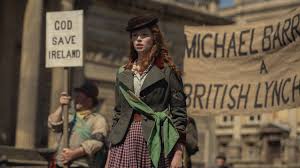
“Animale” is an intriguing French body horror thriller set in Camargue, the bull fighting capital of France.

The first local woman to enter the ring with the young men who tempt, chase and are chased by local bulls starts to see things from the bulls’ perspective as bulls go “rogue” and started goring and stamping the locals in the dark of night, long after the audience — mostly tourists — for some events has left.

Writer-director Emma Benestan (“Fragile”) uses this setting and set-up for an allegory about women in a man’s world, animal cruelty and the guilt our heroine feels about the “sport” she’s determined to get into.

The Camargue style of bullfighting is non-fatal, a lot less bloody and far and away a more humane and “even” contest and is thus referred to as “bull racing” by the locals, who enter the ring — basically unarmed and on foot — and try to snatch cash-prize tokens attached to the bull’s scalp.

Nejma (Oulaya Amamra) is the daughter of a cattle man, now breaking the gender barrier working for the otherwise-traditional bull-breeder Leonard (Claude Chaballier). She’d like to use her understanding of bulls, picked up during roundups, branding and the like, to get in the ring with the other local cowpokes — razateurs — who dress in white, chase and are chased by a bull in their efforts to win prizes.

Her fellow ranch hands seem more tolerant of this invasion of their “traditional” space than we might expect. The boss’s gay son (Damien Rebattel) encourages her, and other cowhands help train her.

Razateurs need to be fit, nimble and gutsy. Nejma may not be the fastest or most muscular. But lean and able to scramble up the sides of the ring matter more here. She doesn’t make an utter fool of herself her first time out, which she reluctantly takes as a “win.”

“You did great for a girl!” (in French with English subtitles) wasn’t what she was looking for.

But something happens the night the ranch hands spend celebrating their feats of bravery. Out harassing the bulls in the swampy pastures, Nejma is “attacked.” She’s bloodied and injured, and she doesn’t remember what happened.

As she struggles to recover and figure out what’s going on in her head, she starts to see things from the bulls’ point of view. This isn’t Spain, with its more brutal and far less “sportsmanlike” ritualized bullfighting. But maybe it’s bad enough, if you’re looking at branding, beating and taunting through the animal’s eyes.

Benestan uses effects that turn Amamra’s eyes wide and black when she’s staring down/connecting with a bull, and has her see her toes transforming into hooves.

Our writer-director draws a parallel between how men treat livestock and how they treat women, but she soft-sells that analogy. One can only imagine how much more piggish the male cowhands might come off in other hands.

“She’s the first girl,” the lads chortle in their shared dressing room before a bullfight. “Can’t we hit on her?”

As Nejma spirals into madness, we realize before she does what’s really going on — with or without supernatural repercussions.

Amamra is more physically convincing in the part than emotionally. And she and Benestan do a better job of announcing Nejma’s inner turmoil than actually portraying it.

But with a striking setting, menacing music scoring gloomy shots of bulls running through swampland in the fog and an up-close look at this unusual variation of bullfighting (it’s barely explained), “Animale” puts us in the mood for a fright even if it’s slow to deliver one.

Rating: unrated, graphic violence, animal cruelty

Cast: Oulaya Amamra, Damien Rebattel,
Claude Chaballier, Vivien Rodriguez and Marinette Rafai

Credits: Directed by Emma Benestan, scripted by Emma Benestan and Julie Debiton. A Film Movement+ release.

Running time: 1:38

Posted in Reviews, previews, profiles and movie news | Tagged , , , , | Comments Off on Movie Review: A French bull-“racer” starts finds empathy with the “Animale”

Documentary Preview: A Chip off the Old Icon — “It’s Never Over, Jeff Buckley”

A singer songwriter, son of a famous died-too-soon singer-songwriter, wrestles with every bit of that legacy.

This doc about Tim Buckley’s son Jeff Buckley is filled with testimonies to the kid’s talent and legacy and opens in August.

Posted in Reviews, previews, profiles and movie news | Comments Off on Documentary Preview: A Chip off the Old Icon — “It’s Never Over, Jeff Buckley”

Movie Review: Israeli history as remembered by “Shoshana” and her British lover

The director of “Welcome to Sarejevo, ” “A Mighty Heart” and “The Road to Guantanamo” reaches for another hot button topic with “Shoshana,” a historical thriller about the bloody birth of Israel.

With global condemnation and outrage over Israel’s apartheid regime diving headfirst into Gaza genocide, this film about the Jewish zionist factions — socialist/egalitarian vs. violent, intolerant and “fascist” — that have struggled for primacy in founding and governing a Jewish state in “the Promised Land,” could not be more timely.

Michael Winterbottom tackles the last years of the British Mandate that governed Palestine as seen through the eyes of an idealistic Russian Jewish immigrant. Shoshana Borochov was the daughter of Russian Zionist Socialist Ber Borochov, a woman who emigrated to Israel in the 1920s, a few years after her father’s death.

She narrates this history she was a witness to, noting the “zionist” leanings of the Herbert Samuel, first British High Commissioner for Palestine, a Jew who opened the doors to a huge influx of people who altered the demographics and enraged many in the Arab majority in what had been a “sleepy backwater in the Ottoman Empire” until World War I ended that empire.

In 1938, Shoshana (Irina Starshenbaum of the Russian sci-fi thriller “Attraction”) is an office employee of the Histadrut trade union and a member of the banned Haganah zionist paramilitary organization. But even the Brits who “banned” it recognize it as the more moderate of the armed groups — including the terroristic Irgun — trying to lure and protect Jewish immigrants to Palestine, and squeeze out the Arabs already there.

Douglas Booth (of “Mary Shelley” and “Pride and Prejudice and Zombies”) is Tom Wilkin, one of the British Detective Constables added to the Mandate’s police force to try and keep the peace as Palestine lurched towards the 1917 Balfour Declaration’s stated goal — a Jewish state within the historical/Biblical boundaries of ancient Israel.

Wilkin works the beat in the new Jewish city of Tel Aviv, which is how he meets and becomes smitten with Shoshana, as famous “for her beauty” and she is “her political passions.” She’s carrying on the “Let’s set up a socialist state where Arabs and Israelis can get along” beliefs of her father, who historians note figured the Arabs would “assimilate” and be overwhelmed by the “superior” European Jewish immigrants flooding in.

Wilkin tries to track down Jewish caches of weapons and hunts Jewish bombers, who dress in Arab garb to go plant their explosives among the civilians in the Arab towns and cities (Jerusalem included) in the tit-for-tat terror campaigns that the Balfour Declaration set off. Wilkin, who has learned Hebrew, is nothing if not diplomatic.

To the north, Detective Constable Geoffrey Morton (“Harry Potter,” “Pale Blue Eye” and “Old Guard” alumna Harry Melling) is stationed among the Arabs. He’s more ruthless in his running of informers, and seemingly more trigger happy as he quells the after shocks of the latest “Arab revolt.”

As matters in and out of Tel Aviv get out of hand and Britain struggles to keep the peace there while fighting the Nazis in Europe, with officers and officials of the British police force assassinated by Jews, Morton is brought in “to treat the Arabs and the Jews equally.” That spells even more trouble for the brittle romance between Shoshana and Wilkin as Palestine simmers, ready to explode and both lovers’ loyalties are tested.

It’s sometimes hard to reconcile the director of those delightful “Trip” comedies with Steve Coogan and Rob Bryden with the political hot potato-grabbing filmmaker who spent “Eleven Days in May” of 2021 filming Israel bombing and killing civilians by the hundreds in Gaza.

Palestine is a dreadfully complicated subject, something more appreciated when you see how many footnotes you have to include to make a simple review come off fair and have it make sense.

Imagine Winterbottom’s challenge.

But he makes this filmed-in-Italy romantic thriller work, even if the romance plainly takes a back seat to the politics, especially as far as Shoshana is concerned.

What’s sobering here is the depiction of Zionist violence predating the Holocaust victimhood that sort of got all that shoved under a rug in Hollywood celebrations of the Birth of Israel — films such as “Exodus” and “Cast a Giant Shadow.”

“Shoshana” shows fewer Arab provocations, jokes that “Arabs aren’t very good shots” and focuses instead on the precursors of the Israeli Defense Force carrying out assassinations, bombings, reprisals and judge-jury-and-executioner murders of those deemed “traitors” to the cause within the Jewish immigrant population.

Filmed in and around Taranto, Italy, which is dry and rocky but not nearly dry and rocky enough to pass for Palestine, with a Russian star and a lot of Brits (Ian Hart plays the head of the Mandate government, Robert Chambers, which appears to be the name of an academic/author who wrote about Palestine in that era) in supporting roles for a movie that lacks Israeli or Hollywood support, Winterbottom gets at the difficulty of examing the root causes of this not-that-ancient conflict.

But he kind of/sort of pulls it off. In an era of both rising Anti-Semitism and a soaring use of that term to shut down criticism of an Israeli fascist government that has ended any semblance of pluralistic democracy in that country and has played a role in ending American democracy and hobbled politics in other Western democracies, that’s no mean feat.

I watched this piece of little-covered Israeli history and found myself remembering the elementary school music classes where kibbutz songs about Israeli statehood were a part of the curriculum, for reasons only Golda Meir and Nixon could explain.

The narrative of “Shoshana” is simple in structure but complex in its politics, and it’s a credit to Winterbottom’s years of experience dealing with material like this that it plays as well as it does, and that it comes off.

The love story doesn’t deliver. But everything historically referenced, explored and explained that keeps it from being the emotional heart of “Shoshana” does. And if ever we needed to understand the difference between a “Zionist” and a “fascist/nationalist/terrorist,” that time is now.

Rating: unrated, graphic violence, sex, nudity

Cast: Irina Starshenbaum, Douglas Booth, Harry Melling, Aury Alby, Oliver Chris and Ian Hart.

Credits: Directed by Michael Winterbottom, scripted by Laurence Coriat, Paul Viragh and Michael Winterbottom. A Greenwich Entertainment release.

Running time: 2:02

Posted in Reviews, previews, profiles and movie news | Tagged , , , , | Comments Off on Movie Review: Israeli history as remembered by “Shoshana” and her British lover

Movie Review: As “Indie” as they come — “AJ Goes to the Dog Park”

“AJ Goes to the Dog Park” is a cheerfully cheesy semi-surreal indie film about what one dopey chihuahua owner will go through to get his dog park back.

It’s twee in the extreme, with the occasional sophisticated effect — “No need to cry CG tears!” — and a lot of DIY ones. There are stuffed dogs double for the “real” ones, a windblown inflata-guy meant to be the “hero” getting blasted by a prairie breeze in the screwball Fargo (lots of models of the city) to go with inside joke “landmarks” and a pirate on an across-the-state-line-from-North Dakota Minnesoooooota lake.

This is a goofy version of the Fargo the locals know, a Fargo of their mind — not the Coen Brothers’ minds. And that Fargo has its charms.

AJ (AJ Thompson) is a cubicle drone perfectly content to keep his entry level tech job and not accept a promotion from the boss. As the boss is his dad (Greg Carlson) who’d like to prep the lad into taking over the family business, you’d think that’d be a problem. But not for AJ.

He’s got dinners with dad and “Stewp” (“Soup that’s a stew,” donchaknow) with his married pals (Morgan Hoyt Davy and Danny Davy) and his dogs, Biff and Diddy. And best of all, he’s got a dog part to take them to.

“AJ Goes to the Dog Park” is about what happens to AJ’s contentment when a moronic mayor (Crystal Cossette Park) converts the Dog Park to a Blog Park, “no dogs allowed.”

AJ’s life unravels, and he must challenge the mayor via the tenets of “ancient Fargo law” to unseat her and get his park back.

He must catch a bigger muskie than the mayor ever did. A Minnesotan (Jacob Hartje) turned small craft warning in a pirate hat will be his “Yarrrrrr” coach.

AJ must be tougher than the mayor, learning to wrestle from the coach turned hazelnut tycoon (Jason Ehlert) who moved into Morgan and Danny’s house when they fled North Dakota.

And he must evade the mayor’s Fargoans in Black, two goons in black suits and Raybans who would do anything to save the mayor’s job — anything.

Writer-director Toby Jones, with other directors filming the sometimes animated flashbacks that most every character trots out at some point, melds sketch comedy, comic book and student film style visuals and shtick for laughs, occasionally letting some of the infamous quirkiness of the Northern Plains in on the joke.

“Need I say much more?”

AJ misquotes the Bible, gets ticketed for waving while bicycling and learns to tap/sap trees as he loses track of the forest, the park and those two dogs for those trees.

What all involved have committed to — the film looks like a summer shoot, with a call-back for a taste of Fargo’s winters — and conjured up is a classic “film festival film,” a movie too twee, precious and amateurish to live outside of North America’s film fest circuit. Film buffs at such events tend to cut a lot of slack to plucky little comedies with no budgets and non-professional casts. Groupthink sets in as unassuming little comedies like this offer a contrast to the much more polished film fare on display — foreign and art films.

There are about 30 minutes worth of fresh (ish) ideas and about ten chuckles in “Dog Park.” Like many a festival film before it, the cold hard truth about “Dog Park” is it can’t thrive on charm alone, not without more laughs.

At least the guy playing the pirate seemed to be having a grand time of it.

Rating: unrated, mock violence, a moment of profanity

Cast: AJ Thompson, Crystal Cossette Knight, Greg Carlson, Morgan Hoyt Davy, Danny Davy and Jacob Hartje

Credits: Scripted and directed by Toby Jones. A Doppelgänger release.

Running time: 1:19

Posted in Reviews, previews, profiles and movie news | Tagged , , , , , , , | Comments Off on Movie Review: As “Indie” as they come — “AJ Goes to the Dog Park”

Classic Film Review: Verhoeven showcases Hauer as his WWII Dutch “Soldier of Orange”(1977)

Long before “Robocop” made him a household name and “Basic Instinct,” “Showgirls” and “Starship Troopers” made him infamous, Dutch director Paul Verhoeven gained international acclaim for a few films in his native Holland, the most enduring of which is his jaunty/bloody/sexy World War II “true story” resistance thriller “Soldier of Orange.”

And when he needed a comeback after studios and audiences tired his overripe, oversexed style, he went back there for an even more violent, more suspenseful and sexier WWII Resistance thriller “Black Book.”

Verhoeven got Hollywood’s attention with 1977’s “Orange,” which came after his “Turkish Delight” breakout. Both films star his early muse, the formidable Rutger Hauer, who enjoyed a long Hollywood career that took him from “Blade Runner” to “Hobo with a Shotgun.”

“Soldier of Orange,” or “Soldaat van Oranje” in Dutch, is a thriller that doesn’t so much celebrate The Netherlands’ partisan fighters of WWII as appreciate them. We see their clumsy, cavalier and under-committed early recruitment, note their fence-straddling about whether to throw in against the Nazis before the tide turned, and their necessity.

Like the French and Norwegians, Dutch people could keep their heads held high after the war because of the few who fought back, didn’t collaborate, fraternize or sell-out to their German occupiers. Verhoeven shows us treachery, treason, the “cruelty is the point” that draws so many to fascism even today and the love-the-one-you’re-with immediacy of a deadly world war where who knew if you’d be around tomorrow?

The lens we see all this through is class, the upper crust college boys who meet in ’38 and go on to sign up or delay enlistment with Europe in mortal peril, only to get involved when it meant adventure, risk and more chances to wear black tie and tails than you’d think.

Hauer is Erik, a boyish freshman who endures hazing at Leiden University where the imperious and rich Guss (future Bond villain Jeroen Krabbé) rules the roost, at least as far as hazing underclassmen is concern. A self-described “prick,” Goss goes overboard abusing Erik and that bonds them for life.

All the lads know that only John (Huib Rooymans) is really concerned about “the Nazis” and the threat they represent. One and all dismiss that because he’s “The Jew” in their crew.

When the shock of war comes, Erik and Guss can’t enlist on the spot, and The Netherlands hastily surrenders for reasons given — Rotterdam is badly reduced by bombing — and the ones the script suggest. Their military was totally unprepared, falling for pranks, bungling the military call-up and generally lost when it came to who the fascists were in their midst, and of course blamed “the politicians” for selling them out.

Over the course of the war, some will collaborate, some will flat-out join the Dutch contribution to the Nazi war machine, some will resist and many of the young will float along on whatever impulse or opportunity presents itself to them.

Get away to England? SURE. Not this time? Maybe later, then.

Hauer and Krabbé compete to see who has the best swagger, with Guss right on the edge of upper class twit when it comes to thinking things through and Erik Mr. Indecisive in most matters that aren’t sexual.

Nico (Lex van Delden) was “Mr. Particular” in college, the detail-oriented guy you’d want running your resistance cell. Robby (Eddy Habbema) is the motivated radio operator with a Jewish fiance (Belinda Meuldijk) who is sweet on Erik.

We see most of this through Erik’s eyes, as the film’s opening sees him in uniform, tucked into newsreel footage of Queen Wilhelmina’s triumphant return to her palace at war’s end.

The genius of the film, the script and Hauer’s performance is the ambivalence and devil-may-care reminder that youth — especially upper class young people seemingly insulated from some of the harsh realities to come — can be slow to take up a “cause.” But adventure, risk and sex? Where’s the Resistance rave/hook-up this weekend?

“A spot of war would be exciting,” Erik cracks (in Dutch with English subtitles) early on, and that’s what Verhoeven is both reminding us of — that nobody in Europe was foolish enough to name people who had this situation land in their laps “The Greatest Generation” — and sending up.

One hilarious set-piece has Hauer’s Erik dragged onto the dance floor by an old classmate (Derek de Lint) who’s gone Russian Front Dutch SS, a formal, threatening same-sex gavotte that Erik has to somehow exit in time to save a mission from betrayal.

The spycraft of Resistance work is far better covered in “Black Book,” as are the preps for the violence one must master to fight back.

But Verhoeven brilliantly handles the suspense of all this, people living through “interesting times” with no notion of living through them, even joking about “suicide pills” that are an option if they face capture, as if anybody in this lot thinks that far ahead.

And “Soldier of Orange” — the title comes from the royal family’s color of choice — still zips by, a sober, sexy and even silly WWII adventure that spends two hours and forty five lively minutes underscoring that “heroes” aren’t born to it or always trained and hardened to rising to the occasion. Oftentimes they’re lucky, in the right place and willing to take the right action at the right time, even if they never really give it a lot of thought as they do.

Rating: R, graphic violence, sex, nudity, alcohol abuse, smoking

Cast: Rutger Hauer, Jeroen Krabbé, Belinda Meuldijk, Susan Penhaligon, Lex van Delden, Dolf de Vries, Derek de Lint, Eddy Habbema,
Rijk de Gooyer, Huib Rooymans, Andrea Domberg and Edward Fox.

Credits: Directed by Paul Verhoeven, scripted by Kees Holierhoek, Gerard Soeteman and Paul Verhoeven, based on a book by Erik Hazelhoff Roelfzema.

Running time: 2:45

Posted in Reviews, previews, profiles and movie news | Tagged , , , , , , | Comments Off on Classic Film Review: Verhoeven showcases Hauer as his WWII Dutch “Soldier of Orange”(1977)

Netflixable? Tyler Perry’s Back in Drag for “Madea’s Destination Wedding”

You just know that what few conditions Netflix probably had in the big fat contract it gave the prolific Tyler Perry, one of them was “Give us a Madea movie every now and then.”

Because even if his hilariously outspoken drag alter ego had run her course with a paying theatrical movie audience, there are plenty of people who can’t get enough of the wit and wisdom of the two-fisted, foul-mouthed font of great granny giggles that Madea serves up.

And you knew that his farewell tour with the character, “Madea’s Farewell Play” was not the last we’d see of her, her curmedgeonly cuddle bunny Joe (Perry as well) and that vast extended family of insult-slinging slaptstickers, including The Browns.

“Madea’s Destination Wedding” is like all of the recent Madea movies — scribbled in haste, with dashes of improvised insults and the like by Perry and his repertory company — Cassi Davis as the teetering bowling pin Aunt Bam, David Mann as bad, broad and loud Leroy Brown, Tamela J. Mann as as Cora, etc.

His debut feature, “Diary of a Mad Black Woman” had some edge. But as Perry went to the Madea well time and again, the formula boiled down to the bare basics — find a situation to put her in — Jail, Christmas, a Funeral, Halloween — and turn the heffer loose in the china shop, bitching, threatening, swaggering and insulting until the closing credits.

So the set up here is a “Destination Wedding” at a (product placement) Bahamas resort, with that great grandniece Tiffany (Diamond White) rushing into marriage with a model-pretty cornrowed creep named Zavier (Xavier Smalls).

He rubs her divorced dad (Perry as Atlanta DA Brian) the wrong way. You KNOW great grandma Madea and granddad Joe (Perry and Perry) are going to get their backs up about the hastily arranged wedding (by Tiffany’s sketchy mom, Debrah (Taja V. Simpson).

Zavier likes casually dropping the “n” word on his prospective in-laws.

“We don’t SAY n—a in THIS house, n—a!”

Madea’s got to fret about overseas travel and the prospect of a passport.

“I am ILLEGAL in 92 countries!”

Brian’s bright but indulged, childish 19 year old son (Jermaine Harris doing an Urkel homage) puts Joe in another “You need to beat the kid’s ass” for this, that and the other, otherwise, Brian’s just “a little bitch” of a parent.

The Bahamas trip has airport hijinks, flight gripes and on arrival, a chance for Madea to dig into the “real” reasons for this rapid coupling and Joe to hit the card tables in a “charge it to the room” spree.

There’s a lot less of Madea’s odd word-mangling and a bit less of her, frankly, in this latest iteration.

A few laughs turn up, but everything seems played with only the novelty of rageaholics Madea and Joe, and Brown, Bam and Cora reacting to the same nonsense of a thousand other wedding comedies, trials of travel and family fracus farces.

This stuff doesn’t write itself, but it does seem as if Perry’s put the whole enterprise on autopilot, and his supporting “family” can’t riff or improvise much that’s funny into the worn out formula. He may not be as ambitious as he once was, but Madea has long been a “safe” space for him renew his popularity when the melodramas, thrillers and more challenging stories he tries to tell don’t work or connect with an audience.

I dare say this won’t be the last “Madea” Netflix comedy. But what we’ve got here is a not-really-trying model for all the Madeas from here on out.

Rating: PG-13, violence (Madea style), drug jokes, sexual jokes and profanity

Cast: Tyler Perry, Cassi Davis, David Mann, Tamela J. Mann, Taja V. Simpson, Diamond White, Jermaine Harris and Xavier Smalls.

Credits: Scripted and directed by Tyler Perry. A Tyler Perry Studios release on Netflix.

Running time: 1:44

Posted in Reviews, previews, profiles and movie news | Tagged , , , , , | Comments Off on Netflixable? Tyler Perry’s Back in Drag for “Madea’s Destination Wedding”

The Unheeded Climate Warnings of James Burke’s “After the Warming” (1989)

The record-warm winters, the baking hot summers — some dry, others filled with historic floods from “extraordinary rain events” — have a lot of people ready to lecture each other on when these “just as predicted” consequences of climat change popped up on our cultural radars.

Wags will point to this series of print stories, that bit of NASA science-backed alarm or Al Gore’s culturally divisive documentary, “An Inconvenient Truth.”

That 2006 two time Oscar winner from director Davis Guggenheim marked a moment in time when nearly everyone could force themselves to admit “Well, we were warned.”

Unfortunately, what that film really marked with the great divide between those able to grasp and reason with hard, ugly facts and the know-nothings of the the alt-conservative universe, back by the aren’t-ageing-well lies of the fossil fuel lobby, who dug in their heels for further decades of denying what was becoming obvious to anybody with a memory and two eyes to watch was what happening all around us.

Start with the knee-jerk hatred that inflamed that corner of the culture for Al Gore, probably the legitimate president in 2000 and not the accident-prone big oil-bought numbskull G.W. Bush, and it was inevitable that “climate change” became the irrational “woke” buzzphrase of its day, beaten into the simpletons unable to discern facts from Fox News.

But like Gore, I remember the filmed warning about what was to come thanks to a fossil fuel/deforestation driven warming planet. It was on public TV 17 years BEFORE “An Inconvenient Truth.”

As I scrolled through the memes and lectures aimed at the Texas weather disaster — yeah, let the oligarchs defund FEMA — and those acting shocked SHOCKED at what is happening on Bluesky today, I hunted down James Burke’s “After the Warming,” a 1989 two-part doc for public TV (in the US and UK) in which he depicted a 2050 where some of the worst climate changed disaster had happened, and what the smarter, more proactive and progressive leaders of Earth were doing about it.

Ironically, one of the first links served up by the dubiously biased Google Search, was this unsigned screed of utter BS from the professional liars at The Energy Advocate. Printed eight years AFTER the programs aired, this “review” is not aging well, and I daresay your kids are relieved you didn’t sign your name to it, Coal Porter.

The just-concluced warmest year in recorded history made every word of that 1997 screed a lie.

I’d track down Burke’s special any time I noticed the changing sea life (different species of barnacles growing on my boat hull), longer fire seasons, dryer summers — interrupted by lots of hurricanes — shifts in the climate of Florida during my 20-odd years living there.

Check it out below. It’s still alarming, even if not every worst-case-scenario has come to pass.

If we’d started listening to reason and voting against paid-off climate change deniers back then, none of us would have had to deal with irrational, ignorant Al Gore haters when he gave voice to the obvious in “An Inconvenient Truth” 17 years after “After the Warming.”

Posted in Reviews, previews, profiles and movie news | Tagged , , , , , , | Comments Off on The Unheeded Climate Warnings of James Burke’s “After the Warming” (1989)

Netflixable? Dutch Duo are on the case as “Almost Cops”

The Dutch word for “buddy picture” is “vriendenfilm.” They take their shot at the genre with a cop/buddy action comedy, “Almost Cops,” whose title in Dutch is “Bad Boas,” a cute pun.

That’s funnier than anything in this stunningly unsurprising stroll through Cliche City. I basically can’t list anybody in the credits beyond the leads without giving away the plot. Three credited screenwriters and three “script contribution” writers do the worst job in living memory at hiding the “mystery” at the heart of their tale of Rotterdam corruption, drug dealing, gang wars and the Community Service Officers out of their depth but out to crack the case.

Long review short for our friends who no longer wear wooden shoes, “Het is rot.”

Jandino Asporaat is Ramon, a “cut these people some slack” CSO who’s inclined to let little old dog ladies off the hook for not picking up after their pets and think the best of teen truants who are already mixed-up with the wrong crowd.

He’s got the department de-escalation speech memorized. He’d better, because all he’s armed with is pepper spray, a live-streaming bodycam and a “tiny little flashlight” (in Dutch with subtitles, or dubbed into English) to defend himself.

Yeah, he’s disrespected. The locals call his kind “Smurfs” and “Paw Patrol” thanks to their uniforms, their do-gooder indulgence of miscreants and their powerlessness. Hell, Ramon’s even mugged at one point.

His younger half-brother (Yannick Jozefzoon) is the one living up to their dead hero-cop father’s tradition. Kevin tries to indulge his sibling’s dream of a teen center to keep kids on his beat out of trouble by contributing a billiards table.

But Kevin’s the one involved in stakeouts and dangerous work. It’s made more dangerous by having a reckless, swaggering partner, Jack (Werner Kolf). Their coke-smuggling stakeout on the docks gets Kevin killed. His bungling gets Jack demoted to bottom level of the police heirarchy. And naturally, Jack’s new “partner” is the half-brother of the undercover cop killed right in front of him.

Not that anybody’s telling Ramon this.

Jack’s two-fisted, dive-right-in approach to even this level of “ticket or no ticket” policing will never work as a CSO. And he can’t muscle his way back onto Kevin’s murder case. Ramon has to be pushed and pushed before he’ll get worked-up enough to try and punish his brother’s killer.

The scattered laughs come from Ramon’s bend-over-backwards decency. He interrogates teen suspects by beating himself up while handcuffed to one. He’s quick to apologize, slow to anger and kind of the model “almost cop” that Jack’s detective chief (Ramona Vrede, fed-up and funny) advises him to treat “like slow toddlers or something.”

The screenplay takes the time to set up Ramon’s squad as “types” — the exhibitionist/woman-repellent hulk, the conspiracy nut, the Turk whose solution to every problem is “soup” and others. But precious little is done with that set-up.

American viewers may get a kick out of how “nice” and polite Dutch police are compared to the armor-plated hotheads the U.S. is famous for.

But getting comedy out of a Kevin Hart “type” (Asporaat, who is related to one of the screenwriters) paired-up with an Ice Cube (closer to Idris Elba) “type” proves a lot more difficult than you’d hope.

Hart’s screeching way with a line and the faces he makes made “Ride Along” work in ways “Almost Cops” never does.

We can guess who is doing what and who will turn out to be pulling the strings the moment we meet those characters.

“Almost Cops” winds up as almost a buddy comedy, and certainly not one that works.

Rating: TV-MA, bloody violence, profanity

Cast: Jandino Asporaat, Werner Kolf,
Florence Vos Weeda, Ramona Vrede and Yannick Jozefzoon

Credits: Directed by Gonzalo Fernandez Carmona, scripted by Kenneth Asporaat, Joost Reijmers and Thomas van der Ree. A Netflix release.

Running time: 1:36

Posted in Reviews, previews, profiles and movie news | Tagged , , , , , , , | Comments Off on Netflixable? Dutch Duo are on the case as “Almost Cops”

Documentary Review — “Angelheaded Hipster: The Songs of Marc Bolan and T. Rex”

Seems like we’ve just about had enough time to forget singer-songwriter-provocateur Marc Bolan and his band T. Rex, when along comes another reminder that “Oh yeah, he was a big deal.”

All it takes is a Mitsubishi sports car commercial, a Robert Palmer & Band cover or any of the some 200 movies and TV episodes that have featured “Bang a Gong (Get it On),” “Twentieth Century Boy” or “Children of the Revolution” — including the Aussie film “Children of the Revolution” — and it all comes back.

Anarchy and androgyny, funk and glam, poodle curls and eye shadow, idol to teen and pre-teen girls, legit rock guitarist, best-selling poet and iconoclastic trixter — Bolan represented all that and more, a rock star who innovated and launched glam, appreciated, embraced and popularized punk (via his music TV show in the UK) and made noise in disco, a performer who “played a part” and then moved on to the next thing before the rest of the culture did.

“Angelheaded Hipster” is thus the perfect title for a documentary appreciation of the music and lyrics of a singular talent who surfed music culture’s ever-shifting waves better than just about anybody. Even the changeling David Bowie, a longtime friend, admitted Bolan got to glam first, grasped punk ahead of the curve and generally went his own way, much as Bowie himself did — with The Thin White Duke often playing catchup to the mercurial Marc.

Ethan Silverman’s film — about the making of a tribute/cover LP of Bolan’s tunes performed by everyone from U2 to Macy Gray, Joan Jett to Nick Cave — is an exhulant celebration of the music that skips over the life and world and biography that made him, which has been covered in other docs over the decades.

Mark Feld took up music, dabbled in modeling and became — like Bowie — a quintessential “Mod” in the British 1960s. And then he became Marc Bolan, joining one band, then beginning T.Rex with just a bongo player as accompaniment, a “rock star” who “couldn’t yet afford a band,” as an earlier producer notes in “Angelheaded Hipster.”

We see U2 deconstruct and reconstruct “Bang a Gong” as they cover it. Ringo Starr marvels at the curious (polyphonic) rhythms of Bolan’s brilliantly arranged, engineered and recorded records. Elton John and Ringo remember working in the studio with Bolan as he took Elvis era rockabilly and upended it, watch Jett and Cave and Maria McKee and Beth Orton and Kesha cover this and that and hear Macy Gray‘s Bob Marley-influenced interpretation of “Children of the Revolution.”

Ringo has a laugh at the fact that knowing Bolan at his pop/rock peak, the thing that mattered to the man the most was that his book of “Tolkienesque” poetry made him the best selling poet in England. Def Leppard lead singer Joe Elliott then trots out his copy of that book, and a childhood, line-by-line transcription of it that he wrote out as a tween.

There’s archival footage of Bowie paying tribute to his friend and rival in interviews and on stage, where he’d tear through “Twentieth Century Boy” whenever he toured with a band that could handle it. His tale of the day the two met (they shared management) is hilarious.

Former teen rock journalist turned filmmaker Cameron Crowe recalls interviewing Bolan in his “wounded bravado” moment where he wasn’t catching on in America, and he was done with “the makeup” and the “glam” back in Britain, where it had made him famous.

And Bolan himself is seen and heard, in playful interviews and hosting a ’70s TV series that broke punk acts (Billy Idol worships him) and kept Bolan relevant just as his own music was evolving out of the shtick that made pubescent girls scream.

“Angelheaded Hipster” serves up truth in advertising, not just in its mod-model to glam rock star and beyond career arc, but in its “The Songs of Marc Bolan and T. Rex” subtitle. Every artist appearing here takes a shot at re-imagining or at least re-appreciating the dense lyrics (Bolan referenced Dylan when talking about his lyrical ambitions), funky arrangements and guitar-driven “spooky” drama or joy in his tunes.

And if nothing else, this film puts a face, a mind and a hairstyle behind all those tunes you hear in “Longlegs” (three songs by Bolan), “Ghosted,” “Death Proof” or “Scott Pilgrim vs. the World.”

Rating: unrated, nudity, profanity

Cast: Marc Bolan, Elton John, Gloria Jones, Macy Gray, Maria McKee, Ringo Starr, David Bowie, Hal Willner, Rolan Bolan, Joan Jett, Lucinda Williams, Kesha, Nick Cave, Billy Idol, The Edge, Beth Orton and Cameron Crowe.

Credits: Scripted and directed by Ethan Silverman. A Greenwich Entertainment (Aug, 8) release.

Running time: 1:39

Posted in Reviews, previews, profiles and movie news | Tagged , , , , , , , , , | Comments Off on Documentary Review — “Angelheaded Hipster: The Songs of Marc Bolan and T. Rex”

Movie Review: Gunn takes his shot at “Superman”

Not using a “real” dog as Krypto, the superdog, was as understandable as it was unfortunate.

James Gunn’s take on “Superman” has a CGI version of a dog he’s owned as an antic, overeager but always-hits-his-mark digital sidekick.

It’s got jokes, a welcome light touch. Hell, it’s got Nathan Fillion as The Green Lantern. You laughed the minute you read that, I’ll wager.

David Corenswet of “Twisters” and TV’s “We Own This City” proves an inspired choice for the Man of Steel, and “Marvelous Mrs. Maisel’s” Rachel Brosnahan pretty much channels Margot Kidder as Lois Lane.

But cub reporter Jimmy Olsen (Skyler Gisondo)? He’s a player. Nicholas Hoult’s Muskovite turn as villainous Lex Luthor brags about “brains over brawn” to figure out how to best Superman, and we know he’s just not that smart.

The film is a cluttter of characters and collection of plot points that don’t add up to anything resembling a compelling narrative.

It’s gimmicky, from casting Bradley Cooper and an actress (Angela Sarafyan) who looks just enough like Lady Gaga to make you do a Warner Brothers squint, to parking Frank Grillo in his perma-Brillo stubble as enforcer Rick Flagg Sr., in charge of arresting our Superman, who needs to start thinking about the “consequences” of his high-handed “Metahuman” actions, interfering in human affairs — wars and whatnot.

“You didn’t read me my rights.”

Famous players such as Pom Klementieff and Michael Rooker “play” the CGI robots who tend to Superman’s wounds in his Antarctic Fortress of Solitude. But of course only master robot voice actor Alan Tudyck has any lines.

Fillion’s Green Lantern is the face of the Justice Gang, a privately financed force independent of Superman (Isabela Merced is Hawkgirl, Edi Gathegi is a droll Mister Terrific). And no, they didn’t focus group that “name” before settling on it.

This Superman is a lot less omnipotent. This Superman has supervillains and fake news TV opinionaters arrayed against him. This Superman is definitely in love with Lois Lane.

I like the fact that Gunn chose to join this saga “in progress,” as it were. This isn’t an origin story. This is about Superman losing his first fight, coping with the consequences of interfering in a war between fictional Russian Federation (ish) “states” that Luthor has taken sides in.

The movie’s politics have conservatives snowflaking out. Superman is an “alien,” an immigrant locked in a private prison that isn’t hidden in El Salvador or wherever, but in a “pocket universe” that Luthor can access. Torture and murder are common currency in this metaverse jail.

Superman’s the victim of “monkey bot” online disparagement, which has trashed his rep. Luckily, Jimmy Olsen has an ex (Sara Sampaio) influencer/girlfriend to Luthor who feeds Jimmy tips about what the amoral, heartless DOGE-ish tech bros are up to.

The plot is all over the place, the villains kind of amorphous and just generally “against” the idea of a Superman and there just isn’t enough Fillion and Gathegi or enough jokes outside of those jokers to get the picture over the hump.

Super-dupe cracks one just as he’s about to “Up, up and AWAY” (No, he doesn’t say that. Dammit.).

“Hey buddy, eyes up here.”

It’s all pleasant enough between the generic super-being brawls, which aren’t impressive enough to avoid the label “sleep-inducing. You just know the reporters will struggle to clear the guy’s name, his family will remind him of who he is and the damned digital dog will play “Fetch,” to the advantage of Mr. “Truth, Justice and the American Way.”

Heck, maybe that’s why the snowflakes are complaining that the picture’s “too woke.” It’s got a guy who stands for all three of those, a guy who loves dogs and whom dogs love. They ought to be “triggered.” If there’s a point to Mr. Gunn’s “Superman” movie, that might be it.

Rating: PG-13, violence, “action” and lots of profanity

Cast: David Corenswet, Rachel Brosnahan, Nicholas Hoult, Edi Gathegi, Isabela Merced, Skyler Gisondo, Wendell Pierce, Sara Sampaio, Mikaela Hoover, Beck Bennett, Zlatko Buric, Bradley Cooper, Frank Grillo, Neva Howell, Pruitt Taylor Vince, Alan Tudyck and Nathan Fillion.

Credits: Scripted and directed by James Gunn, based on the DC Comics. A Warner Bros. release.

Running time: 2:09

Posted in Reviews, previews, profiles and movie news | Comments Off on Movie Review: Gunn takes his shot at “Superman”