
Documentary Review: The Human Body, often inside out, “De humani corporis fabrica”

“De humani corporis fabrica” is a cinematic med school anatomy quiz, one which doesn’t necessarily provide direct answers to what it is we see being probed, sliced, removed, straightened or examined under a microscope. We can guess. Usually.

If the photos above didn’t scare you off, here’s written warning. This is not for the squeamish.

The latest movie from the filmmakers behind the fishing documentary “Leviathan” and the far more unsettling “Caniba” — which examines what Timothee Chalamet’s last movie was about, the subject of Chalamet’s former co-star Armie Hammer’s kinkiest desires — takes its title from a 16th century collection of anatomy books. Their Latin title translates to “On the Fabric of the Living Body” in English.

That’s pretty much what this film is — well, much of the time — human anatomy, the working and sometimes defective parts of the body, seen in living color as they’re cut and corrected.

Lucien Castaing-Taylor and Verena Paravel filmed in 11 hospitals of Paris — in operating rooms, delivery rooms, looking at X-rays and cat scans and using endoscopes and every “scope” in current use in surgeries and examinations to take us into the intestines, lungs, throats, eyes and urinary tracts and wombs of assorted patients. The only dialogue is what’s overheard as nurses prep or dress anesthetized patients or doctors as they remark on what they’re seeing, what’s going wrong and bitch about workloads as they remove another prostate or show us one of the more graphic Caesarian section births ever filmed.

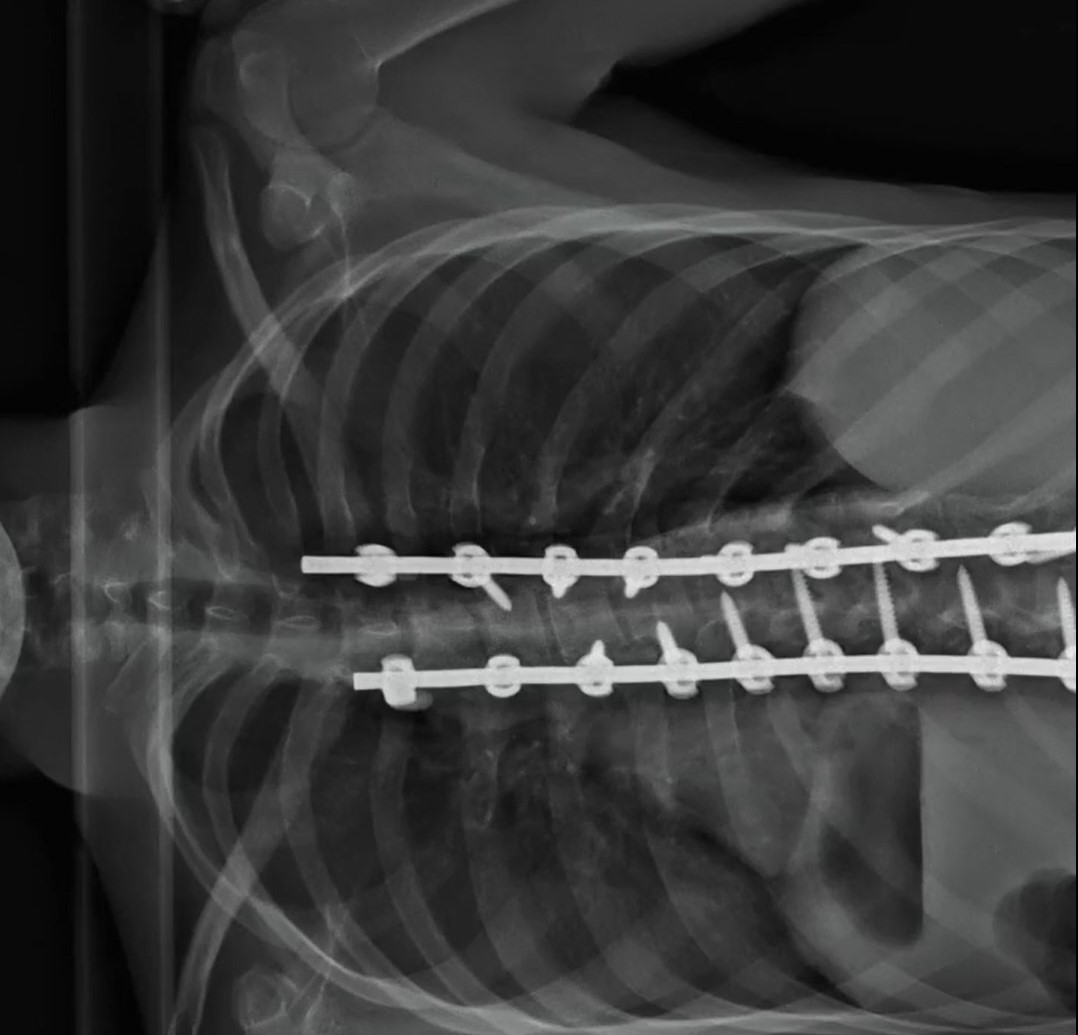
If you’re not cringing at the hammering and chiseling, drilling and screwing it takes to straighten a young man’s scoliosis, you’re made of sterner stuff than me. The eyeball poking and probing operation is but a warmup to the spinal surgery.

Traditional pre-natal sonograms are seen, like other sequences of “De humani,” in a grainy, expressionistic blur. Then we’re treated to the state-of-the-art color imagery of a scoped- peek at the near-birth baby’s development.

Every now and then, the filmmakers wander into rooms where patients are being handled, and managed. A woman’s plaintive cries point to madness, and a confused man endlessly repeats this or that phrase (in French) insisting that he’s not going back to his room.

And a couple of times we follow what look like a hospital’s security staff as they wade into the bowels of the institution, the metal plumbing-lined tunnels used for storage and providing the lifeblood of the ORs, ERs and pediatric wards above, where human plumbing is plumbed and altered by the healers who labor there.

“This prostate is HUGE!” Again, in French with English subtitles.

The film is maddeningly random and almost-pointlessly opaque at times, forcing the viewer to guess what they’re operating on, and why. Random translated words (“cortical chimney,” “Retzius”) point us in the right direction before actual answers slip in. Cross-section examination of an umbilical cord as it is sliced up and studied, a placenta is gone over or a breast cancer tumor’s cells are viewed in slice-slide formdon’t don’t require further explanation.

Castain-Taylor and Paravel are selective about who they actually show on camera, and delay showing any clear, focused doctor or nurse for most of the early scenes. They dip back into blurry, impressionistic and sometimes underlit (or unlit) scenes illustrating the muted and muffled conversations, rants and diagnoses we half overhear.

As one gropes for footing or simple answers, it’s tempting to reference American cinema verite documentaries on medicine, mental patients and the like and wonder if it isn’t just the surgery that’s “invasive” here.

“De humani” is meant to be immersive, and it occasionally is — and demystifying, which it occasionally achieves. But by the long, going-away (Retirement? Can’t tell.) party sequence at the end, with blurred dancing and music and close-ups of a more playful anatomical mural decorating wherever the hell these staffers are, much of what is “magic” about this flesh-and-blood-and-organs meditation has evaporated.

The surgeries shown here, organs in their place in the crowded human body, functioning or failing, is indeed eye-opening. But the film’s structure is, as an ancient Roman critic would have put it, inportunum et inordinatum.

Rating: unrated, graphic images of surgery, sexual organs included

Credits: Scripted and directed by Lucien Castaing-Taylor and Verena Paravel. A Grasshopper Film release.

Running time: 1:58

Posted in Reviews, previews, profiles and movie news | Comments Off on Documentary Review: The Human Body, often inside out, “De humani corporis fabrica”

Movie Preview: A Communicate-with-the-Dead Creeper — “Talk to Me”

A24 is home to high end horror, and this high-concept thriller — she just wants to talk to her dead Mom, and friends/peers know how that’s done — sure looks like it delivers.

July 28.

Posted in Reviews, previews, profiles and movie news | Comments Off on Movie Preview: A Communicate-with-the-Dead Creeper — “Talk to Me”

Movie Review: An Indie Giggle at Garth and George’s Expense — “Country Gold”

“Country Gold” is a pulled-punch satire of country music stardom, a Garth Brooks send-up that arrives about 20 years too late to land.

But give director, co-writer and star Mickey Reece credit for ambition. The Oklahoman Reece (“Anges” and “Corgis 2” were his) follows that reach-must-exceed-my-grasp artist’s dictum in a stagey, downbeat “comedy” that barely manages a laugh.

Reece stars as Troyal Brux, a cherubic king of country music at his mid-90s peak, a star who rides his big hat and “good ol’boy” image as hard as he can, neglecting his family as he does.

“I make nothing but hit records and baby boys” he brags to his wife (Leah N.H. Philpott).

His latest brush-off begins with a phone call. George Jones, that ol’Possom himself, an icon who seemed to live the hard-life/hard-love songs he wrote and sang, wants to meet up. “Time with me and the kids” will just have to wait.

Meeting his idol (Ben Hall) at a steakhouse, and carrying that over to The Ol’ Possom’s favorite watering hole, his pal Pee Wee’s honkytonk, “where country stars come to write their drinking songs,” just might let the evening get out of hand.

George isn’t really a fan, but he lets Troyal know that he’s about to have himself cryogenically frozen, and that he’s chosen to spend his “last night on Earth” (unless he comes back) with him. So the delusional diva takes that as a compliment, and sticks around through the booze, cocaine and lady masseuses to follow.

The script has Jones, a “washed-up gin rat” one person who joins them at their table notes, pass on wisdom to Troyal — “There’s true things that are terrible and terrible things that’re true.” George lived on his Daddy’s advice, “The world won’t let you scream, so you’d better learn to sing.”

Troyal probably learns more from the transvestite in the men’s room than from the aged boozehound, with “You can be anyone you want to be this time around” giving him visions of Garth’s “Chris Gaines” interlude.

Reece suggests a thorough if somewhat superficial grasp of his target and the country music milieu. Jones’ real-life pal Pee Wee Johnson becomes Pee Wee Roberts, for instance.

But Reece is a one-dimensional screen presence, with little that suggests charismatic “star” about him. He performs his glib patter at a sprint, which doesn’t make it funnier, and he’s an indifferent if country competent singer. Hall is a sturdier presence, even if he sounds little like the eminence he’s playing.

Despite the f-bombs, the egomania and a montage of Troyal shooting a beer commercial and having a hissy fit as he does, too little here rises to the level of “satire” or even “amusing.” Blown lines made the final cut, sidebars are set-up and abandoned and a promising premise that might apply to any country singer who achieves stardom is wasted.

“If George Jones was watching you, what would he say?”

Rating: unrated, drug abuse, nudity, profanity

Cast: Mickey Reece, Ben Hall and Jacob Ryan Snovel

Credits: Directed by Mickey Reece, scripted by Mickey Reece and John Selvidge. A Cinedigm release.

Running time: 1:23

Posted in Reviews, previews, profiles and movie news | Comments Off on Movie Review: An Indie Giggle at Garth and George’s Expense — “Country Gold”

Movie Preview: Disney goes to the J.M. Barry once more, “Peter Pan & Wendy” with Jude Law

Law plays Capt. Hook, Jim Gaffigan is Smee, and a bunch of adorable Brit accented moppets flesh out the rest of the cast.

April 28, Disney+, methinks.

Posted in Reviews, previews, profiles and movie news | Comments Off on Movie Preview: Disney goes to the J.M. Barry once more, “Peter Pan & Wendy” with Jude Law

Next Screening? “Once Upon a Time in Ukraine”

Samuel Goldwyn Films has this Ukrainian…Western.

Pistols, Katana swords and bloodshed.

I napisheet you not. Opens Friday.

Posted in Reviews, previews, profiles and movie news | Comments Off on Next Screening? “Once Upon a Time in Ukraine”

Opening Friday? Toni Collette is…”Mafia Mamma”

An American summoned to Italy to be “The Boss” of “The Family.”

Toni Collette has the title role, Monica Bellucci is her rival/advisor, etc.

Atsa gotta be cute, capisce?

Posted in Reviews, previews, profiles and movie news | Comments Off on Opening Friday? Toni Collette is…”Mafia Mamma”

Netflixable? China’s “The 9th Precinct” keeps Ghosts in Line

Get past the sometimes cool and properly sinister effects and “The 9th Precinct” is a very stupid movie — or at least a seriously silly one — trying to pass itself off as a serious thriller.

A tale of ghosts and the cops who keep them from breaking the law and disturbing the living, it is “R.I.P.D.” masquerading as “Ghost,” reaching for sentiment when “Ghostbusters” was always going to be closer to the mark.

It’s about a young traffic cop (Roy Chiu) whose ability to “see what other people can’t” lands him a job at the 9th in the subterranean offices of the Houli Police Agency. It was either that, or be fired. His instincts spotted a murderer, his partner got killed and he insisted in a report that a female ghost intervened on his behalf and saved him.

Must be nuts, right?

Det. Chang (Chia-Chia Peng) takes him on at the 9th and shows him the ropes of ghost-busting, as it were.

Special incense seems to enable interactions with the dead. A special yin/yang umbrella protects them. A “sacred water pistol” will defend him. You have speak to ghosts, but they won’t talk back, not that you can hear, anyway. And ghosts can cause trouble.

“One gets confused when one has just died,” Chang explains, in Mandarin with English subtitles. One gets a little confused streaming this movie, one hastens to add.

As they investigate hauntings, young officer Chen Chia-hao resents this work when they should be using ghosts, like his late traffic police partner, to track down killers. As ghosts lead him to bodies in a mass grave, Chia-hao’s sense of urgency seems justified.

Who or what is behind these deaths? Is there a serial killer, or are these ritual murders of some sort?

Flashbacks tell us of our hero’s “gift.” There’s a mystical colleague who allows herself to be “possessed” by The Master, a nosy reporter and an imperious hospital administrator to contend with, fights with the living and the dead and a game of Russian roulette.

And as sober as it all seems, it’s not scary enough to be a thriller and not silly enough to be played for laughs.

Co, a Chinese “R.I.P.D.” without any laughs. At all.

Rating: TV-MA, violence, smoking

Cast: Roy Chiu, Chia-Chia Peng, Eugenie Liu, Chen-Ling Wen, Blaire Chang, Eugenie Liu and
Heaven Hai.

Credits: Directed by Ding Lin Wang, scripted by Kiu -li Chang and Ding Lin Wang. A Netflix release.

Running time: 1:36

Posted in Reviews, previews, profiles and movie news | Comments Off on Netflixable? China’s “The 9th Precinct” keeps Ghosts in Line

Movie Review: Donnie Yen swaggers through this Spaghetti…Eastern — “Sakra”

Any doubt that the Chinese invented noodles is utterly erased in Donnie Yen‘s martial arts actioner, “Sakra.” He takes this sword-and-sorcery saga straight into Spaghetti Eastern — or Ramen Noodles Western, if you prefer — territory from the first bit of horseplay and earliest twangs of Italian Westerns of the ’60s guitar in the score.

It’s an often-over-the-top action romp, full of epic brawls and flawless, fluid wirework stunts (Yen’s an old hand at playing flying martial artists), where magic plays a hand and many die, but noble deaths and big death scenes almost always point to sorcerers tampering with “Is she/he really gone?”

And it’s quite a bit of fun, when it’s on the move and fists are flying. In between? A bit of a drag, with a pointless (Franchise building?) epiloguethat tends to muddy up what came before.

At the beginning of the Song Dynasty, a babe is found, literally “wrapped in swadling clothes,” left at the door of a childless couple. Young Qiao Fung grows up gifted, strong and righteous. He joins the Beggar’s Gang at an early age.

We meet him as an adult (Yen, of “Rogue One,” “John Wick 4,” etc.) lecturing a Shaolin monk who is transporting “a gift,” perhaps a sacrifice, in a covered cage. The brash stranger is told to mind his own business by the cruel monk.

“In the land of the Great Song, anyone who disregards morality is my business!” Xiao declares. And it’s on like Song…Dynasty. Minions and the monk, who can fling fire out of his fingers, must be foiled. Martial arts blows must be labeled as they’re delivered.

“Dragon Claw Hand!” “Dog Beating Staff!” “Eighteen Subduing Dragon Palms!” Later comes my favorite of all.

“The Proud Dragon Repents!”

Xiao Fung turns out to be the leader of the Beggar’s Gang. The prisoner turns out to be a pretty young lady Azhu (Chen Yuqi) whom Xiao Fung instantly devotes his life to defending.

That’s fateful, because when he returns to the gang to seek medical help for her, the vast bureaucracy of The Beggar’s Gang has deemed him a “traitor” and a “foreigner,” accused of the murder of the late husband or Mrs. Ma (Grace Wong Kwan Hing), who has a letter from her husband that lays the blame for his future death at Xiao Fung. So…he MUST be guilty!

Chinese justice, nothing like it.

The rest of the movie involves brawls and intrigues, magical martial arts, a little horseplay and — through most of the middle acts — a helluva lot of talking about what’s happened, what’s going to happen and the need for the Heroes at Heroes Gathering Manor (catchy) to deal with the rogue warrior of the Central Plains.

This is a film of scale and scope, with a sea of extras confronting our hero on foot and an army of allies catching wine bottles he samples and tosses back — at full gallop — for all to share.

Fight choreographers Hua Tan and Kang Yu cook up some dazzling martial arts ballets as no roadhouse, manor house or city street on the Central Plains is safe from their precisely-planned mayhem.

Yen may still be doing a lot of his own stunts, with the once-and-future stunt-man/Ip Man having credits that pre-date Jet Li’s “Hero” ands his own turns as “Iron Monkey.” If that’s really him dashing effortlessly, poetically across the rooftops of one town Xiao Fung tears up I wouldn’t be surprised. That’s one of the most graceful pieces of wirework I’ve ever seen in a martial arts movie.

Yes, the story’s a goof, a nonsensical mash-up that gives his character an excuse to bowl over legions of hired swordsmen and soldiers, monks and wizarding world warriors. But Yen is terrific, a Smiler with the Knife anti-hero who has the charisma Jet Li lacked and a cool bravado that never suited everyman martial arts comic Jackie Chan.

If he sticks around John Wick-world for a while, or returns to a time “Long ago in a galaxy far away” for an encore, or just keeps doing what he does in the noodle countries of the Exotic East, we’ll all be the richer for it.

Rating: R, bloody violence

Cast: Donnie Ye, Chen Yuqi, Eddie Chueng, Grace Wong Kwan Hing, Yuan Xiangren

Credits: Directed by Donnie Yen, scripted Ha Ben and Chen Li, based on the novel by Louis Cha. A Well Go USA release.

Running time: 2:10

Posted in Reviews, previews, profiles and movie news | Comments Off on Movie Review: Donnie Yen swaggers through this Spaghetti…Eastern — “Sakra”

Classic Film Review: If Only Every Oscar Winner Held up as well as “The Sting” (1973)

In the small town where I grew up, in the BFE borderlands of Virginia and N.C., I lived within walking distance of a downtown cinema that opened and closed a few times in my childhood, giving up the ghost completely at about the time I headed off to college.

By the early ’70s, I was walking to it on my own for the first time as my parents had aged out of going out to the movies, the way so many do. I’d see “Valdez is Coming” or “The Getaway,” “The Three Musketeers” or “American Graffiti,” sometimes on weekends with friends but most often by myself because they weren’t as into cinema as me, and I had a paper route and pocket money.

“The Sting,” which opened on my birthday, Christmas of ’73 in much of the country, didn’t arrive until shortly thereafter — well before the Oscars, as I remember it. It was a life-changing experience, a movie that made the long walk home a giddy skip-to-my-lou that I can picture to this day. Roger Ebert would later talk about “out of body experience” movies. This did that for me.

Over the years, meeting fellow critics — mostly contemporaries — at film festivals and press events, whenever we’d swap notes on the movie that changed the course of our ambitions “The Sting” came up a lot. It wasn’t just me.

It’s a movie that made one invest in watching the Oscars, to make sure the Academy “got it right.” Seven Academy Awards? That’s pretty close to what was deserved.

Watching it anew makes one appreciate the clockwork screenplay that David S. Ward devised, far and a away his best script, although he’d go on to adapt “Cannery Row,” have a hand in “Sleepless in Seattle” and the comedy blockbusters titled “Major League.”

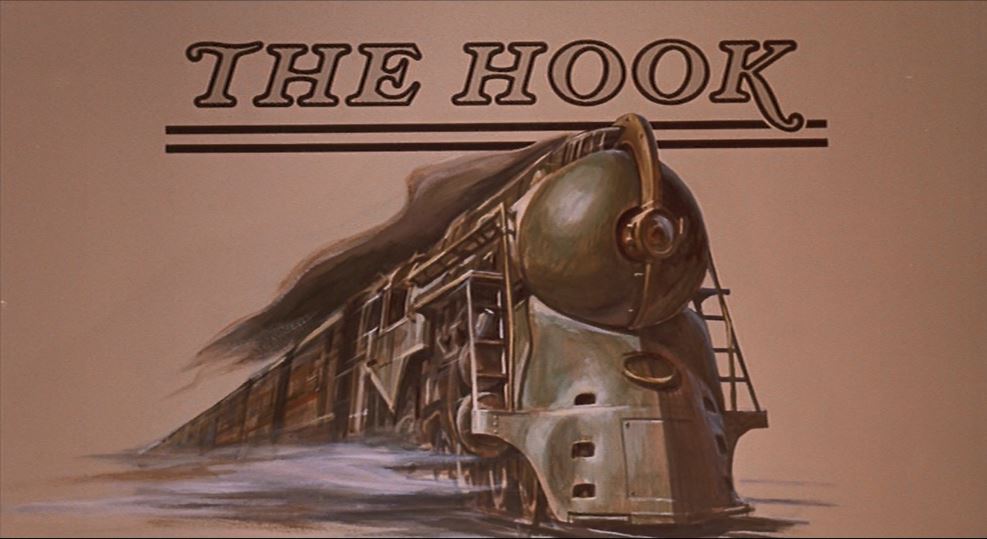
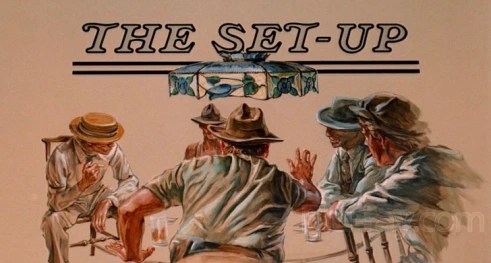
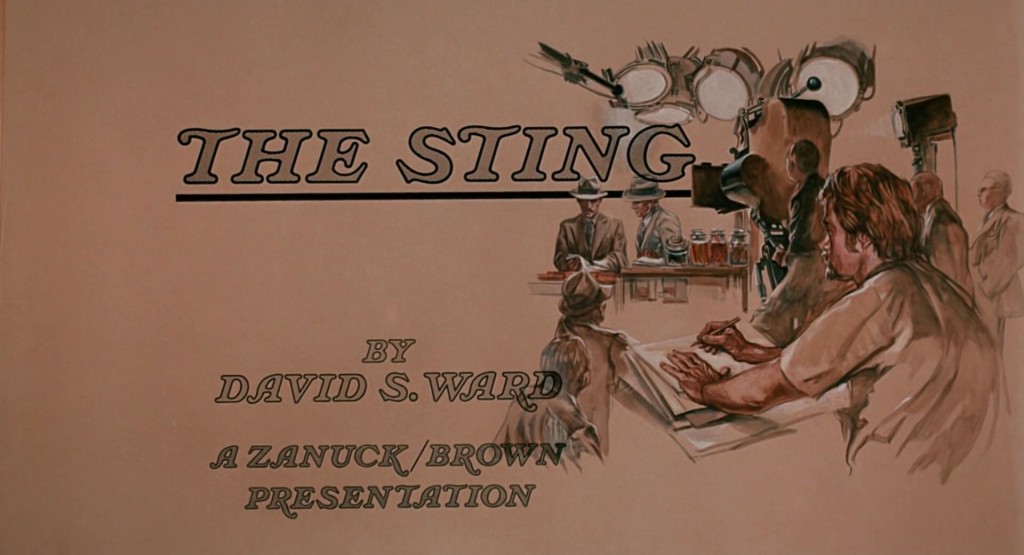
But its the arcana, the production designed near-perfection of its period detail, the total immersion that George Roy Hill’s jaunty direction, the production artist Jaroslav Gebr’s Norman Rockwellian title cards denoting chapters — “The Set-Up,” “The Hook,” “The Sting” — and the glorious Oscar-winning Marvin Hamlisch adaptation of Scott Joplin’s ragtime that bowls one over, even today.

Hill, reuniting his “Butch” and “Sundance,” Paul Newman and Robert Redford, surrounded them with faces — a Who’s Who of character actors of the day. I’d started noticing the stand out work of guys like Slim Pickens in his chewy cameo in “The Getaway,” and a other colorful bit players before this film. But here Ray Walston and Harold Gould as dapper confidence men recruited for “The Big Con,” and Eileen Brennan and Charles Durning and Jack Kehoe and that mug’s mug, Charles Dierkop, left me amazed.

Robert Earl Jones, James Earl Jones’ dad, gave his most endearing performance in a movie that made everyone in it — even players with just a scene or two, like Jones — immortal, because few pictures, especially Oscar winners, have aged as well as “The Sting.”

The Depression Era milieu, contrasting down-and-outers with the crooks and high rollers who thrive in any economy, reinforces the cinematic memories of the era laid out by “Paper Moon,” which came out in May of ’73, and prefigures the “Gatsbymania” that would arrive when Redford’s take on “The Great Gatsby” premiered in March of ’74.

“The Sting” came out in the middle of the Watergate meltdown, an upbeat piece of pure escape that left crooked politicians and Vietnam and cynicism at the window where you bought your ticket. And watching it now, I can see Ward’s  plotting as an extension of what people had seen in recent years during the long run of TV’s “Mission: Impossible!”

Hard to remember that was a television show before Tom Cruise came along, isn’t it?

The “Sting” story — a simple bait and switch cons a runner, transporting Joliet numbers and off track betting cash back to the Big Boss, out of thousands.

Luther (Jones) and Erie (Kehoe) figure they’re set for life as they split up the take later. But Hooker, “the Kid,” has already blown his on a big bet on a fixed roulette wheel.

Their grift gets Luther killed, chases off Erie and sends Hooker to Chicago to look up an old pal of Luther’s, the master of the Big Con — Henry Gondorff (Newman).

The goal is revenge on the Five Points native (“Gangs of New York”) Irish mob boss Doyle Lonnegan (Robert Shaw, a year away from “Jaws”). Gondorff and everybody else loved Luther. Everybody’s in, with the Kid getting a makeover and a quick lesson in Big Con caper comedies.

These set-up scenes make the middle acts a pure delight, with this or that speciality pursued and hired. There’s a veritable guild of Chicago con artists, with a “sheet” of “who’s in town.” That’s how the so-dapper-he-must-be-gay Twist (Gould) selects their huge crew.

The Kid? He’s got Lonnegan’s goons after him, and a brutal, corrupt Joliet cop (Durning) determined to grab him to shake him down and avenge himself on a hustler who tried to pay him off with counterfiet cash.

Shaw played a lot of burly heroes in his too-short career. But Lonnegan is a masterful study in menace. When Doyle tells you how it’s going to be, his finishing phrase lets you know that’s just what he expects to happen, or else.

“Ya follow?”

We see this brutish bear of a man poked, repeatedly, by Newman’s Gondorff, play-acting a rich bookie named Shaw, as a drunk who keeps besting the big man at cards and mangling his last name every time he taunts and insults him.

The bait is taken, “The Hook” is set, and we’re off on a leisurely romp through the least depressing Great Depression tale of them all.

Walston, Gould, Durning and Dana Elcar — in the first of his No Nonsense authority figure roles — sparkle. Brennan, fresh off “The Last Picture Show,” brings her trademark working class gravitas to a madam who runs a brothel upstairs from a carousel.

Redford literally sprints through a lot of scenes, and Newman takes his sentimental, cynical and amusingly boozy (when he needs to fake it) mentor-protege thing with his pal to the bank.

“The Sting” became a cultural phenomenon, sparking a ragtime revival, renewed appreciation for illustrator Norman Rockwell (even though Gebr did the title cards, not Rockwell) and making Hamlisch a star composer in its wake. I interviewed him some years later when he was touring Florida’s “blue hair circuit,” the performance halls in seniors-heavy cities along the Gulf and Atlantic coasts. We had a lot to chat about (he won multiple Oscars), but chatting by speaker phone from wherever I was reaching him, when I mentioned “The Sting,” that was the one he started picking out on the piano, an acknowledgment that this was the work that made him.

The movie became a benchmark for me, for good and ill, especially when it came to Oscar nominees. Rare is the Oscar winner that’s a feel-good film, a caper comedy or a wildly popular hit. “Schindler’s List” and “Twelve Years a Slave,” movies of import, are the goal and that at least is defensible.

But “How will it/does it hold up?” has figured permanently into how I rate movies in reviewing them.

Nobody’s talking up “The English Patient” today, and “Crash” wasn’t the only Oscar winner that the Academy, and those who love movies, wish they could take back. Is anybody tracking down “The Artist” (the true fate of “Babylon”) these days, or “The Shape of Water,” “Moonlight,” “Parasite,” “Nomadland,” “CODA” to rewatch for pleasure and edification?

Is “Everything Everywhere all at Once” destined to have an afterlife, to “hold up?”

Maybe. But not the way “The Sting” has. I’ll take that bet all day long.

Rating: PG, violence, a little burlesque nudity courtesy of Sally Kirkland.

Cast: Paul Newman, Robert Redford, Robert Shaw, Eileen Brennan, Ray Walston, Charles Durning, Dana Elcar, Charles Dierkop, Jack Kehoe, Dimitra Arliss, Harold Gould and Robert Earl Jones.

Credits: Directed by George Roy Hill, scripted by David S. Ward. A Universal release on Amazon, Netflix, etc.

Running time: 2:09

Posted in Reviews, previews, profiles and movie news | Comments Off on Classic Film Review: If Only Every Oscar Winner Held up as well as “The Sting” (1973)

Movie Review: Old Scores and Old Debts are settled in “Devil’s Hollow”

“Devil’s Hollow” is a downbeat, torpid thriller of the Appalachian Gothic persuasion. A few solid performances and a strong sense of place never quite lift this formulaic melodrama out of the funk it wallows in.

Shuler Hensley stars as Bobby Hawkins, fresh out of 13 years in La Grange prison, still confined to house arrest by an ankle monitor. He’s returned to the farm where he grew up, not to “work it,” but to sit and mope, master his cell phone and occasionally summon the lone sex worker here in BFE, Kentucky.

Bobby has history here — with his old running mate, Birdy (Will Hawkes), who has found Jesus and become a First Baptist regular, with his barmaid ex, Kelly (Kelly Shipe), with the daughter he barely knows (Skyler Hensley) and with the ringleader of the criminal crew he used to run with, Harry Casper (David Dwyer, pretty damned menacing).

Harry’s the guy who figures that Bobby, after doing jail time the others dodged, still owes him money from that “First National job.” Bobby insists the member of their quartet who disapppeared got it all, but Harry doens’t want to hear it.

And by the way, Bobby’s daughter somehow wound up in crime-boss Harry’s care. So things are complicated, and about to get moreso.

“Devil’s Hollow,” which Bobby apparently forgot how to pronounce while in stir (Real Appalachian folk I know still say “Holler.”) is the sort of place where an ex-con can have a nip with his probation officer (Patrick Mitchell) and expect no help from the sheriff (Emma Thorne) when Harry’s henchmen come to collect.

There’s enough here that you can see the makings of a better indie film than writer-director Chris Easterly got out of this raw material. Tropes and recycled plots and sequences that we know are coming abound.

But as tropes go, if there’s a better way to start a dark backwoods tale of money, family and murder than the sight of a 40something loner, gone-to-seed, digging a hole by lantern light as he narrates-drawls “I don’t know where to begin, really,” I haven’t run across it.

Rating: unrated, violence, sexual content

Cast: Shuler Hensley, David Dwyer, Skyler Hensley, Will Hawkes, Kelly Shipe, Patrick Mitchell and Emma Thorne

Credits: Scripted and directed by Chris Easterly. Self Distributed

Running time: 1:17

Posted in Reviews, previews, profiles and movie news | Comments Off on Movie Review: Old Scores and Old Debts are settled in “Devil’s Hollow”