Movie Review: Summer of ’81, “Casey Makes a Mixtape”

“Casey Makes a Mixtape” is a wan indie coming-of-age dramedy in which nobody comes of age, nothing dramatic or comedic happens.

It’s a sort of little film festival movie that couldn’t, a period piece that was never fated to pick up distribution outside of its run in festivals. I see it played in Portland, at least.

Texas filmmaker Blake Calhoun gives his lead characters names that all begin with the letter “C,” and the script shows little imagination beyond that. And he appears to have found out the hard way how difficult it is to make a “High Fidelity” tween comedy without the cash to buy music clearances.

Casey (Presley Richardson, making her film debut) is 13 and obsessed with music. It’s 1981, and she uses her boom box to record her favorite songs off the radio — tunes by the likes of Rick Springfield and Journey.

Casey’s Mom (Arianne Martin) thinks she has it going on. She’s off to Paris where she expects her beau to propose. First, she’s got to Pontiac Trans Am Casey to her parents’ house in suburban Texas for the summer.

Casey skateboards her way into meeting Craig (Julian Hilliard) and Carrie (Kennedy Celeste). If she could only convince a DJ at Q-102 FM in Dallas-Fort Worth to live up to their “Texas’ Best Rock” motto and play her favorites, The Police, she’d finish this ten-tune mixtape she has in the works.

“Don’t Stand So Close to Me,” she pleads into the phone, glancing at the wall poster of the pop-rock trio every time she calls Q-102.

That’ poster’s as close as she’s going to get to The Police. That’s as close as we’ll get to hearing that song.

Truthfully, Calhoun (“Spilt Milk” was his) only landed the rights to a couple of classic rock tunes from the era. Spoiler alert, one’s from a band named for a Massachusetts city and the other is by a Canadian “power trio,” and no, not THAT one.

Stripped of most of the music it would take for “Mixtape” to be a “Mixtape” and work its nostaglia magic, all we’re left with is uninteresting incidents decorating the dullest tween summer ever put on film.

The situations and the kid actors acting them out never come close to “interesting,” and the adults show us that the script is how those situations and characters turned out so drab.

Young Miss Richardson half-whispers and shrugs as she narrates the most blase details of her life directly to the camera. Not exactly “Sixteen Candles.” The boy can’t add up to a “love interest” and the “bad girl” (Celeste) is just a shoplifter.

As with “Empire Records” and “High Fidelity,” the most promising setting is the local record shop. That direction is the path this plot doesn’t take. Even that setting has all the life drained out of it. And no, we don’t hear the hit records of the era playing on its sound system, either.

The entire affair comes off as half-hearted and half-assed. But putting it online for streaming could be useful to aspiring filmmakers. Here’s how “not” to make a coming-of-age movie. Characters have to grow, change or discover something interesting about themselves.

And if you don’t have the cash to buy music rights to your period piece, you’d better set it in the 1880s, not the 1980s.

Rating: unrated, pot use

Cast: Presley Richardson, Kennedy Celeste, Julian Hilliard, Arianne Martin, Jennifer Griffin and Brad Leland.

Credits: Scripted and directed by Blake Calhoun. A Loud Pictures release.

Runnimg time: 1:36
Posted in Reviews, previews, profiles and movie news | Tagged , , , , , , , | Comments Off on Movie Review: Summer of ’81, “Casey Makes a Mixtape”

Movie Review: An Impressive Dreamscape and Disappointing Romance — “Daniela Forever”

Movies have been tied to dreams from the very beginnings of cinema. The storytelling medium lends itself to the interior world of dreaming. And films from “Spellbound” onward have made serious attempts to recreate and interpret the experience of what our subconscious does in the journeys we take when we dream.

“Daniela Forever” is a movie about grief, undying love and lucid dreaming as a way of clinging to someone you’ve lost. The latest sci-fi from Oscar nominated writer-director Nacho Vigalondo (“Timecrimes,” “Colossal”) is a fascinating dip into lucid dreaming hampered by a DOA love story and the limitations of handsome but often emotionally unavailable leading man Henry Golding.

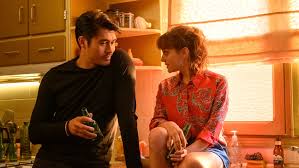
He plays a star DJ lured to Madrid by gigs set up by his poseur/manager (Rubén Ochandiano) but whose life is upended when he falls for an Italian artist, Daniela (Beatrice Grannò) who then dies in a car accident.

The film’s central flaw is glaring and obvious right from the start. We have no time to invest in the romance, and even as the narrative gropes and meanders its way to a conclusion that maybe “explains” that, we have nothing to cling to but DJ Nicolas and his undying devotion to Daniela.

Golding can’t make the sale, and looking at his other romances, it’s a wonder that he keeps trying his hand at them. As the prospective groom in “Crazy Rich Asians,” he had better chemistry with his best man. Here, we just don’t buy how bereft and lovesick his character is supposed to be.

His friend Victoria (Nathalie Poza) suggests he sign on for a drug trial that she’s been involved with. It’s being tested to see if this pill can enable directed lucid dreaming. Subjects are put on the medication, given instructions that amount to a “script,” what they should be trying to dream about, and then are intereviewed to see if this medication helps someone control their dreams.

Nicolas cheats. He only wants to dream Daniela back to life.

Nicolas enters these dreams in his apartment with Daniela, and ventures with her to where they met, places they went. He focuses on details, notices dead ends — limits to this dreamscape created by his lack of knowledge of this street, this shop (the suits on display have no backs, for instance).

“Everything I don’t know doesn’t exist.”

He tries to master this world and cling to Daniela, who is limited by how he remembers her and what he didn’t know about her. Her friend Teresa (Aura Garrido), whom he met at her funeral, might offer clues. But he’s so wrapped up in dreams that he lets everything in his waking life go.

“I think I get it now,” he tells Daniela, over and over again as he masters this somnambulent rule or that one. But does he?

Golding’s performance is flat, all surface affectations, none of them hinting at the obsession he allegedly has for this woman. Her elusive art — faceless characters, figures with their heads out of the frame, all composed on a computer — gets at the film’s superficiality.

The limits of her character, created from his memory, hamper Grannò, who does nothing to suggest the cause for obsession. She is a boring pixie dream girl.

The film’s one light touch is the one truncated love scene, picked up just as the menage a trois has ended, It’s the most comical and one of its most revealing moments.

But Golding has to carry this, and he just doesn’t. As fascinating as Vigalondo’s fantasy dreamscape with its rules — Nicolas can focus and alter where a door takes them, who they run into and the like — can be, “Daniela Forever” never escapes being a clock-watching romantic melodrama with intriguing sci-fi touches.

The science fiction is solid. The melodrama has you wondering how much longer we have to spend with this unbelievable “couple.”

Rating: R, profanity, one sexual situation

Cast: Henry Golding, Beatrice Grannò, Aura Garrido, Nathalie Poza and Rubén Ochandiano

Credits: Scripted and directed by Nacho Vigalondo. A Well Go USA release.

Running time: 1:52

Posted in Reviews, previews, profiles and movie news | Comments Off on Movie Review: An Impressive Dreamscape and Disappointing Romance — “Daniela Forever”

BOX OFFICE:  Taylor Swift” goes “Showgirl,” scores a $30 million+ weekend — The Rock’s “Smashing Machine” Smashes his Oscar Hopes

A documentary about the making of her album “The Life of a Showgirl” makes Taylor Swift the queen of the box office on the first weekend of October, celebrating the record’s blockbuster release with a box office smash as a side dish.

Record sales, Spotify downloads, “intimate look” documentaries, everything the woman touches turns to gold. Well, the exeption might be The Kansas City Chiefs.

Deadline.com extrapolates that her $15 million Friday opening of a documentary she only announced she was offering to AMC theaters a couple of weeks back adds up to a $30 million+ weekend. Her fanbase could push that much higher, but we’ll see. She’s older, they’re older, and fanatics or not, only two weeks of pre-sales should keep this south of $40.

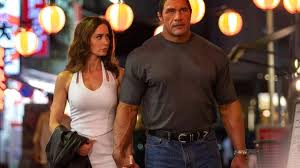
The other wide release this weekend is the bio-pic that was supposed to put Dwayne Johnson on the awards season map. “The Smashing Machine,” about the life of UFC brawler Mark Kerr, puts Johnson in makeup to make him resemble “The Thing” from “Fantastic Four,” and pairs him up with his “Jungle Cruise” sidekick, Emily Blunt.

Fans aren’t going for it. Reviews have been passable, far from ecstatic, and a $6 million opening weekend won’t help the aging action star’s quote and won’t keep the picture in theaters long enough to build any sort of groundswell of buzz. It’s Johnson’s worst-ever opening, and there’s schadenfreuide attached to the film as well, as Johnson irked a lot of the people who’d be voting him into awards by sticking his two cents worth into politics last year. Opening in third place when it was supposed to be a $20 million+ top dog is humbling for the wrestler-turned-acting diva, and the writing could be on the big guy’s wall.

“One Battle After Another,” on the other hand, is rolling through a $17 million weekend, which should push it past $50 million in North America by midnight Sunday. The global take should be in the $100 million range come Monday morning.

A second-place finish to the latest Tay-Tay mania is a big boost for Paul Thomas Anderson’s topical, awards bait, all-star comic thriller.

Everybody who was going to see “Gabby Dollhouse: The Movie” has pretty much seen it as it tumbles to fourth place with a just-under $5 million second weekend.

“Conjuring: The Last Rites” is proving to be the horror title to beat all the way to Halloween, hanging in the top five for one last weekend, making another $3-4 million, inching towards the $175 million domestic box office mark.

“Demon Slayer: Infinity Castle” is still making a little money — $3.3 million this weekend, putting it in sixth.

“Strangers: Chapter 2” got no one’s attention and is fading away $2.8 million second weekend (seventh).

Twentiesth Century Studios re-released the second “Avatar” film to hype us for the upcoming third one, and “Way of Water” may clear another $2.5 million.

IFC’s “Good Boy” cracked the top ten, a trained dog horror thriller? Yeah, I requested a review lunk but balls were dropped. Sorry I missed it. This is on track to earn $2.25 and come in ninth.

“The Long Walk” enjoys its last weekend in the top ten in tenth with $1.7 million.

Those three new releases and the “Avatar” re-release push “Big Bold Beautiful Journey,” “Downton Abbey,” the indie June Squibb comedy “Eleanor the Great” and “Him” out of the top ten.

As always, I’ll update these figures as the weekend progresses.

Posted in Reviews, previews, profiles and movie news | Tagged , , , , , , , , , | Comments Off on BOX OFFICE:  Taylor Swift” goes “Showgirl,” scores a $30 million+ weekend — The Rock’s “Smashing Machine” Smashes his Oscar Hopes

Movie Preview: “Psycho Killer,” Qu’est-ce que c’est?

The screenwriter of “Se7en” wrote this thriller, with Georgina Campbell as the huntress and James Preston Rogers in the title role.

Palpable “Fargo” meets Fincher vibe in this Gavin Polone thriller. That’s not Malcolm McDowell as the “Elderly Priest.” It just looks like him.

Feb. 20.

Posted in Reviews, previews, profiles and movie news | Comments Off on Movie Preview: “Psycho Killer,” Qu’est-ce que c’est?

Breakfast with the Toucans, Belize

There’s no cinema within a five day hike from here. So I’ll just be posting streaming or film fest titles for reviews for the next week or so, as we vacation in the gorgeous rainforest of Belize.

Monkeys and Maya ruins and Mai Tais it is!

Posted in Reviews, previews, profiles and movie news | Comments Off on Breakfast with the Toucans, Belize

Documentary Review: US/Japanese Relations, Over a Century of Baseball “Diamond Diplomacy”

Here’s a truth the average American hasn’t done the math on.

“Japan has been playing baseball almost as long as the United States.”

And whatever the fading state of the National Pastime on this side of the Pacific, in Japan, “The National Game” is bigger than ever, drawing huge crowds, creating homegrown stars good enough to dominate America’s game when they join our big leagues.

That 150 year history is the backdrop for a terrific new documentary about baseball and its role in bonding the U.S. and Japan.

Yuriko Gamo Romer’s “Diamond Diplomacy” reminds us of the American Civil War vet turned educator and consultant who brought the game to Japan in the 1870s.

Veteran Japanese and American players, American and Japanese academics and others talk about how baseball connected to Japanese samurai traditions, how baseball is “older than judo,” and was Japan’s first team sport.

Archival footage shows early 20th century Japan and the game the country took to with a fervor almost greater than American baseball mania at its peak. And we hear and see early trips by U.S. teams — including Negro League all-stars treated better in Japan than they were at home — to Japan to play the land of the rising sun’s best.

Julia Ruth Stevens accompanied her dad on a baseball goodwill tour of Japan in the 1930s. Babe Ruth became an instant legend in Japan, and historians recall how flattered The Babe was when that tour was credited with “preventing a war” in the mid-30s. Japanese nationalism had already started what became World War II in Manchuria and relations grew chilly and tense with the rest of the world, particularly in the U.S.

After Pearl Harbor, Stevens tells us of all the souvenirs and mementos of that trip which her father hurled out the windows of their New York apartment.

Romer’s film covers the game’s racist history, how Japanese immigrants were interned during World War II but the kids and adults kept playing baseball. Players were kept from competing for spots on Major Leagure rosters the way African American players were banned. And we hear how General MacArthur, supervising occupied Japan’s peaceful transition and “Westernization,” recognized the game as a healing, fence-mending cure-all as U.S. all-stars were rounded up to tour the country in the late ’40s to boost morale in Japan and ready American acceptance of Japan as an ally.

Masonori Murikami talks about being the first Japanese player to make it into the major leagues, and his disappointment when contracts and obligations made him go home after just a season and a half. The no-contract poaching agreement between MLB and Japanese leagues kept generations of players out of the U.S. until Hideo Nomo worked a loophole to join the Dodgers, and Nomo-mania began.

American baseballer Warren Cromartie was the first MLB player to leave before the peak years of his career to play in Japan, and he brought American style aggressive play to the Japanese league, learned the language and became an icon of Japanese baseball.

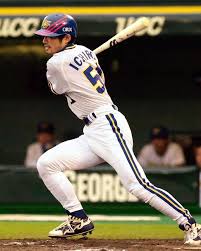
And we see the legendary Ichiro Suzuki celebrated for setting the table for just how much a Japanese player could achieve in the North America.

Romer covers a lot of ground in this sometimes touching and even inspiring documentary. About all she misses is Japan’s invitation to participate in the Little League World Series, and its early dominance and ongoing success there.

But as we see a commemorative recreation of the late 19th century first game played between the two countries and marvel at how much baseball has done to bind two very different cultures, “Diamond Diplomacy” makes one appreciate what the game has meant and what the Japanese, at least, still see in it.

There’s a reason poets have paid homage to baseball since Walt Whitman. Perhaps, this film suggests, we should consider what the Japanese see in the ultimate “team” game and how that impacts a culture. What the Japanese embraced Americans seem to have forgotten in our rush off the cliff for all things football.

Rating: unrated

Cast: Warren Cromartie, Ichiro Suzuki, Robert Whiting, Julia Ruth Stevens, Masonori Murikami, Hideo Nomo and Bobby Valentine.

Credits: Directed by Yuriko Gamo Romer. A Flying Crab release.

Running time: 1:26

Posted in Reviews, previews, profiles and movie news | Tagged , , , , | Comments Off on Documentary Review: US/Japanese Relations, Over a Century of Baseball “Diamond Diplomacy”

Movie Review: Pokey Cowpoke Saga takes us “Where the Wind Blows”

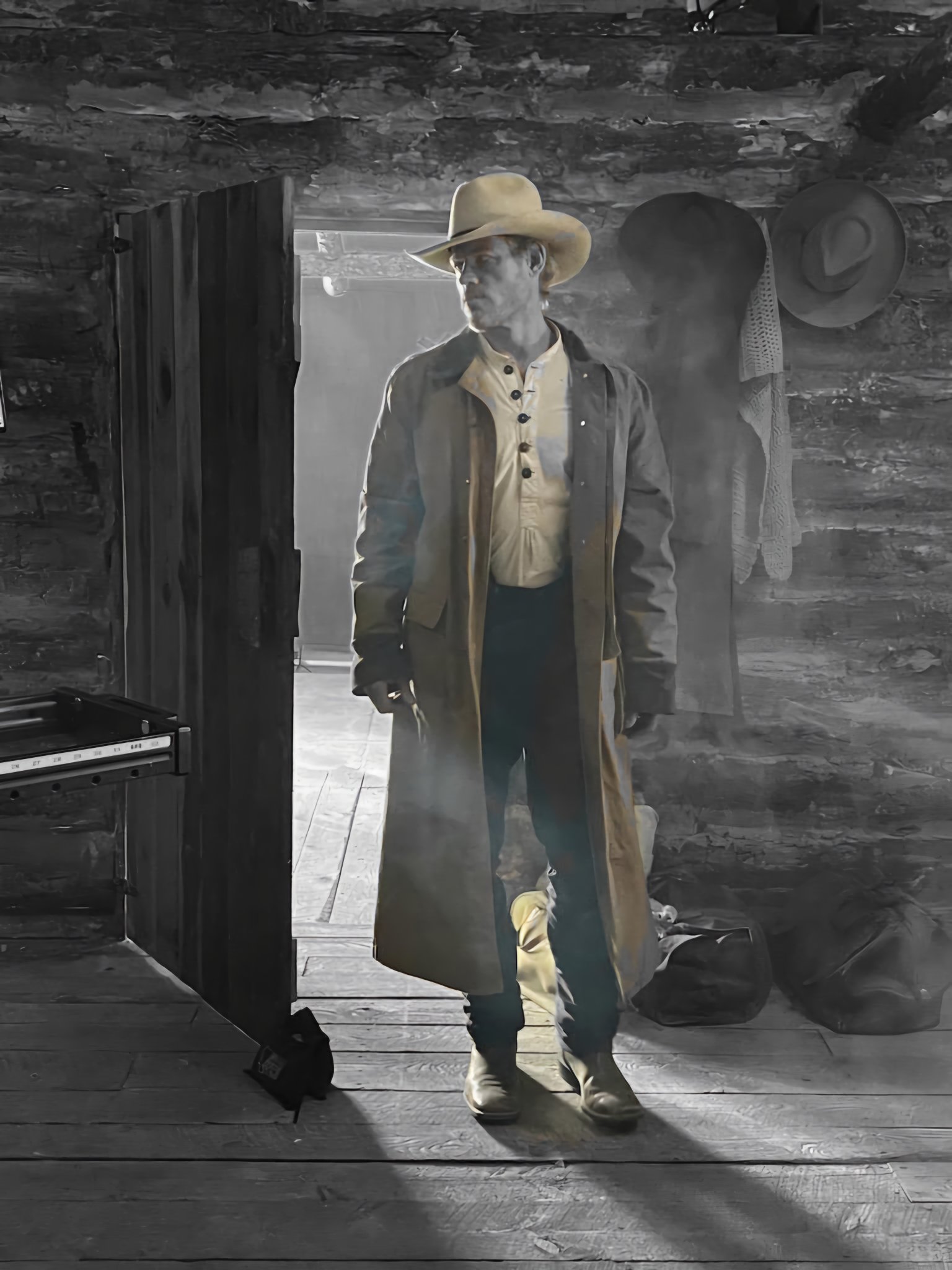
A chiseled cowboy between jobs and a newly widowed farm wife he takes a message to means a ranch in need of tending and a woman in need of a man around the house in “Where the Wind Blows,” a handsomely mounted Western shot on Montana’s Yellowstone Film Ranch.

It’s a good thing the visuals in this John Schimke horse opera are striking. There’s not much else to recommend a sloppily-plotted meander through Western tropes and cliches which pedestrian direction, shooting and editing do nothing to rescue.

Trevor Donovan, best known for the “90210” reboot of a dozen years back, is our blond hunk on horseback, named Chase (of course) and charged with taking care of a fellow ranch hand’s “heirloom” and cash roll. Because when ol’Nathan (C. Thomas Howell) sits down to gamble at the local saloon/brothel, he’d hate to get rolled.

Gunshots awaken chaste Chase — he’s fended off the advances of the prostitutes — and he finds Nate dead, caught cheating at cards. There’s nothing for it but to take that news to far-off Jessie (Ashley Elaine).

He’s not much on comforting someone who learns her husband is dead, although he’s considerate enough to lie about Nathan’s cause of death.

“These things have a way of working themselves out” isn’t what you say to a woman left to fend for herself on the wild frontier.

And that roll of cash and “heirloom?” That becomes one of the more clumsily-handled plot devices I’ve ever seen in a Western. Did Chase “forget” to give it to her? Is he keeping it for his own use? Motives and “secrets” don’t take us toward any satisfying answers.

All we know is that Jessie has a girl from the orphange she herself came from on her way with a guardian (Don Swayze) to see if she’s fit to raise the child. Will Chase pretend to be Nathan, just long enough to ensure the adoption?

Events contrive to make the possibly thieving cowboy do just that, and accept a teen orphan boy (Cole Keriazakos) in the bargain, with the promise that he’ll skeedaddle as soon as the guardian leaves. Jessie is supposed to manage this place with two kids, no livestock and the kindness of her intrepid storekeeper pal (Michelle Hurd).

And then there’s the creepy, sunglasses-wearing drifter (Rob Mayes) with a rapist vibe who has taken to stalking her with a vengeance.

Will Chase stick around? Is he up for a showdown with rapey Lonnie? And how many chores can he do with his shirt off as he does?

Based on what I am guessing is a romance novel by Caroline Fyffe, “Where the Wind Blows” has the tone and light messaging of a faith-based romance. Characters are sketched in as archetypes, most every turn of events leans on coincidence and cliche and the picture never lets us forget that director Schimke is out of his element, if he has one.

The cast is game but rather drab — even the villains.

And we never doubt for a second that as messy and violent as this tale turns, “these things have a way of working themselves out,” and not in any way a more cleverly plotted script would have delivered.

Rating: PG-13, bloody violence, attempted sexual assault, prostitution

Cast: Trevor Donovan, Ashley Elaine, Michelle Hurd, Rob Mayes, Cole Keriazakos, Lochlyn Munro, Don Swayze and C. Thomas Howell.

Credits: Directed by John Schimke, scripted Mike Maden and John Schimke, based on a novel by Caroline Fyffe. A Level 33 release.

Running time: 1:31

Posted in Reviews, previews, profiles and movie news | Comments Off on Movie Review: Pokey Cowpoke Saga takes us “Where the Wind Blows”

Movie Preview: It’s 1981, so “Casey Makes a Mixtape”

Rush, The Police, Rick Springfield anyone?

How can you tell someone you crush on them without a cassette deck?

Oct. 14.

Posted in Reviews, previews, profiles and movie news | Comments Off on Movie Preview: It’s 1981, so “Casey Makes a Mixtape”

Movie Preview: Cumberbatch is a Dad haunted in his Grief by “The Thing with Feathers”

Briarcliff has this widowed dad psychological thriller based on Max Porter’s novel “Grief is the Thing With Feathers.”

David Thewlis is this father’s all-too-real-tohim feathered beast haunting him.

This comes out Oct. 24.

Posted in Reviews, previews, profiles and movie news | Comments Off on Movie Preview: Cumberbatch is a Dad haunted in his Grief by “The Thing with Feathers”

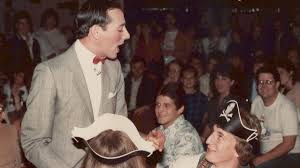
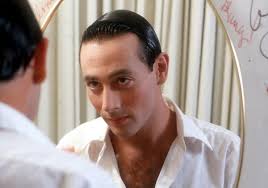
Documentary Review: Paul Reubens bids a bittersweet good-bye — “Pee Wee as Himself”

I once got an angry and wounded piece of hate mail from Judy Rubenfeld, an annoyed  Sarasota, Florida retiree who didn’t appreciate my inclusion of her son’s lowest moment — his arrest in a porno theater string in this hometown — as one of twentieth century American pop culture’s 100 Moments of Infamy.

This was before Paul Rubenfeld, aka Paul Reubens aka Pee Wee Herman, was welcomed back from the pre-cancel culture wilderness, and even that was too late to resurrect his career or make his last years the triumph he’d enjoyed in his prime. She might have had a point.

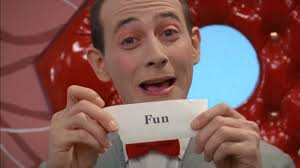
But her son — “out” then closeted, popular then a pariah, self-creation or credit hog — was a complicated guy, something we get a close look at in Matt Wolf’s celebratory but absurdly thorough, warts-and-all portrait of Reubens. “Pee Wee Herman as Himself.”

Wolf got Reubens to sit for 40 hours of something testy interviews — Reubens wanted control and gives the impression he initiated the project, first appearance to last. He died of cancer shortly after filming was finished in late summer of 2023, a cancer he hid from everyone, including the filmmaker, who talks Reubens out of this or that bit of manipulation and into this or that corner of divulgence.

Paul himself speaks of his lack of “perspective” on his own life — or lives. But he gives us a decent blow-by-blow of his life and his feuds in his words and his version of the truth.

No, he doesn’t apologize to those he “stepped on” along the way. “It’s show business.” So Phil Hartman fans will have to wait for a Phil Hartman bio-doc to get his side of the credit theft of Pee Wee’s warped and witty imaginary world.

Tim Burton, Reubens points out, got the lion’s share of the credit for the daffy, childish and colorful “Pee Wee’s Big Adventure,” and the star resented the director forever after.

Pee Wee Mania burned white hot — PALE white hot — across American culture in the mid-to-late-80s.

Paul Reubens‘ alter ego, the eternal “weird” man-child of “The Pee Wee Herman” stage show, “Pee Wee’s Big Adventure” and “Big Top Pee Wee” on the big screen and the absurdist “Pee Wee’s Playhouse” kiddie show was an inescapable presence and pop culture icon and presence of his day. He inspired catch phrases, mass cosplay — especially at Halloween — and brought “Tequlia,” classic bicycles and “dare to be different” into every corner of the country.

The film about Reubens’ rise from a kid who grew up in the winter-quarters circus town of Sarasota, studied acting at the famed Asolo Theatre there, got the bug to go West to LA to join the Groundlings and invent one character that made his name and fame, and his slow fade that turned into an abrupt masturbating-in-a-theatre sting fall is an engrossing deep dive into the man.

We see what made Rubenfeld into Reubens, how Reubens made Pee Wee and how fans like Steve Martin and landing the right management at the right time in a particularly absurdist and tolerant era made Herman a phenomenon.

His parents — including his celebrated Israeli Air Force veteran dad — accepted him and his gay sister and reveled in his success. Reubens’ Groundlings peers Laraine Newman (“SNL”) and Tracy Newman and Cassandra Peterson (“Elvira, Mistress of the Dark”) and some of his “Pee Wee’s Playhouse” co-creatives and castmates (Natasha Lyonne was a child star on the show), Laurence Fishburne and S. Epatha Merkerson, talk about working with him and his way of wearing out or discarding talent around him.

Having an alter ego make itself, not you, famous, was an interesting existential crisis to live through.

It’s stunning to see the sort of alter ego fame and arrested development as path to success story depicted here and compare it to the very similar and even more thorough (and shorter) Andy Kaufman doc, “Thank You Very Much.” Kaufman and Reubens had almost exactly the same influences — “Howdy Doody/Mickey Mouse Club/Captain Kangaroo” — which drove them to pursue surrealist TV fame either using or mimicking children’s TV of their youth, creating alter egos they insisted be treated as “real” on set and in interviews.

Reubens teases and even insults his interviewer/filmmaker and  still comes off as personable but standoffish. But at least he got to have that much influence on telling his actor/comic as performance artist story. And he’s right about filmmaker/interviewer Wolf, “one film I liked and five I didn’t.” This beast of a doc has lots of performance footage, but should have and could have been half as long.

Rating: TV-MA, drug abuse discussed, sexual situations/innuendo, profanty

Cast: Paul Reubens, Laraine Newman, Laurence Fishburne, Richard Gilbert Abrahamson, Cassandra Peterson, S. Epatha Merkerson, Tracy Newman, Natasha Lyonne, Abby Reubenfeld and Matt Wolf.

Credits: Direceted by Matt Wolf. An HBO Max release on Roku, Youtube, Hulu and Amazon.

Running time: 2 episodes @ 1:45-1:50 each

Posted in Reviews, previews, profiles and movie news | Tagged , , , , , , | Comments Off on Documentary Review: Paul Reubens bids a bittersweet good-bye — “Pee Wee as Himself”