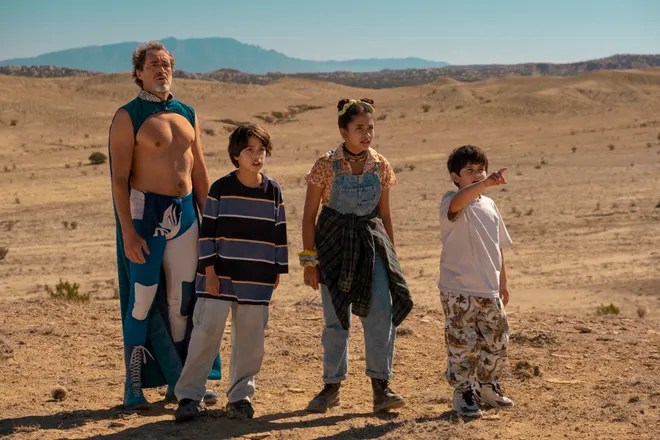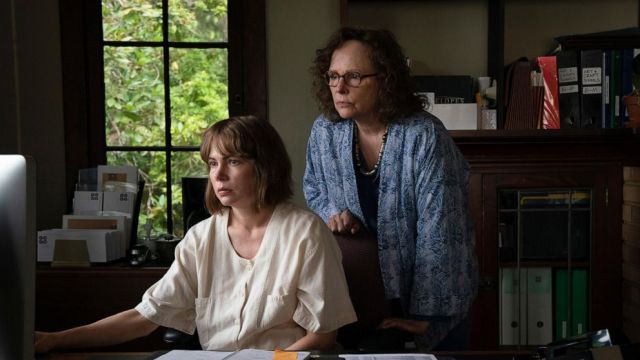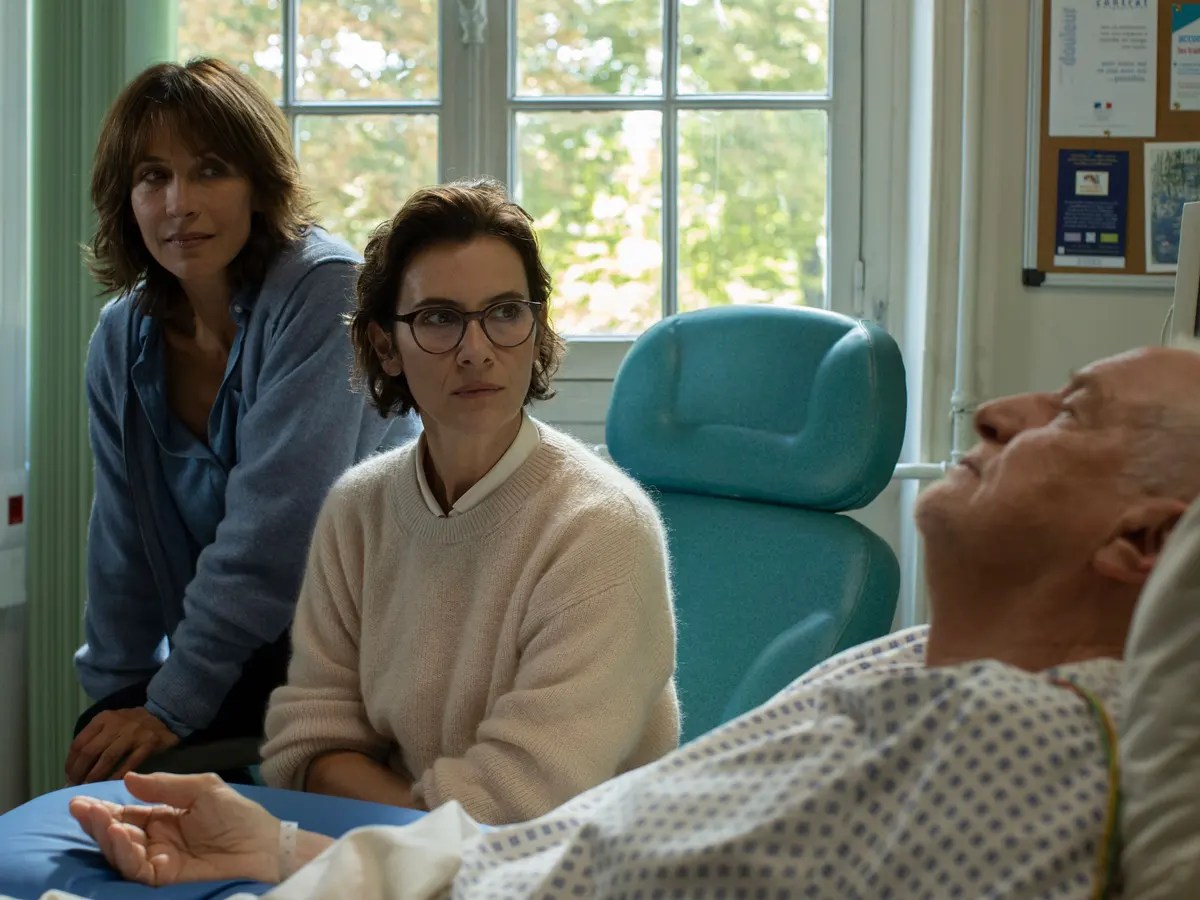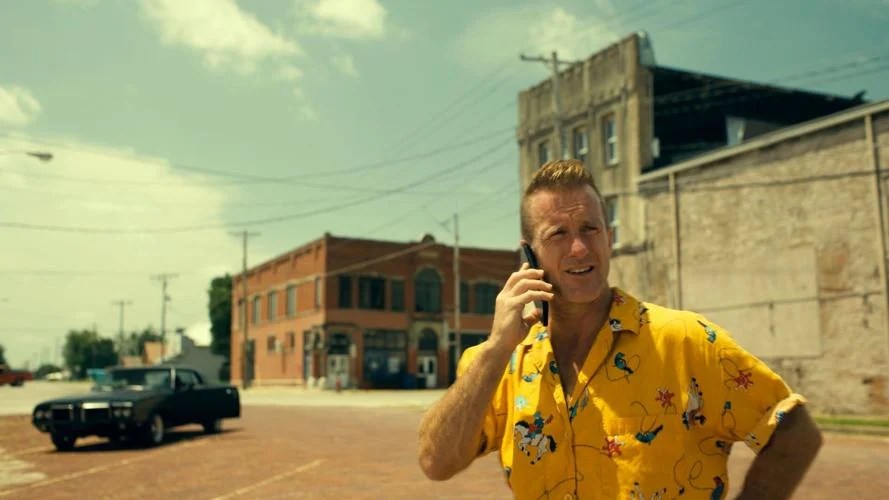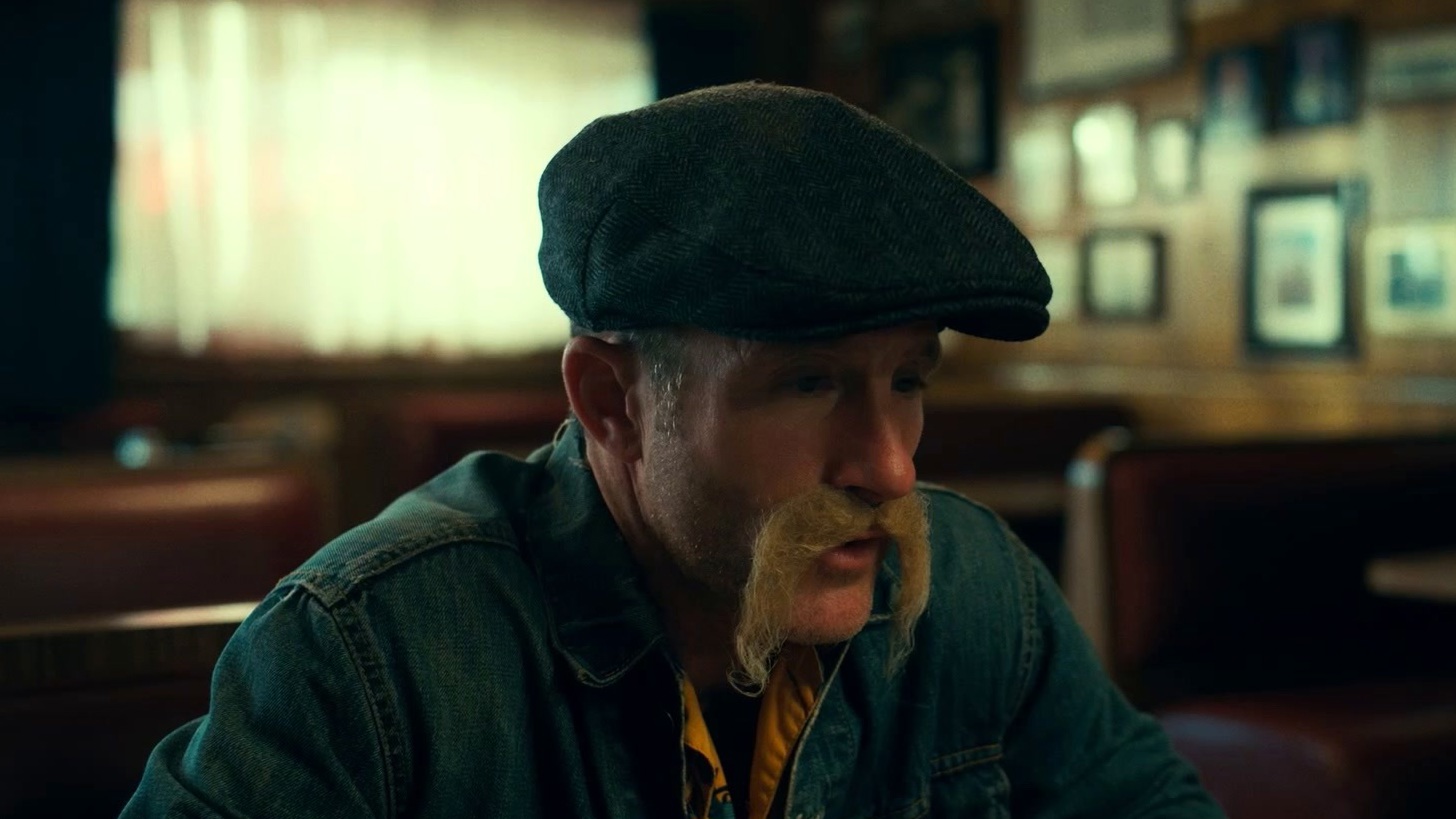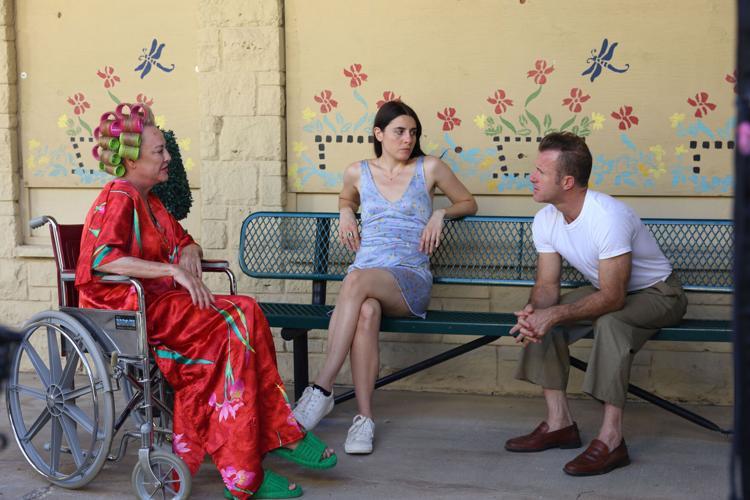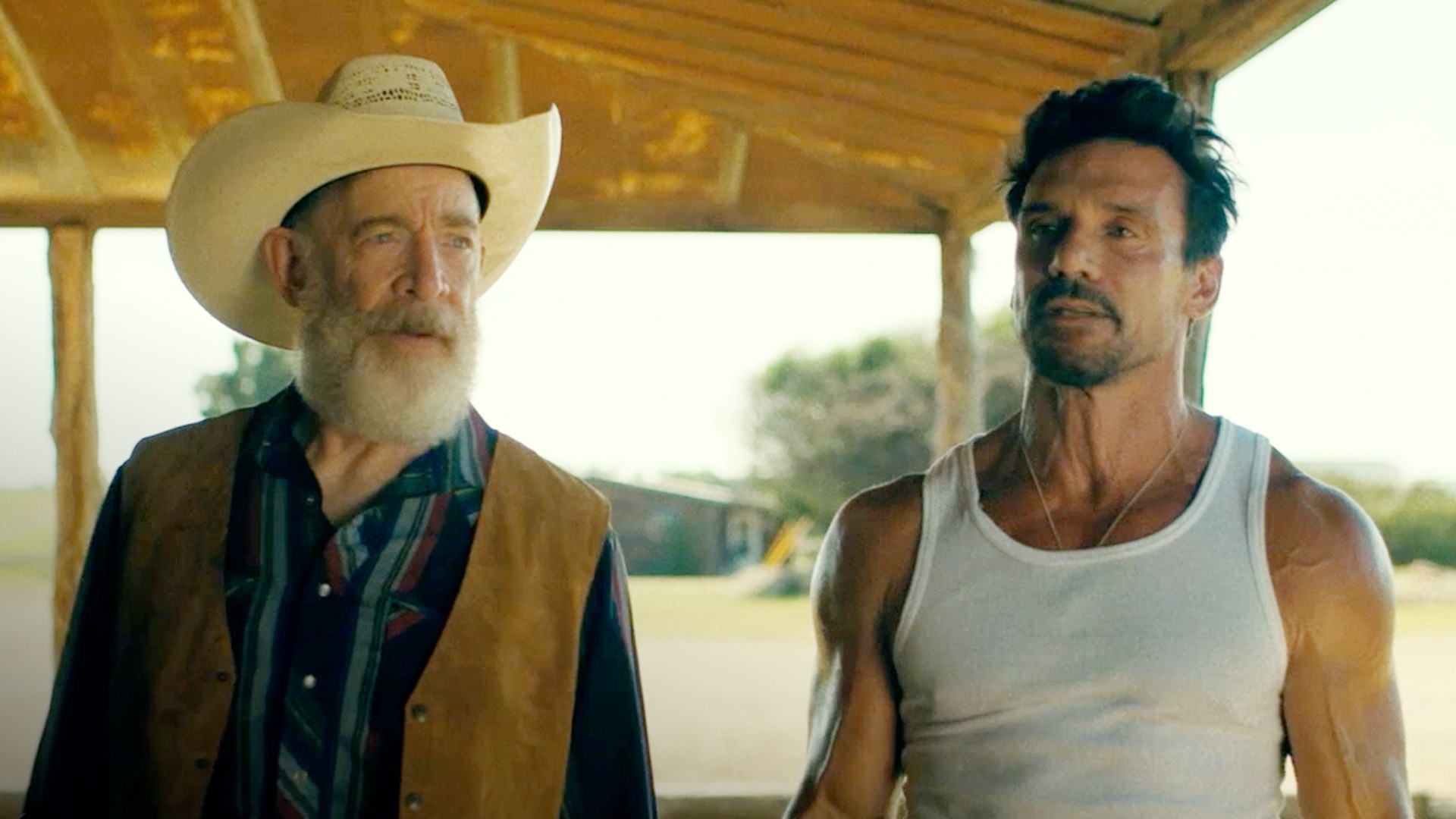
Movie Preview: Animated “Road Rally Racers” have the voices of J.K. Simmons, Lisa Lu, Catherine Tate, Chloe Bennet, Jimmy Yang and…

Our Lord John Cleese is the last top billed voice — as an arrogant fat cat frog — in this Viva Kids animated pic that’s opening May 12.

J.K. Simmons doing a South of the Border accent? As a goat?

Posted in Reviews, previews, profiles and movie news | Comments Off on Movie Preview: Animated “Road Rally Racers” have the voices of J.K. Simmons, Lisa Lu, Catherine Tate, Chloe Bennet, Jimmy Yang and…

Documentary Review: “Still: A Michael J. Fox Movie”

The question, tossed at Michael J. Fox from off-camera by the accomplished documentarian Davis Guggenheim, gets at a truth so blunt and self-evident that it doesn’t require an answer.

“Why do you want to tell this story right now?

And Fox considers not answering it. He has Parkinson’s, and in “Still: A Michael J. Fox Movie,” we’ve already seen how far the debilitating “incurable” illness has progressed. If he doesn’t sit for interviews and read from his autobiography and “host” this film about him now, he might never be able to.

But he doesn’t want that sort of “sad” and “pity” filled biography about an illness that “crushed him.”

“That’d be BORING” he blurts. Think of him as a “cockroach,” he insists. “You can’t KILL a cockroach.”

“Still” is exactly the sort of documentary you’d expect from Fox, whose control of its tone, if not its brisk pace, he seems to have exercised control over. It’s a brief summation of his early life and career, a breezy account of his burning-the-candle-at-both-ends peak, filming TV’s “Family Ties” during the day, knocking out “Back to the Future” and the other movies that made him after hours or when the TV show was on hiatus.

He takes us back to that first day — in a Miami hotel in 1990 — when he woke up, hungover and yet realizing something was wrong with his “auto-animated pinky” suddenly having developed a mind of its own. And he’s sanguine about the dream life he lived before that morning and the diagnosis that followed, and the “cosmic price” or even “karma” he can attach to the disease that arbitrarily and progressively took over his life and all but ended his career.

Fox lets himself get choked-up over his Canadian armed forces veteran turned police dispatcher dad, who didn’t discourage his quite-small-for-his-age son from getting into acting, and who “surprised me” by personally driving him to Hollywood to start the stretch of auditions that would lead — eventually — to his first big break, then the bigger ones that followed.

He puts the sweetest celebratory spin on meeting and insult-flirting with his future wife, Tracy Pollan, on the “Family Ties” set. She wasn’t impressed with his stardom and was nobody’s idea of a fair weather “Hollywood wife” when the chips were down.

“How’s Tracy?” his physical therapist asks at a session.

“Married to me…still.

Parkinson’s may play havoc with an actor’s comic timing. Fox’s was and is so good it overwhelms his condition, which has him dealing with a succession of tumbles, bruises and broken bones over the course of filming “Still.”

We see him take such a fall while walking with a bodyguard-aid as he’s leaving their New York luxury flat. Captured in long-shot, a concerned passersby instinctively reaches down to help. “I’m OK,” he insists, and she recognizes him.

“Very nice to meet you,” she says.

“You knocked me off my feet!” he jokes, and charms her socks off.

“Still” has moments like that, interviews and therapy sessions and a running account of Fox’s career and Hollywood celebrity, many of them recollected from his memoirs. We glimpse him at his “Ferrari, Range Rover and Jeep Cherokee” peak, and on the night he came clean with his fans on a TV chat show about the hidden, heavily-medicated illness that had slowed him down, muzzled his performances and which at least partically explains the tide-turning bombs (sampled in “Siskel & Ebert” clips) that brought his film career to an end.

“Still” was what he could never be as a child, recalling the time he grabbed cash and dashed through the back door to the local candy store while his parents were distracted. The store owner called to alert them he was there with a wad of cash and a taste for sweets. They’d best come fetch him. Fox was two.

These days, thanks to his illness, being “Still” is even more impossible.

His small stature, we’re told, informed his early career. He could play “older, smarter” kids into his 20s, something his first Canadian collaborators tipped him about, “cute and elfin,” traits which sent him to Hollywood.

Fox takes pleasure in reminding the world how producer Gary David Goldberg and NBC programming chief Brandon Tartikoff resisted casting him in “Family Ties,” the “he’ll never be on a lunchbox” limitations that Tartikoff famously scoffed.

Then we see him improvise/invent his character’s middle initial — “Alex P. Keaton” — in a moment in the “Family Ties” pilot, hitting the letter perfectly, instinctively knowing that “Pee” coming out of a short, sweater-vested conservative was funny. Tartikoff got an autographed lunchbox from Fox for Christmas.

“I feel FOUR feet tall!” Fox crowed, upon winning an Emmy for the work.

That on-screen cockiness, delivered when the actor was down to his last Roosevelt dime, has informed our image of Michael J. Fox ever since and spills over into his and his foundation’s battle against his illness.

Fans, people who grew up with him, took the Parkinson’s news hard. But his pugnacious Canadian Cagney demeanor allowed us hope, and every Parkinson’s breatkthrough underwritten by the Michael J. Fox Foundation seems to validate that hope.

They may not name the illness after him, which could finish him before his time. But when the “tough son of a bitch” underwrites the research that ends Parkinson’s, you can be damned sure his name’ll be on the cure.

Rating: R, profanity

Cast: Michael J. Fox, Tracy Pollan, and the voice of Davis Guggenheim

Credits: Directed by Davis Guggenheim. An Apple TV+ (May 12) release.

Running time: 1:35

Posted in Reviews, previews, profiles and movie news | 1 Comment

Netflixable? A Turkish Actress Figures Out How to “Live” a role in the body-switch Dramedy, “Oh Belinda”

“Oh Belinda” is a dark and sometimes comic Turkish body-switch comedy, 97 minutes of giving a spoiled, indulgent actress a taste of the “real life” of a character she’s not-very-committed to playing.

It’s from a genre Hollywood revisits, occasionally, but kind of wore out in the ’80s, and not a lot of the laughs land. But this Around the World with Neflix offering is the raciest, most sexual Turkish film I’ve seen, and has a Westernized brazenness that one almost never sees in films from the Middle East.

It doesn’t begin with “Belinda,” the shampoo that Istanbul actress Dilari is loathe to promote, but with a big, somewhat underchoreographed production number. She’s sashaying her way down the streets and quays of the city to the theater where she’s the star.

Neslihan Atagül plays a thoroughly modern single woman of the arts, a famous beauty with a swank apartment, a new hit show and a regular spot at the bar where all the city’s actors hang out after the curtain drops. And Dilari’s carrying on a very public and sexual affair with her hunky fellow actor Serkan (Serkan Çayoglu).

But this lifestyle comes at a cost. Her overhead is such that she has to take commercials, even though she bitches about it to her agent. This new shampoo spot promises to be an agonizing day on set, a lot of it in a shower as a bell-pepper-stuffing housewife and mother who “washes away her day” with this new product.

Her on-set “kids” are child actors, with all that entails. Her “husband” (Necip Memili) is an attention-starved, unprofessional dope. Only her old pal Timo (Tim Ceyfi) the director can get her through the ordeal.

“BE Handan,” he begs of Dilari, hoping she’ll get into the housewife character. “Don’t just PRETEND.”

During one soapy take, that’s precisely what happens. She opens her eyes, and the shower isn’t on a set. It’s in a crowded apartment.

“Her” kids are playing and fighting loudly. And that fake-mustached boor on the set is now her “real” husband, almost as confused as she is about what has happened. His confusion is in the “What is WRONG with you, Handan?” vein.

The script spends a ridiculous amount of time with our confused thespian in denial over all this, but almost understandably so. Dilari was “Don’t you KNOW who I am?” famous, lording over her public and her acting colleagues. Now, they don’t know her. How could this be?

Serkan doesn’t recognize her when she taxis over to his place, and refuses to pay the cabbie. Her actor “friends” and rival (Beril Pozam has the “All About Eve” role) don’t admit they’re playing a prank on her.

Nothing she does can “end” this little object lesson is reality, humility and the grubby goings-on of “humanity.” Handan is forever fending off her amorous and increasingly upset husband, and apparently having an affair with her crooked bank-manager boss.

She keeps insisting who she really is so loudly that she finally winds up in a mental hospital, where the film’s lone funny line is delivered by a fellow lunatic, the only person to believe her alternate life tale.

“Multiverse.”

That’s funny in dubbed English, or in Turkish with subtitles.

The movie itself is more miss or hit, and in that order. Atagül overwhelms some of the script’s shortcomings with a loud, sexy and assertive performance.

The touchstone film for this tale might have been the already-remade “Overboard,” which produced laughs by having the fake-husband “in” on the misplaced heroine’s plight. But “Oh Belinda” is never that light, taking more of a “Christmas Carol/It’s a Wonderful Life” tone, without the gravitas to carry that off.

It’s still pretty far “out there” by Turkish cinema standards. And some of the set pieces, including a dance in the rain finale, have spark.

Call this one a swing-and-a-miss and “Better luck next time,” because I like the idea and the casting and the sexy tone, just not what they did with those elements.

Rating: TV-MA, sex, profanity, smoking

Cast: Neslihan Atagül, Serkan Çayoglu, Tim Ceyfi, Beril Pozam and Necip Memili.

Credits: Directed by Deniz Yorulmazer, scripted by Hakan Bonomo. A Netflix release.

Running time: 1:3

Posted in Reviews, previews, profiles and movie news | 2 Comments

Classic Film Review: Willie & Kris & Country Music at its Most Rambunctious — “Songwriter” (1984)

The venerated Willie Nelson‘s 90th birthday and the celebrated character actress Melinda Dillon‘s recent passing lured me back to “Songwriter,” an ornery and always amusing country music comedy built around Nelson’s story, Nelson’s persona and Nelson’s attitudes about Nashville and the country music industry.

It didn’t make a lot of noise when it came out in 1984, earning an Oscar nomimation for the music Nelson and co-star and longtime running mate Kris Kristofferson wrote for it. And there’d already been a “What Willie’s REALLY like” country music tale, “Honeysuckle Rose” just a couple of years before. But it was well cast, representative of its milieu and its era, and it’s still damned funny almost 40 years later.

Willie plays Doc Jenkins, a prolific songwriter who sold the rights to his music to a Chicago-born hustler (director and sometime actor Richard Sarafian) who bought a hat and reinvented himself as Rodeo Rocky.

A whole other movie flickers through the montage of the film’s opening credits — Doc’s (cleanshaven) years of struggle, his marriage to his backup singer/muse Honey (Dillon) and subsequent divorce, idiotic “investments” (a German fried chicken restaurant), other women, glory days on the road touring with Blackie Buck (Kristofferson), all bringing us to Doc’s current dilemma.

He’s got a business — Cowbird Music — which represents Blackie, has a “supergroup” record he’s been recording, has a Nashville McMansion, a giant Cadillac convertible, alimony and debts up the yin yang.

How can a creative fellow with no financial sense create under such conditions? He makes his escape “back to Austin,” where he can reconnect with the music, not the business, dodge Rodeo Rocky, make money to try and buy back his publishing rights, catch up with the ever-touring Blackie and “discover” the sexy chanteuse (Lesley Anne Warren) who opens for Blackie, but is represented by the most unsavory promoter this side of Don King — Dino (Rip Torn).

There are a lot of relationships and threads that wove this picture together. Producer Sydney Pollack had discovered Willie’s on camera naturalism in “The Electric Horseman,” and built “Honeysuckle Rose” around him. Nelson’s friend, the Texas screenwriter Edwin “Bud” Shrake (“J.W. Coop,” “Tom Horn”) dreamed up this version of Nashville star Willie’s return to Texas tale.

Steve Rash, the director of the music bio-pic that set the star-does-her/his own singing standard of the era, “The Buddy Holly Story,” was behind the camera for a couple of weeks before Pollack brought in the Altman acolyte Alan Rudolph (“Roadie,” “Choose Me”) to take over. Rudolph gave the picture its loose, playful feel, a “Nashville” with more laughs.

And scene-stealer Torn had made his bones in the genre with the country music cult classic “Payday” a decade before.

Under Altman, Rudolph absorbed the bubbling life of a busy, noisy, chattering film set, something that informed some of his pictures, especially this one.

Nelson and Kristofferson cooked up a dozen songs, and the music — including the title tune — is distinctly theirs. Willie’s Doc picks out his ode to the Nashville music business, “Write Your Own Songs.”

“Mr. Purified Country don’t you know what the whole thing’s about?
Is your head up your ass so far that you can’t pull it out?
The world’s getting smaller and everyone in it belongs
And if you can’t see that Mr. Purified Country
Why don’t you just write your own songs?”

Kristofferson, no slouch as a songwriter himself, has Blackie wonder, ” Do you suppose a man’s got to be a miserable son of a bitch all the time, just to write a good song every now & then?”

These two scheme and kvetch and banter and recycle bits from old Western movies, with any long spiel earning a comical dare — “Say that again.” (from “Red River”).

Country music is depicted as lily white, dominated by non-performing hustlers and populated with drunks.

“The only reason I drink is so people won’t think I’m a dope fiend!”

Comical characters show up for a scene or two. Gailard Sartain plays the last s–tkicker you want managing your money. Sammy Allred is a DJ Doc wants to bribe to play his new singer Gilda’s first single.

“Payola ain’t dead around here,” the jock jokes. “It ain’t even sick.”

And then there’s the dangerous object of fun Dino, a small-timer destined to stay that way, but protecting what’s his and what he’s aimin’ to skim off the box office take with that there pistol he packs in his cowboy boot.

When a guitar player takes up with Dino’s road girlfriend — the movie is pretty damned sexist, any way you slice it — Dino marches him out of the motel room and to the pool in his underwear, makes him park Dino’s half-empty beer stein on his head, and takes a tipsy snub-nosed shot at shooting it off the cuckolder’s head.

“I underestimated you, Dino,” Doc marvels.
Aaalllll you sumbitches do,” Dino growls, my favorite line in the movie and my favorite line in the Rip Torn canon.

“Songwriter” is dated and a bit disheveled. And some of the film’s and Willie’s outlaw reputation have softened over the decades as he’s become America’s loveable iconoclast, a great songwriter, socially out of touch with the ultra-conservative fanbase of his medium, and a bit of a mutt when it comes to his personal life and his inability to manage money.

But the film’s scruffy charms do not dim with age. If you’re in the mood for a musical roman a clef where the songs are sharp and the singing is effortlessly on key, don’t underestimate “Songwriter.”

Rating: R, nudity, profanity, alcohol abuse

Cast: Willie Nelson, Kris Kristofferson, Lesley Anne Warren, Melinda Dillon and Rip Torn.

Credits: Directed by Alan Rudolph, scripted by Bud Shrake. A Tristar release on The Sony Movie Channel, Tubi, etc.

Running time: 1:34

Posted in Reviews, previews, profiles and movie news | 1 Comment

Movie Review: Let’s doze through “Pillow Party Massacre”

Pillow Party Massacre” is such a terrorizing tease.

You title your movie that, you’re promising three things. It won’t be unlike all the assorted “Slumber Party Massacre” C-movies that preceded it. There’ll be some titillation — frolicking in sleepwear, slapping and tickling with pillows, maybe even accompanied by nudity.

College coed underwear can be so flimsy these days.

And the slaughter will be gratuitous and creatively comical. That is the point of a slasher/splatter pic, right?

Writer-director Calvin Morie McCarthy and his cast and crew rarely deliver on those promises.

The premise is lame. A spring prom prank played on a pranks-prone sexually active member of their not-quite-mean-girl gang prompts a murder. Years later, that aggrieved prom queen escapes from a mental hospital and bodies start piling up even before the survivors (Laura Welsh, Jax Kellington, Chyna Rae Shurts, Allegra Sweeney and Nicolette Pullen) head toward that fancy “cabin” up on Burnt Chimney Lake.

As things start to look “sketchy,” one coed purrs “I’ve seen this horror movie,” and a park service cop cracks “What is this, the Washington (State) chainsaw massacre?”

Such wits.

The acting isn’t awful, but stupid reactions the characters are coached to deliver to this moment of peril or that friend’s imiment death are laughable. Butcherings are both graphic and comically fake.

The special effects are so amateurish as to look like continuity errors.

But yes, there is a pillow fight and yes, a top pops off. Since you asked.

Rating: unrated, graphic violence, nudity, profanity

Cast: Laura Welsh, Jax Kellington, Chyna Rae Shurts, Allegra Sweeney, Nicolette Pullen and
Savannah Raye Jones

Credits: Scripted and directed by Calvin Morie McCarthy A Breaking Glass release.

Running time: 1:27

Posted in Reviews, previews, profiles and movie news | 1 Comment

Movie Review: Life as a Closeted Teacher During a Previous Anti-Gay Backlash — “Blue Jean”

“Lesbian phys-ed teacher” feels like a stereotype that’s outlived its days as “that first gay woman I ever knew” and “rite of passage” trope.

Back in the modern American dark ages, there was even a queer folk song about it, “Ode to a Gym Teacher,” a classic of its time, a tad cringy now.

But writer-director Georgia Oakley embraces and upends that “type” in her sensitive, compassionate and very smart period piece “Blue Jean,” about a closeted gym teacher in the Newcastle of Margaret Thatcher’s Britain.

Oakley’s made a depressingly timely film about an earlier “push back” against gay rights and equality, but a movie shot through with hope, the sure knowledge that history isn’t a river, it’s a tide that ebbs and flows.

News reports on TV and the radio underscore teacher Jean Newman’s daily life, accounts of Britain’s version of “family values” conservatives pushing the grim Section 28 law through, and the noisy and inventive gay rights protests that accompanied that.

It’s 1988, and Jean (Rosy McEwen of TV’s “The Alienist”) dyes her short blonde bob, keeps order in her classes, the peace on her school’s netball team, the horseplay to a minumum in the locker room and keeps her personal life separate from her school and her fellow teachers.

She’s paranoid, and no matter what her brassy, out-and-proud motorbiker girlfriend Viv (Kerrie Hayes) may think and say, Jean knows she needs to be careful. Parliament, local councils and her own colleagues could end her career on the flimsiest pretext, were they to find her out.

Viv can joke “I’ll bet there’s loads of les’s on your team” in front of their friends at the pub. But callowly assessing Jean’s gaydar is off the table and out of the question, even if “You can just tell.”

New girl Lois puts all of Jean’s instincts — fear for herself, and an urge to confide and comfort — to their severest test. Lois, played by screen newcomer Lucy Halliday, is tough and brawny enough to play soccer with the lads. That’s going to get her teased and taunted in all-girl gym class and on the netball team.

She’s flinty enough to manage that. But when 15 year-old Lois shows up at the Jean’s gay bar of choice, the perils pile up thanks to a heedless, clueless child who can’t read the room, the country or the state of school districts all across Britain.

Lois may have a crush, but she’s a naive bull in the china shop on the court, in the locker room and in the pub. And Jean’s warnings and threats fall on deaf ears.

Jean’s “Just ignore them” advice about bullies earns a testy “Is that what YOU did?”

Oakley sets up a sort of dread expectation with this story, and wisely rises above the cliches as she does.

Hayes transforms herself into a weary stereotype, right down to the tattoos, buzzcut and motorcycle. But her performance as Viv has a sensitivity that surprises beyond the bravado.

Newcomer Halliday gives Lois layers, letting us glimpse the child bullied and socially and governmentally shunned underneath the bluff, can’t-hurt-me teen exterior.

And McEwen takes us into this world and this woman struggling with it and lets us know a flesh and blood victim of a ground roots backlash that threatened her right to exist, something being cynically exploited by the last gasps of Britain’s most butch prime minister, a woman who took pride in her meanness even as her grasp on power was slipping.

Oakley’s ability to find a hopeful spin to put on this bleak time is a history lesson for us all. As Alan Moore, he smartest guy ever to write for comic books put it, we can react and fight back but never despair at outbursts of hate from officialdom.

“Our leaders do not control the tides of history — they are just surfing them.”

And like the tides, this wave too shall pass. The vigilant’s job is to keep the brief squall at bay until it does.

Rating: unrated, sex, nudity, under-age drinking, profanity

Cast: Rosy McEwen, Kerrie Hayes, Lucy Halliday and Lydia Page

Credits: Scripted and directed by Georgia Oakley. A Magnolia release.

Running time: 1:37

Posted in Reviews, previews, profiles and movie news | Comments Off on Movie Review: Life as a Closeted Teacher During a Previous Anti-Gay Backlash — “Blue Jean”

Classic Film Review: Tom & Meg, Meg, Meg in John Patrick Shanley’s “Joe Versus the Volcano” (1990)

Honestly, I didn’t know what to make of “Joe Versus the Volcano” when it came out. And if I’m remembering correctly, I’m not sure anybody reviewing way back then did either.

But if Hollywood was ever going to indulge anybody with “writer” attached to his name, John Patrick Shanley after the Oscar-winning glories of “Moonstruck” was that guy. Just a couple of years before this 1990 indulgence, he’d given one of the most quotable Oscar acceptance speeches ever, after all.

“I’d like to thank everybody who ever punched or kissed me in my life and everybody who I ever punched or kissed.”

And if a major studio’s going to give a talent like Shanley — he went on to write and direct “Doubt,” which introduced Viola Davis to stardom — a blank check, you had to expect he’d make something akin to “Brazil,” “Toys” and “The Secret Life of Walter Mitty,” a semi-pretentious fable about finding the meaning of life, or at least a little of the joy that’s supposed to come with it.

He convinced Meg Ryan and Tom Hanks, just hitting their peaks, and Nathan Lane and Abe Vidoga and Lloyd Bridges and Ossie Davis and Robert Stack and Amanda Plummer and Carol Kane to sign on, an “Airplane!” load of comic talent. That’s the sort of juice Shanley had.

The story? The titular Joe Banks (Hanks) is an office drone in job that is drudgery itself. He’s a hypochondriac who has failed to get anything out of life and failed to even figure out what it is he’s supposed to have gotten out of life.

He can’t even see the cute swan at work, DeDe (Ryan, for the first time) who masquerades as an ugly duckling.

When he gets a mysterious diagnosis for what ails him — “brain fog” — by a sketchy doctor lent all the authority Robert Stack can give him, he first realizes his time on Earth is short.

But then a sketchier tycoon (Lloyd Bridges, a giggle) confronts him with an offer — lots of money to do something with the rest of his life. He’d like for Joe to volunteer to make a sacrificial jump into a South Pacific island’s volcano, to keep the native Waponi — a peculiar tribe with Vaudeville, Little Italy and Borsht Belt origins — placated so that the rich man can continue to extract a valuable minerals from the island.

Joe is doomed, but a big shopping spree, being chauffeured around New York by Ossie Davis, and an “adventure” in the bargain should be suitable compensation for his sacrifice.

Ossie’s a highlight of this “See New York for the first time” sequence. So is Barry McGovern, playing the ultimate unctuous “gentleman’s” salesman, selling Cadillac-priced steamer-trunks to the well-traveled.

“Have you thought much about luggage, Mr. Banks?”

“No.”

“It’s the central preoccupation of my life.”

A blousy Angelino named Angelina, and then a seagaring gal named Patricia (Ryan and Ryan one more time) will guide Joe from the West Coast southward into the Pacific.

And then he’ll meet his date with destiny among “natives” straight out of “Gilligan’s Island,” with a healthy dose of shtick, thanks to a witchdoctor played by Nathan Lane and a bored-with-it-all chief ( Abe Vigoda).

Patricia, being the sailor who stands to inherit the schooner Tweedle Dee that’s taking them into the South Seas after delivering Joe, is the Message of the Movie, a message embodied by Meg Ryan at her most approachably radiant.

“My father says that almost the whole world is asleep. Everybody you know. Everybody you see. Everybody you talk to. He says that only a few people are awake and they live in a state of constant total amazement.”

Joe and Patricia are destined to fall in love, come what may. And that fate? It will be faced as a couple.

“Joe, nobody knows anything. We’ll take this leap and we’ll see. We’ll jump and we’ll see. That’s life!

Ryan had a knack for making us buy into almost every leading-man pairing of her career. And her future “Sleepless in Seattle” and “You’ve Got Mail” co-star must have seen that and made damned sure they were repaired in better films over the next decade.

One could imagine that Kevin Kline, Matthew Broderick, Val Kilmer, Tim Robbins, Hugh Jackman and Andy Garcia figured out what Billy Crystal beat them all to the punch about. The real challenge in acting opposite Ryan from the late ’80s into the early 2000s was in not falling in love with her the way your character did, the way audiences did.

Perhaps a tell-all book or two will break that spell, but all I could think of watching her interactions in different guises with Hanks is “They don’t give Oscars for that, and they should.”

“Joe” bombed when it came out, arriving to middling-to-bad reviews. And this was AFTER the studio got Shanley to reshoot and re-cut the ending. But seeing it and forgetting it over the ensuing decades allows one the luxury of relishing the dark early moments, gives a finer appreciation of the “Brewster’s Millions” shopping spree and makeover, allows a renewed kick in seeing Ryan in three guises and the unalloyed slap-in-the-face-with-a-mackeral that is that tropical hoot of a finale.

The corniest stuff still plays, the sight gags — Joe and Patricia shipwrecked, using his super-expensive steamer trunks as a raft — still amuse and the stars still let the sparkle simmer on low heat.

Most of the people involved with “Joe” would go on to bigger or at least better things. And the movie’s Big Theme kept coming back. You could see it in Ben Stiller’s glorious “Start living life” vanity project, “Walter Mitty,” in the Simon Pegg bomb “Hector and the Search for Happiness.”

Truth be told, the male existential crisis plot has rarely worked, from “The Razor’s Edge” onward. But “Lost in Translation” and “About Schmidt” got by. And the female version rarely played, unless it’s Julia Roberts who craves the chance to “Eat, Pray Love” or Reese Witherspoon is the one willing to wander into the “Wild.”

One still gets the feeling, after all these years, that the “Volcano” got the best of Joe and John Patrick Shanley. But removed from its time, disconnected from the need to draw an audience and earn back its budget, it’s still something to see. Expensive folly or charming stab at the Hollywood version of the “Meaning of Life” — meet and let yourself fall in love with Meg Ryan — I’d call this one of a “classic” of its type.

That “type” is something you’ll have to decide for yourself.

Rating: PG, thematic material

Cast: Tom Hanks, Meg Ryan, Ossie Davis, Lloyd Bridges, Amanda Plummer, Robert Stack, Nathan Lane, Carol Kane and Abe Vigoda.

Credits: Scripted and directed by John Patrick Shanley. A Warner Bros. release on Amazon, Tubi, etc.

Running time: 1:42

Posted in Reviews, previews, profiles and movie news | Comments Off on Classic Film Review: Tom & Meg, Meg, Meg in John Patrick Shanley’s “Joe Versus the Volcano” (1990)

Netflixable? A Polish rom-com couple nobody will root for — “Kiss, Kiss!”

Oh, “Kiss, Kiss!,” you impish little Polish rom-com, how do I hate thee? Let me ennumate the ways.

I hate your stupid story, your loopy sitcom logic, your repellent lead, your idiotically-compliant leading lady and her inexplicable soft spot for lying, shallow womanizing boors.

Your “meet cute” made me want to puke, your secondary love story was downright gory.

I hate you from your random, “contract that’s going to make me” interrupted for skirt-chasing opening to your attempted “Graduate” finale.

That’s a lot of hate-hate for an innocuous nothing titled “Gorzko, gorzko!” in its original Polish. But 107 minutes of this is one long night at the opera, waiting around for the fat lady to sing or one damned thing about “Kiss, Kiss!” to charm, amuse or delight.

Mateusz Kosciukiewicz plays Tomek, our obnoxious, smarmy, inexplicably-cocky lead. We meet him as he recklessly drives his colleague/girlfriend to their Big Meeting at work, the contract with “The Japanese” that will get him promoted, maybe to New York, preferably to California.

But he brushes-off the lover/co-worker who propped him him and got him here. And when he spies a pretty blonde leaving the office just as he’s arriving, he forgets everything else to chase her onto a bus and him right out of a job, a company Maserati, a live-in arrangment, the works.

Tomek imposes on his Ed Sheeran look-alike estranged brother (Rafal Zawierucha), who inexplicably takes the jerk in. Next thing we know, the womanizer is giving the kid brother romantic pointers so that he can close the deal with shy, skittish florist Klara (Agnieska Wiedlocha) who sells the allergic sibling cacti.

And then they get a job photographing the “behind the scenes/making of” footage of “the biggest wedding this country’s ever seen.” A justice department minister (Marcin Perchuc) who wants to be president and his failed-film-actress wife (Edyta Olszówka) are marrying off their son just before election day.

No expense will be spared, no lack of pomp will be seen. The son will be home from Abu Dhabi shortly. So the film crew brothers will follow mother Patsy as she finishes up plans, and the imposed-upon and the bride-to-be.

Ola (Zofia Domalik) is the face that ended Tomek’s previous career, the skirt that he chased onto that bus. She’s about to marry into money and power and this stalker with the creepy come-ons will be underfoot, pressing his case with a camera in her face right up to “I do.”

The script’s most irksome quality is how she’s resigned to that, how the grandmother who raised her encourages this “rascal” who is prone to grabbing women and “stealing a kiss” like it’s 1925 or the end of World War II.

Meanwhile, Tomek is staging dangerous stunts that will throw Janek and the demure Klara together, stunts that get the police involved.

And then there’s this infamous imprisoned mobster (Tomasz Sapryk) who has a stake in this whole wedding thing and is having Tomek watched.

There wasn’t a single scene in this I found believable, and I’m hard-pressed to think of a character who came off as relatable.

A cute moment, the minister shows up in the middle of his wife’s grandiose plans, rejects “foreign” chamber music and insists on Polish tunes, especially for the planned game of musical chairs.

But that “cute” piece of a scene dies of loneliness in this tone-deaf, fingersnails-on-a-chalkboard farce.

The leads don’t click, with neither “couple” serving up anything worth rooting for. The criminal melodramatics add nothing and the mad sprint to the altar stumbles along to a payoff that is nothing that will make film fans forget Katharine Ross and Dustin Hoffman in “The Graduate.”

Netflix wasted a lot of Polish Zlotys on a terrible movie that had apparently no one in the U.S. company bothered to read and approve, or even have translated so that they could see and hear how bad it was doomed to be.

Rating: TV-MA, sexual situations, profanity

Cast: Mateusz Kosciukiewicz, Zofia Domalik, Rafal Zawierucha, Agnieszka Wiedlocha, Edyta Olszówka, Marcin Perchuc and Tomasz Sapryk

Credits: Directed by Tomasz Konecki scripted by Andrzej Golda and Martyna Skibinska. A Netflix release.

Running time: 1:48

Posted in Reviews, previews, profiles and movie news | Comments Off on Netflixable? A Polish rom-com couple nobody will root for — “Kiss, Kiss!”

Netflixable? The Scariest Threats are Existential, and they arrive “Soft & Quiet”

Disquieting, discomfitting and disturbing almost on a molecular level, “Soft & Quiet” is a horror movie all but ripped from today’s headlines, or would be if anyone still read newspapers.

It’s not about monsters, it’s about your neighbors. And while there are crimes in it, it’s what precedes those crimes that earn writer-director Beth de Araújo’s debut feature the label “horror.”

As Emily, the smiling, helpful kindergarten teacher who has gathered like-minded friends together in a meeting room at the local Catholic church close to the school where she teaches puts it, it’s the folks who organize and show a “soft on the outside” exterior to the world who are societal change’s “secret weapon.” People who “tread quietly” get results.

And then Emily — played with a brittle chill by Stefanie Estes — takes the cover off the fruity pie she baked for this kaffeeklatsch and we see the swastika she carved onto it.

“What, can NO one take a JOKE anymore?”

“Soft & Quiet” is a chilling account, depicted in real time and in what looks like one long, suspense-building take, of Emily’s efforts to organize a white supremacist group. The film lets us see what happens when their racist rhetoric, dog whistles and outright slurs delivered with Betty White smiles, their white grievance and aggressive, confrontational “victimhoom,” is put into practice.

It is jaw-droppingly creepy and cringeable ugly, with their complaints spreading across the spectrum, from “Jew bankers” and “brown” this or that to the N-word and harsh judgements that enfold every nasty thing everyone has ever said about a minority in this country — racial, ethnic, religious or sexual.

The viewer finds her or himself picking out which extremist group — the racist, wantonly belligerent and backward “Moms for Liberty” or the openly fascist and violent Proud Boys — these women resemble at this or that stage of the narrative.

Writer-director de Araújo and her cast — Olivia Lucardi, Dana Millican, Eleanore Pienta, Rebekah Wiggins, Cissy Ly and Melissa Paulo among them — capture “mob mentality” as it forms, mild-mannered women growing more emboldened, radicalized and “triggered” with every minute that passes without the social pushback decent human beings face such goons, even the distaff ones, with.

We’re seeing a 90 minute version of what we’ve watched over the past six years in our country modeled and boiled down to a simple, increasingly-tense and escalatingly more fraught story.

The script sets Emily up as a concerned teacher who comforts a boy whose mother is late picking him up, only to let us pick up on her worldview by the way she insists the child go and order the Latina custodian at school to not mop until after he’s left.

“Grooming,” I believe that’s called.

The impact of this movie is akin to “doom scrolling” on the crippled social media platform Twitter, seeing your worst fears about the worst among us reflected in the news, Congressional race-baiters and their citizen minions and wingnut media amplifiers.

As stressful as that sounds, it’s still a recommendation. A tight, minimalist thriller this smart, rhetoric-based turning towards violence and its repercussions, is too good and too important to ignore.

Rating: R for disturbing racial violence including rape and pervasive language including offensive slurs

Cast: Stefanie Estes, Olivia Lucardi, Dana Millican, Eleanore Pienta, Rebekah Wiggins, Cissy Ly, Melissa Paulo.

Credits: Scripted and directed by Beth de Araújo. An eOne/Blumhouse release on Netflix

Running time: 1:31

Posted in Reviews, previews, profiles and movie news | Comments Off on Netflixable? The Scariest Threats are Existential, and they arrive “Soft & Quiet”

Movie Review: This time, “Carmen” becomes operatic, balletic and cinematic

The story has turned up in so many forms, in every media imaginable — yes, even a “graphic novel” — that it’s a piece of our universal narrative heritage now.

“Carmen” was the classic femme fatale, the perfect temptress to build an opera, a ballet, plays or movies around. Now the smoking and smoking hot Spanish Gypsy who is handy with a knife becomes a dancer, on the run from trouble in Mexico, fleeing straight into more trouble when she slips across the border and into the United States.

Choreographer and dancer Benjamin Millipied (“Black Swan”) turns the opera and ballet into an impressionanistic portrait in dance for his feature directing and co-writing debut. It’s a sometimes gorgeous saga, more of a riff on “Carmen” and a comment on cultures clashing today than an “adaptation.”

Featuring new music woven into the story, it is built around impressive acting and dancing performances by Melissa Barrera in the title role and Paul Pescal as Aidan, an American Marine who becomes Carmen’s hot-tempered, soldierly lover in this outing.

Co-scripted with a “Birdman” screenwriter and a French soap opera scribe, “Carmen” looks and feels experimental, a movie of action and violence, plot occasionally carried by song but with emotions conveyed through the dance. It’s sprawling and yet simple and rarely stumbles across a trope it doesn’t embrace.

Often as not, “Carmen” is an experiment that works.

We meet Carmen as she’s fleeing some unnamed trouble — perhaps romantic. Her mother (Marina Tamayo) stalls for time, rehearsing flamenco in a gunpoint standoff on a makeshift stage under a tarp behind their house in the desert borderlands of Mexico (but filmed in Australia). Her mother is murdered, but she advised Carmen to flee to L.A., to her “like a sister” friend Masilda. She will help.

First, though, she’s got to cross the border. That’s how Carmen runs into Aidan. He’s an aimless, traumatized combat veteran nagged into taking up volunteer work with other semi-automatic rifle toting veterans, “Huntin’ Mexicans” with the full cooperation of the Border Patrol.

Paired up with a trigger-happy goon with a gun, Aidan defends Carmen and kills the killer. That pairs them up — reluctantly — and puts them on the lam, making their way to “The City of Angels” and stumbling into dancers along the road.

And once there, aging diva and impressario Masilda, played by Almodovar darling Rossy de Palma, could indeed be their salvation. Unless you remember how the opera, ballet etc. turned out.

The dance sequences — indoors and outdoors at sunset or by firelight — are just lovely. Barrera, a veteran of the “Scream” franchise and the musical “In the Heights,” is impressive and utterly credible as the beauty who tempts men beyond reason.

Irish actor Pescal of “Aftersun” and “The Lost Daughter” is similarly credible as a lost soul who stumbles into action, purpose and love when the chips are down.

“Carmen” is more a movie of tableaux and emotions than a story with a clean linear narrative that leads us along moment by moment. It’s so far from being a literal “Carmen” that one can barely call it an adapation.

But those moments and heightened emotions, delivered via dance, tell us a story with more than words. And sometimes the words — in Spanish or in Englihs — are just right, too.

“Remember that the thing you’re running from is almost always the thing you’re running towards.”

Rating: R for violence and nudity and profanity

Cast: Melissa Barrera, Paul Pescal, Marina Tamayo and Rossy de Palma

Credits: Directed by Benjamin Millepied, scripted by Alexander Dinelaris, Loïc Barrere and Benjamin Millepied, based on the novel by Prosper Mérimée and the opera and ballet it inspired. A Sony Pictures Classics release.

Running time: 1:57

Posted in Reviews, previews, profiles and movie news | 1 Comment