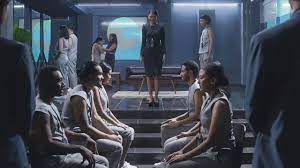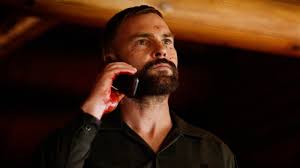
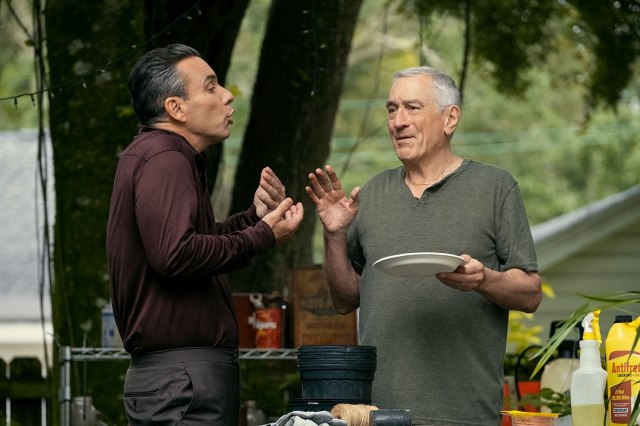

Netflixable? Gabrielle Gets her Groove Back with “The Perfect Find”

Gabrielle Union tries her hand at “rebranding” after 40 with “The Perfect Find,” a sexed-up rom-com from the director of “Jezebel.”

Her instincts are as sharp as ever. But this contrived “Gabrielle Gets Her Groove Back” is very much a mixed bag. She’s still an inviting, engaging screen presence with a light touch. And it’s a film that overcomes the “work in New York fashion” cliche with a few real insights on how “trends” are manufactured these days.

But virtually every story beat about her character tumbling into attraction, diving into romance and backing away from it — every fight and almost every obstacle put in the way of that romance arrives abruptly and seems arbitrary. They’re requirements from the Rules of Rom-Com Screenplays, not organic give-and-take hills, dips and curves of the love roller-coaster.

Union plays Jenna Jones, formerly the pretty half of “New York’s most stylish couple.” That ended ugly after ten years, and Jenna finds herself over 40, unemployed, an “It” girl influencer turned Old News.

After Mom kicks her out of the house, she heads back to The City to start over, begging an old rival, Darcy (Gina Torres, bitchy-funny) for work at her “Darzine.”

The effortlessly-stylish Jenna and her fashionista eye are set to climb that mountain again. But she finds herself “making out with a fetus” at a party. That “fetus” turns out to be Darcy’s film school alumna son Eric (Keith Powers, years past TV’s “Faking It”). He is Mom’s choice to be Darzine’s new videographer.

“There’s nothing wrong with Black nepotism,” Jenna enthuses.

But can they “work” together in the face of this steam heat that the script ordains?

“We’re professionals! We do our jobs, not each other!”

Union’s brand has always been smart, erudite and classy, and while the almost-graphic discussions of sex and genitalia she and her girlfriends giggle over and she and Eric flirt with doesn’t tarnish that, it’s not a natural fit.

Still, I like the tentative way Union’s character treats the age difference, a woman who wants “family” with a 24-or-so year-old filmmaker who isn’t on that track. It feels real.

The rest? Pretty much all contrived. Jenna has two BFFs. So does Eric. First his ex, then hers, re-enters the picture. And on and on veteran TV series screenwriters Leigh Davenport and Tia Williams go, trotting through the tropes of the genre. Director Numa Perrier only seems comfy with the serious and sexual stuff, not the comedy.

The jokes about “40something, single and mean” being a Black female stereotype from “Tyler Perry movies,” and young men’s passion for that “BBL aesthetic” land.

Union is on her game, and the movie’s affection for Black fashion icons of history — Eartha, Josephine and “The Black Garbo” — is a great hook to hang the “fashion” element of the story on.

But too much of what’s here is over-familiar, and the “familiar” isn’t anything anybody would get all sentimental over.

Rating: TV-MA, sex, profanity

Cast: Gabrielle Union, Keith Powers, Gina Torres, D.B. Woodside

Credits: Directed by Numa Perrier, scripted by Leigh Davenport and Tia Williams  A Netflix release.

Running time: 1:39

Posted in Reviews, previews, profiles and movie news | Comments Off on Netflixable? Gabrielle Gets her Groove Back with “The Perfect Find”

Movie Preview: Englund, Bill Moseley and Charlotte Fountain-Jardim star in the horror that comes when “Natty Knocks”

My favorite graphic in this trailer is “From the Director of Halloween 4.”

Can you remember who that was? The John Carpenter films, the Rob Zombie abortive attempts, I remember those.

July 21, Mr. Englund leaves behind the hat, striped sweater and gory glove for “Natty Knocks.”

There’ll always be an Englund.

Posted in Reviews, previews, profiles and movie news | Comments Off on Movie Preview: Englund, Bill Moseley and Charlotte Fountain-Jardim star in the horror that comes when “Natty Knocks”

Movie Review: Millie Messes Up, so “Millie Lies Low”

“Millie Lies Low” is a next-level cringe-comedy from Kiwi Country, a New Zealand goof on the Deep Fake lives the savvy among us can live on social media when our real lives are coming off the rails.

It begins with a panic attack, even though Millie (Any Scotney) insists “I NEVER have those!”

She’s boarded the plane. She’s heading to New York, to an internship that it seems everybody knows about, a Wellington uni student about to make all of New Zealand proud, or so the magazine and TV coverage would have you believe.

Bit of pressure? You bet. But the moment she gets off that plane, everything gets worse.

Her problems multiply and her “solutions” are to cover them up. She lies to try and get a discount on the very expensive ticket she has to replace, lies to try and get a store-front loan to cover it and posts that first “lie” on social media — a screen-cap of an airplane window, a post about “the adventure” that begins with her “step into the next chapter of my life.”

We start to get the picture. The panic attack that Millie “never” has is a reckoning, or a fear of a reckoning. All her chickens are coming home to roost.

Director and co-writer Michelle Savill’s sparkling debut is the dark side of “fake it until you make it.” It dances between grimaces and giggles as Millie would rather sleep in the airport, or sleep in the department lounge at her old university, sleep on the street or steal back the car she “gave” to her best friend and fellow architect-wannabe, Carolyn (Jillian Nguyen).

Millie can raid her old apartment and dumpster dive for backdrops to her New York selfies or Facetime calls. A subway map poster’s an unusual bit of decor for an actual New Yorker’s apartment, Carolyn notices. No no, check out the “exposed brick” (just a wall in an alley) feature in this building.

She DIYs a disguise to sneak into a graduation party at her old place, dodging the boyfriend (Chris Alosio) she ditched to take this “next big step.” She hits up her sickly Mum (Alice May Connolly) for cash, raids her fridge when she’s not at home and secretly camps out in in the woods behind her backyard so she can use her wifi to post the next lie.

Because Millie lies like she breathes. Millie feels like a fraud because she might very well be. And in disguise, or stalking Carolyn or whoever, she overhears what people really think of her and how they see through her.

That “panic attack” wasn’t over flying.

Scotney (“Cousins,” “Bad Behaviour”) is a terrific reactor here, playing a young woman with the resourcefulness to get through architecture school (with some shortcuts) and the native cunning to fake an entire trek to New York on the fly.

Scotney’s face barely masks the turmoil inside of Millie, her personal disappointment, her terror of disappointing others, her bitterness at realizing she isn’t fooling anyone and at the way her lies and rash impulses ripple out among others, hurting them and creating layers of collateral damage.

And she lets us pity this frightened coed, even if she’s getting at least a little of what she deserves.

It’s a marvelous performance in a dark comedy that never lets us believe that it’s “always darkest before the dawn,” not where Millie’s concerned. There’s always another bad decision to make, another half-assed excuse to offer, another “t” she’s forgotten to cross but that we can guess as “Millie Lies Low” until all this blows over.

Rating: unrated, sex, nudity

Cast: Ana Scotney, Jillian Nguyen, Chris Alosio, Sam Cotton, and Alice May Connolly

Credits: Directed by Michelle Savill, scripted by Eli Kent, Michelle Savill. A Film Movement release.

Running time: 1:40

Posted in Reviews, previews, profiles and movie news | Comments Off on Movie Review: Millie Messes Up, so “Millie Lies Low”

Movie Preview: Oh Baby, Elizabeth Banks and that Galifianakis dude resurrect “The Beanie Bubble”

Sounds like Zach, but does this guy look like Mr. Galifianakis? Quite the transformation for the “Between Two Ferns/Hangover/Baskets” drawling, sarcastic lump.

Ms. Banks is spot on as one of the many women screwed over and cheated by the hustling, huxtering, fad-feeding Ty Warner.

July 21 in theaters, July 28 on Apple TV+

Posted in Reviews, previews, profiles and movie news | Comments Off on Movie Preview: Oh Baby, Elizabeth Banks and that Galifianakis dude resurrect “The Beanie Bubble”

Movie Review: God Bless “The Childe” Who Survives This

“The Childe” is a flip and darkly amusing comic thriller from Korea, a tale of an impoverished Filipino boxer who laments the fact that he’s never been able to find his Korean father. Until he does find him.

It’s violent, sadistic and quite a bit of fun, thanks to the big screen debut of Korean TV star Kim Seon-ho. As a comically-cocksure, joking, grinning, chuckling and whistling hitman who interferes with or expedites this “Dad” search, he identifies himself only as “a friend.”

It’s no wonder the broke boxer Marco (Kang Tae-Ju) gives him the side-eye when this “friend” lays out Marco’s immediate future.

“You’ll find out for yourself when it’s time for you to die.”

Our hitman loves his designer duds and dotes on him Merc. He drinks Cokes through a straw. But rest assured, he tells one and all whom he deigns to identify himself to instead of just stabbing, throat-slicing or shooting.

“I’m a professional!” (in Korean with English subtitles). He most certainly is. He’s also damned entertaining. And what did Hitchcock always say? “Good villains make good thrillers.”

Marco is a loser at life, probably since birth. He is a “mutt,” one and all say, a Kopino — half Korean, half Filipino. Marco’s mom needs life-saving surgery. He gambles his boxing winnings in Manila (I think that’s the location, even though those scenes were shot in Thailand) and pays others to hunt for his Korean father in the vain hope of getting the cash for the medical bills.

He’s even desperate enough to agree to pitch in on a jewelry store heist, which turns out to be a gang set-up for 11 guys who must have lost money on a fight Marco won and want to beat him to death.

Imagine his surprise when a Korean lawyer, complete with entourage, shows up saying that his father has been looking for him, too. They’ve brought along a hospice nurse. They promise to pay for Mom’s surgery. But he needs to get on a plane for Korea right now. Dad’s dying.

It’s on the plane that Marco first meets the “friend” whom he doesn’t realise has been stalking him. That friend doesn’t seem that friendly when he later ambushes Marco’s ride to his father’s side.

For a boxer, this kid is awfully prone to take the “flee” option when faced with “fight or flight” moments.Whatever’s going on, you can be sure there are mobsters, family factions and more than one “professional” on the lookout for Marco.

Go Ara plays a cold-blooded woman on his trail. Kang-woo Kim is the mob empire heir so determined to meet “my brother.”

As the bodies pile up and many a Genesis and Mercedes is trashed or perforated with pistol holes, we shout at the screen for Marco to “HIT somebody,” but not for our smirking cola-addict to get what he has coming to him. He’s just too damned fun.

Writer-director Park Hoon-jung keeps the action so brisk that we barely notice that the editing mixes up who is in which car and when that ride gets wrecked. He did “I Saw the Devil” and “V.I.P.” and delivers thrills on a modest scale and a modest budget. The same two stretches of Korean backroads through forests give him most of the chase coverage he needed (a bit of highway sneaks in there).

And you can guess where this is headed pretty early on. You could lop off the 18 minutes or so of explanations and other elements that constitute an anti-climax at the end and have a better film. But whatever.

Park keeps this A-to-B journey, with our hapless hero changing custody many times, on the move. Kang lets us feel the wince every time somebody calls Marco a “Kopino” or “mutt,” each slur cutting him to the quick. Marco’s unprofessionalism and cluelessness has him running right into peril time after time, refusing to use his reflexes and one known-skill to pop this or that goon or girl with a gun right in the mouth.

Every now and then though, he surprises us with a punch, just enough to keep his boxing card. It’s always unexpected, and always gets a sadistic laugh out of the viewer, if not the resident sadist in the script.

And Kim, dapper and profanely jokey — playing a guy who only truly gets angry when you ding his Mercedes or soil his pricey shoes — makes sadistic killers for hire fun again. He sets the tone right from the start as this unnamed “friend” overwhelms a garage full of thugs, promising their leader, Boss Cho, that this screwdriver in his hand is what he’s using to “carve your heart out” because a blunt instrument like that “is more painful.”

And he should know. He’s the “professional.”

Rating: unrated, violent as all get-out

Cast: Kim Seon-ho, Kang Tae-Ju, Go Ara, Kang-woo Kim

Credits: Scripted and directed by Park Hoon-jung A Well Go USA release.

Running time: 1:57

Posted in Reviews, previews, profiles and movie news | Comments Off on Movie Review: God Bless “The Childe” Who Survives This

Netflixable? Dropping in on the sword and sorcery anime “Black Clover: Sword of the Wizard King”

The magical manga turned anime spectacle “Black Clover” becomes a feature film in “Black Clover: Sword of the Wizard King,” an offshoot of the popular TV series that struggles through a sea of characters, contrived factions and sword and sorcery magic practiced by those fighting to rule and perhaps “cleanse” the Clover Kingdom.

It’s a lot to wade into, an anime effects extravaganza with so many story threads, agendas and characters that it’s not really the sort of thing you “wade into.” And despite Biblical undertones to its central struggle over free will, self-determinism and the “fallen angel” who wants to “fix this country” by ridding it of most of the wizards, wizard kings and magic-free bystanders who live in it, it never really rises above the nonsense of it all.

Director Ayataka Tanemura, who worked on the TV series, and her crew deliver eye candy and a simple plot buried under clutter in the form of fan service.

Characters pop in for glib one-liners, rallying cries, death threats and spells — SO many specialized, unique to the character spells.

“Fake manipulation, ABSOLUTE EVASION!” “Spatial Magic! Fallen Angel’s Wingbeat!”

The story sort of drifts free of the “two orphans/rivals” dynamic of the manga and TV show, where Asta and Yuna compete their way towards Wizard King status. Here, the years-long struggle between wizards Julius, a righteous consensus builder, and Conrad the megalomaniac to control Clover Kingdom takes center stage.

A prologue captures Conrad, foiled mid-power grab, contained and exiled “forever,” which is why the good folks of Clover Kingdom are told he’s dead. Julius & Co. overpowered him.

Ten years later, at The Triumph, the contest between wizards to determine who gets to move up in the hierarchy, Yuna and Asta’s rivalry is set aside by a coup attempt. Conrad is back. And he has allies and minions.

It will take teamwork to resist him, his faction and his “magic soldiers.” The Black Bulls and their bluff, “just took a dump” leader Yami, scientists at the Magic Tool Research Lab and others join the fray

The rivals pay lip service and lip service only to debating power and discrimination and prejudice and honor.

“I will fix this country!”

Are we meant to believe Conrad has a point? Without examples? I mean, he does insist to Julius “You’re the one standing in the way of PROGRESS!”

To be as well-esablished as this narrative is, characters spend an INSANE amount of dialogue (in subtitled Japanese, or dubbed) delivering exposition, back-story, history, motivations and the like aloud.

Fan or no fan, you have to admit that’s infantile storytelling.

A puerile, Pokeman-level encyclopedia of rules — whose power trumps what — must be considered and arbitrarily abandoned when the next epic brawl begins.

The problem with a fantasy with this much “history” and this many characters layered on top of a simple story is that its “complexity” is superficial, gained by simply adding more colorful wizards and spells, and that its conflict is exposed as contrived claptrap to anyone looking for a straightforward plot, properly motivated characters, logic and the like.

There’s little here for a non-fan, and almost nothing to invite non-fans to become fans.

Rating: TV-14, violent action, a few toilet references

Cast: The voices of Chris Niosi, Dallas Reid, Brynn Apprill, Christopher Sabat, Robert McCollum, Tia Lynn Ballard, Josh Grelle, Jill Harris and many others

Credits: Directed by Ayataka Tanemura, scripted by Johnny Onda and Ai Orii based on the Yuuki Tabata manga that also inspired the TV series. A Netflix release.

Running time: 1:53

Posted in Reviews, previews, profiles and movie news | Comments Off on Netflixable? Dropping in on the sword and sorcery anime “Black Clover: Sword of the Wizard King”

Classic Film Review: Kubrick becomes Kubrick, “Paths of Glory” (1957)

Cinephiles congregate around the films of Stanley Kubrick the way history buffs are drawn to Alexander, Hitler and Napoleon. They were all-powerful control freaks who set out to remake the world in an image they saw in their own minds, and gained the power to attempt it.

So it was with Kubrick, a chess fanatic who came along too late to have grown up with the world-building games that connect new generations of Kubrick fans to his films and his career. He is admired by fans at least partly because of his dictatorial powers over the worlds he created in his films.

He was an Orson Welles who won absolute power over his career and his movies, a Spielberg with more grandiose visions and ambitions.

“Paths of Glory” was a brisk and biting World War I anti-war film, a politicized combat movie that reset the standard for trench warfare movies. It was Kubrick’s first “all-star” production, thanks to Kirk Douglas, who co-produced it and attracted a “name” cast of Hollywood supporting players.

As he and his partner James Harris had co-producing credits, he had at least some control over his second United Artists release, control he wouldn’t do without after the experience of his next film with Douglas, the Roman epic “Spartacus.”

This 1957 film is quintessentially Kubrick, even though it wouldn’t bear the elephantiasis of his best known pictures — epic length even when the subject matter didn’t seem to command it. Only “Doctor Strangelove” would be as short, sweet and to the point as “Paths of Glory,” the one later Kubrick film to clock in at well under two hours. The intimate, creepy and dark “nymphet” comedy “Lolita” somehow became a two hour and thirty-three minute endurance contest thanks to his “final cut.”

The Kubrickian camera compositions, riveting long takes and tracking shots, production design and spare sound design give “Paths of Glory” a grandiosity beyond its brief time frame — just a couple of days in 1916 France — and 88 minute running time. It’s magnificent, and until “1917” and the most recent “All Quiet on the Western Front,” was the gold standard for recreations of “The Great War,” its trenches and the slaughter of No Man’s Land.

The story is a parable of class wrapped in an anti-war fable. It’s based on a Humphrey Cobb novel that was in turn based on a real incident — the French Army executing soldiers, at random, for an attack that failed. The soldiers died labeled “cowards” while the bungling officers who ordered their deaths sipped cognac and got off scot-free.

Douglas plays Col. Dax, a regimental commander who was a famous lawyer in civilian life. He is the middle class middle man, trapped between soldiers he is loyal to and the orders of an aloof, upper class General Mireau (George Macready, his face bearing a dueling scar, his every clipped line reeking of “good breeding” and privilege) charged with making a futile attack. Mireau is reluctant to accept the task of seizing the fortified “Ant Hill” objective of the assault, but caves in with a smirt because he craves the promotion offered by the conniving, manipulative General Broullard (Adolphe Menjou, chuckling, patronizing corruption incarnate).

There were cowards in the ranks, symbolized by the drunken, blame-passing Lt. Roget (Wayne Morris). But he’s able to CYA just a little while longer by selecting Corporal Paris (Ralph Meeker, in top form) as the man from his unit marked for execution, the one man with first-person knowledge of Roget’s murderous incompetence.

Kubrick’s “The Killing” trigger-man Timothy Carey plays an almost comically-dismayed soldier chosen to be shot “to set an example” for the ranks. And Joe Turkel, another “Killing” alumnus who’d go on to screen immortality as “Lloyd” the bartender in “The Shining” and as the villainous tycoon “Dr. Tyrell” in Ridley Scott’s “Bladerunner,” plays the unluckiest of all, a victim selected by drawing lots.

Dax insists on being allowed to represent them in their court martial. But it’s an exercise in officious futility in front of officers who have already decided the three’s fate.

Kubrick’s military-styled mastery of the technique of staging a battle became part of the lore making up his mystique. Georg Krause’s camera tracked through the battlefield, following the whistle-blowing Col. Dax, with Kubrick breaking down sections of No Man’s Land into killing zones, with each extra assigned a zone to “die” in.

This would bear fruit in “Spartacus” and “Barry Lyndon” battle scenes, and whetted Kubrick’s appetite for his planned late 1960s “Napoleon” picture.

The crowded, nicely-detailed but overly-tidy-and-quiet trenches and dugouts of the line are contrasted with the echoing opulence of the chateaus where the top officers reside, work, dine and dance in a formal ball, removed from the murderous combat they’re responsible for.

We’re allowed to think of this film’s class warfare and callous incompetence as “French” with our eyes. But our ears cast away that distancing, as they’re filled with American accents, especially in the ranks. Meeker, Carey and veteran mug Emile Meyer, cast as the priest summoned to minister to the condemned men, underscore that.

The most revolting snob in the officer corps is Maj. Saint-Auban, a sneering social climber and aide who mimics General Mireau’s “childish” “animals” patronizing regard for the footsoldiers.

“If these little sweethearts won’t face German bullets,” Mireau sneers, “let them face French ones!”

Saint-Auban, played by the future boss of “The Six Million Dollar Man,” Richard Anderson, will be his contemptuous prosecutor in the trail.

The performances are uniformly sharp and compact, with the oft-hammy Douglas setting the standard. Meeker, Turkel, character actors Bert Freed (as an unsentimental Sgt.) and John Stein (as an unflappable artillery captain) are outstanding in small roles.

Legend has it that Carey tried to ham it up and steal the incarceration, court and execution scenes and that at one point Kubrick put him through 50+ takes to correct this. Whatever Carey’s acting foibles (he’s great here), Kubrick got in a very bad habit with that bit of dictatorial indulgence. He became infamous for the number of takes he’d demand.

But the results speak for themselves, perfect frame after perfect frame, scene by succinct scene and with performances that register, as sharply as ever, 70 years after “Paths of Glory” came to the screen.

This film is the one that placed Kubrick firmly on the path to his own glory, a reputation for being one of the cinema’s most infamous perfectionists and one of its finest artists built on “Dr. Strangelove,” “2001,” “A Clockwork Orange, “Full Metal Jacket,” and this film, undeniably marking the former Look Magazine photographer for greatness way back in 1957.

Rating: “approved,” violence

Cast: Kirk Douglas, Ralph Meeker, George Macready, Adolphe Menjou, Richard Anderson, Wayne Morris, Timothy Carey and Joe Turkel.

Credits: Directed by Stanley Kubrick, scripted by Kubrick, Calder Willingham and Jim Thompson, based on the novel by Humphrey Cobb. An MGM release on Tubi, Movies!, Amazon, Youtube etc.

Running time: 1:28

Posted in Reviews, previews, profiles and movie news | Comments Off on Classic Film Review: Kubrick becomes Kubrick, “Paths of Glory” (1957)

Movie Preview: “Priscilla,” the Elvis Movie about the Teen The King Groomed to be Queen

Sofia Coppola hasn’t had a winner in some time. “On the Rocks” was Ok…ish. A pale comparison to “Lost in Translation.”

But in telling Priscilla Beaulieu Presley’s version of this “fairy tale” romance of the ’60s, and doing it for A24, she’s got one that’s sure to be noticed.

Posted in Reviews, previews, profiles and movie news | Comments Off on Movie Preview: “Priscilla,” the Elvis Movie about the Teen The King Groomed to be Queen

Netflixable? A Mexican Loner takes on “Dark Forces (Fuego Negro)” in a noir horror world

Dark Forces (Fuego Negro)” is a bloody-minded, sex-scene-stuffed Mexican film noir that that staggers along like a George A. Romero zombie.

That’s rich, because “zombies” aren’t the creatures of mythic horror this Bernardo Arellano thriller has in mind.

Atmospheric, with gloomy scenes bathed in lurid shades of neon, if it went any slower it would unfold in reverse.

A loner (Tenoch Huerta) shows up at a classic noir hotel. He’s not just checking in, he tells the sketchy desk clerk (Marina Huerta). He’s looking for somebody.

Yeah, the clerk might have a lead. But as “Franco,” hunts for Sonia, whom flashbacks suggest is his sister, he has time to rescue/bed the waitress/sex-worker Rubi, given a femme fatale clingy edge by Eréndira Ibarra. She’s the fall-in-love-in-an-instant type.

“In crime,” he assures her (in Spanish with English subtitles), “whoever has your back today stabs it tomorrow.”

He’ll meet the creepy-as-all-get-out cadaverous gay trumpet player/drug dealer (Nick Zedd), first in his nightmares.

And he’ll consult a the albino medium (Johana Fragoso Blendl), a sensitive soul who “sings” her prophecies, but who can only be consulted during a full moon.

For an 80 minute movie, this picture dawdles a lot. Long pauses, slow turns, wasting screen time on Franco doing his exercise regimen in his hotel room, wasting more time on his fetishized unwrapping (it’s in a hanky) folding knife, which looks like nothing special.

But Franco needs it for his “work.” And his work is “hunting,” and not just for his sister.

Some of the effects, a soul-sucking tapeworm that comes out of the possessed’s mouth and into a victim, aren’t bad. The dialogue has its moments.

“Evil has drunk from your blood!”

But the pacing just amplifies how routine-and-worse this is, sex and occasional burst of violence aside. The actors aren’t interesting, the archetypes they play are tedious, the tropes and props — Franco wears a trench coat, of course — laughably predictable.

“Dark Forces” is the sort of thriller you “research” by watching telenovela thrillers on the TV, day drinking at home.

Rating: TV-MA, graphic violence, sex

Cast: Tenoch Huerta, Eréndira Ibarra, Mauricio Aspe, Daina Liparoti, Johana Fragoso Blendl and Nick Zedd.

Credits: Scripted and directed by Bernardo Arellano. A Netflix release.

Running time: 1:21

Posted in Reviews, previews, profiles and movie news | Comments Off on Netflixable? A Mexican Loner takes on “Dark Forces (Fuego Negro)” in a noir horror world

Documentary Review: Boiling Down “Taylor Mac’s 24-Decade History of Popular Music”

One does not know what took so long for drag performer/singer, writer and activist Taylor’s Mac‘s Olympian undertaking, “Taylor Mac’s 24-Decade History of Popular Music,” to make it to TV and the masses.

An epic 246 song show, toured as four six-hour marathon productions, he only did the entire 240 year history — with band, back-up singers and guest musicians — in one long day and night on one occasion — Oct 8-9, 2016.

Filmmakers Rob Epstein and Jeffrey Friedman, who gave us “The Celluloid Closet” and “Linda Ronstadt: The Sound of My Voice,” and their filming/recording production crew were at St. Anne’s Warehouse in Brooklyn to capture it all.

Maybe it took them this long to edit 24 hours of straight-through performance — with interview inserts with the production team and showcasing the outlandish, period-parodying costumes of designer Machine Dazzle at a fashion shoot — into a finished film.

In any event, the timing of this history lesson through music presented in a drag show could not be better — released right before July 4, right in the middle of nationwide attacks on drag, sexuality and history itself by a zealous, scapegoating, intolerant minority.

The show was born during that live-performance/Youtube-immortalized “History of Rap,” “History of Dance,” “History of Music” craze of the mid-to-late 2000s.

Mac’s brainchild? To tell the long, sometimes tortured tale of the United States via music, the popular songs of every era, “songs you’d hear in pubs (mostly).” He’d include what would later be called the “erased” parts of our national story and fold it all into an AIDS allegory.

“That history is in our songs,” he says on stage, midway through a vamp on “Yankee Doodle” to open the show.

So he was going for “epic,” an “Angels in America” drag musical that would highlight the nation’s history and the queer elements and famous figures — like Walt Whitman — and unknown ones.

“Bayard Rustin, a queer Black man, organized the (1963) March on Washington,” is among them.

The filmmakers turn this “You had to be there (the committed-to-the-end audience was relatively small)” show into Taylor Mac’s “The Last Waltz,” a generous sampling that gives us the musical, theatrical, historical and emotional flavor of the event.

I can’t imagine sitting through any production of that length. But this 106 minute sampler zips by, serving up facts you didn’t know — “Coal Black Rose,” the first “minstrel” (singer in blackface) song, started life as a racist sea chantey about gang rape of a slave — and old tunes rendered in new lights.

“Father of American Song” Stephen Foster is ripped for his racist-even-for-their-day ditties. Ted Nugent’s anti-glam rock “Snakeskin Cowboys” is “appropriated” from its “f-g-bashing” origins and rendered into a “Junior Prom” ballad.

Bowie’s “Heroes” to Bruce’s “Born to Run” — “So that’s what it was like in America before ‘Will & Grace!'” — take on renewed cultural significance, placed here on Mac’s historical timeline.

AIDS is summed up as a disease, a disaster and a call to arms — out of the closet and into the streets — as Laura Brannigan’s dance-club hit, “Gloria,” performed by Mac in an exhausted, funereal ballad that morphs into audience participation “community building.”

Mac, a MacArthur “Genius” grant recipient, holds center stage for almost the entire “performance art” concert and theatrical happening, with spirited backup singers, singing harpist Erin Hill (“10,000 Miles”) or folk singers taking on a number, here and there.

Even though I couldn’t imagine the endurance contest of experiencing the show in person in real time, this documentary — which identifies via graphics the songs and their earlier-than-you-realized dates of composition — leaves you wanting more. As dazzling as this highlights sampler can be, one hopes more of it will be released in bite-sized servings.

Perhaps on Youtube, where this sort of performative history with social commentary and comical interjections first reached a mass audience? We’ll see.

For now, we have an excellent snapshot of a singularly sensational theatrical event, entertainingly pulled off-by a talent who should be as celebrated for his stamina — He’s OK with “He,” but identifies as “Judy.” — as he is for his genius.

Cast: Taylor Mac, Matt Ray, Anastasia Durasova,
Niegel Smith

Rating: unrated, profanity, sex toys and phallic props

Credits: Directed by Rob Epstein and Jeffrey Friedman. An HBO release on Max (June 27).

Running time: 1:46

Posted in Reviews, previews, profiles and movie news | Comments Off on Documentary Review: Boiling Down “Taylor Mac’s 24-Decade History of Popular Music”