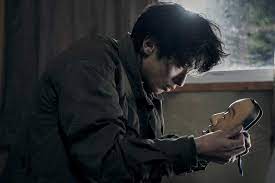
Netflixable? Japanese High Schoolers as Boy Band Brawlers — “High & Low: The Worst X”

The Japanese Boy Band brawlers “media franchise” “High & Low” may be the craziest thing you ever drop in on as you travel Around the World with Netflix.

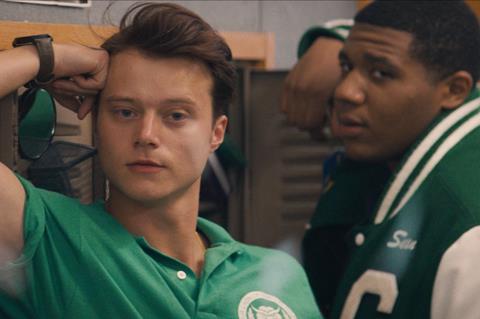
It is, in many ways, the classic Japanese “give the people (teen girls especially) what they want” entertainment, attached to an absurdly violent “universe” of high school lads who spend half their time fighting, and the other half getting their hair styled and picking out cool outfits to wear into battle.

“High & Low: The Worst X” is the seventh film in this “franchise,” following TV series that have had half a dozen seasons in assorted incarnations, all of it designed around runway-model lads brawling and bonding with the marketers bragging that “every one is a leading man.”

It’s a film set three years after events in a previous film, with unexplained references to “SWORD” and other entities and alliances of earlier installments. But it’s more or less a stand-alone movie, and it’s pretty much rubbish — shiny, well-shot and edited rubbish, but rubbish none the less.

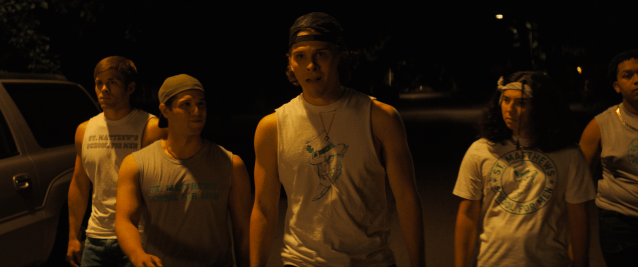
Some of the set piece fights are reminscent of classic Hong Kong punch-em-ups of the Bruce Lee/Jet Li/Jackie Chan/Donnie Yen variety. But the colorfully-attired “schools” — Oya High, Housen Academy, Senomon Tech — have “The Warriors” vibe.

Unlike the gang bangers fighting their way back home to Coney Island in that 1979 Walter Hill classic, there is no quest for “home,” no allegorical homage to Xenophon’s “Anabasis,” which inspired Sol Yurick’s novel “The Warriors.”

No, this feels like an action franchise produced by a marketing department, cast by a modeling agency and costumed by a fast-fashion clothier. The only thing allegorical about this simplistic tale of “who’s the toughest fighter” tests, factions fighting and allying with each other and a rich kid sort of manipulating the many high school gangs of Taoru City is what the films might be saying about modern Japan.

The world presented here has no cops, no teachers, no classes in these graffiti-covered schools and hideouts, and no girls or adult women.

Yes, it’s occasionally homoerotic. It might seem too violent for high school girls to get into, but maybe girls in the Land of the Rising Son are raised on “A Clockwork Orange.” Still, if you wonder about Japan’s population loss and general, decades-long decline and post-peak malaise, there might be a clue in this nonsensical monoculture where boys will be boys and the fairer sex is never ever seen, only pandered to in the sea of pretty boys cast in the thing.

Fight choreographer/action directors Takahito Ôuchi and Masaki Suzumura do their best to stage and shoot some epic brawls as the brash Fujio (Kazuma Kawamura) of the Oya School gang tries to get a meeting with the legendarily tough Rao, who is absent for most of the film, but who makes a Ryan Reynolds entrance (he even resembles RR) in the third act.

There must be 40 or 50 characters identified by name and school in this movie, many of them getting a credit freeze-frame credit in the “High & Low” opening, but the film’s IMDb page is woefully inadequate, with many the most important characters not listed. Several characters have several different ways of being addressed in the film, adding to the confusion. And the film’s on-screen credits are only available in Japanese (same with the dialogue, which at least has subtitles).

So no, I’m not going to wade through the long list of actors and the archetypes they play — the quiet, bespectacled “smart” fighter, his “fishing buddy,” the deadly dress-alike-duo, the rich punk whose father bought out another man’s company, forcing the bankrupt fellow to become the kid’s driver and the driver’s son, Saboten (Ikuya Naganuma) to be the punk’s insanely-tough high school gang bodyguard.

“Let’s get this brawl started.”

“Dibs on kicking your ass!”

Some performers are great brawlers and others plainly the beneficiaries of “Let’s not show him fighting much” protective editing.

Every fight has its moments where you think, “That haymaker would break every knuckle in that hand” and others that give-away the game (obvious stage punches).

Groups of guys are constantly striking album cover poses or walking into the frame in perfectly aligned slo-mo. It’s all so pretty, even the bloody bits.

But none of the care taken with the visuals and potential poster shots of all the over-styled “stars” trickled down to the screenplay, with only the occasional snappy come-back making us forget the lack of a plot, logic, character motivation (in most cases) or sense that any of this means a damned thing.

“The Worst X?” Let’s hope so.

TV-MA, violence and lots of it

Cast: Kazuma Kawamura, Ikuya Naganuma, and Yuta.

Credits: Directed by Norihisa Hiranuma and Daisuke Ninomiya, scripted by Norihisa Hiranuma, Shôichirô Masumoto and Kei Watanabe. A Netflix release.

Running time: 1:59

Posted in Reviews, previews, profiles and movie news | Comments Off on Netflixable? Japanese High Schoolers as Boy Band Brawlers — “High & Low: The Worst X”

Classic Film Review: David Lean looks in on Noel Coward’s “This Happy Breed” (1944)

“This Happy Breed” is a middling if affectionate domestic melodrama that spun out of the creative fervor of playwright Noël Coward‘s most productive years, the 1920s and ’30s. It was Coward’s attempt at peeking in on the working class he came from and left behind. Preserved on film with a lavish late-war Technicolor production in 1944, one can only wonder if it didn’t feel a bit bougie even to audiences back then, as if this posh panderer of the upper classes couldn’t help it.

But there’s little sense of his looking down on his subject and his characters in this 1939 play (first produced in ’42) that was filmed just as the World War it prefigures was winding down. Whatever the “family lives through the inter-war years” intent of the work while new, by the time it was released in the UK (making it to the US in 1947), it played like an appeal for a return to normalcy and a celebration of the “ordinary folks” who rode the tides of top-down economics, labor strife and political bungling, keep that stiff upper lip and “Rule Britannia” in their hearts and carry on.

“I wonder when the next war will be?”

“Not in our time, or our son’s time.”

The movie version would turn out to be “Lawrence of Arabia” director David Lean’s solo-directing debut. The editor-turned-director Lean split directing duties with Coward on the playwright/screenwriter’s fine destroyer-at-war drama “In Which We Serve” (1942). Here, he’s given the keys to the toyshop — a colorful, sound-stage and outdoor settings for military parades and the like remembrance of times “While England Slept,” if not a critique of “Why England Slept.”

Newly-restored, “Breed” is well worth a look, and makes a nice companion piece to mid-war “homefront” films like “Mrs. Miniver.”

It’s not Lean’s showiest picture or particularly impressive in any cinematic regard, at least partially owning to the limitations of Technicolor and Lean’s status as a newish director unfamiliar with color. But the script has a fluid throughline, the cast is spot-on and the performances have a life that transcends the affectations of the writing and pre-Method formality of British screen acting of the day.

We follow the Gibbons family through 20 years of modern British history, all of it lived in a High Street townhouse in Clapham, London. In 1919, the former Sgt. Frank Gibbons (Robert Newton) is newly “demobbed,” mustered-out of his army regiment and moving his family into their new home.

Frank has a job in a travel agency, arranging “battlefield tours” for a civilian populace that has no idea of the horrors he and his comrades faced.

Celia Johnson is wife Edith, still unused to not having “that weight” hanging over her, fearing every day’s mail because it might bring news of her husband’s death in the trenches.

They have three children — the spirited Queenie (Kay Walsh), more reserved and traditional Vi (Eileen Erskine) and son Reg (John Blythe).

Wonder of wonders, an old comrade in arms (Stanley Holloway) has already moved in next door. His son Billy (John Mills) is early in a career in the Royal Navy, and takes an instant shine to Queenie.

Some of the film’s tenderest and most Coward-like scenes are built around Queenie’s early realization that she “hates it here,” all this suburban myopia and the limited life it promises. She is the character Coward might have indentified with most, working class with a taste for the finer things, the faster life and high-living refinement. She rebuffs Billy more than once, tearfully arguing that she won’t make much of “a sailor’s wife.”

Son Reg gets mixed up with young political agitator Sam (Guy Vernery), who in between rants about capitalists and workers’ rights, takes up with unassuming Vi.

History marches by these characters — the 1924 British Empire Exhibition, the General Strike of 1926, elections going to Conservatives who reduce the size of the armed forces (by League of Nations arms treaties, the film leaves out), no real mention of the Great Depression, the funeral of King George V, the abdication of Edward VIII dealt with via a premature removal of a calendar, those first photos of Herr Hitler in the newspapers and first mentions of Japanese aggression in the Far East and “Peace for Our Time” a fading hope.

Frank’s politics and attempts to ignore the outside world are based on two simple facts. One, he’s home with his family and two “I belong to a generation of men, most of whom aren’t around any more.”

Through it all, there are weddings and tragedies, Charleston dance contests and bickering between Edith’s aged mother (Amy Veness) and Frank’s spinster sister (Alison Leggatt) all tied together by a general sense of pre-war pub-crawling, tea-drinking and “Keep Calm and Carry On” before it became a World War II motto.

Frank and others have the foresight to note that World War I led to a “tired” Britannia, and remind late-war and post-war audiences of the weight of that mass slaughter informing their refusal to accept that another war could be coming.

Coward, a salesman’s son who became poster boy for upper class wits, gets a few political digs in — sympathizing with labor despite the “down with everything” pronouncements of Sam and his fellows.

“Where they go wrong is trying to get things done too quickly,” Coward/Frank declares, reminding his wife that they’re a patient “nation of gardeners.”

Newton, a notorious alcoholic, gives his usual spirited performance despite whatever he was doing off-set and between takes. Was he really fined the equivalent of his entire salary for holding up the production?

Mills stands out in the supporting cast, giving Billy a lovesick puppy-dog demeanor and hard-edged, rising-through-the-ranks-pragmatism in later scenes when he stands up to mercurial Queenie. For all her “good time” cravings, her “sailor’s wife” qualms are validated when we see the destination sticker on her luggage in one of the film’s last scenes, set in 1939.

“Singapore.”

Its late arrival in cinemas washed away any mid-war propoganda value “This Happy Breed” (a phrase from Shakespeare’s “Richard II”) might have had. One can watch it now and see Coward getting in the first shots of revisionism in selectively reminding “the ordinary people” all the country went through thanks to the shock of World War I and the turmoil of the ’20s and ’30s. But it does give one a sense of context about the history this generation lived through without realizing what was coming, because most people didn’t.

And if we don’t see the future that awaited David Lean in this bland but colorful box office hit, we’d do that soon enough when he returned to black and white and discovered his flair for Charles Dickens adaptations.

Rating: approved

Cast: Robert Newton, Celia Johnson, Kay Walsh, Alison Leggatt, John Mills, Amy Veness, Eileen Erskine, John Blythe, Guy Verney and Stanley Holloway

Credits: Directed by David Lean, scripted by David Lean, Ronald Neame and Anthony Havelock-Allan, based on the play by Noel Coward. An Eagle Lion/Universal release on Tubi, Amazon, Youtube etc.

Running time: 1:50

Posted in Reviews, previews, profiles and movie news | Comments Off on Classic Film Review: David Lean looks in on Noel Coward’s “This Happy Breed” (1944)

Next Screening? At Long Last “Oppenheimer”

The summer’s prestige picture, an historical epic hanging on a scientific achievement that was also a great moral and ethical quandary, is a three hour argument for the stardom of Cillian Murphy.

We’re all dying to see this one. I did a college internship at a PBS affiliate one summer that was finishing up a documentary on a couple of atomic scientist veterans of the project, and I got to help out in suggesting classical music (public domain) for segments of the sound track, seeing as how I had been working in public radio all during school. That turned out to be a deep dive into something that few films — “Fat Man and Little Boy” among them — have tried to tackle.

A grand national scientific achievement that can be celebrated and debated until all involved are blue in the face, this is a big canvas and important subject, one worthy of Christopher Nolan’s companion piece to “Dunkirk.”

They’re showing it on a BIG screen, I hope. We’ll see.

(Updated: My review is here.)

Posted in Reviews, previews, profiles and movie news | Comments Off on Next Screening? At Long Last “Oppenheimer”

Movie Review: Child Trafficking Mayhem in Malaysia — “Walid”

An onscreen brawl takes over the movie just before the halfway point and lasts for almost an hour in “Walid,” a Malaysian thriller about child trafficking and the burly teacher who decides to beat his way through all manner of villains to free a little girl he just met.

The Malay martial art Silat is put on great display, although you’d have to be an aficionado to discern a “style” through all these beat-downs, clubbings, stabbings and shootings. Still, an hour-long fight is something to brag about and the chief selling point in this confused, confusing and clumsily-slow-until-the-big-fight action picture.

Megat Sharizal has the title role. This much is clear. He is a teacher of small children in an open air school somewhere in the provinces. He takes an interest. And when he sees a threat, he takes the time to take off his glasses before he takes care of business.

Putri Qaseh plays Aisha, “an immigrant,” the locals call her, someone discriminated against, unwanted and thus vulnerable in this corner of Asia, where child trafficking — as depicted here — is a going concern.

Director and co-writer Areel Abu Bakar packs a lot of villains on the screen, leaving most of them unidentified — creep with the cowboy bat, perve with the lollipop, hothead with the ever-present illegal cigarette and middle men in service of some cocky older operator, also in a hat.

There are also unnamed — at least as far as the film’s inept subtitling tells us — cops fighting the kidnappers and not shy about mixing it up with them when they think they’ve got this or that trafficker cornered.

But the film’s first fight, the one that gives you hope this could be exciting, violently satisfying or at least a bit different, is instigated by Aisha’s mom, played by veteran Malay star Feiyna Tajudin. She’s doing laundry by hand, a Muslim woman barking at the creepy men she sees hanging around the school and her kid, when next thing we know, she’s beating the hell out of three of them with just the soggy clothes she has in her basket.

The epic throw down that consumes most of the film has nothing as furious and funny as this bit of business. As the first act is mostly bits of brooding, teaching kids to read and to recite the country’s oath, and scenes of price-haggling/child-trafficking bad guys, it takes patience to get to that second, third and never-seems-to-end final brawl.

The acting isn’t bad, but like the fight choreography, it’s of uneven quality.

There’s an odd voice-over of a speech or something by a figure Malay viewers may recognize laying out the stakes for their country and its problems, and it’s “make sure we don’t lose our country” (in Malay with subtitles) messaging suggests it could be xenophobic immigrant bashing, too, something the film takes a stand against.

On the whole, “Walid” is messy in a conventional sense and alien to a Western viewer in its storytelling style. I’ve seen a number of Malaysian films on Netflix in recent years, and I guess the streaming service makes it a point to order or acquire movies with a more Westernized storytelling style.

The fights, at least, need no explaining or translating.

Rating: unrated, graphic violence, child trafficking, smoking

Cast: Megat Sharizal, Putri Qaseh, Namron, Yusran Hashim, Sham Putra and Feiyna Tajudin

Credits: Directed by Areel Abu Bakar, scripted by Areel Abu Bakar and Hafiz Derani. An Outsider release.

Running time: 1:50

Posted in Reviews, previews, profiles and movie news | Comments Off on Movie Review: Child Trafficking Mayhem in Malaysia — “Walid”

Movie Review: Remembering the “Theater,” never quite mastering the “Camp” — “Theater Camp”

The third act, home to the show’s resolution and finale, saves “Theater Camp,” a show that’s lacked anything resembling a “show stopper” up to its last scenes. The script is cleverly conceived to conceal the plot’s “big original musical” from the viewer, and the true depth of the talent of this Camp Adirondacks summer camp for kids ages 8-13 (or so) before that Big Finish.

There are laughs in the first two acts, giggles at the spotlight-hogging tyke “types,” the self-serious teachers, the theatricality of one and all. But that finale loses the “camp” and remembers the “show” in a “Let’s put on a show” musical. That’s what allows a marginal comedy to let you leave the theater with a smile and an affirmation that yes, these kids have found their tribe, have found their passion and have figured out that they have “it.”

Based on a cheerfully cheesy and spot-on spoofy viral short film of a few years back, this Molly Gordon, Nick Lieberman and Noah Galvin project is about a struggling camp named “AdirondACTS” located in the you-know-where mountains. Somehow, founder Joan (Amy Sedaris) and manager Rita (Caroline Aaron) & Co. have kept it funded and afloat, welcoming kids “who don’t fit in anywhere else” — thespians.

But a recruiting/fund-raising trip leads to Joan having a seizure in the middle of a middle school’s musical. Those darned strobing lights resulted in “The first ‘Bye Bye Birdie’ related injury in Passaic County history,” Joan’s coma, an inter-title drolly informs us.

Yes, this is a mockumentary. And yes, the filmmakers inform us in another title, their “star” is incapacitated before the summer’s even started. But the show, and the mockumentary, must go on.

Not to worry. Joan’s adultish son Troy (Jimmy Tatro, hilarious) will take over and get them through the season. Troy a delusional “financial guru” vlogger and sometime DJ with strong bro-dunce energy. He can’t read the room when he introduces himself to the campers, many of whom have been there before. He can’t win over the staff, many of whom he fired to cut costs. He can’t make the mortgage or power bill payments because he’s uh, not opening the mail.

Ben Platt and co-writer/director Molly Gordon play the heart and soul of AdirondACTS, life-bonded friends who met at camp there many years before and who tied their fates together — professionally (she figured out he’s gay) — and return here every year to teach.

They make a big production out of everything, delivering the season’s line-up of shows — “Damn Yankees” and “Cats” included — in a sort of “Forbidden Broadway” musical vamp. Their speciality? Every summer they whip up an original musical for the best kids in the camp to perform, and previous shows like “A Hannukah Divorce” will be joined by their work-in-progress inspired by their boss and inspiration’s coma, “Still, Joan.”

“Camp” co-writer Noah Galvin plays the lights/sets/electrics guy who keeps everything running — barely — and who harbors a hidden pain. Glenn had Broadway dreams and wanted to be in the spotlight himself at one time.

A rival Camp Lakeside owned by a hedge fund operation would love to buy AdirondACTS, and fetching Barnwell Capital shark and camp director Caroline (Patti Harrison) could be just the one to tempt Troy into some blunder that kills off his mother’s dream.

The kids are a sparkling assortment of little narcisissists, but they’re in the background mostly. This little egomaniac is “an example of a kid who started too early” and that one isn’t interested in the greasepaint and spotlight. He’s eight and hustling himself into a career as an agent.

The adults are center stage here, the preening dance teacher (Nathan Lee Graham) and bitchy costumer (Owen Thiele), and the movement/masks/stage combat newcomer Janet (Ayo Edebiri) who is such a fraud only Troy could have been fooled into hiring her.

The mockumentary format is barely present and half-hearted, at best. And much of the humor will play as terribly inside baseball or off-off-Broadway or community theater to people who have never tiptoed into that world.

The teacher who resents his younger and more talented student, the theatricality of one and all, the self-importance and vanity behind a motto that holds that “summers come and go, but what happens on this stage? That’s eternal!” — it’s worth a giggle, an eye-roll and the occasional spit-take in recognition from anyone who’s ever done “theatre.”

Everybody’s pretty good. But Youtube-famous actor Tatro is amusingly clueless, “Booksmart” veteran Gordon and “Pitch Perfect” and “Dear Evan Hansen” alum Platt pair up beautifully and really get across the low-stakes/life-and-death importance of the work of those who truly LIVE the theater.

Still, it isn’t until the “camp” is shoved upstage and the kids and their Big Theater Show step downstage and into the light that “Theater Camp” finds its heart and hits its best notes.

Cast: Ben Platt, Molly Gordon, Noah Galvin, Jimmy Tatro, Ayo Edebiri, Nathan Lee Graham, Owen Thiele, Patti Harrison, Caroline Aaron, David Rasche and Amy Sedaris.

Rating: PG-13, some profanity, drug jokes

Credits: Directed by Molly Gordon and Nick Lieberman, scripted by Noah Galvin, Molly Gordon and Nick Lieberman, based on the short film by Nick Lieberman. A Searchlight release.

Running time: 1:33

Posted in Reviews, previews, profiles and movie news | Comments Off on Movie Review: Remembering the “Theater,” never quite mastering the “Camp” — “Theater Camp”

Movie Preview: Emilia Clarke and Chiwetel Ejiofor procreate as members of the future’s “Pod Generation”

Sci-fi “pod” raised babies vs. “the old fashioned way.”

Aug. 11, this satire shows us the future. Maybe.

Posted in Reviews, previews, profiles and movie news | Comments Off on Movie Preview: Emilia Clarke and Chiwetel Ejiofor procreate as members of the future’s “Pod Generation”

Netflixable? How Many Poles does it take to find a National Treasure? “Mr. Car and the Knights Templar”

“Mr. Car and the Knights Templar” is a Polish mash-up of “Indiana Jones,” “National Treasure” “DaVinci Code” and “The Goonies,” a treasure hunt mystery with clues and ancient artifacts with “the power to change the course of history.”

It’s a daffy but generally dull and childish adaptation of Zbigniew Nienacki’s novel, a writer who threw in a magical Bond-mobile/”Chitty Chitty Bang-Bang” vehicle for good measure.

The task of pulling these dispirate, franchise-sized plot elements and this populous cast into a coherent narrative with fun action beats proves too much for director and co-writer Antoni Mykowski, who bites off more than he can chew for his feature film debut.

A promising opening, with our hero, the art historican Tomek (Mateusz Janicki) fighting a caped, gaucho-chapeau’d South American knife fighter (Jacek Beler) and others in a lighthouse and through the Baltic Sea in search of the Cross of de Molay, ends rather anti-climactically. Tomek escapes his rivals, drives his gadgetized 1960s SUV across the Baltic only to dive overboard and promptly pick-up the relic.

That sets the tone for this late-’60s period piece — big build-ups, blandly-disappointing pay-offs. And often, even the “build-up” gets lost in exposition, infighting and “National Treasure/DaVinci” style over-explaining “history” lessons.

Tomek’s a treasure hunter for the Polish National Museum, and recovering that cross — with clues embedded in its gold casting — is supposed to be merely the beginning. It’s not even that.

There’s another cross. There’s a “contest” to find it sponsored by a treasure collector (Anna Dymna), a reporter (Sandra Drzymalska) who thinks “Why do people hunt for treasure?” (dubbed, or in Polish with subtitles) would be a great idea for a story, the martial-artist daughter (Maria Debska) of a rival treasure hunter and three kids from a coed anti-Russian/anti-“Red” scout camp, kids who go by the “code names” of Squirrel (Kalina Kowalczuk), Mentor (Piotr Sega) and Eagle Eye (Olgierd Blecharz)

Kids, treasure hunters and the expert relate bits of Knights Templar and Medieval European history and factoids that help them get into or out of messes, as this ungainly and unlikely sextet team up for their quest.

“According to American scientists, one out of every ten drivers could be a serial killer” really ruins one’s hitchhiking experience.

The guy they code-name “Mr. Car” because of obvious reasons has a moment or two of decent derring do, including a cutesy sexual-position “escape” masterminded by the sexy martial artist in a Twiggy bob (Debska). But the kids are cute and nothing more, the reporter is set decoration and the “car” features lame gadgets, even for a tale set in the ’60s.

And the payoff is allegorically obvious.

One can appreciate the effort and expense here and still say it’s rubbish because sometimes effort is simply wasted.

Rating: TV-14, violence, sexual situation

Cast: Mateusz Janicki, Sandra Drzymalska, Maria Debska, Jacek Beler, Anna Dymna, Kalina Kowalczuk, Piotr Sega and Olgierd Blecharz

Credits: Directed by Antoni Nykowski, scripted by Bartosz Sztybor, and Antoni Nykowski, based on a novel by Zbigniew Nienacki. A Netflix release.

Running time:

Posted in Reviews, previews, profiles and movie news | 2 Comments

Next screening? Disney’s Latest Effort to Monetize “Haunted Mansion”

This looks a little edgier than the family-friendly Eddie Murphy movies of yore.

Rosario Dawson, Oscar winner Jamie Lee Curtis, Oscar winner Jared Leto, Lakeith Stanfield, Winona, Tiffany, Owen, DeVito’s having another moment.

This comes out July 28.

Posted in Reviews, previews, profiles and movie news | Comments Off on Next screening? Disney’s Latest Effort to Monetize “Haunted Mansion”

Movie Preview: John David Washington takes on an Adorable Terminator — “The Creator”

Gemma Chan, Oscar winner Allison Janney, Ken Watanabe and Veronica Ngo star in this Sept. 29 release, which has a much more international feel than the “Terminator” franchise ever did.

Gareth Edwards, who did the best of the post-original trilogy “Star Wars” movies, “Rogue One,” directed it.

Dazzling visuals, an intriguing concept. Another shot at an A-picture hit for John David Washington.

Posted in Reviews, previews, profiles and movie news | Comments Off on Movie Preview: John David Washington takes on an Adorable Terminator — “The Creator”

Movie Preview: Ashley Greene and Ron Perlman upset Nic Cage’s “Retirement Plan”

Greene plans the daughter who gets in trouble, Perlman and Jackie Earle Haley are bad guys embodying that trouble, Cage plays a dad with “periocular skills,” and Ernie Hudson’s the guy who knows Dad’s past.

Yes, this looks a LOT like Perlman’s “The Baker.*

“The Retirement Plan” opens Aug. 23..

Posted in Reviews, previews, profiles and movie news | Comments Off on Movie Preview: Ashley Greene and Ron Perlman upset Nic Cage’s “Retirement Plan”