Movie Review: Paranormal Pegg meets his Isle of Man match — “Nandor Fodor and the Talking Mongoose”

What a daft and twee thing “Nandor Fodor and the Talking Mongoose” is. And God help anybody trying to market this dry, eccentric comedy built around the charms of Simon Pegg, Minnie Driver, Christopher Lloyd and sci-fi author Neil Gaiman voicing a (possibly) imaginary “talking mongoose.”

Perhaps it was the “true story” nature of the tale, a real-life Hungarian-American parapsychologist on the “skeptical” end of the spectrum investigating assorted published (and BBC broadcast) reports of a chatty mongoose who’d taken up residence on a farm on the 1930s Isle of Man that dialed down the wacky here.

One gets the feeling that writer-director Adam Sigal, with nothing distinguished on his resume and nothing at all comic, left a lot of laughs on the table in conjuring up supporting players and casting them with reliable comedians and giving them amusing things to say and do.

But it’s an immaculately-realized period piece about a fine bit of humbug, with plenty of charm and a healthy appreciation for the paranormal lore it dabbles in. And if it isn’t hilarious, it will make you smile.

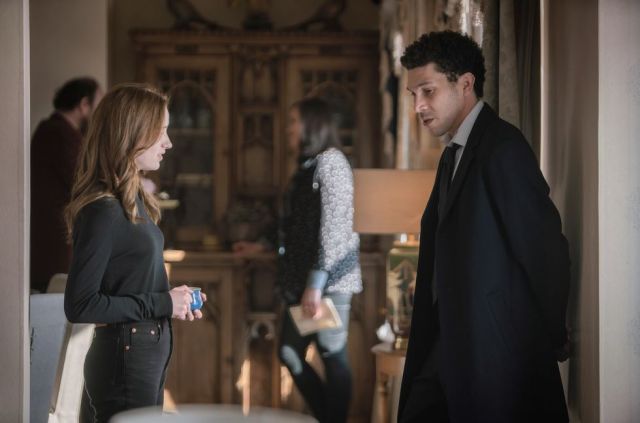
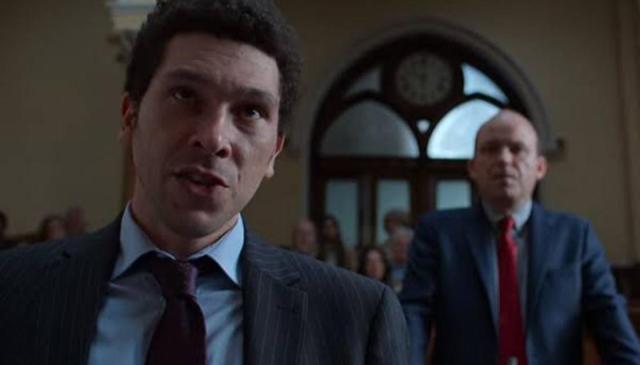
Pegg’s doubting Dr. Fodor character is visiting the UK when he’s summoned by an old parapsychologist (Christopher Lloyd) rivalwho suggests he look into something that stumped the older Dr. Harry Price — this farm and its celebrated talking mongoose the family that hosts him has named “Gef.”

“It’s the strangest case I’ve ever encountered.”

Yes, Price went to the Irving Farm on Dalby Mountain to see for himself. No, he didn’t actually “see” Gef.

“But I heard him…in the next room.”

Oh, and by the way, one of the members of the Irving family, daughter Voirrey (Jessica Balmer) is “an accomplished ventriloquist.”

Fur from the animal was provided by Gef and tested by a university biologist who deemed it more likely from a dog than a mongoose.

And all of this has Fodor repeatedly raising an eyebrow, knocking back another belt from his drink, and then relaying this seemingly-obvious fakery to his assistant Anne (Driver).

But Dr. Price weaves this account of a humbug that he actually believes in around anecdotes about Harry Houdini’s (Edmund Kingsley) years of debunking frauds and fake spiritualists, leading the two men to drift into thoughts about matters existential and the nature of faith, belief and delusion.

Since the Irvings don’t seem to provide an obvious answers as to “why” they’re insisting all this is real — there’s no profit “motive” — there’s nothing for it but for over-dressed Fodor and Anne to motorlaunch over to the Isle and see and hear for themselves.

On meeting the Irvings — played by Tim Downey, Ruth Connell and Balmer — Fodor rolls his eyes at the Tinkerbell nature of this “Earthbound spiritual being,” Gef. Fodor must announce “I believe” into whatever barn, wall-crawlspace or cave Mr. Irving insists Gef was “just here” in. Because “Gef’s probably watching us, right now.”

Meeting the town drunk (Paul Kaye) down at the otherwise empty local pub tips Fodor that this bloody mongoose is “clairvoyant,” too, telling people things in person or over the phone that your average “Earthbound spiritual being” wouldn’t know.

All of Fodor’s huffing about “any real evidence” kind of goes by the board as one and all “believe.” Even Anne starts to buy in, even after she’s gotten a ventriloquism lesson from the “accomplished” Voirrey.

The man of science hears the “Oh, he just left” excuses. And then he hears this elfin voice on the phone (Gaiman), which tells him something which unnerves him, no matter how inane the viewer recognizes it to be.

No, there’s nothing much to any of that, although the odd embarrasing bit amuses — about why Anne hasn’t married, why she hasn’t taken up with her paranormal boss and made use of those “fine birthing hips” — and the occasional incredulous stare from Pegg over what he’s being asked to consider is possible when “facts” and “reason” and “evidence” render impossible is worth a grin.

Every anecdotal flashback engages, and as they’re all related by Lloyd, Pegg or Kaye (“Game of Thrones”), they serve to ensconce us in this quirky place and time, when respectable newspapers covered the hell out of absurd nonsense like this.

Maybe “Doctor” Fodor is missing out on that leap of faith it takes to “believe.” Maybe the parade of irrational folks around him are onto something, as the farm’s hired hand (Gary Beadle) suggests, even though he and Fodor know there isn’t anything there.

That kind of goes for this film as well. Whatever isn’t here somehow adds to the charm of what is. That won’t be for everyone, but if you’re on this wavelength and have a soft spot for these players, “Nandor Fodor” could give you a grin, with or without that talking mongoose.

Rating: PG-13, smoking and a spot of profanity, wot wot?

Cast: Simon Pegg, Minnie Driver, Paul Kaye, Ruth Connell, Tim Downie, Jessica Balmer, Edmund Kingsley and Christopher Lloyd, featuring the elfin voice of Neil Gaiman.

Credits: Scripted and directed by Adam Sigal. A Saban Entertainment release.

Running time: 1:36

Posted in Reviews, previews, profiles and movie news | Comments Off on Movie Review: Paranormal Pegg meets his Isle of Man match — “Nandor Fodor and the Talking Mongoose”

Movie Review: A Murder Mystery unravels via “The Fallen Bridge”

The many melodramatic touches would almost certainly have marred my experience of “The Fallen Bridge,” had this mystery thriller been a formulaic Hollywood product. But it’s Chinese — VERY Chinese — and that adds layers of meaning to even mundane details, enriching the film and almost overwhelming even the obvious contrivances.

What director Li Yu and her frequent collaborator, producer and co-writer Fang Li (“Buddha Mountain,” “Lost in Beiing”) give The West is a beautiful, almost almost exotic depiction of Chinese decay and corruption. It’s a grey, rain-drenched tale of a bridge collapse that exposes a murder which unravels wrongdoing that might be reported to the always-two-steps-back police, but would be better dealt with via simple revenge.

Most of the film’s images of Huangque City are grim, bordering on squalid. Ruined apartment blocks, empty power plant cooling towers, trash-littered streets and buildings stained with pollution with a lot of unemployed or underemployed — some of them squatting — and many other locals seemingly over-compensating for that exterior ugliness by over-decorating their flats.

Li Yu uses CCTV footage to set the scene, and capture the collapse of a major bridge in the city. This footage pops up throughout the film, underscoring the place’s unwelcoming appearance — from most every angle — and perhaps jabbing the surveillance state of the world’s most CCTV-crazed countries.

This bridge was almost new. There are victims, and a contractor involved, Zhu Fangzheng (Fan Wei of “Mr. No Problem”) is apologetic, seemingly-outraged at the primary builder and promising victims’ survivors that he and the police will get to the bottom of this.

But as the investigation begins, a body is found, long buried in a bridge pier. It is preserved in concrete, and it is of a long-missing civil engineer on the project. In his pockets, there is a whistle-blower letter about this sloppily-built bridge.

The dead man’s daughter, Xiaoyu (Ma Sichun of “Soulmates”) always assumed Dad had run off with his mistress. That’s what she’d been told as a child by her bitter mother and others. She is summoned from art school, where she is studying to be a sculptress, to identify the body. With the help of the man who raised her after her father’s disappearance, she gathers broken concrete from the site to use for a funerary bust of her late father.

She vows to “kill whoever killed my Dad.” As she knew the man who took care of her as “Uncle Zhu,” we can guess what she quickly comes to conclude. Old, well-connected Uncle Zhu must be implicated in this somehow.

On her quest for The Truth she will be aided by Meng Chao (Karry Wang), a mysterious young squatter, a laborer since childhood who worked on the bridge. He knows something and once he gets her Dad’s long-abandoned motorbike working, he’ll drive Xiaoyu around as they stalk Uncle Zhu and try to piece together the chain of events that killed her father and the people — an ex-mistress and others — who may know something.

The viewer doesn’t have to know young Mr. Wang’s background to guess it. He’s playing a homeless squatter while sporting a 2700 yuan popstar (TFBOYS) haircut.

We get a hint of where this story will reach its climax that’s so obvious it might as well be subtitled “FORESHADOWING.”

The spying young couple have an almost omniscient narrator’s eye-view of attempted shakedowns and suspicious meetings. They visit not just that mistress but a single mom (Chloe Mayaan) with a thing for dressing in red, a cute little girl and information that could incriminate those who need incriminating.

Li Yu tells this story from two points of view, that of the criminals covering their tracks and the young not-quite-couple doggedly following them, and then eventually adds a third — that of the police, who have their suspicions but are slow on the uptake.

As a thriller, “The Fallen Bridge” comes together as we engage with the leads and wonder just how far Xiaoyu will take this. She gets her hands on a dagger, but will she use it? Meng Chao is scripted to be a young man of mystery and chivalrous commitment. The mop-topped pop-star squatter is not letting her do this alone.

Uncle Zhu? He’s superstitious, devoted to folk remedies and given to smoke-cleansing everything, even the vast pile of cash he keeps stashed in one of the city’s many (probably “real estate bubble” pointless) high-rises that he has a hand in.

He’s still delivering godfatherly advice long after Xiaoyu and we grow suspicious of him, trying to throw her off the scent.

“There is an old Chinese saying,” he intones (in Mandarin with English subtitles). “Don’t dwell on the past. Don’t worry about the present. Don’t rush into the future.”

Xiaoyu ignores every line of that, and she has a dagger.

While Li Yu is famous on the film festival circuit for testing China’s notorious censorhip laws, “The Fallen Bridge” plays like one long exercise in pulling one over on them, a film that subtly touches on the generation gap (high youth unemployment as the economy contracts), the building bubble that their elders contrived to cover up the failings of an economy planned and administered pretty much as George Orwell predicted, and the corruption of the One Party state and those who know how to work that system.

The parable here is just what a new generation can and cannot do about all this, as waiting for “the system” to deliver justice when “the system” created the scandals and the decline and decay they foretell is futile. Which is why a dagger might seem like a handy thing to own.

Wonder if the censors missed that?

Rating: unrated, violence, profanity

Cast: Ma Sichun, Karry Wang, Chloe Mayaan and Wei Fan

Credits: Directed by Li Yu, scripted by Fang Li and Li Yu. A Cheng Cheng Films release.

Running time: 1:54

Posted in Reviews, previews, profiles and movie news | Comments Off on Movie Review: A Murder Mystery unravels via “The Fallen Bridge”

Movie Review: “Golda” earns Mirren the Bronze

A solid Helen Mirren turn in the title role gets lost in a choppy narrative and haze of cigarette smoke in “Golda,” a bio-pic about Israel’s controversial but (apparently) far-sighted prime minister during the 1973 Yom Kippur War.

The film is a “Thirteen Days/Darkest Hour” dramatic thriller treatment of those few weeks in Oct. of 1973, when blunders, miscalculations and geopolitics allowed Russian-armed Egyptian and Syrian forces to almost reverse the results of the much-longer-than-its-name-“Six Day War” of 1967 with a sneak attack.

It’s a top-down “command decisions” story of maps and meetings, generals and crackling radio transmissions overheard from combat, a leader’s visits to the morgue and a sick old woman coping with the stresses of a situation as dire as “They’ll never take me alive.”

But more glibly put, “Golda” is the best damned 100 minute anti-smoking ad you’ve ever seen.

The film is (kind of) framed within the post-war Agranat Commission hearing (Henry Goodman is the chair) on Israel’s lack of preparedness for the surprise attack that most saw coming. Meir testifies, owns up to her mistakes and those of others.

Mirren’s Meir is motherly amd matronly, blunt and fatalistic, aware of her failing health (cigarettes are bad for you) and willing to take the fall for the CYA missteps of others. And as is in the case in your more old-fashioned screenplays, she can see the future.

“Just remember, all political careers end in failure,” she tells the showboating glory hound officer and future prime minister Ariel Sharon (Ohad Knoller).

She is a philospher and a prophet — “The Russians. They’ve brought nothing but misery to the world…Let me TELL you about the Russians. When I was a child in Ukraine…”

And she is eminently quotable.

“Knowing when you’ve lost is easy,” she says of the Eygptians, about to snatch defeat from the jaws of victory. “But it’s knowing when you’ve won that’s hard.”

The film’s interesting historical takes include showing Six Day War hero Moshe Dyan (Rami Heuberger), Israel’s iconic eyepatched Defense Minister, throwing up as he flies to survey the Syrian combat zone, and all but cracking up with panic, authorizing a nuclear response which Meir would never approve. Meir has to send him home and tell him to “snap out of it.”

Military and intelligence chiefs are named as being behind the intelligence failures, Israeli reservists are heard in radio traffic flailing and weeping in panic at the onslaught, not exactly the image the hard-nosed Israeli Defense Force (IDF) projects to the world.

Liev Schreiber makes a dashing, perfectly-calculating U.S. Secretary of State Henry Kissinger, bemoaning the Arab Oil Embargo that is already beginning, trying to convince Meir that all the U.S. wants is to prevent Russian (Soviet) intervention and World War III from starting, playing down his Jewishness in this life-or-death emergency involving the Jewish State.

But the film clumsily uses archival news footage of the real Kissinger and the real Meir, which — whatever prostethics (the practical shoes and fake-bloated legs covered by practical stockings stand out) they give Mirren — don’t flatter the actors. These aren’t mere impersonations, they’re performances. If you can’t pay to digitally insert the actors into those real scenes, don’t use the doc footage until the closing credits.

Camille Cotton plays the devoted personal aide who is there for her prime minister to unburden herself to, to bathe her and light her next smoke. Attempts to personalize a tragedy that struck almost every Israeli family by having a government office pool typist weeping at the keyboard over a son missing in action is as old fashioned as almost everything else.

But Mirren’s unapologetic turn overcomes much, including a narrative that never flows thanks to the episodic nature of the various meetings, insertion of news footage, Golda’s nightmares (phones ringing with staticky calls from the front, etc) and the top down nature of point of view. Her performance compares favorably to Ingrid Bergman’s definitive small-screen take on the character in the early ’80s TV movie (in two parts) “A Woman Called Golda.”

“Golda” might have had awards season potential, but the finished product wiped away that dream and rendered this tale of Israel’s darkest October a classic “August” movie, dumped where it won’t attract attention because it just isn’t worthy of it.

Rating: PG-13 (Pervasive Smoking|Thematic Material)

Cast: Helen Mirren, Camille Cotton, Lior Ashkenazi, Rami Heuberger,
Henry Goodman, Ohad Knoller and Liev Schreiber

Credits: Directed by Guy Nattiv, scripted by Nicholas Martin. A Bleecker St. release.

Running time: 1:40

Posted in Reviews, previews, profiles and movie news | Comments Off on Movie Review: “Golda” earns Mirren the Bronze

Documentary Preview: Let’s celebrate the most influential writer Modern America has produced — “Radical Wolfe”

Tom Wolfe coined a Fitzgerald worth of phrases as he defined his era, the 60s through the early 2000s.

He changed how we think of hippies, astronauts, New Yorkers, Wall Streeters, rich Southerners and, thanks to his dapper, larger than life persona, writers.

Sept. 15, we get a cinematic reminder of that.

Posted in Reviews, previews, profiles and movie news | Comments Off on Documentary Preview: Let’s celebrate the most influential writer Modern America has produced — “Radical Wolfe”

Classic Film Review: “The Running Man” was Laurence Harvey in this 1963 thriller

“The Running Man” is a heavy-handed 1960s crime-and-greed parable that has nothing to do with the 1980s Richard Bachman (Stephen King) novel or the Schwarzenegger film made from that.

This version is most interesting because it’s built around a superbly-sinister performance by Laurence Harvey, who made too few films in his cancer-shortened career, but almost all of them worth seeing.

There’s also a peak-period Lee Remick co-starring turn (She died too young, too.), and a taste of Alan Bates just as he was emerging as one of Britain’s screen actors to watch.

It’s not one of the best films by “Third Man/Oliver” director Carol Reed. I mean, it’s about insurance fraud, after all, faking one’s death for a check and all that. But there’s a bit of suspense, the action beats are solid and the Spanish locations a veritable time capsule of a the era.

Harvey is Rex Black, a devil-may-care aviation-mad pilot who is being eulogized as the film opens. He died in a glider accident, the priest intones, leaving lovely American Stella (Remick) a young widow. But she’s not all that torn up about it. And with good reason.

Rex shows up at her back door shortly after the service. It was all a scheme to get even with an insurance company that failed to pay out for an earlier crackup he had (seen in a detailed but clumsily-inserted flashback that Stella dreams).

“We’re only getting back what they really owe us,” Rex insists, and she goes along, taking his instructions about what to do with the settlement and how to reconnect with him because he’s off to Malaga on the Costa del Sol.

What’s the point of faking your death if you’re not going someplace nice?

But he hasn’t even left the house before an insurance claims investigator (Bates) tactlessly shows up and tactlessly cracks how “lucky” she is, with this policy and all.

Months Stella later makes her way south when that check (cheque) clears, only to discover that Rex has dyed his hair blond and grown a mustache, also blond.

He’s hanging with some Malaga swingers — mostly Spanish — and partying hard. He’s swiped the passport of a tipsy Australian sheep baron and is passing himself off as womaning, free-spending Jim Jerome, with half a million sheep and a ranch the “size of Wales.”

“Well, I’m sorry” she says, sizing up the love of her life in this guise, “but I don’t LIKE Mr. Jerome.”

No worries. They’re going to “get rid” of “him” the same way Rex got rid of himself. He’s gotten away with one insurance hustle, why not another?

A shocked Stella barely has time to process this when that she stumbles into this Englishman, Stephen (Bates) whom she can’t quite place. And when she does, both she and Rex have reason for alarm.

The insurance man fails to ID himself as an insurance man or where they’ve met. He politely — at least more politely than he did in the UK — expresses an interest in the “widow,” and asks her out.

At Rex’s insistance, she agrees. The film tracks Stella’s wariness, attempts to sound this Stephen fellow out and her barely-controlled sense of alarm, Rex’s rising mania and the poker face that this persistent Brit — whom they can’t shake despite taking off for a road trip through Andalusia — shows as he gets to know the widow and this accent-comes-and-goes Aussie who seems to have become the new widow’s “particular friend,” as Jane Austen used to put it.

Reed serves up one lighter touch in all this rising suspicion and suspense. Free-wheeling/free-spending Rex has rented a car for all this galivanting. It’s not like the tiny open-top roadster MG-TC he tooled around Blighty in. He got himself a new ’62 Lincoln Continental convertible to motor from Malaga to Algeciras, via tiny streets and narrow, winding moutain roads.

If there is a car of that era more unsuitable for such a trip, complete with a couple of harrowing chase scenes, it is this ultimate Yank Tank. I couldn’t help but laugh at the sight of Harvey hurtling down alleys and built for horse-drawn carts, navigable by Fiats and SEATS, but which had to be cleared to make way for this behemoth to pass.

Reed, to his credit, doesn’t always have the streets cleared, making for some harrowing navigation through crowds and a lot of frantic horn-honking looped in during post-production.

I also love the way this film doesn’t translate the Spanish Stella encounters, which she doesn’t understand, Rex isn’t fluent with and Stephen’s “commercial” Spanish barely relates to.

You don’t realize how much modern films spoon-feed today’s audiences until you watch the occasional classic, where we don’t need to see every city (especially the iconic ones) ID’d with a graphic intertitle. The idea of putting us in the shoes of the heroine — at a loss at understanding what’s being said to her, about her and around her in a foreign land as she’s trying to dodge prison — by not subtitling the Spaniards, making us paranoid on her behalf, seems like a no-brainer when you see it.

Not many modern filmmakers would have the confidence to demand that sort of effort from the viewer.

The travelogue elements heighten the enjoyment of this thriller, especially in the third act. The peculiar border situation between Spain and British Gibraltar was a tad more tense back then and Reed makes great use of the simple fact that to enter Gibraltar you still, to this day, have to cross an active runway on the one flat piece of land connected to The Rock.

An increasingly frantic and paranoid pilot might have good reason to ditch a Lincoln in just such a spot.

And look for future “French Connection” villain Fernando Rey as a Spanish police officer, years before international stardom came Rey’s way.

I enjoyed this “Running Man” more than I expected to. There’s not a lot of heavy intellection lifting going on here, but Harvey’s version of a downward spiral is fun to watch, Remick was at her most beguiling as a woman trapped between two men and a literal rock and a hard place, Bates is believably smitten and Reed keeps it all on the move, despite or perhaps because he picked the very worst car to accomplish that with, the clever devil.

Rating: “approved” (TV-14)

Cast: Laurence Harvey, Lee Remick, Alan Bates

Credits: Directed by Carol Reed, scripted by John Mortimer, based on a novel by Shelley Smith. A Columbia release on Tubi, etc.

Running time:

Posted in Reviews, previews, profiles and movie news | Comments Off on Classic Film Review: “The Running Man” was Laurence Harvey in this 1963 thriller

Netflixable? Spain takes a stab at “Scream” — “Killer Book Club”

The characters are self-decribed “archetypal cliches” fated to die “long, drawn out deaths.”

And as they’re horror fans often commenting on the conventions of the genre, it’s safe to label “Killer Book Club” what it is — a Spanish “Scream” without the laughs.

It’s a slick, university-set thriller with a sexy young cast and grisly deaths that the viewer works her or his way through to figure out whodunit. But from the archetypal characters to the standard-issue murder settings and modes of death, there isn’t much here to hold the interest of anybody who’s ever seen a horror movie.

“Scream” was packed with jokes for a reason, amigos.

Veki Velilla plays Angela, “the heroine,” a leader among the lit students who gather in the boiler room they’re allowed to meet in and decorate. She’s a published writer struggling through horror-block to finish a second book.

The other “types” include “the brat” (Priscilla Delgado), “The Babe” (Ane Rot), “The Librarian” (María Cerezuela), “The Wild Man” (Carlos Alcaide), “The Simp”(Álvaro Mel ) “The Influencer”(Hamza Zaidi) and “The Emo” (Iván Pellicer).

A prologue apparently shows us the fiery end of Angela’s debut novel and now, six years later, she’d love guidance from her sympathetic lit professor (Daniel Grao). But he’s a “going through a divorce” sexual assaulter cliche.

No worries. Angela’s posse, obsessed with “killer clown” narratives (Let’s learn what coulrophobia means, kids!), gathers and plots — with her — revenge. But donning clown suits and scaring Prof. Cruzado leads to bloodying Professor Cruzado and that leads to him falling over a railing, impaled upon the lance of Don Quixote, a statue that probably graces the entrance to many a Spanish Lit Universidad.

They think they’ve gotten away with it when the text messages start — chapters of a new novel, “The Mad Clowns,” “Chapter One, The Death of the Professor.”

Someone saw them. Or maybe it was someone in their group of eight who taunts, threatens and promises to kill them “one by one,” just like in every horror story/movie since “The Masque of the Red Death.

Carlos García Miranda’s humorless script is strictly formula, with the murders taking place at a foggy bus stop, a crimson-red (lighting) morgue and the like.

The problem-solving, led by the librarian, is simple but as with other elements of the narrative, our writer isn’t playing fair — this victim just “passed out,” that new character is half-expected. The sex is as foreshadowed as the murders. Even the book club members turning on each other (“You got us into this mess!” in Spanish with subtitles, or dubbed.) is more tedious than entertaining.

Good looking film, but if you aren’t going to mock the horror book/movie conventions you’re sending up, I really don’t see the point.

Rating: TV-MA, graphic violence, sex, profanity

Cast: Veki Velilla, Álvaro Mel, Priscilla Delgado, Iván Pellicer, Hamza Zaidi, Carlos Alcaide, María Cerezuela, Ane Rot and Daniel Grao

Credits: Directed by Carlos Alonso Ojea, scripted by Carlos García Miranda. A Netflix release.

Running time: 1:29

Posted in Reviews, previews, profiles and movie news | Comments Off on Netflixable? Spain takes a stab at “Scream” — “Killer Book Club”

Movie Preview: Gael Garcia Bernal goes Luchador — “Cassandro”

This September 15 release is based on the true story of a Luchador “exotico,” a “heel” (designated villain, usually, in US wrestling terms) who performs in drag, and becomes wildly popular in a macho and by reputation homophobic culture.

The trailer has a fabulously uplifting vibe, and Bernal always always siempre delivers.

Posted in Reviews, previews, profiles and movie news | Comments Off on Movie Preview: Gael Garcia Bernal goes Luchador — “Cassandro”

Movie Review: A Swing and a Miss at an Existential Robbery Comedy — “Welcome to Redville”

Not every B-movie getaway thriller has the ambition to aim for something existentialist/absurdist in its plot, so a deep bow and a tip of the hat to filmmaker Isaac H. Eaton — using a story idea of Daniel Devoto — for making the attempt.

“Welcome to Redville” is about a murderous jewelry robbery couple (Jake Manley and Highdee Kuan) who find themselves stuck in a quaint little desert southwest town that’s “not on the map.” They think they’ve made their getaway, but getting away from that getaway could be tricky.

You can see echoes of Ambrose Bierce, or Pirandello’s “Six Characters in Search of an Author,” which Rod Serling satirized in “Five Characters in Search of an Exit” on “The Twilight Zone.” But the best analogy is the unfortunate farce “Trapped in Paradise,” a 1994 “Groundhog Day” riff with robbers Nic Cage, Jon Lovitz and Dana Carvey stuck in a winter wonderland town they cannot escape.

“Redville” is a deathly-slow, emotionally empty exericise in “Is this Purgatory?” But even though everything existential and cinematic can’t be “Everything Everywhere All at Once,” I hand it to them for trying.

We meet Toni (Kuan) and Leo (Manley) as they’re being chased on a desert highway where the Joshua Trees grow.

The police are reluctant to pull the trigger, even though a flashback shows up the jewelry store robbery that went and awry and ended up with a security guard killed.

The couple — Toni was wounded in the shootout — take a Thelme & Louise gamble in their Dodge Charger, and win. The cops won’t follow and, gut-wounded girlfriend or not, Leo’s relieved to find this “not on the map” village where they can get the car fixed, Toni can recuparate (the wound is forgotten in time for “We got away with it” sex.) and they can lay low.

It’s a squirrely little berg — tumbleweed dirt roads lead in, but the designer downtown (California City, CA) has paved streets, shops and diners and lots of customers — some of them literal clowns. Sheriff Brooks (Chris Elliott) is prone to “You’re not from around here” threats, urging the newcomers to “stay humble” and stay out of trouble. And Sabrina Haskett plays his temptress daughter/bartender/jewelry store clerk who pretty much ensures that Leo, at least, follows neither piece of advice.

Radio personality and sometime actor Phil Hendrie plays the local jeweler with a tempting treasure on hand and a temptress (Haskett’s Lili) on staff to see that the visiting bad guys try and take the bait.

Kuan’s Toni resigns herself to what she thinks might be going on. Manley overacts-the-heck out of Leo as he rages — and raids the gunshop/Army Navy store — against whoever or whatever is holding him back.

Scene after scene lacks pop or urgency, and goes on past any expected payoff.

It’s a film of digitally-added gunshots, digitally-generated fire and digitally-composited steam coming out of the Charger’s radiator, something Dodge usually arranges for you.

The acting is uneven, the dialogue never quotable and the surprises unsurprising on most every level.

But at least they tried something outside of the ordinary in their otherwise instantly-forgotten thriller.

Rating: unrated, violence, profanity

Cast: Jake Manley, Highdee Kuan, Sabrina Haskett, Hendrie and Chris Elliott.

Credits: Scripted and directed by Isaac H. Eaton. A Gravitas Ventures release.

Running time: 1:28

Posted in Reviews, previews, profiles and movie news | Comments Off on Movie Review: A Swing and a Miss at an Existential Robbery Comedy — “Welcome to Redville”

Classic Film Review: The Hidden Pleasures of Palance, Pleasence, Anita Ekberg and Anthony Newley and “The Man Inside”

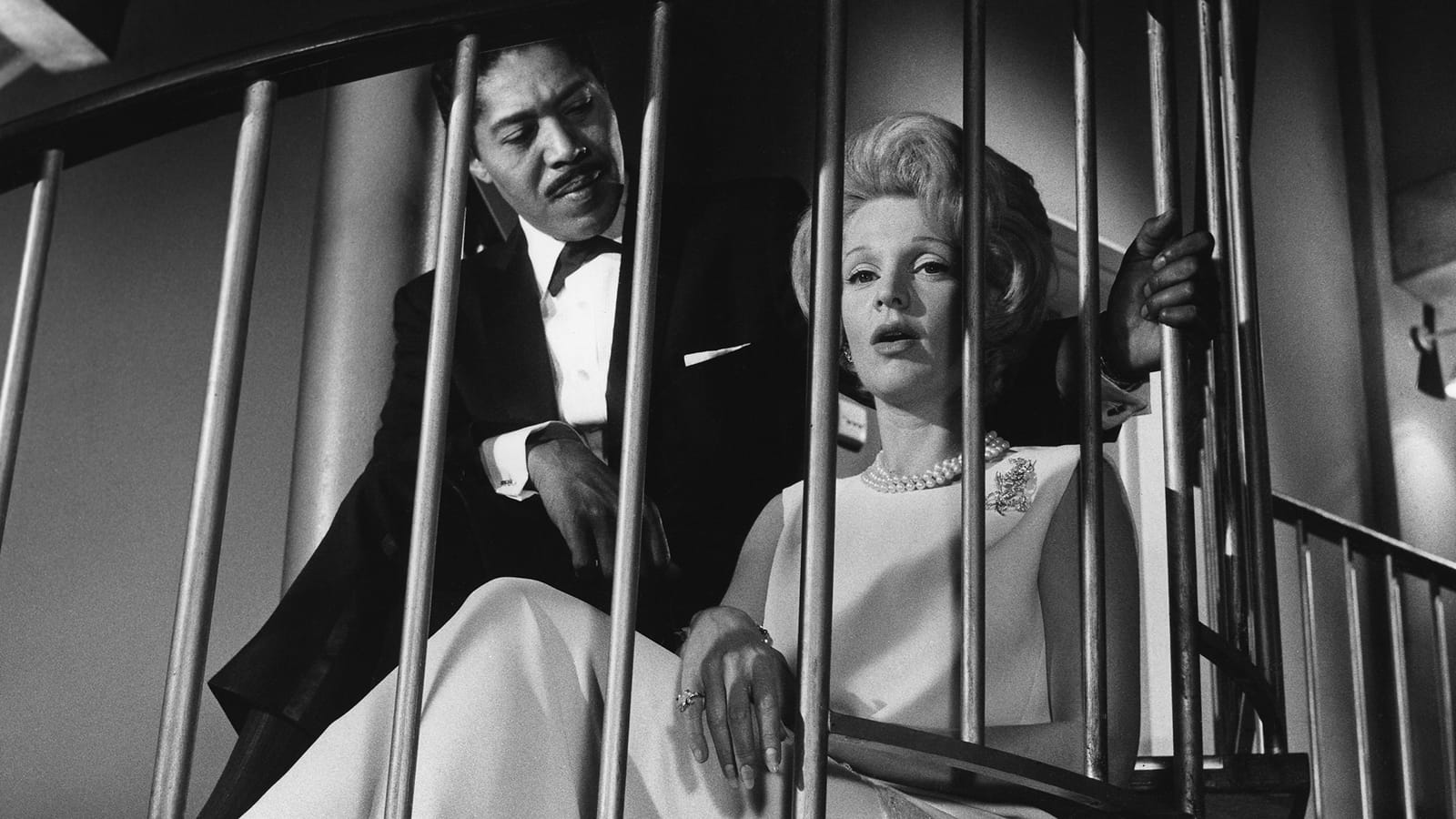
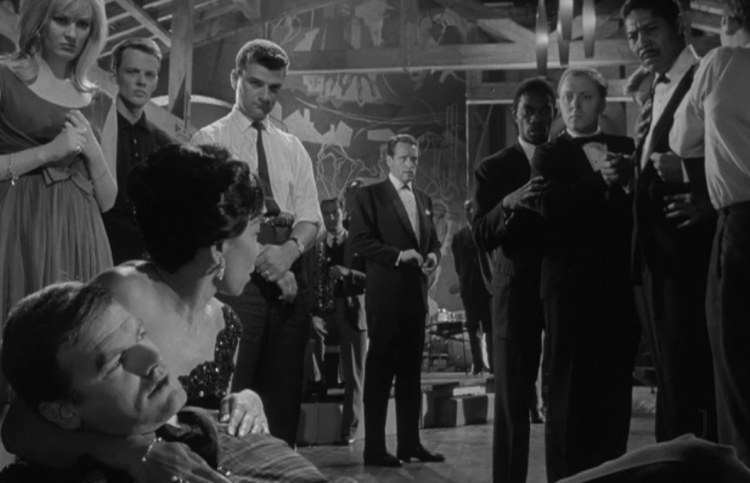
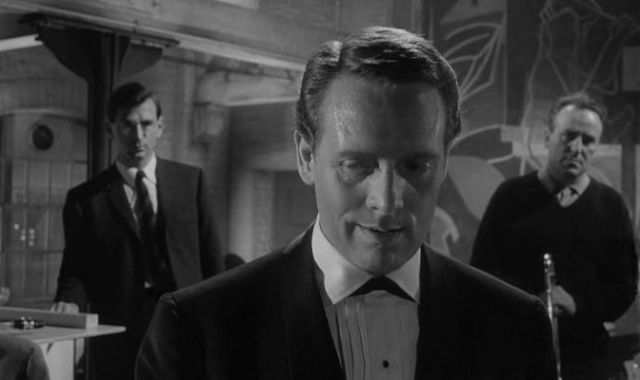
Whatever its perceived shortcomings upon its 1958 release (1960 in the U.S.), “The Man Inside” offers plenty of delights for the classic film buff of today.

It’s got veteran screen heavy Jack Palance, cast against type as a drawling, wisecracking film noir detective. He’d win an Oscar for being even funnier than this in “City Slickers.”

There’s gorgeous Swedish starlet Anita Ekberg as a femme fatale, joking about her “concealed weapons” and giving Palance’s character a running gag he just wouldn’t let go of.

Future James Bond producer Albert “Cubby” Broccoli signed the checks of not one but TWO future Bond villains — Donald Pleasense and Walter Gotell — for this pre-Bond bounce around Europe.

And here’s future Grammy winner Anthony Newley, slinging a not-wholly passable accent as a Spanish cabbie and singing a Spanish patter song. Well, the song is looped, but that may have been him singing.

“The Man Inside,” based on a novel by M.E.Chaber, is a pre-“Pink Panther,” pre “Topkapi” diamond heist thriller. A solitary, man-of-few-words Brit (Nigel Patrick, terrific) and New York diamond-trade insider walks in on a colleague of 15 years, locks the man in his safe and steals the coveted Tyrana Blue from a display case in his office.

Silent Sam Carter shoots the elevator operator to make his escape.

He’s become entranced, “obsessed” with the jewel, the colleague tells the police, who summon their Man in Dallas (Palance), Mr. “heart of asbestos,” to chase this Sam Carter down and retrieve the treasure.

Milo March marches in on Carter’s dumpy old New York apartment to find Trudie (Ekberg), dressed to the nines, has rented it. She can’t be mixed up in this, or can she?

Milo realizes she is when his car, parked outside, blows up, killing the guy he’d given the keys to move it. And he figures out someone ELSE, someone serious, is tracking Carter and covets the diamond as well.

The story takes us to the alleys of Lisbon and the parks and backstreets of Madrid, where Milo’s cabbie/guide to the city (Newley) is his driver on a car chase in an attempt to get away from goons led by Lomer, the man with the scar (Bonar Colleano, in his final film).

Paris comes next, then a train ride to London, as March gets close to Carter, they compete for Trudie and we pick up hints about the murderous robber’s personality. He’s a classic loner, but he does magic tricks for the children of Madrid, who steal the object he has the diamond hidden in and lead him on a merry chase through the Plaza de Espana of Franco-era Spain.

When a child hands the cabbie Ernesto a rabbit at the conclusion of all this, it’s hard to imagine a better punchline.

It’s all something of a violent lark, with scores of Brits employed in roles of various nationalities (mostly in soundstage interiors) for this Warwick Production, distributed by Columbia. I laughed at quite a few sight gags, pithy noir-speak exchanges and pretty much every time Newley shows up.

The plot’s problem-solving — getting our heroes in and out of jams, parlaying information into being in on the deal, etc .– has a few holes thanks to the production’s overall briskness, probably reflected behind the camera.

The music — composed by Richard Rodney Bennett and conducted by Muir Mathieson — swings. The lighting, camera blocking and cinematography (by early Bond favorite Ted Bennett) are sharp, the action beats are well conceived. Nicolas Roeg is one of the credited assistant directors (IMDb has him as a camera operator).

Pleasence duels Newley for “Scene Stealer” honors. He plays a Portuguese organ grinder “much too GRIEVED” to talk about his dead friend, the document-forger, whom Carter also murders. Insert bribe here.

Patrick, one of the great character players of his era, is all beady-eyed mustachio’d menace here. Carter is someone all involved might underestimate but the classic example of the title’s aphorism, a man with a public face but whose “man inside” we don’t grasp until he acts on his innermost obsession, that “tyrana blue” (it’s a black-and-white Cinemascope film) stone he has coveted for 15 years.

How Ekberg — a great beauty who achieved screen immortality just a couple of years later in Fellini’s “La Dolce Vita” — never became a Hitchock Blonde is a mystery for the ages. She hits just the right notes in a role that could have just been another skirt for Newley to leer at.

Palance has a light touch in the Ekberg and Newley scenes, a two-fisted one in the fights. It took decades for filmmakers to fully appreciate everything he could play, but he hints at that range in “The Man Inside.”

Whatever expectations this lightweight thriller carried with it in 1958, now it can be appreciated for the tone, the action beats and travelogue narrative template for 60+ years of Bond films, and imitation Bonds, to come. It’s witty, with cool locations, colorful supporting players and a two fisted hero who might get the girl, but always after getting his man.

Rating: “approved,” violence, double entendres

Cast: Jack Palance, Anita Ekberg, Nigel Patrick, Donald Pleasence, Bonar Colleano and Anthony Newley.

Credits: Directed by John Gilling, scripted by David Shaw, based on a novel by M.E. Chaber. A Columbia release on Tubi, etc.

Running time: 1:29

Posted in Reviews, previews, profiles and movie news | Comments Off on Classic Film Review: The Hidden Pleasures of Palance, Pleasence, Anita Ekberg and Anthony Newley and “The Man Inside”

BOX OFFICE: “Gran Turismo” sprints in front, “Barbie” abides, “Blue Beetle” backs down

A decent Thursday “preview” and solid Friday points to a $16-17 million opening weekend for the video gamer-turned-racer “true story” “Gran Turismo,” not bad for the next to last weekend of summer, but wholly justifying the release strategy of playing it in IMAX and 4DX (shaky seats) theaters for a couple of weekends before releasing it.

Not everybody thinks that’s cricket. But we’ll see if the bean-counters and “opening weekend” judges allow it.

When your “name” stars are Orlando Bloom and David Harbour and your subject if Euro sports car (LeMans, etc) racing in Nissans, you’ll take what you can get.

A fun movie for any car enthusiast (like moi).

“Barbie” is closing in on the $600 million mark at the North American box office and will clear it by next Friday, I figure, making it the Official Movie of the Summer of ’23. As this feminist satiric farce is slated to max out at $15.8 million, there’s a chance it could reclaim the top spot on Sunday.

One reason? Sunday is the annual NATO (National Theater Owners, also hated by Russia) “National Cinema Day,” with some 3000 screens nationwide offering tickets to see the summer’s hits for just $4.

Damn. Go to the movies, people. Get out of the heat. Get your “Barbie/Oppenheimer” et al on.

Deadline.com is saying that a huge fall-off on its second Friday will allow “Blue Beetle” to still clear $10 million on its second weekend. My math and guessing says “maybe not.” A shame, but mixed reviews didn’t help this one, even though it is chock full of representation, uplifting Mexican-American messaging and whatnot. Its target audience fanboys and fangirls and the Latin community — did not show up

The epic “Oppenheimer” will fall just short of $8, as things stand Friday night.

“Teenage Mutant Ninja Turtles: Mutant Mayhem” will add almost $6 million and fall just shy of $100 million, domestically. A big National Cinema Day and maybe that spikes.

Liam Neeson’s half-decent thriller “Retribution” may clear $3-3.3 million. It’s not terrible, but not all that, and his demo is older and whiter and not hitting the cinemas in great numbers as they age. Except for “Sound of Freedom.”

The middling Dennis Quaid baseball drama “The Hill” won’t clear much more than $2.5 million, “Golda” is coming in at $1.7 or so, says @TheNumbers

“Bottoms” from MGM, which is in very limited release (a platformed roll-out) is winning the per screen average sweepstakes at $48k.

Will any or all of those latter titles surpass the last days “The Voyage of the Demeter,” “Haunted Mansion” or “Sound of Freedom?”

Posted in Reviews, previews, profiles and movie news | Comments Off on BOX OFFICE: “Gran Turismo” sprints in front, “Barbie” abides, “Blue Beetle” backs down