
Netflixable? Overheated, Overwrought and Overdone –“Fair Play”

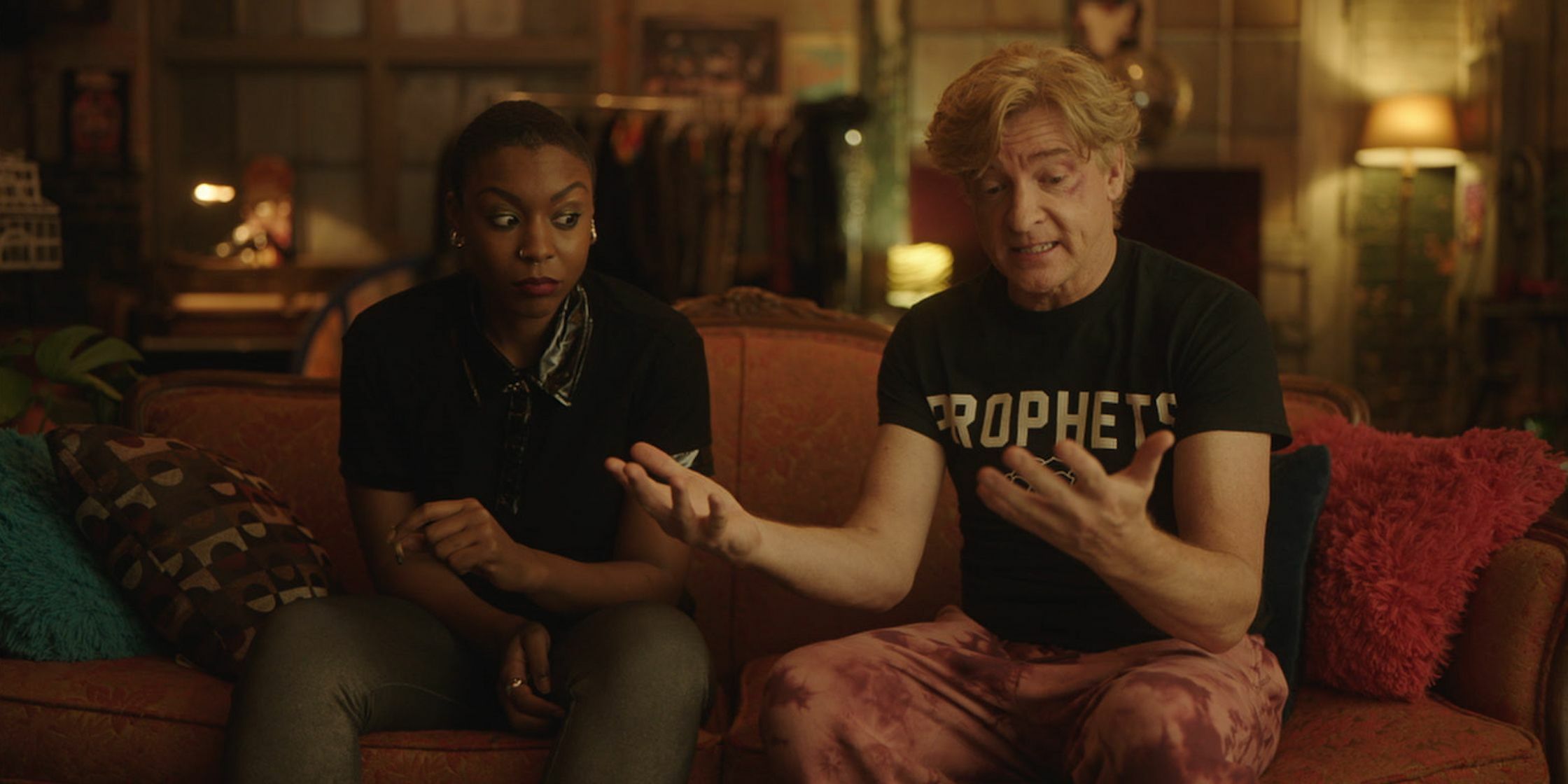
An oddly-dated, obvious and overwrought melodrama about gender roles and the toxic masculinity of Wall Street hedge funders, “Fair Play” is practically a parody of decades of women in the workplace romantic thrillers.

It’s got Phoebe Dynevor of the sexy Shanda soap “Bridgerton” in the Dakota Johnson role, and this festival-hyped feature debut of veteran serial TV writer (“Ballers”) and TV director Chloe Domont (“Shooter”) arrives at a moment when its timeless” gender-role” and glass ceiling issues could have renewed urgency.

But there’s not a subtle or particularly original moment in it. It starts over-the-top, and trots out every “ill-advised” workplace relationship cliche in print or on film in a film of bigger and more epic in-the-office tantrums, eye-rolling HR/Federal EEO violations and theatrical “I’m Mrs. Norman Maine” era throw-it-all away with alcohol-fueled immaturity tropes.

If you don’t find it a little funny, you’re not seeing co-star Alden Ehrenreich give a Judy Garland turn in a non-musical Douglas Sirk slap at dated mores and attitudes about male insecurity measured by a paycheck, you must be Ms. Domont.

Two stock analyists with a longstanding relationship show us a little affection and a lot of carefully guarded efforts to keep their “against company policy” coupling secret in opening scenes that lower the stakes a lot earlier than intended.

Emily (Dynevor) and Luke (Ehrenreich, of “Solo” and “Cocaine Bear”) make moon-eyed ” I wish we could tell the whole world” pronouncements. But while we see a hint of “smitten” from her, the relationship is um “painted” in sex scene cliches as they go at it in yet another slammed-against-the-wall/sex-in-a-bar-bathroom moment in the middle of a wedding celebration for Luke’s brother.

The fact that a woman director conceives this as shorthand for “our great love” and not parody is funny in itself.

“Over the top” begins with the “time of the month” nature of this impulse, and can only have “You look like you slaughtered a chicken” punchline. That’s the film’s lone amusing moment. But as the story marches straight into their “first real test,” we feel little heat, and little of love and tenderness in all this. If there’s chemistry in the couple, its chilly. Maybe it’s their line or work.

That “test” comes in their high-pressure/high-end “boiler room” of a workplace, where lowly analysts like them slave for credit-thieving PMs (portfolio managers), all at the pleasure of the their One Great Capital boss, Campbell, given owlish inscrutability that turns reptillian ruthless by the great Eddie Marsan, in the film’s best performance.

We witness a post-firing meltdown for the ages, watched with morbid, unconcerned curiosity by the room full or predators and wannabe-predators. Emily hears office gossip that Luke must be the choice to replace the PM who melts down, but almost the moment she passes that hopeful news on to her just-gave-her-a-ring fiance, we know it’s wrong.

Emily is confident, at ease and sharp and has the boss’s eye. She gets the promotion. And as he hears the whispers about “what she must have done” to get it from the piggish pack that they work in, he wonders, too.

After all, no over-achiever in a skirt from Long Island ever gets ahead in Bro-World without that, their limited thinking dictates.

“Fair Play” is about Luke’s feigned support and instant sense of emasculation, crawling into the bottle as his wife-to-be hustles to be the “star” her boss expects, with her offering to help Luke get the promotion he has built his life around and trotting through a parade of cliches, from Luke’s “not into it” sexual withdrawal to her “make it rain at the strip club” just to fit in with “The Boys” coming out.

Honestly, there’s not an original thought here, although Domont finds a few shades on well-worn tropes — what Emily discovers about Luke’s office rep, for instance. What Luke’s mindset lets him think about Emily seems a “Greed is good” era Wall Street movie cliche. And the wan love story has laughable “A Star is Born” attitudes trotted out as a straw man for Domont to swat around, as if this cultural debate doesn’t date from “Desk Set” to “Working Girl” and she just “discovered” it.

There’s suspense in how ugly this will all get as Domont serves up bigger and bigger meltdowns, teases us with Emily’s wheels-turning machinations to sabotage rivals and assist her future husband to create peace in the marriage-to-be.

Dynevor does her best to humanize Emily’s response to this threat to what she sees as her “traditional” future happiness. But Domont is more interested in sex as shorthand for “love” that turns to “violence” than presenting a great romance “shattered” in ways these movies and TV have covered for decades and that we all see coming.

Every generation discovers anew the work/family balance struggle, so that’s fair ground to cover. In an America in the midst of a renewed “war against women,” it’s timely to revisit this workplace dynamic with a Gen Z eye. But you’re kind of obligated to let on you’ve done more than watch other movies and television dramas on the subject so you can recycle the most extreme moments moments in a bid to go further and further over the top with them.

There’s veiled moralizing about what repellent creatures these hedge fund folk are without a hint of judgment about the work they do, incorrigible gamblers who traffic in gossip as “inside information” to place their next economy-buffeting “bets.”

But any movie that parks a woman in their midsts and has her drinking and strip-clubbing to fit in, that has our over-the-moon Romeo switch off and crawl into the bottle in a flash, all because his not-yet-wife is making a lot more money than he is, and isn’t simply sending those weary cliches up isn’t worth the hype.

Any movie that dares to make sex in yet another public pub restroom “romantic,” at this late date, is laughable.

Any movie that doesn’t think casting an actual “Mad Men” man (Rich Sommer) as a cutthroat upper exec isn’t as unsurprising as everything else seems ill-considered.

And any movie where, to paraphrase Chris Rock, you think Alden Ehrenreich “is the answer,” well come on.

Rating: R for pervasive language, sexual content, some nudity, and sexual violence

Cast: Phoebe Dynevor, Alden Ehrenreich, Sebastian de Souza, Rich Sommer and Eddie Marsan.

Credits: Scripted and directed by Chloe Domont. A Netflix release.

Running time: 1:53

Posted in Reviews, previews, profiles and movie news | Comments Off on Netflixable? Overheated, Overwrought and Overdone –“Fair Play”

“Fair Play” time in Orlando

Posted in Reviews, previews, profiles and movie news | Comments Off on “Fair Play” time in Orlando

Netflixable? Haley Lu finds”Love at First Sight” on a US to UK Flight

“Cutesie” does battle with “sentimental” in the feather-light romance “Love at First Sight,” basically a Netflix-financed 90 minutge excuse to pair up Haley Lu Richardson with Ben Hardy and have them lose each other in rainy, wintry London.

It’s a romance-novel of a script filled with fate and coincidences, mathematical probabilties, attraction and tragedy, explained away by an omniscient and omni-present (in many guises) narrator.

“Cute” becomes “cutesie.” But after an insipid and unamusing start, “Sight” rallies as it takes on more serious subjects, giving Richardson (“Five Feet Apart,””White Lotus”) and Hardy (he was drummer Roger Taylor in “Bohemian Rhapsody”) a chance to shine.

“Hadley” is often late, which is how she misses her pre-holiday flight to the UK from JFK. But that’s OK. Because that fellow who just offered hapless Hadley his phone-charging cord is easy on the eyes.

She’s in college, he’s studying statistics and “maths” at Yale, and after that missed flight, coincidences by the score align to put these two together on the same flight, on the same row, an hours-long “first date” that includes two means and “a cheesy rom-com.”

Which airlines carry Netflix? I forget.

They get separated in London, with her dashing off to her father’s (Rob Delaney) second wedding and him off to a public family event with theatrical mum (Sally Phillips) and dad (Dexter Fletcher).

But at every turn, there’s our narrator, giver-of-odds and fate-intervenes queen, played by Jameela Jamil as a flight attendant, customs officer, bus driver, wedding bartender and several other costumes.

She’s forever reciting stats about how many people are on plane, how many wedding guests spoke, wore hats (“48”) or were moved to tears (31%).

Veteran TV director Vanessa Caswell fights a losing battle with “cloying” much of the time. But the emotional stuff resonates, the leads are charming and engaging and the setting is London, where no one in her right mind would ditch bridesmaids heels and go barefoot in the rain a couple of days before Christmas because the average temperature, according to statistics, is 48 degrees.

And if I’ve done my job right, the praise and pounding of this innoccuous picture have balanced out to a statistical “mixed bag” review. Which “Love at first Sight” most decidedly earns.

Rating: PG-13, a little profanity

Cast: Haley Lu Richardson, Ben Hardy, Jameela Jamil, Katrina Nare, Sally Phillips, Dexter Fletcher and Rob Delaney.

Credits: Directed by Vanessa Caswill, scripted by Katie Lovejoy and Jennifer E. Smith. A Netflix release.

Running time: 1:31

Posted in Reviews, previews, profiles and movie news | Comments Off on Netflixable? Haley Lu finds”Love at First Sight” on a US to UK Flight

Movie Preview: Gangs, Graffiti and Luis Guzman meet on “Story Ave.”

Asante Blackk plays an artist of the Bronx streets who might find a more productive outlet for his efforts thanks to a stranger.

Luis Guzman has been one of the finest character actors of his generation, and it’s always nice when a plan like this part comes his way.

Sept.29.

Posted in Reviews, previews, profiles and movie news | Comments Off on Movie Preview: Gangs, Graffiti and Luis Guzman meet on “Story Ave.”

Classic Film Review: Guinness and Hawkins face off over a Cold War “Confession” — “The Prisoner” (1955)

Context is everything when it comes to “political thrillers,” especially “controversial” ones.

“The Prisoner” is a war-of-wills tale set and filmed in the early days of The Cold War. Lauded by the British Film Academy (BAFTAs), banned at Cannes and the Venice Film Festivals, it serves up old fashioned British anti-communism and even older fashioned British Catholic bashing in basically a two person “talking heads” story of a Catholic Cardinal facing official denunciation and trial in an unnamed communist country.

Let me guess, in Venice they resented the Catholic bashing and in Cannes they fretted over the way communist totalitarianism was depicted.

What recommends this film, based on a play by Bridgette Boland and reduced to something of an historical artifact today, is the two actors locked in that idealogical/psychological struggle — Alec Guinness and Jack Hawkins. They are subtle actors taking a shot at humanizing archetypes.

What works against the film is almost everything else — the staginess, the arch speech making, the political/religious archetypes, and the exceptionally corny not-quite “love story” tacked onto it, between a guard (Ronald Lewis) and a woman (Jeanette Sterke) desperate to escape West to reunite with her husband, who fled.

The Cardinal (Guinness) is about to say mass, in Latin, when a note is passed into his open prayerbook.

“The police are here to arrest you.”

The crowded cathedral has spies in it. But this cardinal is unshaken. He worked with “The Resistance” in the war. He was tortured by Nazis. He is a major public figure. Communist goons don’t scare him.

But he is arrested after mass, and this doctor turned lawyer (Hawkins) is to be his official interrogator, the one handing him a confession to sign.

“I imagine this is more awkward for you than it is for me,” he tells his persecutor. “I am difficult to trap and impossible to persuade.”

He knows why he is here, but it is articulated for him. Priests are “more dangerous than politicians….You represent a religion which provides an organization outside The State.”

This confession, this interrogation, this show trial and this process are about a “monument” that “must be defaced,” in the eyes of the communist state.

The “enemy of society” is to be prodded, cajoled, debated and interrogated — because the Cardinal is “tolerably” immune “to physical pain.”

Hawkins’ Interrogator is feeling the pressure of the party general secretary (Kenneth Griffth) as this ordeal drags on and method after method is tried to “break” the man. A somewhat sympathetic guard (Wilfrid Lawson) can’t do much of anything to make the Cardinal’s imprisonment more tolerable.

And time passes as the two men struggle, play semantic games and look for lapses in each other’s logic, moral authority and human decency. We see people outside the prison, sitting in cafes reading the “wrong” newspaper, which was “just banned” and shuttered “this morning.”

I’m a big fan of the leads, and Guinness and Hawkins do what they can with it. But the heavy-handedness of the parable, the obvious and unsatisfying finale and that not-entirely-pointless-but-close “love story” beat “The Prisoner,” and the viewer into submission.

And by “beat” I mean “bore.”

There have been much better interview/interrogation thrillers this rather stagebound, flatly-directed, unemotional “message” wrapped in black and white celluloid.

But in its day…

Rating: “approved”

Cast: Alec Guinness, Jack Hawkins, Wilfrid Lawson, Jeanette Sterke, Ronald Lewis and Kenneth Griffith.

Credits: Directed by Peter Glenville, scripted by Bridgitte Boland, based on her play. A Columbia release on Tubi, Youtube, Amazon, etc.

Running time: 1:31

Posted in Reviews, previews, profiles and movie news | Comments Off on Classic Film Review: Guinness and Hawkins face off over a Cold War “Confession” — “The Prisoner” (1955)

Documentary Review: Doggedly Chasing a Toxic, Pathological Gaslighter, this one in New Zealand — “Mister Organ”

It probably wasn’t on New Zealand journalist and filmmaker David Farrier’s mind as he tumbled into a story about narcississtic Kiwi name-caller, pathological liar and “in his own reality” con man named “Mister Organ” that he might have an American political allegory on his hands.

All that’s lacking in the film is a board certified diagnostician weighing in and saying “narcissistic peronsality disorder” to make the Michael Organ/Donald Trump comparison complete.

Farrier, a dogged reporter/filmmaker — remember “Tickled?”— spent years digging into the life of and getting to know and exposing Mister Organ.  He paid a legal and personal price as he and by extension the audience for this film discover just how ill-equipped society, human nature and the justice system are to deal with a relentlessly harassing gaslighter who simply repeats lies, ad nauseum, until most of us grow deaf to them and the most gullible among us — sometimes, even in court — actually believe the “art” this toxic BS artist is shoveling.

It begins with a bit of small business extortion. An antiques store in tony Ponsonby, Auckland, New Zealand is enforcing its “no parking in our parking lot” policy with a self-appointed “clamper” locking drivers’ wheels until they pay hundreds of dollars to get the clamp taken off.

The imperious owner of Bashford Antiques, Jillian Bashford, claims not to know who’s doing this on her behalf. Merely asking her about it, reporting or even complaining about it often results in threatening calls or letters from a “lawyer” named Michael Organ. Or “Organe,” or any number of other aliases trotted out by the guy over the years.

New Zealand, being a tiny country, makes it easy to figure out who this fellow is. He’s been in the papers, on talk radio. an ex-con who once stole a sailboat out of revenge against a creditor, a poseur who tried to pass himself as a “count” in myriad legal proceedings over the years. And he’s living with Mrs. Bashford, who is 30 years his senior.

“I’ve checked his legal qualifications,” a puzzled Farrier notes. “He doesn’t have any.

Down the rabbit hole Farrier goes, speaking with a convicted “terrorist” and a long string of acquaintances who describes themselves as “victims” of Organ. The deeper Farrier digs into the guy, the more he comes into contact with him. He eventually finds himself talked-over and shouted-down in court by this classic “stupid person’s idea of what a smart person sounds like,” the posh-drawled Organ. And then they really get to know each other, after years (we gather) of run-on phone chats, interviews and lies endlessly-repeated so that Organ really gets into Farrier’s head.

At one point, the filmmaker is choking back tears at this “pointless exercise” with an “impossible” man with “more money than me,” who is just “better than me” at burying objective truth and “never letting something go.”

But there’s a “never let something go” relentlessness to Farrier, too. He stays engaged with this liar he loathes, this smug, repellent bully, first trying to let him trip himself up with his web of deceit, and when that doesn’t phase the toxic creep, actively confronting him with those lies, the proven court case and jail time, and other contradictions.

Perhaps Farrier should be hosting “Meet the Press.” You don’t see this kind of push-back on American political TV.

Farrier’s frustrations spill off the screen and give the viewer the same anxiety the reporter feels, the same anxiety anyone shares who knows something about facing down a lying, harassing, bullying moron who won’t leave you be.

The quirky Kiwis depicted here aren’t amusing in that Taika/Jemaine way, just well-mannered eccentrics (and enablers, including Organ’s family) baffled by what to do about such a dangerous manipulator, how to deal with him and what they’ll do to escape his clutches.

Farrier leaves a lot unsaid in the film. He doesn’t look into Organ’s childhood — what made him this way — has no mental health experts on camera, and doesn’t get too deep into Organ’s possibly predatory (certainly overbearing) relationship with his Sugar Mama, Bashford.

But Farrier’s made a fascinating picture to ponder about how difficult it is to challenge a system and its gullible pawns who enable such predators to get away with all that they do, simply by talking, bluffing and buffaloing their lies into the conversation, fooling just enough of the people and scaring others and forcing everybody else to deal with their “reality,” no matter how unrelated to real “reality” it is.

Rating: unrated, profanity

Cast: Michael Organ, David Farrier and Jillian Bashford, many others

Credits: Directed and scripted by David Farrier. A Drafthouse Films release.

Running time: 1:35

Posted in Reviews, previews, profiles and movie news | Comments Off on Documentary Review: Doggedly Chasing a Toxic, Pathological Gaslighter, this one in New Zealand — “Mister Organ”

Next screening? A thriller that smells like a contender — “Fair Play”

Veteran TV Writer director Chloe Domont (“Ballers,” “Shooter,” Billions,” etc.) makes her feature film debut with this nasty dig into sexism and cutthroat office politics

Netflix is putting this and Phoebe Dynevor, Alden Ehrenreich, Eddie Marsan work/romance conflict thriller in theaters for a couple of weeks.

It streams Oct. 13.

Posted in Reviews, previews, profiles and movie news | Comments Off on Next screening? A thriller that smells like a contender — “Fair Play”

Movie Preview: Old West Nic Cage hunts Buffalo to Extinction in “Butcher’s Crossing”

Smaller distributor, as is Nic Cage’s lot these days. Looks existential and dark and prophetic.

Posted in Reviews, previews, profiles and movie news | Comments Off on Movie Preview: Old West Nic Cage hunts Buffalo to Extinction in “Butcher’s Crossing”

Movie Review: Chinese Myth writ large…and long — “Creation of the Gods I: Kingdom of Storms”

Imagine popping into a multiplex and diving into say, an “Avengers” or “Star Wars” movie. Imagine doing that in Papua-New Guinea or some place far removed from the “universes,” cultural tropes and long-beloved characters in those films and not having a clue what’s going on, for big chunks of the time.

“Capes? Tights? Hammers?”

That’s akin to any Westerner checking out an Indian, Japanese, Korean or Chinese myth turned into cinema. However well you know the universal templates such tales lean on, how much you remember from your Joseph Campbell, you’re going to be a bit at sea in a “Journey to the West” or “Creation of the Gods,” both Chinese epics so sprawling they required Harry Potter length “installments” to tell.

“Creation of the Gods I: Kingdom of Storms” has that Roman numeral in its title, so we know that two a half hours is just the beginning of this Chinese eye-candy epic.

It’s a tale of tyranny and magic, of nobility trying to overthrow the monstrous King Zhou (Kris Phillips, aka Fei Xiang) — with a little divne help from “The Immortals” — set during China’s first documented dynasty, the Shang.

There are grandiose sieges and battles in icy, wintry fog, intrigues, dragons and demons and beheadings and “interventions” and a murderously tempermental king from whom his own kin aren’t safe, especially after he falls under the spell of the enchanting “daughter of a traitor” Su Daji (Naran), aFox Demon.

Self-sacrifice is preached — “What is a king if not the bearer of all the Earthly sins of his people?” (in Mandarin with subtitles) –and sometimes even practiced.

The picture is state-of-the-art dazzling in its effects. The scope and scale of some sequences, digitally-augmented or not, is almost overwhelming.

But as storytelling, it’s a movie that gets lost in endless exposition, a parade of intertitles naming this or that figure in the “plot” and their relation to this or that king, as if that really helps.

It’s a cluttered narrative that might be better served as a simple sweep through myth and history rather than anything as literal as this. Mongolian director and co-writer Wuershan (“The Butcher, the Chef and the Swordsman”) is better at action than trying to explain it all.

There are a few characters to latch onto, some epic fights and even a hint of humor, here and there amidst the spectacle. And as is usual in the lesser epics of this genre, there’s an awful lot of shouting.

“Think you can kill ME?” “SAVE Fa JI!”

One of the immortals is a bratty child (Yafan Wu) who jets into scenes, intervening with his elders, via flaming flame-powered feet. Another, played by Li Xuejian, is a whimsically earnest sage, while a third (Bo Huang) serves up dark magic with a tongue-in-cheek touch.

That’s where the movie should lie, with the immortals and everything else just playing out inviting their interference. Burdening the picture with legions of mere mortals makes it hard to follow for anyone who didn’t grew up with the 16th century mytho-historical novel  Fengshen Yanyi.

It wasn’t just the pricy effects that slowed this years-in-the-making first film of a trilogy down and caused production to shut down at one point. Surely there was somebody lobbying for something more streamlined, that focused on the core story, the “hero’s journey” and those divine interventionists playing their games with mere mortals, the way gods always do.

“Kingdom of Storms” “Dazzling to look at,” sure. But the ungainliness of this lumbering, over-populated narrative has one often wondering, “Wait, where’d the Fox Demon go?”

Rating: unaated, acton violence

Cast: Yosh Yu, Huang Bo, Kris Phillips, Naran, Li Xuejian, Quan Yuan, Li Xuejian, Le Yang, Yu Xia and Yafan Wu

Credits: Directed by Wuershan, scripted by Jian Rn, Ping Ran, Cao Sheng and
Wuershan, based on a Ming era novel by Xu Zhong Lin. A Well Go USA release.

Running time: 2:28

Posted in Reviews, previews, profiles and movie news | Comments Off on Movie Review: Chinese Myth writ large…and long — “Creation of the Gods I: Kingdom of Storms”

Movie Preview: Trouble in British farm country bonds neighbors — “And Then Come the Nightjars”

This Oct 3 release is about a couple of old farm coots and coping an outbreak of hoof and mouth disease.

It looks a little lighter than that sounds.

Posted in Reviews, previews, profiles and movie news | Comments Off on Movie Preview: Trouble in British farm country bonds neighbors — “And Then Come the Nightjars”