Movie Review: “The Exorcist: Believer” won’t convert anybody

Perhaps the last thing you’d expect a reboot of “The Exorcist” franchise to botch is — you know — the exorcism scene. But that’s what “The Exorcist: Believer” does.

It’s another David Gordon Green (“Halloween” franchise) reboot, so you can expect sentimental returns of surviving characters from the original film, a renewel of the threat and an attempt or two to up the ante from that first film, William Friedkin’s chilling 1973 masterpiece, based on a William Peter Blatty novel.

Here, Green summons back Ellen Burstyn, now 90 years old and reprising her turn as Chris MacNeil, actress turned exorcism activist in the 50 years since her daughter Regan was freed from a demonic possession in Watergate Era Washington, D.C. Seeing Burstyn again is worth a lump in the throat, until you see her limited function in the story and hear some of the lines she’s commissioned to intone.

“There are many dark forces in the world, Mr. Fiedler,” she tells concerned widowed dad Victor (Leslie Odom, Jr.). “Not all of them supernatural.”

You, um, don’t say? I guess she has her reasons for accepting the supernatural as a norm.

Green’s reboot slowly introduces two tween girls (Lidya Jewett, Olivia O’Neill) to us, their dabbling in the occult and their joint disappearance for three days, a frantic local (Georgia) search that ends with them alive, but “changed.”

Green’s big contribution to this venerable franchise is two-for-one demonic possessions, both in need of exorcisms. Eventually. After medicine has run out of options, of course.

Angela (Jewett) lost her mother in the Haitian earthquake of 2010, which explains who she is reaching out “beyond.” That’s a pretty conventional motivation/”explanation” slapped onto this story, traditionally treated as simple innocence under assault. Classmate Katherine (O’Neill) comes from a devout, church-going family and she’s the one who knows rituals and summoning spells and such.

When the girls go missing, photographer and aetheist Victor is thrown in with Katherine’s equally alarmed but religiously-inclined mother (Jennifer Nettles) and pious-but-hotheaded father (Norbert Leo Butz).

And when their “answered prayers” daughters return and show “symptoms” and start acting out, it’s the religious folks who start wondering about supernatural causes. Victor has to hear that from them, and from his Catholic nurse/neighbor (Anne Dowd).

How long before they convince him to summon The Exorcist?

In the fifty years since Max Von Sydow brought an Oscar-worthy gravitas to a priest charged with performing this ritual, the movies have given us dozens of exorcists played by the likes of Anthony Hopkins, Tom Wilkinson, Stellan Skarsgard and even a Vespa-riding Russell Crowe. Not all of them played Catholic priests, but casting adds weight to such a part, no matter the faith.

Here, Green and his co-writer seek a sort of pantheistic legitimization of Catholic dogma, stripping the story of much of its Catholic mystique. Considering the half century the Catholic Church has had, its shrinking membership and its widening separation from American mainstream thought, perhaps that’s understandable.

“Believer” introduces a conservative Protestant pastor (Raphael Sbarge), a speaking-in-tongues church friend of Victor (Danny McCarthy) and an oncologist turned “healer” and perhaps voudou mystic (Okwui Okpokwasili), as well as a “hands are tied” Catholic priest (E.J. Bonilla) and that Catholic nurse. At least a lot of groups are represented here.

The film has gone to some pains to show the search for the girls, their discovery, the police and medical procedures they endure and the symptoms they start to show. Green has taken his sweet, methodical time getting us to a payoff.

And then we’re treated to a room full of faiths and non “experts,” with none of the actors — some more accomplished than others — getting across the idea that they’re seeing and experiencing something that reason would tell them “This cannot be real.”

Perhaps they’re under-reacting because they, like we, have seen too many exorcism movies to be rattled by foul-mouthed, floating or vomiting girls any more. No, “possession” effects haven’t improved that much in fifty years.

Green manages a grabby moment or two, a child busting up church communion with a Satanic shriek — “The Body and the Blood!” There’s one legitimate moment of pathos, and another achieved by stunt-casting.

But after taking forever to open up the story (some good on location footage in Haiti) and stumbling a bit in setting the “growing sense of doom” tone, Green loses the plot and with it the power to land a big third act punch. Finishing with a swing and a miss can’t have been his intent.

Rating:  R for some violent content, disturbing images, language and sexual references.

Cast: Ellen Burstyn, Leslie Odom, Jr. Anne Dowd, Lidya Jewett, Jennifer Nettles, Norbert Leo Butz, Olivia O’Neill, E.J. Bonilla, Okwui Okpokwasili, Raphael Sbarge and Danny McCarthy

Credits: Directed by David Gordon Green, scripted by Peter Sattler and David Gordon Green, based on characters created by William Peter Blatty. A Universal release.

Running time: 2:01

Posted in Reviews, previews, profiles and movie news | Comments Off on Movie Review: “The Exorcist: Believer” won’t convert anybody

Classic Film Review: Talking Heads and Demme “Stop Making Sense” (1984)

I’ve seen “Stop Making Sense” a few times over the years, and that was reason enough to duck back into this re-issued classic 1984 concert film between other new releases to catch it on the big screen the other night.

I got into the band right around the time the film originally came out and was thus late to the art-school-kids-play-arty-proto-punk-New Wave thing they were surfing at this, their peak moment. But watching it anew, I was instantly swept up in memories of my first impressions of this piece of art-rock theater, reinforced 39 years later.

You remember the grey-on-grey and black production design — costumes, etc. — that David Byrne conjured up for this series of shows, the big smiles — apparently genuine — of the expanded version of Talking Heads that took the stage, the “huge suit” which became a pop cultural punchline, and the sweat one and all worked up, which future Oscar winner Jonathan Demme captured with his on-stage or just offstage cameras.

The show, conceived almost as a play, quietly opens, builds, transcends, climaxes and delivers its curtain call in 90 sometimes antic, always-considered and choreographed minutes.

And then, ever so briefly, Demme scans the diverse and seriously hip crowd that was at the Pantages Theatre in LA on these select nights. Oh yeah, THAT’s the phenomenon that they were. This band — Tina Weymouth, Chris Frantz and Jerry Harrison — in service of their mad, artistic and autistic genius (not known at the time) leader, were much bigger than the occasional bit of radio airplay they’d had up to now, or the radio/MTV hits that would follow in the few years they stayed together afterwards.

Some of the songs were already touchstones in the culture — “Psycho Killer,” “Life During Wartime,” “Burning Down the House,” their quirky New Wave cover of Al Green’s “Take Me to the River.” The rest would help expand their fanbase after this widely-hailed concert doc by a Big Name filmmaker came out.

Byrne would take his vision of music and visuals into a feature film (“True Stories”) and Broadway (“American Utopia”) and his sense of theater into every aggregation he gathered around him to perform his hits in later years. There was a joyous tour with the art rocker St. Vincent, a drummer and eight-piece brass band about ten years ago whose excerpts are my favorite Youtube “happy place.”

But there’s a frosty remove to most of Byrne’s self-consciously avante garde work that’s always made “Stop Making Sense” a sterile experience to me. Watching it now, that “Sheldon Cooper Starts a Band” joke attached to the on-the-spectrum sitcom character comes to mind. The “Oh, he’s autistic” news came along later and just sort of explained the disconnect of the music and this film.

Smiles on stage notwithstanding, the emotional heft of “The Last Waltz” or even U2’s “Rattle and Hum” is lacking. The colorful, creative chaos of “Mad Dogs & Englishmen” or a few other great music docs — Scorsese’s “Rolling Thunder Revue” comes to mind — is missed.

The energy exerted is extraordinary. One can feel exhilarated and exhausted at the same time at the musicianship, dancing and constant running in place.

This is a good stage show concert film that feels a little dated in light of the grand stage shows of the bigger, more flamboyant tours to come. It still holds up, but that somewhat heartless art feeling that crept up on me watching it, decades ago, hasn’t faded with the years.

“Stop Making Sense” is a very good concert film, an excellent snapshot of an offbeat band at its peak, but “the greatest concert film ever?” I’ve never thought so and never will.

Rating: PG

Cast: David Byrne, Tina Weymouth, Bernie Worrell, Jerry Harrison, Chris Frantz, Ednah Holt, Lynn Mabry, Alex Weir and Steven Scales.

Credits: Directed by Jonathan Demme, scripted by Jonathan Demme and Talking Heads. A Cinemom release re-issued by A24.

Running time: 1:28

Posted in Reviews, previews, profiles and movie news | Comments Off on Classic Film Review: Talking Heads and Demme “Stop Making Sense” (1984)

Movie Review: Working Class Family deals with a forest world “On Fire”

“On Fire” is a solid if generally unsurprising drama spun out of every week’s headlines, a tale of a family scrambling to escape the wildfire that’s exploded all around their rural home in the dry, mountainous American West.

Starring and co-directed by Peter Facinelli (“Twilight”), it’s got impressive fire effects, a few jolts and moments of pathos mixed in with lapses in logic and urgency and the odd bit of over-the-top “silliness.”

May co-star Asher Angel, as the teen track-star son of contractor Dad and very pregnant Mom (Fiona Dourif of TV’s “Chucky”), has a long and fruitful career, and lots of talk show appearances where he can laugh off his signature silly moment in this generally sober-minded treatment of an increasingly common and fraught experience — escaping the flames from another blaze in an historically fire-prone, drying, climate-changed world.

“F— you, FIRE!” young Clay yells into the flames.

An opening montage of news audio captures fire coverage from Canada and the US to Australia, Greece, Turkey and Russia, which isn’t necessarily the global take that Dave and son Clay, and later Dave and wife Sarah exchange when they note the ominous towering cloud of smoke a couple of ridgelines beyond the one they live on.

“Little brush fire” comments lead inevitably to “It’s getting bigger,” and last minute fire prep — extra hoses, sprinklers, fire blankets and an Internet check of “how to fireproof your house in a forest fire” list.

Dave scrambles, Sarah tries to rouse Dave’s aged, on-oxygen-and-still-smoking father George (Lance Henriksen) to action and considers packing up to flee.

Meanwhile, things at the local 911 call center are heating up as new-to-the-job Kayla (Ashlei Foushee) tries to reassure locals that it’s all under control.

There’s an urgency to the prep — setting sprinklers on the roof, raking away acres of dry pine needles (good luck) that is never quite mirrored in the 911 call center scenes.

And once the inevitable happens, the fire blows up and cinders in, the family is separated and accidents, tragedies and think-on-your-feet changes in plans kick in. The narrative takes a few too many pauses for the story to propel us into the blaze and through it in the shoes of people who have never faced anything like this.

“On Fire” looks pretty good for a picture of obviously modest budget. They didn’t have the cash to mimic the winds and “firestorm” such forest-devouring furnaces create. I mean, Clay’s track team uniform looks off-the-rack-at-Dollar-General, after all.

But characters take the time to bicker over climate change, lament the struggle of having a single-wide home with “no insurance” in ways that many experience life in low-opportunity, rural and sylvan slices of “Paradise.”

“On Fire” isn’t all that, but all things considered — the cast is good, and the fire is impressive — it’s not half bad, either.

Rating: PG-13 for action/peril, disturbing images, smoking and some strong language.

Cast: Peter Facinelli, Fiona Dourif, Ashlei Foushee, Asher Angel and Lance Henriksen.

Credits: Directed by Peter Facinelli and Nick Lyon, scripted by Nick Lyon and Ron Peer. A Cineverse release.

Running time: 1:20

Posted in Reviews, previews, profiles and movie news | Comments Off on Movie Review: Working Class Family deals with a forest world “On Fire”

Movie Review: Almodovar Saddles up for a “Strange Way of Life”

The cinematic label for any film under 40 minutes is “a short.” But in the case of “Strange Way of Life,” Pedro Almodóvar’s half hour long gay Western romance with gunplay, the better descriptor might be “small.” Truncated, even.

A tale of two former “hired guns” reuniting 25 years after a brief two month love affair, Almodóvar (“Women on the Verge of a Nervous Breakdown,” “Tie Me Up, Tie Me Down” and “Parallel Mothers”) dances down a fine line between soap operatic melodrama, Western tropes, bittersweet romance and camp.

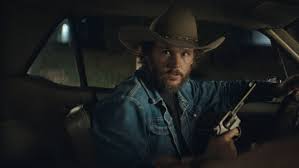
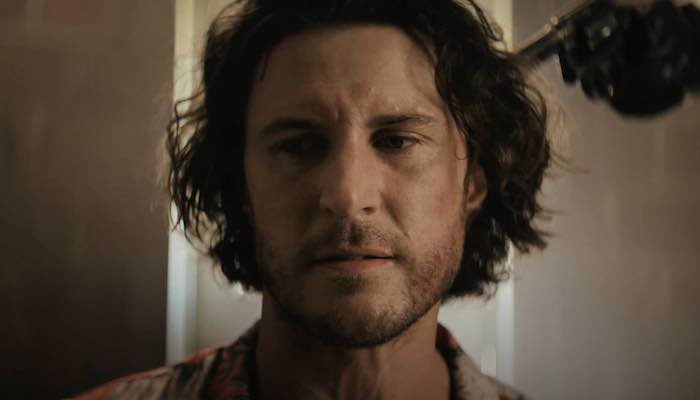
He puts his two stars, Pedro Pascale and Ethan Hawke, on horseback, but keeps the camera tight for the most part. That makes the movie, with its sublimated emotions and romance — or at least a sexual relationship — rekindled by liquor, intimate.

But the Old West never seemed quite so small as it does here.

Hawke plays a sheriff resigned to chasing down a murder suspect with a locally-familiar limp. Pascal is Silva, his old riding mate who shows up at just this moment to get reaquainted.

The suspect is Silva’s son. Might a seduction spare his offspring?

“Don’t look at me like that.”

“How do you want me to look at you?”

Old wounds are reopened, old plans long abandoned revisited, and hard truths faced. Justice and loyalty demands that the son’s got to be brought in, dead or alive.

There’s even a flashback, showing our two drunken, whoremongering pistoleros (Jason Fernández and José Condessa) shooting wineskins, cackling madly and ignoring the sex workers they’re partying with to drinking from tehir bullet holes with their hands down each other’s chaps.

While the same sex romance may be somewhat novel, and the minimalist plot and narrow focus on a scale with many classic Westerns, it’s hard to imagine the Spanish Oscar winner getting a full length feature out of this. It’s a one-joke short. /Thus, “Strange Way of Life” is paired for release with the filmmaker’s more symbolic and cryptic 2020 short “The Human Voice,” starring Tilda Swinton, which is also half an hour long.

Sure, this hour of filmmaking is by Almodóvar, and is always going to be a little clever, a bit daring and maybe even subversive at times. But premium prices at your favorite art cinema for an hour of movies makes this package (I vaguely remember “Human Voice” but didn’t review it) an iffy recommendation at best.

Rating: R, violence, sexual situations, nudity, profanity

Cast: Ethan Hawke, Pedro Pascale, George Steane, Jason Fernández and José Condessa

Credits:Scripted and directed by Pedro Almodóvar. A Sony Pictures Classics release.

Running time: :31

Posted in Reviews, previews, profiles and movie news | Comments Off on Movie Review: Almodovar Saddles up for a “Strange Way of Life”

It’s “Exorcist” time again…

Here we go again, Ellen Burstyn may be 90, but she’s still getting a demon exorcising job done.

My review is here.

Posted in Reviews, previews, profiles and movie news | Comments Off on It’s “Exorcist” time again…

Movie Preview: Netflix reminds us of the Evils of Nazism — “All the Light We Cannot See”

Netflix has had very good luck with World War movies, mostly made abroad. This three part series, set in WWII France, is about a blind radio operator speaking out about the darkness of fascism, and a German soldier witnessing this monstrous political movement from the inside.

Aria Mia Loberti and Louis Hofmann star.

Hugh Laurie and Mark Ruffalo are also in the cast.

Nov. 2.

Posted in Reviews, previews, profiles and movie news | Comments Off on Movie Preview: Netflix reminds us of the Evils of Nazism — “All the Light We Cannot See”

Movie Preview: Sofia Coppala’s “Priscilla” gives us another side of the Elvis saga

They didn’t use words like “groomer” way back when. But if this isn’t the most famous case of it — ever — I don’t know what is.

Cailee Spaeny has the title role. Aussie Jacob Elordi is The King….who liked them young. Very young.

Nov. 3.

Posted in Reviews, previews, profiles and movie news | Comments Off on Movie Preview: Sofia Coppala’s “Priscilla” gives us another side of the Elvis saga

Netflixable? A Hallmark Card from Oz, “Love is in the Air”

“Love is in the Air” is an an inane and scenic romance from Australia, a “Hallmark Movie” is all but name.

This Netflix release is an old-fashioned “fish out of water” comedy that’s rarely comic, a city boy/gal from the bush rom-com that blows the “meet cute” and so glams up our tough lady pilot of the bush that she’s ready for a runaway, all right. Just not one that caters to small propeller planes.

Long review short, it’s a film built on a foolproof formula, in which the fools foul up the basics.

Delta Goodrem is Dana, who never shows up for a day at work at tiny, one-Cessna Fullteron Airways without perfect makeup, eyelashes, highlights and a daily blowout.

She’s a pilot always missing tourist charter appointments for “remote air support” pick ups and drop-offs, mail delivery and “emergencies, such as taking a snakebit dog from a remote sheep station to a vet.

That irks the boss, but as Jeff (Roy Billing) is her widowed Dad, there’ll be no complaining.

The sassy mechanic Nikki (Steph Tisdell) worries about their one-serviceable aircraft’s 50 year-old engine, and wishes Dana would get back together with the local hunk.

“You’ve gotta put your foot on the ground sometime, otherwise, life will fly right by you” is merely the first of the eye-rolling aviation puns that litter the script.

But Fullerton (not a real town, Whitsunday, Queensland was the main location) isn’t independently-owned. A hustling analyst with London’s ITCM Financial sees the operation is on their books, and well worth liquidating. Will (Joshua Sasse) tells the boss (Hugh Parker) this, and the boss — also his dad — sends him south, “to the ass-end of the world,” to check out the operation and make their move to close it down.

Considering that the plane ticket, etc., would just be more lost cash, you’d think they’d do that remotely. But no. Dad wants the lad to prove himself. Which Will proceeds to screw up, almost from the start.

A half-hearted attempt at mistaken identity at the airport, a hasty enlistment in “assisting” pilot Dana in some of her work, and Will is enchanted by the place, the seat-of-your-pants nature of the job and the flying, and smitten with the sassy Dana.

What that situation needs is sparks, a little friction. If you remember the tomboyish bush pilot Maggie of “Northern Exposure” you know how this is supposed to play. Beautiful or not, she’s too butch for the sissy city boy. But the sparks fly anyway.

That doesn’t happen here. Everything is watered-down, with any promising rough edges rubbed off. There’s little chemistry between the attractive leads. The “real reason” Will’s here is sure to get out. Even the third act “crisis” (a storm) is predictable and is plotted out in the least logical or interesting way imaginable.

A bit of attempted beach football (soccer) in a suit, a little cricket on the tarmac, a little slang — “Get a wiggle on!” “Oh my giddy aunt!” — a few puns, and a bit of coastal Queensland scenery is about all there is to the stale “Love is in the Air.”

Rating: TV-14, mild peril, profanity

Cast: Delta Goodrem, Joshua Sasse, Roy Billing, Hugh Parker and Steph Tisdell.

Credits: Direted by Adrian Powers, scripted by Katherine McPhee, Caera Bradshaw and Andrian Powers. A Netflix release.

Running time: 1:28

Posted in Reviews, previews, profiles and movie news | Comments Off on Netflixable? A Hallmark Card from Oz, “Love is in the Air”

Next Screening? Pascal and Hawke in Almodovar’s “Strange Way of Life”

Two old friends from the Old West reconnect after a separation.

Pedro Almodovar’s Western is a short film, only thirty minutes long. But Sony Pictures Classics will be coupling it to Almodovar’s 2020 short “The Human Voice,” starring Tilda Swinton and based on writings by Jean Cocteau.

That, too, is only half an hour long. But as this double-feature will be playing at an art cinema near you, these Almodovar tapas should find their audience.

This short film pairing opens in NY/LA Wed., and wider Friday, almost certainly at an art cinema near you.

Posted in Reviews, previews, profiles and movie news | Comments Off on Next Screening? Pascal and Hawke in Almodovar’s “Strange Way of Life”

Documentary Review: A Legend Reflects on an Ending Career and Life Winding Down — “Joan Baez: I Am a Noise”

Joan Baez wrapped up her 60 year career as a folk music icon and very public global civil rights activist with a 2019 show in Madrid, an exclamation point at the end of decades of thrilling, often landmark performances, protests and outspoken activism.

Her unmistakable soprano voice ringing clear and true, even as it aged, covering classic folk tunes and songs of her own creation, was always a clarion call for justice.

Now 82, she’s already been lauded and given her due as a legend, an “American Master,” as PBS labeled her.

“Joan Baez: I Am a Noise” is a more intimate look inward at a life in the public eye, famous from her teens, a Time Magazine cover at 21, respected and controversial from the beginnings of her public life to the end of it.

Three directors use lengthy conversations with Joan, her now-passed sister Pauline and mother “Joan Sr.,” archival interviews, readings from childhood essays and life journals, taped letters from the road and even cassette recordings of therapy sessions to paint a deeper portrait of a complex woman with so many layers to her no single film could do her justice.

A Mexican-American (her father was a preacher-turned physicist and UNESCO researcher) who experienced discrimination in childhood until she picked up first a ukulele and then a guitar, Baez was “running around barefoot, long-haired, looking like the Virgin Mary and probably thinking I was a little bit like her” in her youth,

But as her family became Quakers and she witnessed poverty in America and around the world, thanks to her father moving them to assorted Third World countries working for UNESCO, she noted in a teen essay, “I am not a saint. I am a noise.”

Interviewers like Christiane Amanpour might hail “one of the purest notes in music history,” but Baez sees herself, in reflection, as “just the right voice at the right time.”

“I Am a Noise” uses some childhood reenactments to recreate that childhood, and snippets of animation to provide visuals for the vast archives of audio recordings of her tape-recorder-mad father, her own taped letters and reflections.

We see performances from the last stretches of the tour she didn’t want to call “a farewell,” with her small band — son Gabriel Harris was her percussionist — and the film uses snippets of those shows and samples her scores classic live performances over the decades.

She revisits her brief, youthful and celebrated affair with Bob Dylan and her role in legitimizing his career and songwriting. We see their soulful and sometimes playful joint stage appearances, and note how her rural New York home is still decorated with images of Bob.

It’s a somewhat sprawling and almost ungainly film, years in the making, very revealing and yet notably incomplete. The great love affairs — male and female — leave off Apple founder Steve Jobs, and the weight of late life allegations of abuse by their father, which Baez and her folk-singing younger sister Mimi Fariña made, necessarily burdens the movie’s third act.

The focus is narrowly on Joan and her family, with only rare outside voices of authority glimpsed in archival interviews placing Baez on the pedestal music and cultural history built for her.

But her reflections on a life lived in the public eye are insightful and her memories of the many landmark civil rights events she participated in and help popularize an invaluable record of her era.

When folk singer and actor Theodore Bikel (“The African Queen,” “The Defiant Ones”) introduced Baez onto the stage at the 1960 Newport Folk Festival, his few simple words set up all the acclaim that her later life would live up to.

It was a rare thing, Bikel noted, to have a “great singer and musician” wrapped up in someone who is also “a great human being.”

Rating: unrated, drug content, abuse discussions, some profanity

Cast: Joan Baez, Pauline Baez, Gabriel Harris, Joan Baez Sr., with archival interviews/etc. with Bob Dylan, Mimi Fariña, Richard Fariña and David Harris

Credits: Directed by Mira Navazsky, Maeve O’Boyle and Karen O’Connor. A Magnolia release.

Running time: 1:53

Posted in Reviews, previews, profiles and movie news | Comments Off on Documentary Review: A Legend Reflects on an Ending Career and Life Winding Down — “Joan Baez: I Am a Noise”