You can’t really call it a preview when it’s the night before opening. But I missed it on the festival circuit and had to see it in a theater, no matter what my kidneys might say.
Three hours and 24 minutes of erased American history. Here we go.

You can’t really call it a preview when it’s the night before opening. But I missed it on the festival circuit and had to see it in a theater, no matter what my kidneys might say.
Three hours and 24 minutes of erased American history. Here we go.


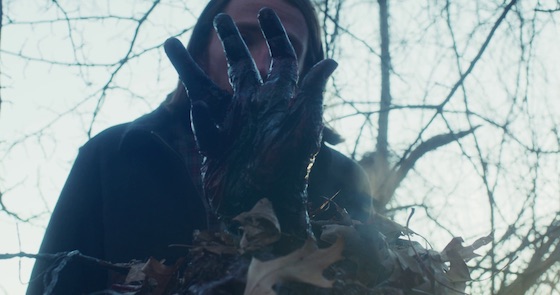
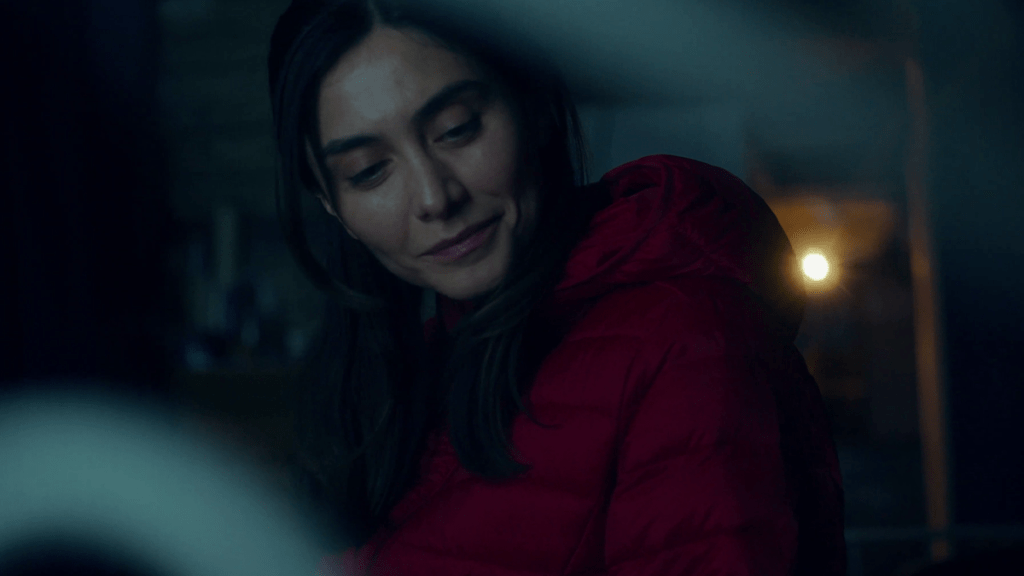
The Czech and Slovak joint production “Nightsiren” is a witchy tale about superstition, ritual and the function of witchcraft in an age-old patriarchy.
Director and co-writer Tereza Nvotová has conjured up an obscure, opaque thriller of symbolism and violence, old grudges and dots that don’t quite connect. When the events of this film cross that fateful date, “midsummer,” we have our easiest, most apt analogy for it.
It’s a slightly dumber “Midsommar.”
Years ago, a girl fled her brutal, widowed mother and in so doing caused the death of her little sister. Twenty years later, Sarlota (Natalia Germani) returns with her backpack, some supplies, a big wound she’s treating, psychic scars she’s ignoring and a guilty conscience she’s not quite reconciled.
Local yahoos on ATVs accost her as she rummages through a building on her mother’s old property.
“The witch dropped a tree on the last person who stayed here,” they warn (in Slovak with English subtitles).
But the armed tough guys are a little rattled with she tells them her name. Her mother was the one they called “the witch.” The place is cursed.
For real answers about this unfriendly village and what’s going on here Sarlota turns to one seemingly sympathetic older woman, and to the free spirit Mira (Eva Mores).
But even Mira can’t tell her what happened to this “wild child” her mother kept around after Sarlota fled. Might that be the sister she’s long believed died? And as we’ve seen the same body at the bottom of a cliff that Sarlota has, we wonder “Was it witchcraft that brought that wild child back?”
Actress turned director Nvotová’s film has a dreamlike quality to its folklore and a grim women-in-a-man’s-world reality to the daily indignities and violence the women in this village endure.
Some seasonal ritual has the menfolk dunking every woman they can get their hands on in water. Sarlota isn’t having it.
Every time it seems she might be fitting back in where she grew up, something about livestock or the local children comes up to shine suspicion on her anew.
Nvotová — “Filthy” was her debut feature — goes for tone more than linear coherence in this somewhat slow sex and superstition and gender-politics tale. Situations aren’t explained, various aspects of Sarlota’s physical state hinted at with contradictory explanations.
And just when you let the “witch” thing slip to the back of your mind as the film plods forward, here’s a moment where one suspected witch must strip and another where Sarlota finds herself stumbling into a witches’ orgy in the woods, nude bodies cavorting about a bonfire.
“Nightsiren” is too ponderous and self-serious to ever earn the label “exploitation,” but with all the nudity, sex and sexual violence in a somewhat less than it seems story, that’s where it belongs.
That laborious “chapter” heading editing and organizing principle (faddish screenwriters everywhere do this) is trotted out. And while the picture reaches a climax and wanders into an ending, there’s not much pace or ugency to any of it.
Even connecting with our heroine seems a stretch, despite her and Mira standing up to the child beating-spouse-abusing locals. Germani’s performance has purpose, but no pathos.
It holds one’s interest, if only to make the viewer wonder if this connection to that new state of affairs will ever be expained, or if more semi-gratuitous nudity will pop up between the bonfires, campfires and housefires that are what stick in the mind’s eye about “Nightsiren.”
Rating: unrated, lots of violence, nudity
Cast: Natalia Germani, Eva Mores, Juliana Olhová, Marek Geisberg, Jana Olhová and Noel Czuczor
Credits: Directed by Tereza Nvotová, scripted by Barbora Namerova and Tereza Nvotová. A Breaking Glass release.
Running time: 1:47

“Open” is an “open marriage melodrama complete with “rules” that are broken, celebrity, an unplanned pregnancy and stalking.
But the hook here is that writer, director and co-star Miles Doleac imagines our heroine, played by his wife and co-star Lindsay Anne Williams, dreaming about the principals in this messy menage as members of a band, with all of them in ’80s bandwear and her the most dolled-up of all.
“I’m open for anything,” our rocker-in-her-dreams croons, “except pain.” Later, she changes her tune.
“This isn’t what I thought it would be.”
And “The truth will set you free,” she goes on. “Truth, you mother-f—-r.”
The Boss couldn’t have put it better.
It’s pretty bad, a listless, no-energy quickie about Kristina and Robert (Williams and Doleac), months into their trial co-habitation separation (“Swingers,” somebody jokes. But “swingers” have more fun than this.). She dates a fading TV star Erik LaRue (Jeremy London, who did years on TV’s “I’ll Fly Away”), ends up getting tipsy and breaks the “no sleep-overs” rule she and Robert had.
As first Erik and then Kristina try to break it off, things turn stalky, acting teacher Robert, friends (Elena Sanchez, Amber Reign Smith) become more than bystanders and a policeman relative of one friend (William Forsythe) gets involved.
And every so often, there’s another song, or bickering in the band as Erik and others get added to its lineup. Again, all that is in Kristina’s dreams.
The songs aren’t that good, but they fall well short of terrible. The acting is more indifferent than bad, the direction lackluster and the scripted proceedings are cheesy enough to earn a National Dairy Council seal of approval. And that’s case closed on “Open.”
Rating: unrated, nudity, some violence, profanity
Cast: Lindsay Anne Williams, Jeremy London, Miles Doleac, Amber Reign Smith, Elena Sanchez and William Forsythe.
Credits:Directed by Miles Doleac, scripted by Miles Doleac and Lindsay Anne Williams. A Virgil Films release.
Running time: 1:58


I counted one legit laugh in the Danish pregnancy comedy “Maybe Baby (Bytte bytte baby),” a film about two couples of differing ages experiencing the (scientific) miracle of childbirth.
They have a joint baby shower, and the holisitic “hippy” couple’s mom brings just what you’d expect — a cake shaped like a vagina. Vagina cakes always crack me up.
This blandly predictable difficult pregnancies comedy’s one wrinkle is having the pricey, busy and carely private in vitro clinic that hard-driving, demanding lawyer Cecile (Mille Dinesen, fierce and kind of funny) and her husband Andreas (Lars Ranthe) visit as a last resort mix up her fertilized egg with that of younger, closer-to-broke Liv (Katinka Lærke Petersen) and partner Malte (Kasper Dalsgaard).
As the fertility specialist (Thomas Bo Larsen of “Another Round”) is prone to implanting eggs and telling the biological father “We finished without you. I’m almost like a stepdad!” we can see how that might happen.
Fine. Fine. Just bring your babies to term and swap them, right?
But short tempered Cecile is ready with a writ, actually a contract, to make sure that happens. And laid-back Liebraumilch drinking Liv — Ms. “A Little Wine Can’t Hurt” — isn’t sure about that, as she expends to bond with this child growing inside her,
Cecile? “I refuse to have their hippie baby!” (in Danish with English subtitles).
Each must bend to the other’s preferred way of approaching pregnancy to mimic the experience the child will be brought up in.
Dinesen (“Hold My Hand”) is the only one who reaches for laughs here, although Larsen sneaks in a lighter touch. Everybody else plays this fairly straight, and dull.
Nothing particularly original or hilarious spins out of this Pia Konstantin Berg screenplay. Cecile’s sexist “I would have like to have gotten a head’s up” boss is predictably unsupportive.
But as the mothers fight over holistic, laid back, “no meat,” herbal this and “natural” that vs. Cecile’s “no cats — litterbox germs…No wine!” and “My baby needs MEAT,” the film lapses into that just-as-sexist menfolk are the reasonable ones ytp[, with Andreas consoling Cecile, accomodating Liv and Malte and Malte protesting how Liv is leaving him out of the decision-making process.
Even in enlightened Scandinavia, old movie comedy tropes die hard.
Rating: TV-MA, explicit sex, profanity, alcohol
Cast: Mille Dinesen, Katinka Lærke Petersen, Kasper Dalsgaard, Lars Ranthe and Thomas Bo Larsen
Credits: Directed by Barbara Topsøe-Rothenborg, scripted by Pia Konstantin Berg. A Netflix release.
Running time: 1:44
A chauffeuring courtship scene involving DiCaprio and Gladstone, as the oil-rich young Osage woman Mollie.
I do love me a good period piece and a Scorsese epic.


“This Much We Know” is an old-school first person essay documentary and new style “performative” bit of navel gazing about suicide, how we understand it and why Las Vegas is the “suicide capital of North America.”
But filmmaker, interviewer and voice over narrator L. (Lily) Frances Henderson — the hospice documentary “Lessons for the Living” was hers — meanders around a couple of subjects, giving us a seemingly intimate and personal film that is never quite either, despite being equal parts early Ross McElwee (“Sherman’s March” and early Errol Morris (“The Unknown Known”).
Henderson recreates the last hours of a focused, martials arts-trained teen named Levi, who ended that day by riding to the top of the Vegas Stratosphere tower, climbing over protective barriers and leaping to his death.
Henderson uses Levi’s life and actions as a means of examining the Las Vegas suicide situation, glancing in passing at the city’s gambling industry as she makes her way to the years-long debate over the Yucca Mountain Nuclear Waste Repository set up outside of the city.
Hearing from Yucca Mountain experts allows Henderson to weigh the issues of statistical probabilities, the mathematical truths, remote and otherwise, that determine the odds against accidents at the now-semi-active (it’s a political hot potato) facility, and compare that to the statistical certitude of a “suicide ruling” in a coroner’s cause of death declaration.
Yes, that’s a bit of a reach and the film never made that connection work for me.
“This Much We Know” is “inspired by” and based on John D’Agata’s non-fiction best seller, “About a Mountain,” which is about him moving to Las Vegas, digging into the Yucca Mountain waste repository issue, learning the city has the highest suicide rate in the country and apparently answering a suicide hotline phone and speaking with Levi, Henderson’s subject, hours before he took his own life, something Henderson alludes to (not mentioning D’Agata by name) in the film.
Soooo…D’Agata’s done the heavy thematic lifting and fact-finding and Henderson is just… parachuting in and riffing on his ideas? If so, she has a lot more trouble tying all this together in a coherent argument or documentary.
Long Yucca Mountain passages with one anchor interview about that aside, the meat of the movie is Henderson’s efforts to get at the big unknown in most suicides, “Why” someone did it. It’s an issue she tackles in classic journalistic fashion, getting to asking “Why” after she’s explained “Who, what, when, where and how?”
Her central argument, vaguely presented and under-narrated in Henderson’s quiet, intimate monotone (roughly one third the volume of anyone she interviews), is that there should be degrees of uncertainty about the coroner’s judgement that someone has taken her or his own life.
“Involuntary self-manslaughter,” she considers. “Accidental suicide.” The movie’s most pointed debate is with former Vegas coroner Ron Flud, who shuts down her “uncertainty,” “yes and no” “grey area” doubts, just not to her satisfaction.
What Henderson is getting at indirectly is the stigma still attached to suicide. She hears out a bullying, intemperate and off-the-record (we don’t learn his name) complaint call about doing a film about Levi, and we maybe we shake our heads at his brusque “move on/let it go/get over it” dismissal.
Henderson mentions a “friend” who took her life several times in the film, often as a means of passing on to someone she’s interviewing her connection to such tragedies and understanding of what someone who loses a loved one that way goes through. She evens shows us pictures of the blonde woman who shot herself and ponders what one unguarded photo might say about her state of mind.
But while she takes pains to identify Levi Walter Pressley in full, interviewing his still suffering parents (his mother consults a spiritualist), Henderson never names that friend, stigmatizing her death and treating her suicide with a delicacy not applied to her study of Levi and interviews with friends and family.
As to “Why,” at the end of the day and the end of the movie, she can’t know and we can’t know, despite her study of and many citations from French sociologist Emile Durkheim’s groundbreaking 1895 book “Suicide: A Study in Sociology.”
Maybe that book would have been easier to get an uncluttered, thematically-compact film out of than “About a Mountain” and vague notions of what risks and uncertainties we as a culture are willing to take as they relate to suicide and nuclear waste storage.
Whatever D’Agata managed Henderson just doesn’t pull off.
Rating: unrated
Cast: and Lily Frances Henderson, who also narrates.
Credits: Scripted and directed by L. Frances Henderson, inspired by “About a Mountain,” by John D.Agata. An Oscilloscope Labs release.
Running time: 1:50
Eve Mauro and Ashton Leigh are among those who join Alex and Jackson for this B-movie/actioner.
“Black Noise” opens Nov. 3.
Steven Soderbergh produced Eddie Alcazar’s dystopian assault on the senses. Check out the trailer. It’s a real pin-your-ears-back sales pitch, right?
Bella Thorne, Scott Baluka, Moises Arias, Stephen Dorff and snippets from earlier B & W sci-fi classics appear to make up this Utopia release.
Wowza.


The late Tom Sizemore’s waning days and only slightly-diminished talents were utterly wasted on “Impuratus,” an under-lit, under-edited and over-written period piece mystery just now coming before the public.
It’s a supernatural thriller about a 1920s detective summoned to hear a “confession” from an ancient, near-catatonic Civil War veteran, played by Jody Quigley.
What the film — whose title translates as a succint two-word review, “vile, infamous” — adds up to is a 35 minute dramatic short spread over 133 minutes of run time. It’s interminable, with scene after pointless scene and a novella’s worth of discardable, doesn’t-advance-the-plot-or-illuminate-characters dialogue.
Sizemore’s Allentown police detective gets the word that a witness to all this man’s weird history is dead, but only after he’s been informed of much she said and thought, ad nauseum, by the head shrink (Robert Miano) at a Pennsylvania insane asylum.
“Passed. Whattaya MEAN passed? As in dead? AS IN DEAD?”
That’s a lot of words to get across “Oh she’s dead, is she?”
“Well well well, that’s a fascinating surprising development, Doc.”
Well, if you say so, flat foot.
Writer-director Mike Yurinko burns through some 20 minutes of screen time just to get us to the point where our detective is summoned to that mental hospital — by the patient — only to be trapped there A) by a coming ice storm and B) by this endless back-story, some of it visited in Civil War flashbacks, much of it narrated from combat veteran Daniel Glassman’s jumbled, run-on “All work and no play makes Jack a dull boy” typewritten confession.
Sizemore was perfectly credible as a detective, private or police, in most periods the movies depict such gumshoes.
“People say the damned things to avoid getting what’s coming to him,” he growls, and we buy in.
But he floundered here, a troubled actor and screen veteran who seems to realize what he’s saddled with here, and that no amount of improv or animation on his part can improve it.
Yurinko (“Entity” was his) made a dark, not-particularly spooky movie that is cryptic with no real mystery to hide, repetitive with no scene or situation worth repeating and based on a script that apparently he got no feedback on before starting production.
“What causes mental illness?” our pre-Freudian detective wants to know at one point. That’s what we call a non-starter.
And “Just get to the point” he says later, one instance where he really should have repeated himself — constantly. Not that one line, even repeated, would have made a difference in this dull exercise in demonic whaeverness.
Rating: unrated, violence, some profanity
Cast: Tom Sizemore, Robert Miano, Airen DeLaMater, Lew Temple,
Silvia Spross and Jody Quigley,
Credits: Scripted and directed by Mike Yurinko. A Gravitas Ventures release.
Running time: 2:14
Zac Efron, Jeremy Allen White, Lily James, Maura Tierney and Holt McCallany are among the stars in this edgy Dec. 22 biopic of ’80s wrestling tyros, the Von Erich Brothers.
You know what we say? “If it’s A24 I’ll take a look.”