Movie Review: A fine cast stands clear of the messiness that is “Eileen

“Eileen” is a chilly, immersive character study about a young woman drowning in the drudgery and burdens of the trap her life has become.

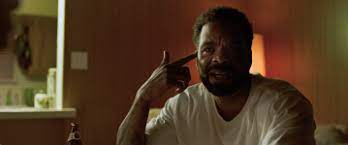
Eileen, played by the wonderful Thomasin McKenzie, has a soul-crushing job at a young men’s prison. And at the end of each workday, she drives her battered, smokey, exhaust-leaking Plymouth Savoy home to her alcoholic ex-police chief dad (Shea Whigham, hatefully perfect), but not before stopping at the liquor store to replenish his supply.

For this, she gets nothing but abuse and insults.

“You should be nicer to me,” she complains, to no avail.

It’s the winter of ’64-65 from the looks of things, and in this corner of Massachusetts, even “the beach” is bleak at this time of year. It’s no wonder Eileen fantasizes about the sex lives of others, and masturbates with images of a young guard or even of a silent young murder suspect in her mind.

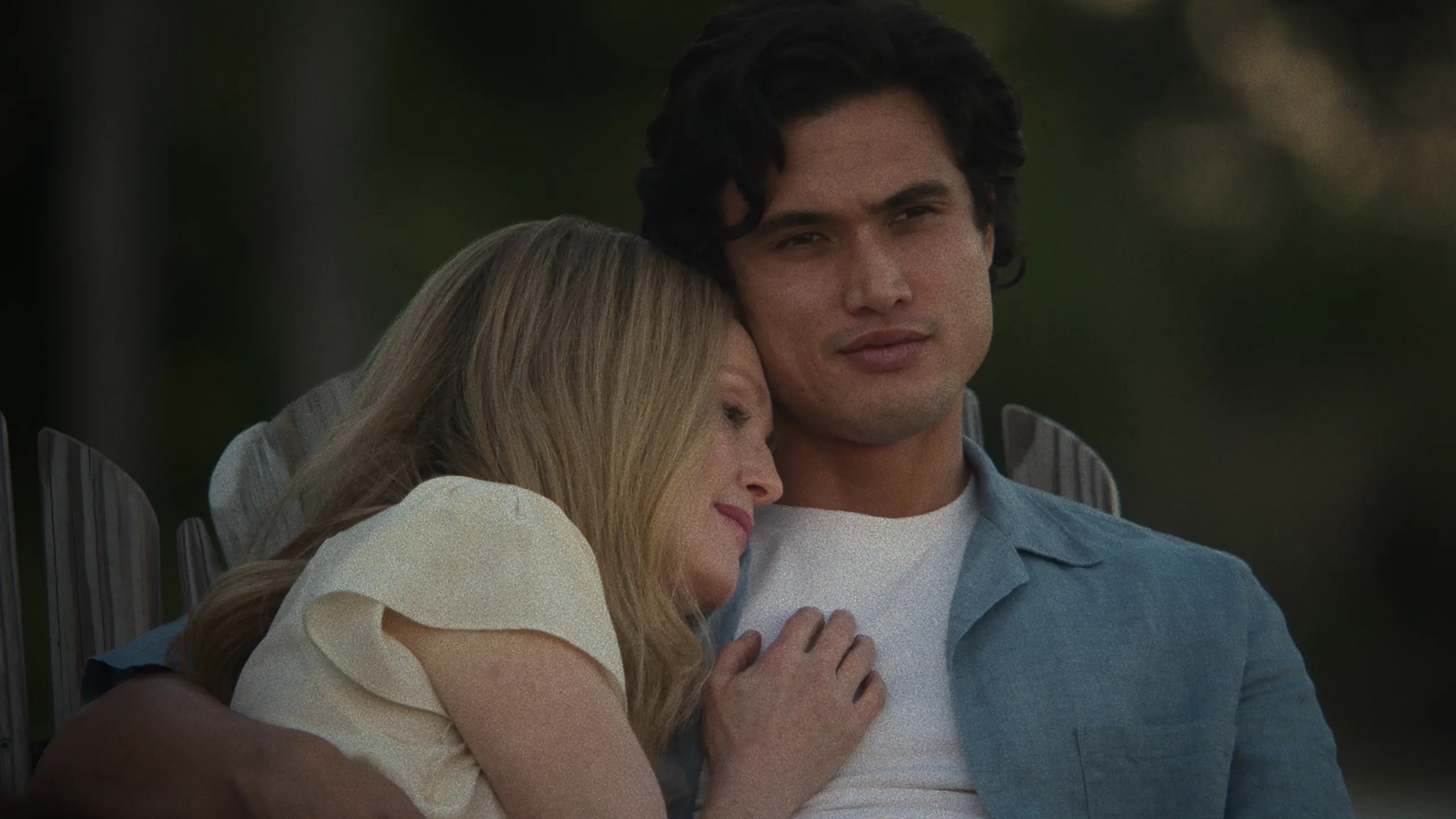
And then this blast of big city sophistication, a well-dressed and perfectly-turned out beauty blows into her world. The new psychologist at the prison is a woman, a cool vivacious blonde vamped-to-the-max by Oscar winner Anne Hathaway. In this repressed, depressing, sexist world, Dr. Rebecca St. John is a breath of fresh air, an intellectual oasis, an ally and a confidante. Maybe even, when the chips are down, she could be a co-conspirator.

The latest film from the director of the Florence Pugh star vehicle “Lady Macbeth” is a vivid recreation of a time and a place in pre-feminist history, when males at any level, from loutish barflies to leadership in any institution — prisons included — had license to sexualize, demean and diminish women of real accomplishment.

In the case of “Dr. ‘Miss’ Rebecca St. John,” as her warden introduces her, we see somebody who may have to endure such loutishness, but maintains lines she won’t let any man cross, and a streetwise New York savvy about where to land a punch, and when.

Continue reading
Posted in Reviews, previews, profiles and movie news | Comments Off on Movie Review: A fine cast stands clear of the messiness that is “Eileen

Documentary Review: The “Fixed Fight” with Big Pork in Eastern N.C. — “The Smell of Money”

“The Smell of Money” is a social justice documentary about environmental racism and its role in bringing home the bacon, ham and sausage in the American food chain.

Set in the towns and rural counties of Eastern N.C. where Big Pork has set up shop, with giant processing plants fed by “factory farms” and their underregulated/unenforced cesspools of pig feces. “Money” takes us through the decades-long legal fight to do something about a toxic, life-shortening and occasionally directly lethal stench. That stink is produced by these absentee landlord factory farms plopped down, often on land obtained by dubious manipulations of small town courthouses and old deeds, right in the middle of people’s neighborhoods and lives.

It’s a broad subject, so much so that parts of the story — the infamous Southern practice of disputing poor Black landholder’s century-old deeds and claims to inherited property by white interests with deep pockets — have to be mentioned but passed-over to make room for other grievances. Specifically, the way Smithfield Foods in its many incarnations has bent the state’s politics to its will, devaluing working class folks and limited-incoming retirees’ property, taking shortcuts to solve a catastropic waste problem and cavalierly “waiting out” the parade of lawsuits and gigantic judgments rendered against Smithfield, hoping the elderly and made-sick-by-Smithfield-practices plaintiffs will die.

Director Shawn Bannon and screenwriter Jamie Berger’s film is infuriating. And you don’t have to have driven through this corner of the South, as I used to on a regular basis, to be mad at a corporate invasion targeted at “invisible” and mostly Black and generally powerless people.

The entire enterprise is engineered to protect the company behind all the wrongdoing as it signs up farmers and those who get their hands on farmland to open feeder factories — CAFO, “Concentrated Animal Feeding Operations” — directs how such operations should be run and funds politicians who change laws to protect them from demands to do something about the dangerous smell and insulate them from accountability.

Even the way the debate is framed has been manipulated, as a parade of state TV news coverage demonstrates. The fumes are diminished with the word “nuisance,” and the white-haired Jesse Helms wannabe anchor at WRAL-TV seems to relish the confusion the word sews as he describes “nuisance” suits in ways that make it sound like the “nuisance” is to this multi-billion dollar, now Chinese-owned corporation.

One of the film’s villains is the Republican state ag commissioner, Steve Troxler, who rallies farmers — who aren’t being sued despite their role in spraying waste over acreage guaranteed to seep into the water supply and very air breathed by their “neighbors.”

“We are NOT a nuisance,” Troxler bellows at rallies. “We have done nothing WRONG. We are feeding the WORLD. What we are is a BLESSING.”

But as plaintiffs such as Elsie Herring, living in a literal “Little Pink House,” Rene Miller and others make clear, the only people “blessed” live a long ways at a geographical and financial remove from this nasty business which occasionally kills an employee thanks to the toxic environment they’re working in.

Continue reading
Posted in Reviews, previews, profiles and movie news | Comments Off on Documentary Review: The “Fixed Fight” with Big Pork in Eastern N.C. — “The Smell of Money”

Movie Review: A “Book of Mormon” inspired pre-Colombian action pic, “The Oath”

In secular cinematic terms, “The Oath” is a limp, underfinanced Pre-Columbian “Last of the Mohicans,” an “action adventure” about the lone survivor of a tribe hunted down by his hated rivals, but not before he’s fallen in love with an outcast from the tribe that’s trying to finish the genocide it started.

The characters are kind of colorless. There’s one big swordfight and the “romance” is largely off camera. The not-exactly-an-epic production values — nothing is “built,” with a river, a waterfall, forest and a rock overhang cave the only settings — are still a step or two above the “student film/first film” feel of the entire enterprise.

But “The Oath” isn’t “secular.” Actor (often billed as Darin Southam) turned writer-director-star Darin Scott has conjured up a MesoAmerican thriller built on Mormonism’s foundation myth, with just enough magical thinking thrown in to make everything “historical” presented here play as eye-rolling hokum.

Set about 500 years after the death of Jesus, and roughly 500 years after Jesus appeared to the “lost tribes of Israel” in the Americas, it’s about descendents of the Biblical Joseph who fled Egypt, crossed the Mediterreanean and Atlantic and settled in the New World, only to engage in a blood feud here.

The last of the Nephites, Moroni (Scott) is on the run through the verdant woodlands of North America, hunted by the minions of Aaron, king of the Lamanites. He’s played by Billy Zane in a classic Brigham Young beard, speaking in some sort of pre-Columbian Irish accent.

That Billy Zane. What a cut-up.

Moroni prays in interior monologues as he lays low and finishes inscribing the golden plates alleged to have been the source scriptures for the Book of Mormon. He urges the almighty to “make me mighty in body and soul” so that he won’t have to endure “the slavery of my (fore)fathers,” the dreamcoated Joseph and his Israelites in bondage in Egypt Land.

Widowed Moroni finds his scholarship with those golden plates interrupted when he takes in the injured and cast-out concubine Bathsheeba (Nora Dale) from the evil Aaron’s “court.”

Once they get past her “You’re boring, all of your talking” and his raised-eyebrow over what “concubine to the king” entails, they’re destined to fall in love.

But the rules of drama are that this is the perfect moment for ace trackers, including Bathsheeba’s sister (Karina Lombard) and Aaron’s head henchman (Eugene Brave Rock) to find them.

The film’s Mormonism origin story is back-engineered to get us from the words of the descendant of one Joseph to the hands of a New American Joseph, Joseph Smith, via those inscribed plate/pages of gold Smith claimed to have found buried in upstate New York in 1823.

I first encountered the rough parameters of this tale as a child, in handed-down Mormon comics from a true-believer uncle. As a childhood fan of the National Geographic TV archeology and paleontology specials and a lover of history, the yarn struck me as eye-rolling “history,” and a dim, dull fantasy not remotely inventive enough to be on a par with the Marvel comics I was reading and outgrew by my early teens.

Darin Scott as he now bills himself isn’t able to wring anything more convincing out of this scenario on film. It’s a production that conspicously avoids any depiction of “lost tribes” as advanced civilizations. No “cities,” no buildings for the king and his “court.” About all we see here that might have made it into the archeological record — had any of this really happened — are steel swords and bronze breastplates.

But this isn’t about archeology. Mormonism’s founding text and version of American pre-history has been debunked at the highest, most scientific and official levels. No “Lost Tribes of Israel” voyaged 5000 miles to the Western Hemisphere.

Given that provable fact, and allowing that few religions could pass a rigorous fact-based dig into their origins, “Oath” is a story that needs to at least be compelling enough to be the backbone of belief.

“The Oath” isn’t anywhere near compelling, convincing or even interesting enough to make that sale. The movie’s lifeless and generic, and does nothing to shake the sense that the theology behind it is probably balderdash.

Rating: PG-13, violence

Cast: Darin Scott, Nora Dale, Karina Lombard, Eugene Brave Rock and Billy Zane.

Credits: Directed by Darin Scott, scripted by Darin and Michelle Scott, based on The Book of Mormon. A Freestyle Media release.

Running time: 1:44

Posted in Reviews, previews, profiles and movie news | 2 Comments

Documentary Review: Deconstructing a Cinema Revolutionary — “Godard Cinema”

Prolific provocateur and cinema revolutionary Jean-Luc Godard cut a long, narrow swath through film history in his 91 years.

He changed cinema into something messier and more realistic in launching the French New Wave in the 1950s. Movies were never the same after 1959’s “Breathless,” and other early works such as ” Bande à part (Band Apart)” and “Contempt (Le mépris).” And like his onetime idol, Chairman Mao, spent the rest of his career attempting and advocating for a perpetual revolution.

He stirred up passions, pro and con, pretty much for the rest of his life — boo’d at Cannes, pied in the face after his “blasphemous” “Hail Mary,” dismissed, chastised, running off to self-imposed exile and even attempting suicide a couple of times.When he finally died, it was via assisted suicide in Switzerland.

But his towering reputation and legend live on. Quentin Tarantino named his production company “A Band Apart” after the Franco-Swiss enfant terrible. Others still celebrate him, and he remains a bucket-list filmmaker that any self-described cinemaphile must sample.

And now there’s a documentary that attempts to take in the totality of Godard. “Godard Cinema” is an ambitious compilation of clips, snippets of films and other projects, interviews with him and those who knew, married and worked for Jean-Luc Godard — some loving, some hating — as well as academics, biographers and experts (all French) who remind us that while his reputation waxes and wanes, his relevance outlives him, as do his greatest films.

Godard might have been the smartest filmmaker ever to step behind the camera, the very model of the cerebral cineaste, a deep thinker even at his most wrongheaded. Alternately brooding and playful and almost always arrogant, he broke into cinema as a film critic.

Naturally.

As a critic, he was of a generation of French “Cahiers du Cinema” (Notebook of Film) writers who pushed the idea of cinema as art, as if no one had ever thought of it before them, as if they slept through Latin class at their posh prep schools and didn’t recognize that MGM’s logo since the 1920s has been “Ars Gratia Artis,” “art for art’s sake.”

Champions of the “auteur theory,” they lionized filmmakers with consistent themes, styles and obsessions, not just the John Fords and Orson Welles, but Hitchcock, Sam Fuller and genre specialists who made statements as they demonstrated the old maxim “an artist is someone who hammers the same nail over and over again” with every movie.

Ever used the term “film noir?” These are the folks who identified that famous criminal underbelly genre, and named it.

Cyril Leuthy’s film remembers Godard’s avowed practice of asking “What would (filmmaker Jean) Renoir do?” in a given scene or given cinematic situation. “Or Hitchcock?” He’d then try to do “the opposite.”

“I am a painter who does literature,” he said in one archival interview. “Cinema is the truth at 24 frames per second” was a film student T-shirt just waiting for mass production.

Leuthy’s film notes how Godard massaged his “legend,” smoking and wearing his pricey sunglasses indoors, telling anyone who asked — biographers included — that there are “no pictures of my childhood.” One historian asked “Was Godard ever a child?”

Yes he was. Yes, there are photos, or at least one photo. “Godard Cinema” gets at his reasons for covering-up his privileged (raised in Paris and Switzerland), politically-connected upbringing.

He prepared meticulously, some who worked with him declare, but always hid that to ensure he’d be labeled a “genius” for just tossing off his 140 features, shorts and even movie trailers that pass for art.

Godard didn’t like sharing screenplays with the cast, and was an innovator in the “earpiece in the actor’s ear” directing style, passing on dialogue and acting directions mid-take. He was given to quoting philosophers famous and obscure off-set, and having his characters do so in his films. As neither actor nor viewer had a firm grasp of why this quotable line worked here or there, that could be exasperating to all concerned.

The documentary does justice to the man, and does well enough at summing up how his contrary personality serves his art, although it might be better served having an English-language narration for US distribution. By the time we drift past his most famous U.S. TV interview, with Dick Cavett as “Every Man for Himself” (1980) came out, revelations in “Godard Cinema” are in shorter supply, as indeed his relevence seemed to fall-off after that watershed event — save for the rank provocation of “Hail Mary” (1985).

But if “Godard Cinema” prompts streaming services to renew our acquaintance with the work, films from “Breathless” to “Hail Mary” that often retain their power to jolt, shock, inspire and provoke, all the better.

Rating: unrated, nudity, smoking, some profanity

Cast: Jean-Luc Godard, Julie Delpy, Hanna Schygulla, Anna Karina, Macha Méril, with Johnny Hallyday, Jean-Paul Belmondo, Dick Cavett, many others, narrated by Guillaume Gouix.

Credits: Scripted, directed by Cyril Leuthy. A Kino Lorber release.

Running time: 1:41

Posted in Reviews, previews, profiles and movie news | Comments Off on Documentary Review: Deconstructing a Cinema Revolutionary — “Godard Cinema”

Movie Review: Slovakia’s Oscar contender is set underground in Kyiv, Ukraine — “Photophobia”

“Photophobia,” Slovakia’s entry for Best International Feature in the upcoming 96th Academy Awards, is a reminder that Ukraine still merits the world’s compassion, aid and attention.

It’s a docudrama with non-actors “playing” the role Putin’s Russian invasion has limited them to, that of refugees in their own country, living in the sections of Kyiv’s subway which serve as the safest air raid shelter in the city.

“Niki” (Nikita Tyshchenko) looks to be about nine, a boy somewhat traumatized by the experiences that brought him and his family down here, urged to keep a diary by a doctor who visits everyone and checks their ears, throat, pulse and general mental wellbeing.

His biggest health issue is “Photophobia.” He needs sunlight, “Vitamin D” and fresh air. As do they all. They need a country free from Russian invasions.

Luckily for him his sister Anya (Anna Tyshchenko) is there to roam the empty stations and tunnels and play with him, his mother (Yana Yevdokymova) is there to comfort them and his friends are still somewhere that they can text him.

“Where are they,” his mother wants to know?

“They don’t say,” he replies in Ukrainian with English subtitles.

We get a glimpse of the routines of life in a shelter, food shortages but everyone shares because everybody “down here” has a story about where they were when “the war started,” some of which Niki takes to transcribing in his diary.

Niki and Anya’s parents — his stepdad (Yevhenii Borshch) is here with them — debate whether to go back “up there” because others do, only returning to the subway at night to sleep in relative safety. And they wonder if “the kids will remember this.”

Meanwhile, an elderly busker (Vitaly Pavlovich) serenades one and all with folk songs and ditties as he accompanies himself on his guitar, an entertainer keeping himself busy distracting passersby and those within earshot with reminders of their shared Ukrainian heritage via love songs and the like.

Filmmakers Ivan Ostrochovský and Pavol Pekarcik limit themselves to a mere snapshot of this grim but survivable life led by those who stayed in Kyiv during the Russian siege. They pepper their picture with cell video “snapshots” of the people of the city, their lives “above” after the attack.

Their film is thus a bit myopic, even if it is a worthwhile reminder that democracies everywhere are under attack and Ukraine is the front lines of this global war for liberty and freedom from fascism.

Rating: unrated, discussions of violence

Cast: Nikita Tyshchenko, Yana Yevdokymova, Yevhenii Borshch, Anna Tyshchenko and Vitaly Pavlovich

Credits: Directed by Ivan Ostrochovský and Pavol Pekarcik, scripted by Marek Lescák, Ivan Ostrochovský and Pavol Pekarcik. A Cinémotif Films production.

Running time: 1:11

Posted in Reviews, previews, profiles and movie news | Comments Off on Movie Review: Slovakia’s Oscar contender is set underground in Kyiv, Ukraine — “Photophobia”

Movie Review: Toxic Masculinity embodied by Wrestlers and “The Iron Claw”

Your first though when you see him is that “High School Musical” alum Zac Efron is the beneficiary of the latest tech used to make “The Hulk” come to life.

He is a walking muscle, bulked-up so much his head seems an immovable object riveted onto his neck. The bulging muscles of his legs and simple bulk of his body affects his forward motion, forcing him to sidle into scenes rather than simply walk in.

It’s a stunning transformation, and whatever he went through to achieve it, that speaks to his commitment to “The Iron Claw,” a “true story” of wrestling, toxic masculinity and the dreams of the father pursued without much choice by four sons of a onetime pro who never got that coveted world heavyweight title belt.

The latest drama from writer-director Sean Durkin (“Martha Marcy May Marlene,” “The Nest”) is a tale of God, guns and steroids and the performative masculinity of a sport and “scene” seemingly tailor-made for Texas.

It’s about the Von Erich clan, four young men trained, tested, taunted and bullied into the ring by their father in pursuit of his dream, to settle his “grudge” against the wrestling establishment that never gave him his shot.

“Fight Club” and TV’s “Mindhunter” veteran Holt McCallany has his chewiest big screen role in years as that patriarch, Fritz Von Erich, who “ranks” his sons in terms of who is his “favorite” determined by who has the best shot at that elusive “belt.”

He’s not physically abusive, just uncompromising and demanding, running his family as part of the Texas wrestling business he bought out in his later years. His boys will be “the toughest, the strongest and absolute best.” And they’ll get their shot.

If not Kevin (Efron), the best looking and bulkiest of the lot, then it’ll fall to towering, charismatic David (Brit actor Harris Dickson of “Where the Crawdads Sing”). If not David, then Olympic prospect Kerry (Jeremy Allen White of “The Bear”) will change sports and he’ll be The Chosen One.

Skinny, musically-minded Mike (Stanley Simon)? Well, let’s hope it doesn’t come to that, right?

Kevin is our single-minded narrator, the one who talks about “the family curse.” Not only was Dad unable to reach the pinnacle of success, but he lost his first-born son before the lad reached his tweens. His other boys become his project, working out constantly on their Texas ranch, roughhousing and bonding when they aren’t body-building and getting shots in the rump to aid that bulking up.

Kevin’s handsome and unworldly, a bit shy. Naturally he’s bowled-over by the brassy fangirl (Lily James) who asks him “What do you want in life, Kevin Von Erich?” His dopey answer, “to be with my brothers,” gets a cards-on-the-table reply from her, and our great big wrestler turns into a lovesick puppy.

As Kevin isn’t a natural at the rehearsed and “performed” trash-talk that promotes TV wrasslin’, he’s facing an uphill battle. David, on the other hand, has that shtick down, always using the family’s trademark wrestling hold, “The Iron Claw” as his punchline.

Kevin’s sensitive enough to see the toll all this competing and paternal pressure is taking on himself and his siblings. Mom (Maura Tierney)?

“You work that out with your brothers,” is her dodge. “That’s what they’re here for.”

The film tracks the Von Erich (original surname Adkisson) clan through the ’70s, taking its best shots in the ’80s and coping with “the family curse” that is their father’s excuse for when things don’t work out, often with tragic consequences.

Of the performances, Efron’s startling transformation impresses, letting you see the limits it imposes — physical, emotional and intellectual — on poor Kevin, who like most of his siblings, has little else that he’s fit to do in life. At least he gets a dance number — a boot-scuffling line dance with his brothers.

The film on the wandering wrestling family that settled in Texas dabbles in the rigid gender parameters imposed in their world and the violence even in a “rehearsed” and “staged” sport. Those tables they and their great “national” rival, Ric Flair (Aaron Dean Eisenberg, a hoot here) crash through, those folding chairs that make handy weapons, those concrete floors they’re doomed to land on, hurt and cripple.

Durkin’s longish and thorough (“ish, as he left out one brother) account of this family, its sport and its “curse,” can feel cursory, as if he hasn’t made up his minds about all this when filming finished. McCallany has too few scenes and Fritz feels watered down, perhaps owing to family sensibilities, as a brute who scarred his brood for life.

The film plays as a “Great Santini” in which no one stands up to the bullying, controlling patriarch. That makes it more an observation than anything Durkin is drawing a conclusion about.

The performances are good, the wrestling thrillingly-shot and cut together. But with a meandering message and an ending that is almost a parody of the “paradise” these boys reach for, it’s forgiveable to consider “The Iron Claw” — scripted and acted to the limits of what the script serves up — as little better than a draw.

Rating: R, violence, steroid abuse, sexual situations and profanity

Cast: Zac Efron, Lily James, Jeremy Allen White, Stanley Simon, Harris Dickinson, Maura Tierney and Holt McCallany

Credits: Scripted and directed by Sean Durkin. An A24 release.

Running time: 2:10

Posted in Reviews, previews, profiles and movie news | Comments Off on Movie Review: Toxic Masculinity embodied by Wrestlers and “The Iron Claw”

Classic Film Review: The Eyes Have It — Orson Welles weaves “Black Magic” (1949)

As “classics” go, “Black Magic” is very much a mixed-bag.

A fanciful and dark account of the life of a real-life historical figure, the magnetic and captivating 18th century magician, con-man and hypnotist Cagliostro, it features impressive Italian locations, soaring sets, dazzling costumes and Orson Welles, all in service of a plot that’s “inspired by” historical events and so uneven in emphasis that it’s hard to make much sense out of it.

But if you’re a film buff, all you saw in that previous paragraph was “ORSON WELLES.” The film is remembered for being a later addition to the Orson Welles directing canon — on-set stories related that he directed himself in his own scenes and perhaps some other sequences under credited director Gregory Ratoff. A “Wellesian” will see The Master’s Touch in the way this shot is lit or framed, that camera angle, in the overlapping “radio drama” styled “realistic” dialogue in some sequences.

Dismissed upon its release — the New York Times lumped the initialed-but-unsigned review of it in with a review of a forgotten bio-pic of the trotter/harness-racing “pacing” horse “The Great Dan Patch” — “Black Magic” has a few things to recommend it. Chief among them is Welles, a magician in front of and behind the camera, on and off set.

There are many times we get the sense that a quote famously attributed to Welles is true, that he had more “fun” making this movie than any other he filmed.

Having just watched another adaptation of Alexandre Dumas’ “The Three Musketeers,” knowing that Dumas the Elder wrote about Cagliostro, and this being the season of holiday hams, I was in the right mood for a little Orson prestidigitation.

The story is framed in an 1848 argument between Dumas the elder (Berry Kroeger) and his “Camille” writing Dumas “fils” (son), played by the always riveting Raymond Burr.

We hear in voice-over and see the tale of the hard life of the Gypsy boy Joseph (Guiseppe) Balsamo, the execution of his falsely-accused mentalist mother and father and his own rescue just as minions of the high-handed Viscount de Montagne (Stephen Bekassy) have finished beating young Joseph and pulled the branding iron out of the fire to blind the boy as punishment.

Balsamo would not forget this great wrong. He grows up, not as a medium but as a healer/persuader, and becomes a traveling wagon show magician and hypnotizer (the word hadn’t been coined) who gets the attention of the scientist for whom “mesmerizing” was coined, the Viennese Dr. Franz Anton Mesmer.

Mesmer (Charles Goldner) is amazed at Balsamo’s eye-contact powers of persuasion, perhaps discounting the way the key light (on set) narrows to just his eyes as he zeros in on a “patient” or “victim.” But when Mesmer tries to convince Balsamo to join him in studying this power for the aid of mankind, Balsamo flees.

Remaking himself as Count Cagliostro, he dazzles crowds and “cures” via the power of suggestion. That brings him into the court of aged, chuckling Louis XV (Robert Atkins) of France, the scheming consort Madame du Barry (Margot Grahame), the heir (Lee Kressel) and the dauphin’s wife, Marie Antoinette (Nancy Guild).

Cagliostro falls for a Marie look-alike, Lorenza (Guild again) just at the time a scheme is hatched to discredit the easily-discredited Marie with The Affair of the Diamond Necklace. Cagliostro, hypnotizing Lorenza away from her titled suitor, is drawn into it.

Welles works magic act sleight of hand into not just “The Act” scenes, but in character conversations that reveal Cagliostro’s thinking about this scheme and “What’s in it for” him.

He ensures that he’s shot in crazy-eyed close-up, sometimes underlit from below. And he turns that sonorous voice on an indeterminate Euro-accent that comes and goes, the way such performances did in the days before dialect coaches were on set.

This film comes close enough on the heels of “Lady from Shanghai” and “Macbeth” that we can appreciate Welles seeking or scripting roles that play to his power, presence and voice on screen. Like “Macbeth,” Cagliostro isn’t a mastermind, just a chancer swept along by fate and the ideas of others. But he always owns the room.

The finale has a swordfight that’s pretty impressive in the seamless way the big man is stunt-doubled in all the more dangerous bits. But he’s at his best in a thundering royal trial sequence, and in his commanding answer to a “prank” “cure” staged at court to discredit him when he first meets Louis XV.

“There’s one little matter they all forget,” Cagliostro purrs. “If I can cure, I also can AFFLICT.”

Then, as now, Guild seems a little over-matched, cast in a double role above her abilities, although she delivers a mean “You insolent fishwife” in the best Marie Antoinette tradition.

Valentina Cortese, as a loyal woman who was by Balsamo’s side after his Roma rescue from blinding, makes a better show of it playing a more compelling character.

When the production cast the Armenian character actor Akim Tamaroff as Gitano, the Roma friend who rescues him and becomes Cagliostro’s lifelong sidekick, Welles also found himself a sidekick for life, bringing in Tamaroff for assorted roles, including Sancho Panza in his unfinished shot at “Don Quixote.”

“Black Magic” may largely be regarded as a fat check and European vacation/starring-role between “Lady from Shanghai/Macbeth” and Welles’ grand turn in a character role in “The Third Man.” But there’s fun stuff in here, and a big, broad performance to relish at the center of this big cast/big sets (black and white) Hollywood production.

Not having to take the entire hit if the film bombed, even if it did mean he’d quickly transition to character support for much of the rest of his career as this film finished off the idea of the actor Orson Welles as “leading man” and “box office” must have been liberating, if bittersweet in memory.

He’d make a few classics in the ’50s and 60s, in front of and behind the camera. And he’d become the ultimate Hollywood insider/outsider, revered as Our Great Talent, but not to be trusted with Hollywood money or Hollywood productions as star or director.

It’s no wonder he called this his “most fun” film to shoot. He’d never be this dashing and handsome on screen and never have this much flattering control of his image and performance in a big Hollywood movie again.

Rating: TV-PG

Cast: Orson Welles, Nancy Guild, Stephen Bekassy, Margot Grahame, Valentina Cortese, Frank Latimore, Charles Goldner, Robert Atkins, Berry Kroeger, Raymond Burr and Akim Tamiroff.

Credits: Directed by Gregory Ratoff and Orson Welles, based on a story by Alexandre Dumas. An Edward Smalls production on Tubi, Amazon, etc.

Running time: 1:45

Posted in Reviews, previews, profiles and movie news | Comments Off on Classic Film Review: The Eyes Have It — Orson Welles weaves “Black Magic” (1949)

Next screening? “The Iron Claw” takes us into the ring and a family that dominates it

Former “High School Musical” “It boy” Zac Efron co stars with this year’s cable king Jeremy Allen White of “The Bear” in this tale of wrasslin’ and the violence, risk and true costs of a life in this “fake” “sport.”

The formidable Holt McAllany and Maura Tierney also star in the latest from “The Nest” and “Martha Marcy Mae Marlene* director Sean Durkin.

Posted in Reviews, previews, profiles and movie news | Comments Off on Next screening? “The Iron Claw” takes us into the ring and a family that dominates it

Netflixable? Mexican Family stumbles through a “Stolen Vacation (Viaje Todo Robado)” — to Texas

“Stolen Vacation” is a stumbling, slow-footed Mexican “vacation” comedy (titled “Viaje Todo Robado” in Spanish) that barely gets out the front door, fails to arrive at its destination and never once gets up to speed.

Comedy can be slow and deadpan and still pay off. But this is an intended “romp” broadly in the same category as “National Lampoon’s ‘Vacation'” and scores of its imitators. The one thing that makes it stand out might be how lifeless it is, first to last.

Bruno Bichir of “Sicario: Day of the Soldado” stars as a lazy lifer in an office job in 2004 Mexico City who stumbles across cash stuffed in a toilet paper roll in the bathroom who decides to use that cash to take the family on a spring vacation to the Outlet Malls of San Antonio, Texas.

It’s not wholly clear why they set this picture in that particular Mexican election year, which is acknowledged in a single scene in which Carlos, our hero, laments at the voting and the way nothing improves in their lives. But if it’s set in 2004, at least you can attempt flip phone gags and Compuserve one-liners.

I guess.

The hook here is that Carlos is under water, dodging collection calls from the note-holder on the family van. Wife and homemaker Lola (Ana Claudia Talancón, who co-starred with Bichir in “Perfect Strangers”) is in debt thanks to her addiction to bingo. Daughter Lolita (Irka Castillo) is endangering her private school scholarship by hustling “burner” CDs, which she gets her Jewish classmate and neighbor to pirate for her. And scholarship son Charlie (Germán Bracco) lies to his all-sexed-up-and-ready-to-go-to-Princeton girlfriend that he’ll be joining her there. Or maybe Harvard. Which he’ll never be able to afford.

The walls are closing in around all of them as Lola’s maid quits over non-payment, Carlos dodges an office investigation into missing funds which could put his promotion in danger, Lolita can’t deliver CDs she’s already accepted cash for and Charlie’s ability to get into any university is down to Mom paying for a placement test. Which she can’t because she’s already blown her household cash, the maid’s pay and her wedding ring gambling.

Nothing in all of that is particularly novel. Other “obstacles” to a happy family vacation include the van’s repossession and forgetting their passports. But even the simple possibilities are botched in this Diego Graue (he also directed) and Santiago Mohar Volkow screenplay. The passports turn up with a minimum of fuss, a neighbor conveniently leaves the keys to a van they can “borrow,” etc.

They run into a hostile Border Patrol agent entering Texas. His name is Rodriguez and he repeatedly demands that Carlos “address me in ENGLISH.”

Like everything else thrown at them and us, just as that might turn into an amusing if cliched episode, it’s abandoned. The shopping business is airlessly and humorlessly dizzy, the culture clash in the Tex-Mex corner of Texas comes to nothing.

The cast don’t rise above the thin material, and there it is, a “Stolen Vacation” that youd best avoid unless you’ve got 90 minutes you can afford to lose to theft.

Rating: TV-MA, a little sex, toilet humor

Cast: Bruno Bichir, Ana Claudia Talancón, Germán Bracco, Irka Castillo and Daniel Haddad

Credits: Directed by Diego Graue, scripted by Diego Graue and Santiago Mohar Volkow. A Netflix release.

Running time: 1:31

Posted in Reviews, previews, profiles and movie news | Comments Off on Netflixable? Mexican Family stumbles through a “Stolen Vacation (Viaje Todo Robado)” — to Texas

Movie Review: An Elegy to Love, Loneliness, Memory and Closure — “All of Us Strangers”

The sweet sadness of “All of Us Strangers” envelops the viewer with the warm melancholy of memory, which makes it the best “holiday” movie to have little to do with “the holidays.”

It’s a tenderly-acted romantic fantasy about a lonely man finding love in the fictive present and closure with his long lost parents, burnishing his recollections of them by meeting them in his mind and being tearfully surprised by how “they” turned out. Because they turn out to be pleased at how he turned out.

The Irish actor Andrew Scott, of TV’s “His Dark Materials” and “Fleabag,” plays Adam, a solitary 40something screenwriter mining his memory for a script in a new, mostly-empty high-rise apartment complex in London.

A fire alarm sends him outside, and that indirectly introduces him to Harry (Paul Mescal), a young neighbor who approaches him because gaydar is totally a thing and this nearly-empty building is making him a bit mental.

The tentative nature of their early relationship seems formed by their pasts. Harry has had intermittent contact with his family. Adam lost his parents at 12, in the ’80s.

“Car crash. Not the most ‘original’ of deaths,” screenwriter Adam admits.

“I’m sorry,” Harry says.

“It’s all right. It was a long time ago.”

“I don’t think that matters,” Harry replies.

And that’s the movie, that simple, sad, compassionate exchange.

Because as Adam takes the train south to the suburban city and suburban house where he lived as a child to jog his memory and add details to this script he’s writing, he stumbles into his father (Jamie Bell), still in his ’80s wardrobestill smoking and hitting the liquor store on the way home. He recognizes his kid and brings him home where the same late ’70s Ford Cortina sits in the driveway.

“Is it him?” Mum (Claire Foy) wants to know, as if they’ve just lost touch.

And thus begins a brittle and bittersweet reverie of visits, reminscing and catching-up. Adam will “come out” to them. One parent is more instantly accepting than the other. An awkward bit of treating him like a child passes, then Adam gets to bring them both up to date on the changes in the Western world’s tolerance and the end of AIDS. And his folks learn about how he grew up and what he became, and reconnect him with his past and his roots.

“You look just like my Dad,” mum gushes at one point.

“All of Us Strangers” is based on a novel by Taichi Yamada, and shows the same sensitivity writer-director Andrew Haigh has brought to his best work (“45 Years,” “Lean on Pete”).

He bathes his film in ’80s era “new romantics” Fine Young Cannibals/Pet Shop Boys era pop, underlining Adam’s “stuck at age 12” status just as subtly as “Guardians of the Galaxy” has its Star-Lord lean on his late Mom’s favorite mixtape.

Although the story traffics in a few cliches — drinking and drugs and dancing at the club, each partner wrestling with personal demons — the romance is treated with tenderness and respect.

And the parental reactions to this “discovery” that their boy grew up to realize he was gay features expected responses and an unpleasant unexpected one balanced against an utterly charming, idealized, best-case-scenario parental affirmation of love, connection and a wish for their child’s happiness and success.

Scott effortlessly conveys the guarded solitude, the alone-with-his-thoughts demeanor of the garreted writer’s lifestyle. He and Haigh take us on this character’s journey and make us relish the emotional release Adam feels as he “researches” a script and fantasizes and writes his way to a happier life.

Mescal brings a nice mystery to the forward, overly-chatty and troubled Harry, a most humane man who respects Adam’s boundaries even as he’s trying to express an interest in him.

Foy is spot -n as a mother rattled by this long-delayed “catch -up” with her son, a vulnerable and limited person whose character arc may be the film’s most rewarding and emotional.

And the once-and-always “Billy Elliot” Bell is a marvel, a working class Joe who probably wasn’t the best parent for a gay boy to have, but who — in Adam’s mind — was self-aware enough to know his limitations and offhandedly reconcile this side of him so that reconnect with his kid. Bell makes this character idealized but wholly credible, an EveryDad every kid would love “closure” with.

There are bigger films and more entertaining stories coming to screens this holiday season. But there isn’t one more life and love-affirming than “All of Us Strangers,” a movie that reminds us that memory burnishes loved ones for a reason. If we love them and remember them, they’ve earned it.

Rating: R, for drug abuse, sex, profanity

Cast: Andrew Scott, Paul Mescal, Claire Foy and Jamie Bell.

Credits: Scripted and directed by Andrew Haigh, based on a novel by Taichi Yamada. A Searchlight release.

Running time: 1:45

Posted in Reviews, previews, profiles and movie news | Comments Off on Movie Review: An Elegy to Love, Loneliness, Memory and Closure — “All of Us Strangers”