Netflixable? Her Daughter died. Why? “Elena Knows”

Claudia Piñeiro’s novel “Elena Knows” comes to the screen as a convuluted and mournful affair, a moody murder mystery whose solution seems too obvious too soon to truly come off.

Gabriela Larralde’s script transforms the compact single-day search for answers about why Elena’s adult daughter was found hanging in the bell tower of the church school where she taught into something more drawn-out, immersing us in the sadness and the building of “the case,” but spoiling any sense of mystery.

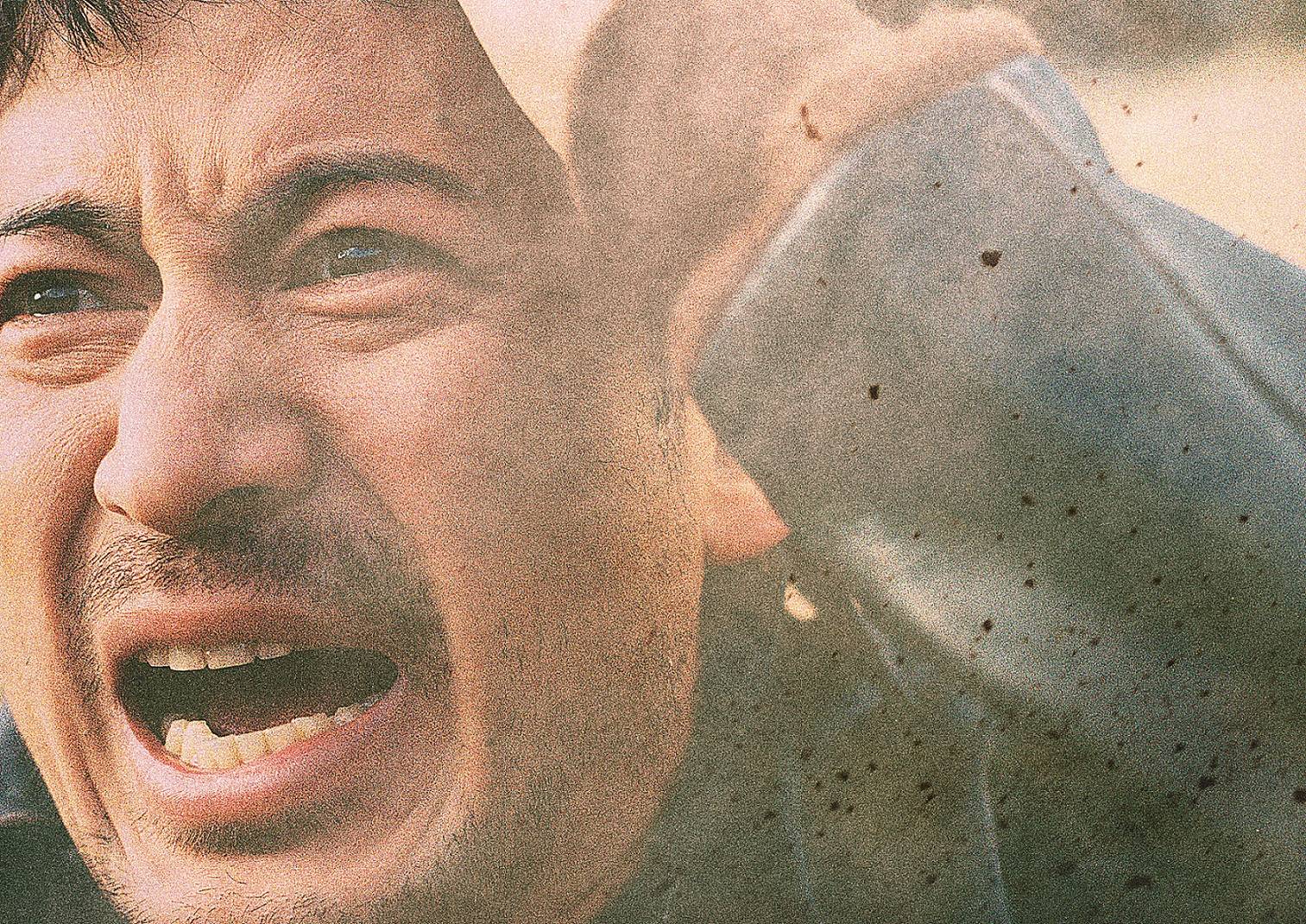
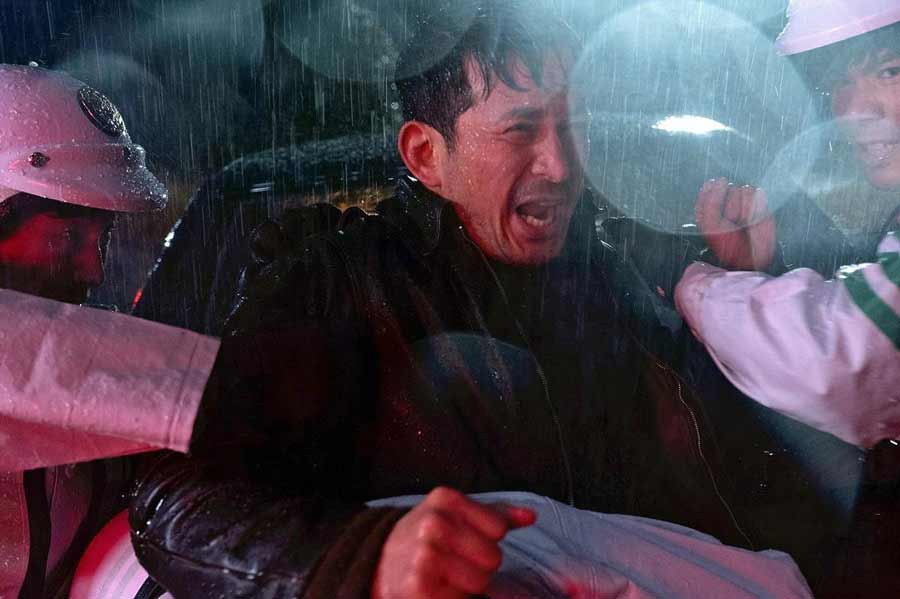
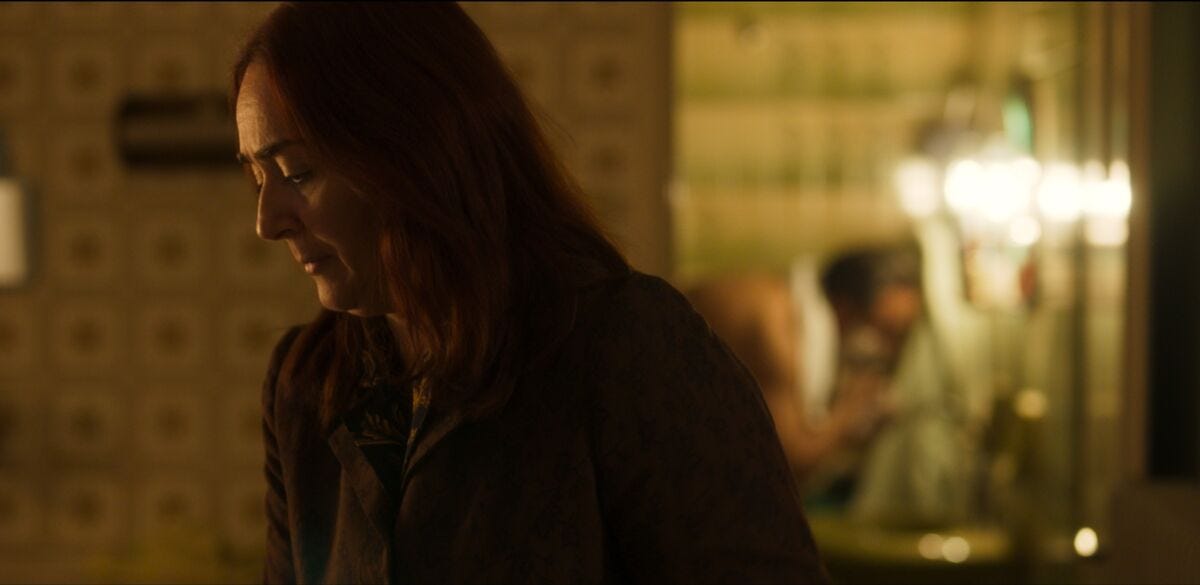
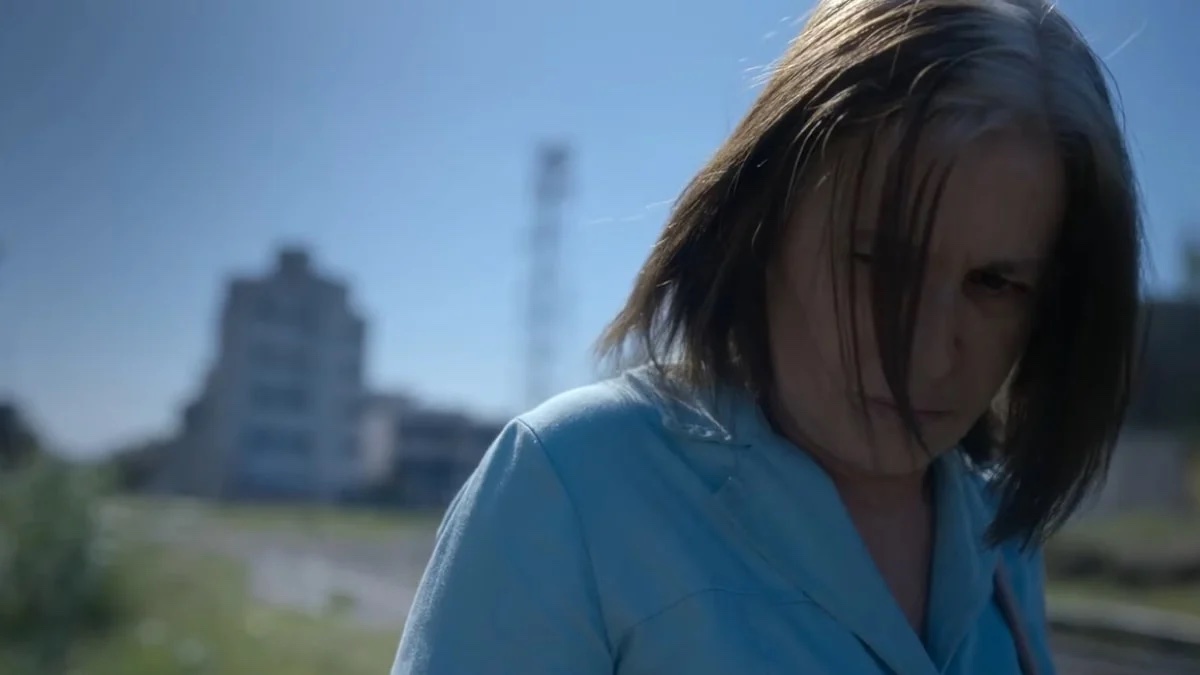
When we meet her, Elena (Mercedes Morán) is enfeebled and bitter. Stooped, walking with her eyes always fixed on the ground in and around Buenos Aires, it takes a while for us to figure out what ails her.

She has a pill regimen and a fridge full of prepared meals, all of this maintained by her 40something daughter. And whatever’s going on with her now, “life itself” gives her no pleasure. Daughter Rita (Erica Rivas, quite good) is prone to tears in her presence.

Maybe a visit to the hair salon will cheer her up. A nice dye job. Sure, the conversation with the hairdresser has a disappointed edge, but let’s move past that.

But when nobody comes to pick Elena up at the end of the day, when Rita doesn’t answer her phone, we expect the worst. It comes in the form of a cop at her door late at night, a body to identify in the morgue, and questions.

Rita was mortally afraid of lightning. Would she go out in a storm? Why would she hang herself in the church, where her long-standing crush, Father Juan is priest? What’s up with her husband, the weepy Paolo? Why are her students — one in particular — so disrespectful at the funeral home?

The cops consider the “case closed.” But Elena knows there is more to this, and is determined to get an autopsy and get some answers — harassing people, collecting appointment books and the like, even paying to have a banner demanding answers hung across the street from the parochial school.

Director Anahí Berneri is stingy with the clues here. Elena’s malady isn’t mentioned until midway through the movie. Other wrinkles in the narrative, designed to make us doubt this or that conclusion, are underwhelming if plausible.

Because the flashbacks are the real story.

Morán (of “Norma” and “Neruda”) is a riveting presence, carrying the narrative along its path, creating an unlikable heroine of stern convictions and unbending principles. Elena is one of those women (We never see a husband or hear a word about Rita’s father.) to whom EVERYTHING is a “principle.”

Miranda de la Serna ably plays Young Rita in flashbacks — open-hearted, desperately wanting to have a cat, and shut down every time she brings in a stray. We see young Rita struggling against them, but slowly absorbing her mother’s values.

The problem with “Elena Knows” is how early on we “get” that. It’s not that we “know” as soon as Elena does. We know sooner, too soon for this mystery to remain mysterious.

Rating: TV-MA

Cast: Mercedes Morán, Erica Rivas, Mey Scápola and Miranda de la Serna

Credits: Directed by Anahí Berneri, scripted by Gabriela Larralde, based on a novel by Claudia Piñeiro. A Neflix release.

Running time: 1:39

Posted in Reviews, previews, profiles and movie news | Comments Off on Netflixable? Her Daughter died. Why? “Elena Knows”

Next screening? “Wonka” with Timothee and Hugh

This Christmas will host “The Color Purple” musical, George Clooney’s take on “The Boys in the Boat” and a pre “Charlie and the Chocolate Factory” Willie Wonka origin story.

The trailers to “Wonka” have a lovely Dickensian winter sheen sheen and lots of recognizable elements from the Wonkaverse.

Will it be the holiday blockbuster? Should it be? Let’s find out.

Posted in Reviews, previews, profiles and movie news | Comments Off on Next screening? “Wonka” with Timothee and Hugh

Movie Preview: Dan Levy and Luke Evans, “Good Grief”

A wasting death, a trip to celebrate a life, and to recover from “Good Grief.”

Levy tries something sensitive and not at all funny for his writing and directing and starring debut.

Jan. 5 on Netflix.

Posted in Reviews, previews, profiles and movie news | Comments Off on Movie Preview: Dan Levy and Luke Evans, “Good Grief”

Movie Review: Dominican Republic’s Oscar contender is a Dark Dinner Party During Covid Comedy, “Cuarencena”

“Cuarancena” may not be the most bourgeois comedy ever to come out of the Dominican Republic. But I’ve seen a few, and I’m guessing it is, and I mean that in the most flattering way.

A high-toned dark comedy that only really turns comic in the third act, it’s about folks who break curfew for a posh meal paired with fine wines late in the “cuarencena” (quarantine). The “price” they pay for breaking the rules for nouvelle cuisine are hurt feelings, sorely tested relationships, mistrust and a genuine fear of infection, or worse.

Chef Mateo (Luis José Germán) and restarateur Claudia (Soroya Pina) have invited his younger brother Jonas (Joshua Wagner), the gay couple Jojo (Isabel Spencer) and very pregnant Aurora (Elizabeth Chahin) and the ex-couple Carmen (Nashla Bogaert) and the goof everybody knows as El Chompi (Frank Perozo) for a multi-course meal and possible overnight stay, depending on what curfew is ordained that day.

Claudia doses almost everybody (not the pregnant Aurora) with disinfectant as they enter, checking their vaccination status as she does. Somebody didn’t follow her protocols.

But everyone knows everyone else, and it’s not just the noisy bro El Chompi and Carmen who have “history.”

There are secrets to be revealed, old feelings that haven’t gone away, and if we’re to believe the opening moments — the heard, not seen aftermath of violence — somebody’s going to get hurt.

The sixth film from writer-director David Maler (“Todas las mujeres son iguales” and “La Boya) is a blend of fine dining and furious hurt served up in sumptuous close-ups of each dish with each “chapter” of the picture including a wine suggestion for that dish.

“Main Course, Oyster Mushrooms in duck gelatin on a bed of seaweed and spinach” to be “paired” with a cabernet sauvignon. Of course.

The picture starts slowly, letting us settle into the characters and the “types” they play. Aurora and Jojo are a vegan and almost-vegetarian, fellow social justice warriors who refer to their baby-to-come as a “They-by” (in Spanish with English subtitles), because “We’re going to let them choose their gender after birth.”

Carmen is frantic that her new boyfriend wasn’t able to make it and seems unreachable by phone. And El Chompi, a life-of-the-party smoker, joker, COVID conspiracy buff and lesbianism is “just a phase” flirt, is giving his ex the full court press.

Something’s “off” about our married hosts. And some of it might have to do with Mateo’s relationship with his and Jonas’s parents.

Maler takes time setting all this up, with little bursts of testiness popping up out of nowhere. We get the feeling that were it not for the curfew they’re violating, somebody would be stomping out.

But the real drama — dark and then darkly comic — breaks out in the third act as shocks are followed by surprises, almost every one of them landing laughs.

Germán, Spencer and Perozo have the chewiest roles and stand out in the cast. But we buy into everyone playing her or his or “their” part, no matter how archly-drawn the characters might be.

Every Oscar season has a Best International Feature underdog or two worth championing and rooting for the “honor just to be nominated.” I’m pulling for this, a COVID “Cuarencena” from the second largest island in the Caribbean, and a pretty funny movie that streaming services should be fighting over any minute now.

Rating: violence

Cast: Nashla Bogaert, Luis José Germán, Isabel Spencer, Soroya Pina,
Frank Perozo, Elizabeth Chahin and Joshua Wagner

Credits: Scripted and directed by David Maler. A Lantica Media release.

Running time: 1:34

Posted in Reviews, previews, profiles and movie news | Comments Off on Movie Review: Dominican Republic’s Oscar contender is a Dark Dinner Party During Covid Comedy, “Cuarencena”

Classic Film Review: An Ealing Satire that Still Stings  — “Passport to Pimlico” (1949)

There’s something to the notion that bomb-battered and nearly bled-out Britain had more to celebrate than most after the end of World War II. That explains the time-delayed explosion of wry, giddy comedies that poured out before they’d ended rationing or even begun to clean up the rubble from six years of world war.

“Kind Hearts and Coronets,” “Passport to Pimlico” and “Whisky Galore!” all came out the same year, every mother’s son of them a bonafide classic, and all of them heralding more classic farces to come.

“Whisky Galore!” is the most eccentric and hilarious of the lot. But its 1949 competition, “Passport to Pimlico” gives it a very nice run for the money, a romp that folds in pent-up privation, anarchic capitalism, “We’re all in this together” socialism and a Who’s Who of Great British character players to make funny characters stick and Cockney-flavored punchlines sting.

It’s about a corner of London — hemmed-in by the city and pinned-down by national and local austerity — where everyone is resigned to their limited diet and still putting things on layaway for that sunny day when they have the ration points to buy a car or a dress or what have you because little was available as the country was as broke as could be.

Then one day, the “19 families” of Miramont Place, Pimlico, learn that they’re still under the domain of the French Duchy of Burgundy. “British” austerity “rules” don’t apply. That martinet bank official has “no jursidiction” over his put-upon but independent-minded local manager (Raymond Huntley). The dress shop owner (Hermione Baddeley) can sell whatever she wants as “imports.”

Even the local bobby (Philip Stainton) no longer has the power to close any business on Sundays, or close the pub at “Last orders, ladies and gents.”

Right. “I’ll have a pint, too” then.

Director Henry Cornelius (“Genevieve,” “I Am a Camera”) had the budget to fill the streets and Ealing Studios sets with extras and the cast with famously funny faces for this farce. They treat us to the giddiness of “freedom” from a rigidly-controlled wartime economy. And one and all serve up the sour aftertaste as unregulated “freedom” leads to cheating, inequity and (British) government crackdowns, a “siege” of this little bit of Burgundy in Olde Britannia.

T.E.B. “Tibby” Clarke was a big reason we call “Ealing comedies” a genre and a writer largely responsible for the “Golden Age” of British screen farces. He won an Oscar for scripting “The Lavender Hill Mob,” and “The Titfield Thunderbolt” and “Passport to Pimlico” decorate his classic-strewn resume.

Here, he deftly sets us up for the fun with a “Dedicated To the Memory” image of a wreath with ration books “buried” inside it. The bobby walks the streets, warning residents of what the viewer can hear on the radio, that the area’s “last unexploded bomb,” nicknamed “Pamela,” is due to be removed.

Is there anything more WWII “British” than nicknaming a long-unexploded German bomb?

As we meet various locals — fishmonger Frank (John Slater), Baddeley’s dress shopkeeper, etc. — we get the news that the bomb won’t be removed at all. It’s to be inconveniently blown up in that crater in the middle of a ruined city block that nobody wants to build on.

Pranks-prone schoolboys solve that problem by rolling an old factory flywheel into the crater.

One “ka-BOOM” later, and what’s beneath that crater reveals itself — a treasure trove from a former lord of the region’s stash. One coroner’s inquest later, an expert royalist (Dame Margaret Rutherford) is consulted, and damned if it doesn’t appear that this 15th century Duke of Burgundy didn’t die on a battlefield and lose his lands that way. He lived on, and this parcel still belongs to his descendents — in France — and its people aren’t exactly English or British.

“You mean that these Londoners are…Burgundian?!”

“Indubitably!”

Continue reading
Posted in Reviews, previews, profiles and movie news | Comments Off on Classic Film Review: An Ealing Satire that Still Stings  — “Passport to Pimlico” (1949)

Netflixable? Third time’s not the charm for this latest remake of a dirty cop’s “Hard Days”

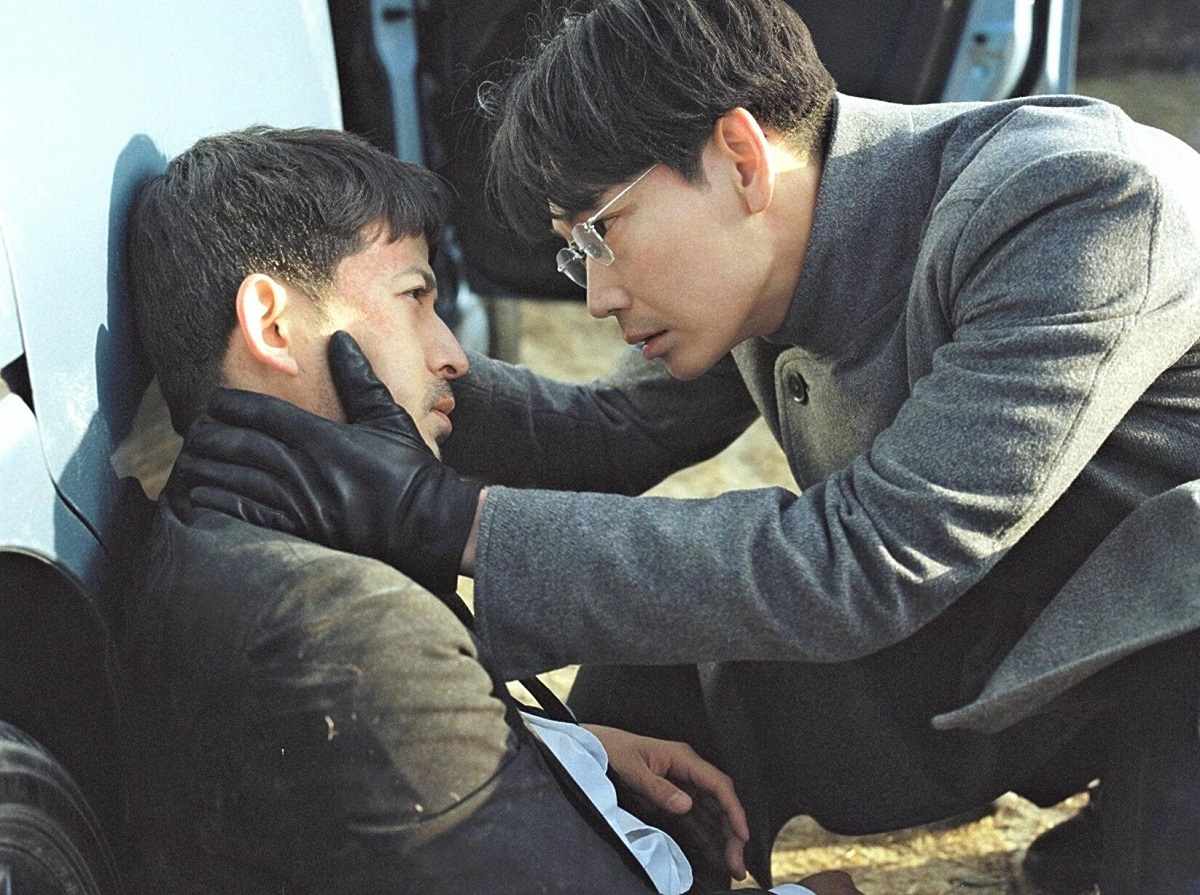
There was something familiar in the tropes, tricks, twists and gimmicks in 2014’s Korean thriller “A Hard Day.”

A cop, in trouble and dashing about trying to cover his tracks in a corruption scandal, running over a pedestrian in his mania, covering up those tracks by stashing that body here and there. The corpse is stuffed into a car trunk and eventually into coffin with another body — that of the cop’s mother, who just-died.

The moment other concerned parties enter the funeral home, not knowing where that extra body is, and the dead guy’s cell phone rings? I feel as if I’ve seen that in other films before 2014 as well.

Damned if “Hard Day” wasn’t remade for French Netflix back in 2022. “Restless” was the title of what I called an “inferior copy.”

And hell’s bells, here we are at the end of 2023, and damned if that intellectual property isn’t back, only this time in Japanese (with subtitles, or dubbed into English).

“Hard Days” has a few Japanese touches, such as death and funeral rituals, and the gangsters this time are yakuza, and not Korean or French.

I will say this for it. I see and review so many films that titles and plot points become a blur. But it took me a good 30 minutes before I lost any thoughts of “deja vu” and paused this one to look over the writing credits to confirm my suspicions. It starts well, even if it runs out of gas and into complications that beggar belief.

Nobi Nakanishi plays Detective Yuji Kudo, a man about to have all his chickens come home to roost, and just in time for the New Year.

His mother is dying in the hospital, his estranged wife (Ryôko Hirosue) is furious he hasn’t made it to the hospital. His boss and colleagues are freaked out that Internal Affairs is investigating the “mob ties” in their precinct. And then damned if he doesn’t run over a pedestrian (Hayato Isomura) and frantically have to shift gears in order to cover up that crime.

The body’s in the trunk. There’s a sobriety check point where the street cops aren’t going to let the detective pull rank and avoid getting the breathylizer, maybe even his trunk searched, as they smell blood in the water around the mob-connected Kudo.

He misses his mother’s dying breaths, and is distracting by a phone that won’t stop ringing as he’s talking with his not-quite-ex-wife, child, a nurse and a funeral home representative.

Kudo is dragged into a meeting with Yazaki, a lean-maybe-mean Internal Affairs investigator. And just when he thinks he’s in the clear, questions start popping up around a missing person who happens to be the corpse he’s been trying to dispose of, and the Yazaki (Gô Ayano of the yakuza thriller “A Family”) turns out to be on the payroll of some mob or other.

Maybe not the Senba gang. Not if their old boss (Akira Emoto, who’s been in Japanese films since the ’70s) can be believed.

Continue reading
Posted in Reviews, previews, profiles and movie news | Comments Off on Netflixable? Third time’s not the charm for this latest remake of a dirty cop’s “Hard Days”

Movie Preview: Michelle Yeoh is the gangster mom of “The Brothers Sun”

A Taiwanese/American gangland thriller/action shoot’em up, this one looks jokey and bloody and kind of fun.

Jan. 4. Netflix

Posted in Reviews, previews, profiles and movie news | Comments Off on Movie Preview: Michelle Yeoh is the gangster mom of “The Brothers Sun”

BOX OFFICE: “Boy/Heron” Anime Owns the Weekend as Beyonce Falls of a Cliff

Hiyao Miyazaki’s latest “final film” (he’s retired a few times, most recently in 2013) is doing bang-up business at the U.S. box office as “The Boy and the Heron” looks to win a weak, no-real-competition early Dec. opening weekend.

Deadline.com was projecting a $10-12 million take for this fantasy fable from the master Japanese animator who gave us “Spirited Away,” “Ponyo” and “The Wind Rises.”

The final tally is $12.83, per @TheNumbers.

Ordinarily, that wouldn’t be enough to win a weekend. But early December is traditionally a weak stretch for new openings, and this year’s Thanksgiving offerings — a new “Hunger Games” installment winding down, “Napoleon” underperfoming ($4 million) and last weekend’s concert film blockbuster, “Renaissanse: A Film by Beyonce” taking a STEEP dive on its second weekend — left the box office door open for this anime event.

“The Hunger Games: The Ballad of Songbirds & Snakes” took in $9.4 million in its umpteenth week of release.

The real “race” here was between “Renaissance,” “Trolls Band Together” and last weekend’s other “big” (ish) release, “Godzilla Minus One,” with all three films expected to tally about $6-6.5 million, based on Friday’s box office take.”Godzilla” is only losing 40-45% of its opening weekend take, a much better hold than the front-loaded ticket sales of the Beyonce movie.

A reminder, this is how singing star concert films normally perform in theaters — a big opening, a steep drop-off (But 77%+? Ouch.), and quick disappearance. “Renaissance” only took in $5 million this weekend. Taylor Swift’s “Eras” was a blockbuster exception, opening huge and sticking around for an epic month of big box office.

“Godzilla Minus One” easily took third place, with $8.34 million.”Trolls” added $6.2, “Napoleon” only managed $4.2 and seems not destined for greatness.

Limited release/low box-office expectation pictures such as the filmed stage musical “Waitress” ($3.2) starring Sara Bareilles, Oscar-bait “Poor Things,” ($644K), less Oscar worthy “Eileen” ($615) and the corrosive “Saltburn” are left fighting for the Top Ten leftovers, along with “Silent Night” and “Dream Scenario.”

Angel Studios’ faith-based sci-fi “The Shift” is doing middling business, $2 million or so.

“Thanksgiving” faded to black even faster than “Wish” (another $5 million and change). Disney isn’t reporting “The Marvels” earnings any more, because the pain is too deep.

Posted in Reviews, previews, profiles and movie news | Comments Off on BOX OFFICE: “Boy/Heron” Anime Owns the Weekend as Beyonce Falls of a Cliff

Movie Review: Greece’s hope for an Oscar nomination, a tale of the Refugee Crisis “Behind the Haystacks”

A refugee smuggling tragedy tears at the fabric of a Greek family in “Behind the Haystacks,” a touching and deeply involving drama that is the Greek submission for consideration as Best International Feature for the next Academy Awards.

The Middle Eastern conflict refugees are mostly in the background of writer-director Asimina Proedrou’s debut feature, a film that reveals the cultural and social rifts and weaknesses that migrants, fleeing wars and climate-change worsened economic strife, have opened in a troubled country that serves as a gateway to Europe.

The story is told within the frame of a lakeside summer picnic in a village on the border with Macedonia. Children playing in the water are shocked to find bodies floating in the reeds. And something about the way the men of the farming hamlet laugh this off, ask them if they know the legends about “water nymphs” and the like as the women look pained or appalled is just chilling.

We learn the “real” story of those bodies, life in this place and the differing attitudes of the locals to “outsiders” via three versions of what happened there, told from the point of view of indebted farmer/fisherman Stergios (Stathis Stamoulakatos), his devout Greek Orthodox wife Maria (Eleni Ouzounidou) and their 20ish student nurse daughter Anastasia (Evgenia Lavda), an aspiring singer bridling at the restraints of living under her father’s thumb.

Stergios is paying off a tractor and hiring an Albanian immigrant to use it to fertilize and cultivate his land, and driving back and forth across the border to fish the lake and sell his catch to a local butcher.

His finances, and those of the village farm co-op, are a shambles, mirroring those of Greece itself. Corruption, tax dodges and sloppy envoicing have him and many of his neighbors on the brink, Nobody is paying anybody else what they owe, and they’re all in trouble.

Stergios resists the offers of “help” from his hated, sketchy, strip-club-haunting brother-in-law Dmitris (Paschalis Tsarouhas), whose visits are unwelcome as he showers birthday cash on his niece, Anastasia.

That “help,” when Stergios is finally forced to accept it, involves smuggling refugees into Europe.

“If it gets out of hand you’ll be the one behind bars,” he’s warned when he gets belligerent (in Greek with English subtitles).

Wife Maria is in charge of fund-raising for a restoration of Saint Barbara’s, the parish church. The older priest orders that there be no church outreach for the poor huddled Muslim masses encamped and struggling to survive as they await escape or government help. Old emnities aren’t so much mentioned as felt.

Maria is as obedient to her priest as she is to her husband. But a neighbor, Georgia, has common sense compassion and ignores the priest’s un-Christian edict. Maria finds herself torn when she goes to the camp, hunting for Georgia, and sees the problems of the people there.

Anastasia is young, working her way into a career and straining to live a more lively life than the broke one her controlling, bullying father oversees. She lands a side hustle as a singer, but needs to keep that secret. She takes a lover, and that is also something her father cannot know about.

“Behind the Haystacks” is neatly separated into those three narrative threads, with that of Stergios as the most detailed and dramatic.

Proedrou sets up and reinforces the idea that the problems were always here — a stodgy, patriarchal society only as adaptable as the limited, stubborn men running things, “independent” and proud rural people who rationalize getting by via cheating, an ancient religion limited by ancient grudges it won’t abandon and outsiders who are to be ignored, unless there’s easy money to be made off them, dismissed and unmourned when things go wrong.

The three-act structure may be simplistic, but it works. The arcs of the various stories have a predictibility to them that doesn’t ruin the parable’s impact. The performances are compelling and lived-in.

And the detailed depiction of Greece beyond the tourist sites, beyond the headlines, out in the country “Behind the Haystacks” make this as timely and topical as any film up for Oscar consideration this year.

Rating: unrated, violence

Cast: Stathis Stamoulakatos, Eleni Ouzounidou, Evgenia Lavda, Christos Kontogeorgis,
Dina Mihailidou and Paschalis Tsarouhas

Credits: Scripted and directed by Asimina Proedrou. A TVCO release.

Running time: 1:56

Posted in Reviews, previews, profiles and movie news | Comments Off on Movie Review: Greece’s hope for an Oscar nomination, a tale of the Refugee Crisis “Behind the Haystacks”

Ryan O’Neal: 1941 -2023

Ryan O’Neal was ridiculed for being a wooden pretty boy in his early films. But he was very funny opposite Streisand in “What’s Up Doc?” and lowdown amusing in “Paper Moon.”

His best role might have been an iconic, largely silent and much-imitated turn in the title role on Walter Hill’s genre-defining “The Driver.”

Pretty cool. RIP.

Posted in Reviews, previews, profiles and movie news | Comments Off on Ryan O’Neal: 1941 -2023