BOX OFFICE: “Wonka” and “Night Swim” duel on a slow weekend to start 2024

A strike year following COVID years means that 2024 won’t generate the $9 billion the domestic box office pulled in for 2023.

That’s foretold by the month of January, traditionally a slow month for new releases anyway, made more so by titles shifting around, Pixar pictures getting re released and the like.

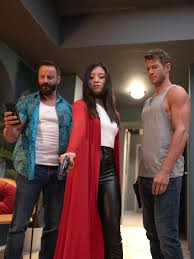
The only wide release opening fresh this weekend is the mediocre horror tale “Night Swim,” starring Kerry Condon and Nepo Baby Wyatt Russell. It’s a good looking picture with almost no frights or thrills to brag about.

But it’s a horror film, so there’s a guaranteed audience of at least $11 or $12 million worth of ticket sales coming its way.

That might not be enough to dethrone the holiday blockbuster “Wonka,” which is heading over $12 for another weekend, per deadline.com.

Disney is reloading Pixar titles into theaters because Universal’s “Migration” is the only animated choice out there at the moment. “Migration” is on track to add another $10 million+.

Aquaman: The Lost Kingdom” may be a critical bust, but it’s still adding to Warner Brothers’ bottom line, another $10 million and change for that one this AM.

And that’ll edge the R-Rated rom com “Anyone But You,” which Deadline.com is saying has $9 5 million more in the tank.

The Color Purple,” “The Boys in the Boat,” and a couple of other titles round out the top ten.

As always, I’ll update these figures as more data comes in

Posted in Reviews, previews, profiles and movie news | Comments Off on BOX OFFICE: “Wonka” and “Night Swim” duel on a slow weekend to start 2024

Classic Film Review: Robert Ryan, Mel Ferrer, Joan Leslie and Zachary Scott figure out Joan Fontaine was “Born to be Bad” (1950)

Sometimes the all-star credentials of a vintage film draw you to it more than subject matter or a “classic” reputation. And occasionally, it’s the legend attached to it, the Hollywood lore surrounding it that piques your curiosity.

Any film by Nicholas Ray is worth checking out. The director of “Rebel Without a Cause” and “Johnny Guitar” was a genuine Hollywood maverick, getting his start under the studio system, bristling at that and swaggering through later years on a reputation made by films such as “They Live By Night,” a rep trumpeted by the French “New Wave” cheerleaders behind the camera or writing for Cahiers du Cinema.

Joan Fontaine was an Oscar winner, an English-American actress and early “Hitchcock blonde,” fresh off the masterpiece “Letter from an Unknown Woman” and just entering her 30s.

Maybe the phrase “Born to be Bad” isn’t something you’d attach to this petite starlet, most associated with romantic victimhood in Hitchcock’s “Rebecca” and “Suspicion.” But she was nominated for Best Actress three times. She had some range.

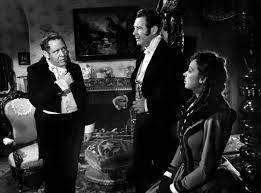
Any movie with Robert Ryan as a brutish suitor, Mel Ferrer as a bitchy artist “friend,” Zachary Scott as Fontaine’s character’s romantic ideal and Joan Leslie (“Sgt. York,” “Rhapsody in Blue”) as the rival she must steal him from has built in appeal.

And the dialogue they’re performing has snap, crackle and pop to it. Ryan, playing an aspiring novelist, gets some of his tastiest lines ever as Nick, the guy who covets a young woman whose eyes are on a pricier prize.

“You seen the view? It looks better with me in it!”

“If you ever draw an honest breath, I wanna be there. I’ve never seen anybody choke to death!”

 “I love you so much I wish I liked you.”

But the story behind “Born to be Bad” is that new RKO Pictures owner Howard Hughes had one of his Hollywood obsessions over Fontaine, insisting on casting her — at 32 — as a young, possibly innocent “business school” ingenue on the hunt for a rich, socially-connected husband. And the rebel Ray wasn’t happy about it.

If Ray had any say, casting the high-born, mustachioed Zachary Scott (“Mildred Pierce,” “The Southerner”) as the prize Fontaine’s Christobal covets, catches, uses and cheats on was telling. Scott was a near dead-ringer for Hughes.

“Bad,” based on a novel by Anne Parrish, came out the same year as iconic back-stabbing-in-acting drama “All About Eve.” Something was in the air in those years, and stories about disadvantaged women with cunning, agency and no scruples about getting what they wanted were all the rage.

The stakes were higher in “The Postman Always Rings Twice” and “Double Indemnity,” but feminine wiles were taking it on the chin in films made by the Hollywood patriarchy.

Publishing assistant Donna (Leslie) is prepping for a posh post-play party for her society swell fiance Curtis (Scott) when this waif that her boss (Harold Vermilyea) talked her into taking in shows up a day early.

Christabel (Fontaine) makes a great show of contrition and excuses. But she’s invited into the big party, and we quickly realize that’s what she wanted all along.

She hadn’t counted on being teased by the sarcastic painter Gobby (Ferrer) or man-handled by Mr. Testosterone Poisoning, the novelist Nick (Ryan). But she won’t let them distract her from the dashing man with money in the tuxed, the one engaged to her hostess, Donna.

Christabel ingratiates herself into their circle, a model-thin clothes horse with bottle blonde beauty and a disarming way of sabotaging Donna and Nick while pulling the wool over her Uncle John’s eyes over that whole “business school” dodge.

Where “All About Eve” had George Sanders and eventually Betty Davis playing characters “wise” to the machinations of the striver, Eve, “Born to be Bad” has Nick and Gobby, whose may not be as gay as his bitchiness suggests.

“My dear girl, apart from painting my major occupation is convincing women’s husbands that I’m harmless.

Nick sees her as “two people,” “one fictional” a “pretty little gal who sees herself getting all the things she never had,” and the “real” Christabel, who infatuates him.

There’s little getting around the fact that Fontaine is simply miscast as this scheming golddigger. Like her sister, Olivia de Havilland, she lacked menace and an ability to suggest bad intent and native cunning.

Without any murderous undertone, there’s no “film noir” to this drama. It’s a lower-stakes version of “All About Eve” without the guts to let the “Bad” girl get her way, by hook or by crook.

But the movie surrounding Fontaine can be bitchy fun, with much of its edge coming from its anachronistic take on macho courtship. If we believe the movie’s lore, Ryan must have been given a blank check by Ray to abuse Fontaine. “Manhandling” doesn’t do the way he grabs and mashes on this willowy Englishwoman justice.

Nick’s sexism has him pulling Donna into his lap so he can give her a “shoulder to cry on.” The dear. Nick is Norman Mailer, affecting a Hemingway machismo but only able to impose his vision of himself on “the weaker sex.”

And Ferrer is just as interesting, a character we can easily imagine might fancy rich blade Curtis for himself. Gobby is a “friend” but never a confidante to our anti-heroine, letting her see that he sees through her just as Nick does, but without the bruises.

This isn’t one of the top drawer pictures in Ray’s portfolio. But his style and cynicism, eye for conflict and ear for cutting dialogue make him every bit the “auteur” that the French proclaimed him to be shortly after this came out.

If he wasn’t having one or two over on Hughes — in casting Howard-look-alike Scott, in having Ryan yank Fontaine around, and in showing off a very good actress’s weak spots — we’d realize soon enough that the rebel was sure as hell was capable of it.

Rating: approved

Cast: Joan Fontaine, Robert Ryan, Joan Leslie, Zachary Scott and Mel Ferrer.

Credits: Directed by Nicholas Ray, scripted by Edith Sommer and Charles Schnee, based on a novel by Anne Parrish. An RKO release on Tubi, Amazon, etc.

Running time: 1:29

Posted in Reviews, previews, profiles and movie news | Comments Off on Classic Film Review: Robert Ryan, Mel Ferrer, Joan Leslie and Zachary Scott figure out Joan Fontaine was “Born to be Bad” (1950)

Movie Review: Transgender in Bhopal, looking for “A Place of Our Own”

There’s no sex or romance in “A Place of Our Own,” no hormone therapy, surgical consulations or discussion of “transitioning.”

This simple slice-of-life/fly on the wall drama is about two transgender friends’ struggle to find a house or apartment they can call “home,” somewhere they can be safe from discrimination, harassment, exploitation and violence.

As this story takes place in Bhopal, India, there’s also no mention of what that city is infamous for. Which is fine, because finding housing under slow-to-evolve Indian attitudes and social conditions is dramatic enough to warrant its own movie.

New-to-acting transgender women Manisha Soni and Muskan play Laila and Rhoni, two roommates and friends who share accommodations by necessity. It’s damned near impossible for even one of them to find a place they can rent. It takes both of them forever and a day to search, meet with realtors or landlords, endure homophobic rejections and hold down steady jobs as they hunt.

Laila is a college-eductated counselor at the New Hope Social & Mental Health Clinic. Rhoni is personal cook for a demanding wealthy family, a job she shows up for as Sandeep, the male she was born with.

The trouble starts when a stranger comes pounding on the door of their latest place, making come-ons, insinuations and threats to Laili, who has the good sense not to open it. She is frightened.

Just getting the landlord to accept that this isn’t their fault, that some creep scoped them moving in, decided they were transgender sex workers, proves impossible. Getting the jerk to refund their money will be another difficult task.

Using a transgender person’s different sex birth name as an excuse to not complete a wire transfer refund is a new one on me.

They meet with one real estate agent after another, most of whom seem to accept — however grudgingly — the country’s anti-discrimination laws. But one is so “curious” about “your condition” that their meeting becomes an interrogation. Others shrug them off, or meekly accept a property-owning woman’s angry “I won’t rent to ‘those’ people” (in Hindi with English subtitles) rebuff.

Things are so bad that there’s only one tuk tuk (three-wheeled taxi) driver that they can trust. We wonder if there’s an attraction thing going on with driver Sharukh (Aakash Jamra) and Laili. His reason for helping them out is more poignant than that.

Even a trip to a public restroom is fraught with peril. If someone complains, each is afraid of just how little officialdom will do to back them up, or if their lives will get harder through more threats and violence.

The acting here is somewhat flat and unemotional. And there’s little that’s truly surprising in “A Place of Our Own,” as this sort of gay and transgender story has been more openly told in the West for a couple of decades, now.

But it’s compelling because it reminds one that transgender discrimination is wrong, in every culture, and just how venal, backward and dumb a person doing the discriminating comes off, no matter what language they speak and cultural tradition they claim to be “defending.”

Rating: unrated

Cast: Manisha Soni, Muskan, Aakash Jamra and Mahima Singh Thakur

Credits: Directed by The Ektara Collective, scripted by Rinchin Rinchin, Maheen Mirza and Manishi Soni. A Dark Star release.

Running time: 1:28

Posted in Reviews, previews, profiles and movie news | Comments Off on Movie Review: Transgender in Bhopal, looking for “A Place of Our Own”

Netflixable? A death, an unhappy revelation, seeking closure in Dan Levy’s “Good Grief”

“Good Grief” is Dan Levy’s delicate and arms-length drift through the psychology of mourning, with that grief complicated by post mortem secrets that emerge about the deceased.

It’s a featherweight attempt at the gutting, deflated feeling of loss, with clever characters in a tony setting — London’s arts and entertainment scene — and sometimes amusing put-downs but few serious insights into the human condition.

Levy’s feature writing/directing/starring debut is more glib than great, but it’s pleasant enough if never quite as poignant as he’s shooting for.

The “Schitt’s Creek” alumnus plays Marc, a North American living in London with his Young Adult Fiction-writing husband, Oliver (Luke Evans).

Marc is reserved, devoted, detail-oriented in planning their lavish Christmas party, complete with a jazz combo. Oliver is gregarious, the life of the party, leading one and all in a lush, choral version of William Bell’s “Every Day With be like a Holiday” that he arranged.

They exhange banter with their besties — Thomas (Himesh Patel of “Yesterday”) and the spirited, tipsy, sings-too-loud costume designer Sophie (Ruth Negga as we’ve never seen her).

“Your voice is like a church organ someone threw out a window” won’t shut her up.

Then Oliver kisses his husband goodbye with a “We have lots to discuss,” gets into a cab and never makes it to his Paris reading and book-signing. Marc will spend the next year trying to recover from “the time I watched my husband get pried out a cab, like escargot.”

There was a Christmas card Oliver left behind, which Marc finally reads and doesn’t share with anyone. It dryly announced “I have met someone outside of us.”

Marc is left to deal with a funeral, financial fallout from a writer in a long-term (novel series) contract, and a secret — which includes a pied-à-terre in Paris that only Oliver’s death revealed.

Marc must gather Sophie and Thomas for a trip to check this place out, with him hunting for answers and closure, and them not having a clue about this new wrinkle in their quiet, painter-who-can’t-paint friend’s grief.

Levy’s chief gifts are as a writer and performer of dry, acidic one-liners, and he gives himself and his co-stars a few of those, if never quite enough to make this sad story comical.

“She wears ‘logic’ like one of those little handbags that can’t actually hold anything.”

The character arcs here aren’t broad or decisive, just a man coming to grips with having “lost a year of my life” to something that wasn’t what he thought it was. “Growth” is ladled onto Sophie and Thomas, but only perfunctorily.

Levy writes himself a melancholy drunken karaoke scene, a mild-mannered (he is Canadian, remember) restaurant blow-up and a couple of muted confrontations that aren’t as satisfying as one might hope. He’s yet to show us much range, and he’s written himself a more introverted version of characters he’s already played.

But “Good Grief” is sober-minded, considered and almost sweet. Compared to other Netflix deals with writer-directors given a big check to film their indulgent “dream” project, it’s also modest and sometimes compelling.

Fair enough, but let’s see what he manages the next time he’s given this opportunity.

Rating: R, aubstance abuse, profanity

Cast: Dan Levy, Ruth Negga, Himesh Patel, Celia Imrie, David Bradley, Arnaud Valois, Mehidi Baki, Kaitlyn Dever and Luke Evans.

Credits: Scripted and directed by Dan Levy. A Netflix release.

Running time: 1:40

Posted in Reviews, previews, profiles and movie news | Comments Off on Netflixable? A death, an unhappy revelation, seeking closure in Dan Levy’s “Good Grief”

Movie Review: Today’s reading is from “The Book of Clarence”

“The Book of Clarence” is no mere lampoon of the belief system based on a persecution, blood sacrifice and murder by the state origin story.

It’s a retelling, resetting and often amusing examination of “knowledge” vs. “faith,” the nobility of a religion with “kindness,” “charity” and love folded into its teaching, and the inability to “know” what went down 2000 years ago in a place with no cell phones to record and stream events as they actually happened.

It is distinctly British and univerally Black. And in a time of open and “quiet-part-out-loud” white racist Christian-Nationalism, it’s downright bracing.

It’s no accident that British writer-director Jeymes Samuel opens his film with a crucifixion, a nod to Britain’s most infamous and hilarious send-up of Christianity, “Monty Python’s Life of Brian,” which ended with a comical take on that gruesome form of execution. Samuel treats it dead seriously, if not as piously as Mel Gibson — who allegedly filmed his own hands driving in the spikes — in “The Passion of the Christ.”

That sets the tone for the movie. “Clarence” is sometime silly, but just as serious-minded as can be, irreverant, but never really what any serious person would describe as “blasphemous.”

LaKeith Stanfield has the title role, that of a hustler, a chancer and seller of smokeable “herbs” in the Lower Jerusalem of 33 C.E. We meet he and his running mate Elijah (RJ Cyler of “Me and Earl and the Dying Girl”) as they’re chariot racing that resident badass, Mary Magdelene (singer/choreographer/actress Teyona Taylor) along the cliffside, cobbled streets of Jerusalem (Italy), and losing.

A blow-dart armed gang calling itself The Gypsies, led by a runt (Chase W. Dillon) proves their undoing.

Facing their financial back, the loan shark and gang leader Jedidiah the Terrible (Eric Kofi-Abrefa) is too much to bear, at the moment. His sister, Clarence’s crush (Anna Diop) can’t help. Perhaps all these insults from Clarence’s twin brother and his mother (Marianne Jean-Baptiste, stunning here, famous for “Secrets & Lies” and “Without a Trace”) have some advice he can actually use.

This “nobody,” as his twin, the Apostle Thomas, follower of Jesus of Nazareth labels him, needs to “Be the body, not the shadow,” his mother tells him. Do SOMETHING of note and noble import.

That’s how Clarence, “the village mischief maker” decides to become “the 13th Apostle.” First problem? He doesn’t know how to pronounce “apostle.” The “T” is silent, mate. But there’s a bigger issue.

“God doesn’t exist,” Clarence insists. This “Jesus” fellow is a “false prophet” who does “tricks.”

As that kind of rules out his inclusion in the crew that includes “doubting” Thomas and Judas Iscariat (Michael Ward, slick and sinister), perhaps Clarence should study this “messiah” hustle and set himself up as one. He will sell his version of a holy creed.

“Knowledge is greater than belief.”

And as he’s seen “all the MONEY they (Jesus & Co.)” take in, he will settle his debts by fleecing the gullible.

“I’m just playin’ the cards I was dealt.”

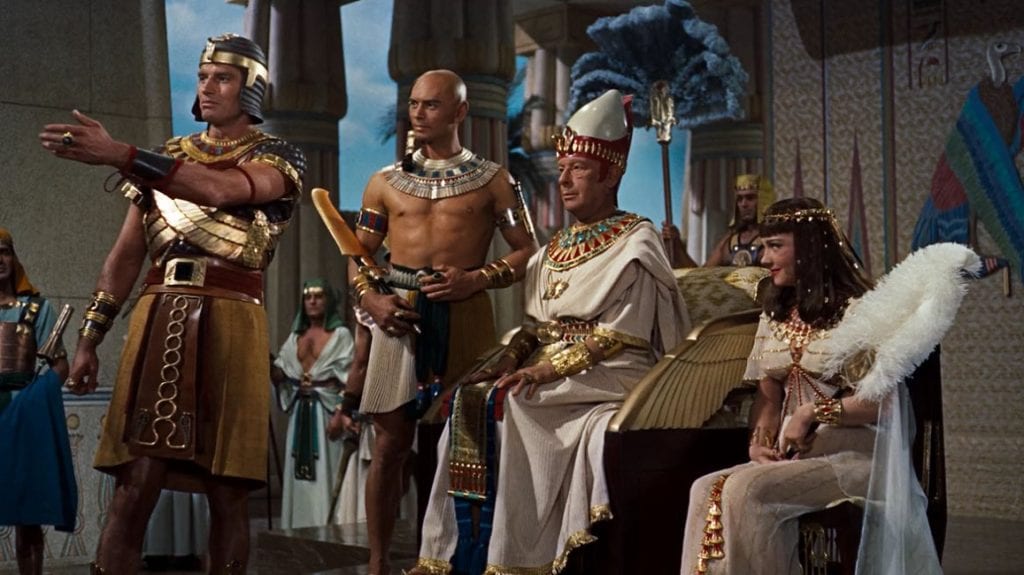
Writer-director Samuel, no longer going by his nom-de-music “The Bullits,” gave us the mixed-bag Black Western “The Harder They Fall.” “Clarence” similarly sends-up Biblical epics (titles and credits resemble “The Ten Commandments” — the movie, not the tablets). But Samuel’s aim is higher and more sure this time, a parody that turns to satire as it speaks to Greater Truths and comments on the Black experience in the White Western world today.

When a Black mother wails that brutish white Romans (Tom Glynn-Carney, Thomas Vaughan-Lawlor and most venomous of all James McAvoy) are “always taking our babies,” she isn’t just talking about ancient Romans.

“Clarence” is a flippant film of group dances and herb-peddling on the streets, of stonings and smokers floating into the ether at the hookah joint, of everybody complaining about everybody else’s “smell,” and of a hero who resents just how many people he knows pronounce his name as “one syllable.” “Clairnce.”

Omar Sy is ferocious as Barabbas, a figure spared crucifixion while Jesus is sacrificed in the Bible, here an enslaved gladiator who considers himself “immortal” save for a particularly vulnerable “heel” (Wonder where he, or writer-director Samuel, got that idea?).

David Oyelowo is hilarious as a slap-happy John the Baptist, who will drown a “Negro” disbeliever, especially if he really needs a bath.

Alfre Woodard makes a warm, wise and wry Mother Mother, whom Clarence consults to see just how her boy Jesus does his “tricks.”

“My dear child, find faith and you will find all of the answers you need.”

Samuel’s film is an embarassment of acting riches, laugh-out-loud funny when it wants to be and thought-provoking when it dares to be. It tests “faith” and forces us to consider the Black experience of Christianity even as it embraces a more rational approach to belief than one offered by the Black church, and indeed the white one.

And Stanfield, by turns droll, wry, thoughtful and soulful, makes a grand tour guide for this satire and study of a value system — kindness, compassion, charity — that has more value for its true believers than dogmatic demands of “belief.”

He may be a “false prophet.” But this Clarence fellow and his “Book” are well worth mulling over.

Rating: PG-13 for strong violence, drug use, strong language, some suggestive material, and smoking.

Cast: LaKeith Stanfield, Omar Sy, RJ Cyler, Alfre Woodard, David Oyelowo, Anna Diop, James McAvoy, Marianne Jean Baptiste, Michael Ward, Teyana Taylor, Eric Kofi-Abrefa and Benedict Cumberbatch.

Credits: Scripted and directed by Jeymes Samuel. A Sony Tristar release.

Running time: 2:16

Posted in Reviews, previews, profiles and movie news | Comments Off on Movie Review: Today’s reading is from “The Book of Clarence”

Movie Review: We’re all just “Roadkill” to this Florida-bound serial killer

“Roadkill” is a leaden, lumbering C-movie about serial killings on the backroads of Florida back in the ’80s.

For his second feature, writer, director and co-star Warren Fast (“Finding Grace”) reaches back for a “drive in” era motors-and-murders thriller about a “Highway Hunter” terrorizing the good folks along the stretch of the state nicknamed “Florabama” with good reason.

It’s got a bombshell who wears midriff-baring shirts, tight jeans (suitable for “Daisy Duke” cutcoffs) and sucks a lollipop like a pro, a Jesus-coiffed drifter who hitches a ride with her, vintage cars and vintage gas stations and diners and a good ol’boy sheriff who is no more a “good” old anything than most Florida sheriffs, then and now.

What it doesn’t have is much of a story, interesting characters or an editor who can hide bad acting, crap dialogue, limp plotting and nonsensical twists by “fixing it in post” after the damage has already been done on the set.

Ryan Knudson, still wearing his Southern Protestant Jesus hair and beard from a recent “Revelations” mini-series, plays “The Hitchhiker,” a fellow with a dark past, his nightmares tell us. His Momma (Christina R Gregg) treated him like a dog, and killed his dog so he wouldn’t “have to share your dogfood” or the doghouse she made him sleep him in.

The Hitchhiker is a slow walker and slow talker. But he winds up in the 1969 Chevy Nova of a 1983 Playmate of the Month candidate, The Driver (Caitlin Carmichael of “Midnight in the Switchgrass” and “Wheelman”).

They’re on the road to somewhere. Or nowhere. No names are exchanged, no backstories are explained.

“I get the feeling, no matter what happens, I don’t think I’m gonna get where I’m going with you,” he drawls.

They’re hassled by the sheriff (writer-director Fast) before events circle around to put them both in his custody. Seems this “Highway Hunter,” a dormant serial killer, is back on the clock, killing service station attendants, short order cooks, random folks hither and yon.

One or both of the people in that sadly souped-up Chevy has got to be a suspect.

The violence here is grisly but still lacking in credibility. The chases are sleep-inducing. The effects — the driving scenes are all green-screen projections — primitive.

The prologue, with The Hitchhiker dreaming of the hell growing up was for him, is given a grainy, scratched celluloid film treatment, maybe the stupidest waste of an effect I’ve seen since my days of judging student films.

It’s just a genre picture, so the bar is low. A few decent ideas and a little more skill in making one’s twists and surprises pay off might have given this a chance of working. I mean, they had a mantrap/femme fatale suitable for any drive-in movie pinup poster.

But the whole enterprise just lies there, squished and rotting on the tarmac.

Rating: unrated, graphic violence, drug abuse

Cast: Caitlin Carmichael, Ryan Knudson, Trenton Hudson, Danielle Harris, Christina R. Gregg, Buddy Campbell and Warren Fast

Credits: Scripted and directed by Warren Fast. An Uncork’d release.

Running time: 1:29

Posted in Reviews, previews, profiles and movie news | Comments Off on Movie Review: We’re all just “Roadkill” to this Florida-bound serial killer

Series Preview: Peacock’s “In the Know” is Mike Judge meets “Between Two Ferns”

“Semi animated,” this irreverent “interview” show has a whiff of the old “Colbert Report” as well in its ideological dope asking idiotic questions.

This time, the animated host (shades of “Space Ghost from Coast to Coast” and “Fetch”) is an unpopular NPR host with a gift for inane, insipid touchy feely queries.

Looks funny. Mike Judge may have a winner on his hands.

Posted in Reviews, previews, profiles and movie news | Comments Off on Series Preview: Peacock’s “In the Know” is Mike Judge meets “Between Two Ferns”

Movie Review: A Twin Cities (Minneapolis/St. Paul) pool is NO place for a “Night Swim”

It stands to reason that a movie about a haunted pool swallowing children and adults would absolutely have to have extraordinary underwater photography, just by design.

“Night Swim” manages that, so a tip of the scuba mask to underwater director of photography Ian S. Takahashi (“Under the Silver Lake,” “The Lost City”). The scenes beneath the surface, looking up or looking down, with victims struggling against whatever is after them, are just beautifuly lit and shot.

The movie? It’s middling, even by early January horror release standards. A few moments of suspense, a belated “Maybe I should play this guy as funny/crazy” decision by leading man Wyatt Russell, a little “It!” and not much else in terms of inspiration, and effects that don’t add to the fear quotient sends this sinker down for the third time.

In 1992, a little girl (Ayazhan Dalabayeva) is lured to the pool in her bunny slippers in the middle of the night so that she can retrieve her kid brother’s toy boat — which had disappeared and is how circling the pool, under its own power.

Before wee Rebecca can scream “Toy boat toy boat toy boat,” nothing but a floating bunny slipper remains.

Decades later, and third baseball Ray Waller (Russell, son of Goldie and Kurt) and his family decide to move into the house with the pool in back. He’s dealing with the onset of multiple sclerosis, his doctor is empathetic but no-nonsense.

“Forget baseball.”

He’ll have to live off educator wife Eve’s (Kerry Condon of “Three Billboards,” “The Banshees of Inisherin” and TV’s “Ray Donovan) insurance and income, rooting for his aspiring swimmer daughter (Amélie Hoeferle) coaching his little boy (Gavin Warren) in America’s Pastime, despite the crutch he now uses.

That pool? That’s therapeutic. Ray soon proves that as his symptoms abate and he feels as if he might get another shot at the Big Leagues, all thanks to the “land of sky blue waters” that fills that pool.

But the wife and the kids soon have other experiences when they swim — voices from the overflow drains, items disappearing, hallucinations about who is peering over the edge down at them, mistaking swimming down for swimming up, living corpses sneaking up on them, holding them under water.

“Marco Polo” becomes a game with a menacing edge under those conditions. But only slightly.

The “rules” of writer-director Bryce McGuire’s world are explained in the third act, and don’t add up to much.

The build-up towards a “Jaws” style “pool party” that’s as ill-advised as opening the Amity beaches on July 4 is mostly-botched. There just isn’t much suspense in the death-comes-from-the-pool scenes that we haven’t seen in the film’s trailers.

But the underwater attacks, escapes and revelations are gorgeous to look at, with a lot of the cast and the effects crew immersing us in the perils of a pool, even if they never get a handle on how frantic drowning and near-drowning is as an experience.

Any more than anybody REALLY gets a handle on how one would likely respond to the terrors of facing something supernatural and evil.

One or two “Minnesota” touches, provided by the dizzy realtor (Nancy Lenehan), and Russell deciding to occasionally make the increasingly unhinged Ray comical as well as possessed and evil aren’t enough to save it.

“Night Swim” never amounts to much more than a dip in lukewarm water.

Rating: PG-13 for terror, some violent content and profanity

Cast: Wyatt Russell, Kerry Condon, Amélie Hoeferle, Gavin Warren, Nancy Lenehan, Eddie Martinez, Ayazhan Dalabayeva and Jodi Long.

Credits: Scripted and directed by Bryce McGuire. A Blumhouse/Universal release.

Running time: 1:38

Posted in Reviews, previews, profiles and movie news | Comments Off on Movie Review: A Twin Cities (Minneapolis/St. Paul) pool is NO place for a “Night Swim”

Movie Review: Polyamorous Spanish “Thruple” discovers the perils of “Stroking an Animal”

“Stroking an Animal” is a dull, pretentious Catalan “four seasons with a polyamorous threesome” melodama in which not a lot happens. Well, not a lot that involves people with their clothes on.

Pointing itself at the “obvious” flaws in such an arrangement — “obvious” to those not in it, or “into” it — it meanders towards a conclusion as inconclusive as its introduction.

Mariña and Ada (Lidia Veiga, Ánxela Ríos) are really into each other and into “it” as the film opens on a heavy-duty makeout session, sans clothes, shot in a near blur of extreme close-ups.

When they’re done, we realize they were in a tent in the Pyrnees, as they exit and finish off their frolic with a topless dip in a mountain stream.

A bearded, topknotted hipster (Xulio Besteiro) strolls up and captures them on his camcorder. He’s not just a creep spying on lesbians, which would have been dramatic, if cliched. We quickly realize he’s part of this arrangement as he joins in on their carnal carrying on.

Tomás, as we eventually learn his name to be, is their third wheel. Everybody’s experimenting, relishing every chance to share a bed and the forbidden fruit of a non-monogamous relationship.

But all this “Stroking an Animal” is going to lead to jealousy, hard feelings and “tests” of the depths of love. Or so every other movie to dabble in the subject has taught us.

In Ángel Filgueira’s aimless, mostly drama-starved “Cando toco un animal,” the “seasons” or chapters — there are more than four here — are introduced by quasi-poetic musings in written, graphic form — thoughts on dragonflies, cats, this and that.

“I read that cats bite when the can’t containt the love that they feel inside.”

Symbolic? Maybe.

“Biting” is about the time trouble sets in as SOMEbody wants a little more of SOMEthing that SOMEbody else can’t give her, sexually.

These chapters, in Galician with English subtitles (like the dialogue), are written by Mariña, we learn, a writer who is sort of participant/observer to all this.

Only she isn’t. Filgueira has made a movie with no actual point of view, no protagonist for the audience to identify with, to lead us through the bare bones of this “story.”

Stripped of story (mostly) and drama (almost entirely), what we’re left with is a lot of coital coupling and thrupling. Take away the “chapter” headings and this is straight-to-video titilation, and not all that titilating at that.

Rating: unrated, explicit sex, nudity

Cast: Lidia Veiga, Ánxela Ríos and Xulio Besteiro

Credits: Scripted and directed by Ángel Filgueira. A Breaking Glass release.

Running time: 1:09

Posted in Reviews, previews, profiles and movie news | Comments Off on Movie Review: Polyamorous Spanish “Thruple” discovers the perils of “Stroking an Animal”

Next screening? A lost and laughable chapter from the New Testament? “The Book of Clarence”

The director of “The Harder They Fall” Western is behind the camera for this riff on a contemporary of Jesus “inspired” to live a “divine” life, or fake it until he makes it.

LaKeith Stanfield stars, with Benedict Cumberbatch, Alfre Woodard, Omar Sy, James McAvoy, Marianne Jean-Baptiste and Teyana Taylor dressing up the supporting cast in this BCE satire, which opens Jan. 12.

Posted in Reviews, previews, profiles and movie news | Comments Off on Next screening? A lost and laughable chapter from the New Testament? “The Book of Clarence”