“Molli and Max in the Future” is exactly what it set out to be, an instant “cult” film, a zippy, low-budget sci-fi rom-com riff on “When Harry Met Sally” designed to play as a “midnight movie” at your favorite art film cineplex.
The brainchild and debut feature of self-described absurdist Michael Lukk Litwak, “Future” doesn’t reinvent the future so much as comically re-imagine it in “Hitchhiker’s Guide to the Galaxy/Futurama” fashion.
In characters, situations, structure and shot selection, it’s an overt homage to “When Harry Met Sally,” without the “I’ll have what she’s having” boffo laughs. But as it riffs through relationships, religion, right-wing populist politics, cyber-celebrity and futuresport, there’s a reasonably steady flow of chuckles even if it bogs down a bit before reaching for a bigger finish than it delivers.
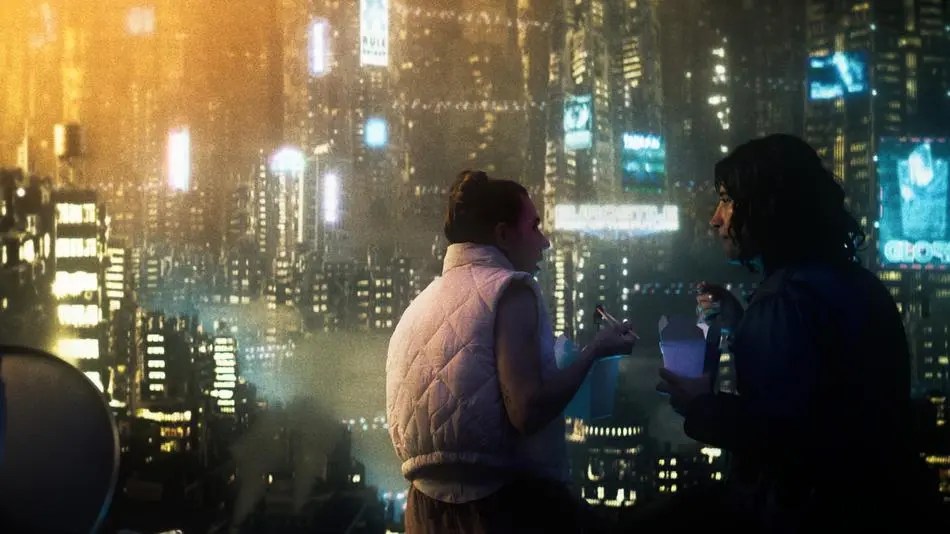
They meet in an accident — not involving cars, but in deep-space coupes bouncing through the asteroid belt. Molli (Zosia Mamet, of “Girls,” daughter of you-know-her and you-know-who) is a bit of a flake — not exactly bubbly, but she’s out here “harvesting (magic) crystals,” a part of her religion. Max (Aristotle Athari, did a season of “Saturday Night Live”) is a realist, a tinkerer trying to avoid going into his father’s line of work.
She’s forced to give him a lift back to Megalopolis. But he’s actually from Oceanus.
“It’s really beautiful” she notes. “Really? You can’t spell ‘Oceanus’ without ‘anus.'”
Max hides the fact that he’s a genocide survivor, one of the fish people.
“You should be proud of your gills! They’re beautiful.”
“It’s like having two vaginas on your collarbone. NOT beautiful
Their fizzy, bantering on-and-off “relationship” traverses space and time in arbitrary chapters in which she joins a cult and has sex with the manipulative and tentacled cult leader Moebius (Okieriete Onaodowan).
“Are we in a cult?” Molli asks fellow cultist Walter (Arturo Castro). “Oh yeah,” he replies. “There was a documentary about us!”
Max invents his way into his favorite sport, exoskeleten robot brawling. Molli canvases for a hapless but humane and smart woman running for Galactic Emperor against a monstrously cruel, vulgar populist — Turboschmuck (Michael Chernus).
And every now and then, sometimes mid-relationship, sometimes between relationships, Molli reconnects with Max like Harry kept running into Sally.
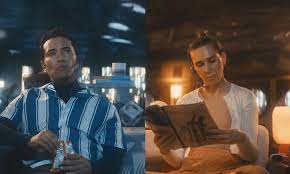
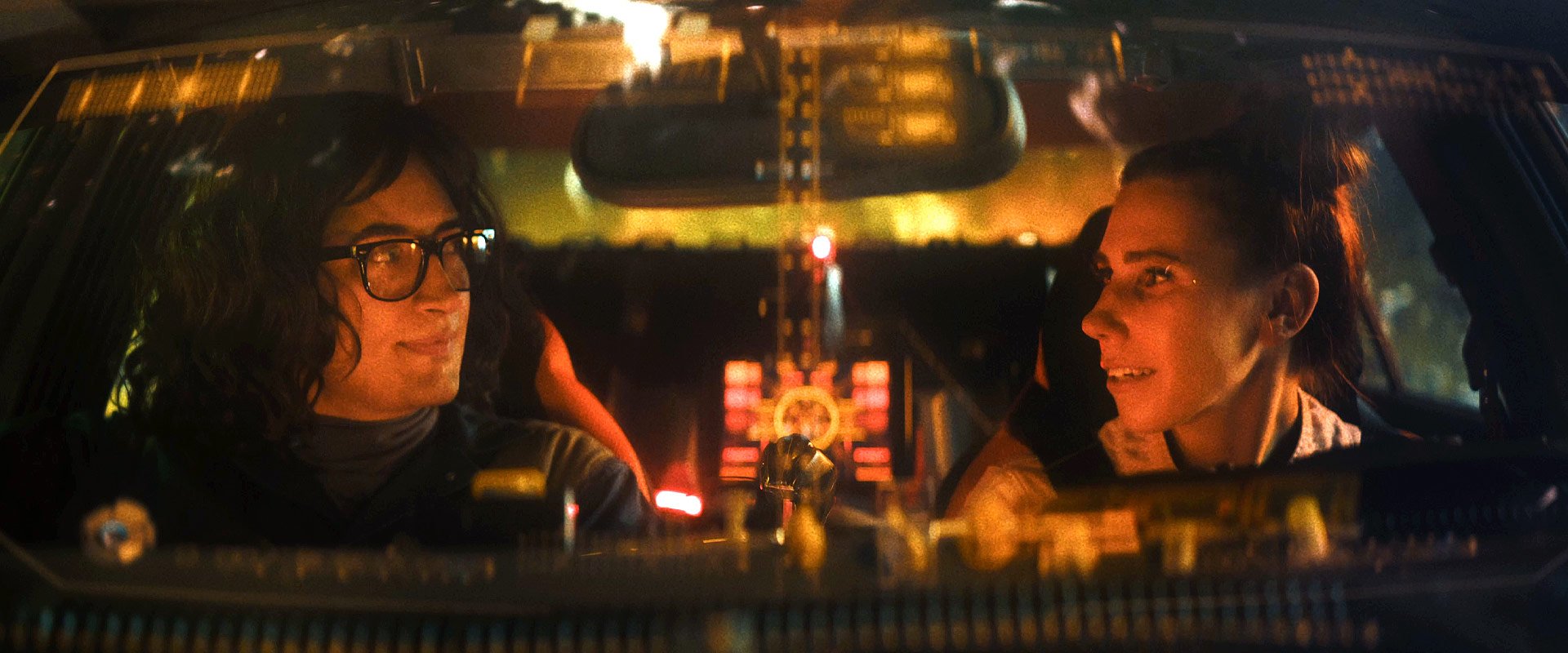
The movie’s many sources for comedy are obvious, but subtly delivered. Cyber-dating and cyberspace notoriety, religious fads and sexual identity and technology — Max builds a “sentient robot” partner for himself (Erin Darke) at one point — all are subject to mockery.
The gender roles are reversed from “When Harry Met Sally,” as Molli is more pro-sex, and also impulsive and a little gullible. Max is cynical but a romantic at heart.
When this picture works, it skips by on a frothy jazz-scored tour of a lot of cool and we’re sure super inexpensive effects, models and sets, which have the soundstagey glow of “Barbarella” or the films of Canadian avant garde wit Guy Maddin (“The Saddest Music in the World”).
When “Molli and Max” doesn’t work, the reach for laughs is obvious and the satiric jabs feel strained.
But the players make it likeable and allow the jokes to whizz by. It’s also lovely-to-look-at and laughably weird enough to play, which is all we’ve ever wanted in a Midnight Movie.

Rating: unrated, profanity
Cast: Zosia Mamet, Aristotle Athari, Erin Darke, Okieriete Onaodowan, Arturo Castro, Paloma Garcia-Lee and Michael Chernus.
Credits: Scripted and directed by Michael Lukk Litwak. A Level 33 release.
Running time: 1:34