
Hayao Miyazaki, the great Japanese animator whose name is synonymous with the anime art form, told the world he was retiring with the 2013 film “The Wind Rises.” That’s a fascinating, mostly historical World War II story about the idealistic designer of Japan’s iconic World War II fighter plane, labeled the “Zero” by the U.S. military.
While distinctly Japanese in subject matter, that somewhat jingoistic “farewell” seemed out of character for a filmmaker who won an Oscar for “Spirited Away,” someone best known for fables with magical characters (“My Neighbor Totoro,” “Ponyo,” “Howl’s Moving Castle”) playfully or symbolically juxtaposed against life in “modern” Japan.
So he’s made another “farewell” film much more in keeping with his style and his sort of storytelling.
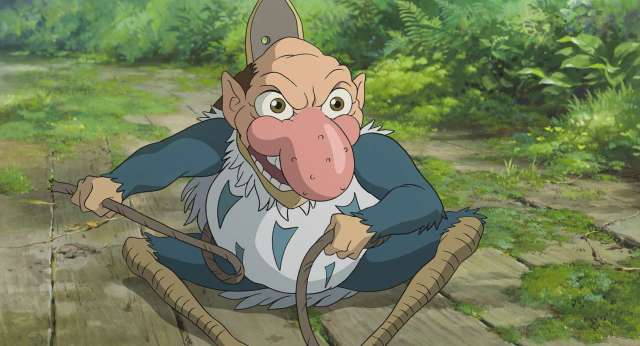
“The Boy and the Heron” is about a child of World War II sent to live in the country with his father and his father’s new wife after the lad’s mother is killed in a hospital fire. He runs afoul of a pesky gray heron, who transforms into creature trying to lure him into “the other world” that’s apparently much easier to access in the countryside than in the bombed cities.
“Your presence is requested,” the toothy heron (voiced by Masaki Suda, in Japanese with English subtitles) croaks more than once.
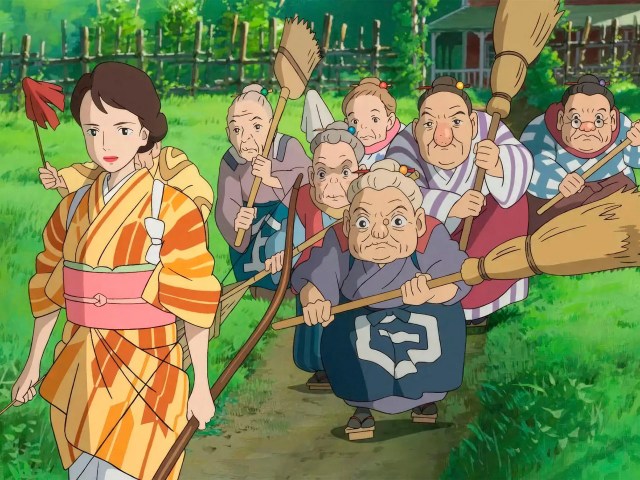
When young Mahito (voiced by Soma Santoki) sees his pregnant stepmother (Yoshino Kimura) wander into the forest, he fetches his homemade bamboo bow and arrow and pursues her into the underworld.
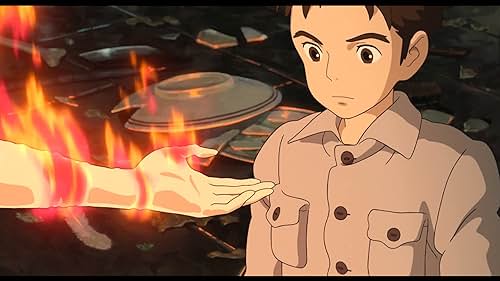
The lad, bullied in his new school to the point where he injures himself rather than go back, has nightmares about his mother dying in that fire that resulted from Allied bombing. The film is set shortly after the fall of the island of Saipan, which when the bombing began and is mentioned by his father (Takuya Kimura), an industrialist who has set up an airplane cowling factory in the remote countryside. The boy’s heron-guided plunge into an afterlife of magic, gigantic talking and fighting parakeets and the like in pursuit of his stepmother is a search to save his stepmother and perhaps his birth mother, or at least obtain closure with the latter.
The character designs — fanciful and grotesque — are as distinctly Miyazaki as the themes, “modern” Japan reminded of its ancient ways, beliefs and connection to a spirit world and its inhabitants.
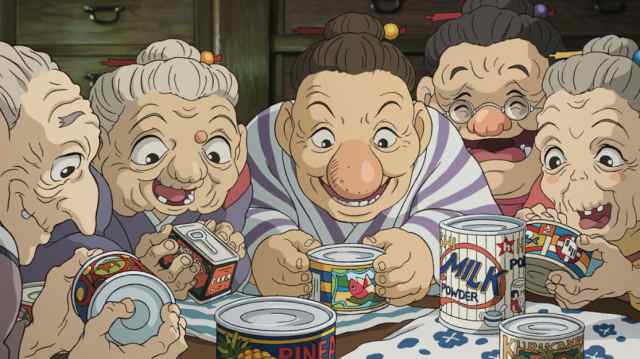
Family history and destiny intertwine to remake shattered young Mahito’s sense of self. His father seems somewhat remote from the boy and almost discerned about the war, how it’s progressing or even that it took his ex-wife’s life. He brings Mahito into his compound of houses, an ancient one presided over by a staff of granny and grandpa crones, and a more modern (Queen Anne style?) where the boy, his father and stepmother, live.
Variations of other fantasy story and mythic traditions are showcases. Puffy bubble creatures await the meal of gigantic fish provided by a fisherwoman/wizard (Kô Shibasaki) before they can float upward to be “born” as babies in the world above.
The world “above” is somewhat controlled by an ancient relative who maintains “balance” via a sort of Jenga puzzle of teetering, stacked blocks of various shapes.
The heron, white pelicans, frogs and other animals aren’t just a touch of nature. They can be sinister creatures with greater powers than the child understands, but which — being a child — he instantly accepts.
With its trademark pastel color palette and fanciful character design, “The Boy and the Heron” isn’t a better film than “The Wind Rises.” Both stories have their oblique autobiographical references for the filmmaker and allow Miyakazi to remember and recreate settings from his World War II childhood (He was born in 1941, years after fascist Japan started the world war by invading China.).
But “The Boy and the Heron,” the first Miyazaki film to open at number one at the North American box office, is much more representative of his life’s work. This grand curtain call is a much better gateway film for inspiring new fans of the undisputed master of his art form to dig into his back catalog and visit the striking and distinct worlds he dreamed up over his legendary sixty year career.

Rating: PG-13 for some violent content/bloody images and smoking.
Cast: The voices of Soma Santoki, Masaki Suda, Yoshino Kimura,
Kô Shibasaki, Aimyon and Takuya Kimura
Credits: Scripted and directed by Hayao Miyazaki. A Gkids release.
Running time: 2:04



