
Movie Review: An Indie Gem from Opiod Appalachia — “Hazard”

Ruined, emptied-out towns filled with rusting hulks of their mining past, long-shuttered storefronts, mobile homes twenty years past their expiration date, kudzu-overgrown Little League fields and locals who know they’re trapped even if they don’t know that ATV they just bought won’t drive them out of it — that’s the Appalachia of “Hazard,” a simple and poignant portrait of an America that’s been left behind in one of the most beautiful places on Earth.

It’s a taste of Opiod Appalachia, where the insidious oxy has embedded itself into the fabric, the economy and the life expectancy of people who can’t see the big picture. Big Pharma underplays the dangers, crooked doctors run a prescription flood-the-market business, even the “clean” locals get those scripts and resell the drugs to support themselves. And Big Rehab is end game, scamming insurance, state and federal resources to keep the whole cycle running and operating at a profit.

The second feature from Appalachian filmmaker Eddie Mensore (“Mine 9”) is an immersive gem of a drama and an 88 minute long argument for the survival of indie regional cinema. Because Hollywood sure as hell isn’t telling these stories.

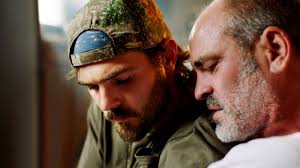
Alex Roe of “The Fifth Wave,” “Forever My Girl” and the current “Billy the Kid” streaming series stars as Will, a young father, estranged partner, and an addict and addict’s son who knows how to steal, buy at a discount or finagle the pills that he and his kind can pop, snort or cook and shoot up.

At least he’s not a coal miner. “It’s s— work,” he tells his pain-wracked and now oxy addicted coal miner dad (Steven Ogg).

Sara (Sosie Bacon, you’ll recognize her “Smile”) kicked Will out of the house. She’ll raise their little boy Morgan on her own, if need be.

But “What if I had a plan and the bucks to back it up?”

Will’s dream, “getting out,” fleeing to Myrtle Beach and opening a t-shirt shop. He’s got cash saved up. But it’s how he earns that money — his “I got a house to paint” odd job lies don’t convince anyone — that has her keeping her distance. She’s nearly a year sober, and he isn’t.

And that “plan?” When he unloads pricy pills to some teenagers, we can see what’s coming.

So can the local cop (Dave Davis). He’s at home in the decay all around him, knows everybody and which park the locals shoot up in. Not just because he sets up trail cameras to catch addicts and dealers in the act. Because he grew up with Will. And Sara? She’s his sister. He alone on the underfunded force knows something has to be done before Hazard overdoses itself into oblivion.

Mensore took a Kentucky town’s name and used Harlan County, Kentucky as his gritty, authentic filming location. But “Hazard” could be anywhere from vast swaths of Southwest Virginia, West Virginia, mountain Kentucky, mountaineer Tennessee or the western Carolinas.

As someone who grew up near Appalachia, went to school there, took “Appalachian Studies” courses on the history and never-ending parade of exploitation there and worked and lived in the region, I keep one rule in mind when viewing films set this close to home.

Are the filmmakers, actors included, looking down on a blighted place? Or are they seeing it through the inhabitants’ eyes, and letting us see it the same way?

Mensore, a West Va. U. alumnus, gets it. The “dreams” — of Myrtle Beach or just a getaway to King’s Island amusement park in Cincinnati — are limited, as are the horizons. He catches a few non-actors showing off on their ATVs in the opening credits. This is not America’s Smart Decision Belt.

The world he shows us is a town and region wrapped up in co-dependency. Will barking at Officer John about what he’s trying to accomplish, when this abused woman needs her pills for pain, and the extras as income because she’s fled a bad marriage and lives in a van, speaks volumes. Such stories are everywhere in a region where intergenerational co-dependency is almost the only economic life left. Even if it’s killing people.

A muddled ending and the over-familiarity of the ground we’re covering dull the movie’s impact, but only a little.

Mensore gets it right and tells a story validated by journalism and every trip through the region and everybody you know who lives there. And Roe, Bacon, Ogg, Davis and the parade of non-acting Appalachians we glimpse along the edges of the frame let us feel they’re living it, even if only for the length of a film shoot in Harlan County, Kentucky.

Rating: R, drug abuse, sex, profanity

Cast: Alex Roe, Sosie Bacon, Steven Ogg and Dave Davis

Credits: Scripted and directed by Eddie Mensore. A Quiver release on Plex, Amazon Prime.

Running time: 1:28

Posted in Reviews, previews, profiles and movie news | Tagged , , , , , , , | Comments Off on Movie Review: An Indie Gem from Opiod Appalachia — “Hazard”

N.C. Symphony goes “Psycho?”

What record is sitting on the turntable in Norman Bates’ room on his mother’s motel?

Beethoven’s “Eroica” Symphony. The kinky bugger. He had a Napoleon complex — Lovely Ludwing Van had a flirtation many artsy anti monarchy Europeans shared when the Frenchman first came to power. Or maybe Norman just thought it spelled “Erotica.” Cold comfort to Marian Crane, who should have noticed all the birds the creep stuffed, remembered her avian last name and fled.

First up in this concert,  a suite of music from the score of the Appalachian Carolina Civil War romance “Cold Mountain.”

But why is it that every film, concert or funeral I  attend has me parked next to the one ill mannered rube who insists on playing with her/his phone?

As Jack Donaghy memorably put it in many an episode of “30 Rock” when confronted by such gaucherie, “What are we, farmers?”

Posted in Reviews, previews, profiles and movie news | Comments Off on N.C. Symphony goes “Psycho?”

Netflixable? “Being Eddie” is how Murphy wants you to See Him

Eddie Murphy has a lot to be satisfied with.

A gifted mimic turned overnight stand-up star, famous since his teen years on “Saturday Night Live,” a ground-breaking African American superstar of the screen, for decades one of the biggest box office draws and one of the best paid actors ever, mentor and example to generations of Black comics and actors who followed him, idolized by millions, what’s he got to complain about?

At 64, he’s maintained a career that took him from Next Big Thing to Hottest Thing on Screen to Dad Comedies, making classics (“48 Hours,” “Trading Places”) and finding more recent critical acclaim (“Dream Girls,” “Dolemite is My Name”) that reminds us he’s overdue for a career achievement Oscar.

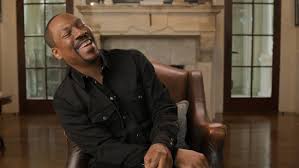
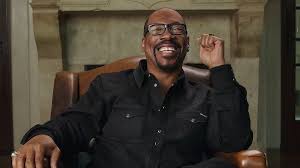
That’s the version of Eddie Murphy that he wants to you see in “Being Eddie,” self-satisfied. It’s an obviously Eddie-approved documentary about his life and career that editor-turned-first-time-doc-director Angus Wall filmed.

Eddie tells the story of his life — a glimpsed-over childhood, the father who left and the stepfather who supported him and even became the good-natured butt of onstage Eddie jokes about his drinking, his devotion to Richard Pryor and stand-up from the age of 13, his teenaged stardom and beyond.

He notes how he avoided the drug and alcohol downfall that took down so many of his idols and contemporaries, and friends, colleagues and his late brother Charlie Murphy back this up by confirming Eddie “was never the life of the party” — any party.

Director John Landis relates how Paramount had set up “Trading Places” for Richard Pryor, but “Richard set himself on fire,” Eddie jokes/explains. He speaks about the role then-Paramount exec Jeffrey Katzenberg had on starting his film career and “protecting me” from getting fired from “48 Hours,” his film debut, and Katzenberg confirms telling his fellow execs to be patient, because Eddie is “special.”

Murphy jokes about an entire older generation of Hollywood that suddenly wanted to meet him for dinner, drinks, what have you. Who knows what Yul Brynner had in mind when he invited Eddie home?

But as we revel in the anecdotes and see and hear Chris Rock, Dave Chappelle, Tracy Morgan, Arsenio Hall and others sing Murphy’s praises, it’s pretty obvious this is a life and career that has been sanitized for Eddie’s protection.

The more interesting Eddie is the one who recalls his infamous Peak Era Eddie on-stage bit of truth-to-power Oscar presentation speech back in 1988 — “Black people will not ride the caboose of society, and we will not bring up the rear anymore. And I want you to recognize us.” Murphy figures that’s the main reason he’s never gotten an Oscar, honorary or otherwise.

“Norbit?” Sure, that might have cost him the “Dream Girls” best supporting actor Oscar. But there was also the cavalcade of crap that came before that and for years after it. “Meet Dave,” anyone?

“My advice to young comics? Don’t ever play a rocket ship.”

He’s certain Hollywood holds a grudge the way he does — 35 years estranged from “Saturday Night Live” because David Spade joked “Look children, it’s a falling star! Make a wish” about “Vampire in Brooklyn,” one of the legions of ill-conceived dogs Murphy brought to the screen after his peak.

So there’s no Lorne Michael testimonial, no Walter Hill (director of “48 Hours” and Richard Pryor’s “Brewster’s Millions”), no Nick Nolte or any “Beverly Hills Cop” co-star here to speak about working with him.

It’s enlightening to hear Murphy assert and others back up the doors he opened when he took roles because “Nobody’s seen a Black guy” in this or that sort of on-screen part. That “Hollywood before Eddie” and Hollywood after him statement about his significance is undeniable.

He’s been canny about his career and image all along. Remember Muphy’s first big screen entrance? What song is he caterwauling in a prison cell in “48 Hours?” “Roxanne” by The Police. That’s a hip and white-American moviegoing audience approved choice of tune, something I noted at the time. Edgy Eddie was “safe” for Middle American moviegoers was the message he always sent.

Murphy wanders his Roman villa-sized $85 million Beverly Park mansion and tells us stories and it’s fun to see him opening up, even if he isn’t opening up that much. And we can’t help but notice the select group of co-stars and proteges (Rock, Chappelle, etc) who sing his praises. Even if Arsenio Hall has some interesting insights, he’s never shaken the “Eddie’s Lapdog” image he’s justly worn his entire life.

There’s lots of appreciation for Murphy’s stand-up documentaries “Raw” and “Delirious,” much of it from Chappelle and Morgan. But there’s no mention of the widely criticized homophobia Murphy threw out there in both those stand-up tours, something he has in common with Chappelle and Morgan, who’ve also gone for homophobic laughs, perhaps taking their cue from their idol.

Perhaps that’s one reason comic elder-statesman Jerry Seinfed says “The rules are just different for him.”

Murphy mentions his divorce in passing, shows off his new wife and “ten kids.” He leaves out the Spice Girl he had to be sued to make him admit he was her baby daddy. That “baby” is now a teen and just came out as transgender, by the way. He doesn’t talk about his infamous police stop for picking up a transgender prostitute named Shalimir.

Hell, Hugh Grant makes jokes about his similar arrest, and he’s not even a stand up comic. Think of how Murphy, who shows off ventriloquist dummies he had made of Richard Pryor and Bill Cosby for a possible stand-up “conversation” he never got around to staging, might relate his “real” and even embarrassing experiences on stage.

“Eddie Murphy telling a story made you feel like you were there,” Kevin Hart marvels.

So while his tribute to big brother Chair is touching, and it’s entertaining to hear what Murphy does tell us, the origins of his gift for voices and character creation (from “Gumby, dammit” on “SNL” to all those makeup-assisted roles he took in “The Nutty Professor,” “Norbit,” and “Coming to America”) and flattering for all these comics to lament that he hasn’t gone back and done some stand-up, “Being Eddie” never overcomes the “hagiography” label.

Murphy telling us which broke actor’s tombstone he paid for and which famous Black performers he “buried” (paid for their funeral) is righteous but self-serving. Having no contrary voices in this fawning film makes such “admissions” grating.

In the recent rush of comics lauded in bio-documentaries, “Being Eddie” simply isn’t on a par with “John Candy” I Like Me,” or “Pee Wee as Himself.” Let’s hope Eddie doesn’t wait until he’s dead for his story to fully be told.

Rating: R, profanity

Cast: Eddie Murphy, Dave Chappelle, Jerry Seinfeld, Tracee Ellis Ross, Chris Rock, Tracy Morgan, Arsenio Hall, Reginald Hudlin, Jeffrey Katzenberg, John Landis, Brian Grazer, Charlie Murphy and Richard Pryor.

Credits: Directed by Angus Wall. A Netflix release.

Running time: 1:43

Posted in Reviews, previews, profiles and movie news | Tagged , , , , , | Comments Off on Netflixable? “Being Eddie” is how Murphy wants you to See Him

BOX OFFICE: “Now You See Me” out sprints “Running Man,” “Predator Badlands” drops to third

A franchise revival, a remake and a big sci-fi/monster holdover walk into a bar…

This weekend’s box office isn’t one for the record books, as nothing is making Marvel/Pixar/”Avatar” money in a $12-$20 ticket environment. But it does show why Hollywood clings to old reliables and why cineplexes are grateful for them. Because something’s got to keep the lights on.

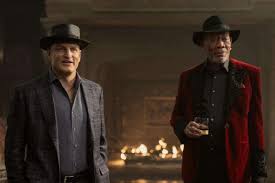
“Now You See Me: Now You Don’t” is the third film about magicians as grand illusionists and caper comedy Robin Hoods, the first film to put Jesse Eisenberg, Isla Fischer, Dave Franco and Woody back on screen together since 2013, and the first in the franchise (Fisher missed the second film) since 2016.

It did a decent Thursday night ($2.1 or so) setting up an $8.4 million “opening day” Friday and bested the Edgar Wright remake of Stephen King’s “The Running Man” ($1.9/$6.5), which had a passable Friday. “Now You See Me” has the advantage of a PG-13 family-friendly rating, and The Numbers reports that its final tally reflected that — $21.3 million.

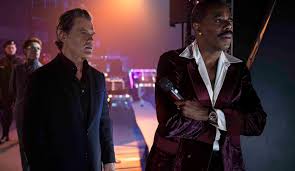
“The Running Man,” now an R-rated Glen Powell star vehicle, with Colman Domingo and Josh Brolin in villainous support, tallied $17 million, better than the $15 million it seemed headed for, but a lot less than the mid $20s first projected. Ouch. There’s a lot of money on the screen in this $110 million thriller.

Neither film is riding critical acclaim in this horse race.

Wright is beloved by fanboys/girls thanks to “Sean of the Dead,” “Hot Fuzz” and “Scott Pilgrim vs. the World.” He tries to take this material seriously in light of its dystopian connection to the ICE/fascism world we live in but never settles on a tone that works or a final act that pays off.

And “Now You See Me” was never all that to start with and adding three Gen Z accomplices and Rosamund Pike as a South African villain with the oddest Afrikaner accent of them all doesn’t help. Deadline.com says these “illusion” films are big in China. But what’s up with that colon in the middle of the title?

Projections are for “Predator Badlands” to lose over 66% of its opening weekend audience and earned $13 million this weekend, perhaps a bit more. It could come in second. I poked my head into a showing on Thursday evening that had a lot more people in it than the “preview” of “The Running Man” I was there to see.

The Colleen Hoover weeper “Regretting You” is finally fading away, but is still outperforming expectations, managing $5 million when $3.8 seemed the best it would manage.

“Black Phone 2” adds $2.65 million and enjoys its last weekend in the top five and appears destined to clear $84-86 million by the time it loses its screens.

Another new release, one I didn’t get to myself, is “Keeper,” a no-budget horror title from Neon and Osgood Perkins (“Longlegs,” “The Monkey,” “Blackcoat’s Daughter”). It finished in sixth $2.5 million take. Neon keeps betting on this guy.

Nothing else is making money, as “Nuremburg” ($2.4) and the sort-of faith-based “Sarah’s Oil” ($2.34) never took off, “Chainsaw Man” ($1.6) is finally fading away and “Bugonia” ($1.6) and out of the top ten “Springsteen: Deliver Me from Nowhere” underwhelmed and his fans have aged out of moviegoing during the first Obama administration.

“Tron: Ares” exits the top ten/top twelve and the scene with a $72 million take. The damned thing cost $180 million.

Maybe Netflix should have opened “Frankenstein” in more cinemas and for a few weeks longer.

Posted in Reviews, previews, profiles and movie news | Tagged , , , , , , , , , , , | Comments Off on BOX OFFICE: “Now You See Me” out sprints “Running Man,” “Predator Badlands” drops to third

Movie Review: A Torch and a Card Trick are passed to a new Generation — “Now You See Me: Now You Don’t”

It helps to think of the “Now You See Me” film franchise as a manga that dodged the whole anime series then anime movie “product” assembly line. “Now You See Me: Now You Don’t” brought on that epiphany.

Revived a dozen years after it launched and six years after a sequel that included Daniel Radcliffe, these tepid thrillers are pure pop fantasy, with a manga style universe in which magic is not just cool, it’s “hip.” Gen Y and Z are all about pop-up shows where four Gen X-ers — OK, three plus one Boomer — show them card tricks, rob the robber barons and serve up justice by sharing all that ill-gotten, hoarded wealth with the underemployed “Gen Z staring” masses.

If you think of it all as manga in origin, you can brush off every absurd assumption, assertion (“This is cool!”) and laughable “reality” with a “Well, that’s what’s big in Japan right now.”

Hey, we all have our coping mechanisms.

Confronted with this joyless, by-the-numbers “getting the band back together” reunion, with ancient overseer Michael Caine retired out of the series and the agent chasing these “outlaw” magicians around the globe (Mark Ruffalo) reduced to a Zoom call with three new “horsemen” recruited to the four FIVE horsemen of the first two films, you can’t just wait to hang on every word the normally wonderful Rosamund Pike utters for a laugh.

Pike plays the villain, a South African diamond mining empress. And that accent... Oh. My. God.

Ordinarily, actors not named Sharlto Copley, Alice Krige or Embeth Davidtz speak a version of English that’s mostly Aussie without the “crikeys.” But Pike (“Gone Girl”) goes at it like a Jamaican on a rum-bender in County Kildare.

“She makes all the world’s worst people possible,” is how Atlas (Jesse Eisenberg) describes Veronica Vanderberg’s blood diamond/money-laundering empire. Yes, and she makes South African Oscar winner Charlize Theron spit up her prosecco every time she opens her mouth.

The four credited screenwriters open the film with a pop-up show in Bushwick, with the long-split-up “Four Horsemen” of magic (Eisenberg, Dave Franco, Woody Harrelson and even Isla Fischer from the first film) pulling out all the stops as they appear, disappear and make a crypto bro’s millions vanish into the hands of the Gen Z audience.

But it turns out the “Horsemen” weren’t really there. It was an illusion/hustle cooked up by Ms. Parkour practicing Pickpocket June (Ariana Greenblatt), tech nerd illusionist Charlie (Justice Smith) and “Horsemen” hating master of disguise Bosco (Domonic Sessa).

J. Daniel Atlas is not amused. He was summoned there by a tarot card clue, and after he’s instantly sussed who the real practical jokers are, he enlists the new kids on the block for a heist.

Can the world’s largest diamond, the wellspring of the wealth of the Vanderberg diamond empire, be swiped? Let the old blood meet the new blood and we’ll see if that can be sorted out.

Jack (Franco), reduced to cruise ship magic bookings, mom Henley (Fisher) and hard-drinking hypnotist.”mentalist” Merritt (Harrelson) show up with their own Tarot card summons to pitch in, mid-theft.

“This liver is not going to destroy itself,” Merritt reasons between rounds.

They don tuxes and evening wear and disguises, crash galas, zipline, jet off to “the Orlando of the Middle East” (Abu Dhabi), steal a Formula One race car and face death because, as our South African princess reminds us “The Vanderberg family day nowt lowse!”

The humor is meant to come from the clash of generations, mocking shots of “You kids make a REAL difference” and the like.

The illusions are well-handled, “unbelievable” but easy enough to pull off — in a movie. Bringing back Henley’s “replacement” Horseman from “Now You See Me 2” (Lizzy Caplan) is worth a chuckle or three, mainly in her disguises.

But there are now FAR too many characters to track. And there’s no pop to the story or the new recruits. An F-1 car chase, a harrowing escape or two and more magic words of wisdom from the sage Thaddeus (Morgan Freeman) don’t put the picture over.

That four-handed screenplay gives us 85 minutes of movie, and “Zombieland/Venom” director Ruben Fleischer drags that out to nearly two hours. That underscores just how much this disposable piffle outstays its welcome.

As for the formidable Ms. Pike, let’s hope this over-budget card trick and her accent vanish before any real career damage is done.

Rating: PG-13, violence, profanity

Cast: Jesse Eisenberg, Rosamund Pike, Woody Harrelson, Isla Fisher, Justice Smith, Dave Franco, Ariana Greenblatt, Lizzy Caplan, Dominic Sessa and Morgan Freeman

Credits: Directed by Ruben Fleischer, scripted by Seth Grahame-Smith, Michael Leslie, Rhett Reese and Paul Wernick, based on characters created by Boaz Yakin. A Lionsgate release.

Running time: 1:52

Posted in Reviews, previews, profiles and movie news | Tagged , , , , , , , , , , | Comments Off on Movie Review: A Torch and a Card Trick are passed to a new Generation — “Now You See Me: Now You Don’t”

Movie Review: “The Running Man” Stumbles into a Dead End

About thirty minutes into the Glen Powell/Edgar Wright remake of “The Running Man” I thought “This is kind of working.” I invested in this updating of Stephen King’s dytopian sci-fi horror for the age of ICE, fascism and murderously amoral media and new star Glen Powell navigating it.

There are jokes connecting the film to the 1987 original. This fascist mediacracy America uses “New Dollars,” and Arnold Schwarzenegger, the last “Running Man,” has his picture on the currency. Wright brings in his “Scott Pilgrim vs. the World” star Michael Cera, and there’s a further sop to the fangirls and fanboys in a character who researches, writes and performs a vlog dissecting the infamous race-to-the-death TV show called “The Running Man.”

But the film’s grim tone suggests serious intent, and Wright wrestles with how to manage that messaging throughout. About an hour in, we get the first hints that Wright and co-writer Michael Bacall are scripting themselves into a corner. And upon arriving at that dead end, they focus group themselves right out of topical, allegorical sci-fi thriller and into a finish that’s the least satisfying or logical of the “Sean of the Dead/Hot Fuzz” director’s career.

Powell plays a short-tempered blue collar laborer in this future winner-take-all economy. Ben Richards can’t keep a job, at least partly because of his compassion and sense of responsibility to his fellow workers. His wife (Jayme Lawson) can only take so many extra shifts at The Libertine, a strip club where she insists she just “waits tables.”

And in an America where the working masses are at each other’s throats, the health care system has entered its end game. They’re on their own with a sick toddler and no money to get her “good pharm,” the medicine and medical care that will let her survive the latest iteration of the flu.

The Network isn’t just serving up all manner of “reality” FreeVee TV shows with terminal stakes for the participants. They’re the outsourced supplier of masked “goons” who serve as private police. Some of those goons are the hunters and killers on their most popular show, “The Running Man.”

Ben Richards insists “I’m not stupid enough” to audition for that 30-days-on-the-lam program, whose participants are always hunted down and killed before surviving the full thirty days and collecting the big paycheck. But when Ben shows up, desperate and ill-tempered, for the clearinghouse audition for any of a number of Network game shows, “Running Man” creator/show-runner Dan Killian (Josh Brolin at his toothiest) identifies him as the best prospect for his series, pitched to auditioners as “We’ve got the cash if you’ve got the balls.”

Maybe it was his responses to word association and the holographic Rorschach Tests. “The angriest man to ever audition” is a star in the making, Killian figures.

Ben signs on the dotted line, sends cash home to the wife — who is taken into hiding. And he braces himself for the challenge of running, hiding, disguising and fighting his way past paid thugs and freelance yahoos angling for the rewards the show promises to those who help track Ben, dopey Tim (Martin Herlihy) or their running woman Jenni (Katy O’Brian) down and kill them.

Colman Domingo tries to bring a little Tucci/Elizabeth Banks “Hunger Games” showmanship to the role of MC, the person who whips up the studio audience and viewers at home about how “evil” these “criminals” are that they’re turning loose to be hunted down on TV.

Ben quickly figures out this isn’t on the up-and-up. The Network deep fakes videos, backgrounds and the speeches the hunted “criminals” make and uses any means at its disposal to hunt and stage bloody executions in prime time — once the runners have driven the ratings up — collateral damage be damned.

King came back to this sort of Darwinian contest idea for “The Long Walk,” which was recently filmed. And “The Hunger Games” was just one YA novel series that stole that plot.

Dystopia seems a lot closer to real life than it did when King wrote the book and when Schwarzenegger & Co. first committed it to film. Not sure if that’s a selling point any more than the futuristic slums and legions of neon-lined futurecars mixed in with retrofitted DeLoreans, Citroens and the like we see in the crowded streets. But yes, the production values are first rate.

And there’s something primal about the chase, and “The Running Man” gets us pondering how we’d get out of this or that jam, get away from the D.C./Philly region to New York, Boston and — of course — Derry, Maine, the Capital of Stephen King Country.

Powell may be adept at taking us along for the run, but Brolin at his most sinister is the one who makes the sale. Yes, “entertainment” really could come to this.

Alas, the film’s pacing is stumbling and the longer it goes on, the less urgency we feel in that chase.

There’s little character development, with supporting roles barely sketched in. William H. Macy plays the black market explosives, disguises and weapons dealer/pal that everybody on the lam needs. Daniel Ezra plays the vlogger, with Angelo Gray as the kid brother who talks him into helping this stranger escape the mob and the goons.

And then, as we check our phones or watches for the umpteeth time, we figure that the fellows writing this have no neat, original, satisfying or “true” way of wrapping it all up. The sad part of that is they knew this before we did.

Everything they throw at the screen in the last 12 minutes plays like rewrites, reshoots and a studio badly fumbling what they’d thought was a sure thing way back when they set it up.

Rating: R, graphic violence, nudity, profanity

Cast: Glen Powell, Josh Brolin, Jayme Lawson, Daniel Ezra, William H. Macy, Angelo Gray, Michael Cera, Lee Pace and Colman Domingo.

Credits: Directed by Edgar Wright, scripted by Michael Bacall and Edgar Wright, based on a Stephen King novel. A Paramount release.

Running time: 2:13

Posted in Reviews, previews, profiles and movie news | Tagged , , , , | Comments Off on Movie Review: “The Running Man” Stumbles into a Dead End

Classic Film Review: Lesser Lubitsch, a “Heaven Can Wait” (1943) that Bores

When we think of the Hollywood comedies by the great German expat Ernst Lubitsch, we remember Garbo at her drollest, a Bolshevik who falls in love in “Ninotchka,” the doors-slamming-on-Nazis backstage farce “To Be or Not to Be” and the oft-remade wit of “The Shop Around the Corner.”

We recollect the sophistication, the famed “Lubitsch touch” that made his films stand apart, even those less timeless titles (“That Uncertain Feeling”).

The monied, high-society setting and comedy of manners and mores “touch” is in evidence in his adaptation of the play “Birthday,” which the studio retitled “Heaven Can Wait” for its 1943 release.

Some critics at the time park this one in the pantheon of Lubitsch pictures, and a few today still do. But blame it on the limitations of the Technicolor production process, the time the film premiered — right at the height of World War II — the screwball-averse cast or the source material itself if you want to. Any way you slice it, this picture’s a sentimental stiff.

Glancing at reviews of it at the time on the film’s Wikipedia page, the greatest critic of the era might have been the only one to see the light. “Not up to his best,” James Agee opined. I’d go so far as labeling it a “Magnificent Ambersons” with fewer laughs.

The game is given away straight off as Alfred Newman’s score quotes freely from that 1909 tune “By the Light of the Silv’ry Moon.” Whatever else is going on here, a fat coating of sentiment will be lathered over it.

A “great cavalier of the gay ’90s” has died and gotten an appointment with “His Excellency,” Satan. The womanizing old man (Don Ameche) taking a seat before a towering Lucifer (Laird Cregar) is sure he’s hellbound and that he’s earned it. But the tall, tuxedo’d Old Scratch will decide if he meets “our requirements.”

So Henry Van Cleve of the Manhattan Van Cleves tells us and His Excellency the story of his privileged life and his lifelong infatuation with “girls,” from the child in pigtails he crushed on as a tween, through his marriage and into his dotage.

Impressing one of a couple of schoomates he was sweet on as a child required the gift of a captured beetle. Life lesson learned?

“If you want to win a girl, you have to have lots of beetles.”

We meet the oft-fired housemaid/French teacher (Signe Hasso) who gave teen Henry his first drink and it’s implied, first taste of sexual experience. Henry’s mother is quite put out at his “ill” her son must be, mumbling and half-passed-out as he is.

“Oh Randolph! Our boy, DELIRIOUS in a foreign language!

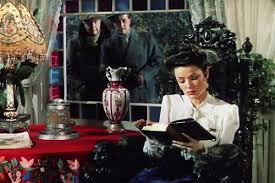
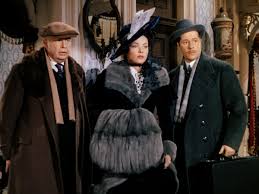
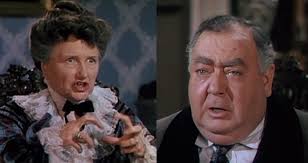
We see the young 20something Henry fall hard for a vision of 1890s femininity — Martha. Gene Tierney, who’d film the movie’s she’s most remembered for, “Laura,” the next year, makes Martha Strabel beguiling and guileless, just a girl from new money in Kansas who has no intention of letting her parents (Marjorie Main and the blustery character comic Eugene Pallette) keep her in Kansas. She’s just gotten engaged to Henry’s square young lawyer cousin Albert (Allyn Joslyn) to ensure she gets out.

Not for long.

When Henry poses as a store sales clerk (she’s interested in a “How to Please Your Husband” self-help book), poor Martha doesn’t even know she’s being courted and set up for an elopement at Henry’s birthday party later that evening. Albert barely has a chance to make their big announcement and introduce his prospective in-laws before the happy not-quite-a-couple-yet are off.

These scenes, stuffed with a smorgasbord of the best character actors of the day, charm and merit a grin, maybe two. Louis Calherne is Henry’s indulgent “keep a stiff upper lip” father. Spring Byington is a my-boy-can-do-no-wrong mom. But the venerable Charles Coburn has the most chances for laughs as the all-knowing grandad who sees through the lad and his son and daughter-in-law’s failed parenting. Grandpa sees enough of himself in the 26 year-old to give it all away.

He gruffly questions his butler, whom he sends after the elopers in mock outrage, shoving cash into that butler’s hands to get the young couple out of town.

“She was packed by E.F. Strabel / To be served at Albert’s table / But that Henry changed the label. Now that’s poetry!”

Wisecracks about Kansas “yokels” and the like keep the tone light in the early scenes. But the stodgy “My life story as told to the Devil” framework slows the pace and drains the light out of laughs that should trot by at a sprint.

Henry can’t think of any one capital offense that’s earned him the right to Eternity in Hell.

“But I can safely say my whole life was one continuous misdemeanor!”

For me, “Heaven Can Wait” doesn’t light up until the setting shifts to Kansas, an HOUR into the narrative. There’s where Martha is fleeing after years of Henry’s constant philandering around the fringes of their “happy” marriage.

The bickering Strabel matriarch and patriarch, who disowned Martha, can’t bear to sit closer than 25 feet apart at breakfast. An early 1900s disagreement over “the funny papers” has to be adjudicated by a long-suffering servant (Clarence Muse, who almost steals these scenes).

Pallette, who was Little John to Flynn’s “Robin Hood” and the blustering, flustered employer of “My Man Godfrey” is in his usual dudgeon, and Main (the future “Ma Kettle”) is more than his match.

The film’s screwball possibilities are evident early on, but mildly dithered away. That broken promise is only kept (almost) in this Kansas sequence, with Henry dashing in to lie and finesse his wife back home.

The stately pacing seems to reflect the somber mood of the country, the world and time the film was conceived and released in. I’ll bet this pattered by at a sprint on the stage.

Ameche had a sort of Ralph Bellamy handsome guy who doesn’t always get the girl career in his younger years. Whatever possibilities this scoundrel Henry Van Cleve afforded him weren’t really realized until his grand ’80s comeback — “Trading Places” (co-starring with Bellamy), two “Cocoon” movies and “Things Change.”

Tierney was a star hitting just hitting her peak, but she was never known for comedy.

Cregar’s turn as Satan is more of a sight gag than anything the screenwriter or the actor tried to have any fun with.

One can wonder if re-casting with a Stanwyck/Jean Arthur type would have goosed the pacing and the picture’s punch, with Ameche amping up his performance just to hold his own.

Shooting it in black and white might have stripped the “stately” out of this “escape” and allowed Lubitsch to pick up the tempo. Technicolor slowed many a feature film production to a crawl.

But what’s here is never more than a wry template for a sendup of dated mores and manners with a sentimental Satan there to hold our anti-hero’s hand and assure him that he’s not really suited for “down here,” even if “up there” seems like a bigger stretch.

And through it all, Alfred Newman keeps coming back to his idea of the right “Sentimental Journey” tone that the score needed, the maudlin but not-quite-sappy-enough to be funny (here) “Silv’ry Moon.”

Seen today, “Heaven Can Wait” — which was the title of the play that became the film “Here Comes Mr. Jordan,” which Warren Beatty remade as “Heaven Can Wait” in 1978 — feels like a polished production of a darkly funny film on the page rendered into something too sober by half on the screen.

Rating: “approved,” TV-PG

Cast: Gene Tierney, Don Ameche, Charles Coburn, Marjorie Main, Eugene Pallette, Louis Calherne, Spring Byington, Allyn Joslyn, Signe Hasso, Clarence Muse and Laird Cregar

Credits: Directed by Ernst Lubitsch, scripted by Samuel Raphaelson, based on a play by Leslie Bush-Fekete. A 20th Century Fox release.

Running time: 1:52

Posted in Reviews, previews, profiles and movie news | Tagged , , , , , , , | Comments Off on Classic Film Review: Lesser Lubitsch, a “Heaven Can Wait” (1943) that Bores

Movie Preview: An outbreak, a “Thing is spreading,” and Liam Neeson’s here to help put it in “Cold Storage”

Getting strong “The Stand” and “Andromeda Strain” with a splattery comic edge from this trailer.

Georgina Campbell and Joe Keery co-star in this star screenwriter David Koepp (“Jurassic Park,” “Mission: Impossible,” “Ghost Town,” “Indiana Jones/Dial of Destiny”) project.

Feb. 13.

Posted in Reviews, previews, profiles and movie news | Comments Off on Movie Preview: An outbreak, a “Thing is spreading,” and Liam Neeson’s here to help put it in “Cold Storage”

Movie Preview: Timing? “The Devil Wears Prada 2”

A sequel to the 2006 film based on a novel even further from a different era, with everybody involved 20 years older, seems kind of…made for streaming.

But when you’ve got Streep, Hathaway, Blunt and Tucci on board, there’s nothing for it but to zip up and doll-up and make your plans for May 1.

Fashion comes back into fashion?

Posted in Reviews, previews, profiles and movie news | Comments Off on Movie Preview: Timing? “The Devil Wears Prada 2”

Movie Preview: Sam Rockwell is “FROM THE FUTURE!” — “Good Luck, Have Fun, Don’t Die”

A week doesn’t go by when I don’t dial hop past some “Pirates of the Caribbean” telecast and wonder “Whatever happened to Gore Verbinski?

The dude directed “Mouse Hunt,” “The Mexican,” “The Ring” and “The Weather Man” before selling his soul to Disney.

Well, here he is, behind the camera for an all-star action-farce about how a slob from the future starts the revolution today.

Zazie Beetz, Michael Pena, Juno Temple, Haley Lu Richardson and Asim Chandry are also in the cast.

Feb. 13, we see how it all goes down.

Posted in Reviews, previews, profiles and movie news | Comments Off on Movie Preview: Sam Rockwell is “FROM THE FUTURE!” — “Good Luck, Have Fun, Don’t Die”