
An action comedy with ELO inthe trailer? Go on.
Jack Black is the robot, Edgar Ramirez is the villain, Ariana Greenblatt is the kid.
An August Lionsgate answer to…”Guardians of the Galaxy?” Looks spirited and noisy. Could be fun.
An action comedy with ELO inthe trailer? Go on.
Jack Black is the robot, Edgar Ramirez is the villain, Ariana Greenblatt is the kid.
An August Lionsgate answer to…”Guardians of the Galaxy?” Looks spirited and noisy. Could be fun.


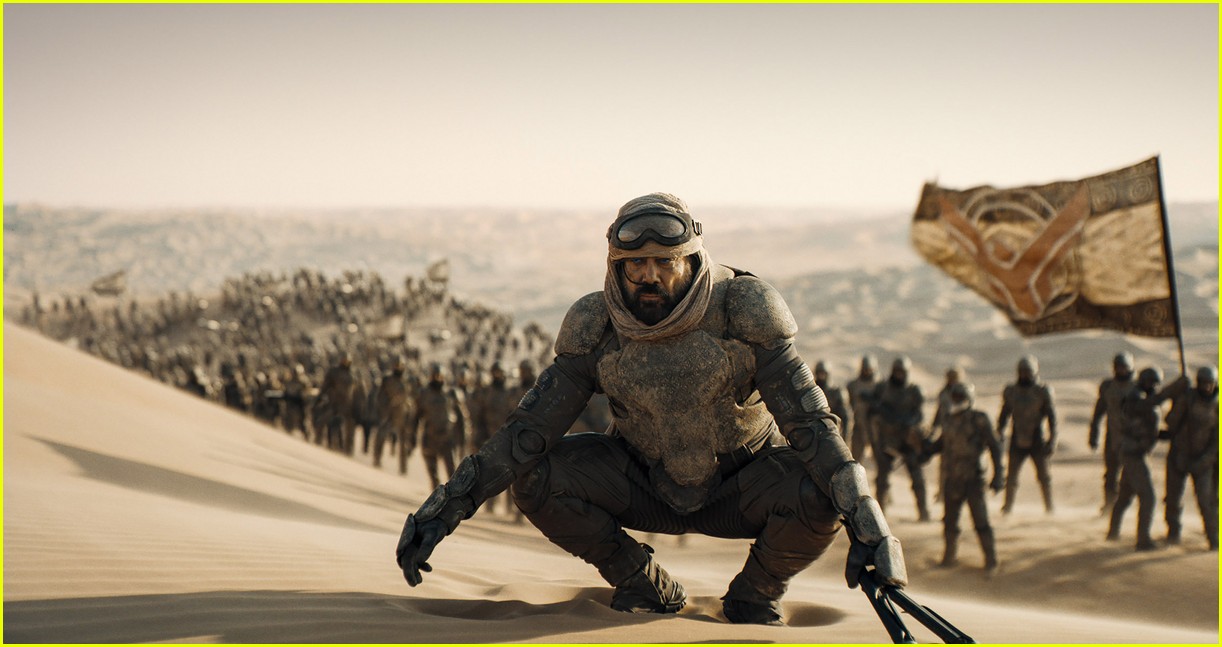
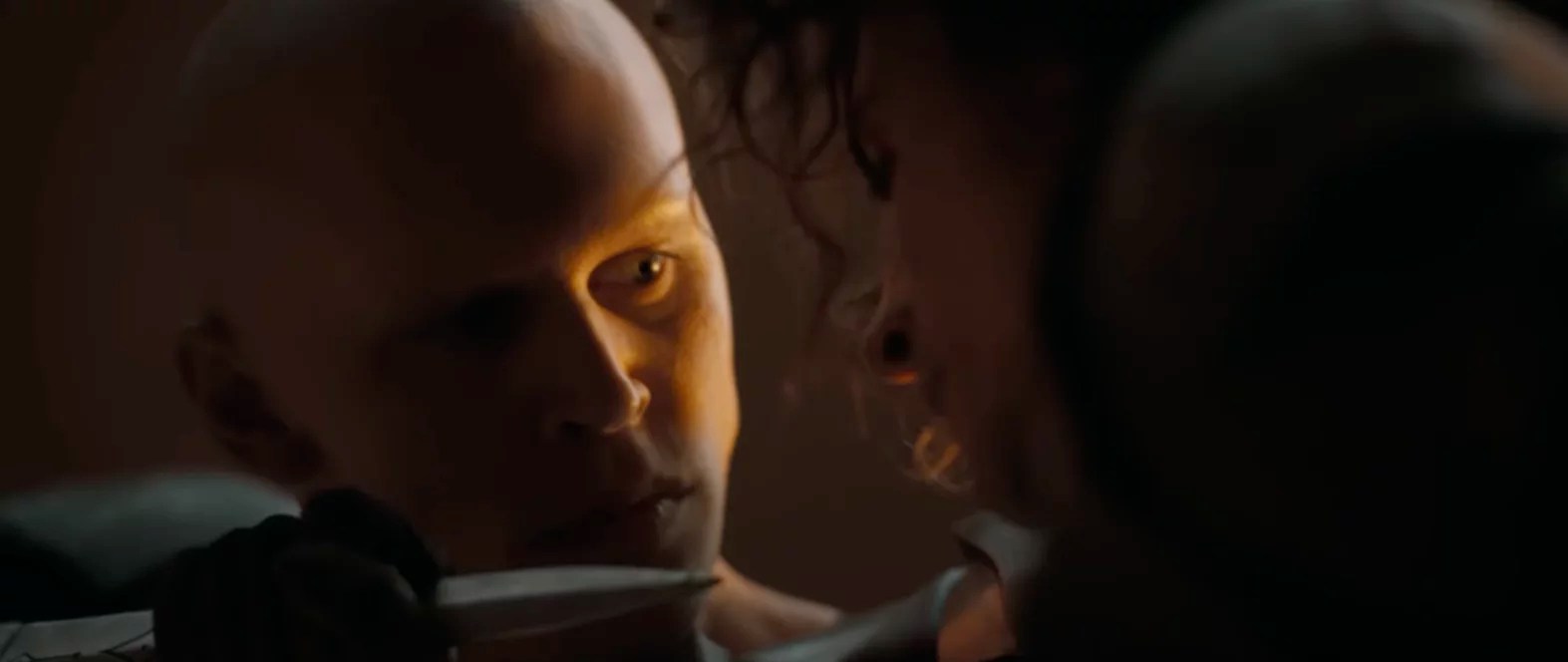
There’s a marked attention to grandeur in “Dune: Part 2.” The “world building” of this science fiction saga is more detailed and eye-catching, the sweep of the landscape and grit of those who live on it vastly more pronounced than in Denis Villeneuve’s first film, both of them based on Frank Herbert‘s 1965 novel.
With this film, Villeneuve more fully realizes his overarching intent, and “Dune” becomes what it was meant to be pretty much all along — the “Lawrence of Arabia” of science fiction. The sweeping source novel with its array of characters, settings, environmentalism and cultures may not share the subtexts of “Lawrence,” but it and this film of it are smart and large scale, so much so that every frame reminds you “This is Epic.”
“Part 2” is the aftermath of the slaughter of House Atreides, an ancient feudal spacefaring clan entrusted with administering the vital desert planet Arrakis, source of the “spice” that the rich and noble of their galaxy use to gain paranormal powers, make interstellar space travel possible and extend their lives.
The Duke (Oscar Isaac) and his lieutenants are dead and/or gone. But teen son Paul (Timothée Chalamet) survived the massacre, and a fight-to-the-death at the end of it. And he and his pregnant Bene Gesserit mother (Rebecca Ferguson), from a race of seer women who act as manipulators and puppet masters of the fate of the empire, escape into the desert that covers the once-green planet. Son and mother, with her fetus communicating with her telepathically, pre-birth, find refuge among the Fremen of a planet that’s been enslaved and exploited for its natural resources. Among them, Chani (Zendaya) takes a special interest in Paul due to his bravery, his noblesse oblige and humility.
The fact that he’s pretty has nothing to do with her teaching him things like “sand walking” so as not to attract the attention of the gigantic worms, which the Fremen and others worship as “Shai-Hulud,” the makers of the spice.
The villains of House Harkonnen carried out the slaughter, and their monstrous Baron (Stellan Skarsgård) relishes this chance to control the spice supply line. His murderously cruel lieutenant, Beast Rabban (Dave Bautista) is charged with doing the actual work, deploying troops to protect spice harvesters and keep the various desert-dwelling native factions at bay.
Paul, dosed with spice and other chemicals by the Fremen and his mystic mother, has visions that formulate a plan of action. But he won’t hear of his mother’s plot to “propagandize” the natives with the idea that he is their prophesied “chosen one,” come to lead the people of the planet to liberty.
“Im no messiah!”
The fierce and religious Stilgar (Javier Bardem) wants to be believe in that prophecy, even if young Chani hisses that “prophecies” are how their oppressors “keep us enslaved.” Chani’s read her Marx. She knows “religion is the opiate of the masses.”
But destiny and his mother’s influence on it may not care how Paul would like to be just a warrior and not a leader.
The elderly Emperor (Christopher Walken) and his Bene Gesserit daughter (Florence Pugh) are watching the situation on Arrakis with interest and a hint of alarm.
And a “psychopathic” “sociopath, a” young na-Baron of the Hakonnen, Feyd Rautha (a bald Austin Butler of “Elvis”) is angling for status on Arrakis, and within his clan. We foresee a rumble coming, both sweeping and gruesomely personal, as the Atriedes heir and the Harkonnen thug have a date with fate.
The novel “Dune” came out in the middle of a 1960s flowering of interest in all things desert Arabic, thanks largely to David Lean’s film “Lawrence of Arabia.” Herbert freely appropriates Arabic words, phrases and water-preserving customs — given icky sci-fi twists for this prototypical “desert planet” tale — for his galactic Bedouin and their world of sand and worms and ritual, with the “Southern Fundamentalists” of the planet the most devout.
Villenueve and co-writer Jon Spaihts wisely leave out some of Herbert’s Arabic words that have become commonplace in the half-century+ since “Dune” was published and Middle East and West have spent the ensuing decades in conflict. Refer to your war as “Jihad” and you take the viewer right out of the film.
The effects are just as dazzling as the sand-covered production design, with characters floating down (by wire and CGI) from heights on their exotic warcraft/spacecraft or cliffs on rocky outcroppings in the desert. Some sort of gravity gadget of their battered, armored suits? A “spice” benefit?
Bardem comes close to becoming the Auda Abu Tayi of this interstellar “Lawrence of Arabia,” giving us hints of Anthony Quinn’s humor and larger-than-life presence in that movie. Crusty Josh Brolin gives the narrative additional humor and gravitas.
Ferguson and Léa Seydoux are inscrutably cunning sisters of the Bene Gesserit, with Pugh’s Emperor’s daughter character still moral and curious about her sect’s schemes and intrigues. Charlotte Rampling, one of the great beauties of the ’60s cinema, is properly scary as the Reverend Mother of this Women on Top heirarchy.
Villeneuve casts a broad spectrum of humanity among the various peoples of Arrakis, with very aged mystics, a wizened dwarf and characters so impossibly pale they must be kept indoors as human computers, “Mentats.”
Skarsgård’s Baron is undoubtably the visual model for George Lucas’s “Jabba the Hutt,” a beast of a man so large he needs technology and compliant, slaughterable females to keep him going. But the most interesting thing about the Skarsgård’s turn is the attention Butler, who did a pretty good job impersonating Elvis, pays to the Swede’s accent, tone and vocal cadences. Butler’s “na-Baron” sounds like Skarsgård, which is both apt and kind of cute to hear.
But in terms of performances, this is Chalamet’s star vehicle, and he takes Paul from boyish martial arts training to grieving (tiny bit) son to a Man in Full in this performance. The character wrestles with the morality of power and fearsome responsibility of being or at least play-acting a “chosen one.” Chalamet lets us see the reluctance, the fatalism and the doubts that warn Paul away from taking on this Mahdi role.
His chemistry with Zendaya is workable, although she seems like a character and an actress performing her in a somewhat more conventional “warrior princess” tale.
One thing that sticks with me about the “Dune” novels (there are five, should Warner Brothers find this universe too lucrative to leave idle) after reading them many years ago — OK, TWO things, one being the gigantic sandworms that people who “are one with the desert” can ride bareback — is the attention to water in a world where it is scarce.
Suits recycle water. The dead have their water “harvested.” Vomiting is a disaster. Shedding tears will earn you a “Never give your water away” lecture.
The second Battle for Arrakis hits a few action highs in the middle and later acts, giving us a welcome break from the exploration of desert mysticism and endless exposition from characters both new and older ones who return to the fold.
And the finale feels a tad perfunctory as it hews closely to the novel and every other filmed attempt at “Dune,” with an open-endedness that may be the studio’s demand, but which might be giving Villeneuve Peter Jackson “Hobbit” commiment nightmares.
One gets the feeling we will see more of this war-among-the-worlds and the “Houses” that rule them from here on out. But that open-endedness robs the climax of much of its impact. Would we still be visiting “a long time ago in a galaxy far, far away” had Lucas & Co. not given their initial film a big bang, a bigger sendoff and an almost literal curtain call? Maybe not.

Rating: PG-13 for sequences of strong violence, some suggestive material and brief strong language.
Cast: Timothée Chalamet, Zendaya, Javier Bardem, Rebecca Ferguson, Josh Brolin, Florence Pugh, Dave Bautista, Stellan Skarsgård, Léa Seydoux, Babs Olusanmokun, Austin Butler, Souheila Yacoub, Charlotte Rampling and Christopher Walken.
Credits: Directed by Denis Villeneuve, scripted by Denis Villeneuve and Jon Spaihts, based on the novel by Frank Herbert. A Warner Brothers release.
Running time: 2:46
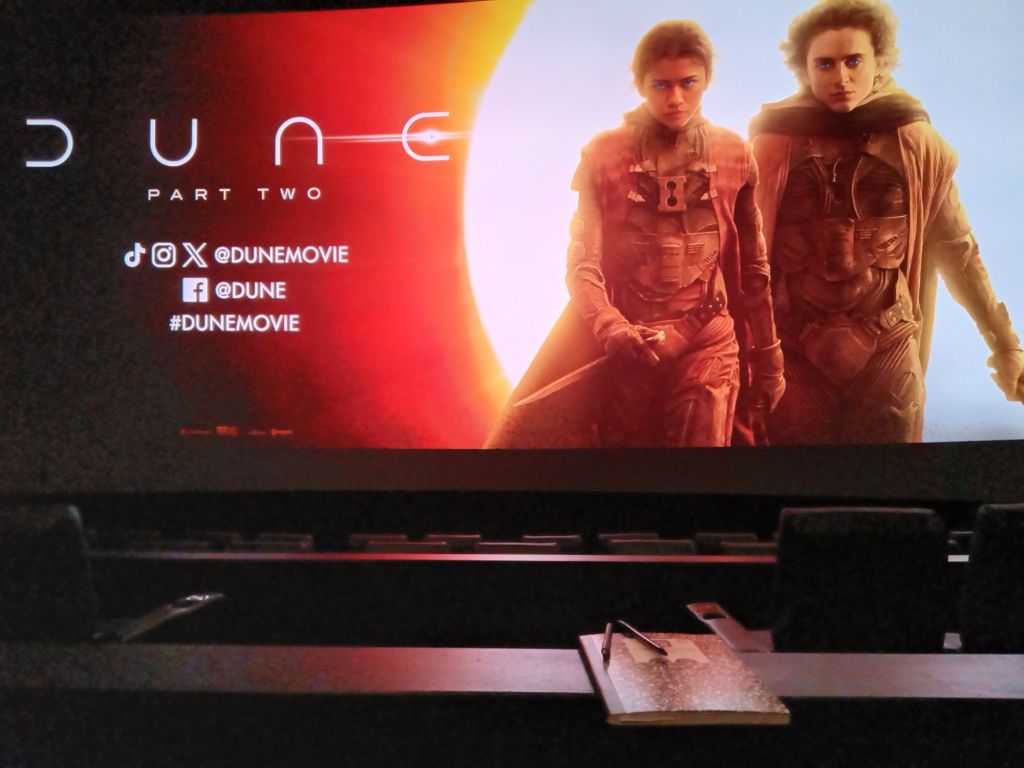
Two hours and forty odd minutes of spice and worms and an all-the-stars cast. Here we go.
The eagerly anticipated, long-delayed sequel opens Mar. 1.


Just when you think Andie MacDowell is ready for bland moms and grandmoms as her career’s third act, along comes Big Cat, her “Queen of Odom County” meth mama in “Red Right Hand.”
“We’re gonna stuff and MOUNT these mutha-(you-know-whats)! Make a SHOW it!”
It’s not a natural fit for her, but it is a most savage turn by Ms. “Four Weddings and a Funeral,” a chance to let her inner Appalachian Mountaineer out.
“Red Right Hand” is a blood-bathed B-movie, an Orlando Bloom star vehicle about a corrupt corner of Kentucky where Big Cat reigns and getting out from under her thumb is deadly business.
Somehow, Cash managed to do it. He’s a former enforcer for Big Cat with no means of support in the “Hillbilly Heroin/Hillbilly Welfare” belt, living in a cabin on his brother-in-law’s farm.
Big Cat or her best-selling product may have had some hand in the death of Cash’s sister. Now her widowed husband (Scott Haze) is farming and hiding in the bottle as Cash helps out, taking his school-oriented ninth grade niece Savanna (Chapel Oaks) to church on Sundays.
Garret Dillahunt plays the redeemed sinner pastor, a guy who you just know is more of an Old Testament “type” when the chips are down.
Big Cat’s minions have their hands all over Cash’s family, thanks to brother-in-law Finney’s “loan” with her. As is the way of such movies, piling goons into a vintage Chevy Nova to go rough the client up long before the note is due is just part of business.
Maybe Big Cat wants Cash back. Maybe his old pal, the cop Duke (Mo McRae) could help them out in a quid pro quo sort of way. Maybe the sheriff (Brian Geraghty) would be OK with that.
One thing’s for sure. An awful lot of people go missing as the body count rises, an awful lot of locals ignore the din of assault rifle shootouts, and that recent medical report that suggested guns were a big contributor to Red State deafness is backed up as Finney and Cash give Savanna some target practice, sans ear protection.
The script has the odd chewy line or pithy, Dead End America observation about small farms in Appalachia — “Like a bucket with a hole in it.” There’s an inevitability about where the plot takes us, which co-directors Eshon and Ian Nelms over-emphasize by making this 85 minute thriller stroll by at a leisurely 111 minutes.
Blunt instruments need to be wielded with speed.
But the shootouts are well-shot and reasonably well-conceived and edited. Bloom, sporting an ex-con’s abs and tats, is credible as the lead. And Ms. MacDowell does her damnedest to take this good/bad ol’gal places she’s never been as an actress.
“Red Right Hand’s” not quick enough to be the gritty mixed-bag B-movie that was its destiny, but the players, the place and pistol-packing might be enough for those who go for that sort of thing.

Rating: unrated, graphic violence, drug content, profanity
Cast: Orlando Bloom, Scott Haze, Garret Dillahunt, Chapel Oaks and Andie MacDowell.
Credits: Directed by Eshon Nelms and Ian Nelms, scripted by Jonathan Easley. A Magnolia release.
Running time: 1:51


Netflix couldn’t get its hands on the Oscar favorite “Oppenheimer,” so they cleverly chose to put a little money behind “Einstein and the Bomb,” a primer on “The Father of Modern Physics,” Albert Einstein.
The physicist was played by Tom Conti in “Oppenheimer,” where we note his connection to J. Robert Oppenheimer’s Manhattan Project team, and his general lack of involvement in the race to develop an atomic bomb.
“Einstein and the Bomb” is a docudrama that explains Einstein’s role in splitting the atom, the theory that made it possible, his refugee wanderings after escaping Nazi Germany and the letter he signed that inspired the United States government to go all-in on this race, in which Germany had a perceived head start.
Veteran Irish character actor Aidan McArdle (“The Professor and the Madman”) plays Einstein, reading from his writings, recreating speeches and conversations in scenes that are interspersed with a sea of archival footage of the history unfolding around Einstein and the occasional snippet of the real Albert Einstein on film.
Anthony Philipson and Anne Mensah’s film has a whiff of “quick and dirty” about it, although it’s far more polished than your average History Channel docudrama treatment of such a subject.
We learn of the pacifism of “The Father of the Atomic Age,” his credo that “concern for man himself” “must always ben the chief objective in order that the creations of our minds should be a blessing and not a curse to mankind.”
We glimpse, in cleverly-conceived flashbacks, how a very young Albert (Jay Lewis Mitchell) got a handle on relativity and the speed of light by visualizing an 1890s street scene (rear projected) swooshing by him as he sprinted towards that speed of light.
Archival TV documentaries from Britain and the U.S. illustrate the E = mc2 equation in easy to understand ways.
And we hear of a late-life debate, by letter, between Einstein and Japanese journalist Katsu Hara (Leo Ashizawa) in which the reporter implores Einstein to accept responsibility for his role in the bombs that ended Japanese imperialism and aggression forever.
Anyone familiar with Japan’s embrace of victimhood and slow acceptance of evidence of its WWII barbarism and inhumanity is allowed a big fat eye-roll at Hara’s 1955 insistence that his country is “showing sincere repentence for the crimes” committed by their people in their name from 1931-1945.
What was most interesting to me is the film’s painstaking recounting of Einstein’s fame and reception in Germany just after World War I, how the tide of non-Jewish scientists turned on him and how he saw the writing on the wall the moment Hitler’s Nazi party grabbed its first large (never majority) share of the electorate.
The Brits lauded him as “Germany’s” greatest scientist. Germany started referring to him as “the Swiss Jew.”
“I am neither a German citizen, nor do I believe in the Jewish faith,” Einstein said at the time. “But I am a Jew and am glad to belong to the Jewish people.”
The moment Hitler seized power, he fled to the U.K., where a British aristocrat, Oliver Locker-Lampson (Andrew Havill), put the great man up in a shack and tent compound on his estate. Conversations, taken from letters and writings in 1933, show how early Einstein was concerned about the energy-release possible by splitting atoms.
Einstein was reluctant to take on activism, fearing reprisals against “the Jewish people” back in Germany. But eventually he came to the conclusion he could not keep silent.
And then he fled to America, to Princeton, where he would be beyond the reach of Nazi assassins, as leader of a “super university” of scientists, a rough outline for the braintrust that would run the Manhattan Project. But the merest hint of “activism” kept him from partaking in the Manhattan Project he, in effect, would inspire with that letter to President Franklin D. Roosevelt.
“Einstein and the Bomb,” using fresh voice-over narration, recreated headlines and audio clips from decades of historical documentaries for TV — I recognized the late Richard Basehart, and perhaps Lowell Thomas and Alexander Scourby in the archival narrator sound bites — is on solid historical ground throughout. But it’s at its best when capturing the flavor of the fraught times Einstein lived in, especially his later years, when he — not unlike J. Robert Oppenheimer — was encouraged to mull over his role and even the idea of his “guilt” in unleashing the atomic age.

Rating: TV-14, archival footage of Nazi violence
Cast: Aidan McArdle, Andrew Havill and Leo Ashizawa
Credits: Directed by Anthony Philipson, scripted by Anne Mensah. A Netflix release.
Running time: 1:16
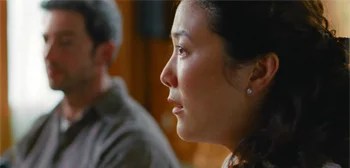

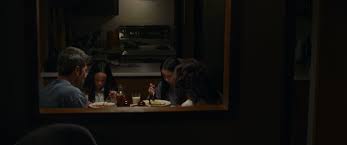
“Seagrass” is a low-simmer Canadian drama about a couple in trouble and the therapeutic resort “retreat” they visit to see if this marriage can be saved.
By focusing on a “mixed” marriage between the daughter of Japanese immigrants and a white man, writer-director Meredith Hama-Brown’s 1994 period piece can touch on issues of identity and generational guilt, with a subtext of tacit racism even in that paradise of “nice,” Canada.
We see happy, bubbly siblings impacted by their grandma’s loss, but also by their parents’ distraction, sisters pulled apart by that and their age difference as one starts to feel peer-pressured into “growing up” and growing away from her kid sister.
But like a lot of films about an embattled marriage, counseling and group therapy, Hama-Brown takes sides, just the way movies depict marriage counselors.
Viewers south of the 49th Parallel might not know that Canada, like the United States, treated its Japanese residents and citizens as being of suspect loyalty during World War II, and forcibly removed them from British Columbia on Canada’s West Coast.
That comes up as a shortcoming in the memories of Judith (Ally Maki of TV’s “Wrecked” and “Cloak and Dagger”) as she struggles with the recent death of her mother and takes stock of her state of happiness.
Whatever face she shows daughters Stephanie (Nyha Huang Breitkreuz) and younger Emmy (Remy Marthaller), the viewer easily picks up on Judith’s sadness. Now she and husband Steve (Luke Roberts of TV’s “Black Sails” and “Ransom”) are taking the whole family to a seaside cabin-camp for a vacation wheere the kids will be supervised (barely) while the adults attend sessions and workshops.
“Something isn’t quite going as planned,” Steve tells their group therapy counselor. So he’s doing what Judith suggested they do and sought help. Judith doesn’t speak in therapy.
Whatever’s going on with the couple is understated, but the presence of childless repeat-visitors at the resort, its biggest fans (Sarah Gadon and Chris Pang), is a fresh stress on their marriage, right from the start.
She is white, childless and “too vain to get stretch marks,” and a bit over-curious and triggering in her chats with Judith. And Judith adds a little smile and flirtatious giggle to the attentions of the Aussie-accented Asian bro husband Pat, who likes to show off his new Jag and brag about vacations they’ve taken, even if he doesn’t know that Machu Picchu was built by the Incans, not the “Aztecs.”
Pat also heritage-shames Judith for not speaking Japanese and not even knowing where her parents were interned in the 1940s.
Yes, she has issues and this is adding to them. And Steve is a tad adrift in a touchy-feely, woman-counselor world exploring the “fragile ecosystem” of their marriage. We – or at least male viewers — get a “polar bear” vibe about Steve even before he makes a racist penis size joke. He’s doomed.
Meanwhile, older daughter Stephanie is experiencing peer pressure from boy-obsessed girls and mixed-race racism from other kids there. That distracts her from a big sister’s prime directive — looking after her younger sibling.
In her feature film debut, Hama-Brown gives herself the license to lightly mock the counseling process, partly by making this a period piece and partly by simply letting us sit in on “sharing” and “pillow pounding” sessions.
But the process of dismantling traditional gender roles and the patriarchal structure of marriage had been underway for decades before the Vancouver Canucks staged their first post-Stanley Cup riot.
“Seagrass” can be evocative, with its seaside setting (a place Judith’s parents were banished from). It has a lovely sensitivity to it, and Maki and Roberts make the most of these layered, mostly-internalized starring roles.
Then a tipsy couples night out sees Maki sing karaoke like the actress-and-former-girl-band singer she is — too “good” at it to feel real.
The evening’s blow-ups take a predictable form, and you start to notice that most everything about this story is pre-ordained, and not just because of the obvious forshadowing.
Taking sides is simple human nature and there really aren’t a lot of fresh variations on a tale bent on showing us “Scenes from a Marriage.”
“Seagrass” is psychologically interesting, and touching here and there. But one can’t help but get the feeling our filmmaker never got out of the shallows.

Rating: unrated, adult situations, alcohol abuse, profanity
Cast: Ally Maki, Luke Roberts, Nyha Huang Breitkreuz,
Remy Marthaller, Chris Pang and Sarah Gadon
Credits: Scripted and directed by
Meredith Hama-Brown. A Game Theory release.
Running time: 1:55


Victor Mature packed up his trench coat and made for Liverpool and the eager arms of Diana Dors for “The Long Haul,” an acrid film noir made with 1950s Columbia Pictures money tied up in Europe.
Writer-director Ken Hughes, who’d go on to script and direct “Chitty Chitty Bang Bang” and “Cromwell,” ensures that there’s at least a whiff of edge to this late ’50s British outing in a genre famed for its sordid settings, compromised characters and moral ambiguity.
It’s a trucking thriller in a “They Drive By Night” mold, with an honest GI fresh out of the Army (Mature) tested by corruption both financial and personal as he tries to keep his British wife happy with a British job after he musters out.
But Britain was home to the UK’s answer to Marilyn and Jayne — Diana Dors. That’s a “test” many a man would fail in that day and age.
Mature is Harry Miller, too handsome and too old (he was 44 when this came out) to be a convincing Army motor pool corporal finishing his hitch at a Bavarian U.S. Army base.
He’s got a wife and a pre-school age son, and she (Gene Anderson) isn’t keen on his plans to go “home” to the States where he has a job and a life lined up for them. So he goes to Liverpool where she has an uncle (Wensley Pithey) in trucking.
Harry’s very first run, following the old hand Casey (Liam Redmond) teaches him he’s got “a lot to learn about this game.” Harry roughs some guys up who are looting Casey’s Leyland 12-wheeler. Casey knows to “look the other way,” even if Harry doesn’t.
The crook running this ransacking racket is Joe Easy (Patrick Allen), a crooked long-haul business contractor who pays off the guys looking “the other way.” And there’s this pin-up blonde on his arm…
The script adroitly sets up Harry’s connection to vivacious Lynn, and then is clumsily contorted to take some of the cheating heel out of the hero. We understand the temptation. What’s with the too-tame attempt to rationalize Harry out of it?
Mature makes our hero properly torn by his failings and corruption, and Dors does some of her best work as a woman grasping for the escape her pulp fiction novel cover-model looks and the life it’s given her.
“Usually, when a fella takes a girl out and buys her a meal, he thinks that she’s the dessert.”
The third act features a suspenseful cross-Scotland truck trek to meet a smuggler’s boat with a haul of stolen fur coats. Credit Mature, Allen and Dors for keeping it all serious when this lorry ride through rocks, river and surf turns into something the goofs on “The Grand Tour” might have tried.
No, fur coats aren’t the best choice when you’re trying to find something to give those rear wheels traction, mate.
Coming along just as “Kitchen Sink Realism” was hitting British theater, and just before it swept through the cinema, the gritty (ish) “The Long Haul” probably felt quaint and a tad old fashioned within hours of its release.
For all the violence and sexual dalliance, it seems a tad muzzled. That dash to the smuggler’s cove lacks urgency at times.
But Mature and Dors make an interesting go of a “couple” plunging into an impulsive “escape” that no self-respecting film noir cast and crew would ever consider allowing to go off without a hitch.

Rating: “approved,” violence, smoking, and smoking hot Diana Dors.
Cast: Victor Mature, Diana Dors, Patrick Allen, Gene Anderson, Peter Reynolds and Liam Redmond.
Credits: Scripted and directed by Ken Hughes, based on a novel by Mervyn Mills. A Columbia Pictures release on Tubi, Amazon, etc.
Running time: 1:28
An Oscar winner brings to life a Brooklyn schoolteacher and Representative whose quixotic run for president wasn’t so quixotic after all.
The late and great Lance Reddick, Lucas Hedges and Terrance Howard also star in this March 22 drama that reminds us of some ’70s history much of America doesn’t remember.




The heavy in “The Bad Shepherd” shows up in a Dodge Challenger, a sports coat and a black turtleneck. And something about him is just…off.
It’s not the menacing presence, that cropped hired-killer haircut. Not even the “attempted mustache.”
The voice? An odd Jersey Shore accent, maybe an octave or an octave and a half higher than we’d associate with a generic movie tough — sort of Tom Selleck or sportscaster Jim Rome before they put a lot of effort into lowering theirs to something more butch.
And the words that come out sound as if the character reciting them has seen them on the page, but never spoken them aloud, or heard them spoken aloud.
He speaks of “watching your prey from afar.” As he is summoning up all the menace he can manage for a quartet of hunters who have come into possession of a cliched duffel bag full of cash, he has words of high-voiced warning.
“I know that money? It’s the beginning of your demise.”
I try to make it a point of not singling out performances in bad to middling films, unless it’s obvious that Dakota Johnson is a big part of the problem in “Madame Web.” Geo Santini, playing a mysterious menace in “The Bad Shepherd?” He’s also the director, and judging by the credits, he’s the writer as well (IMdb and other sources credit somebody else.).
As this information is conveyed in the CLOSING credits to the film, Geo is fair game. He chose to cast himself. If he’s going to direct himself, maybe he should be like Clint. Cut as many of your lines as you can get away with. Every time he opens his mouth, his movie gets worse.
It’s a formulaic thriller that opens with a bloodied woman with a gun fleeing from something or someone. She has a flat tire in the wintry woods, grabs that pistol and that duffel bag and tries to get away on foot.
Four “city” hunters in an oversized Ford pick-em-up run over her. She does not get up.
Paul (Christos Kalabogias) is ready to call the police. But John (Scotty Tovar) has searched the duffel bag.
“Put the phone away, Paul. We gotta think what we’re gonna do here.”
Driver Travis (Brett Zimmerman) notes his alcohol intake and “two DUIs.” Leonard (Justin Taite)? He’s willing to hear John out.
They’re just starting to carry out “the plan” when a cop rolls up, looking for something specific and not “calling it in.” Things get more serious in a flash.
And that hunting cabin they go to isn’t the safe haven/hideway they think it is. The stranger in the Challenger comes straight to their door, knowing their names and making them an offer they may or may not refuse.
He wants to “convince you that is in your best interest” to just give him the cash. Will anybody or everybody be convinced?
The preordained nature of the story has the four friends turning on each other over the cash, the predicament and the rising body count that carrying out their scheme entails.
Some of that works, much doesn’t. And let’s wait to figure out why “Sidney,” the stranger, knows so much about them.
Santini isn’t the only one miscast here. There’s a woodsman checking his traps who is about as woodsy as any customer at any suburban Williams Sonoma store on any given Saturday.
There’s suspense in a few stand-off moments, but the plot’s twists grow less unexpected by the minute.
And every time we return to our title character, the philosopher in the hitman’s turtleneck, we cringe, and not in a good way.

Rating: unrated, violence, profanity
Cast: Christos Kalabogias, Scotty Tovar, Justin Taite, Brett Zimmerman and Geo Santini.
Credits: Directed by Geo Santini, scripted by Ryuan David Jahn (and Geo Santini?). A Saban Films release.
Running time: 1:31
Matt Dillon channels his inner real-estate agent hustler, with Danny Glover and Kim Quinn also in the cast.
This one opens March 8 and looks to be fun.


