
This March release was named “Best Animated Feature” by the Nevada Film Critics coffee klatch.
So, they’ve got that going for them.
An ’80s period piece about a Manhattan dog that builds himself a companion? Why didn’t Pixar think of that?
This March release was named “Best Animated Feature” by the Nevada Film Critics coffee klatch.
So, they’ve got that going for them.
An ’80s period piece about a Manhattan dog that builds himself a companion? Why didn’t Pixar think of that?
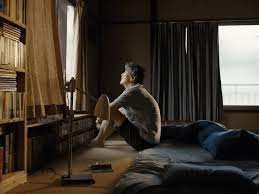


There’s a mesmerizing tranquility to German director Wim Wenders’ homage to Japan and the cinema of Japanese icon Ozu Yasujiro.
The filmmaker who gave us “Wings of Desire” and a pretty good documentary on Ozu (“Tokyo-Ga”) loses himself in a Westernized interpretation of Japanese minimalism in the style of the “everyday Japanese life” filmmaker who gave us understated meditations such as “An Autumn Afternoon,” “Late Autumn,” “Early Spring,” “Early Summer” and most famously, “Toyko Story.”
Wenders’ Oscar-nominated Tokyo reverie “Perfect Days” might better be titled “Zen and the Art of Tokyo Public Toilet Maintenance,” because that’s what it’s man-of-few-words antagonist does for a living, and “zen” is the best word for describing his approach to this “untouchable” career.
We may wonder how Hirayama, played by “Shall We Dance” hearthrob Koji Yakusho, came to be an exacting 50-60something scrubbing public restrooms for The Tokyo Toilet contractors. But Wenders gives us more a collection of intriguing details than anything resembling an answer.
Hirayama is a man of rigid routine. He eats the same things and covers the same route on a daily and weekly basis. And he is a worker with high standards. He takes out a mirror to examine what needs to be scrubbed off the bottom of the urinals in “the cleanest public bathrooms on Earth.”
Hirayama is a loner, but he has hints of a poetic soul, taking photos of shadows of leaves against the sky with his cheap Olympus film camera, listening to “House of the Rising Sun” or “Sittin’ on the Dock of the Bay” on vintage cassettes in his self-owned work truck, taking his lunches in the open air, reading Faulkner, Patricia Highsmith and others by the light of the sole lamp in his spartan apartment.
What, we wonder, will interrupt this routine and form the basis for the drama here? Will it be his amusingly doltish, slacker Millennial “junior” cleaner, Takashi (Tokio Emoto)? Takashi’s efforts to woo bar woman (kyabajō) Aya (Aoi Yamada), a blonde pixie plainly out of Takashi’s league?
She is so moved by Hirayama’s cassette of Patti Smith’s “Horses” that she pockets it after the lazy and always-imposing Takashi gives her a lift in Hirayama’s truck.
Then there’s the long-estranged niece (Arisa Nakano) who shows up, stays with Hirayama and shadows him on his job, anything to get away from her mother (Yumi Asô).
There’s a strange woman Hirayama smiles at in the park every day, with only a dead-eyed stare sent in return. Maybe the bar owner nicknamed “Mama” (Sayuri Ishikawa) who regularly flirts with Hirayama is singing her heartbreaking Japanese version of “House of the Rising Sun” directly to him.
Wenders layers details on top of details, obsessively focusing on Hirayama’s holy reverance for seedlings that he takes — with permission — from a shrine to raise in his own mini teacup planter forest, his nightly trips to a public bath, weekends of laundry, bike rides to bars as he runs errands and his morning ritual of rolling up his futon, donning his coveralls with a fresh towel around his neck, looking up to check out the morning sky, and exult in it, buying a canned iced coffee from the vending machine conveniently right out in front of his flat and then selecting a vintage cassette — “Feeling Good” by Nina Simone? — to ride to work by.
It’s more a film of feelings, subtle emotions, and a fascinatingly committed lead performance than it is a straightforward narrative. Things happen, but the arc of a life this myopic won’t be broad. When these slight things do roll up, they can be life affirming, but only in the broadest “quiet desperation” sense, and even then there’s more “quiet” than “desperation.
The title, “Perfect Days,” would be an unkept promise if it weren’t taken from one of several (mostly) Western pop songs that do a lot of the heavy lifting in the film — “Brown-Eyed Girl” and Patti Smith album tracks to Nina Simone and Otis Redding and The Animals (“House of the Rising Sun” is almost a pun here) warhorses. The title tune, as it were, is Lou Reed’s “Perfect Day.”
“Oh, it’s such a perfect day
I’m glad I spent it with you
Oh, such a perfect day
You just keep me hanging on
You just keep me hanging on…”
Seeing as how the tune is about being in a heroin-narcotized state, even that’s a functional dead end, ironic and nothing more.
But the slice of Tokyo life is lovely and arresting. It’s as if Japanophile Wenders noticed the spotless restrooms that other visitors to the land of the rising sun rave about and pondered “How do they get that way?”
Your appreciation of “Perfect Days” hangs on how fascinating you think a toilet cleaner would be, and how much interior life you’re willing to add to Wenders’ repetitive and superficial “meditation” on such a character.

Rating: PG, smoking, some nudity
Cast: Koji Yakusho, Arisa Nakano, Sayuri Ishikawa, Inuko Inuyama, Yumi Asô and Tokio Emoto
Credits: Directed by Wim Wenders, scripted by Takuma Takasaki and Wim Wenders. A Neon release.
Running time: 2:03


Many Orson Welles‘ films can be labeled “noirish” without a lot of debate among cinephiles. But only a couple might rightly be regarded as “film noir,” sordid crime tales exposing the dark underbelly of pre-war to post-war America.
The two films most clearly fitting into that genre are also defining films in Welles’ legacy, “marred” and studio-edited masterpieces, joining “The Magnificent Ambersons” as among the many projects that make Welles fans salivate over “what might have been.”
“Touch of Evil” (1958) has long been a favorite of film buffs, thanks largely to its glorious excesses, degree of difficulty and “Hollywood comeback” nature. For decades the film didn’t exist in accordance with Welles’ vision of it — the celebrated long take that opens it allowed to roll under the opening credits, etc. There is a “Welles cut” of that film extant, which could scarcely improve the picture’s already-lofty reputation.
Welles labored under similar circumstances on “The Lady from Shanghai.” He filmed this 1947 release for a major Hollywood studio, Columbia Pictures, and it starred the most powerful lady on the lot, Rita Hayworth. As she was married to Welles at the time, this picture gave him the leverage to make his own picture, and even dye her famous red tresses blonde, and chop them off short, enraging studio chief Harry Cohn.
Cohn, for whom Welles made the movie as a “favor” as the Columbia chief had invested in Welles’ disastrous stage production of “Around the World in 80 Days,” with music by Cole Porter, took out his revenge on the former “wunderkind” by heavily hacking away at “Shanghai,” cutting the big funhouse “hall of mirrors” climactic showdown from twenty minutes to just over three, for instance.
What’s left is still brisk and brilliant, a picture whose stature has soared in the decades since its badly-reviewed/box-office bomb release.
Welles slings an Irish accent and takes on an anti-heroic “action hero” role, playing a two-fisted brawler, writer and itenerate merchant mariner and sailor. That was a bit of a stretch, as we can make out the stunt men doubling for the tall, hulking Welles in the fight scenes.
“Black Irish” Michael O’Hara falls under the spell of the blonde Elsa — he prefers to call her “Rosalie” — on a hansom cab ride in New York. Some thugs come for her in Central Park, he knocks them about, and thus impressed, she starts to fall for him.
But bookish Irish Mike must not know the French phrase “femme fatale,” which he should sense the moment he spies the pistol she didn’t pull out of her purse to defend herself.
He’s disappointed to learn she’s married, but his sardonic, sarcastic voice-over narration all but brushes that off.
“Personally, I don’t like a girlfriend who has a husband,” he brogues. “If she’ll fool a husband, I figure she’ll fool me.”
The radio drama veteran Welles indulges in his most playful use of voice-over narration, which even if it was a product of re-edits and re-shoots, is some of the most charming film noir monologuing ever.
Black Irish Mike refers to himself as a “fathead,” and “big boob that I am” as he narrates himself right into a trap.
“This is I, thinking myself a very gay dog, indeed. But, here was a beautiful girl, all by herself, and me with plenty of time, nothin’ to do but get myself into trouble. Some people can smell danger. Not me.”
The “danger” may come from Elsa’s crutch-walking husband, the high-powered criminal defense attorney Arthur Bannister, deliriously overplayed by Welles’ “Citizen Kane” pal Everett Sloane. Bannister is a cynic and a realist. He wants Black Irish to crew on his sailing yacht, Circe (Errol Flynn’s yacht Zaca, was rented for the shoot, with Flynn along to sail it), which is to voyage from New York to California through “the (Panama) canal.” Bannister wants Mike because his wife wants him.
And what “Lov-errr,” as he calls her wants, Lov-errr gets.
Bannister has a sweaty, sketchy smart-ass partner, Grisby (Glenn Anders). And there’s a goon in the legal eagle’s employ (Ted de Corsia), some sort of private eye. If the lady of the yacht is making a play for the big “boob” of a bosun, this could get very messy very quickly.
The violence comes from an expected direction, but not with the expected victim and/or consequences.
The “big boob that I am” seems cagier than he lets on, resisting the lady’s charms as they sail to small Mexican towns and arrive in a small boat port near San Francisco. Yet somehow O’Hara is trapped, in a fix, with no way of knowing how to finagle his way out of it.
Welles shot in San Francisco and Sausalito, Acapulco and Pie de la Cuesta, Mexico. The picture has an intentional documentary realism at times, but peppered with telling close-ups, grim violence and grave pronouncements rendered by one and all, always with O’Hara’s resigned, world-weary voice-over spin as the icing on the cake.
“I never make up my mind about anything at all, until it’s over and done with.” “The only way to stay out of trouble is to grow old, so I guess I’ll concentrate on that.”
Watching the film, you can see what’s here as tight and polished and quick. Reading about it, you can see what might have been had Welles been left to his own devices. But like the thoroughly entertaining thriller “The Stranger,” “Touch of Evil” and “The Magnificent Ambersons,” there’s a briskness to the proceedings that make one wonder — not for the first time — if Welles wasn’t his own indulgent worst enemy. Even those films that only exist in truncated form are dazzling in technique, great fun to watch and timeless.
“Touch of Evil” plays as dark and droll with those credits rolling over Charlton Heston and Janet Leigh’s long walk across from a Mexican border town to an American. “Lady from Shanghai,” jumpy and choppy as it can seem, just skips by, a brutally efficient thriller with mystery and a grim determination to get on with everyone facing his or her fate.
“Maybe I’ll live so long that I’ll forget her,” O’Hara muses. “Maybe I’ll die trying.”
Welles the filmmaker and Welles the actor rarely told a tale that held us as firmly, from start to finish, as this one.

Rating: unrated, violence
Cast: Rita Hayworth, Orson Welles, Everett Sloane, Glenn Anders, Ted de Corsia, Gus Schilling, Evelyn Ellis and Erskine Sanford
Credits: Scripted and directed by Orson Welles, based on a Sherwood King novel. A Columbia release streaming on Tubi, Amazon, etc.
Running time: 1:27

There isn’t a week that goes by that I don’t give at least a moment or two’s thoughts to one of the landmark projects in the history of TV and film, the “7 Up” series. That’s the power of film to burrow into your brain and influence your thinking.
A former high school classmate is forever Facebook posting vintage photos from the hometown newspapers of the Southern town where I grew up. I glance at these wholly-segregated accounts of life in that rural county and can’t help but see the same entitled surnames and faces, for generations, always worthy of a newspaper’s attention. And I note how these “whitewashed” Facebook history posts are indirectly making the point of the “7 Up” series of TV programs — following 14 kids of various social and demographic strata in Britain for decades, catching up with them every seven years — which was intended as a test of Aristotle’s maxim “Give me a boy until he is seven and I will show you the man.”
The kids, the series suggested as its class conscious thesis, would rise to rule or be ruled largely based on the affluence and class they were raised in. Orphans “in care,” Cockney working class “East Enders” who inspired their own soap opera and rural farm kids were born at a disadvantage to Latin-reciting (and singing) posh private school city girls and boys, their uniforms and accents and confident privilege ensuring their later success in life.


Director Michael Apted and assorted collaborators with Granada TV/ ITV started this intimate series, which began brilliantly and evolved into something psychologically and socially revealing and profoundly moving as England’s version of “Baby Boomers” aged and were tested by life as they grew up in the public eye.
In every episode clips from the first installment and earlier films are used to illustrate how they age, how their attitudes evolved or didn’t change over the course of their lives.
The movies, beautifully and evocatively boiled down from the TV episodes every seven years, could make you weep. I got pretty teary when Apted, one of the cinema’s most politically empathetic filmmakers, who brought humanity and social justice concerns to almost every film he made — Bond movies to “Coal Miner’s Daughter,” “Thunderheart” etc — died in 2021.
The films first gained notice on this side of the Atlantic with “28 Up,” a mid-80s point in time where the series’ brilliant conceit and probing execution truly started bearing fruit. “Siskel & Ebert” raved it up, and the documentaries based on the every-seven-years TV series became must-see pictures for cinephiles.
But that still means most people aren’t acquainted with the project or even its abortive American incarnation, which ended less than 20 years in.
I was delighted to find most of the TV series, and several of the films (including the most recent, “63 Up”) on not just streamers like Britbox, but on Youtube.
Here’s the first TV film.
My fiance hadn’t seen any of these films, and we binged a lot of them on a rainy day recently (look at the side rail of the page to see all the titles), and I was shocked at how moving they still are.
Yes, it’s Boomer Nostalgia. But here’s the thing, Generation X, Millennials, etc. The American version of this series was launched among Gen X kids raised to believe there was no “class war” in the “Land of Opportunity,” when the basic thesis of the series was under attack from conservative elites who didn’t want the proles to know they were getting screwed.
The series requires thinking long-term, delayed rewards not instant gratification. Such series require time and cash and sacrifice, something I was made keenly aware of whenever I interviewed Apted about another film project he was promoting. He’d note, with dread and obligation, his duty to get back to work on the next “Seven Up” as soon as he got off the phone.
American filmmaker and Spielberg protege Phil Joanou was supposed to be the one committed to seeing this American “Up” series through. Not sure why it died — lack of generational interest, thus making it unsellable, Joanou’s own shortening attention span.
But it’s startling to look on the Apted films, from 1964-2019, and see the definition of “success”
and a “happy life” broaden, right before your eyes. A plucky Cockney jockey becomes a cabbie, a terminally depressed wanderer tranforms from homeless to politician, married-too-young girls struggle, posh kid becomes college prepped barrister and then there’s the librarian with no college degree whose life expanded around her until she is mistress of all she surveys at a British university.
Some are happy, some bitter and some go through periods where “broken” is the only word that fits. But most aren’t, and life — its ups and downs — progresses, sometimes happily, sometimes grudingly updated every seven years as we note which among them was the most fully-formed at Aristotle’s magical age “Seven.”
This is heartbreaking but hopeful bucket list cinema for film buffs, for aspiring sociologists and politicians and anybody who ponders the role “class” still plays in our lives. And if you haven’t seen it, Youtube just made that as easy as can be.

One of the great stand- ups of his era, Richard Lewis, a professional neurotic who amusingly took credit for the comic use of the phrase “from Hell” during his many years of appearances on Larry David’s “Curb Your Enthusiasm,” has died.
He died from a heart attack, and after recently disclosing that he had Parkinson’s. He was 76.
His Twitter feed the past year or so had a “love life” sentimental edge, suggesting he knew the end was nigh. But It could be hard to tell. He built his career on self examining, self pitying and self loathing observations about himself.
Analysis, romance and head scratching self doubt were trademarks, as was that mane of hair he maintained long past an age when anybody not a rock star typically keeps it.
The King of Kvetching was just that, a rock star comic with a few movies, a few sitcoms and thousands of live sets to his credit over a fifty year career.
I saw him live a couple of times, interviewed him a few more, and always found him loose and blunt and funny, even on bad days where you could detect his self doubt mania.
My favorite memory of him was catching up with Lewis as he got back on the road shortly after 9/11, talking about how honored he was to go out and try to make a despondent, worried country laugh, and how touched he was that fans were still showing up.
He was one of the great ones, and if nothing else, Larry David deserves our heartfelt thanks for giving a very smart, very funny man a great career curtain call.
This June release has mystery, the threat of sudden gruesome death and a trip to the woods.
Very M. Night Shyamalan.
Every time one interviewed Oscar winner Kevin Costner about Westerns, he’d speak of the life changing experience seeing the epic “How the West was Won” was as a boy.
Now that he’s reestablished his Western primacy thanks to a wildly popular (especially among older viewers), he’s ready to make one more big statement on the subject.
This epic, which might go as far as four planned installments, has an all-star cast of a “Lonesome Dove” size.
Sienna Miller, Jena Malone, Danny Huston, Sam Worthington, Michael Rooker, Michael Anagarano, Tatanka Means, Dale Dickey, Giovanni Ribisi, Glynn Turman, Angus Macfadyen, Kathleen Quinlan, Like Wilson and Thomas Haden Church are among the stars.
If he’s going to make his Big Statement on the West, I’d hope there’d be less white washing of the era that included Buffalo Soldiers, a Mexican diaspora, Black cowboys and lots more interaction with Native Americans.
Still not nuts about the title, embracing the American “Western” creation myth should be easy to get across without such vagaries.
Lots of proclaiming its themes from Danny Huston and others in this trailer.
But it’ll be something to see, in theaters in two parts this June and August.



Why keep coming back to a series of popular but dreadful “horny teen melodramas” from Spain, which have ranged from “vapid but titillating” to “Are you just here for the nudity?“
That rhetorical question can be aimed at the audience for this series, a trilogy which seemingly concludes with “Through My Window: Looking at You.” But that query can be turned back on any critic reviewing all three as well.
Am I just here for the cold-day-in-Catalonia nudity, the sex scenes that break up the monotonous soap opera between them? Nah. I’m back for the same reason I checked back on the films of Cheech and Chong, Tyler Perry, Dakota Johnson or Adam Sandler.
I’m wondering if they get better.
The answer, nailed shut on the third film of this sappy, prolonged romance, is “Alas! No!”
The acting isn’t awful, but the writing has degenerated from insipid to eye-rolling. It’s as if no effort is being made to keep the viewer engaged with what they’re watching on their streaming device between the sex scenes.
To catch us up, Raquel (Clara Galle) is no longer joined-at-the-groin with her rich neighbor, Ares Hidalgo (Julio Peña), an entitled med student (in school in Stockholm in the second film) who steals Raquel’s wifi every time he comes home to Barcelona to his family of pretentiously-named siblings, younger Apolo (Hugo Arbues) and older Artemis (Eric Masip), now in the family business.
But Raquel has been in love with Ares since staring him down “Through My Window.” The fact that she’s with Gregory (Ivan Lapadula) and Ares has married money — Vera (Andrea Chaparro) — can’t stop the love, or sexual assignations.
Apolo may be “with” Daniela (Natalia Azahara), but he’s scratching a different itch on the side.
And bitter Anne (Carla Taus) still hasn’t gotten over the tragedy at the end of “Through My Window: Across the Sea.” Yes, somebody died. If you haven’t seen the second film, I shan’t spoil it for you whilst you catch up.
Raquel has turned her stolen wi-fi romance into a novel that’s coming out, with another book on the way. Hilariously, she’s still got to work part time, dressed as an elf, wrapping gifts in a Barcelona gift shop at Christmas.
Everybody, it seems here, has “an unforgettable ex” and no separation or involvement and even matrimony with anybody else can shake that unfightable urge to climb back “Through My Window.”
And no matter what is going on in everyone’s life, there’s always time for clubbing, Christmas parties and New Year’s Eve blasts.
It’s all a little confusing to drop in on, even if you’ve seen the first two films. But as uncertain as I sometimes was about how this ended up as that and where she/he/they come into this, the ones we should be feeling sorry for here are director Marçal Forés and screenwriter Eduard Sola.
They’re the ones charged with keeping this all straight on an official basis. Do they? Only in a “keep the story going until the next sex scene arrives” sense.

Rating: TV-MA, sex, nudity, alcohol and drug abuse
Cast: Clara Galle, Julio Peña, Natalia Azahara, Hugo Arbues, Eric Masip, Andrea Chaparro, Ivan Lapadula and Carla Taus.
Credits: Directed by Marçal Forés, scripted by Eduard Sola, based on the novel by Ariana Godoy. A Netflix release.
Running time: 1:45
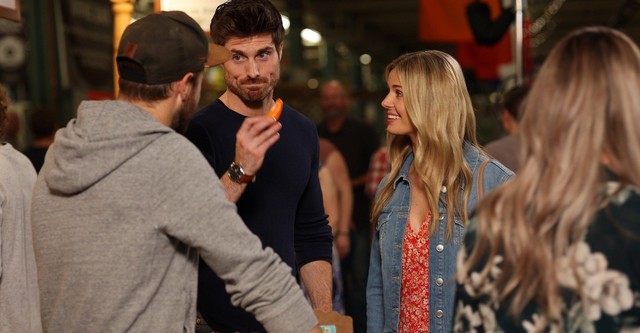


“From Italy with Amore” is like pasta your local Olive Garden left standing in water overnight.
It’s shapeless, tasteless, inedible goo, and about as Italian as Chico Marx.
The “Italy” here is a “we make our own pasta for our ‘authentic’ cuisine” eatery, apparently a novelty in Edmonton, Alberta.
That’s the unnamed setting, a city that presents itself as too lovely to deserve hosting the blandest romance ever filmed on that side of the border.
Ariel (Rebecca Dalton) is a features writer for a magazine/website named “Glow,” a career woman who is lovelorn but who has her ideal in mind.
“Six feet tall, strong build, chiseled” features, with “good eyes, a radiant smile.” And he should “drive a yellow sports car.”
That’s what Mr. Must-Be-Right pulls up in the moment she mentions this list to bestie Jules (Kara Duncan), who kidnapped her from the office for lunch on her birthday.
So the hunk with model good looks (Brendan Morgan) has to be made for her. And the good looking co-owner of Vicky’s Bistro, Daniel (Marcus Rosner) barely merits a second glance.
Jules notices him, but Ariel mermaids right past the guy serving them to the guy he’s giving an espresso. To put herself in yellow sports car Jamie’s field of vision, she’ll have to show up at Vicky’s Bistro, day after day, as it soft-reopens before Daniel and his chef brother Tony (Stafford Perry), gay and finally close to adopting a baby with his husband, stage their grand re-opening.
Maybe if she pitches an “Italian comfort food” feature to her “mst popular wellness magazine in the country” editor, she’ll kill two birds with one stone, and get the big promotion at work to boot.
That throws our blonde reporter together with the cuisine-championing, market-visiting, family business man Daniel, who is smitten but whom Ariel needs to shy away from because Jules is interested, and besides, Ariel’s ideal has that yellow sports car.
I mean, she “manifested” her “ideal man.” Who is she to argue with the universe?
The cooking is de-emphasized, so the “Italy” come-on in the film’s title is pretty much a total bait and switch. The cuisine we glimpse is underwhelming.
The leads are bland, the “chemistry” has no heat to it and the situations, all the way down to the gay couple who needs Tony and Daniel’s restaurant to succeed over the chain joint across the way (“The Olive Branch,” cute) in order to be able to adopt, are tepid.
This clunker is about as appetizing as a can of Chef Boyardee, and just as sexy as it is appetizing.
Maybe next time you’re making a movie in under-filmed Edmonton, you make something out of it, give it a little local color. Edmunton deserves better.
Rating: TV-PG
Cast: Rebecca Dalton, Marcus Rosner, Kara Duncan, Stafford Perry, Brendan Morgan and Dawn Ford
Credits: Directed by Dylan Pearce, scripted by Katy Breier and Erica Deutschman. A Freevee/Amazon Prime release.
Running time: 1:24
The French director of “Johnny Mad Dog” puts Penn, Sheridan, Katherine Waterston, Mike Tyson and Michael Pitt through their paces for this March 29 release.
Looks like a solid genre drama.


