Movie Preview: J Lo is Lost in space with on AI to save her — “Atlas”

This Netflix thriller further ensures that the days when “AI” stood for Allen Iverson are gone baby gone.

Judging from the trailer, this is one good looking space mission in crisis thriller.

But we’ll have to see.Lopez has so much makeup and…hair…in space.

Posted in Reviews, previews, profiles and movie news | Comments Off on Movie Preview: J Lo is Lost in space with on AI to save her — “Atlas”

Movie Preview: Gonzo slaughter-comedy “Boy Kills World” has Skarsgard, Dockery, Famke, Jessica Rothe — and the voice of H. Jon Benjamin

A deaf child whose family is murdered is trained and interior-monologued into seeking his revenge on those who did it.

And the world in general.

This April 26 thriller-comedy is based on a short film and not a comic book (we all lose that bet) has some big names in the cast — Bill Skarsgard, Famke Jansen, Michelle “Downton” Dockery and Jessica Rothe, but is notable for the voice of that deaf guy’s interior monologue, the dry comical stylings of H. Jon Benjamin, voice-actor of many an animated TV series, from the current “Bob’s Burgers” going all the way back to Comedy Central’s droll masterwork, “Dr. Katz: Professional Therapist.”

This looks nasty and funny.

Posted in Reviews, previews, profiles and movie news | Comments Off on Movie Preview: Gonzo slaughter-comedy “Boy Kills World” has Skarsgard, Dockery, Famke, Jessica Rothe — and the voice of H. Jon Benjamin

Movie Review: Family is haunted by a child’s “Imaginary” friend

Production designer Meghan C. Rogers cooks up a fine M.C. Escher nightmare world of doors, dead ends and perils folding in on themselves for the drawn-out finale of “Imaginary,” another variation on the sinister side of having a childhood “imaginary friend.”

Unfortunately, most everything that precedes that overlong, climax-to-anti-climax and onward ending is just as “drawn out.” This Jeff Wadlow (“Truth or Dare,””Fantasy Island”) thriller grabs a simple concept and overthinks it into a dumb and rather dull 90 minutes surrounding maybe a dozen minutes of delivering chills.

But mixed in with all the metaphysical mumbo-jumbo of “explaining” what might be going on — much of it coming out of the mouth of Broadway legend Betty Buckley — at least we learn a new word. “Parocosm,” that’s what the broader idea of imaginary worlds, often created in childhood, is called.

DeWanda Wise of “The Harder They Fall” and “Jurassic World Dominion” stars as Jessica, a children’s book author and illustrator happy to escape the nightmares of a city apartment and move, with her new musician husband (Tom Payne) and his teen (Taegen Burns) and pre-school (Pyper Braun) daughters back to the house she grew up in somewhere in Louisiana.

Her books are about Molly the Millepede and her struggles with Simon the Spider, mild-mannered scary material aimed at the very young. Might they somehow tie into her past and that prologue that saw a Black family struggling with something demonic hidden behind a crawl-space door?

When little Alice, “Ally” (Braun) finds Chauncey, an old Teddy bear tucked away in Jessica’s old house, we start to get our answers.

Chauncey talks to her, or rather we hear her voice his side of conversations that involve games, tea parties and a scavenger hunt.

Jess overhears this chatter and is charmed and amused by it. Some of it even inspires her next story about that millipede, a real help to an illustrator with a deadline. And it’s a welcome break from the drama of the rebellious teen whose criticism of her various “step-mom” moves is not a help.

Ally, we’ve noticed, has a scar. Her birth mommy is “sick,” which must have ended the marriage. Jess has a scar, too.

And the violence of both their pasts informs what is to come as whatever Chauncey is, childhood “friend” doesn’t seem the best description.

The performances are mostly competently indifferent, although young Miss Braun packs a punch as a mouthy child who isn’t shy about asserting herself to an imaginary friend who seems bent on causing her harm.

The narrative steps on familiar touchstones of the genre — “irresponsible” fifteen year-old not taking care of her sister because there’s a cute teen boy next door, Chauncey “testing” Ally and making Jess anxious, the tuned-out husband who has to go “back on the road,” and the “chatterbox” neighbor (Buckley) who seems to know all about Jess’s past and what might be going on with Ally.

“People don’t believe in otherworldly things, until they have to.”

None of it’s handled with much pace, humor, suspense or style until our third act journey into the NeverEver. And even that, derivative as it is, misses the mark in terms of real frights.

“Explaining” is almost always over-explaining in horror, because the best jolts come from the shock of the unknown and unknowable. The “Imaginary” is always lot spookier than the “explained.”

Rating: PG-13, violence, suggestions of teen drug and alcohol abuse, profanity

Cast: DeWanda Wise, Pyper Braun, Taegen Burns, Tom Payne and Betty Buckley.

Credits: Directed by Jeff Wadlow, scripted by Greg Erb, Jason Oremland and Jeff Wadlow, A Lionsgate release.

Running time: 1:44

Posted in Reviews, previews, profiles and movie news | Comments Off on Movie Review: Family is haunted by a child’s “Imaginary” friend

“Arthur the King” time

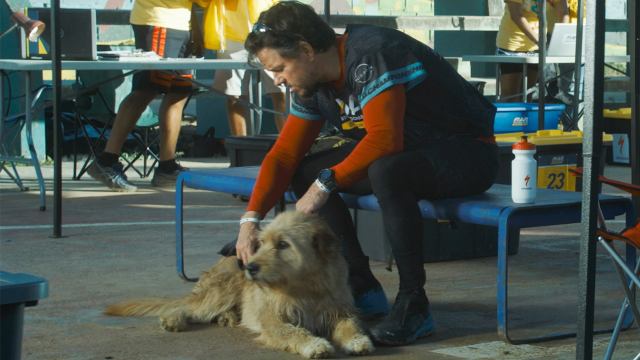
No Mark Wahlberg doesn’t have the title role. He’s all but doomed to be upstaged. By a dog.

But he’s being a good sport about it. So here goes.

(Updated, here’s my review.)

Posted in Reviews, previews, profiles and movie news | Comments Off on “Arthur the King” time

Documentary Review: An Artist in her own words, “Frida”

In our celebrity-obsessed culture, the work of creative people is often overwhelmed by the pathos or drama of their personal stories. That’s long seemed the case with the great Mexican painter Frida Kahlo.

Notorious for her iconic, attention-grabbing “look,” her marriage to muralist Diego Rivera, her outspokenness, her communist politics and the tragedy of her personal story — grievous back injuries due to a bus and trolley collision in her teens, a miscarriage and unfaithful husband — her death at 47 seemed to freeze her artistic reputation in the shadow of her personal one.

But the artist and the woman are grandly illuminated in the new documentary, “Frida.” Using her reams of letters and frank, colorfully-illustrated and colorfully-profane personal diaries, filmmaker
Carla Gutierrez (she edited the Ginsberg doc “RBG”) lets us see the woman behind the icon.

And animators Sofia Ines Cazares and Renata Galinda breathe life into the decades of self-portraits, sketches and increasingly surreal doodles that comprised Kahlo’s artistic legacy, showcasing the genius often lost in the bushy eyebrows, traditional Mexicans fashions and the near mustache Kahlo defiantly wore and depicted in her art.

“I paint myself because I’m what I know best,” she wrote, her words read aloud (in Spanish with English subtitles) by actress Fernanda Echevarria del Rivero. She could “express my emotions” as she depicted her current physical and mental state on canvas.

The child of a devout Catholic mother and Mexico city photographer father, young Frida relates how she saw colors and the distinct shapes of her world from an early age.

Green was “good warm light.” Magenta represented “Axtec” images. “Mexican red” is “the color of old blood of the prickly pear” cactus, brown “the color of mole’…earth,” and yellow of “sun and happiness.”

How she saw her world is reinforced with snippets of newsreel footage from the Mexico of her childhood, the early teens of the 20th century, with selectively-colorized shawls, scarves and sombreros.

We hear from school classmates and her first boyfriend that she was “a little strange,” wearing men’s clothes, fond of profanity and blunt in her sexual appetite.

She and that first boyfriend graphically describe the accident that injured her and circumscribed her future life.

“I now inhabit a world of pain” she wrote, still in her teens. But that’s when she took up painting, something her father had dabbled in, more seriously. Laid up, with a contraption of her mother’s design over her bed, she painted herself and her mental state almost from the start.

At 18, recovering, the petite, aspiring artist Kahlo brazenly marched up to revolutionary muralist Diego Rivera, high on a scaffolding at work, and barked “Diego! Get down!” The towering, rotund Rivera — voiced by Jorge Richards — was struck by this fiery little woman with the brass to call him a “womanizer” as she made plain she wasn’t there “to flirt.”

He sized up her art, told her to keep painting, and as she did, a love affair started. They married and Kahlo was swept up into the whirlwind of the most celebrated Mexican artist in the world, traveling to New York and Detroit as he earned fat commissions from rich “idiots” (her words) and she painted, assisted with his murals and absorbed some of his style.

Her look won her attention rich society matrons “who get excited over the dumbest things.” But that fashion sense drew newspaper attention for her art.

She started to come into her own as an artist only after their divorce and her turn towards surrealism.

But in and out of marriage, her affairs are documented — a dalliance with the Soviet expat Trotsky, the French surrealist poet Breton, and others — as are Rivera’s. And the lifelong struggle with pain, so vividly depicted in her art, she relates from her letters and diaries.

One aesthetic blunder in “Frida” is worth noting. The war over movie subtitle colors was fought decades ago, but here the filmmakers avoid yellow subtitles — much more visible against white and all other light colors — for basic white subtitles, which washes out against many backdrops of Kahlo’s life and work. Brush up on your Spanish as the titles are almost lost in many scenes.

But “Frida” is still a beautiful film, both an appreciation of and an eye-opening humanization of its subject. Seeing the art animated with movement can seem redundant, but it is applied to delightful effect here.

The documentary does the best job of any film of rescuing the painter from the iconic, tragic artist who created the work by getting beyond the hair, the fashion sense and the eyebrow-lidded stare that one can’t help of think of when one hears the name Frida Kahlo.

Rating: R, nudity, profanity, smoking

Cast: The voices of Fernanda Echevarria del Rivero, Jorge Richards and others

Credits: Directed by Carla Gutierrez, with animations by Sofia Ines Cazares and Renata Galinda. An MGM film on Amazon Prime.

Running time: 1:27

Posted in Reviews, previews, profiles and movie news | Comments Off on Documentary Review: An Artist in her own words, “Frida”

Next Screening? Must love dogs and Wahlberg — “Arthur the King”

This sentimental “amazing dog” story — inspired by true events — looks to be sweet and uplifting, unless Mark Wahlberg screws it up.

Guessing that won’t happen.

“Arthur the King” opens Friday.

Posted in Reviews, previews, profiles and movie news | Comments Off on Next Screening? Must love dogs and Wahlberg — “Arthur the King”

Classic Film Review: The Austere Emptiness of Antonioni’s “The Passenger”

“The Passenger” is a cinematic product of a different age, when movies could be geared for a more patient audience, one willing to embrace a mystery for mystery’s sake.

Michelangelo Antonioni’s 1975 Hollywood outing, a Jack Nicholson star vehicle distributed by old Hollywood itself — MGM — is sparing with dialogue and stingy with explanation. Some locations are tourist attraction obvious, many others are not named at all. It is existential in its inciting incident and obscurely vaguely vengeful in its climax, not so much defying us to understand it as demanding that we bring our own interpretation and be prepared to argue its merits.

It is, first scene to last, a “film” not a movie, “cinema” and not “content.”

Watching it now one can see it as a signpost for the end of ’60s cinema, the thought experiments of “Last Year at Marienbad,” the mind-expanding hallucination of “2001: A Space Odyssey,” the indulgent excess of Antonioni’s own “Zabriskie Point,” which preceded “Passenger” and pointed towards the long wander of the end of not just his career, but of his type of art film.

It helps to have seen other films of his before tackling this exercise in impulse and emptiness for its own sake. And as the film was rescued by Nicholson’s guardianship and re-released decades later — with footage restored — on video, the fuller credits give another important clue about approaching this. Anybody who has taken a “semiotics in the cinema” course will recognize the name of one of the now-credited writers, Peter Wollen.

Semiotics, the study of signs and images and their meaning, adds weight to many seemingly vague scenes that emphasize distances, objects identified with “freedom,” the traps of life and the escape one man takes when he sees the chance.

As Antonioni & Co. take us from Saharan Africa to Germany and then through Spain, we soak up a dream “escape” that plays like a waking nightmare, a pointless trap of our hero’s own creation that he and we can only suspect holds perils beyond the simple discovery of what he has done.

We’re dropped into the Sahara with a Land Rover driver we come to learn is named David Locke. Eventually.

Locke (Nicholson) is venturing into unknown territory, making contact with locals, seeking guides and interviews. He is a conflict reporter, and this place (Chad, unnamed) has armed rebels attacking the government. The film’s long prologue shows this work — both in the fictive present and in flashbacks of interviews he’s done with officials and locals — as frustrating and dangerous. Locke ends up walking back to a town out of the desert after he gets the Land Rover good and stuck in the sand. He’s questioning the job.

“People will believe what I write. And why? Because it conforms to their expectations – and of mine, as well – which is worse.”

His confidante back at the hotel is a mysterious traveler named Robertson (Chuck Mulvehill) to whom he confesses his “detachment” and recognition of the presupositions he brings to all his interactions with Africans. And he’s married, we gather, perhaps not happily.

Finding his hotel neighbor dead in bed gets Locke to thinking. In the manner of other identity-swap thrillers — and soap operas — we see him swapping passport photos and hear “Robertson” telling the front desk a resident has died, that fellow named “Locke.”

It’s the pre-Internet, pre-commercial refrigeration Sahara of 1975. Locke must know the body won’t be preserved or shipped. Just a cause of death, notification of next of kin via the British embassy (Locke’s a Brit raised in the U.S.) and a local burial and that’ll be that.

Robertson? Locke’s about to find out just a little of who he was and what he’s about, and not quickly, either.

The modern viewer may be moved to ask questions we and the critics of the mid-70s passed over in their thrall of the Great Anonioni (“Blow-Up”) back then. Why does Locke do this? Why does he take the dead man’s appointment book and start attending meetings listed there, poking around the dead man’s house, picking up keys as if he knows exactly what they fit in, checking on lockers where something is stored that will give him clues about who he is meeting with, or avoiding?

“Il mistero della vita,” or just “Il mistero della cinema.”

It isn’t long — well, actually it is — before he has that “meeting” where an African asks him for an envoice and seems relieved Locke/Robertson has procured “the effing rifles,” if not the anti-aircraft guns he’d sought.

Locke seems to guess he’s in over his head. And as this isn’t just a reporter going undercover to break a story, but a man wanting a changed life, he peels off the fake mustache he’s wearing and heads, with some trepidation, to Barcelona for a meeting he may or may not take. And it’s there, among the sandcastle buildings of the Catalan architect Antoni Gaudí, that he notices — for the second time — this young German woman (Maria Schneider) whom he’d glimpsed in Munich.

“I used to be somebody else, but I traded him in,” he grins. Yes, he has a wife (Jenny Runacre) who thinks she’s a widow, back in the U.K. Not to worry, she’d already been cheating on her ever-absent spouse with a bloke played by veteran character actor Steven Berkoff of “A Clockwork Orange.”

“People disappear all the time,” the woman only billed as “The Girl” shrugs. She and the fellow she takes at face value soon are on the road in a late model Mercury Comet convertible he’s bought because he’s tired of telling the Avis rent-a-car clerks he’s keeping a rental “for the rest of my life.”

They dodge anybody who might be looking for him — a British TV producer (Ian Hendry) who, with his “widow,” is trying to find Robertson to ask what happened to Locke, gun runners, the Spanish police, etc.

Enthusiasts have long praised the beauty of where Antonioni puts his characters as he forces them to confront their decisions, their unraveling scheme and the emptiness of their lives. Southern Spain is displayed at its most spectacular and unspoiled (Spanish dictator Franco died shortly after the film was made). They and we take in forlorn desert roads, striking cliffside villages, friendly people and police who might give chase in their Fiat/SEATs, but have no prayer of catching an American V-8 convertible from the ’60s.

Schneider’s role is more symbolic than fleshed-in here. She’s merely a compliant female, another symbol or “sign” in the narrative about a man’s quest to escape himself.

Nicholson is free from any of the mugging that would mark his later career, just a guy making rash decisions, not spelling out what he’s doing and why because that would making things too obvious.

“The Passenger’s” Italian title — “Professione: reporter” — underscored the professional angst Locke is enduring, a journalist who has come to feel he’s part of the problem, bringing “his” viewpoint into a part of the world that is operating on its own rules and priorities. Had the film taken a more literal translation of the title, “Reporter,” we’d have pondered even longer what Locke is truly up to.

The obscurant nature of the narrative and the way it unfolds seems obvious now, removed from its time. Stealing a dead person’s identity was a trope long before this film, and endures in movies to this day.

And the celebrated six minute long-take pentultimate shot isn’t “bravura” filmmaking by modern standards, where cameras can be light and tiny and the stunt of staging, blocking and choreographing the film’s climax in a frame (with lots of off-camera sound) is closer to routine, and well within the budget and skillset of most a modern movie maker.

But “The Passenger” still pulls you in, still makes you tease out the simplest clues to get your filmwatching feet underneath you, and remains a classic study of beautiful emptiness — where to look for it, why you might crave it and just what seeking that could cost you.

Rating: PG

Cast: Jack Nicholson, Maria Scheider, Jenny Runacre, Ian Hendry, Chuck Mulvehill and Steven Berkoff

Credits: Directed by Michelangelo Antonioni, scripted by Mark Peploe, Enrico Sannia, Peter Wollen and Michelangelo Antonioni. An MGM/Sony Classics release on Tubi.

Running time: 2:06

Posted in Reviews, previews, profiles and movie news | 1 Comment

Movie Preview: “Wicked Little Letters” gets the “red band” (foul-mouthed) trailer it deserves

Hate mail. Nothing like it.

This Olivia Colman/Timothy Spall cuss-a-thon from “finest hour” or nearabouts Jolly Olde opens March 29.

Looks a stitch, it does.

Posted in Reviews, previews, profiles and movie news | Comments Off on Movie Preview: “Wicked Little Letters” gets the “red band” (foul-mouthed) trailer it deserves

Netflixable? Taiwanese and Tarantino-esque — “The Pig, the Snake and the Pigeon”

A terminally ill hit-man decides to go out with a bang — a couple of bangs — by executing the guys above him on Taiwan’s “Most Wanted List” in “The Pig, the Snake and the Pigeon,” a new thriller from the director of “Once Upon a Time in Shanghai.”

Fair enough, simple enough, you say. As did I. Our killer, formerly known as “The Kuilin Kid,” has to track down mobsters in hiding, manage his illness and keep the cops at bay — especially the dogged investigator he blinded in a brutal chase and fight a few years before — to complete his mission.

But writer-director Ching-Po Wong throws a curveball in the third act that is positively Tarantino-esque. Even if you figure you’ve “seen it all,” like me, there are twists and moments that will make the viewer go from “Wait, say WHAT now?” to chortling at the audacity.

Yes, it’s a bit long and by the way, that third act is so over-the-top that it goes well past straining credulity and into “Oh come on, now.” The finale, informative about the Taiwanese justice system, is more bitter than touching.

But for those looking for a conventional thriller that delivers, and then turns into “something completely different,” this one fills the bill.

We meet “the kid” at a mobster’s funeral outside of Taipei. We learn how the guy died from a mob-punk fanboy Goldie (Tzu-Chuan Liu) who tells this gauche, grinning goof with no table manners what “The Kuilin Kid” did. No, the goof in the ill-fitting suit can’t give Goldie a lift back into town.

“I’m Chen Kui-lin,” he (Ethan Juan) tells the lad. “I have a real name. Stop calling me ‘Kuilin Kid!'”

He then finishes “the job” by brazenly shooting another mobster at the funeral.

Here’s a buy-in moment for genre fans. A mob funeral with “over 800” made men, and the only one with a gun is the assassin? Nobody’s gutsy enough to take one for the boss, or gang tackle the killer?

The cops have been monitoring this ceremony, and one (Lee-zen Lee) is a more than a match for our sprinting escapee. Or maybe just a “match” as they brawl. OK, not quite a match, as Chen Kui-lin takes out the detective’s eye to break free.

Years later, a now-bearded Chen Kui-lin is long on the lam, when a “pharmacist” whose side hustle is mob doctor (Cherry Hsieh) gives him the bad news. He’s got just a few months to live.

“Rather than dying like a street rat,” she says (In Mandarin with English subtitles), “you could act more honorably…die with a little dignity.”

After trying and failing to turn himself in, the guy who wanted to make sure that fan at the funeral at the beginning of the story remembered his name wants to leave a little notoriety behind. He will hunt down killers more notorious than he is and dispatch them.

Our writer-director handles the “Hunt for the mobster/victims” scenes with skill — a wary stake-out here, a suspenseful straight-razor shave there.

But just as we figure the picture has settled into what it’s destined to be, that third act takes a detour through Tarantinoland, which is all I’ll say about it.

Juan makes the move from supporting roles in assassin movies like “The Assassin” to swaggering, determined and resigned killer-for-hire with ease. He’s got great presence and is credible as a brawler, a sprinter and a man having an existential crisis, which comes to a head in that lulu of a third act.

Hsieh makes her mob doctor morally-conflicted to the point that when Kui-lin kidnaps her kid to make her give up information, she takes it in stride as a sort of just deserts. Gingle Wang ably plays a damsel in the clutches of a mobster (Ben Yuen, perfectly vile) and thus in distress.

Ching-Po Wong gives us a taste of Taiwan in his thriller’s varied settings, never really breaking the spell of following our anti-hero to focus on the cops chasing him. A horn-flavored jazz-pop score sets the underworld on the move mood.

As long as you’re not squeamish about a bodycount — not everybody who “gets it” deserves it — and how that’s papered-over here, this “leave the world better than you found it” parable, with its “notoriety is still fame” messaging makes for a pulse-pounding surprise.

Rating: TV-MA, lots of violence, near nudity

Cast: Ethan Juan, Cherry Hsieh, Ben Yuen, Gingle Wang, Chen Yi Wen and Lee-zen Lee

Credits: Scripted an directed by Ching-Po Wong. A Netflix release.

Running time: 2:14

Posted in Reviews, previews, profiles and movie news | Comments Off on Netflixable? Taiwanese and Tarantino-esque — “The Pig, the Snake and the Pigeon”

Movie Review: “Trail of Justice,” trail of eye-rolls

Montana’s Bitterroot Valley provides the striking locations of “Trail of Justice,” an over-ambitious and amatetuerish Western with a few decent sequences that stand out amidst the clumsy plotting, bad to indifferent acting, stilted dialogue and mixed messaging.

It traipses from one plot throughline to the next, basically following some brothers and a fellow they rescue from outlaws, hounded by a widening cast of pursuers, sheltered by Blackfeet warriors, flirting with town gals and fending off town bullies plainly played by haven’t-shaved-yet college acting students.

Well, one hopes they’re in college. And that they study acting before trying this again.

“What’s a wildflower like you doin’ with a tumbleweed like this?”

I’m not interested in singling anybody out, but I will allow myself the indulgence of an eye-roll about one particularly inept scene. A rancher with a past comes into an empty church, starts a “Bless me father, for I have sinned” speech with no priest there, laments his Civil War indiscetions with a convoluted tale of rejecting the Army of Northern Virginia to join the Union Army and “butcher rebs” — requiring a strained, overreaching flashback, all to set up how evil he is and whatever is to come.

It’s a scripted dead end, one among many.

Bad acting, middling makeup (few players look like they’re more than 15 minutes from their last shower), grindingly-tin-eared dialogue, on at least one occasion, recited by a PeeWee-voiced Blackfoot.

“You intrude on sacred ground.”

The best use anyone will have for “Trail of Justice” on video is for its location scouting properties. Pretty country, already the filming location for the many “Yellowstone” incarnations on TV. Better Westerns could come from this, probably not from this cast and crew. But maybe they’ll prove me wrong.

Rating:  PG-13 (Sequences of Violence)

Cast: Robert A. Rogers III, Luke Valimont, Hollee Kolenda, Gideon Valimont, Abbie Valimont, Andrew Knoll, Brody Severson, Stephen Jarvis

Credits: Directed by Nick DeBoer, scripted by Chase Jessop. A Lionsgate release.

Running time: 1:45

Posted in Reviews, previews, profiles and movie news | Comments Off on Movie Review: “Trail of Justice,” trail of eye-rolls