Classic Film Review: Denueve, Rey, Nero and Buñuel dish up a Spanish parable — “Tristana” (1970)

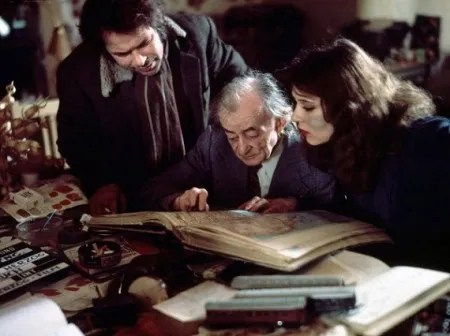
The peak years for Catherine Deneuve, the great French beauty and darling of the Great Directors of her youth, stretched from Demy’s “The Umbrellas of Cherbourg” and “The Young Girls of Rochefort” to Polanski’s “Repulsion” through Buñuel’s “Bell de Jour,” Truffaut’s “Mississippi Mermaid,” with the Oscar nominated “Tristana” (1970), also directed by Luis Buñuel, heralding the end of an era, although she’d work for Demy on a couple of post-peak “auteur” films of the ’70s.

Those ’60s films made her an international screen icon and ensured the longevity and the”legend” label that she grew into in a career that later earned her an Oscar nomination (“Indochine”) and kept her in demand on into the 2000s with films as varied as the musical “8 Women,” the comedy “Potiche” all the way to year’s dramedy “Funny Birds.”

“Tristana” might be the weakest of those ’60s classics, a film that suffers due to the technical and budgetary shortcomings of much European cinema of the day, as well as its general old-fashioned feel.

It’s a Spanish melodrama and the French Deneuve is dubbed into Spanish, as is Italian co-star Franco Nero. Indeed, all the dialogue and sound effects are vaguely disembodied suggesting the entire soundtrack was looped, a not-uncommon European practice of the era.

And that calls attention to the general mustiness of the story being told here. Based on a 19th century novel, this 1920s period piece is about a beautiful young woman who becomes the ward of an older, old-fashioned guardian (Fernando Rey of “The French Connection”).

For all his grumping about “appearances” and “honor” and virtue, noble Don Lope lusts after Tristana, seduces her and continues to try and control her as she develops an independent streak and then falls for eveyr parent and ward’s nightmare — an artist (Nero).

Old attitudes, mores and conservatism run up against “the modern” as we see Don Lope dismiss being asked to judge a duel when he hears the combatants will only fight until “first blood” is drawn.

“There are no longer men of my kind,” he huffs (in Spanish with English subtitles), sneering at the “effeminacy” of the culture he finds himself living in.

Tristana is in mourning when we meet her. Her mother has passed and as someone who “never enjoyed your father’s wealth,” she is at the mercy of the town (Toledo) and its sexist rogues and chancers.

Don Lope will take her in, and his housekeeper and cook Saturna (Lola Gaos) will help her fit in.

“No one is better than Don Lope,” she assures Tristana. “But where there is a skirt, he has horns and a tail.”

Rey plays Don Lope as a literal mustache twirler when he spies a pretty woman. We are told that he called a married woman’s husband out for a duel, which adds a touch of dash to his persona. But he is a mouthy hypocrite — stingy, cash-poor, domineering and a creature of leisure and habits, contemptuous of capitalism, loans, work, even the Guardia Civil, the police.

When he orders Tristana to “stop mourning,” because of how comfortable her all-black wardrobe makes everyone else, she does. When he comes on to her with a kiss, she giggles. And when he visits her room later, she submits to him.

But as time passes and she grows into her own (Deneuve was 26 when the film was made), Tristana sours on “the old man,” his penny pinching and control issues. She is ready to meet someone to fall in love with, and the not-quite-starving artist Horacio (Nero) is that someone. She dreams of running away to Barcelona with him, contributing piano lessons income to their stake, and freeing herself from Don Lope.

The old contronts the new most graphically in a scene where Don Lope, disapproving of her love match, goes to confront Horacio, insults and threatens with a glove-slap, only to get punched out at this invitation to a 19th century duel. Get with the times, old man, is the message.

Sex is that which cannot be named in this multi-national production, as what Don Lope is most concerned about is Tristana parading in public, “layabouts” coming on to her and her falling for one. Saturna scolds her deaf and horny teen son Saturno (Jesús Fernández) about slacking off at his first job for masturbating. She never says the word, as he’s deaf. A gesture will do.

Deneuve was forced to add ineffectual mime to her repertoire for conversations with the deaf Saturno — who with a pal takes every chance he can get to grope the grieving girl in early scenes — and is saddled with a performance that’s as subtle as a mime, with everything that’s understated struggling to register on screen and especially on the soundtrack.

Long a Spanish exile who filmed in Europe and Mexico, with a career that traced itself back to the famed silent surrealism collaboration with Dali, “Un chien andalou” (An Andalusian Dog”), Buñuel was anxious to make his Spanish homecoming a triumph, in spite of the conservative, Catholic-endorsed restrictions of Franco-era Spain.

But those restrictions may have a lot to do with the early reviews and even Oscar consideration of this Buñuel classic. “Look at all he had to overcome,” after all.

Deneuve had covered similar cinematic ground, as had Buñuel with his sensational “Viridiana”). The filmmaker admitted the novel he was working with here old fashioned to the point of “kitschy” and figured he’d overcome that. He didn’t. Not entirely, anyway.

There’s merit in even the pedestrian depictions of pre-tourism Toledo, the fading glory of the broke Spanish aristocracy — Don Lope mutters about getting a fair price from “the Jew” he sells the family silverware to. And yet Rey, mustache-twirling aside, was one of the more commanding screen figures of his era for a reason. Great presence.

But “Tristana” has a creaking quality. It’s merely a semi-successful attempt to transplant an early Spain (the novel came out in 1892) to a later, Civil War Eve story about a world dying out and the ruthless, unsentimental one about to replace it.

Rating: PG-13, adult situations, innuendo, mild violence

Cast: Catherine Deneuve, Fernando Rey and Franco Nero

Credits: Directed by Luis Buñuel, scripted by Julio Alejandro and Luis Buñuel, based on a novel by Benito Pérez Galdós. A Mercurio/Cohen Media Group release streaming on Tubi, etc.

Running time: 1:39

Posted in Reviews, previews, profiles and movie news | Comments Off on Classic Film Review: Denueve, Rey, Nero and Buñuel dish up a Spanish parable — “Tristana” (1970)

Movie Review: Korean experts on the uneasy dead? Call them “Exhuma”

“Exhuma” is a somewhat lumbering South Korean thriller about ghosts, how they can disturb the tranquility of the families that descended from them and the professionals hired to help remedy such problems and remove such troublesome spirits.

It’s got lighter moments, but it’s no “Ghostbusters.” The film is also about Korea’s uneasy relationship with its past tormentor, Japan, creating afterlife issues that can dog the Korean diaspora in America, thousands of miles removed from the Korean peninsula.

I have no gripe with Jae-hyun Jang’s film’s modest effects, which get the job done. But the paucity of “thrills” and frights, many of them consigned to that “reckoning with Japan” and Japanese ghosts (which are “different”) in a third act that takes forever to show up water down the tale’s impact make one wish for one last vigorous edit.

A young couple that isn’t really a “couple” travels to America to visit a hospital and consult with a concerned family there. Their newborn baby isn’t laughing or responding to stimuli, and they figure it has to do with their ancestors.

The newly-flown-in Hwa-rim (Kim Go-eun) hears of the history of their family and agrees. “First borns” of every generation of this clan face this. She and her assistant Bong Gil (Lee Do-hyun) try a couple of folk medicine things and recommend more drastic measures that must be taken up back in Korea.

“Shadows” hang over your baby, “pressing down from your ancestors.”

Hwa-rim is a shaman, one who exists “between” the living and the dead, she narrates. She knows her business. With assistant Bong Gil, she will oversee exhumatations. She will dance (more K-Pop and Britney than “traditional” seeming, but maybe that’s just me) and he will chant and play the drums as old graves are reopened and the uneasy dead are dealt with.

To do that, they’ll need a geomancer, a wizened expert in grave sites, soil and whether or not an interred soul has reasons to complain about their accomodations.

Hwa-rim might say a prayer over a grave. Geomancer Kim Sang Deok (Choi Min-sik) will taste the soil, and when his accomplice Mr. Ko (Yoo Hae-jin), a funeral home director, has arranged for the grave to be opened, Kim will climb into it and make an assessment.

“Bloodlines,” Kim intones (in Korean with English subtitles). “You can’t escape them, even in death.”

What follows is a long, convoluted discussion of this one family’s history, who married into it, a mountainside grave that must be located and studied and a bit of joking — when the client’s not around — among these seasoned professionals about their billable hours.

The tale breaks down into chapters, which may help screenwriters organize their dramatic beats but rarely add anything to a finished film.

There are jokes, here and there. An old man tasting the dirt in a grave is amusing. I think Hwa-rim’s dancing might be meant as a joke. But the wisecracks about money and making bank off these “rich” Korean-Americans are openly humorous, as is the occasional generational jab.

“This is why it’s tough working with geezers.”

Choi Min-sik, a veteran of the original “Oldboy,” as well as “I Saw the Devil” and “Lucy,” brings gravitas to Kim that gives us someone to connect with, someone who sees the “everyone could get killed” stakes. Kim Go-eun (“Canola”) nicely suggests a young woman who has probably just aged enough to truly take her job seriously.

But as interesting as many of these folkways and cultural supernaturalist quirks are, and as apt as the whole Korean-Japanese bad blood thing is as a subtext, the meandering narrative robs “Exhuma” of much of its punch.

The third act has higher stakes and violence and rituals that race against a clock. But by then the story’s spell has dissipated, and any hope the tale might twist into something scarier, sadder or funnier is long gone.

Rating: unrated, supernatural violence

Cast: Kim Go-eun, Choi Min-sik, Lee Do-hyun and
Yoo Hae-jin

Credits: Scripted and directed by
Jae-hyun Jang. A Well Go USA release.

Running time: 2:14

Posted in Reviews, previews, profiles and movie news | Comments Off on Movie Review: Korean experts on the uneasy dead? Call them “Exhuma”

Netflixable? Hot Interpol cop hunts Art Heist Hunk — “The Art of Love”

“The Art of Love” is an almost-flippant Turkish take on “The Thomas Crown Affair.” Never quite funny, and nowhere near amusing enough to be a caper comedy, with stakes that are entirely too low to be an effective heist picture, it just sort of lies there, looking sleek and sexy, as if that’s enough.

It isn’t. Any more than the middling thefts and tepid chase scenes through Istanbul and Prague, which could have used a French second unit director’s consulting to bring them to life.

Turkish TV starlet Esra Bilgiç is Alin, someone with a passion for art and a degree in it who found a good use for her expertise — working for Interpol, tracking art thefts. Someone is stealing “the least valuable painting” from Europe’s museums and galleries. She and agent Ozan (Ushan Çakir) are stumped until she figures out these works of Fauvism are all about “love.”

They guess what might be targeted next, guess right, and just as the thief slips through their fingers, Alin realizes it’s this billionaire named Güney (Birkan Sokullu) whom she dated until he “disappeared.”

Small world.

Now he’s back back from hiding, and leading a team in stealing art. Apparently.

The movie’s cat-and-mouse “Thomas Crown Affair” variation is that this time it’s overwhelmingly from the investigator’s point of view as she plots to re-enter his life and tempt him until he slips up.

“Look at what you’re making me do, Güney!”

His “team” is barely in the background, save for a hacker (Nil Keser) vs. Alin catfight.

The odd playful or sexy moment is lost in the low-heat tedium of everything that happens. Even a third act shootout seems dispirited.

Want to remake “The Thomas Crown Affair” on a Netflix/Turkey budget? Script and stage a “Grand Gesture” in a baroque concert hall, with only two dancers and our billionaire and his former enamorata the only ones in the audience. Saves money on performers and extras. Have your swaggering, rich thief talk about “extreme sports,” but skip actually showing them.

The idea is sound as the story’s plot has worked in a couple of other films. But the performances don’t pop. “The Art of Love” never overwhelms us with affluence, never titilates us with sex (not really) and never gives us anything like the suspense that would be needed for this to come off.

A bit more polish in the Craft of Screenwriting and the Art of the Chase Scene, and maybe a little more money in the budget, and this this can’t-miss premise wouldn’t have missed.

Rating: TV-14, gunplay, fisticuffs, mild profanity

Cast: Esra Bilgiç, Birkan Sokullu, Firat Tanis, Nil Keser and Ushan Çakir

Credits: Directed by  Recai Karagöz scripted by Pelin Karamehmetoglu. A Netflix release.

Running time: 1:39

Posted in Reviews, previews, profiles and movie news | Comments Off on Netflixable? Hot Interpol cop hunts Art Heist Hunk — “The Art of Love”

Movie Preview: A record collection enables time-travel — “The Greatest Hits”

A music lover tries to save a doomed lover via the music of their affair. Then again, maybe this new music lover could distract her from that time-traveling music mission.

Searchlight and Hulu have this one. April 12.

Posted in Reviews, previews, profiles and movie news | Comments Off on Movie Preview: A record collection enables time-travel — “The Greatest Hits”

Movie Preview: Ethan Hawke directs Maya Hawke as Flannery O’Connor — “Wildcat”

Hard, brittle and cutting short stories like “A Good Man is Hard to Find” sealed Flanney O’Connor’s reputation as an unblinking observer of humanity, mostly in its Southern form.

“I try to turn the other cheek, but my tongue’s always in it.”

Maya Hawke plays the writer, with Laura Linney as her somewhat disapproving mother.

Oscilloscope Labs got this film festival darling, always a good sign. In theaters May 3.

Posted in Reviews, previews, profiles and movie news | Comments Off on Movie Preview: Ethan Hawke directs Maya Hawke as Flannery O’Connor — “Wildcat”

Documentary Review: Memories of the real “Masters of the Air” — “The Bloody Hundredth”

“The Bloody Hundredth” is a documentary commemoration of the real-life airmen whose exploits fighting the air war in Europe during World War II inspired Apple TV’s fine “Masters of the Air” series.

We meet some of the survivors of that conflict and the bomber group whose grievous losses earned it the nickname, “The Bloody Hundredth” — bombardiers, navigators such as Harry Crosby and pilots like “Rosie” Rosenthal and Tuskegee Airman fighter pilot Richard Macon are joined by academic historians, “Masters of the Air” author Donald L. Miller, as well as filmmaker/historian Steven Spielberg in retelling the story of their service and sacrifice.

Filmmakers Laurent Bouzerau and Mark Herzog use archival combat footage, generous helpings of newsreels of the day — including an Army Air Force recruiting film hosted by pilot and movie star Jimmy Stewart — and radio recordings of speeches and newscasts to set the scene and take us back to the darkest days of the war and the grim business of daylight bombing German targets in durable and heavily-armed but still ironically-named B-17 Flying Fortresses.

We get a taste of the training they went through and the awful things they endured in combat or in POW camps if they were shot down and captured.

“You look on your left and on your right,” one Eight Air Force airman remembers their commanding officers telling them at an assembly. “Only one of you is coming back.”

“We were going overseas to die.”

And many did, with no other bomber group sustaining the losses The 100th endured. Some of this, we’re made to realize, was attributable to the “hard luck” that dogged the unit — bad weather foiling elaborately-planned raids, the luck of the draw in assignments.

The closest the documentary gets to passing judgement on other reasons is the suggestion that the early leaders of the group, “Buck” Cleven and “Bucky” Egan, played by Austin Butler and Callum Turner in “Masters of the Air,” were “reckless” and “cocky.”

As the tide of the air war turned and more disciplined Col. Thomas Jeffrey (interviewed here) took over, their losses fell off dramatically.

“The Bloody Hundredth” doesn’t cover much that’s new in its remembrance of this unit and the nature of the Western Europe air war. But it makes a fine companion piece to the series and the “real” Rosie,” Crosby and Richard Macon underscore its accuracy with their memories of the fight and their experience of it.

Rating: unrated, PG worthy

Cast: Harry Crosby, Robert “Rosie” Rosenthal, John “Lucky” Luckadoo, Richard Macon, Thomas Jeffrey, Donald L. Miller, Steven Spielberg and many others, narrated by Tom Hanks.

Credits: Directed by Laurent Bouzereau and Mark Herzog. An Apple TV+ release.

Running time: 1:03

Posted in Reviews, previews, profiles and movie news | Comments Off on Documentary Review: Memories of the real “Masters of the Air” — “The Bloody Hundredth”

Movie Review: Kristen Stewart stars in Surreal Queer Noir — “Love Lies Bleeding”

Dark, darkly funny, surreal and nauseatingly violent, “Love Lies Bleeding” is a serious shock to the system. “Saint Maud” writer-director Rose Glass’s second feature delivers jolts, grim jokes and grisly killings in a queer noir thriller brimming over with “Bound” and “Blood Simple” touches.

The viewer is left slack-jawed, tumbling from “Wow” to “Wait, WHAT?” in a furious roller coast ride with a roid raging fury and the hard-nosed, “practical” woman who loves her.

It’s 1989 and the Berlin Wall is about to come down. But in this corner of BFE, New Mexico, life is boiled down to the honky tonk, the shooting range and the gym. That’s where Lou (Kristen Stewart) presides. She’s an unsentimental lesbian with a clean-the-toilets job and a fangirling, brown-toothed lover (Anna Baryshnikov) she’d rather keep at arm’s length. Maybe two arm’s lengths, if she’s being honest.

We don’t see Jackie, played by martial artist/stunt-woman turned actress Katy O’Brian, roll into town. We meet her sexing-up a creep (Dave Franco) in douche dude’s Camaro because he can put in a good word for her regarding a job.

Jackie is jacked. She is also homeless, sleeping under a bridge, working out hanging from parts of the highway overpass she’s sleeping under. The job is at the shooting range, a job she secures despite admitting to the owner she doesn’t like guns.

“Anyone can hide behind a piece of metal,” she notes. “I prefer to know my own strength.”

Jackie is a body builder, angling for a shot an upcoming Vegas contest. She is headed for the gym, and not just because she’s fated to meet Lou.

Lou’s the daughter of the man she describes as “a f—–g psycho,” Louville gun range owner, Lou Sr. (Ed Harris). The F.B.I. is sniffing around, asking Lou about Lou Sr. and her long-gone mother because Lou Sr. runs guns with local law enforcement paid to turn a blind eye. And young Lou’s the sister-in-law of the cheating, rat-tailed J.J. (Franco) Jackie had sex with to score a job. J.J. beats his wife (Jena Malone), which is why Lou wishes him dead.

Things are complicated, and about to get more so.

Glass serves up lesbian love affair tropes — instant attraction, sex and post “first-date” moving in and abrupt “big future plans” with a side order of muscular, energetic sex. Because Jackie is jacked. And as Lou just happens to have steroids around, Jackie may have a Vegas edge, one with impulse control after effects.

The violence, when it comes, is shocking enough to snap your head back, queasy to the point of nauseating.

The crime might be covered-up, but Jackie is losing her grip on reality and Lou can’t hide their tracks and lie her way around loose ends with her brand-new partner only focused on leaving for Las Vegas and glory.

Lou Sr. isn’t going to like any of this, not with the Feds having him in their sights.

Glass and co-writer Weronika Tolfiska don’t hide where this is going, but keep wrong-footing us on the way to getting there. The layer of details, such as Lou’s self-help “Stop Smoking” cassettes, to everybody’s hair — Stewart’s was cut with a weed whacker, Jackie is ’80s curls incarnate, Harris wears a bald-villain’s ponytail and Franco’s transition from mullet to rat tail is almost complete — help sell the reality here.

Until surreality kicks in, most of it seen through Jackie’s eyes coming out of Jackie’s increasingly unhinged head.

O’Brian a real find here, a dreamer toughened up by life who buries her family’s rejection under more body building, a woman whose “focus” is limited to one thing at a time. Stewart gives a rough, affectation-free performance as Lou, who has been through things, seen things and maybe done things that we can guess, just from her manner and her self-loathing.

The usually-grinning Franco is perfectly vile here. And the reliably scary Harris has only to scowl for us to recognize what Lou Sr. is capable of.

What they give us in the end, isn’t pat, righteous or “bluebird on a telegraph line” “happy,” to refer back to the Elton John/Bernie Taupin song that provided the film’s title. It’s just bracing and brutal, two people who find each other determined to punch through anybody who gets in their way, venal, violent and just-a-victim alike.

Rating: R for violence and grisly images, sexual content, nudity, language throughout and drug use.

Cast: Kristen Stewart, Katy O’Brian, Anna Baryshnikov, Jena Malone, Dave Franco and Ed Harris.

Credits: Directed by Rose Glass, scripted by Rose Glass and Weronika Tofilska. An A24 release.

Running time: 1:44

Posted in Reviews, previews, profiles and movie news | Comments Off on Movie Review: Kristen Stewart stars in Surreal Queer Noir — “Love Lies Bleeding”

Movie Review: Holocaust story of saving not just “One Life” tugs at the heartstrings

“One Life” is an inspiring drama about efforts to save refugee children — mostly Jewish — from Czechoslovakia in the months leading into World War II.

It’s a meandering if sometimes moving story of asserting one’s humanity and appealing to Britain’s “commitment to decency and kindness and respect for others” that strains to assert its relevence in an anti-refugee era in Britain and much of the West.

And it’s a Holocaust drama overswept by events in Gaza which threaten the usage if not the very meaning of “Save one life and save the world entire.”

Anthony Hopkins plays Nicholas “Nicky” Winton, a British retiree nagged by his wife (Lena Olin) into getting rid of the lifetime of clutter, files and such he’d accumulated over the decades, cluttering several rooms of their house by the late ’80s.

A volunteer at non-profits, even in his dotage, Nicky flashes back to his pre-World War II actions as he’s rounding up files about work that had nothing to do with his lifelong labors as a London stock broker.

Back then, Nicky Winton — Johnny Flynn plays him as a young man — reads news accounts and rushes to Czechoslovakia, whose Sudentenland has been ceded to Hitler to save the peace, an action that dooms families that fled Germany and Austria, many of them Jewish.

“I have to do something,” he tells his almost-disapproving mother (Helena Bonham Carter).

And once there, he joins a British refugee rescue operation already organizing family evacuations. He takes note of the looming winter of ’38, the neediness of the hundreds of children he encounters and all of a sudden, London’s stock index doesn’t seem so important.

“I have seen this, and I cannot unsee it.”

“One Life” is a seriously conventional drama about the logistics of getting children out of a war zone with the only escape route a train ride through hostile Germany itself, and through Holland, “which has closed its borders to Jewish refugees.”

British bureaucracy must be confronted. That’s where Nicky’s Mum (Bonham Carter) makes her “commitment to decency and kindness” appeal. National attention must be obtained via the press, funds raised.

And wary Czechs and a Prague rabbi must be persuaded that Winton — whose family had just changed its Germanic name to avoid problems in the U.K.– means them no harm, that he’s not stealing their children and helping “end” Judaism in Central Europe by his actions.

The acting is good (Romola Garai is a fiery, no-nonsense aid worker), the suspense not quite as suspenseful as one would hope and the earnestness exactly what we’ve come to expect from the many movies about versions of Oskar Schindler-like figures saving the most prominent victim group of the Holocaust, Europe’s Jews.

“You’ve done enough!”

“It’s never enough, is it?”

The movie’s third act is wholly about how this forgotten story came back to light, and while it is moving, it’s ungainly, and as generic as much of what’s come before.

You’d like to think people the world over, from Islington to Illinois and even Israel, would have absorbed the lessons from history’s darkest hour, that we wouldn’t need reminding with periodic updating of a story that’s often been told in movies just like “One Life.”

And then you watch the news about refugees facing life-or-death barriers to safer lives almost everywhere, and “ethnic cleansing,” a genocide with a neater, Serbian-inspired name going on in the last large piece of Palestine left to its native inhabitants, and you realize that repeating “Never forget” and “Never again” is never going to be enough, especially if the people saying it are using it to deflect criticism from their own crimes.

Rating: PG

Cast: Anthony Hopkins, Lena Olin, Romola Garai, Johnny Flynn, Jonathan Pryce and Helena Bonham Carter.

Credits: Directed by James Hawes, scripted by Lucinda Coxon and Nick Drake, based on a book by Barbara Winton. A Bleecker Street release.

Running time:

Posted in Reviews, previews, profiles and movie news | Comments Off on Movie Review: Holocaust story of saving not just “One Life” tugs at the heartstrings

Movie Review: Wahlberg’s the star but “Arthur the King” in this Shaggy Dog Story

“Arthur the King” is a sweetly sentimental story all but guaranteed to move any dog fancier to tears.

A Mark Wahlberg star vehicle in which he’s more or less second banana to a dog — at least when they’re on screen together — it balances some gripping action with canine melodrama, teaching us as it does about the extreme sport this “true story” is set against — team Adventure Racing.

Wahlberg plays a headstrong star in the three-men/one-woman team sport that sees competitors run, climb, bike and kayak across hundreds of miles of some of the world’s most impassible wild terrain. But as “all-in” as Mike Light is, he’s never brought home the top prize.

When we meet him, he’s bullheaded a team into paddling in defiance of the tide and losing one last time, ignoring the solid advice and protests of the more media savvy teammate, Leo (Simu Liu of “Shang Chi and the Legend of the Ten Rings” and “Barbie”), who shames him with a viral video.

Three years later, Mike’s not-quite-resigned to helping run his Dad’s (Paul Guilfoyle) Colorado real estate business and raising his little girl with his retired-competitor wife Helena (Juliet Rylance). But Mike wants that “one last shot.”

“Racers race. This is not how it ends for me.”

We see him round up an under-tested (Nathalie Emmanuel) climber/competitor, a canny but older “bum knee” navigator/veteran like himself (Ali Suliman) and reluctant sponsors for a team leader who never comes out on top.

Social media star Leo is the only way they land the money, setting up an in-team rivalry as we wonder if Mike will screw it up again, or learn to be a “team” player.

That could very well be the case as they struggle during the early stages of a 400-mile+ dash over, through and around the Dominican Republic for a world championship.

But we’ve also been following the plight of a street dog of Santo Domingo, an injured mutt who’s been abused and tested by this life on his own.

“Arthur the King” is the name he’s given when he shows up, mid-race, to aid and inspire the team.

The Michael Brandt script and director Simon Cellan Jones, who directed Wahlberg’s “The Family Plan” fictionalize the tale — a Swede named Mikael Lindnord was the one who met Arthur, and wrote a book about him — and ensure that the first two thirds of the movie are overwhelmingly devoted to assembling the team and the “embrace pain, buckets of it” nature of the race, where “suffering is a skill” one and all must master.

The scenery is spectacular. The players do a decent job of getting across the superhuman efforts required and the stunt crew delivers one doozy — involving mountain bikes, a “short cut” and a zipline.

But the picture doesn’t find its stakes until this bloodied dog joins them in their quest.

The script tries and fails to find a “villain” for the tale, something a few “true story” films struggle with. A trash talking Aussie (Rob Collins) is the best they could manage. The snarky, funny Liu would have better served that purpose, but what can you do?

The Hollywood focus on Wahlberg’s Americanized character distracts us from the actions of the dog, which seem pretty far-fetched on the surface.

But if we focus on the dog and his struggles, we have to try not to pretend there’s anything off-putting in these entitled fringe-sport athletes competing in some of the poorest places on Earth for their races, where emaciated dogs are but one sign of the poverty of their vacation destination.

I found myself focusing on how the athletic star Wahlberg related to the dog (played by a team of matched canines), how the instant empathy his character is scripted as having seems harder to play than the acceptance of their mascot in later scenes.

But as manipulative as this has to be, as far-fetched as some of the story plays, the film’s heartwarming virtues cannot be denied. The dog training — thank GOD they used real dogs and not digital ones — paid off, and Arthur shows a little bit of personality, mostly in the eyes.

And if you don’t get a little choked up by the finale, you may find yourself condemned to watching “My Dog Skip,” “Marley & Me” and “A Dog’s Purpose” in Purgatory until you get the message.

Rating: PG-13, profanity

Cast: Mark Wahlberg, Nathalie Emmanuel, Simu Liu, Juliet Rylance, Paul Guilfoyle, Rob Collins and Ali Suliman.

Credits: Directed by Simon Cellan Jones, scripted by Michael Brandt, based on the book by Mikael Lindnord. A Lionsgate release.

Running time: 1:30

Posted in Reviews, previews, profiles and movie news | Comments Off on Movie Review: Wahlberg’s the star but “Arthur the King” in this Shaggy Dog Story

Movie Review: Cena shenanigans get lost in the ooze of “Ricky Stanicky”

If Oscar night and a scattering of “out there” movie and series turns hadn’t made it obvious, that darned John Cena is pretty Down for Anything.

Nude “Best Costume” presentation, or dressing up as Alice Cooper or Britney Spears in “Baby One More Time” schoolgirl gear, Cena lays it on the line — showing off the sight-gag bod and crackling timing of probably the funniest wrestler turned actor of them all.

All those rock star poses — complete with singing R-rated versions of “Whip It,” “White Wedding,” etc. — are the funniest bits of “Ricky Stanicky,” a bloated groaner of a comedy from Peter Farrelly.

Cena is far and away the best and almost the only funny thing in this farce, whose director must like working with Zac Efron (“The Greatest Beer Run Ever”) and the idea of putting the Oscar winning “Green Book” further behind him as he revisits the hit-or-REALLY miss farces of his “Dumb and Dumber” past.

Cena plays Rod Rimestead, aka “Rod Hard Rob,” a flailing Atlantic City showman whose act is masturbation-themed parodies of pop and rock hits of the past. His life changes when he meets three jerks who have lied their way into a weekend in Atlantic City away from their significant others.

Sadly, “Ricky Stanicky” is about the lives of Providence, Rhode Island’s own lie-on-the-fly king Dean (Efron), “organic” “natural” stick-up-his-bum J.T. (Andrew Santino) and never-found-his-calling Wes (Jermaine Fowler), three pranksters who invented an imaginary bestie to get out of trouble in childhood — they set a house on fire — and clung to that friend, complete with fake online identity, cell phone and legend into adulthood.

These three use some crisis or need to meet-up with Ricky Stanicky as their way of getting out of all sorts of things, including the baby shower Dean and TV reporter girlfriend Erin (Lex Scott Davis) are throwing for J.T. and his wife (Anja Savcic).

The aimless, indulged and supported-by-his-partner Wes, who is gay, uses Ricky excuses to escape “living in a gay ‘Handmaid’s Tale,'” which is how he describes his life. Yeah, they’re brats, nobody’s idea of adults.

Sporting events, concerts, guys’ nights out, “weekends,” Ricky has always come through, although wives, partners and relatives scratch their heads over a guy they’ve never met.

But the baby shower transitioned into premature labor and J.T. missed the birth of his son. His furious mother-in-law (Heather Mitchell) demands to meet him and others chime in. Either come clean, or double down on the lie with a “Ricky.” That out of work actor nicknamed Rock Hard Rod? He’s “available.”

The most amusing elements of the movie — AFTER Cena’s on-stage singing shtick — are how deep “sloppy drunk” failed-actor Rod gets into character. The lads kept a “Bible” of their Ricky lies, details of his life to keep others from tripping them up with questions about details. Rod memorizes it.

Ricky’s a few years sober? Vomiting, withdrawal Rod jumps on the wagon. Ricky’s a non-profit do-gooder in Africa? Rod enters the Bris in a safari hat, filled with Bono stories and facts at his disposal about the perils facing the planet and the good works he’s involved in. He charms most — “Churn my butter with a slippery stick!” — convinces (sort of) the mother-in-law, and even insults Dean and J.T.’s financial firm boss (William H. Macy) in true self-righteous eco-warrior fashion.

“Whatever helps you sleep at night, Ebeneezer.”

Things get out of hand. Rod’s past is pursuing him in the form of a couple of mugs. The lies are so convincing there’s sure to be repercussions for the Providence Prevaricators. Is having a real Ricky Stanicky in everybody’s lives really what the three con-stooges have in mind?

The energy in the picture falls off a cliff after the introductory scenes, which climax with the bris. Jeffrey Ross has a cameo as a shticky rabbi who gets amusingly “k-holed,” and it’s pretty much all downhill after that.

The former Farrelly brand, beaten into us when Peter and Bobby Farrelly were The Farrelly Brothers, is revived here — off-color one-liners and “Oh no they didn’t” go theres leaving no subject sacred, vomiting and bodily function humor, alcoholism as a punch line, etc. — and wears out its welcome in record time.

And yet the movie persists, pointing us toward some sort of long-delayed squishy finale that doesn’t tickle, touch or leave a pleasant taste in the mouth.

Like too many of his movies of late, the idea here is to “See it for Cena,” as the film around him isn’t up to the big funny man’s big, scenery-devouring turn.

Rating: R, substance abuse, drug jokes, profanity, vulgar content

Cast: Zaf Efron, John Cena, Lex Scott Davis, Andrew Santino, Jermaine Fowler, Heather Mitchell and William H. Macy.

Credits: Directed by Peter Farrelly, scripted by Jeff Bushell, Brian Jarvis, James Lee Freeman, Peter Farrelly, Pete Jones and Mike Cerrone. An MGM/Amazon Prime release.

Running time: 1:53

Posted in Reviews, previews, profiles and movie news | Comments Off on Movie Review: Cena shenanigans get lost in the ooze of “Ricky Stanicky”