Movie Review: A Cold Case in a Barren Australian Place — “Limbo”

Writer-director Ivan Sen’s “Limbo” is a film of few words, little action and an understated resolution.

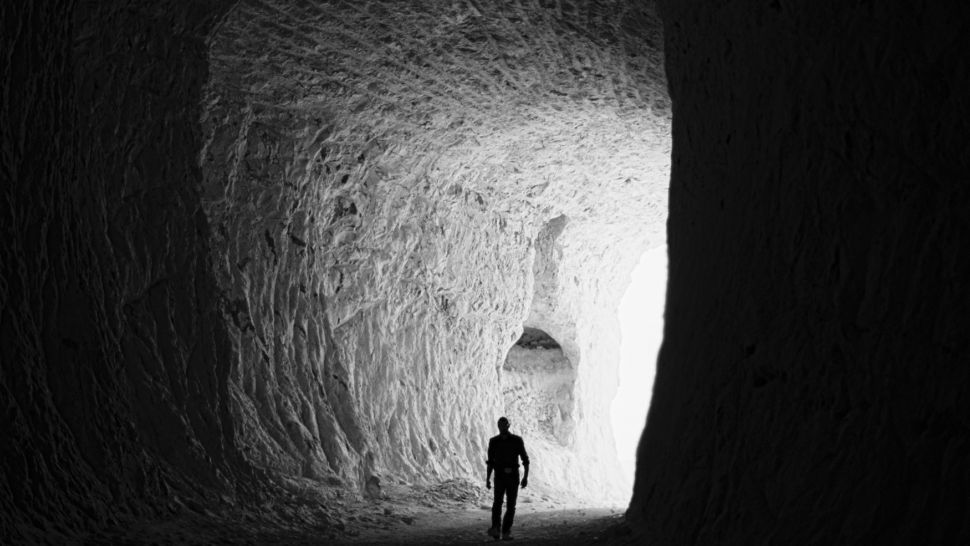
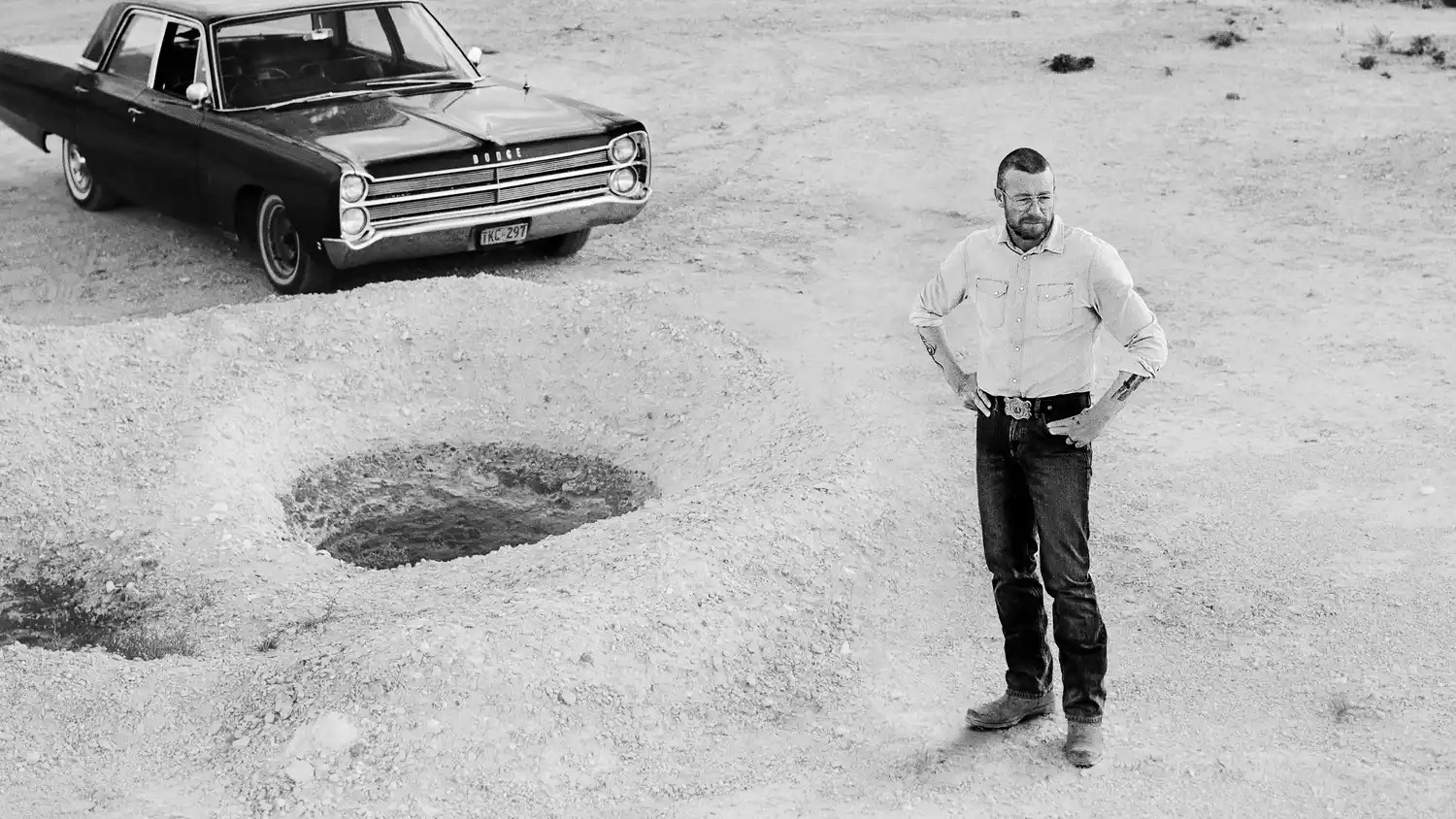
It’s a murder mystery starring Simon Baker, but co-starring the scenery near Coober Pedy, a dry, under-populated sandscape riddled with holes.

When Baker’s Det. Travis Hurley shows up there, he checks into the Limbo Hotel — like most of the places we see there, a structure dug out of the outcroppings and cliffs. Never was there a more apt and allegorical name for a hostelry in the pockmarked middle of nowhere than that.

Hurley’s in purgatory, tracking a 20 year old cold case stuck in “Limbo.”

Sen sets about introducing this character, filling in just enough of his back story to get by. Hurley’s first act on checking in is to cook and shoot-up his needle drug of choice. Every person he speaks with he tries to keep at some distance. At one point, he tosses his badge to a former murder suspect (Rob Collins) rather than getting any closer before asking questions.

When Hurley gets no answers, which is is the case with the missing woman’s brother Charlie (Collins) and others, as often as not, he just shrugs.

“Fair enough.”

The victim — no body was ever found — had a mistrustful sister, too (Natasha Wanganeen). No one there, especially the Aboriginal friends and relatives of missing Charlotte, wants anything to do with a “white fella copper.”

As we listen and Hurley to the 20 year-old tapes of police interrogations from back then, with their racism and ridiculously obvious efforts at railroading anybody with dark skin, we get it. So does Hurley.

“Fair enough.”

Writer-director Sen — who filmed the similarly-plotted “Goldstone” a few years back — keeps one detail from the viewer long enough for us to ponder “What are they all digging for?” It’s opals, but the gemstone’s only connection to the plot are as a reason for the pits, tunnels, homes and church carved out of the rock there.

This loner with a drug problem (understated) never sees much urgency in this work, even as we see him visit suspects and question the missing young woman’s family. And the family is not just wary. They have spent their lives keeping their expectations when it comes to justice from “white fella coppers.”

Baker plays this Bryan Cranston-weathered, Guy Pearce-introverted detective so close to the vest he’s almost mesmerizing in the role. We read into him what he won’t say about his issues, his past and just what he’s too cautious to say he hopes to accomplish here.

“I guess I don’t like anyone too much. Most people don’t think too much of me, either.”

I was wholly taken in by the forlorn setting — accentuated by the black and white photography — and by the racism subtext in play here. But too little happens in “Limbo” for my taste, and there’s a fine line between “patient” storytelling and a film so slack in its pacing as to lower the stakes and test the viewer’s patience.

Still, that barren landscape, a wasteland before men and women covered it in holes, is unforgettably striking and just symbolic enough to keep us hopeful this “Limbo” provide some answers.

Rating: unrated, drug and alcohol abuse, profanity

Cast: Simon Baker, Natasha Wanganeen, Rob Collins, Joshua Warrior and Nicholas Hope.

Credits: Scripted and directed by Ivan Sen. A Music Box release.

Running time: 1:49

Posted in Reviews, previews, profiles and movie news | Comments Off on Movie Review: A Cold Case in a Barren Australian Place — “Limbo”

Movie Preview: Remaking a Cursed Film — “The Crowe,” with Bill Skarsgård, FKA twigs and Danny Huston

There’s something a little triggering about this trailer, based on a comic book from the last millenium, and a remake of a movie that got Brandon Lee killed just as his career was taking off.

“The Crowe” (1994) has long been a cult film, perhaps a bit overwhelmed by its “lore,” perhaps not good enough to merit its reputation otherwise.

That’s the best kind of movie to remake, one that didn’t quite get there the last time around. The on-set death of Lee, the son of Bruce Lee, cast a shadow over the picture that threatened its initial release. Lots of creative editing made it play.

The circumstances of that accident — a non-union shoot in Wilmington, N.C., are very similar to the “Rust” situation which led to a cinematographer’s death, a big civil settlement and now an impending criminal trial involving the actor who pulling the trigger on an on-set gun that he didn’t know had live rounds in it.

Lee was just 32 when he was killed by “negligence” 31 years ago this March 31st.

I was working at an N.C. newspaper when that happened, and I’ll never forget the sound of veteran producer Edward R. Pressman breaking down on the phone when we talked about the accident and the original Aled Proyas film as it was coming out. People involved with that film aren’t happy that it is being remade, but that’s showbiz.

The trailer looks moody, trippy and grim, which is apt in pretty much every way you can imagine.

“Coming Soon.”

Posted in Reviews, previews, profiles and movie news | Comments Off on Movie Preview: Remaking a Cursed Film — “The Crowe,” with Bill Skarsgård, FKA twigs and Danny Huston

Netflixable? A South African/Zulu variation on the Hit-Man Thriller — “Inkabi”

It’s a little chilling to realize that hired killer is a job that might be the world’s second “oldest profession.” Judging by the movies, most every culture seems to have them, and the way screenwriters depict them, they have traditions, mores, preferred weapons and a “code.”

That’s the intriguing premise of “Inkabi,” a South African/Zulu thriller about that continent’s most famous warriors taking their skills and tribal traditions into murder-for-hire. If the Japanese Yakuza, American and Italian mafia, the French, Brits and the Chinese of the John Woo universe can be contract killers, why wouldn’t South Africa’s bloody colonial and Apartheid history have produced hitmen?

But that promising set-up earns a lumbering, half-speed treatment in writer-director Norman Maake’s hands. Even the fights feel like rehearsals before “Action!” is shouted — walk-throughs that won’t fool most viewers.

A hit is contracted in a tiny, rural store/cafe out in Zulu country. And that ensnares a big city croupier, a axi driver, the cops and the object of that hit — a white man embroiled in a government scandal that’s made the newspapers.

Michelle Tiren is Lucy, a hard-partying, always-late roulette wheel spinner at the storefront Big Time Casino. Her drinking and snorting and loose-living have cost her custody of her daughter, we learn in the film’s laborious, melodramatic early scenes.

That court case guts her, and makes her say “Yes” to the creepy older customer (Jonathan Taylor) when he makes his second attempt to ask her out. She wakes up in his bed just in time to see him strangled, almost rituatlistically, by the scowling Inkabi nicknamed “Scar” (Dumisami Dlamini).

But that slow, deliberate taxi driver she stiffed on a ride the other day? He might be her salvation. Frank (Tshamano Tsebe) is a retired, gone-into-hiding killer. He and Scar know each other. They know “the code.” But unlike in the Chow Yun-Fat films of John Woo, it’s not “No women, no kids.” It’s thou shalt not harm or interfere with another Inkabi in his work.

Whatever the many melodramatic touches Maake ( “Piet’s Sake” and “Soldiers of the Rock”) serves up — kidnappings, every killer pausing and lecturing his victim before pulling the trigger, all but ensuring somebody else has time to fetch a gun and shoot the shooter in the back, he needed a fresh set of eyes editing this picture.

Maake pointlessly breaks the tale into “chapters,” and uses animation to give a taste of tribal history and the devolution into contract killing work.

But literally every scene drags in this Zulu contract killer thriller, with the camera lingering over many a take well past its payoff.

That underscores the weakness of the performances. Players don’t act Maake’s stentorian lines, they intone them.

“Money doesn’t change lives. It ruins them.” “I lost something today which I used to hold very dear,” follows declarations about “the power to lead people astray” and that deepest of deep thoughts, “Everybody is in a hurry to get something. You just need to wait your turn.”

Tsebe has more presence than charisma, and Tiren is more affecting than the character she is playing or the lines she delivers.

But even with the cachet of being a new world for Zulu John Wicks to inhabit, “Inkabi” just doesn’t play. It’s the “code” of hit-man thrillers that does it in. They’ve got to move faster than this, and the action has to reflect that speed most of all.

Rating: TV-MA, violence, nudity

Cast: Tshamano Tsebe, Michelle Tiren, Dumisami Dlamini and Jonathan Taylor

Credits: Scripted and directed by Norman Maake. A Netflix release.

Running time: 1:41

Posted in Reviews, previews, profiles and movie news | Comments Off on Netflixable? A South African/Zulu variation on the Hit-Man Thriller — “Inkabi”

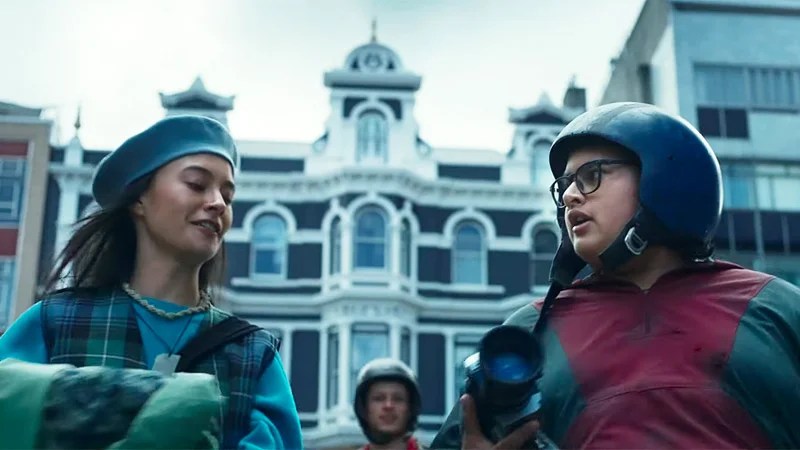
Movie Review: Coming-of-Age Māori in a New Zealand riven by an “Uproar”

“Uproar” is a sweetly-uplifting coming-of-age dramedy set against a fraught moment in the history of New Zealand.

It’s about a sensitive teen trying to find his place in a rugby-obsessed culture, and a member of the Māori minority struggling with identity in a mostly-white country that agreed to host Apartheidist South Africa’s famous rugby squad as the world was finally turning against that repressive, racist state.

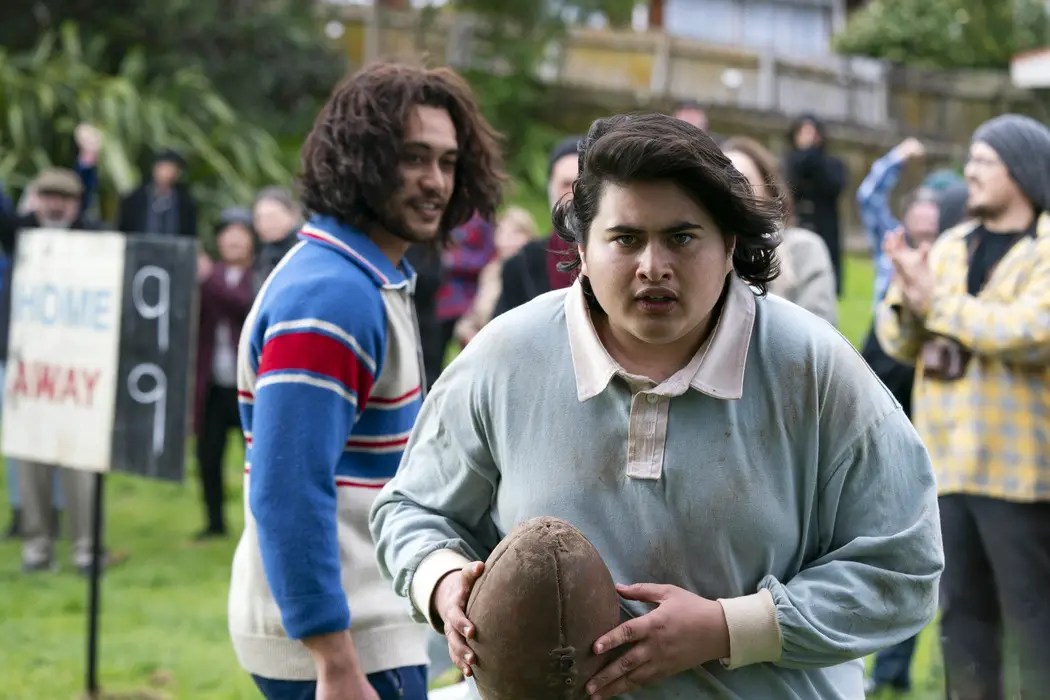
Julian Dennison, the cute kid from Taika Waititi’s charming “Hunt for the Wilderpeople” plays Josh Waaka, a smart, bespectacled and rotund kid forever bullied at the mostly-white prep school he attends.

His older brother was a star player for the school in his day, but Jamie (James Rolleston) is on crutches, his career at an end and too bitter and grim to stick with the rehab that will at least let him walk without a cane.

Mum (Minnie Driver) is a custodian at St. Gilbert’s, another reason Josh is there.

It’s 1981, Josh narrates, a moment in history when “mild mannered” New Zealand was torn by protests as Māori and some white allies took up the cause of shaming their government for hosting the murderously repressive Boer state‘s Springbok’s squad.

Being smart and sarcastic, Josh has to see the irony in the stern headmaster (Mark Mitchenson) lecturing the student body that “Real New Zealanders combat division with unity.”

“Unity” is sometimes code for a majority imposing its idea of “calm” on minorities.

Josh has a childhood friend, Grace (Jada Fa’atui), more traditionally Māori, who comes into political awareness over the issue. But being half-Māori, Josh never picked up the language or expressed much interest in the culture. He’s not ready as a “brown” person to identify with the South Africa’s oppressed Black majority.

And he has that one teacher who takes an interest. Mr. Madigan, played by Rhys Darby of “Next Goal Wins” and the recent series, “Our Flag Means Death,” calls on Josh in English class and would love for him to join the secret theater group he’s started in the conservative school. The kid’s emotionally available and a quick study at memorizing lines and the teacher would like him to capitalize on that talent.

But as the street protests turn violent and the school rugby team begs Jamie to take over as coach, Josh finds himself pulled in multiple directions at a time in life when your first big decisions present themselves. Which way — or ways — will he go?

There were many hands reworking the script Paul Middleditch and Hamish Bennett directed, so perhaps that’s why the picture has a compromised feel. The dialogue also has a scattering of modern anachronisms transferred to the early ’80s which grab your attention.

It’s still sweet, lightly amusing and very good at setting up the conflicts, identifying villains and such. But a concerted effort to “not be predictable” serves up false leads, red herrings in the plot and a sometimes frustrating feeling to things that aren’t resolved.

The big moments scome from exactly the places and situations you expect — a march that climaxes with a Māori haka chant/dance at billy-clubbing riot police, a bit of pursue-your-bliss and a moment of solidarity among people who got their share of raw deals from the British who colonized their islands in the 1840s and took most of their land.

Even as a child actor, Dennison had screen presence to burn. He’s effective here, with Darby adding sparkle to the teacher trying to sneak a production of “Foreskin’s Lament” by the authorities. Driver was cast for her nurturing but fiesty presence. And Erana James from Amazon’s “The Wilds” series impresses as the most outspoken protester of them all, the fiery Samantha.

“Uproar” is a tad too cute to pass by uncriticized. An overly-precious epiloque rather spoils the climax. But it’s long and never once drags, and the players, the politics and the intrigues tucked into it make a splendid history lesson, one with just enough feel-good moments to carry the day.

Rating: PG-13, violence, profanity

Cast: Julian Dennison, Rhys Darby, Erana James, James Rolleston, Jada Fa’atui, Mark Mitchenson and Minnie Driver

Credits: Directed by Paul Middleditch and Hamish Bennett, scripted by Hamish Bennett and Sonia Whiteman, based on a script by Keith Aberdein. A Blue Sky release.

Running time: 1:49

Posted in Reviews, previews, profiles and movie news | Comments Off on Movie Review: Coming-of-Age Māori in a New Zealand riven by an “Uproar”

Classic Film Review: Herzog’s take on Germany-and-America-in-the-70s — “Stroszek”

Long before he became the German filmmaker whose somber, ironic narrations and bleakly beautiful and humanistic documentaries turned Werner Herzog into a pop culture icon, he was a cult figure among international cinema fans.

In his early years of fame, Herzog’s movies could be dark, naturalistic poetry, or ambitious, cast-and-crew-testing living nightmares. His alter ego in the latter films was the bug-eyed maniac Klaus Kinski (“Aguirre: The Wrath of God,” “Nosferatu the Vampire, “”Woyzeck,” Fitzcarraldo”). Herzog later made a documentary tribute to their difficult working relationship, “My Best Fiend.”

But his co-conspirator/muse for the strange, personal and very human character studies “The Enigma of Kaspar Hauser” and “Stroszek” was the eccentric, troubled forklift driver and self-taught street musician Bruno Schleinstein, known in Herzog’s films and to the film world as simply “Bruno S.”

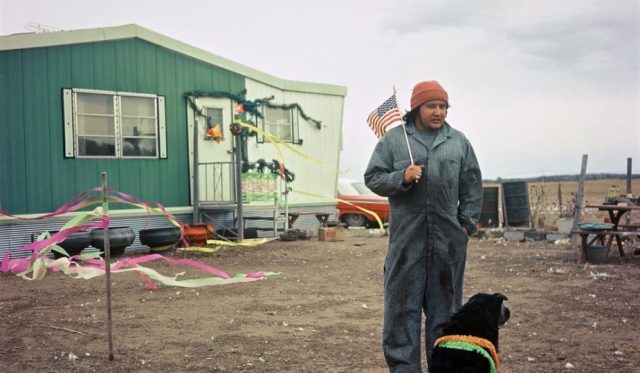
“Stroszek” is a tone poem of a shattered life that comes to cling to one last broken dream. It’s a statement on the disconnect between 1977 Europe and America, particularly rural America, as seen through a delusional and alcoholic street musician with no visible means of support who moves from Berlin to BFE, Wisconsin in a country where “everybody gets rich” and The American Dream, at least as Cold War-weary Germans saw it, could come true.

It’s bleak and tragic, and funny in the darkest ways. It’s the sort of film that seemed very much of its time in its time, but that inspired generations of indie filmmakers to seek out the unheralded inhabitants of whatever underbelly of life was close at hand, and the sort of eccentrics who might be living in it.

Bruno is a theatrical goofball of inmate who loudly jokes through his entire paroling out of a Berlin jail. Some of his warders want to know, after all the time he’s served, if he’s been “dropped on the head?” The warden hectors him over his “beer” and goes on and on (in German with English subtitles) about how he should “never touch another drop” and “never set foot in a pub.”

Garrulous Bruno seems to agree, right up to the moment he rolls into his neighborhood watering hole on his way home.

A couple of brutish pimps are berating and knocking around Eva (Eva Mattes), whom Bruno sees as his “girl.” He doesn’t even try to defend her. But he invites her to live with him, with hopes of taking care of her. It’s just that his cluttered flat full of musical instruments which he’s taught himself to play, from the piano and accordion to the mellotron and glockenspiel, seems to defy that expecation.

And Eva’s lot gets worse when her pimps drag her out and back to work, and then bring her back, beating Bruno and humiliating him in front of her as they do. Their only way out may be accompanying their elderly neighbor (Clemens Scheitz) to stay with his nephew in Railroad Flats, Wisconsin.

So that’s what they do, losing Bruno’s mynah bird in U.S. customs, buying a used station wagon and trekking cross country to this place they can barely find on a map.

Clayton (Clayton Szalpinski) is a simple Air Force veteran running a garage in a one-stoplight town on the Northern Plains. He scrapes out a living, adds Bruno to his garage staff (Ely Rodriguez already works there) and shows them around a tiny, dead town where “murders” happen, where farmers feuding over a tiny parcel of land between their adjoining farms ride their tractors with a rifle in their spare hand.

But at least there’s a local truck stop where Eva can wait tables. As Bruno and Eva set up housekeeping, buying a new single-wide and a ruinously-expensive Sylvania TV, Eva is almost certain to have to resume her old career if they’re to make ends meet.

“Stroszek” is a leisurely, contemplative character study with music, as Herzog gives Bruno S. room to let us see into his soul through his musicianship, his fondness for playing and singing to no audience in big, echoey, empty courtyards and such. The Country Muzak of guitarist Chet Atkins’ instrumentals underscores many of the North American scenes.

One evokes memories of the Old World, where the buildings and people seem ancient and set on life’s path by their circumstances. Bruno S., playing a version of himself, is an orphan whose prostitute mother didn’t want him. Life in both worlds has its tests but the nature of the struggles are different, with the promise of America, a land of plenty undercut by the never-ending quest and need for money, which the “proletarian” Bruno starts to see as a “conspiracy.”

In its day, “Stroszek” was celebrated as a soulful bolt out of the blue in an American film landscape just turning itself over to the blockbuster. Lore grew up around the film and the seat-of-the-pants way Herzog filmed it (driving scenes with no camera truck/trailer) and scripted it, working around his screwy leading man’s moods, filming much of it Nekoosa and Plainfield, Wisconsin, with a conjured up tourist-trap-in-winter-finale filmed in Cherokee, N.C.

Viewed today, its whimsical charms stand out more than its tragic overtones. Even back then, critics and culture observers were pondering why American cinema made so little effort to find and celebrate the Brunos in our midst.

But documentary filmmakers Errol Morris and Les Blank, early disciples of Herzog and credited in “Stroszek,” are Americans who achieved their first fame for finding and lauding the quirkiness in the vast United States between the coasts.

And then the indie cinema of the ’80s and ’90s came along and amplified queer lives and rural despair, urban struggle and generational angst. By that time, their acknowledged or unacknowledged icon, the pioneering Herzog, had shifted more to the documentary side (“Grizzly Man,” “Cave of Forgotten Dreams”) and become an actor and personality far more famous than the movies that first made him.

But quaint as it sometimes seems now, “Stroszek” remains one of the touchstone films of an era whose very look on screen — grey and gritty and forboding — is as instantly identifiable as its often more sober-minded and cynical subject matter and the inimatable characters inhabiting it.

Rating: unrated, violence, sex work, profanity, smoking

Cast: Bruno S. (Bruno Schleinstein), Eva Mattes, Clemens Scheitz, Ely Rodriguez, Clayton Szalpinski

Credits: Scripted and directed by Werner Herzog. A New Yorker Films release on Tubi, Amazon, etc.

Running time: 1:48

Posted in Reviews, previews, profiles and movie news | Comments Off on Classic Film Review: Herzog’s take on Germany-and-America-in-the-70s — “Stroszek”

Next screening? “Ghostbusters: Frozen Empire”

If the trailers are any indication, the sequel to the Jason Reitman reboot of his dad and Harold Ramis’s smash comedy franchise will have even more comics in the cast — and fewer laughs.

Big twitter (X) debate over the weekend over whether or not this was anything to get too worked up about. Maybe it’ll still be fun. Projections are for “Frozen Empire” to pull in $50 million on its opening weekend.

Let’s see.

Posted in Reviews, previews, profiles and movie news | Comments Off on Next screening? “Ghostbusters: Frozen Empire”

Netflixable? Wes Anderson adds “Three Other” Roald Dahl stories to his Oscar-winning short film, “The Wonderful Story of Henry Sugar”

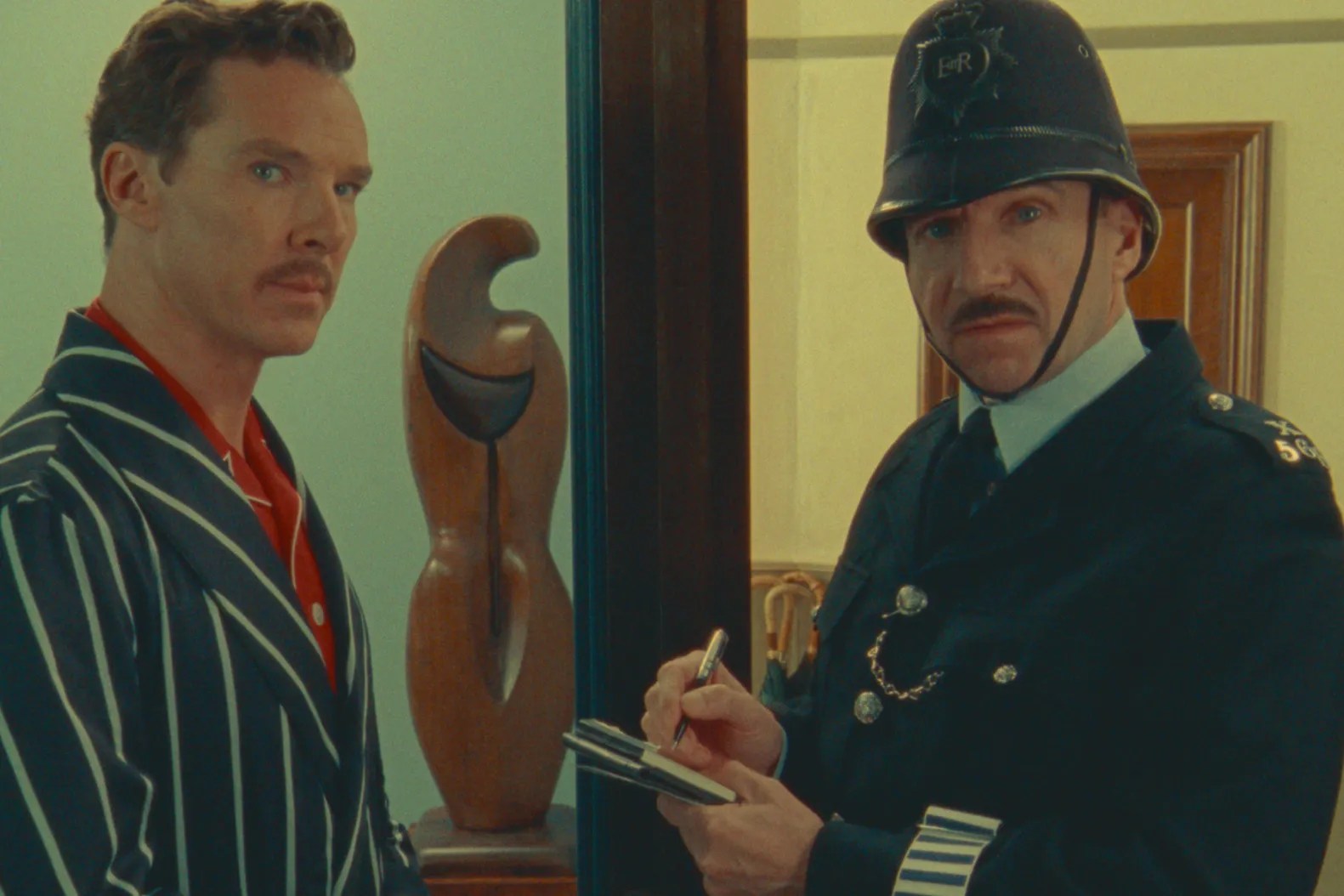
Wes Anderson went a long ways towards “rescuing” the reputation of the dark and twisted fiction writer Roald Dahl from his “children’s author” image with his gloriously cast and production-designed-to-death short film version of “The Wonderful Story of Henry Sugar.”

The author of “Charlie and the Chocolate Factory,” “Witches” and “James and the Giant Peach” had something to say to adults, too.

Now, celebrating that 40 minute “Henry Sugar” Academy Award win, Netflix releases that film folded into into a new package of FOUR Roald Dahl stories. It’s titled “The Wonderful Story of Henry Sugar and Three More.” And as “The Swan,” “The Rat Catcher” and “Poison,” the added stories make clear, Dahl’s sophisticated, sometimes sadistic fiction could pack on suspens, despair at the human condition and touch on themes with the cold, wet slap of cultural criticism layered-in.

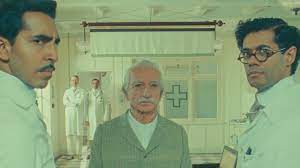
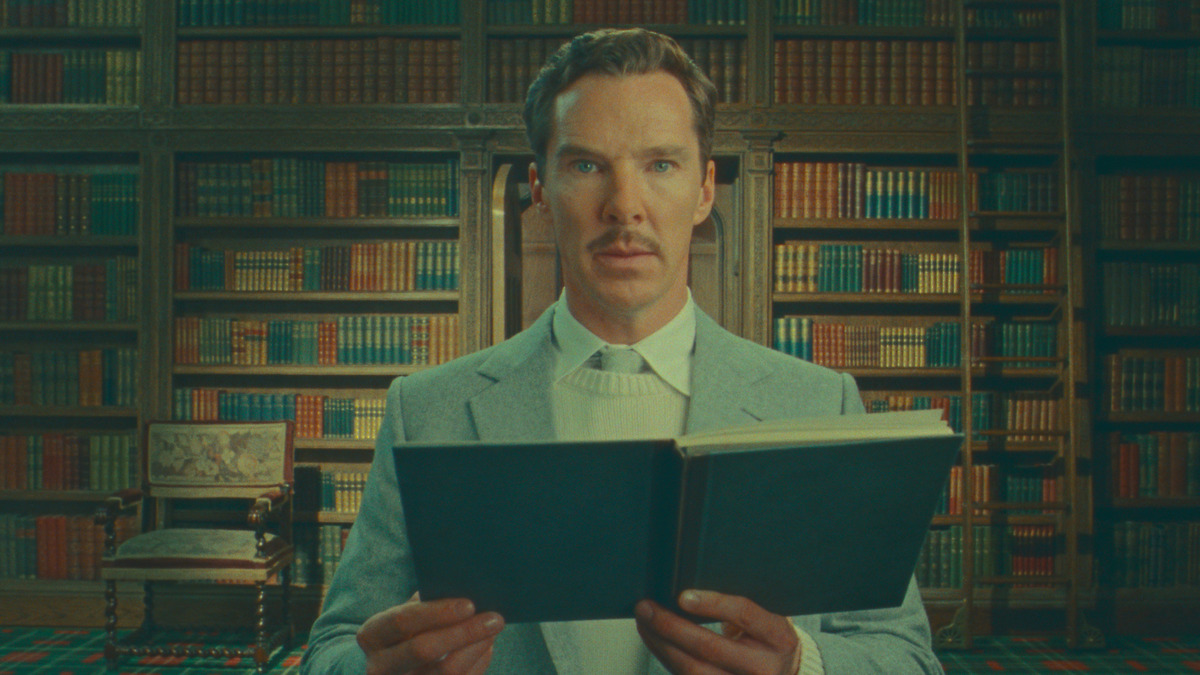
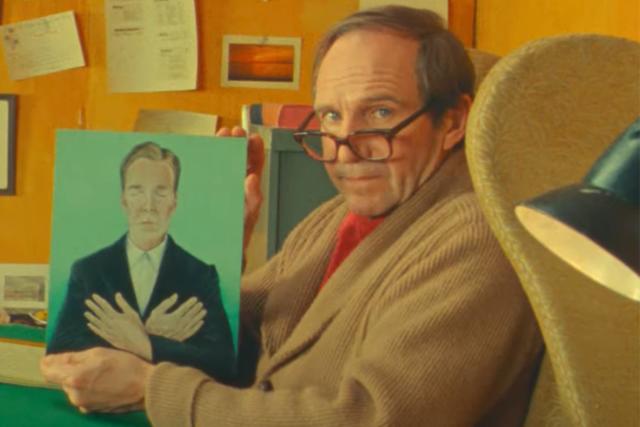
“Henry Sugar,” the story of a greedy rich heel (Benedict Cumberbatch) who masters the transcendental Eastern art of seeing with one’s eyes closed and seeing through things to win at blackjack, only to reform after winning bores him, showcased Cumberbatch, Dev Patel, Richard Ayoade and Oscar winner Ben Kingsley. It was an acted/all-narrated story within a story within a story, with every actor named speaking in voice over or directly to the camera, often deferring to the author himself (Ralph Fiennes) as he sits and edits and speaks from a soundstage version of his writer’s “shack” behind Gipsy House, Dahl’s home in Great Missenden, Buckinghamshire.

It’s classic Anderson “twee,” a fast-talking, candy-colored animated film sans animation, with actors telling the story, passing the narration back and forth, dryly reacting or under-reacting to the words, the actions and the stage hand who shows up to remove or add props and change stage backdrops and settings.

Every man has his moment — for this is an all-male enterprise, not wholly out of place for the sometimes-sexist Dahl — and many of those moments are underscored by a Max-the-Dog move from “How the Grinch Stole Christmas.” Each and every one turns and stares, befuddled or annoyed, at the viewer.

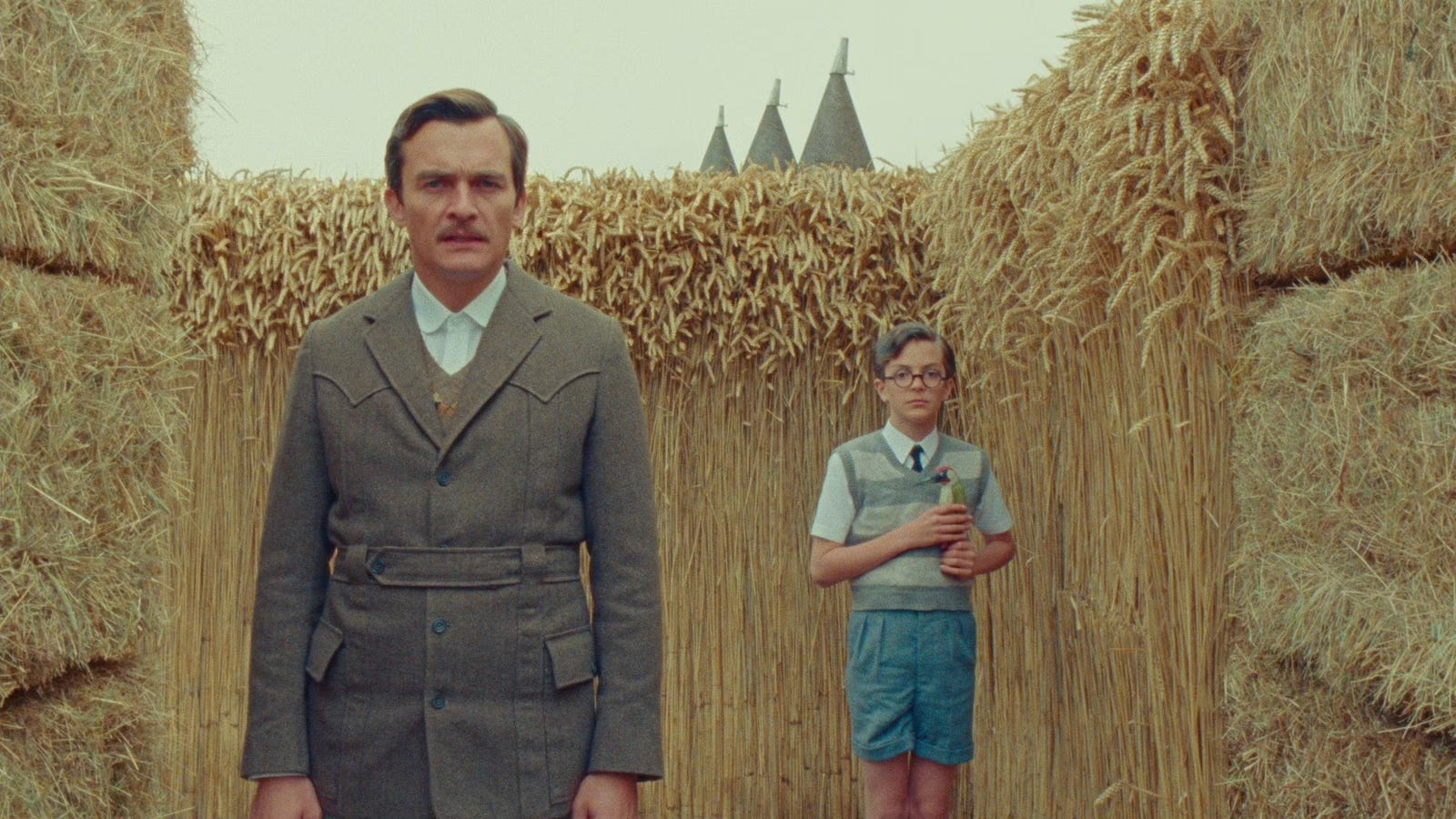
The precious effect is repeated throughout “Henry Sugar” and the three newer and darker stories added here. Only now, Rupert Friend joins the ensemble, all of whom play multiple roles in the stories.

In “The Swan,” we’re treated to a grim and horrific tale of a young birdwatcher being kidnapped and tortured by bird-murdering teens — tested by being lashed between the rails of railroad tracks, forced to watch crimes against nature and bird sanctuary laws. It is a sad, almost bleak dip into magical realism, here tinged by Dahl’s trademark sadistic edge.

“The Rat Catcher” features a feral Fiennes as a bloke who’s been summoned to deal with rats in a 1950s British village. By focusing the script on Dahl’s actual words via the constant narration, Anderson immerses us in the lovely, exacting descriptions of a cynic and a master craftsman.

The title character “was lean and leathery, with a sharp face and two long, sulfur-yellow teeth protruding from the upper jaw over the lower lip.”

Cumberbatch, Kingsley and Patel are featured in “Poison,” a tale from just-before-independence India in which a Brit (Cumberbatch) has had a poisonous krait snake crawl onto his chest and doze off. A colleague (Patel) summons a Bengali doctor (Kingsley) to try and protect the seemingly-doomed Englishman and neutralize the snake. But will his efforts dent the Brit’s inbred racism?

The way Anderson uses the actors, deadpan performances (mostly), narrating in a stacatto style, parked in front of clever settings in varying degrees of surreal “realism,” is almost animation, a reminder that “The Fantastic Mister Fox” and “Isle of Dogs” have been the pointilistic Anderson’s most wholly-realized triumphs — created in stop-motion animation.

His style can be grating, especially that self-aware mugging-to-the-camera that he insists on. But here we see its greatest application, deadpan turns played underneath screwball-comedy-speed dialogue, all of it, pretty much every juicy, biting word, written by a mercurial, sometimes mean-spirited wit who was always entirely too brilliant and too adult to be “just for children.”

The real Dahl was a real piece of work. But the work is timeless, and Anderson has rendered it in its most entertaining cinematic form with this short story collection feature film.

Rating: PG, closer to PG-13 thanks to human and animal cruelty, racism

Cast: Ralph Fiennes, Dev Patel, Ben Kingsley, Rupert Friend, Richard Ayoade and Benedict Cumberbatch.

Credits: Scripted and directed by Wes Anderson, based on four short stories by Roald Dahl. A Netflix release.

Running time: 1:29

Posted in Reviews, previews, profiles and movie news | Comments Off on Netflixable? Wes Anderson adds “Three Other” Roald Dahl stories to his Oscar-winning short film, “The Wonderful Story of Henry Sugar”

Movie Review: Ex-detective Crowe searches his failing memory for clues in “Sleeping Dogs”

Russell Crowe plays a cop remembering things that might best remain forgotten in a more sturdy-than-inspiring thriller about a murder, a wrongly-accused death row inmate and more than one suspect who’d prefer to let “Sleeping Dogs” lie.

Based on a novel by E.O. Chirovici, it sets up as a twisty tale in the “Memento” style. A man whose memory is addled by early onset Alzheimer’s, forced to label everything in the house, from the “front door” down to his microwave meals with taped child-appropriate instructions, is called upon to save the life of a convict (Pacharo Mzembe) who claims he’s innocent, and that the former detective either knew that back when, or didn’t care enough to dig deep and clear him.

Wearing a stocking cap to hide his “experimental treatment” scar, Roy flashes back to visits to his doctor, who tells former detective Roy Freeman his years-long alcoholism is “a common trigger for Alzheimer’s,” but that the surgery, the implants and vigorously exercising his mind — puzzles, memory-jogging — could turn him around. Roy will meet up with his old partner, open case files and revisit a past that didn’t exactly cover him in glory.

He was fired, with cause. He was a “loyal” cop, which suggests that “We look out for our own” ethos that is the core of much police corruption. And there were plenty of motives and suspects floating around this womanizing, manipulative, credit-stealing college professor (Marton Csokas) who got himself beaten to death.

The desperation of the condemned man is tinged with rage. You’d be angry too, if your only hope was a disgraced cop whose memory is out to lunch, perhaps never to return.

Tommy Flanagan plays Jimmy, the old partner who admits “We all drank on the job, back then,” as if that’s some consolation to Roy. Sure, he’ll pitch in. Or will he?

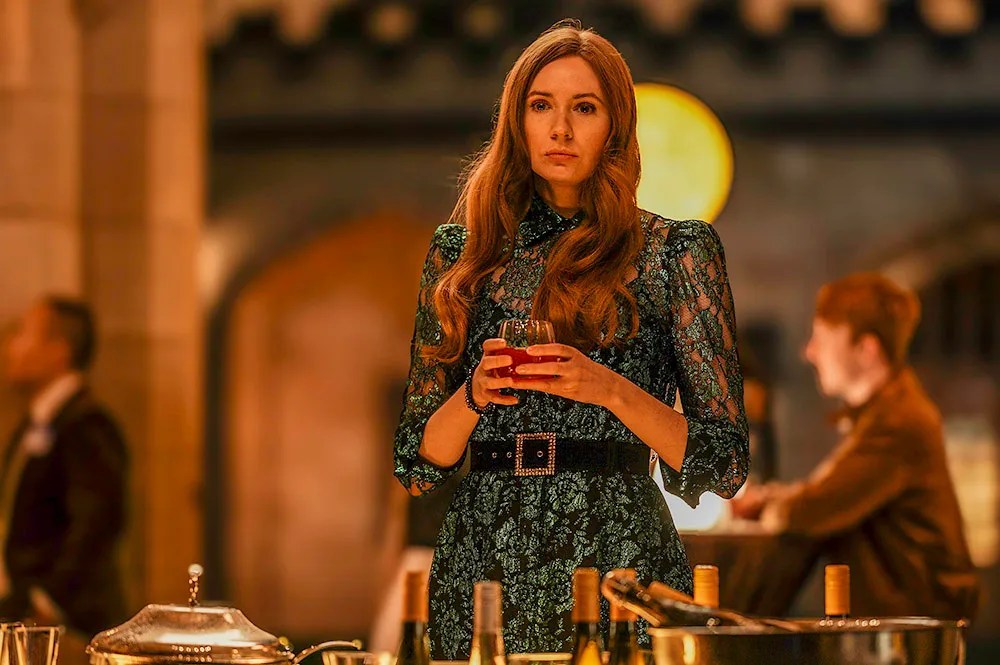
Harry Greenwood is a writer whose true crime memoir recalls the murder, his college days working with that dead professor, and obsessing over the creep’s brilliant polymath research assistant, played by Karen Gillan.

Gillan’s Laura Baines is painted in femme fatale shades. Like others he meets, she remembers Roy even if Roy cannot remember her, or the case, very clearly.

He’s acting on “just a feeling,” he admits. “That’s all I’ve got to go on these days.”

The more he digs, the more he remembers and the more stones he turns back over, or figures out that he never turned-over in the first place.

Adam Cooper, graduating from screenwriter (“Assassin’s Creed,” “The Transporter Refueled”) to director and co-writer, barely maintains his directing debut’s forward motion, which mutes its impact. Too many shots of Crowe’s Roy pondering this or that, sometimes jarred by a flashback, make “Sleeping Dogs” a fairly sleepy affair.

I liked the way Roy relies on what he used to do by rote, methodically questioning, reading up and extrapolating clues, listening to his instincts about who may or may not be involved, tracking the threads of the plot in post-its notes and the like.

Memory loss or not, these are the muscles Roy used to exercise. Now, if he could just figure out which flashbacks are suppressed or lost memories and which are hallucinations, he’d be cooking.

The poor pacing and a platoon of peripheral characters weigh the picture down and cheat the viewer of the chance to get ahead of the plot.

But Crowe’s guarded, meditative presence more or less holds this cluttered, convoluted tale together.

Flanagan and Csokas show us flash.

And Gillan takes a good shot at showing us a woman with problems, a past and a hard-to-pin-down place in all this, perhaps out of guile, or perhaps owing to fear of what waking these “Sleeping Dogs” will do to her, Roy, the past and all of their futures.

Rating: R for violence/bloody images, sexual content and language.

Cast: Russell Crowe, Karen Gillan, Tommy Flanagan,
Pacharo Mzembe, Harry Greenwood and Marton Csokas.

Credits: Directed by Adam Cooper, scripted by Adam Cooper and Bill Collage, based on a novel by E.O. Chirovici. Released by The Avenue.

Running time: 1:50

Posted in Reviews, previews, profiles and movie news | Comments Off on Movie Review: Ex-detective Crowe searches his failing memory for clues in “Sleeping Dogs”

Movie Review: A not-half-bad variation on a time-honored formula — “The Last Exit” (aka “Little Bone Lodge”)

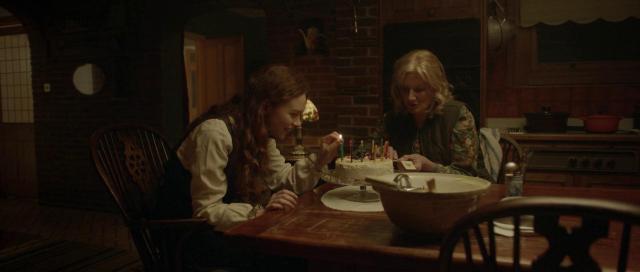
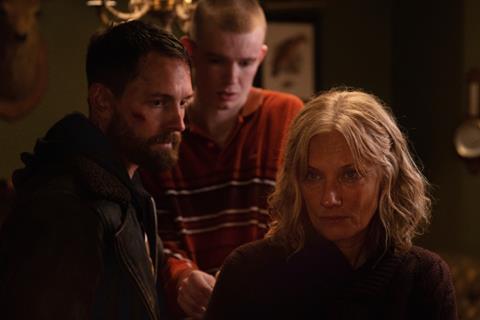
“The Last Exit” isn’t the most evocative title for a home invasion thriller. But “Little Bone Lodge,” the earlier release label on this Joely Richardson genre picture, might have been a tad too on the nose.

It’s a solid “You don’t know what I’m capable of” story of hoodlums who picked the very worst place in the middle of nowhere, Scotland, to bust into after a heist gone wrong. It plays around with a theme explored in many a home invasion predators-become-prey tale — David Hyde Pierce’s “The Perfect Host” and “Don’t Breathe” are examples that leap to mind.

Richardson stars as Mama, a woman who runs a remote sheep farm with her doted-on daughter Maisy (Sadie Soverall of “Saltburn”), taking care of her invalid, mute husband (Roger Ajogbe) in the bargain.

There’s something a little “off” here. You can see it in the eyes of the heavily-medicated husband and a few other “tells.”

And there’s something off in the screaming, pleading way a stranger (Harry Cadby) frantically pounds on their door on a pitch-dark night. His weeping answers to Mama’s “What are you doing all the way out here?” don’t allay suspicions.

But she opens the door and lets the weeping, troubled and “simple” young man drag his bleeding friend in. There’s a an impaling puncture wound, an “accident,” he says. Lucky for him Mama knows her way around pulling out a piece of rebar, stopping bleeding and sewing “Jack” up.

Teenage Maisy is filled with questions which wary Mama can’t stop her from asking, even after Jack (screenwriter Neil Linpow) comes to and starts eyeballing the place, and rummaging through the duffel bag hysterical Matty (Cadby) brought with them.

Jack needs a to make a call. Like NOW.

“No reception here. No phone. No TV. No computer.”

Jack’s insistence that Mama accompany him back to the road where their car crashed triggers a tense negotiation. Yes, he’s been impaled. But he’s wild-eyed enough to alarm anybody. Maisy doesn’t seem afraid. But Mama?

“You don’t know my life,” she hisses. Jack and we don’t know what she’s done, what she’s capable of. But we can guess, even if he can’t.

That’s a shortcoming here, the script and the performances’ failure to truly misdirect us from what we figure is headed our way.

“Jack’s “You ain’t gonna like what you’ve made me do now” doesn’t make Mama blink. Mama’s “You touch my daughter and I’ll kill you” is a lot more alarming.

The violence, when it comes, it hard to rationalize, given Jack was passed out from the loss of blood because he was IMPALED. The story beats — other “visitors,” complications, back story, alliances forming — are familiar, manipulative and yet more or less pay off.

Richardson is fierce, Linpow is vile, Cadby is a varying degrees of hysterical as a classic “criminal savant,” a simpleton badgered and brainwashed into crime.

Director Matthias Hoene cranks up the narrative and action to “over the top” too early, and aims even higher for the finale.

I can’t say it all works, but “The Last Exit” pulls you in and slaps you around a bit before it’s done. Not all that, but not that bad, either.

Rating: R, graphic violence, profanity

Cast: Joely Richardson, Neil Linpow, Sadie Soverall, Roger Ajogbe, Cameron Jack and Harry Cadby.

Credits: Directed by Matthias Hoene, scripted by Neil Linpow. A Saban Films release on Tubi, Amazon, etc.

Running time: 1:33

Posted in Reviews, previews, profiles and movie news | Comments Off on Movie Review: A not-half-bad variation on a time-honored formula — “The Last Exit” (aka “Little Bone Lodge”)

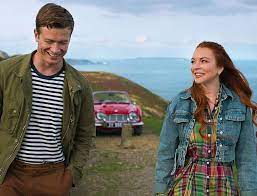
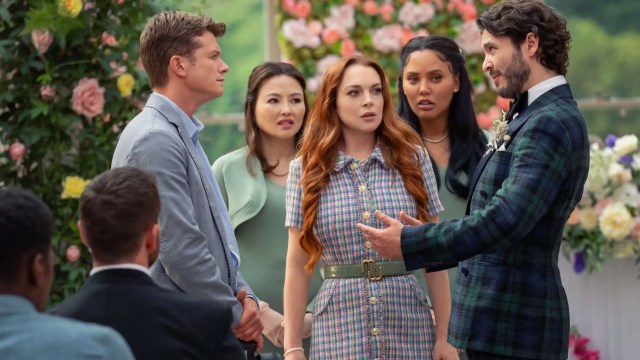
Netflixable? Lindsay Lohan, a redhead in Eire making an “Irish Wish”

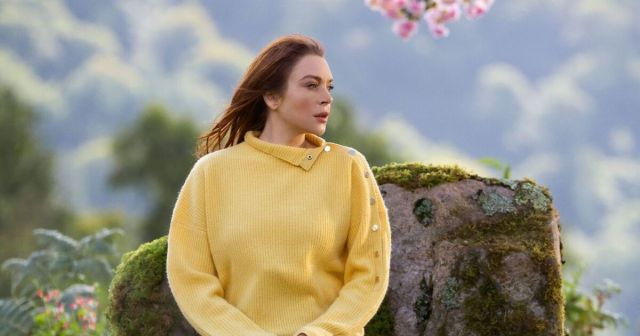
Lindsay Lohan’s not exactly an old pro at rom-coms. But as she’s a producer on her new film, one would have hoped she’d do the homework that would tell her how they function, what pay-offs they need to deliver and how important chemistry is.

Setting can be a plus, supporting players should be amusing and colorful. And the leads absolutely positively have to “click.” Take care of those concerns, and parking the redhead into a romantic comedy set in Ireland should have been a slam dunk.

It’s not. That’s not really on her, but as she took that producing credit and deepens her connection to Netflix, it might have been nice if she’d insisted on someone with more than mawkish Hallmarkish “Christmas” romances on her resume as director, and pushed for a rewrite that spiced up the sparks between her and co-star Ed Speleers.

Because, saints preserve us, one and all wasted a good trip to Ireland with “Irish Wish.”

The last half of the third act has the right energy, if not the jokes and romantic whimsy that the entire movie cries out for. It’s just not funny enough, not romantic enough and not Irish enough to come off.

Lohan plays Maddie, a New York book editor who swoons over Paul (Alexander Vlahos), an Irish author who became a star thanks to her endless rewrites. She thinks he’s going to propose, the silly thing. Her mother (Jane Seymour) knows this, but not Maddie’s friends, who meet her for the most glamorous book-reading/signing ever.

That’s where bestie Emma (Elizabeth Tan) makes eyes at the author and next thing we and Maddie know, she’s boarding a plane for Knock Airport in the west of the Olde Country for Paul and Emma’s big fat Irish wedding.

Sure, Maddie met a rude local (Speleers of “Downton Abbey”) at the luggage carousel. But that “meet cute” with a photographer isn’t spirited or amusing and holds little romantic promise.

If only she could make a wish by an enchanted lake in Old Eire, sitting herself on the stone wishing chair and praying to Saint Brigid (Dawn Bradfield) to make her Paul’s bride to be.

And so it shall be. She wakes up with a fellow she’s pined for, scrambling to ensure the wedding his stage-directing mother (Jacinta Mulcahy) always dreamed of, and noticing that there’s still “something” between Paul and Emma, and that there might be “something” in this nature photographer James (Speleers) that she’s drawn to.

Lohan’s third act cameo in the musical movie revival of her earlier triumph “Mean Girls” was the most charming thing in that sometimes grating and oversexed “remake. If we can root for Robert Downey Jr., who put himself through some things, we can surely still pull for Lindsay.

But as much as we root for Maddie here, it’s hard to see her engagingly paired-up with any of her co-stars. Lohan’s still a likable presence. But Speleers’ James lacks the roguish edge of say, a Matthew Goode in the middling-but-still-better-than-this “Leap Day” Irish rom-com of some years back.

This “Irish Wish” sits uneasily in the gap between “competent” and “moderately inspired.” The hints of local color — a twinkly priest (Aidan Jordan), a generic barman (Tim Landers), a few lovely settings, including The Cliffs of Moher — just aren’t enough to deliver the charm the picture sorely lacks.

Rating: TV-G

Cast: Lindsay Lohan, Ed Speleers, Alexander Vlahos, Elizabeth Tan,
Dawn Bradfield and Jane Seymour.

Credits: Directed by Janeen Damian, scripted by
Kirsten Hansen. A Netflix release.

Running time: 1:33

Posted in Reviews, previews, profiles and movie news | Comments Off on Netflixable? Lindsay Lohan, a redhead in Eire making an “Irish Wish”