Movie Review: A town and a country torn…and tickled, by “Wicked Little Letters”

It often seems, on a personal as well as cultural level, that the F-bomb has lost all power to shock.

And then a comedy comes along to remind us of the colorful ugliness and delicacy of language and how it can be deployed and censored to jolt, judge and control society. And where there’s judgement and control, there are insiders and designated outsiders, those who get the short end of the stick.

“Wicked Little Letters” is foul-mouthed farce based on a true “scandal” about a small town terrorized by vulgar, cruelly personal and utterly anonymous letters. In the hands of director Thea Sharrock, screenwriter Jonny Sweet and a sparkling cast, it becomes a parable on shifting social mores, sexism, morality confused with legality and women’s suffrage.

It’s a vulgar hoot.

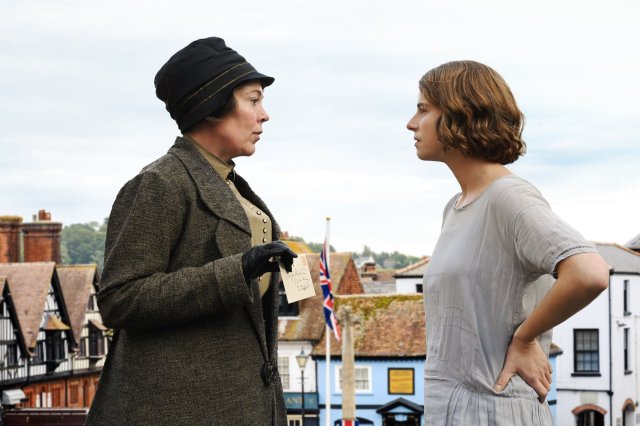
Oscar winner Olivia Colman stars as Edith Swan, a smug, self-righteous spinster who starts many a remark with “If I were without sin” or “We’re all God’s creatures” and “It is in the pardoning that we are pardoned.” That’s usually followed by a moment of bringing the hammer down.

A lot of her blushing disapproval is aimed at her unfiltered, blowsy and blue-streak swearing Irish neighbor, Rose Gooding, played by brassy Jessie Buckley of “Wild Rose,” “Doolittle” and who co-starred with Colman in “The Lost Daughter.”

Rose is a widow, a single mum with a live-in lover (Malachi Kirby) given to singing and closing the pub down, a woman who swears like she breathes.

“You mangey old titless turnip!” is the most printable outpouring to emanate from her Irish-accented mouth.

Edith is sweet to her face, but behind her back she holds nothing back.

“She’s heinous!”

The furor really begins in 1920s Littlehampton when Edith gets her blush-inducing 19th letter from an anonymous critic. The obscenity has a studied, insulting air and a colorful variety and unfamiliarity with the form that suggests it was researched from a Roget’s Thesaurus of Vulgarity.

“You f—–g a-s old whore!”

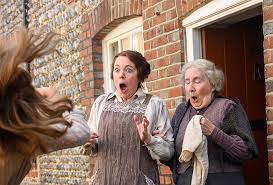
Edith is wounded, her mother (Gemma Jones) takes the vapors. But her officious, ever-so-proper father (Timothy Spall) is apoplectic. He’s the one who goes to the police over this “prison offense!” And he’s the one who convinces the boy’s club of coppers (Paul Cahidi and Hugh Skinner) that these must come from their next-rowhouse-door neighbor, Rose.

Just like that, poor, powerless Rose, a “war widow” with a tween daughter (Alisha Weir), is arrested, charged and tossed in jail because she can’t make bail.

The cops ignore the fact that it’s a tad too-on-the-nose for the professionally-profane Rose to be the author of such screeds, that the letters continue and spread to the entire community, and that “Woman Police Officer Gladys Moss” (Anjana Vasan) has serious doubts about authorship and Rose’s guilt.

Director Sharrock (“Me Before You”) gets a lot of mileage out of the contrast between “Wicked Little Letters” and the “Downton Abbey” world she’s documenting, filling her supporting cast with screen veterans like Spall, Jones and Eileen Atkins, who have all appeared in their share of Dickens, Austen and Gilbert & Sullivan period pieces.

Some Brit journalist with a notebook in hand counted “120 outbursts” of colorful invective (Well done, you.) in “Wicked Little Letters,” readings from letters and insults delivered in the heat of the moment. That underscores the movie’s “We’ve kind of become numbed to it all” subtext.

Color-blind casting is applied to clever effect, emphasizing the hidebound, myopic Old Order challenged by the new, limited horizons broadened by taking women cops and characters with differing racial, cultural and social backgrounds’ views into account.

Women Police Officer Moss adorably enlists “friends” of Edith’s (Lolly Adefope, Atkins and Joanna Scanlan) in her investigation, even though she’s warned “women constables don’t sleuth.”

Buckley, a bracing breath of fresh air in many roles, gives Rose a resignation about all this that seems out of character but is a nice twist. Yes, she’s potty-mouthed and outspoken. But busted for it? “It’s a fair cop,” she seems to shrug, even as she insists she didn’t do the letter writing.

The “national” nature of the “scandal” is briefly touched-on, and we’re allowed just enough time to fret over whether justice will be done to keep things interesting.

And if the tale drifts into cute and finds a finish that’s a tad too pat, at least we have the satisfaction of muttering “About f—–g time.”

R: nudity, profanity

Cast: Olivia Colman, Jessie Buckley, Anjana Vasan, Lolly Adefope, Gemma Jones, Eileen Atkins, Joanna Scanlan, Hugh Skinner and Timothy Spall.

Credits: Directed by Thea Sharrock, scripted by Jonny Sweet. A Sony Pictures Classics release.

Running time: 1:40
Posted in Reviews, previews, profiles and movie news | Comments Off on Movie Review: A town and a country torn…and tickled, by “Wicked Little Letters”

Classic Film Review: Cary Grant, Jean Arthur and Ronald Colman are “The Talk of the Town” (1942)

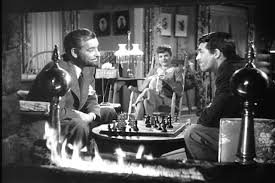
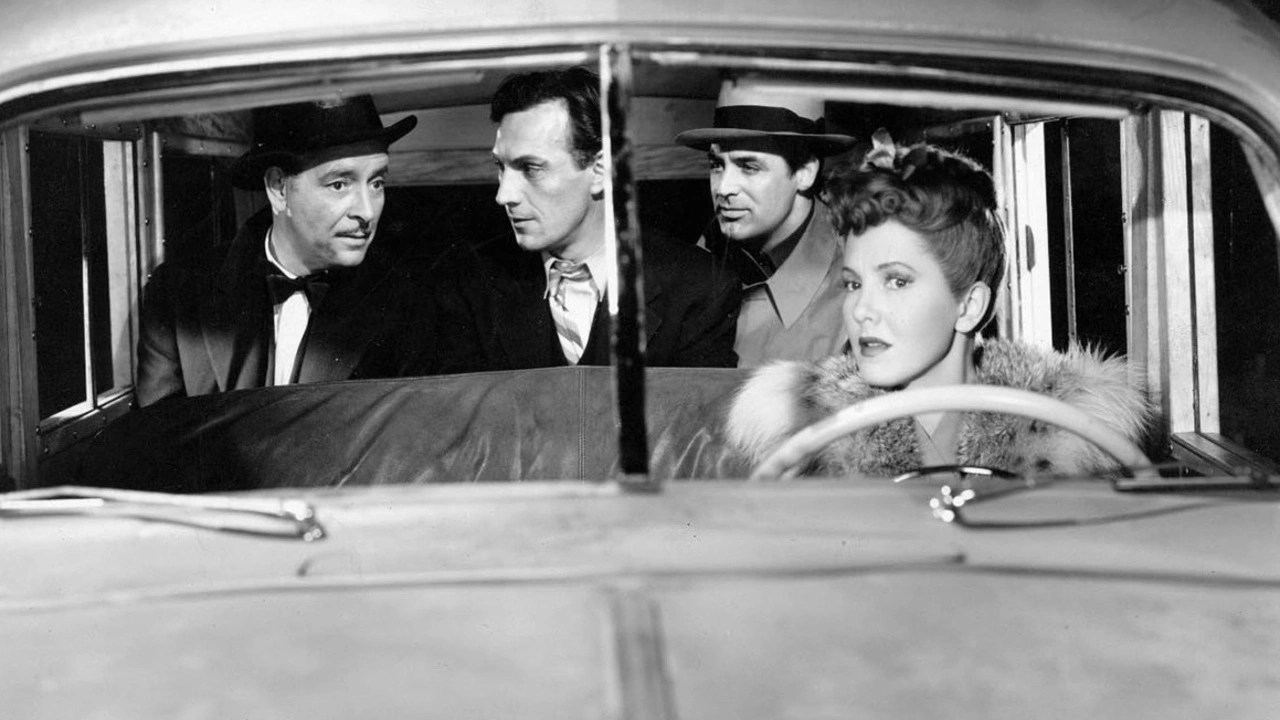
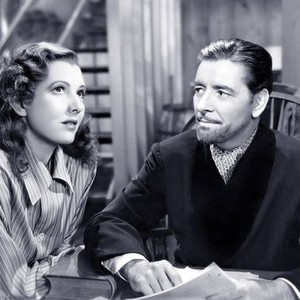
“The Talk of the Town” is a lightly-amusing, mildly-suspenseful, engagingly-acted and solidly-constructed comic melodrama, a pleasant enough time-killer from director George Stevens and featuring a rogueish Cary Grant, a charming and plucky Jean Arthur and Ronald Colman at his most urbane and droll.

History remembers it for the fact that it was a hit upon its release in 1942, and that it collected a whopping seven Academy Award nominations. But that Oscar recognition underscores everything this “pleasant enough” picture is not.

It is a civics lesson about a justice system rigged to suit the needs of the rich, but lacks the lump in the throat pathos and “blessings of democracy” earnestness of the films of Frank Capra or Preston Sturges.

There are screwball comedy elements. But Stevens — best known for “Shane,” “Giant” and “A Place in the Sun” — lacked “the (Ernst) Lubitsch touch,” or the rat-a-tat timing and dialogue of a Howard Hawks comedy.

It’s romantic and sometimes witty, but simply not on a par with the best films of that day that covered similar emotional ground.

Heck, look at the Oscar nominees it was up against at the March 1943 Oscar ceremony –– “The Pride of the Yankees,” “The Magnificent Ambersons,” ” “Yankee Doodle Dandy,” “Mrs. Miniver,” “Now Voyager,” “To Be or Not to Be.” It didn’t win anything against that field, and with good reason.

As I watched this long and somewhat leisurely light entertainment unfold, I kept wondering why I’d never encountered it before in a college class or film society showing, never sought it out on any classic film channel. Its credits scream “classic.” But the fact that one of the screenwriters, Oscar winner Sidney Buchman, had a hand in “The Awful Truth,” “Mr. Smith Goes to Washington” and “Here Comes Mr. Jordan,” the template for “Heaven Can Wait” gives away the game.

Stevens, one of the top dramatic directors of his era, was simply out of his element here. “The Talk of the Town” never quite hits the right comic, sentimental or romantic notes accordingly.

But what does stand out after all these years is the enviable pairing of two leading men in a movie that gives Colman (“Lost Horizon”) the spotlight and a chance to shine in a rare lighthearted, if sophisticated role.

He’s Professor Michael Lightcap, an educated and urbane dean of a law school who rents a farmhouse outside of the New England mill town of Lochester. He’s planning on writing another ivory tower tome on the philosophy and history of one arcane corner of The Law.

But he shows up a day early, and home owner Nora Shelley (Arthur, of “Mr. Smith Goes to Washington” and later “Shane”) hasn’t finished cleaning and furnishing the place. What’s more, an escaped convict has just staggered to her door in the rain.

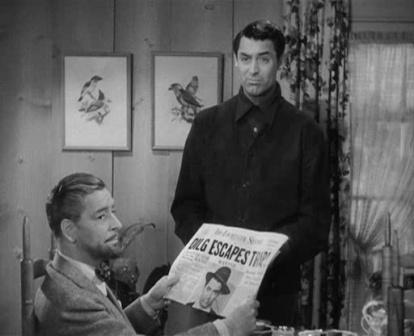
Leopold Dilg (Where DID they get these names?) is a Lochester loudmouth, somebody noted for taking on the self-serving “rule” of fabric tycoon and town “boss” Andrew Holmes (Charles Dingle). A factory burned down and a night watchman died in the blaze. The provocateur Dilg is the likely suspect, and is promptly jailed.

His “escape” just confirms his guilt, to the locals.

“Miss Shelley, do you believe I could burn down a factory?” convinces her he must be protected from discovery. Well, that and the fact that he’s played by Cary Grant.

Dilg is “the only honest man I’ve come across in this town in 20 years,” his lawyer declares. “Naturally, they want to hang him.:

The best “screwball” moments here are the never-ending parade of interlopers — cops, lawyers (Edgar Buchanan plays the true believer assigned to Dilg’s case, over Dilg’s objections), relatives, bloodhounds and a senator who comes to tell the esteemed professor that there’s a Supreme Court seat waiting for this great legal mind, if he’s willing to accept it.

When Dilg eventually gives away his presence on the farm, Nora passes himself off as “Joseph, the gardener.” But “Joseph” is awfully outspoken on matters of the law and America’s already two-tiered justice system. The “theoretical” professor finds his thinking challenged and himself manipulated into seeing Lochester law through this “gardener’s” eyes.

There’s an amusing outing at the local ballpark, where Lightcap meets the already-made-his-mind-up judge and his ilk. He’s lured to the scene of the crime, where the grandstanding capitalist plays the victim tirelessly pursuing justice…and publicity.

There’s more to this gardener, this crime and this whole system than our legal eagle realized. And there’s a lot more to this plucky pixie who aids and abets, protects and helps guide the suave Lightcap to the light.

Rex Ingram (“Green Pastures,” “The Adventures of Huckleberry Finn,””Sahara” and “Your Cheatin’ Heart”) turns up as Lightcap’s “man” (manservant), a less offensive version of the servile roles African Americans were generally consigned to in the films that era, but probably meant to be funnier than Ingram plays him.

The democracy-in-action finale is rowdy but messy in its messaging. And “message” is a big deal here, as Stevens & Co. are delivering something more cynical than Capra, less certain of American forthrightness than “Casablanca.”

“What is the law? It’s a gun pointed at somebody’s head,” Dilg lectures, one of several such speeches in the picture. “All depends upon which end of the gun you stand, whether the law is just or not.”

Colman’s fun to watch and listen to, Grant gives an edge in his seemingly reluctant playing of a second banana. And Arthur is good, tickling occasionally but never coming close to the breaks-your-heart pathos of her best performances.

All of which underscores the notion that all this “Talk” adds up to is something of a mixed bag, a film with all the hallmarks of a classic but without the pace or the “touch” that might have made it much more than it is.

Rating: “approved,” some violence, innuendo

Cast: Cary Grant, Jean Arthur, Ronald Colman, Edgar Buchanan, Glenda Farrell, Charles Dingle and Rex Ingram.

Credits: Directed by George Stevens, scripted by Irwin Shaw, Sidney Buchman, Dale Van Every. A Columbia Pictures release streaming on Tubi, Amazon, etc.

Running time: 1:58

Posted in Reviews, previews, profiles and movie news | Comments Off on Classic Film Review: Cary Grant, Jean Arthur and Ronald Colman are “The Talk of the Town” (1942)

Netflixable? Of course an Indian “Top Gun” includes a little song and dance — “Fighter”

Film critics are like baseball umpires. Right and wrong are relative, so “consistency” is what matters.

If I panned the original “Top Gun,” kicked its sequel “Maverick” and torched the Chinese knockoff “Born to Fly,” it’s not as if I’m going to adore two hours and forty-four bloody minutes of India’s version of this “fighter jocks party and dogfight” jingoism.

I mean, the most Indian thing about this Indo-Pakistani conflict variation on an F-16 theme is Bollywood style love duets and a big Bollywood production number or two. What’s jingoism without dancing a jig in your musical interludes?

“Fighter” is sort of a mash-up between the first and second “Top Guns,” with a heaping helping of the inferior “Iron Eagle” “Top Gun” knockoffs of the ’90s.

It’s built around top drawer flight effects — lots of jets chasing each other over Kashmir and Pakistan, dogfighting and engaging in jet-to-jet trash talk.

“You may have won this battle by outsmarting us, Bloody INFIDELS!”

It’s the Air Dragons of India’s Air Force vs. Islamic terrorists in alliance with Pakistan, with F-16s battling F-16s and other aircraft (Sukhoi? Israeli?) with missiles and machine guns and bombs delivered in “surgical strikes.”

Everybody wants to avoid a war, save for the hunky terrorist Azhar Akhtar (Rishabh Sawhney), who seems furious at having the worst case of pink eye this side of Islamabad.

The Indian pilots, led by pilot-with-a-past Squadron Leader Shamsher “Patty” Pathania (Hrithik Roshan) , his CO Rocky (Anil Kapoor) and assisted by rescue chopper pilot Minni (Deepika Padukone) must contend with restrictive rules of engagement, airborne ambushes, howitzers passed off as anti-aircraft artillery and a villainous Pakistani ace code-named “Red Nose” (Behzaad Khan) in between song and dance numbers.

The acting is mostly posing, glaring and making eyes at one another in the middle of a dance number. The various Pakistani characters are seething caricatures.

There’s something very old school about Indian spectacles of this sort — the star-power/fan service, gorgeous actors in perfect hair breaking into song, peeling off their aviator air masks to deliver pithy put-downs and pausing to (mildly) denounce sexism in the culture and preach patriotism in parties, airports, on the flight line or wherever.

At some point, you either throw up your hands at any of these military recruitment films — American, Chinese or Indian — or just go with them, no matter how silly they start to seem, each in its own culturally-distinct silly ways.

I just consistently roll my eyes and opt for the former.

Rating” TV-MA, violence, profanity

Cast: Hritthik Roshan, Deepika Padukone, Rishabh Sawhney, Anil Kapoor and Behzaad Khan

Credits: Directed by Siddharth Anand, scripted by Siddharth Anand, Abbas Dalal, Husssein Dalal, Ramon Chibb and Biswapati Sarkar. A Netflix release.

Running time: 2:44

Posted in Reviews, previews, profiles and movie news | Comments Off on Netflixable? Of course an Indian “Top Gun” includes a little song and dance — “Fighter”

Documentary Review: Remembering “Max Patkin: The Clown Prince of Baseball”

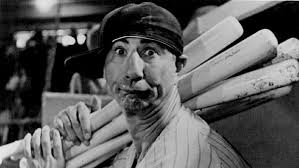
Max Patkin had been “The Clown Prince of Baseball” for 40 years before “Bull Durham” came along and preserved his act for all time.

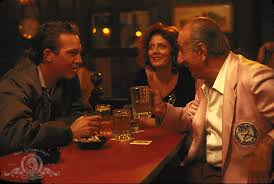
Writer-director Ron Shelton, a former minor league infielder, remembers basically building his Kevin Costner/Susan Sarandon/Tim Robbins romance around the presence of Patkin, the animated, gawky mime who “saved” minor league baseball.

“Max WAS minor league baseball,” Shelton recalls for the new documentary, “Max Patkin: The Clown Prince of Baseball.”

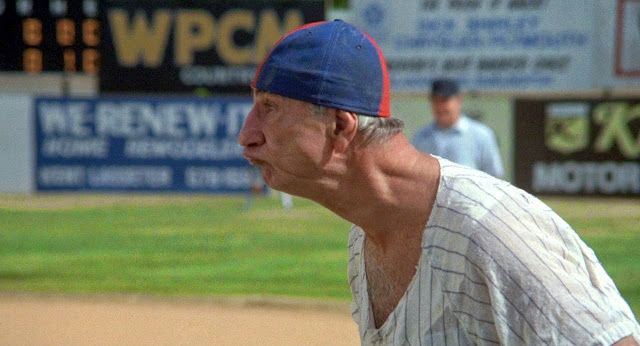
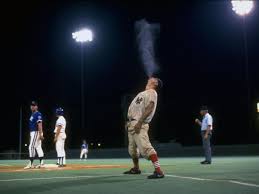
Tall, ungainly, with “a big nose and one tooth,” a “goose-neck” and Jim Carrey-rubbery limbs that seemed to defy the presence of bones, Patkin harbored big league dreams in his youth. But he found his true calling as a mid-game “clown” — mimicking and teasing players, over-acting the role of semaphore-signaling third base coach, faking arguments and spraying a “geyser” of water into the heavens with just just mouth and lungs.

With his eyes bugging-out below a long-defunct Montreal Expos cap worn sideways, a filthy uniform that could double as a skirt, with a “?” for his uniform number and a loping walk and sprint reminiscent of Harpo Marx, Patkin was a featured attraction at many a struggling minor league ballpark for most of his career.

If you ever saw him, you’d understand why. His childish, child-centered clowning was adored by generations before Shelton captured and preserved it in the greatest minor league baseball movie of them all.

Documentary filmmaker Greg DeHart is a former minor league pitcher who remembered Patkin “getting under my skin” while he was playing, trying to pitch his way to the major leagues. After that didn’t work out, DeHart spent 20 years compiling interviews for a Patkin documentary.

Former players like Bob Feller and Harold Reynolds, the late player and Cubs and Yankees manager Don Zimmer, Shelton, sportswriters and others remember the clown with the sad back story — an unhappy marriage that ended in violence — and a mania for performing.

Patkin appeared in some 4000 games, minor and major leagues, over the course of his long career. That got him on a lot of local and national TV, into “Bull Durham” and landed his jersey in the Baseball Hall of Fame.

We see footage of Patkin coaching the players about his act pre-game, directing the gags and the best ways for them to react to them.

“It’ll be cute,” he urges them. Come on, play along.

We hear about “the grind” of minor league life, even for the barnstorming clown who’d travel from city to city, goosing attendance everywhere he appeared. No, nobody in that life stays in nice hotels.

“The last room I had was so small even the mice were hunchbacks.

DeHart covers Patkin’s baseball career and recalls the “big break” that came when he was pitching against Joe DiMaggio in an exhibition game for the troops in Hawaii late in World War II. Minor leaguer turned Navy man Max gives up a homer, and trots behind DiMaggio, mimicking his gait around the bases.

An act was born.

The peak moments are remembered and the grim facts of life about maintaining a marriage and raising a kid while constantly being “on the road” are related.

One thing I hadn’t realized is that Patkin wasn’t the first “clown prince” of America’s oldest and most sentimentalized professional sport. Al Schacht kind of invented the schtick and the nickname.

But Patkin was the guy who made a career of it, bringing the hijinx to the game-in-progress and not just between innings. He lasted from 1946 to the Rise of the Mascots, who borrowed a lot of his “bits” just as he reached retirement age.

No, he didn’t help DeHart get into the big leagues, with his “distracting” foolishness. But he did remind one and all how much fun the game could be, especially if you had someone with great clowning skills carrying on during all of the dead spots in a nine-inning contest.

The film that tells the story of his life skips over the unknown and never seems much more than a surface gloss. But it’s a fitting tribute to an unforgettable fringe figure who played an important role in the preservation of America’s Passtime.

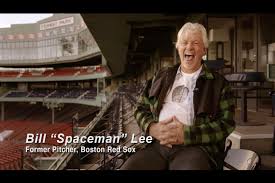
Cast: Max Patkin, Ron Shelton, Bill “Spaceman” Lee, Harold Reynolds, Don Zimmer, Mike Veeck, Joy Patkin and Bob Feller.

Rating: unrated, some profanity

Credits:Scripted and directed by Greg DeHart. A Sunn Stream release.

Running time: 1:10

Posted in Reviews, previews, profiles and movie news | Comments Off on Documentary Review: Remembering “Max Patkin: The Clown Prince of Baseball”

Movie Review: An Iranian Mom struggles to free herself and her daughter from an abusive marriage and oppressive patriarchy — “Shayda”

A wary unease hangs over “Shayda,” the debut feature film of Iranian-born filmmaker Noora Niasari.

In simplest terms, it’s a domestic melodrama, a story of a custody fight against the Islamic patriarchy of fundamentalist Iran. But what the viewer absorbs is the quiet, relentless fear of where we and the title character believe this story is heading.

Shayda, portrayed in a tense, quiet and soulful turn by Zar Amir Ebrahimi, is sure the abusive husband she fled and the tentacled state “back home” that is most concerned with “his” rights, are going to kidnap their daughter and take her back to Iran.

Her paranoia is contagious as information is doled-out sparingly and slowly in this quietly sinister story, framed within a particularly fraught exchange organized by an Australian social worker (Leah Purcell) who is trying to give Shayda and her child all the help that country can give, within the law.

They’re living in a women’s shelter. Everybody there has reason to keep the location a secret and perhaps lay low until their case is closer to resolution. Only Shayda has “anxiety attacks” over the carelessness of some of the others who pass through — young women, in one case supported by her insensitive if not idiotic mother, who want to live their lives, reconnect with their “freedom” and maybe get Shayda to babysit for them while they go out clubbing.

“The Husband” is kept out of sight, a hidden menace who may be in that station wagon parked across the street, in the ear of judgmental, gossipy Islamic fundamentalist women who spot Shayda– despite her haircut and dark shades — trying to buy traditional foods for Nowruz (Persian New Year) for herself and daughter Mona (Selina Zahednia) at the area Persian market.

The pre-school child is very much trapped in the middle here, quick to give voice to complaints about the shelter, the other kids there, wanting to “go home,” see her grandmother, etc. Shayda becomes the classic tries-too-hard Mom, a smiling mom who loves to dance teaching Mona to dance, making promises, trying to teach her child behavior and values she will need because Australia, where her husband brought them while he attends medical (Veterinary?) school, is to be their permanent home.

The judgements from Shayda’s culture can be subtle — a phone translator who bends and dulls Shayda’s Persian testimony about the domestic violence she faced, disapproving scowls from this fundamentalist, customer or that clerk careless who seems to know more of Shayda’s business than she’d like.

And then we meet towering, bespectled Hossien (Osamah Sami), still talking about the life “back home” that they’re returning to, still demanding when Shayda will “stop” with all these actions to end their marriage.

He bargains — “No more hijab” as if that’ll make a difference. He pleads “I’ve changed” (in Persian with English subtitles).

Shayda and we know better. As the point of view shifts to his court-allowed (unsupervised) visits, we wonder if he’ll take Mona because we don’t have to guess what he’s thinking. He grills the child about her mother’s activities with her more assimilated pal Elly (Rina Mousavi) and Mommy’s “new friend” (Mojean Aria).

Poor Mona finds herself unable to keep promises, tripped up by the stress of keeping each parent’s lies from the other.

The story — set in 1995 — is familiar to the point of being conventional. This isn’t a moral outrage melodrama of the “Not Without My Daughter” variety. But the viewer brings expectations into a film like “Shayda” that make it difficult for such stories to surprise. And the feeling of dread that hangs over most scenes notwithstanding, those expectations are almost unfailingly met in a story we’ve seen too many times before.

But Ebrahimi, dogged and fierce in “Holy Spider,” carries the picture by simply humanizing a character who could be Anywoman facing this sort of crisis in a foreign land, or a home country that disregards women’s rights.

Shayda lives in fear but clings to the longing that being in a more liberated country engenders. She’d like to go clubbing, to dance, maybe meet someone nicer than the man who threatened her and assaulted her. She’d love for her daughter to grow up in a place where possibilities are everywhere around her.

But to get them there, she knows and we suspect that she can never ever afford to let down her guard.

Rating: PG-13 for thematic material involving domestic abuse, some violence and profanity.

Cast: Zar Amir Ebrahimi, Selina Zahednia, Leah Purcell, Mojean Aria, Rina Mousavi and
Osamah Sami

Credits: Scripted and directed by Noora Niasari A Sony Pictures Classics release.

Running time: 1:58

Posted in Reviews, previews, profiles and movie news | Comments Off on Movie Review: An Iranian Mom struggles to free herself and her daughter from an abusive marriage and oppressive patriarchy — “Shayda”

Movie Preview: “Harold and the Purple Crayon”

The Crockett Johnson novel makes the journey to the big screen with Zachary Levi in the title role, Zooey Deschanel, Lil Rel Howery, Jemaine Clement and Alfred Molina.

The kid-simple gimmick is that anything Harold draws can come to life. That’s a pretty cool figment of one’s imagination to have as a child. As an adult? Tricky.

Aug. 2.

Posted in Reviews, previews, profiles and movie news | Comments Off on Movie Preview: “Harold and the Purple Crayon”

Netflixable? A ground-breaking politico’s life, dully-rendered — “Shirley”

A noteworthy political life gets lost in its details in “Shirley,” a Netflix bio-pic about the first African American Congresswoman and first African American woman to run for president, Shirley Chisholm.

Veteran TV director (“Barbershop,””Guerilla”) and novelist John Ridley landed Oscar-winner Regina King for the title role, gave the great Lance Reddick (“John Wick”) a fine farewell role as Congresswoman/candidate Chisholm’s chief adviser, and had Terrence Howard and Lucas Hedges to work with.

But the lumbering script, taking Chisholm to her first days in Congress and then through the ordeal of that 1972 Democratic primary campaign, skips over or barely mentions much that was notable about those events and loses itself in internal debates and dramatically-flat meetings that were never quite confrontations, meetings with figures mostly forgortten now, save for Chisholm.

It’s a clumsily-condensed account of Chisholm’s life and career. And King, while managing some of the “Brooklyn school teacher’s” soaring rhetoric and accent, comes nowhere near imitating the Congresswoman’s distinct voice.

With Nixon in the White House, the Vietnam War raging and Civil Rights getting pushed into the background, Chisholm turns from her attention-grabbing 1968 election to the House of Representatives where her fight against a Speaker who assigned the Brooklynite to the House Agriculture Committee showed her resolve, to bringing an activist message to the 1972 presidential campaign.

“Don’t ever accept things as they are,” she tells a protege (Christina Jackson) and reminds an earlier intern (Hedges) whom she puts in charge of young-voter recruitment. The right to vote had been extended to 18 year olds just before the ’72 campaign. She’d have to weigh whether to pursue or accept an endorsement from so-called “radical” groups that were politically-active back then, the Black Panthers included.

But for all the film’s details about the “back room deals” of that fraught contest, the personalities involved (George Wallace, Ed Muskie, Hubert Humphrey and George McGovern among them) and the violence visited on it — Wallace was shot — “Shirley” never really grasps the woman’s idealism, her resolve and why a movie about this ground-breaking moment that barely moved the political needle is really necessary.

Reddick stands out in the supporting cast, with Hedges, Howard, Brian Stokes Mitchell and Michael Cherrie as her almost-anonymous, in-the-background husband Conrad, also registering.

Which is pretty hard to do as there was simply too much going on in that momentous year to get it all in or do justice to much of anything. Watergate, Vietnam, the rise of environmentalism, Muskie’s right-wing triggered meltdown, abortion, the Equal Rights Amendment, rising Latin voter activism and the unfinished business of the Civil Rights Movement competed for Chisholm’s attention, the nation’s and this movie’s.

King handles the flashy moments — a big speech or two, a firm stand on principle or three. But there’s just not enough here, and too much at the same time, for “Shirley” to come off.

Rating: PG-13, Brief Violence|Some Smoking|Racial Slurs, profanity

Cast: Regina King, Lance Reddick, Terrence Howard, Lucas Hudges, Michael Cherrie,
Brian Stokes Mitchell and Christina Jackson

Credits: Scripted and directed by John Ridley. A Netflix release.

Running time: 1:58

Posted in Reviews, previews, profiles and movie news | Comments Off on Netflixable? A ground-breaking politico’s life, dully-rendered — “Shirley”

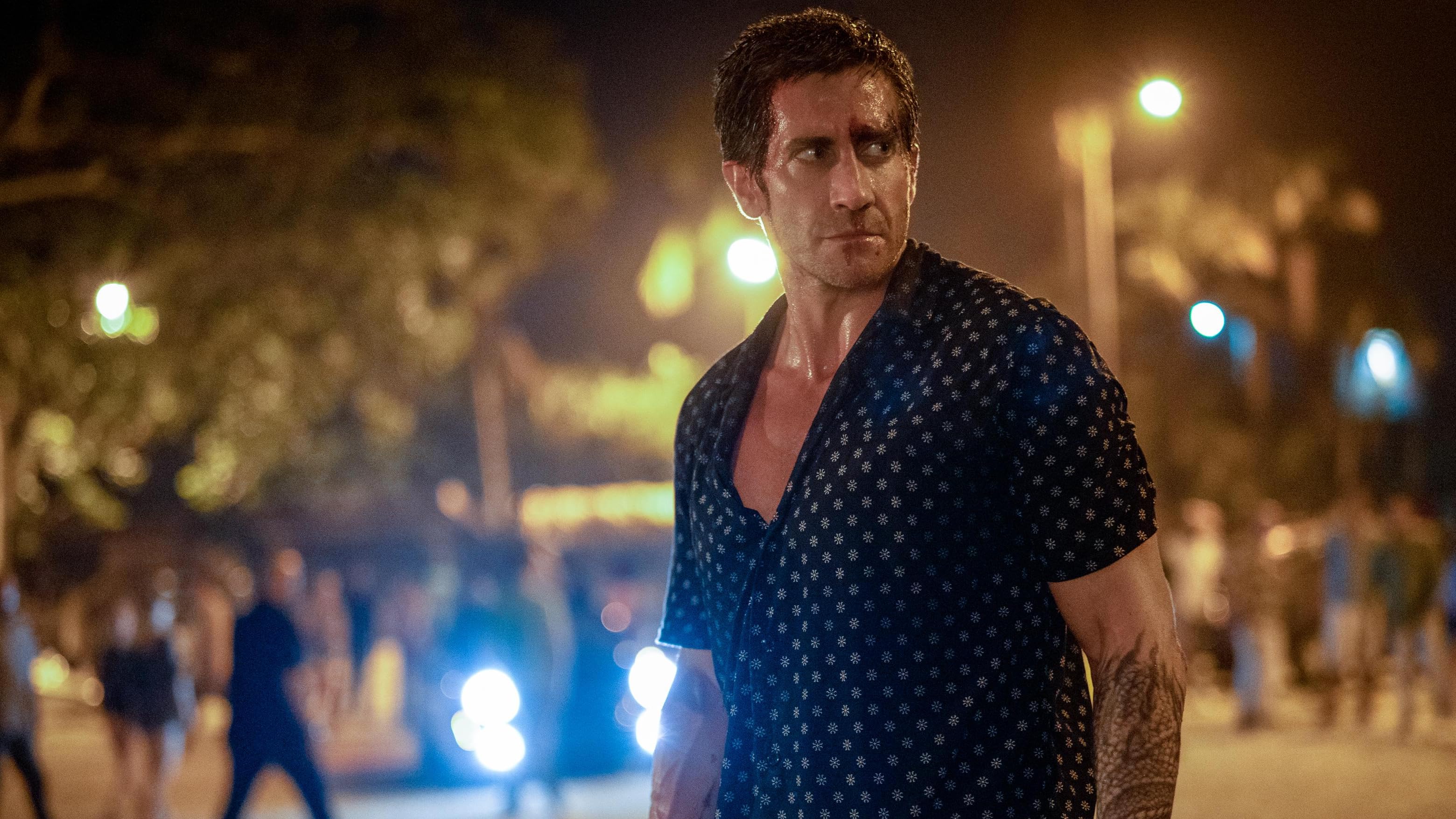
Movie Review: Jake Goes Where Swayze went before — “Road House”

For about 45 minutes — roughly the length of the first act — Jake Gyllenhaal and “Edge of Tomorrow/Fair Game/American Made” director Doug Liman let us know that whatever the glories of Patrick Swayze’s crowd-pleasing bouncer dramedy, their version of “Road House” is reaching for another class.

Subtle acting moments, immaculate compositions and dazzling editing adorn a droll admission that what they’re doing is kind of a lark, a Florida Keys riff on rowdiness, corruption and Old West lawlessness.

And then the violence hits “next level,” Gyllenhaal gives us a couple of his least-convincing line readings ever and the whole enterprise drowns in the formula it’s attempting to rise above.

Gyllenhaal stars as Elwood Dalton, a homeless MMA fighter with a notorious past that only earns him enough to scare-off foes in back-alley brawls for money, and not enough to move out of his ancient Chevy Nova.

But as the trope goes, he’s there by choice. Even an insane offer of “$5K a week” to be a bouncer at some Florida bar that attracts too many rough customers cannot free him from the guilt that torments him and tempts him into a Suicide by Nova moment.

When that doesn’t work out, there’s nothing for it but to Greyhound his way to Glass Key (right next to “Kokomo,” the Beach Boys’ oldie on the soundtrack reminds us), where Frankie (Jessica Williams) and her unironically-named Road House reside.

It’s a Tiki Bar from Hell joint with a waterfront view, a giant thatched roof and a friendly staff (B.K. Cannon), including the obligatory protege bouncer Billy (Luke Gage).

All it takes is one night of sizing up the “rage-filled” biker sociopaths making Frankie’s life hell and her bottom-line filled with furniture replacement and busted-glass removal, and dealing with those rough customers, for Dalton to become a name everybody on the island knows.

He moves onto a half-wrecked trawler that the unsalty souls around him pass off as “a house boat,” crosses paths with the pretty ER doctor (Daniela Melchior), earns the ire of the nepo baby mob boss (Billy Magnussen) and crosses swords with the corrupt (In Florida? Shocking!) sheriff (Joaquim de Almieda).

And every now and then, in between upping the violence ante — think “gator bait,” only with a crocodile — Elwood Dalton has flashbacks to the world and ugliest moment in that world that made him who he is.

“You’re a nice person,” he tells the beautiful doctor. “You don’t want to know me.”

Liman and the screenwriters populate this Key with an almost colorful-enough supporting cast, and writers Anthony Bagarozzi and Chuck Mondry serve up a few pithy pearls in the dialogue.

The Keys’ long history with the drug trade (most of the filming took place in the Dominican Republic) is joked about by the locals who know the island chain’s name rhymes with a drug dealer’s slang for kilograms.

“Why do you think they call it the ‘Ki’s?”

The violence here begins as a bit over the top, with the ripped and cut Gyllenhaal taking a couple of knives to the ribcage. And then MMA psycho-peacock Conor McGregor shows up, strutting and flexing, bellowing and bullying and beating and making sure everybody knows his name. “Knox” he’s called, many times. “Knox” is tattooed all over his chest.

Gyllenhaal’s amused under-playing doesn’t hide the fact that there’s a hero/heavy imbalance, that the villains don’t add up to much until the fearsome McGregor shows up.

As with the strutting, dancer-turned-bouncer Swayze picture of yore, there’s an unreality to it all that gives “Road House” a comical lift. Some bad guys are whimpering pussycats when confronted, the bar really is over-the-top seedy — chicken wire protects the many bar bands that play there (I’d buy the soundtrack if they offer one) — and no bar anywhere in Florida could afford $5,000 a week just for a bouncer.

And once we’ve dropped into this “Watch out for that crocodile” world, checked-out its denizens and been reminded of the “Western” this whole brawling-not-shooting-match truly is by characters who see and state the obvious, the charm wears off and the blood spills and none of it stands up to a moment more’s scrutiny.

Rating: R, violence, nudity, profanity

Cast: Jake Gyllenhaal, Daniela Melchior, Conor McGregor, Jessica Williams, B. K. Cannon, Billy Magnussen, Post Malone and Joaquim de Almieda.

Credits: Directed by Doug Liman, scripted by Anthony Bagarozzi and Chuck Mondry, based on the 1989 film “Road House.” An MGM/Amazon release.

Running time: 2:01

Posted in Reviews, previews, profiles and movie news | Comments Off on Movie Review: Jake Goes Where Swayze went before — “Road House”

Movie Preview: Another blast of “Furiosa: A Mad Max Saga”

The Big Anime Eyes of Anya Taylor-Joy take over this trailer to what looks like another epic in the string of epics Aussie George Miller has made — going back about 40 years — on the same subject.

A post-World War III apocalypse where gas is more precious than blood turned out to be a perfect piece of world-building.

This is a real “WOW” of a trailer.

May 24.

Posted in Reviews, previews, profiles and movie news | Comments Off on Movie Preview: Another blast of “Furiosa: A Mad Max Saga”

BOX OFFICE: Bad Reviews leave the latest “Ghostbusters” chilly, if not “Frozen” — Sydney Sweeney’s “Immaculate” bombs

There’s a dispiriting finality to the latest and perhaps least of the “Ghostbusters” movies, a sense of “deja vu all over again” in the situations, ghosts/villains battled, the stakes involved and all that.

It really does feel as if they’d done all they can do with the franchise, now that Bill Murray’s collected one more big fat check from Sony. And for what? He’s not the least bit funny here.

The over-stuffed cast adds characters and comical players, with nothing funny to say or do. It’s got an anachronistic deceased hottie for our teen leading lady character to connect with. Representation is supposed to add an audience to a movie, but in the cases of franchises, that rarely happens.

Reviews haven’t been kind. Even in the Land of the Lightweights and critics-come-lately, Rotten Tomatoes, it’s easily the worst-reviewed film in the decades-old franchise. It’s as bad-or-worse on the more seasoned critics’ aggregator site Metacritic.

I thought it sucked. “A ghost bust,” to pick a low-hanging fruit line.

Deadline.com is still projecting a $42-43 million opening for “Ghostbusters: Frozen Empire.” But last week they were flinging the number $52 up there. As late as Friday AM they were projecting $45.

“Ghostbusters: Frozen Empiredid a brisk(ish) $4.7 million Thursday night, slightly better than the previous film’s preview Thursday, and about $16 Friday (less than “Ghostbusters: Afterlife” managed $16.6 million back in 2021).

With the film opening on 4300 screens, IMAX included (how I watched it), with Sydney Sweeney as a nun facing horror (“Immaculate”) as the only real competition, and heading into an Easter (second) weekend only a “Kong vs. Godzilla” thing as competition, the table seems set for a blockbuster. Will it happen?

Is the talk of a third film in the franchise further down the development line, on its way to inevitability? God, I hope not.

Meanwhile, “It” bombshell Sydney Sweeney’s horrors of being a nun thriller “Immaculate” is seriously underwhelming as far as ticket sales go. I guess the thought of watching her act and not wear a skimpy swimsuit isn’t as appealing. $5 million is less than half of what a weak horrror title usually manages on its opening weekend. It’s not on many thousands of screens, but still, that’s underwhelming.

“Dune 2” is chalking up another $16-17 million, and another second place finish. It’ll be well over $230 million by midnight Sunday.

“Kung Fu Panda 4” finally relinquishes the top spot to fall to third, with a still-healthy $15 million and change take. It’s over $130 domestically, or will be by weekend’s end. Doing well overseas, well enough in China. Moderate-sized hit.

“Arthur the King” isn’t showing “legs,” tumbling from a weak opening to a lousy $4 million second weekend. No, the great Mark Wahlberg comeback isn’t happening.

“Late Night with the Devil” is the third wide (ish) release opening this weekend, a horror tale with mostly good or at least decent reviews, and just enough screens to pull in $3 million. It should pick up with word of mouth, even if I wasn’t as impressed with it as some.

UPDATED:  The final “estimated top five take Sunday afternoon via @BOXofficepro.

Posted in Reviews, previews, profiles and movie news | Comments Off on BOX OFFICE: Bad Reviews leave the latest “Ghostbusters” chilly, if not “Frozen” — Sydney Sweeney’s “Immaculate” bombs