


If there’s one myth that dies the hardest about the comedian, writer, dancer, banjo virtuoso and art collector Steve Martin, it’s that he’s “unknowable.”
Shy, “very private,” soft-spoken and guarded in interviews that aren’t chat show performances, he’s let that “philosophy major who does comedy” persona give him an inscrutable air.
But he’s written lots of books and essays, a play that touched on his touchy relationship with his realtor/frustrated actor father, been burned by at least one ex girlfriend (the late Anne Heche) in her memoir, and written his own memoirs — the most recent, a lovely comic book about his hit-and-miss and now-officially “ended” movie career.
So maybe we know what there is to know.
I’ve interviewed the man three or four times, read most of his books and reviewed most of his films and plays and had started to believe that along with being very smart, with an academic ability to dissect comedy, he’s basically just “The Lonely Guy” who may have finally found happiness and contentment with a second marriage and a “comeback” TV series and sold-out series of tours with his pal Martin Short, all coming along after he hit “retirement” age.
That’s what Oscar winning docmentarian Morgan Neville (“Twenty feet from Stardom,” and the Anthony Bourdain doc “Roadrunner”) was up against with his three hours+/two-part film “Steve! (Martin)” for Apple TV.
It’s a dry undertaking, but pointillistic in its attention to detail, more fascinating as history than entertaining as “a million laughs and how I generated them” story. And in it, Martin is never less than utterly charming.
“Ever think you’d be so bored?” by this subject, he asks his off-camera interogator (Neville) at one point.
But Neville, like we and indeed Martin himself, can still marvel at “What an odd life” it’s been, the unlikely stardom that exploded into a cultural phenomenon, overnight, fifteen years into his career and mere days before his “I’ll give this until I’m” thirtieth birthday deadline for “making it.” A half-century in the public eye, and a sudden third act “comeback” that startled everyone, himself included, show us a man at long last at ease with himself and happy in life.
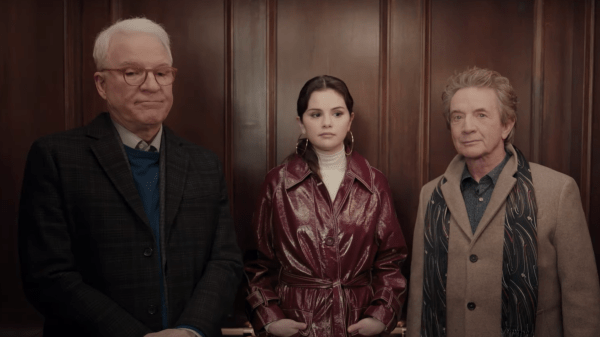
The second half of the series/film is “Now,” catching Martin at 75-76 (he turns 79 in August), biking with his pal and co-star Short through the LA of their careers, testing out material for their act, Martin keeping his late-life child out of the picture as we see the very face of contentment, a very famous man with nothing else to prove who is more likely to stop and chat with strangers if they’re walking their dog.
He calls every dog “buddy.” He tells Jerry Seinfeld that he’s never spoken ill of “other artists,” unlike most of the folks in his profession. He lets us see the adorably funny form letters he long sent to every correspondant. If “Steve!” adds one thing to his rep and his public life resume, it’s that Martin takes pains to be kind.
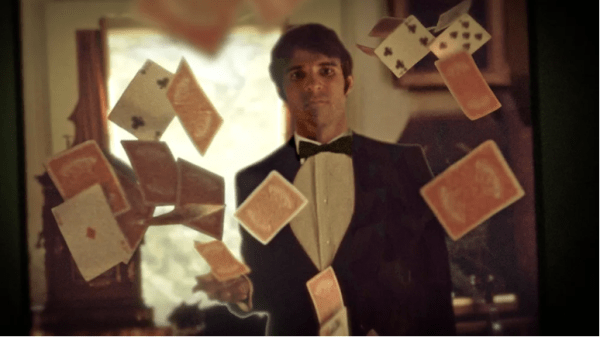
The first half of the film shows us the “anxious” childhood disconnect from his embittered father, Glenn, landing that first job, as a child, as Disneyland, getting into magic in his tweens and realizing “Oh! They love it when the tricks don’t work!”
He went from being a Carl Ballantine fan from TV to stealing shtick from a Disneyland comic who used balloon animals in his act, to the first urges to try his hand at “conceptual” comedy such as what he’d seen Ernie Kovacs do on late ’50s TV.
Martin studied philosophy at a couple of colleges, learned to dissect jokes and the “tension” behind generating laughter, and eventually settled on gags and jokes where he left out the “release” of the “indicator,” the punch line.
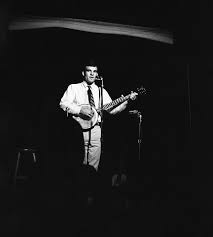
Writing for “The Smothers Brothers” TV show, touring as an opening act for lots of bands, most famously The Nitty Gritty Dirt Band, learning ways to get the attention of arena crowds despite how “weird” his act was, and then — August of 1975, it happens. By the time he first hosts “Saturday Night Live,” one year later, he had a hit record, was selling out arenas as a headliner, and had become America’s favorite comic.
He became “the most idolized comedian ever,” Seinfeld marvels, and lets us get just a hint of competitive resentment at that fact. Seinfeld is rich, supremely successful and apparently mellow in his 60s, but is still a great appreciator of The Great Ones, those even he might still envy.
Martin gives Neville access to hours and hours of performance cassettes and written post-mortems where Martin critiqued his work, lamented his years and years of failure and yet kept making discoveries, testing wild notions — taking his early, devoted and still-“small” “audiences out of the club and into McDonald’s, etc.
He’d sit in on call-in shows for wee hours college radio stations, and come off as witty, flirty and hilarious.
Continue reading










 Movie Nation