
Well doesn’t this look plucky and heart warming? I bet Greg Kinnear cries. Or makes us cry.
This opens August 30
Well doesn’t this look plucky and heart warming? I bet Greg Kinnear cries. Or makes us cry.
This opens August 30
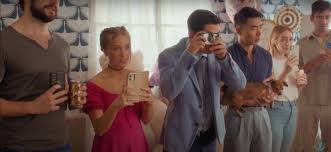
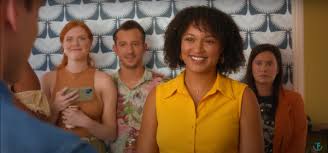
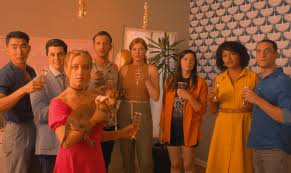
It’s almost always funny when the subject of a surprise party belts the person who planned the party in the eye the moment they’re shocked with the shout of “SURPRISE!”
“I guess those cardio kick-boxing lessons paid off!” another guest at the party might say, as more than one does in the propose-during-a-surprise-party rom-com “Surprise!”
“Surprise!” is a comedy of spoiled surprises, dashed-expectations, complications that range from silly to serious all served up by a cast that enlarges every time the damned doorbell rings.
Good God, it’s cluttered.
Director and co-writer Nate Hapke turns up in the cast as the most insufferable guest at this awkward fete filled with sibling rivarry, competing agendas and scheming support groups trying to “help” our prespective bride and groom figure out what’s going on and whether or not it’s a good idea.
There are little moments that amuse — the would-be bride Jane (Melanie Thompson) landing that haymaker on her suitor, party-planner and ring-offerer Ethan (Bryce Harrow).
The complications are way over the top. Ethan has a total of three brothers — by a couple of different mothers. Jane’s got two siblings who each take their shot at stealing her “special day” from her, if only by accident.
Ethan’s older brother Mack (Rob Harrow) resents little brother Ethan one-upping him, and securing granny’s ring to propose with. So he shows up with a dizzy pixie named Ashleigh (Jamie Miller) instead of the longtime love Ashley (Charlie Carr), who also shows up, but with “Rebound Roger” (Justin Sorvillo).
Virginal younger brother Clark (Aaron Sanders) is assigned to photograph everyone and every “moment” and lusts after every woman in the party as he does. Older brother Walt (Lee Shorten) may be here to save the day, or at least drag a chihuahua from the rescue group he works for to foist on Jane as a birthday gift.
Cait (Marissa Hood) is gay, flying solo today for reasons unknown and is the first to sense that “something is up.”
Because Ethan hasn’t tipped anybody but his siblings that he’s going to propose. He hasn’t even gotten the basic go-ahead to pursue this idea of “marriage” from Jane.
Once Jane’s posse has their suspicions, Ethan’s brothers want to know what they know, and vice versa.
Other guests are in the dark as all this lame “intel gathering” goes on.
And what better way to top the day off than by having Granny come by and throw another monkey wrench into Ethan’s plans?
Serious issues like Dad’s string of faithless marriages — “We all turn into our parents eventually.” — mix with the trivial as the doorbell and phone keep ringing as this ex drops in, that happy couple shows up newly-engaged or another one announces they’re “expecting.”
Any combination of five or so of these disparate threads could have been teased into something funny.
Hapke & Co. keep piling on ideas and characters who might have a promising moment, a quirky character trait worth indulging or developing into something funny.
A “How seriously should ANYbody take Bon Jovi?” running gag shows promise.
“Hey, NO ONE understands the human heart like JBJ!”
But the screenplay never gets past that “workshop this into something sharper” stage, and the many players never transcend that “promising introduction” that their characters are given.

Rating: unrated, PG-ish
Cast: Melanie Thompson, Bryce Harrow, Marissa Hood, Rob Harrow, Charlie Carr, Aaron Sanders, Nate Hapke, Jamie Miller, Lee Shorten
Credits: Directed by Nate Hapke, scripted by Nate Hapke and Rosie Grace. A Freestyle release.
Running time: 1:31
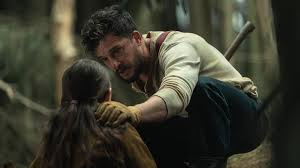
“The Beast Within” is a stylish, allegorical werewolf thriller that toys with its mysteries but can never escape the absurdity that clumsy plotting built into it.
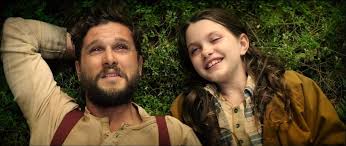
Alexander J. Farrell’s British woodslands tale is seen through the eyes of a child. Willow (Caoilinn Springall) lives in a remote highlands compound (actually Yorkshire) with her mother (Ashleigh Cummings of “The Goldfinch”), father (Kit Harington) and grandpa (Harington’s “Game of Thrones” co-star James Cosmo).
It’s a not-quite-idyllic life, with no school and her needing daily doses from an oxygen tank. And every so often, Mum bundles up Dad in a fur rug, stuffs a squealing pig into the Land Rover and heads off deep into the woods for…something.
A prologue tipped us off that this is werewolf country and that we’d be watching a werewolf tale. Free-spirited mother Imogen, who changes into a dress whenever she and Willow skip off to town for supplies, seems unhappy. Grandpa knows this.
Dad? He’s an old school wood-cutter — apparently. “I’m KING of this Forest,” he bellows playfully to his child. But he has his dark side.
“Mummy?”
“Yes sweetheart?”
“Are we SAFE?”
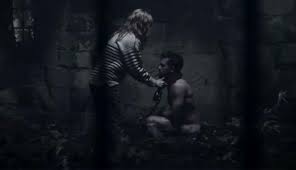
Willow sees Dad’s mood swings. Or does she dream them? They have him naked, in a ruined stone holding pen, transforming into a werewolf, his wife unleashing him on yet another hapless pig.
The allegory laid out here is obvious once you take in the nature of the marriage. But director and co-writer Alexander J. Farrell (“Refugee”) teases us with the supernaturalism of it all.
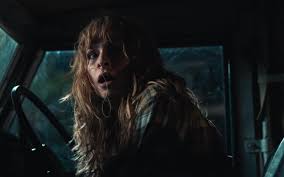
As we see the parents leave for anothe pig-sacrifice deep into the forest, Willow somehow shows up at the place where they park to witness the horrors Daddy Noah commits. For a minute there, I wondered if Willow was a werewolf. How else could a nine year-old on OXYGEN chase them miles away from the house?
The picture’s haphazard long before the third act botches its allegory and undercuts any hope of rising suspense as it defies all common sense, time and again. Our co-writer/director clutters his plot with red herrings.
He breaks Chekhov’s Gun Principle, taking pains to introduce Grandpa’s gun, then dispensing with it in the silliest fashion possible.
The performances are more effective than affecting, although every player has her or his “moment.” There are interesting ideas thrown in, but they’re bandied about, not really addressed or dealt with.
The finale reaches a somewhat satisfying “werewolf” climax, then staggers into “in case you missed the allegory” explanations.
The result is more frustrating than anything else.

Rating: R, violence, nudity
Cast: Kit Harington, Ashleigh Cummings, James Cosmo and Caoilinn Springall
Credits: Directed by Alexander J. Farrell, scripted by Greer Ellison and Alexander J Farrell. A Well Go USA release.
Running time: 1:37
One of the under-appreciated Kings of Film Comedy, Blake Edwards did “Pink Panther” movies, and “10,” “Victor/Victoria” and the pretty good skewering of Hollywood, “SOB.”
The Panther movies are a grand thing to be remembered for, kid-friendly slapstick “sex farces” that immortalized Peter Sellers and thrilled generations, including mine. I think he was the second movie maker I remembered by name. And Hitchcock was first only because he tried a lot harder to be a household name.
He was “politically incorrect” before that was “cool,” casting Sellers — who considered it a part of his repertoire to play Asian and South Asian characters as well as Italian and French ones. Edwards indulged this most famously in the hilarious Sellers farce “The Party,” about an Indian extra showing up at the wrap party and bringing mayhem with him.
Edwards kept pushing boundaries and bending the culture. The first “gay” movie millions of Americans flocked to? “Victor/Victoria.” A midlife crisis about the emptiness of an idealized, much-younger (“Trophy wife” age) bombshell? Bo Derek was the perfect “10,” and Dudley Moore the perfect sap to worship her…from afar. Because reality in that May-October romance is a lot less than it seems.
Edwards married Julie Andrews and worked and worked until he gave her the grand comeback she deserved.
Robert Preston, James Garner, William Holden, John Ritter, Bruce Willis and Bette Midler, a LOT of actors worked with Blake Edwards, a LOT of them more than once. They knew a safe bet when they saw one.
No, you probably don’t remember Ritter in the sex comedy “Skin Deep.” But the blackout nude “glow in the dark condoms” scene in that may have been the biggest laugh I’ve ever heard in a theater.
Musicals, Westerns (“Wild Rovers”), Edwards did it all and did it all well.
An “American Master?” Damned straight. About time they got around to him. Aug. 27 on PBS.
A chiller about the ’60s/70s “dating” game show, with Anna K. playing a struggling actress who gets on the show for exposure and figures out the awful truth about it and herself in the process.
Doesn’t look as if this one has a release date yet, but it seems to have distribution and Kendrick is usually a safe bet in anything indie.
A black and white Western, a real world outside the making of that Western with people in the jungles of Brazil and the frozen north.
This is the latest three stories/one movie adventure from trippy Argentine Lisandro Alonso (“Liverpool”).
August 23, we get a load of this.
A lot of OLD GUYS in the cast. Which explains the techno. Oui?
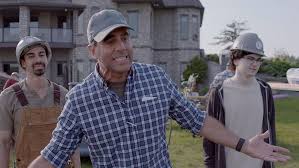
There are a few actors worth taking a flier on just from seeing their name in the credits. Frank Langella sits on that list, or rather he once did.
But the more important names attached to “Angry Neighbors” are Warren Brock, a first-time director who may never direct again, and screenwriters James M. Bear and Hamid Torabpour, who waste most of the 90 minutes they’re allotted here by failing to get to a point, or suggest that in fact they really truly do have one.
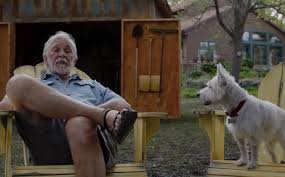
This adaptation of a Roger Rosenblatt novel really only one “angry neighbor,” and that’s Langella’s not-quite-reclusive writer, a man who lives on an island on a lake in The Hamptons (filmed in Minnesota, of course).
Harry March lives among the rich, and yet separated from them on a tiny island he named “Noman.” Mainly because he wants people to ask what it is so he can say “Noman is an island.”
He thinks like that. Harry’s supposedly enraged by his acquisitive, over-developing, well-heeled neighbors. We see evidence of annoyance, not of rage. At least he’s resolved that he won’t suffer in silence in their midst. Or rather he says he’s resolved to do that.
His neighbors regard him as a character, an aged has-been and most don’t give him a second thought. They’re not “Angry Neighbors.”
Harry’s nemesis is in the unseen kitchen utensil heir Lapham, who keeps dragging Kevin (Bobby Cannavale) and his mostly Latino construction crew out to his ever-expanding 26 bathroom mansion, a showplace among showplaces among the monied racists of East, West and Southampton and — you know, Sag Harbor.
A party is coming up, one Harry hopes to sabotage. Yes, he’s invited, which given his history at local parties (seen in flashback) is itself a leap of faith.
He copes with estranged children and an ex-wife (Stockard Channing) by having conversations with his “holy roller” (Christian) Westie, Hector. He’s voiced by Cheech Marin.
Whatever hopes this picture ever had of coming off, of scoring satiric points about the cost of staying silent as the barbarians are at the gates — every gate protecting you — go right out the window the moment the dog talks.
“Praise the Lord! It’s the Rapture!”
No. It isn’t. Hector has the wit and wisdom of a rural fundamentalist and the accent of a Chicano comic.
The one character to register outside of Langella is played by Katie Parker, a model-thin, perfectly put-together bombshell local realtor. She is insufferably rich, arrogantly attractive and seemingly markets herself with daily nude swims in the lake. Which aall the menfolk pause to admire.
“Wrinkles,” she calls Harry. Yes, she’d love to buy his property. No, she has no respect for it, him or anything other than the commission.
Ashley Benson plays a college kid who tries to talk the old man into buying a pool from her father. She’s the one who sizes him up in an instant.
Harry is “a man who has whittled his life to too fine a point.” And so he has. The movie? With an Indian “casino” to be thwarted by the Hamptonites, Harry to be cajoled into selling out and the hated Lapham to be foiled, it has a lot of points, none of which it gets to.
The movie is about his elaborate scheme and all the people who keep interrupting it. We can guess what it is from the shape of the canvas cover concealing his “revenge” in a shed.
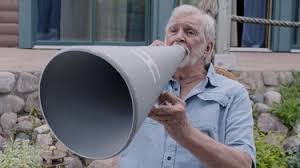
Cute touches about island life — communicating via bullhorn or toy boat — and are never cute enough.
Langella rages, rages against the dying of the light. Only he doesn’t. He’s a Samuel Johnson fan. “Romantics ruin the world,” he declares. Pragmatists matter.
Cannavale showed up for this thankless part for what, Twins tickets?
The insipid voice-over narration (Chris Harris provides it) rivals the inane “chapter” headings of a story that starts with a germ of an idea and spirals quickly down the drain.
Rating: R, near nudity, profanity
Cast: Frank Langella, Bobby Cannavale, Stockard Channing, Katie Parker, Ashley Benson and the voices of Chris Harris (narrator) and Cheech Marin, as Hector the West Highlands Terrier.
Credits: Directed by Warren Brock, scripted by James M. Bear and Hamid Torabpour, based on a Roger Rosenblatt novel. A Lionsgate release on Amazon Prime.
Running time: 1:29
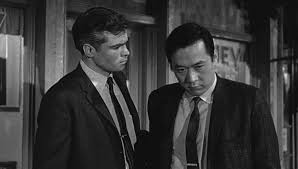

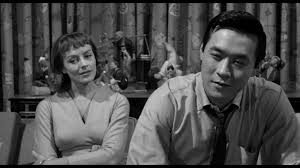

Writer-director Samuel Fuller (“The Big Red One,” “Pickup on South Street”) ticks off a lot of the “Sam Fuller Film” boxes in his 1959 noir drama, “The Crimson Kimono.”
It’s sordid and a tad seamy, set on the mean streets of late ’50s LA — with bums, alcoholics, strip clubs and a lurid murder of a stripper fleeing down the neon-lit strip.
The script touches on combat, with its cop-partners bonded for life in WWII, recalled to duty (it is implied) in Korea.
But Fuller’s fascination with Asia (“China Gate,” the first “Vietnam Movie,” and “House of Bamboo”) is the most fascinating thread to unravel in this atmospheric drama that occasionally loses track of the murder it’s supposed to be investigating.
The newspaper journalist turned filmmaker introduces us to a culture within a culture — Japanese American life, still segregated after WWII, more trusting than you’d think after the population was rounded up in internment camps due to questions about the emigre, second and third generation population’s loyalty.
And as our tour guide to this world, of “Nisei Festivals” and “kendo” demonstrations, he uses Det. Joe Kojaku, played by the dashing Japanese American actor James Shigeta.
Handsome, with a melodious bass voice, the Hawaian-born Shigeta worked through decades of America and Hollywood trying to decide whether to let go of old prejudices, or cling to them a while longer.
That’s exactly what “The Crimson Kimono” is about.
“Crimson Kimono” was Shigeta’s screen debut. And if you watched movies and TV from the ’60s through 80s, he was everywhere. You couldn’t make “Midway” without him playing an admiral. He played villains and victims, yakuza and prosecutors, and “inscrutable” Asian mentors of whatever Asian culture was being depicted.
Yes, he was on “Kung-Fu.”
He was the kidnapped CEO in the Japan Ascendant subplot of “Die Hard,” the voice of “Mulan’s” father in the Disney animated classic, and appeared on every TV series set in Hawaii for decades.
But in this film and other early outings — “Bridge to the Sun” and “Flower Drum Song” — he was allowed to be what he was born to play — a romantic lead.
“Crimson Kimono” begins with the murder of a popular stripper, Sugar Torch (Gloria Pall). Her murderer was waiting in her dressing room, and when the shots there missed, the shooter chased her down the street in her onstage lingerie, gunning her down in front of witnesses.
But nobody got a good look at the killer. Det. Kojaku and his former Nisei Battalion CO Det. Charlie Bancroft (Glenn Corbett) have their work cut out for them.
The police procedural Fuller serves up here is terrific — following leads based on the paintings and wig Sugar Torch had in her dressing room. She was ready to make the jump to Vegas in a geisha striptease, “The Crimson Kimono.”
The cops — “We don’t like being called cops, like girls don’t like being called ‘broads!'” — have to question artists, including the flirtatious alcoholic art-world insider Mac (Anna Lee).
“Love does much, bur bourbon does EVERYthing!”
They’ll visit businesses, a cemetary and a Buddhist temple, looking for Japanese Americans with some idea who the killer’s accomplice might be, and they’ll track an insanely brawny and uncooperative Korean immigrant (Fuji) who tosses Shigeta’s Kojaku around like a rag doll.
Only the artist Chris (Victoria Shaw) got a decent look at their quarry, and her sketch — broadcast on TV — puts her in danger. Her college girl looks get the attention first Charlie, then Joe.
An inter-racial romance? Betrayal of a foxhole buddy? They may have to settle this in a kendo fight.
Fuller parks our cops in a swank hotel apartment — roomies who get room service — with a piano, a city view, the works. There’s almost no explaining this “Miami Vice” lifestyle on a detective’s salary — even two of them. But it makes a convenient place to hide Chris from our still-at-large murderer.
The plot, when things get back to “the case,” unfolds in the most corny, conventional ways possible. A nice twist is undone by a breathless confession recited like a film noir soliloquy.
But the setting, the cultural exploration and the race-consciousness of it all — Japan can give any nation on Earth a run for the title “most racist” — give “The Crimson Kimono” just enough edge to be worth your trouble.
Fuller soft-sells the nasty “miscegenation” angle, which considering the Civil Rights era this film sprang from, seems like a cop-out.
But Shigeta is so good in the lead that his later career becomes one of Hollywood’s greatest “it might have beens.” He shared the 1960 “Most Promising Newcomer” Golden Globe for this film. If he’d ever had that break-out hit, there’s no telling how far this American Mifune might have risen.

Rating: TV-PG, violence, striptease sequences
Cast: James Shigeta, Victoria Shaw,
Anna Lee, Glenn Corbett, Neyle Morrow, Walter Burke and Fuji
Credits: Scripted and directed by Samuel Fuller. A Columbia Pictures release on Tubi.
Running time: 1:22

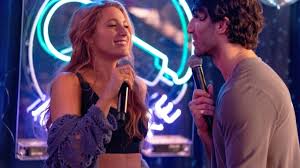
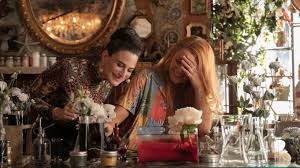
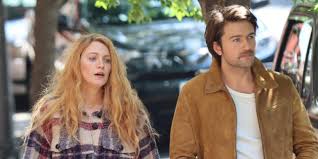
There’s no getting around the “romance novel with abuse” maternity of “It Ends with Us.” A florist named Lily Bloom, a tall, handsome lover with anger management issues named Ryle (“Rile” would have been too on the nose?), a white knight from Lily’s past named Atlas, carrying her world of hurt on his shoulders?
But the abuse text and subtext of this Colleen Hoover novel resonated with millions of women. And give it to director and co-star Justin Baldoni and screenwriter Christy Hall (“Daddio”). They may have recognized the “Lifetime Original Movie” (a disaparaging term used by male critics, mostly) in their source material. But they lean into it and take their shot at making this the best Lifetime Original Movie they can.
When you’ve got Blake Lively as your heroine and smoldering “Jane the Virgin” veteran Baldoni parlaying his co-starring “villain” role into a directing gig (he got behind the camera for “Jane the Virgin,” and directed “Five Feet Apart” and Disney’s “Clouds” as well), you’re off to a good start.
And if it’s a tad on the leisurely side, that’s “patience” and “respect for the material” and the fans who love the book. If there are far too many musical montages of courtship and life in Boston, too many slo-mo “Their eyes locked” moments, that’s “fan service, “too.
If it’s all heavy on the adoring closeups of our beautiful characters and endless fashion-forward wardrobe changes (Once a “Gossip Girl,” always a…), you go with it.
No, I don’t think “It Ends with Us” is heading towards anybody’s “Movie of the Summer” lists. It’s obvious and slow and cute in all the places you’d expect, melodramatic in many of the others.
But for what it is, it is superbly crafted — from the casting to the kitschy, over-decorated sets and over-dressed leading lady to the editing and the way the performers embrace the nuances of extreme close-up (“soap opera acting”) performances
We meet Lily when she comes “home” to Maine for her father’s funeral, which she abruptly leaves rather than come up with a “Five things I loved about my Dad” eulogy. That’s what’s up.
As Lily, the mayor’s daughter and a child of privilege, moves to Boston and opens up a hip, uncoventional florist shop named “Lily Bloom’s, we put together pieces of her past, told in flashback (Isabella Ferrer is “young” Lily). We see her compassion, offering aid to the homeless boy evocatively named Atlas (Alex Neustaedter) and falling in love with him in their teens.
The flashbacks are folded in as adult Lily is courted by the raking “neuro surgeon Ryle (Baldoni), who turns out to be the brother of Lily’s first employee, affluent newlywed Allysa (Slate) who uses the phrase “my best friend” in a romance novel rush.
The courtship is romantic and sexy as all get out, interrupted by Ryle, Allysa and her husband’s (Hasan Minhaj) goofy hockey fan traditions (onesie pajamas for game night) and Lily’s teasing, aimed at keeping Ryle at arm’s length.
“I’ll…see you around.”
“Will you?”
“No.”
But we know they’re destined to be together. And we’ve seen how they met, with Ryle kicking furniture on the roof above his penthouse apartment. We have to figure that’s a bad omen, and that the adult Atlas (Brandon Sklenar) is fated to turn up in Boston, conveniently as a restaurateur.
The best thing Lively brings to this performance is the confidence of the inutterably gorgeous. She knows she’s a looker, and neuro-surgeon or not, Mr. “I want to have sex with you…Love isn’t for me, lust is nice, though” is going to have to work hard on this “girl you bring home to Mom.”
Baldoni, always unshaven, is the quintessence of “tall, dark and handsome” and “maybe dangerous.” He’s good in a role that he never allows to seem despicable, at least in his own eyes.
And Slate is a nice splash of sunny, warm comic relief, Ms. “Don’t fish where I SWIM, Ryle” to her randy, womanizing brother.
The violence, when it comes, isn’t shocking or over-the-top. It’s on the “Should we file a police report or not?” end of the spectrum.
But Lively plays that with gravitas and mixed-emotions that millions of battered women and their friends will recognize. And the script hides Lily’s hand and her fate better than you’d expect.
It turns out this late summer blockbuster has a lot in common with the blockbusters that preceded it, such as Lively’s husband Ryan Reynolds’ “Deadpool & Wolverine.” Don’t overthink it and you’ll be fine.
Rating: PG-13, violence, sexual situations, profanity
Cast: Blake Lively, Justin Baldoni, Jenny Slate, Brandon Sklenar and Hasan Minhaj.
Credits: Directed by Justin Baldoni, scripted by Christy Hall, based on the novel by Colleen Hoover. A Sony/Columbia release.
Running time: 2:10


