
Look at the sight gags, reason out the plot, read the jokey subtitles.
Aug 30.
Look at the sight gags, reason out the plot, read the jokey subtitles.
Aug 30.
Melanie Thompson, Bryce Harrow and Marisa Hood are part of a”Surprise!” Birthday party where things go wrong. And romantic?
August 13.
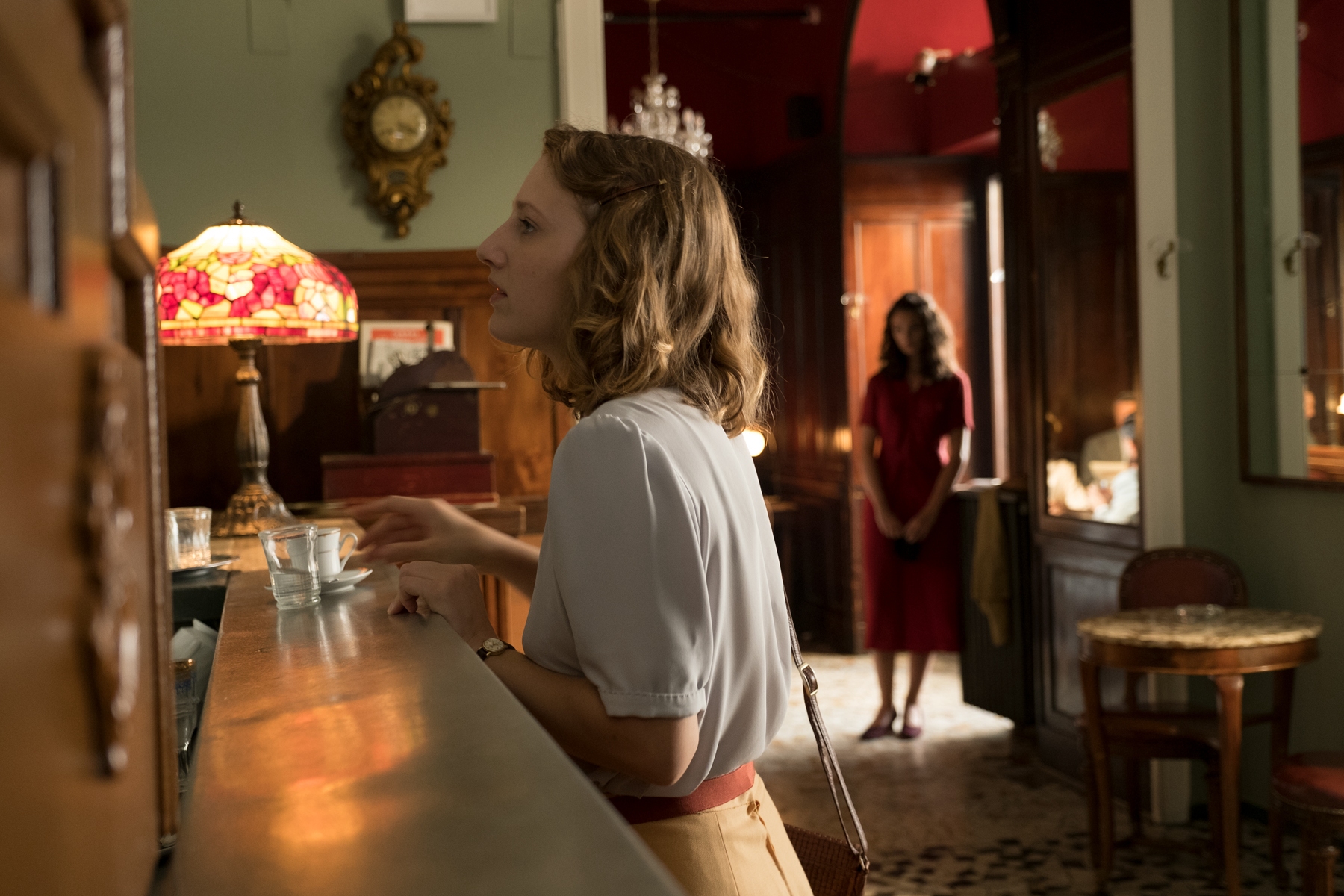
“The Beautiful Summer (La bella estate)” is a sumptuous Italian period piece, a “discovering my sexuality” romance that’s gorgeous to look at, frame by frame.
But when the frame moves, the story those images slowly tell is shallow and slight, melodramatic and conventional. It’s an interesting portrait of everyday people trying to get by, figure out their sexuality, live their lives and dream their dreams, and a portrait that barely mentions all this “real” life is going on in fascist Italy under Mussolini, with World War II a year away.
Writer-director Laura Luchetti (“Twin Flower” was hers), adapting a novel by Cesare Pavese, goes for the sensual in this story of a seamstress from “the countryside” who falls in with the fast and loose art crowd — painters and their favorite model — in Turin, with pretty much pre-ordained results.
Ginia (Yile Yara Vianello) and brother Severino (Nicolas Maupas) share an apartment. She works for a demanding designer and custom dressmaker (Anna Bellato) who sees her eye, talent and dedication. He is a onetime student and aspiring writer who has lost interest in most everything.
Severino has decided to take a job so that they can come up with the money to go home. Ginia has no notion of that. And one day, on a group picnic, she finds another reason to stay.
Amelia (Deva Cassel) is a ravishing, raven-haired beauty who impulsively dives off a rowboat and joins Ginia and Severino’s crowd of young people more or less from the same rural-to-city background. And even though others warn Ginia away from free-spirit Amelia, Ginia is too smitten, or at least fascinated, to resist.
Amelia is an artist’s model who poses nude for old painters and young ones. The younger ones she also parties with and sleeps with. Ginia would like to go and “watch” — the painting, we assume.
Our heroine is a virginal country girl with lots of questions and new feelings. As she falls in with this crowd, sewing that customer’s wedding dress becomes a lot less important and Severino’s “She’s not like us” concerns and issues never come into consideration.
Ginia may act on her desire to pose for one of the rakes in Amelia’s circle of painters.
“I want someone to look at me and show me who I am,” she says (in Italian with English subtitles).
Luchetti’s screenplay drifts and stumbles through melodramatic twists even as her players and her camera never break the dreamy spell of an idealized memory the film casts on us.
We hear Mussolini on a radio, which Ginia closes a window to avoid hearing, and she witnesses uniformed fascist bullying on a street car ride. Nothing is done with this subtext, as we hear nothing of fascist threats to homosexuals and no one considers what might happen to all these young men when the war they should all know is coming begins, especially aimless young men like Severino.
And though we “see” the attraction between the two young women, we rarely feel it. Luchetti makes her beautiful looking film about this budding summer romance, but never quite convinces us of her passionate interest in it, or in much else that was going on in Italy in 1938.

Rating: sex, nudity, smoking
Cast:Yile Yara Vianello, Deva Cassel, Nicolas Maupas, Adrien Dewitte, Cosima Centurioni and Anna Bellato
Credits: Scripted and directed by Laura Luchetti, based on a novel by Cesare Pavese. A Film Movement release.
Running time: 1:53



“My Man Godfrey” struck a nerve when it opened in the middle of The Great Depression. It’s a nerve that it strikes to this very day.
A movie that presents the idle rich as “empty-headed nitwits,” with even the more self-aware among them admitting “All you need to start an asylum is an empty room and the right kind of people,” was bound to resonate in a country where breadlines and “hobo towns” and high unemployment had settled in and proven hard to shake.
Whatever the message or twists of Eric Hatch’s novel “1101 Park Avenue,” he and screenwriter Morrie Ryskind knew that a film that reminded America “The only difference between a derelict and a man is a job” would play.
It stars divorced couple Carole Lombard and William Powell, who knew how to banter, flirt and fend off flirtation from personal experience.
Comic mainstays Alice Brady (“The Gay Divorcee”), Mischa Auer (“Casablanca”), Eugene Pallette (“Steamboat Round the Bend” and later “Mr. Smith Goes to Washington”) and Jean Dixon (“Holiday”) surrounded the leads.
And former cartoonist Gregory La Cava, fresh off the Claudette Colbert/Melvyn Douglas romp “She Married Her Boss,” directed what would turn out to be his masterpiece — a sassy, satiric screwball farce that earned six Oscar nominations, including the only one screen legend Lombard would ever earn.
It begins with a “scavenger hunt,” a bunch of over-dressed swells playing a party game at the Waldorf pile into a homeless encampment on a city dump beneath the Queensboro Bridge. That’s where insufferably rude and snobby Cornelia Bullock (Patrick) offends down-on-his-luck Godfrey (Powell) with her “Want to make $5?”
After he’s insulted her and her wimpy date and given her a shove into the ash-heaps, her younger, dizzier sister Irene (Lombard) arrives and tries to explain away the frivolity. A scavenger hunt is just like a treasure hunt, she reassures the dirty but dapper Godfrey.
But “in a scavenger hunt you try and find something nobody wants.”
Charmed, and chivalrous enough to want baby sis to beat Cornelia, Godfrey agrees to be taken to the swank ballroom and showed off to the swells as one of New York’s “forgotten men.”
Irene is so thrilled that she decides to make Godfrey a project, with her his sponsor.
“Do you butle?”
Next thing we know, our “Man Godfrey” has cleaned up, donned the tie and tails of a Park Avenue butler and waltzed into the world of the Bullocks, presided over by dizzy and dipsomaniacal “lioness” Angelica (Brady, an absolute stitch) and ever-grumping old money Alexander (Pallette, who’d go on to become the perfect Friar Tuck in “The Adventures of Robin Hood”).
The plot takes some pretty bland turns in the third act that spoil the film’s perfection. But the hallmark of the then-new screwball comedy genre was the banter, and it flies by in this, perhaps the finest example of the breed.
“Just a minute, sister!” a detective barks at maid Molly.
“If I thought that were true, I’d disown my parents!”
The never-funnier Auer plays the protege of the lady of the house, a Russian musician who sings laments and plays downbeat ditties at the keyboard and does party tricks to earn his keep.
Godfrey has to prove his worth by whipping up a hangover cure that works for the lady of the house, fend off the attentions of Irene, mollify the man of the house and keep Cornelia’s fangs at arm’s length.
“People who take in stray cats say they make the best pets, madam.”
Few comedies of this or any other era are performed with the panache of this one, with the players making scores upon scores of one-liners, insults and casual remarks worth a chuckle.
“See you in church!”
And if you wonder why all of Hollywood mourned Lombard when she died in a plane crash during a war bond drive six years later, watch her manic pixie rich girl here — hair flying, head bouncing with every utterance, the perfect impulsive ditz who might have to take a breath and show she can have a serious thought if she wants her crush to pay off.
“Oh, it’s a lovely view, the bridge and everything – Is it always there?”
And “Thin Man” icon Powell, the drollest and wisest of the ’30s wisecrackers, holds it all together by being the calm in the center of the silly storm, the “forgotten man” who gave even moviegoers looking for Depression Era escape a reminder that a country cannot and should not discard such worthies, especially with so much money in the hands of the idle and often idiotic.

Rating: “approved”
Cast: William Powell, Carole Lombard, Alice Brady, Gail Patrick, Eugene Pallette, Mischa Auer, Jean Dixon and Alan Mowbray
Credits: Directed by Gregory La Cava, scripted by Morrie Ryskind and Eric Hatch, based on a novel by Hatch. A Universal release on Roku TV, etc.
Running time: 1:34
This low-budget kid-friendly thriller features Mel as a “retired” detective named “Old Man” something or other, summoned by tweens and teens who think something monstrous is going on this season in Martha’s Vineyard.
Lorraine Bracco and Kevin James (?) also star.
Think they really filmed this on Martha’s Vineyard? Is Mel even allowed there? Naaah, I was thinking Hilton Head, from the trees, water and terrain. But it’s even more downmarket than that. I used to sail out of Southport, N.C. Cute and quaint. Why make the setting “Martha’s Vineyard?”
Oct. 2, Pastime Pictures will try to place this in a few theaters.

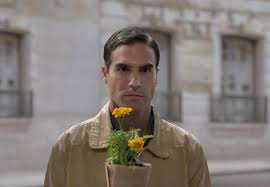
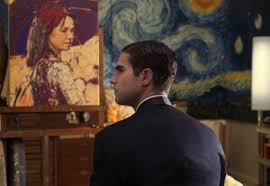
It often seems to me that when it comes to “on the spectrum” characters, the movies have never managed to progress beyond the Hugh Dancy/Rose Byrne Asperger’s romance “Adam,” which came out some 15 years ago. Screenwriters take liberties, making symptoms/behavioral quirks fit the contrivances of the plot, almost always showing themselves at the most convenient moment, shoved into the background much of the rest of the time.
But there’s a line in the new Argentine romance “Goyo” that echoes one I heard and reported from an “Asperger’s Wife” (support group member) I interviewed for a story about how “accurate” “Adam” was back in 2009.
“Have you never dated a man who never seems to lie?”
That doesn’t make this tone-shifting melodrama come off. But it does go a ways in explaining “how” people fall for someone who, for instance, counts the steps of every staircase he encounters, freezes-up or over-reacts to any change in routine, who’s afraid of the subway, leery of being touched and alarmed at the loud noises of any crowd, especially soccer games.
Argentine Nicolás Furtado of “The Big Love Picture” has the title role, a facts-filled/college-educated thirtysomething tour guide at Argentina’s National Museum of Art. If you need someone to deconstruct the South American masterpiece “The Return of Malón,” he’s your guy.
He lives in luxury with his concert pianist sister, Saula (Soledad Villamil) and occasionally hangs with his older brother Matute (Pablo Rago), and his routine includes daily swimming therapy with a “special needs” group that he avoids by holding his breath on the bottom of the pool.
But from the moment he spies “her,” cursing an unwieldy umbrella, her face bathed in the rain, Goyo has a new infatuation. It turns out Eva Montero (Nancy Dupláa) is new security guard at the museum. Goyo can’t stop staring at her.
He stalks her onto the subway, where he freaks out (he never rides the subway) and she freaks out over his creepy stare. But taking romantic advice from the crude, locker-room-talking Matute, he manages an apology and gets his shot at “getting to know” her. And hopefully, as he and Matute crudely and comically make clear, that’ll lead to something else new for Goyo — sex.
Veteran writer-director Marcos Carnevale has worked a LOT in South American TV, and that informs and hobbles his script, which veers from cloying and coarse to sensitive and brittle. Like a lot of TV folks making feature films, he’s overstuffed and cluttered his melodrama, tossing in spousal abuse, mommy issues, alcoholism and the blunt fact that the college-educated docent and the “much older”(not really) middle school drop-out guard have “nothing in common.”
But when Goyo — short for Gregorio Villaneuve — tells Eva Montero of what drew him to her, the way the “light” becomes “chrome yellow…like in Vincent’s paintings” when it hits her cheeks, we’re allowed to swoon, if only for a moment.
Matute’s “MILF” cracks and Saula’s constant boozy rehearsing and Goyo’s noting that the woman he always calls by her first and last name — “Eva Montero” — “Rain Man” style, “smiled 17 times and laughed eight times” on their first date provokes more than a little teeth-grinding.
But Dupláa (“The Retirement,” “10 Palomas”) is almost able to make us buy into this “connection,” showing us common sense reluctance in a mid-divorce mother of two flattered by the attentions of a young, handsome man, “weird” or not.
And when she sees the painting of her she’s started, well, who could resist?
The roiling emotions of love or at least infatuation are heavy-handedly “captured” for Goyo’s hallucinatory reaction to possible rejection. And Furtado and his English language counterpart (you can listen to this in Spanish, or dubbed into English) play Goyo in that standard “on the spectrum” monotone of film characterizations.
So anyone expecting this depiction of Asperger’s/”on the spectrum” autism to advance the medium will be sorely disappointed. The artistic milieu and tentative attempts at making a connection shine, but too much of what’s here is just genre cliches.

Rating: TV-MA, sex talk, profanity, alcoholism
Cast: Nicolás Furtado, Nancy Dupláa, Soledad Villamil and Pablo Rago.
Credits: Scripted and directed by Marcos Carvenale. A Netflix release.
Running time: 1:50
Jay Pharaoh and Jim Gaffigan are in the supporting cast of this Lionsgate farce about people learning exactly how many days they have left on this Earth, and making their love-life/future-life decisions based on that.
This is clumsy trailer that struggles to explain that concept and waits too long — with almost no laughs — to get to pairing up Hale with Gilchrist.
Could be cute, though, reinforcing that “live while you’re alive” ethos and all.
This one comes out Aug. 9.



That “magnificent” hulking, “talking, pratfall-taking sight gag that is Dave Bautista” didn’t get the lesson that maybe a violent action film pairing him with a little girl wasn’t the best idea after “My Spy.”
It wasn’t a box office hit, for STX and I’m damned if I can remember how I actually got to review it. Was it even released in the U.S.? Must have blown up on streaming.
But “Spy” Dave is back, with four-years-older teen Chloe Coleman, Ken Jeong and Ms. Vulgar Double Entendre Kristen Schaal for “My Spy: The Eternal City,” which MGM/Amazon picked up for streaming on Amazon Prime.
It’s a dull European travelogue that takes us to Venice, Tuscany, Austria, Florence, and Rome — sometimes only in “establishing shots” — and a thriller that climaxes in Rome with a spirited chase that puts Dave on a motorcycle hurtling through “The Eternal City.”
Little Sophie at the wheel?
“I’m taking driver’s ed soon!“
“In TWO YEARS.”
The plot — CIA spies led by Kim (Jeong) have tracked down Russian info on where 100 long-ago-lost “suitcase (nuclear) bombs” are hidden, and a bad guy (Flula Borg) takes that data from them.
Teen Sophie, years-into her “training” under “You’re not my Dad” J.J. (Bautista) gets entangled in this on a tour of Italy with her high school choir with her crush, Ryan (Billy Barrat) and nerdy Colin (Taejo K), who crushes on Sophie and thinks his dad (Jeong) is a pediatric nurse, and not the head of a counter-intel division at The Agency.
J.J.? With Chloe’s mom off with Doctors Without Borders (we assume) in Africa, he’s wrangled into chaperoning.
Can he handle the “raging hormones” and “poor impulse control” of the horny teens in his care, the head chaperone (Anna Faris) wants to know?
“Failing to prepare is preparing to fail” is still J.J.’s motto. Sophie? She’s trained in martial arts, knife-throwing and parkour for years. When somebody on their trip is kidnapped, she springs into action, “ready” or not.
Continue readingEddie vamps up this new take on the Robert Louis Stevenson story, with Scott Chambers, Lindsay Duncan, Robyn Cara and Jonathan Hyde (Why not?) in support.
Has anybody ever asked Eddie Izzard what he thinks of Ricky Gervais and David Chappelle? Just a thought.
August 2.


Even a casual Marx Brothers fan knows that the siblings made their best films for their first Hollywood studio, Paramount Pictures.
Already vaudeville veterans pushing past 40, they made their satiric masterpiece, “Duck Soup”(1933) and the wacky stage adaptations “The Cocoanuts” and “Animal Crackers,” their popularity building until peaking with “Horse Feathers” (1932), which was a smash and landed them on the cover of Time Magazine, all for Paramount.
The act, settling into Groucho, Chico and Harpo, gave up all that, and Paramount’s improvisation-friendly productions for bigger MGM paydays in the mid ’30s, and “A Night at the Opera,” their first film for Metro, was the only one regarded as among their best.
Even in this send-up of pretension, class, opera and the very musicals that the brothers flirted with making, one can feel the “madcap” slipping away as the banter slows and structure and sticking-to-the-script/watch-the-clock MGM “efficiency” weigh on them from the start.
But this Sam Wood musical comedy still produced the most iconic Marx Brothers sight gag, “The Stateroom Scene.” It has an ambitious dance number (not involving the brothers), romantic ballads and the trappings of MGM prestige in many a scene.
It presents Chico’s and Harpo’s musical interludes in a logical (for the Marxes) context, and showcases them beautifully, with Chico’s piano pranks performed, up-close, with an audience of children and Harpo playing a cross-eyed tour de force on the harp.
“Opera” also starts the regrettable process of moving Groucho’s greatest foil, Margaret Dumont, into the background as the love interest — singing actors Kitty Carlisle and Allan Jones — and their intrigues with a nastier, more famous singer (Walter Woolf King) and New York Opera director (Sig Ruman) are far more prominent.
But it plays, with veteran screenwriters George S. Kaufman and Morrie Riskind and a circus of uncredited gag writers assisting, leaning into the Brothers’ long-polished comic personas.
Continue reading
 Movie Nation