Movie Preview: Amy Adams, new mom, “Nightbitch”

Yeah, tell her “Happiness is a choice” one more time.

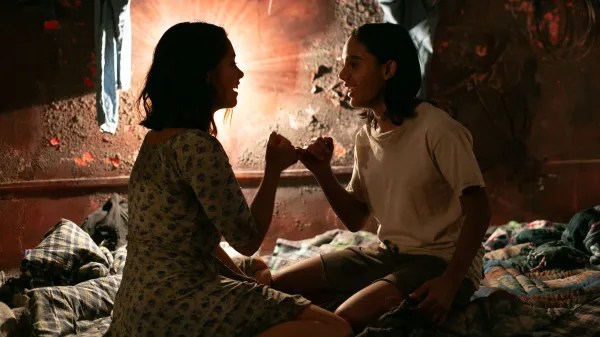
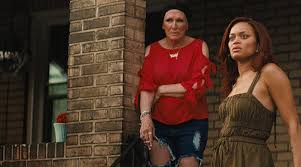
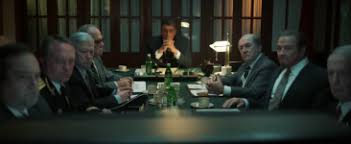
Scoot McNairy, Zoe Chao, and Jessica Harper are among the stars of this satiric Amy Adams comedy about a new mom who identifies with…dogs.

Marielle Heller — “A Beautiful Day in the Neighborhood,” “The Diary of a Teenage Girl” — directs this Dec. 6 release.

Aww, just in time for Christmas.

Posted in Reviews, previews, profiles and movie news | Comments Off on Movie Preview: Amy Adams, new mom, “Nightbitch”

Movie Review: There’s nothing musical…or particularly historical…about “The Ballad of Davy Crockett”

You have to be of a certain age to remember “The Ballad of Davy Crockett,” where the frontiersman “raised in the woods so he knew (“know’d”) every tree” is remembered in song because he “kilt him a b’ar when he was only three.”

It’s myth-building of the sort that the self-mythologizing, tall-tale-telling Tennessean might have endorsed himself.

There is no “ballad” in the indie historical drama titled “The Ballad of Davy Crockett.” There isn’t much in the way of myth, either. And as for history?

Well, as writer-director Derek Estlin Purvis parks Crockett in Washington with his hated foe Andrew Jackson endorsing the “Indian Removal Act” of 1830 (Crockett fought it from the start) calling for the “extinction” of Natives in “the “Continental Congress,” whilst his wife Polly (died 1815) turns sick and relies their two little boys to keep them alive back home in Tennessee, we know SOMEbody slept through history class.

Purvis has Jackson (Edward Finlay, a dead ringer) refer to “colonies” when “territories” is what they were called before admission to the Union. Purvis cast, according to IMDB, an actor to play Daniel Boone — the pioneer and the frontiersman never met, and if he’s in the final cut of the movie, I missed him .

One suspects our writer-director limited his historical research to a brief stop to gas up at the Davy Crockett Travel Center in Morristown, Tennessee, because a trip to the Davy Crockett Restaurant in Gatlinburg was, um, too far out of the way.

This tone deaf “Ballad” follows Davy’s urgent trek home when word of his wife’s illness reaches him in Washington, apparently BEFORE he was elected to Congress, as he decides to run in the film’s finale.

Davy, played with youthful vigor and not much presence by Brit-actor and “Chronicles of Narnia” alumnus William Moseley, loses his horse when wolves attack and magically finds another, who doesn’t know Davy shot his last ride and listens when Davy assures him “You will find me.”

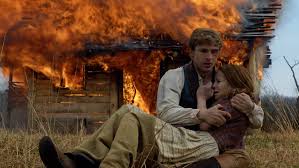
He intervenes in a tribal squabble aimed at killing one Native man (Gray Wolf Herrera) and arrives too late to keep his cabin from being burned, his sick but defiant wife (Valerie Jane Parker) turned out and his little boys (Wyatt Parker and Nico Tirozzi) seized for indentured servitude by a British Great Northwest Fur Trading Company boss.

Um, “‘Great Northwest ‘where?”

Caleb, in top hat, fur coat and ill temper, is played by the film’s lone saving grace, the great Colm Meaney.

“I will have my pound of flesh!”

“Ballad” is pretty bad. But not everything else is rubbish. The locations are scenic and the rustic touches authentic enough, if a tad tidy for the grubby, unwashed erea.

The fights start out realistic and lurch into “tall tale” exploits.

But again, there’s no jaunty/folksy “music” to this ballad, precious little myth and damned near nothing that could pass for “fun” or accurate history.

No ballad? No coonskin cap? No Davy Crockett, even if he refers to himself as “King of the Wild Frontier.”

While one doffs one’s (not coonskin) hat at anyone trying to make a frontier thriller on an indie budget, this “Ballad” borders on abominable.

Rating:unrated, violence

Cast: William Mosely, Valerie Jane Parker, Gray Wolf Herrera, Wyatt Parker, Edward Finlay and Colm Meaney

Credits: Scripted and directed by Derek Estlin Purvis. An Amazon Prime release.

Running time: 1:37

Posted in Reviews, previews, profiles and movie news | Comments Off on Movie Review: There’s nothing musical…or particularly historical…about “The Ballad of Davy Crockett”

Movie Review: Kane crackles and Schwartzman shakes the sads “Between the Temples”

An amusing pixie since birth, Carol Kane is a comic life force and as amusing in person as she is in her many off-the-wall characters — from “Taxi” to “The Princess Bride,” “The Unbreakable Kimmy Schmidt” and beyond.

The “Hester Street” Oscar nominee was my first screen star interview, and in the flesh, she was and apparently remains a hoot. But boy, I’d hate to cross that broad.

We get a little of both Kanes in “Between the Temples,” a laugh-out-loud September-December romance that co-stars her with Jason Schwartzman.

It’s a screwy look at Jewish traditions and “flexible” mores in the sad story of a grieving, morose temple cantor (Torah singer) who “cannot sing.” Not anymore.

Finding your life spark in a much older woman, one who was your elementary school music teacher several decades before? That’s different.

Ben Gottlieb lost his celebrated novelist wife a year ago, and he’s been a wreck ever since. His congregation and his rabbi (“SNL” and “Triumph the Insult Comic Dog” star Robert Smigel) have been very understanding.

His two moms (Dolly De Leon, Caroline Aaron) take him in, try to buck him up and even sign him up for J-dating. That’s not enough to keep him from lying down in traffic, or making his first trek to a bar, where he discovers mudslides and gets into a fight because he thinks someone’s mocking him.

That’s where he’s comforted by the barfly who likes to sing karaoke in the back. It takes Ben a while to recall the music teacher who changed his life. He got “all A’s” from her, and that kept him singing into adulthood and a career.

“It was music class,” Mrs. O’Connor (Kane) grouses. “EVERYbody got A’s.”

She makes an effort to drive him home, and by going first to the house he used to share with his wife, she figures out his story. And next thing he knows, the cantor who cannot sing is visited in his bar mitvah/bat mitzvah class at Temple Sinai by an adult named O’Connor who wants her bat mitzvah.

Turns out “I was named Kessler before I was married. You can’t get much more Jewish than that.”

Ben resists, but his rabbi is all about “Jews in the pews” and donations and what not. They’ll be flexible. She’ll study with Ben. And if 13 months is too long a time to learn to sing her Torah portion,  we’ll work that out, too.

Kane and Schwartzman have an easy chemistry that never seems exactly romantic. The idea she throws out that “I taught you for four years, now you taught me” is just a cover. She’s helping him get over something, taking him back to his elementary school “belly breathing” days, giving him a sympathetic ear even as the rabbi and his pushier Filipino mom (De Leon) would LOVE to set him up with the rabbi’s “mess” of an actress-daughter, Gabby (Madeline Weinstein of “Alex Strangelove”).

“Between the Temples” is funny, from its punny title to adorable scenes such as Ben’s crisis-of-faith visit to a Catholic priest — “Jews don’t have a heaven or a hell. Just upstate New York,” where the movie is set.

The same seen-it-all bartender (Keith Poulson) ordains Ben’s favorite chocolate-flavored drink (mudslides) at the town bar, and at The Chained Duck, the best restaurant in Sefridge, New York (actually Kingston).

The rabbi’s general irreverence extends to what he uses for putting practice in his office — a Shofar. And yarmulkes are punchlines, comic props and conclusions for that rabbi to jump to as his Hepburn-imitating daughter makes the most inappropriate visit to a cemetery since Corporal Bone Spurs.

I loved the down-market world writer-director Nathan Silver creates, Jews talking with their mouths full, until one learns that burger isn’t “kosher,” which is news to a droll “friend of the tribe” local Gentile who owns the restaurant. The rabbi is “flexible” because every dollar counts and he’s supporting a failed-actress kid, a wife fond of plastic surgery and driving a late model Jeep Liberty.

Silver’s fond of close-ups, and he’s got a cast that makes the most of them.

Schwartzman is settling into middle age as a pleasant Everyschlub, and what his performance here lacks in despair he compensates with simple reactions or physical humor that he simply shrugs off at this stage of his career.

And Kane is a wonder, perhaps this summer’s surest Oscar nomination, giving us a foul-mouthed version of Ruth Gordon in “Harold & Maude,” an older woman of uncertain health just full of life, and hoping to pass that on to a student still in her thrall. Because he got all A’s in her class.

A couple of quibbles. The filmmakers insist on having Ben set up with assorted beautiful 20somethings — Weinstein, Annie Hamilton, Pauline Chalamet — all of whom seem into this Upstate New York temple cantor. Is that a catnip-to-the-ladies gig? Schwartzman is well over 40, and showing the miles. etc. I mean, a morose, sloppy shaving, low-paid temple assistant whose duties include caddying for the rabbi? He’s a catch? Come on, now.

The relationship with Mrs. O’Connor develops organically and pauses at a sort of pre-determined point. Anything that suggests a big leap into love and romance is introduced abruptly. I didn’t buy it.

But Silver’s given us a wry, wise and whimsical movie who cutting edges are somewhat removed from the lead characters, whose wit involves both leaning into Jewish stereotypes, and upending them.

And Kane, she of the querolous screech of a voice — which can be very pleasant when she uses it in song — just waltzes off with this movie, a teacher and compassionate older woman not shy about giving a student one last lesson, one that’ll stick “Between the Temples.”

Rating: R, bar punch violence, profanity, sexual situations

Cast: Jason Schwartzman, Carol Kane, Dolly De Leon, Caroline Aaron, Madeline Weinstein and Robert Smigel

Credits:Directed by Nathan Silver, scrupted by Nathan Silver and C. Mason Wells. A Sony Pictures Classics release.

Running time: 1:52

Posted in Reviews, previews, profiles and movie news | Comments Off on Movie Review: Kane crackles and Schwartzman shakes the sads “Between the Temples”

Movie Review: Mixed Messaging and Suspended Suspense hobble Child Trafficking tale “City of Dreams”

With the discredited blockbuster sham “Sound of Freedom” still fresh on everyone’s mind, critics can be excused for steering clear “City of Dreams,” another human trafficking tale, this one about Mexican kids lured to America only to be trapped in sweatshops, coal mines, meat packing plants and sex work.

Writer-director Mohit Ramchandani (“The Lost Tribe”) wisely kept his story and his “white savior” character, a cop (Jason Patric) fictional in a tale that suggests the police and prosecutors turn a blind eye when it comes to the grey market “cheap clothing” industry that props up fashion and much of the world’s economy.

While the film gets quasi-bipartisan political in its closing credits, and Republican hustler Vivek Ramaswamy got behind it as a producer, cynically hoping to hype “the border crisis,” all you really need to know about its agenda is in the last minute title change it underwent before release.

It was called “Wall Street Silver,” but we can’t offend the fat cats underwriting efforts to undo child labor laws, can we?

Still, Ramchandani delivers a dazzling third act chase, on foot, through L.A.’s sweatshop district, a nervy, hand-held sprint that finally gets this static story up on its feet. That’s followed by a breathless finale that frustrates in all the right cinematic ways.

His movie starts slow and settles into ponderous before this. But Ramchandani is to be commended for at least trying to give his villains a point of view — the South of the Border ones were lured here with the same promises and “dream,” only to be trapped torturing and enslaving children. If you want to buy that excuse.

Ari Lopez stars as Jesús, a mute tween with soccer dreams, which his widowed father indulges by arranging to send him north to what the child expects to be an L.A. Cosmos soccer camp.

Dad’s parting words are about about the child’s mother dying in childbirth, the shaman who attended (and lit 1464 candles) and made predictions and warnings. The child will be haunted by images of this demonic figure in Aztec garb for the rest of his days.

The gay coyote Rodrigo (Francisco Denis) loads the kid into his Mustang convertible and hustles him north — not without expenses, and not without a police stop (Patric and Adina Eady play partners) that raises suspicions just a couple of miles from the child’s destination.

The boy’s passport and the fact that he’s A) mute and B) drugged give the officer no grounds to hold anybody. But Sgt. Stevens smells a child smuggling rat.

The sweatshop is run by El Jefe (Alfredo Castro) and managed by hair-triggered young punk Cesar (Andrés Delgado). There are overlords over them. And every so often, a mysterious beauty (Paulina Gaitan) shows up to pluck prettier children from their ranks for grooming in sex work.

But Sgt. Stevens can’t get the idea that the creep in the Mustang was taking that child to his doom.

As Jesús struggles to adjust to the work, to co-workers still harboring the illusion that El Jefe’s promise of “promotion” if they hit their quotas, to the lashings, beatings and threats, he meets Elena (Renata Vaca) and falls for her.

That’s a lot to work in, with Jesús sneaking about about getting a taste of the whole sordid “operation” and Stevens getting into trouble at work for hassling L.A.’s underground slave-labor economy.

Ramchandani doesn’t so much guide us through all this as get through it. His film lumbers along in lurches, with misguided detours (A love story? Really?) and a determined effort to invest us in the boy’s fate and frustrate the hell out of us over that.

That pays off. Eventually.

And as it does, we go further up the food chain to see the Russian-backed garment makers (Samm Levine plays the scion of one such sweatshopworks), the pressures on those down the ladder and the efforts by police higher-ups to leave this criminally irresponsible industry alone.

The kid is good, Patric is properly stoic and assorted heavies (Diego Calva as a cutthroat sweatshop sewer stands out) make good impressions.

But the flashbacks to the boy’s soccer dreams and shaman nightmares become more distractions than plot-advancing background color.

There’s no “border crisis” messaging, just a closing political montage showing all the figures who have spoken out about this problem, most of them avoiding the “cheap food/coal/clothes” engine driving it.

Nobody tells an obvious whopper, nobody comes out and lies about which political party is more concerned about this “crisis” than the other, or which one actually is looking for solutions..

That makes for a factually defensible movie, but also a slow-footed wallow in abuse, exploitation and violence that only comes to life for the third act.

Rating: R, graphic violence, nudity, sex, profanity

Cast: Ari Lopez, Diego Calva, Renata Vaca, Paulina Gaitan, Francisco Denis, Samm Levine,
Andrés Delgado, Adina Eady, Alfredo Castro and Jason Patric

Credits: Scripted and directed by Mohit Ramchandani. A Roadside Attractions release.

Running time:

Posted in Reviews, previews, profiles and movie news | Comments Off on Movie Review: Mixed Messaging and Suspended Suspense hobble Child Trafficking tale “City of Dreams”

Movie Review: An Abusive Dad Should Know Better than to Raise Three Sons to be Hunters — “Betrayal”

There’s usually a “took me right out of the movie” moment in a thriller that might have worked, but doesn’t. And there are a few of those in the Scottish tale of an abusive father and his three vengeful sons bent on “Betrayal.”

Their mother has recently died, and John, Henry and Vince the youngest (Brian Vernel, Daniel Portman and Calum Ross) find themselves in the woods, stalking deer with their dad.

Strange way to pay tribute to dead mum. But when a couple of sons fail to take a shot at a buck they spy in the trees, we and their bullying dad (Paul Higgins, perfectly loathesome) figure it out.

The deer is tied to a tree. There’s a grave already shoveled out, with shovels under the leaves to finish the job. When one brother finally takes the shot — at Dad — the game is up. They’ve shot the tyrant, avenging their long-suffering mother.

“We all did it. All of us.“

As a reward, there’s “a key” to the old man’s safe. But paranoia in this sort of conspiracy is a given. Even siblings who’ve conspired to kill “an animal” together are bound to mistrust one another.

And the kid, Vince? He is pretty obviously the weakest link, “Dad’s favorite” and all. Can Vince keep their secret, keep from giving away the careful plans they made and carried out?

We’ve seen their grave prep, and the way they shut off the motor on their father’s Range Rover and pushed it back to its parking place. What we didn’t see, for obvious reasons, is how they caught and tied up a huge buck.

Then there’s the matter of that “key.” Of all the ways to put that key in that shallow grave with their father’s body, writer-director Rodger Griffiths summons up the stupidest.

And while flashbacks explain their conspiracy and set up the troubling alliances within the alliance, and unravel some motivations, Griffiths, who adapted his short film “Take the Shot” for this, stumbles into a couple of other plot holes along the way.

Because while we know, from the moment he goes in the ground, that the father isn’t dead and that they’ll be digging that grave up to discover that somehow he has survived. Or that something other worldly took-over for him.

Those animal carcasses and random shots they experience in the woods? They might be from that just-wounded father, from one of the brothers or an accomplice, or from a phantom.

The sibling dynamic that Portman, playing the most “like Dad” of the three brothers, Vernel and Ross act-out are engrossing and properly chilling.

The flashbacks are well-conceived and executed, and the complications — Do other hunters they meet “know?” — may be pro forma but at least pass the “logical” smell test.

Even serving up a finale we see coming an hour before it arrives is forgivable, or at least as tolerable as the sometimes indecipherable Scots accents and the “Is it supernatural horror or a simple thriller?” indecision.

But those other stumbles early on seal the fate of this “Betrayal,” a thriller with simple primal plot undone by a leaky script and a loss of nerve.

Rating: R, graphic violence

Cast: Brian Vernel, Daniel Portman, Calum Ross and Paul Higgins, with Anita Vitesse James Harkness and Joanne Thomson

Credits:Directed by Rodger Griffiths, scripted by Rodger Griffiths and Robert Drummond. A Saban Films release.

Running time: 1:31

Posted in Reviews, previews, profiles and movie news | Comments Off on Movie Review: An Abusive Dad Should Know Better than to Raise Three Sons to be Hunters — “Betrayal”

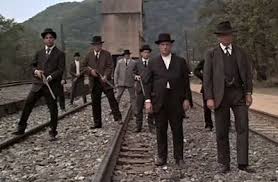
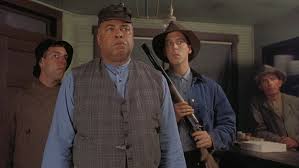
Classic Film Review: A Masterpiece that reminds us why there is a Labor Day — “Matewan”(1987)

“Matewan” is a classic film that looms large in the memory and does not disappoint upon the second, third or fifth viewing.

This may be the greatest indie epic ever, a documentary-real historical film of scope, high stakes and great performances, with future Oscar contenders first gaining notice in its cast, some of the most hissable villains ever and history so forgotten and so very important it’s probably already banned in Florida.

As a child of the Textile Town South who still gets choked-up over “Norma Rae,” it’s this movie from the mountainous coal country of my undergrad years that remains my pick for THE classic to watch over Labor Day.

Sayles made more iconic films — “Return of the Secaucus Seven,” “Lianna” — and more popular ones (“Eight Men Out,” “Lone Star”). But this movie about the origins of The Mingo County War, a touchstone moment in the history of Americans fighting back and organizing to get a fair shake from murderously predatory ownership, has to be his masterpiece.

It’s stunning to think about, miners of various races and national origins joining hands to secure a living wage, freedom from “owe my soul to the company store” and working conditions that weren’t guaranteed to kill them. Shortly after the events in Sayles’ movie, sheriff’s deputies and hired gunmen were joined by the state National Guard and Federal troops who machine-gunned and bombed miners from WWI era aircraft — Americans striking for a better life.

Sayles tells the story of efforts to organize men in railroad towns so far up in the mountains “You have to pipe the sunshine in.” His movie has “Norma Rae” elements, strike breakers, union-busting goons and turncoats, and a climax that is the “Gunfight at the OK Corral” of the American labor movement.

His tale involves a Hatfield from Hatfield & McCoy country and mountaineer righteousness and prejudices, bravery and pitiless mine owner-financed thuggery, with the tug of war over miner’s souls even extending to the pulpit, where competing interpretations of Biblical parables served both sides.

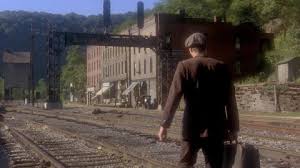
Sayles called on two-time Oscar winning cinematographer Haskell Wexler (“Bound for Glory,” “Who’s Afraid of Virginia Woolf”) and locations in Thurmond, West Virginia to take us back to 1920 Matewan, an area and an era not far removed from the great timber clear-cutting exploitation, right in the middle of the coal boom that miners could hardly be said to have shared in.

I’ve been to the real Matewan, which the intervening century hasn’t changed all that much, and production designer Nora Chavooshian, art director Dan Bishop and Wexler could not have more perfectly recreated that remote hamlet along the Tug Fork, and that time.

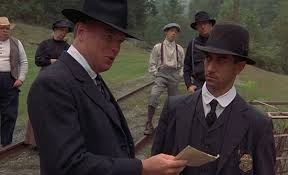
Future Oscar winner Chris Cooper made his big screen debut as Joe Kenehan, labor organizer and pacifist who went to prison rather than fight in World War I. Joe keeps quiet on the train he rides in on, which is hauling in strike-breaking Black scabs from Alabama, and which stops short of town so that would-be strikers could “persuade” them to turn back — violence enabled by pro-union railroad folks, we figure.

James Earl Jones plays Few Clothes Johnson, elder statesman among the imported unknowing strike-breakers. He doesn’t take kindly to the label “scab,” or the idea of being tricked into becoming one by Stone Mountain Coal.

They arrive in a town roiled by an economic downturn in jobs which, because of one’s “contract” with the company, all your pay went to company housing, company medical care and “the company store.”

Mary McDonnell, a few years away from her “Passion Fish” and “Dances with Wolves” Oscar nominations, is the widowed boarding house keeper, leery of the outside agitator but contemptuous of the company that killed her husband. Her teen son (Will Oldham) is a fifteen-year-old miner and lay preacher who is coming around to the idea of a union.

Sayles discovery and longtime collaborator David Strathairn (“L.A. Confidential,” “Goodnight and Good Luck”) is long, lean and tough town police chief Sid Hatfield, who makes us wonder which side of the coming fracus he’ll be on.

“I take care of my people,” he warns Kenehan. “You bring ’em trouble, and you’re a dead man. Sleep tight, Kenehan.”

Locals are played by veteran character actor Bob Gunton, Josh Mostel (as the mayor) and Ken Jenkins, whose greatest claim to fame came wearing a lab coat and telling his underlings on TV’s “Scrubs” “What has two thumbs and doesn’t give a crap? Bob Kelso!” Here, he’s a bloody-minded lead-organizer among the local miners, and damned good in the part.

And TV “Emergency” medic Kevin Tighe reinvented himself and relaunched his career as the smirking, unscrupulous and insulting Baldwin-Felts hired detective/goon Hickey, one of the greatest movie villains ever.

Hickey’s sneering reply to the pretty widow (Nancy Mette) who flirts and gets the name of every single male to get off the train is as cruel as it gets.

“You are the best looking mountain trash I’ve seen in a long time!” Hickey cackles in front of his partner (Gordon Clapp).

Writer-director and sometime actor Sayles and his life partner/producing partner and actress Maggie Renzi fill two juicy supporting parts. He’s a fire and brimstone and union-busting pastor, she’s a miner’s wife who speaks only Italian, lots and lots of Italian.

Organizer Joe must make contacts among the factions and make speeches, trying to mend fences and not get himself murdered by the Baldwin-Felts thugs. If only he can get the locals to stop using slurs and hating the Black and Italian laborers brought in, they can find common cause.

“They got you fightin’ white against colored, native against foreign, hollow against hollow, when you know there ain’t but two sides in this world – them that work and them that don’t. You work, they don’t. That’s all you get to know about the enemy.”

I’ve always assumed that casting Jones — the biggest name in the cast — in “Matewan” was the tipping point that got the film financed and made, but I can’t recall ever asking Sayles that the few times I’ve interviewed him. Jones brings grand gravitas and that larger than life sonorous voice and laugh to his unsentimental Alabama miner with a conscience.

But it’s hard to imagine this script not making it before cameras. Sayles was a prolific and popular screenwriter outside of his writing-directing efforts. Here, the simple but perfectly-executed story arc has built-in treachery that creates teeth-gritting suspense to launch the third act. And the “Battle of Matewan,” when it comes, is shocking, jolting and sad.

Sayles sparingly uses an authentic old mountain man (J.K. Kent Lilly) as eyewitness/voice-over narrator to double down on the film’s sense of authenticity.

“Hit was hard times, and hit was hungry times” the old timer recalls in Mountaineer speak.

Strathairn has never played a tougher character, hero or villain, and Sayles gave him lines appropriate for a legendary figure like Sid Hatfield. His character’s met the boss of this “detective” agency, Felts, he tells the two menacing goons staring him down.

“I wouldn’t piss on him if his heart was on fire.”

The labels that robber barons, oligarchs and their lemmings lay on union folks — “socialist,” “Bolshevist,” “Dirty Red” — are as familiar today at they were in 1920 or 1987, when “Matewan” came out.

That underscores how out of step Sayles and his film were, then and now. Boldly released in the middle of the Reagan/Bush I “Greed is Good,” union-busting era, “Matewan” was never going to be a blockbuster. With unions making a comeback and the political tide turning, perhaps the time to fully appreciate this American masterpiece, a perfectly-crafted, beautifully-acted American indie cinema “Potemkin,” will be this Labor Day, and Labor Days to come.

star

Rating: PG-13, violence, racial and ethnic slurs, profanity

Cast: Chris Cooper, Mary McDonnell, David Strathairn, Kevin Tighe, Ken Jenkins, Will Oldham, Tom Wright, Bob Gunton, Joe Grifasi and James Earl Jones.

Credits: Scripted and directed by John Sayles. A Cinecom/MGM Video release on Criterion, Amazon Prime, etc.

Runing time: 2:15

Posted in Reviews, previews, profiles and movie news | Comments Off on Classic Film Review: A Masterpiece that reminds us why there is a Labor Day — “Matewan”(1987)

Netflixable? Lee Daniels’ “The Deliverance” is a parody of Horror in the ‘Hood

Lee Daniels’ “The Deliverance” is lumbering and lurid long before it shows its African American-styled exorcism hand and turns ludicrous.

It’s a sordid wallow in working poor Black poverty, and the presence of Glenn Close as the white matriarch of this struggling family invites comparison to Netflix’s “Hillbilly Elegy.” If anything, this is even more embarassing for her than that J.D. Vance-written abortion.

I could have gone my whole life without hearing the Always Oscar’s Bridesmaid Close appropriate an affected, half-drawled oversexed and way-over-60 white-woman-in-Black-culture accent, playing the abusive mother of an abusive alcoholic (Andra Day).

“Girl, I’m just tryin’ to get you t’live a clean life.“

“The Deliverance” never shakes that cringy “Hood-billy Elegy” mantle, even as it descends into something that merits its “horror” film label.

Day, last seen in “The United States vs. Billie Holiday,” is Ebony, struggling to house and feed and clothe two teens (played by Demi Singleton and Caleb McLaughlin) and a younger son, Dre (Anthony B. Jenkins) in 2011 Pittsburgh.

It’s worth avoiding the word “raise” in describing what she does for these children. Because while she might indulge her “Little Basquiat” in helping him paint a bedroom wall mural in their latest rental house, Ebony will never win mother of the year.

She’s a foul-mouthed, foul-tempered sometime drunk who took in her white mother Alberta (Close) to help them cover expenses. A social worker, played by Mo’Nique, who won an Oscar for Daniels’ “Precious,” is “on my ass” because Ebony & Fam are constantly on the move as she tries to keep her distance from “the system.”

But her kids get bruised. A lot. It’s just that in this new house, it may not be Ebony doing all the bruising.

She sees her littlest boy exhibit simptoms of trances, as if he’s possessed. She experiences a bit of this demonic possession herself. And then all three kids have meltdowns at school.

The medical profession is baffled. But maybe mother ‘Berta’s “apostle” preacher (Aunjanue Ellis-Taylor), who reaches out and explains the concept of “deliverance” in “It’s NOT an exorcism” (actually, it is) terms.

Day is a solid presence at the heart of the story, and the kids aren’t bad. Mo’Nique is the stand-out supporting player, but Close manages something she’s never come close to in her long career. She embarasses herself.

Daniels, who co-wrote this “inspired by true events” script, tries to one-up “The Exorcist” in at least one regard — profanity. He lays it on thick in dialogue laced with f-bombs and worse (when the “exorcism” begins).

“Clean up your f—–g mouth, Shante,” Day’s Ebony shrieks at one cussing kid.

Daniels has made a couple of half-decent dramas (“The Butler,” “The United States vs. Billie Holiday”) since his “Precious” breakthrough. But he’s always a filmmaker who tends towards the tawdry, the overwrought and the soapy, and when he goes wrong — “Shadowboxer,” “The Paperboy” — his pictures tumble into tacky, cliche ridden camp.

“The Deliverance” has plenty of examples of those excesses, as well as evidence that Daniels is lost in this genre. A horror movie with a message about Black poverty and parenting might seem ambitious, and he makes sure to be inclusive, including a transgender character, throwing in a swipe about white women who prefer Black men (and Black women’s loathing of such women) and such.

But for a guy who jumped straight into putting his name before the title of his films, Lee Daniels is still too ham-fisted and clumsy to make these down-market melodramas come off.

And he’s got no clue about building suspense and delivering shocks.

If Lee Daniels is not as embarassed as Glenn Close probably is by this, he ought to be.

Rating: R, violence, alcohol abuse, graphic scatological content, constant profanity

Cast: Andra Day, Glenn Close, Anthony B. Jenkins, Caleb McLaughlin, Omar Epps, Demi Singleton, Lawrence Washington, Aunjanue Ellis-Taylor and Mo’Nique.

Credits: Directed by Lee Daniels, scripted by David Coggeshall, Elijah Bynum and Lee Daniels. A Netflix release.

Running time: 1:53

Posted in Reviews, previews, profiles and movie news | 2 Comments

Movie Preview: Pre WWII Germans wrestle over “The Universal Theory”

A Sinister slice of between-the-World Wars sci-fi about German scientists,a ski lodge, jealousy, murder and their version of “The Theory of Everything.”

“The Universal Theory” isn’t history, but a thriller about Big Science, Evil Schemes and such.

Black and white, performed mostly in German, the trailer labels it neo-noir, “Nazi era David Lynch” in feel.

Sept. 27, Oscilloscope Laboratories unleashes this one.

Posted in Reviews, previews, profiles and movie news | Comments Off on Movie Preview: Pre WWII Germans wrestle over “The Universal Theory”

Movie Review: An LA Riots heist goes fatally wrong in “1992”

Lionsgate finally found a place for the 2022 thriller “1992” to be released, the last weekend of summer, traditionally a dumping ground for films that can’t find a theatrical home.

But that allows this solid if unsurprising Tyrese Gibson star vehicle a moment in the sun, and gives his late co-star Ray Liotta, who died shortly after this film was completed, a flinty curtail call.

Few actors are better at playing “old school” and “gangster” hard than Gibson, cast here as an ex-con trying to raise his troubled teen, only to have the Rodney King Verdict riots and a mid-riot murderous armed robbery at the factory where he works hurl him back into the violent life he’s tried to escape.

And nobody was a better bad guy than Liotta, a blue-eyed fury who made malevolence his brand in a career that ran from “Something Wild” to “Goodfellas” to “Cocaine Bear.”

Director and co-writer Ariel Vromen returns to something closer to his “Iceman” form with this heist-gone-wrong variation on a theme from “Trespass.”

It’s the end of April, 1992. Los Angeles, California and America are bracing for a Simi Valley verdict in the case of cops, caught on video beating up an unarmed Black motorist named Rodney King.

Gibson plays Mercer “Merc” Bey, whose “O.G. Merc” keychain is the only reminder he allows himself of his former life. The gang banger is six months out of jail, with temporary custody of his teen son Antoine (Christopher Ammanuel), which is a challenge.

“You’re a boy that I’m tryin’ to raise to be a MAN.”

With the bubbling cauldron that tells all that a riot might be on the horizon, Antoine could go either way.

Scott Eastwood is Reagan, a breaking-and-entering specialist who has been trying to sell his little brother Dennis (Dylan Arnold) and father Lowell (Liotta) on a catalytic converter factory heist that is “out of our league” with “too much security” for them to attempt, the old man decides.

But April 29, 1992, all that changes. A verdict comes in (summed up in TV coverage from the day). A jury lets the abusive cops go. The heist — of platinum ingots used to make converters — is on.

“Turns out, all we needed was 12 racist mother—-ers out in Simi Valley,” they crow, the script’s best line.

The robbery of the nearly-empty factory goes deathly wrong. And when Merc manages to get his kid to the supposed “safety” of his workplace, it goes completely off the rails. Two hardened gangster patriarchs face off in a battle of wits and will.

The best scenes in “1992” establish Merc’s bonafides as a tough man trying to be righteous — stepping up to stop intimidation at a Korean-owned bodega, letting former gang brothers know he’s not about that any more.

Liotta’s steely “My word is law” dictatorship over “the fruit of my loins” is implicit, with older son Reagan bristling at his father’s limitations and younger son Dylan cowed into following orders.

The script and Eastwood’s performance of it soften his character into a son ready to rebel against the old man, even in the middle of the job.

The riots are well presented — real footage and recreations — but it’s more a TV coverage “presentational” experience than a harrowing and immersive one.

Attempts to have the gang mirror the racial attitudes of the “all white” Simi Valley jury feel strained and half-worked-out. The racism and police aggression that sparked the riots is nicely suggested in a couple of tense scenes mid-riot, including a humiliating traffic stop.

The action beats feature brawls and shoot-outs are overty-designed to cut the odds (gang of six vs. father-and-son), with a chase or two thrown in and a grim finale struggles to summon up “Treasure of the Sierra Madre” and “Trespass” echoes.

Gibson and Liotta are magnetic, but the picture feels rushed and unfinished in places — blown lines, under-developed relationships, etc.

But even straining to get to the label “solid,” “1992” delivers on the two things its intent and delayed release promise. It’s a Gibson showcase and a Liotta curtain call worth seeing, shortcomings be damned.

Rating: R, bloody violence, profanity

Cast: Tyrese Gibson, Scott Eastwood, Christopher Ammanuel, Michael Beasley, Oleg Taktarov, Ori Pfeffer and Ray Liotta.

Credits: Directed by Ariel Vromen, scripted by Sascha Penn and Ariel Vromen. A Lionsgate release.

Running time: 1:36

Posted in Reviews, previews, profiles and movie news | Comments Off on Movie Review: An LA Riots heist goes fatally wrong in “1992”

Movie Review: “Reagan” gets another gloss-over in a Conservative Comfort Food Biopic

Movies likes “Reagan,” a new screen hagiography of actor turned politician and conservative icon Ronald Reagan, exist in the sort of alternative reality that George Orwell warned us about.

It’s a sanitized, whitewashed love letter to “The Man who Brought Down the Soviet Union,” President “Mister Gorbachev, tear down this wall.”

Serious scholarship on Reagan is thin, seemingly by fiat, and biographies that seek to lay out a “warts and all” portrait of the beloved but scandalized idealogue whose missteps were as epic as his achievements, and whose dementia was undeniable years before he left office, are shouted down by zealots who still insist St. Ron should be added to Mount Rushmore.

One respected biographer apologized for reporting “There is no ‘there’ there” in the actor’s life, an empty suit/figurehead, a man of all-surface traits, an image with narrow focus and whose infamous napping, insensititivity, inattention to details and disregard for the law were papered over with scripted jokes and anecdotes he repeated for decades.

That critical view of Reagan during his presidency was memorably sent-up by “Saturday Night Live,” with Dan Aykroyd playing Reagan as a micromanaging “mastermind,” flying in the face of the widely reported truth of the day.

And when CBS tried to make a mini-series about “The Reagans,” conservatives attacked it over its depiction of his incompetent response to the AIDS crisis. The series was compromised, with any attempt at a warts and all” portrait watered down, and eventually dumped onto paid cable.

For conservatives, Reagan has become Muhammad, the Prophet whose name no non-believer ever dare utter.

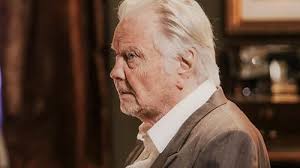
But that’s the “Reagan” of this new movie, a flattering-to-the-point-of-fawning rewriting of history from the director of “Soul Surfer” and starring Dennis Quaid and Penelope Ann Miller, with Oscar-winner-turned-crank Jon Voight and assorted other lesser lights of conservative activist cinema (Kevin Sorbo, Robert Davi).

While it’s useful in reminding us of a time when Republicans made Soviet-hating/Russia-mistrusting their brand, their idealogy and their passion, long before taking them on as political allies and election collaboraters, “Reagan” is a bad movie — a choppy spin on “Reagan’s Greatest Hits,” a highlight reel that doesn’t so much get us closer to the man as serve up warmed-over agitprop that faithful want to believe about him.

Howard Klausner’s script, based on a literary hagiography “The Crusader” by Paul Kengor (Try and find a serious review of that. Good luck.), bounces back and forth in time, from childhood and Hollywood Screen Actor’s Guild activism to the politics that replaced the faded film career.

It’s a story framed by the view his “enemies” allegedly take of Reagan, a “Patton” device of having an aged Russian expert (Russian-accented Voight) explain to a young Putin acolyte the man who did so much harm to “the Motherland,” the U.S. president who “denied us (Russia) our rightful place in the world.”

Voight’s retired comrade claims the KGB were warily watching Reagan from the 1940s, notes how studio chief Harry Warner (Kevin Dillon) tried to enlist Reagan near his peak stardom to “break” the unions, and over-simplifies the union climate of 1945 before noting Reagan became an FBI informant back then.

We track a marriage to Jane Wyman (Mena Suvari) whom the film smears by claiming she dismissed Reagan’s union activities, and who finally split from his as his war-augmented career (his poor eyesight kept him from combat service, not mentioned) went down the toilet after VJ Day.

And we see the odd “courtship” of Nancy Davis (Miller), who needs Reagan’s help escaping the Hollywood Blacklist, which he turns into a quid pro quo dinner and relationship that she partnered all the way to the White House.

“Reagan” isn’t without humor, capturing the “career-ending” Vegas stage act that saw him shilling for Pabst Blue Ribbon beer while glossing past the TV series that kept him relevent. And the only way to regard the death throes of the Soviet “Evil Empire,” with its succession of very old, sick comrades dying off as Reagan was trying to “bankrupt” them by starting a new arms race is in a comical montage of funerals.

The anecdote-centered portrait here never gets past the Aykroyd spin of Reagan as “mastermind” and “prophet” who oversaw America’s victory in the Cold War. It ignores his singularly disastrous energy policites, AIDS, union-busting and the media deregulation and tax “reforms” that battered the middle and working classes while ensuring they’d be bombarded with “news” that flattered their prejudices. It rewrites his landslide re-election by overplaying the set-up “my opponent’s inexperience” scripted quip he delivered against Walter Mondale in a debate.

The characters portrayed here are whittled down to caricatures of Reagan staff, confidantes and Soviet ogres. Lesley Anne Down plays Margaret Thatcher, with Dan Hedaya a gregarious “fellow Irishman” Democratic Speaker of the House Tip O’Neill and a look-alike is glimpsed as Gen. Colin Powell, because efforts to whitewash Reagan’s attitudes on race was a non-starter for true believers.

Miller’s Nancy has more shades, suggesting the careerist of Nancy “rumors,” a devoted defender of her husband’s image and health, with nary a hint of her AIDS hypocrisy (the Reagans didn’t acknowledge the peril until Hollywood friends started dying) or weird obsession with astrology.

Quaid’s impersonation is solid, and makes one wish he’d been given the chance to take on a more nuanced version of the title character. He could easily flesh-out a flawed and ambitious, embittered and opportunistic Reagan, an intellectually-limited political puppet of Big Oil and the super rich, but also a canny political operator who used humor and feigned folksiness — as fake as his dyed hair — to turn himself into “The Teflon President,” one whose myriad scandals were easy for his devoted fans to dismiss.

We may never get that movie, as no studio or streaming service seems motivated to attempt it and endure the abuse of true believers who prefer the myth to the real man. And while movies that scrub off all his flaws may merit plenty of attention in Right Wing “alternate” reality, they do real history and those who learn from it no favors.

Rating: PG-13, violent content and smoking

Cast: Dennis Quaid, Penelope Ann Miller, Jon Voight, Robert Davi, Kevin Sorbo, Kevin Dillon, C. Thomas Howell and Mena Suvari

Credits: Directed by Sean McNamara, scripted Howard Klausner, based on “The Crusader” book by Paul Kengor. A Showbiz release.

Running time: 2:15
Posted in Reviews, previews, profiles and movie news | Comments Off on Movie Review: “Reagan” gets another gloss-over in a Conservative Comfort Food Biopic