Simon McBurney co-stars in this British film that Quiver picked up.
Never heard this accent from Banks. It raises an eyebrow, to be sure. Does it make the title a pun?
Simon McBurney co-stars in this British film that Quiver picked up.
Never heard this accent from Banks. It raises an eyebrow, to be sure. Does it make the title a pun?
The news that the movie review aggregator site Rotten Tomatoes was making yet another attempt to dumb down its “ratings” and pander to the movies that filmgoers today are flocking to — quality, merit and artistic ambition be damned — coincides with a canny new trailer for Francis Ford Coppola’s “Megalopolis.”
I posted it earlier today. Check it out if you missed it. Pay attention to the graphics underneath Laurence Fishburne’s narrated lines about misunderstood genius, what it says about “critics.”
Every artistic endeavor has its infamous blunders by those who critique Tchaikovsky, Tennyson, Taylor Swift or Tarantino. The critics’ names are forgotten, but their misguided “hot takes” often live on.
Coppola was among those who got the crap kicked out of him by the premiere magazine movie critics of his early years, Andrew Sarris and Pauline Kael. And by Rex Reed.
“The Godfather” and “Apocalypse Now” are among the masterpieces of the canon, and it’s worth remembering that there were those reviewing these films back then who blew it, despite having extra weeks to consider their thoughts (magazine deadlines) on great cinema.
Everybody who reviews for a living sticks their neck out when they dare to suggest the “hot” new “emperor” of their art form has no clothes. The jury may or may not be still out on M. Night, Tarantino or anybody who ever made a Marvel movie. But sometimes when reviewing you get it right and the mob is just wrong (The Russo Brothers, that Snyder hack). Sometimes fans are just surfing what’s popular at the moment. And sometimes you as a critic are just out of step.
That’s part of criticism. You set standards, hopefully pretty high, and try to stick to them and present reviews as a world view that uplifts the art form you’re writing about and the culture you’re living in. That line from the Laura Dern/Robert Duvall dramedy “Rambling Rose” comes to mind whenever I’m taking a stance that I sense will be against the grain.
“I am STANDING at Thermopylae!”
Nobody who has read their reviews would accuse Kael or Sarris of just baiting, trolling or talking through their asses. Rex Reed? Well, sure.
Readers read reviews most often, newspaper research used to tell us, to find a critic who agrees with their take on a particular movie. Most readers get around to reading reviews AFTER they’ve seen a movie.
Although there have been instances where fanbases flipped out about reviews BEFORE a beloved franchise installment was released, that last fact — that reviewing isn’t just consumer reporting, but the beginning of a conversation — seems to get lost in a lot of the complaining about “critics” these days.
Rotten Tomatoes, which has been stumbling about trying to stay in the game, has often lost track of this.
Rotten Tomatoes, in a strained effort to remain relevant at a time when audiences don’t always flock to great cinema, smart movies or films of high moral, aesthetic or historic ambition, has decided to add a ticket-buyer “Hot” meter to its famed “rotten” or “fresh” Tomato-Meter.
Film fans are pretty outspoken in their shared rage that critics “talk down” to them, as if every opinion has equal value. It’s a pity they’re not just as irked at being coddled, flattered for their still-forming, often uncultivated tastes. And no, all opinions are NOT created equal.
Is the shrinking theatrical audience in need of this sort of flattery? Have the medium’s butts-in-the-seats turned snowflakey? The dears? Because every other time the cinema has contracted — the pre-“Jaws” ’70s, most tellingly — criticism turned sharper and movies got more intellectually ambitious.
The cinema itself is always scrambling to remain solvent, part of the cultural conversation and relevant in a tide of streaming cinema, series, podcasts and Tik Tok/Youtubers. Team Rotten Tomatoes is likewise entitled to try a bit more “mission creep” in an effort to maintain online traffic. Others have failed before them.
But the more they water down their critic base with a lot of Jenny-Johnny-Jan-come latelies, the more Metacritic.com matters. Informed opinions are more important than ever, even in the cinema.
And since the Rotten Ones seem to have missed the obvious, let me point it out. There’s already a “HOT” meter form of cinematic popularity. It’s called the BOX OFFICE, children. You might have heard of it. Go to http://www.BoxOfficePro, http://www.boxofficemojo, etc. They already own that “hot” what’s selling tickets real estate.
No, “Hot” here doesn’t accurately measure popular offerings from Netflix, Hulu, Amazon Prime, Shudder, Film Movement, Tubi or whoever else is streaming against the ticket buying classes. Rotten Tomatoes, teaming with the ticket sales Fandango website, didn’t take that into account?
That brings to mind a question RT didn’t consider in whatever brainstorming session produced this winner. What was the point? People who buy a ticket to a movie are inclined to buy a ticket to something they want to see. “Shocking” when they reassure us they spent their money on the Best Alien Movie Ever.
A movie review isn’t an edict. It’s an invitation to a debate. You have a different view? Collect your evidence, state your case. Pandering to myopic fans who think “Dragon Ball Broly” or “Halloween” or “Spider-verse” or “Alien IX” or “The Snyder Cut” of anything is a holy text isn’t doing them, the cinema or Rotten Tomatoes a damned bit of good.
The site and its ownership have thrown a lot of ideas against the wall to maintain traffic, almost all of them devalueing what it’s been good at, its whole reason for existing.
You’ve invited yourselves into and then avoided the conversation before, Rotten Tomatoes. Invite viewer comments. Spend a dime and have somebody monitor those so that there’s no legally actionable or petty personal criticism allowed. A parade of tantrum tossers raging about “critics” in general and reviewers of a specific movie, even by name, might give you more of a Reddit feel, and a Reddit on Steroids readership.
The further you get away from your core mission, aggregating reviews and showing readers a critical consensus on films TV, etc., the more dispensable you become.
Telling everybody what’s “Hot” due to ticket sales? That may be the lamest idea since you tried to create a TV show starring two socially-promoted youthful nobodies you ordained as your top of the Top Critics. How’d that work out?
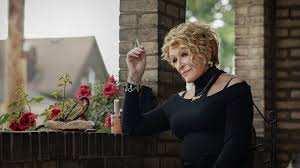
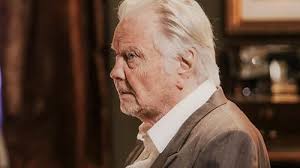
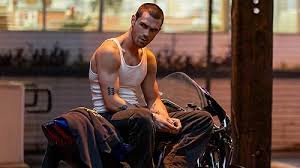
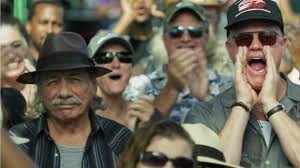
Mekhi Phifer and Josh Hutcherson are on the extraction “team,” Garcia is the bad guy in Venezuela holding the daughter (Brolin, daughter of you know who) of a senator (Oscar winner Melissa Leo) hostage.
Sept. 20 from Lionsgate. Solid looking genre thriller from director John Swab, who did “Little Dixie” and “Ida Red,” which weren’t bad.


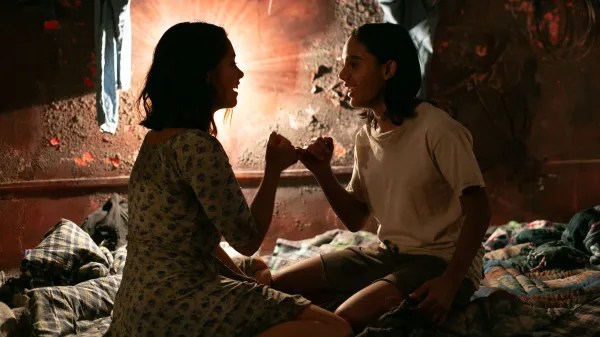
If you see but one semi-musical Welsh lesbian romance this year, make it “Chuck Chuck Baby.”
An adorable, uplifting ache of a movie, writer-director Janis Pugh’s modest marvel floats by on the glories of a well-crafted pop song and summons up “An Officer and a Gentleman” for its finale.
This downbeat working class “coming out” story is set mostly in a Welsh chicken-packing plant and set to sing-along tunes by Neil Diamond, Elton John and Bernie Taupin and John Gummoe. And one would be hard-pressed to think of a recent film that takes us from downtrodden to giddy, resignation to exhultation as effortlessly as this one.
Our heroine Helen is anything but heroic. Louise Brealey makes her a figure of pity, trapped in a blue smock all-female assembly line and a loveless marriage to a lout (Celyn Jones) who keeps his young, thin cartoon of a baby mama (Emily Fairn) under the same roof, which he doesn’t pay for. That leaves Helen to care for his dying mother Gwen (Sorcha Cusack).
Helen’s closest co-workers (Bevery Rudd, Cat Simmons, Emily Aston) joke around on the feather-littered floor of the Chuck Chuck Baby factory, losing themselves in song the moment the overnight buzzer rings. But in her car, Helen laments her lot. For that she’s got Neil Diamond to get her through her quiet desperation — “I Am, I Said.”
But Helen’s drab council estate world is upended the moment Joanne (Annabel Scholey) returns. Joanne left in a fury and under a cloud. But now that her hated father has died, she has to empty out his rowhouse, right next door to Helen.
Joanne is a linewoman for the county, living in a camper, climbing the pylons. Rolling up in a vintage Triumph Herald convertible, she couldn’t be more romantic unless she was crooning along to Glen Campbell.
Helen’s unspoken longing is obvious to Gwen, who isn’t so old that she doesn’t know “friend of Dorothy” when she sees her, even if it’s used more often to refer to gay men.
Can these two 30somethings finally make the connection they might have decades before?
With Gwen urging “Helen the Handmaid” to “make sure she remembers you” and Renaissance’s one hit to guide her, maybe they will.
Writer-director Pugh, with the “experimental” “The Befuddled Box of Betty Buttifint” the highlight of her previous credits, makes no false move and takes no unsure steps in this utterly adorable romance.
The workplace scenes are rude, anarchic and playful, the burdens Helen shoulders heartbreaking and the longing each lover feels for the other palpable. We root for our couple, hiss at the villains and exult at the mere hint that love might triumph.
And songs underscore that longing or giddiness, suggesting dance numbers even if the “dancing” is limited to billowing sheets on clotheslines, umbrellas opened in unison or chickens — some with paper messages like “This job is s–t” stuffed in their gullets — flung to and fro in a chicken packing plant.
The Aussie filmmakers P.J. Hogan and Jocelyn Moorhouse used “Muriel’s Wedding” and “My Best Friend’s Wedding” to remind us that love makes people want to sing, even if they’re not singers. Pugh took that lesson to heart, and how.
Considering how hard it has proven in recent years to make a screen romance come off, give Pugh a pat on the back by purchasing a ticket for “Chuck Chuck Baby.” With this featherweight, fun and inspiring love story, she’s reminded one and all how it’s done, with a song in your heart.
Rating: unrated, innuendo, mild violence
Cast: Louise Brealey, Annabel Scholey, Sorcha Cusack, Beverly Rudd, Cat Simmons, Emily Fairn and Celyn Jones.
Credits: Scripted and directed by Janis Pugh. A Dark Star release.
Running time: 1:41
This trailer, coming after film festival reviews that weren’t flattering, emphasizes the misguided criticism that has often greeted the films of Francis Ford Coppola.
Interesting angle, with narration by Laurence Fishburne (“Apocalypse Now”). It looks spectacular enough to give one the hope that it’s better than its buzz.
Sept. 27.


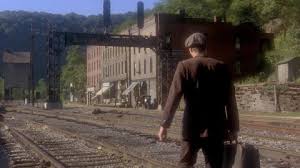
“The Long Night” (1947) is a film noir era police stand-off thriller built around flashbacks that show us how the killer landed in this predicament.
Melodramatic to a fault, it stars Henry Fonda, with Barbara Bel Geddes and Ann Dvorak playing two women of differing backgrounds who want him and what’s best for him, with Vincent Price as the dastardly wild card in that love quadrangle, playing a devious magician, no less.
Ukranian American director Anatole Litvak (“The Snake Pit,” “Anastasia,” “Mayerling,” “Sorry, Wrong Number” and “Decision Before Dawn”) turned out decades of stylish, professional thrillers and if he never quite reached the Andrew Sarris “pantheon” of great auteur filmmakers, his name above the title — even on an RKO production like this one — conveyed European panache realized on simple if not mundane subjects.
Fonda shows off his full range as an actor in playing a goofy lovesick puppy, moon-eyed in love, but suspicious and short-tempered enough not to take his new girl’s inattention lying down. When we meet this veteran, a sandblaster home from the war working at a steelworks in on unnamed city along the Pennsylvania/Ohio line, he is armed and trapped in his apartment, having just shot another man who tumbled down the stairwell.
As the local police department and sheriff’s department take turns riddling the place with bullets and blasting it with tear gas, Joe Adams remembers how he got into this fix, the crush on the florist Jo Ann (Bel Geddes, years before “Vertigo” and TV’s “Dallas”) that became a love affair, her connection to the oily snob Maximilian the Magnificent (Price) and both men’s fascination with Max’s former dancer/assistant Charlene (Dvorak of “Scarface” and “Merrily We Live”).
“Welcome Home Servicemen” banners decorate the streets, and Anzio and D-Day veteran Joe is happy go lucky because he has a steady job and he’s just met somebody he can plan a future with.
“You almost look cute,” he flirts (Fonda fashion, with a hint of “gee whiz”), standing there with those flowers like something growing” amongst them.
But the mysterious Max seems to be a third wheel in their love connection. He is tall, polished and provocative, and not shy about dropping a lie or a put-down when it suits his purposes.
” You know, I always find it rather amusing, these conceptions you simple men have concerning women.”
It’s only when Joe starts keeping company with the just-quit-Max Charlene that he gets a handle on this creepy competition for Jo Ann.
The John Wexley script has plenty of eye-rollers, from the lies that Max spins which quickly unravel to the “convenient” way Charlene takes a romantic interest in Joe and gallantly steps aside when his interest in his fellow orphan (also convenient) Jo Ann is renewed.
“The Long Night” is suffused with violence — especially that meted out by the competing law enforcement agencies — but sentimental to the core, from the blind veteran (Elisha Cook Jr.) who “witnesses” the shooting to the little neighbor girl who gets past police lines for her version of “Say it ain’t so, Joe.”
The crowd takes up the veteran’s plight as he survives having his apartment machine-gunned.
“Don’t try to play ‘dead’ in there, or you soo WILL be!” the coppers promise.
Price was already well on his way to the sophisticated, epicurean villains he’d make a speciality, eventually settling into horror. His early roles suggest Hollywood regarded him as an American George Sanders (“All About Eve”), born to be bitchy, droll down to his marrow.
The “While there’s life, something’s bound to happen” credo here has an optimism you don’t often sense in the cynical “Home from the war, facing the same old evils right here in America” messaging of a lot of thrillers labeled “film noir.”
The locals may know police overkill when they see it, but there’s nary a hint of a veteran’s possible PTSD triggered by the villain he’s confronting. Max is more snide and self-servicing than any sort of darker menace. He sees the naivete in play.
“Good heavens, do I have to apologize for superior imagination?”
The pacing isn’t great, with too many pauses by the jumpy, competitive police for Joe to lapse into flashbacks. But the production, an oversized street and crime scene overrun with interested spectators, impresses and the near-sophistication of this menage a quatre stand out in “The Long Night.”
And Fonda and Price make unexpectedly delicious foils — Tom Joad vs. Roderick Usher.
Polished as it is, like the gifted craftsman who directed it, “Long Night” doesn’t merit inclusion in any list of the great noirs of the day. It’s more sentimental than cynical, slow of foot, and we know John Huston, Fritz Lang or Billy Wilder wouldn’t have stood for that.
But Fonda and Price fans will still find plenty to relish in their parts in it.
Rating: TV-PG, violence, innuendo
Cast: Henry Fonda, Barbara Bel Geddes, Vincent Price, Ann Dvorak, Elisha Cook Jr., Moroni Olsen and Howard Freeman.
Credits: Directed by Anatole Litvak, scripted by John Wexley. An RKO release on Roku.
Running time: 1:40
“SNL” alum Kyle Mooney conceived this teen rom-com/disaster comedy. Jonah Hill produced it to ensure it’d be rude and filthy enough.
Rachel Zegler, Jaeden Martel, Julian Dennison, Mason Gooding and Lachlan Watson are the young folks caught up in what could have happened, had the wrong people been in charge.
Fred Durst, Kyle Mooney and Alicia Silverstone play the “adults” in this Dec. 4 release.
God help us.
Another movie with Mommy issues from Pedro Almodóvar, this one in English and based on a Sigrid Nunez novel.
Alessandro Nivola and John Turturro also star.
Dec. 20.


Apple TV’s “Bad Monkey” ticks off so many personal boxes that there was no way I’d be missing this new series.
It’s a sordid and silly Florida tale, and I put in my 25 years in the Banana Republic, so I’d get the jokes and geography.
It’s based on a novel by Carl Hiaassen, the the wry, sardonic journalist who documented “Florida Man,” Florida politics and Florida kitsch in newspapers before finding it all too dark and Florida weird for mere “facts” to limit his amused dismay.
Bill Lawrence, who gave us “Scrubs,” created the series. Loved “Scrubs.”
It brings Vince Vaughn out of self-destructive career limbo and back into the bantering motor-mouth that was his trademark back when “Swingers” and “Wedding Crashers” made him famous.
Hell, it even features my favorite Florida actor, Tom Nowicki in a role he seems tailor made for — a salty old charter boat cap’n who’s seen it all, and told “the fishin’ stories” that started many a Sunshine State misadventure.
Nowicki narrates “Bad Monkey,” a story of con artists, real estate predators, drugs, murder, corruption, code-busting restaurants and Bahama voodoo that has the feel of Hiaassen pulling out all the stops — every last one of them. But that narration, dryly delivered and insipidly incessant, becomes this series’ Achilles heel.
It begins in that charter boat where an arm dangling off the hook is the catch of the day. The “suspended” Key West sheriff’s department detective Andrew Yancy (Vaughn) is who his former partner (John Ortiz) palms this “evidence” onto.
All Yancy has to do is “not screw up,” not ask a lot of questions, maybe feed the arm to the gators, and he’ll get his old job back. Not the Caruso-profile one in Miami, where he used to work before irking the higher-ups, but the one that lets him pay for his Florida Strait view bungalow, whose view and tranquility are being ruined by the guache developer/realtor (Alex Moffat, “bro” funny) who doesn’t care about the special lights required to protect nesting “baby sea turtles” or the flora that gives the tiny Key Deer something to eat.
Yancy does. Yancy cares. And that’s usually his undoing.
That arm belonged to a guy lost in a boating accident, or so his bad-actress widow (Meredith Hagner) would have Yancy believe. Her drug-addict-turned-mega-church addict stepdaughter (Charlotte Lawrence) doesn’t buy it.
As the widow Eve has seemingly taken up with a Bahamas developer (Rob Delaney), maybe the daughter is right. Yancy, suspended for ramming the golf cart of his lover’s (Michelle Monaghan) husband and dunking him in the gin-clear marina basin, starts asking questions.
“All routine,” he reassures Eve Stripling, who cannot help but notice — like everyone else — that Yancy talks a lot. And that she talks a lot.
“You’re not writing any of this down.”
“I’ll remember.”
“You’d make a really great waiter!”
As the motor-mouth detective already tried to dump the arm with a cute but standoffish Miami coroner (Natalie Martinez), he soon talks himself into a partner in this “investigation,” one a demotion to restaurant inspector doesn’t interrupt. Yancy can’t stop talking and can’t stop asking questions.
“Really? No banter? I thought we were going to banter.“
The banter doesn’t let up when people start dying, and a black Chevy Yukon’s driver starts stalking and trying to shut Yancy up.
Meanwhile, on the other side of the Gulf Stream, Bahamian small businessman Neville (Ronald Peet) finds himself and his pet monkey brusquely kicked out of his home, his business and his piece of paradise. He doesn’t pointlessly complain to the authorities. No, he pays the beguiling Dragon Queen witch doctor (Jodie Turner-Smith, sexy and sinister) to see that harm comes to the rapacious developer. When nothing happens quickly enough, he learns he has to pay more. And more.
The excellent cast and big and small twists recommend “Bad Monkey.” The Florida flavor of it all is underscored with steel drums, Jimmy Buffett tunes and Tom Petty covers and lots of pastels — especially teal.
It is great seeing and hearing Vaughn this engaged in a character with integrity and big, whopping moral failings that don’t keep him from upholding the law, even when it comes to dirty Key West eateries.
“This place is like a day spa for rats!”
But here’s a big hangup, one that burdens the opening episodes and relents only slightly in later ones, as Hiassen & Co. run out of twists.
It’s not just Vaughn who talks this damned thing to death. There is endless voice-over narration, stating the head-slappingly obvious, redundantly-added to visuals which have told us what’s happened, what is about to happen and over-explaining a character’s state of mind.
That’s what you hired Vaughn, Peet, Monaghan, Scott Glenn and many others et al to get across.
“It should be pretty clear right now, Yancy was not good at letting things go.”
Yeah, we see that.
“Yancy got that warm glow he always got when he’d made an enemy for life.”
Oh, we got it.
“It was time for Neville to head home…”
Nowicki gives every line a folksy Florida film noir growl, and if this voice-over touch had been limited to lines like “Miami may, in fact, be the ‘dancing on boats’ capital,” it wouldn’t have intruded and slowed the narrative to a crawl. I can’t believe the producers didn’t step back, watch the finished product, and whack three quarters of this turgid, repetititive restating-the-obvious before broadcast.
But Bill Lawrence’s half-hour sitcom “Scrubs” added an extra dose of “wry” in voice-over (Zach Braff plays a drug-addict doctor here). When it doesn’t work in a sitcom, it skips by. When it doesn’t work here, which is most of the time, it’s a tone-deaf rim shot by a drummer who misses the rim.
Hiaassen, an old hand at having his work adapted by Hollywood (“Hoot,””Striptease,””Skinny Dip”), took an executive producer credit here. Writers tend to love that author’s voice narration in films of their work, often to the film’s detriment. With Lawrence’s history with this lazy crutch and Hiaassen accepting the flattery of adding that “writerly” touch, “Bad Monkey” is damned near undone by this indulgence.
Vince at his best, with stoic Ortiz, Peet drolly Bahamian, femme fatalish Monaghan, dizzy Hagner and dead sexy Martinez (of TV’s “The Fugitive” and “Ordinary Joe”), there’s plenty to relish here.
But considering how keen I was to see it and wallow in sketchy Florida Men and Women and “types” behaving Floridian, the show becomes progressively more deflating as it reveals its tricks and pounds them home in case we missed them.
The lazy over-narration turns this into “Hiaassen for Dummies.” I’ve watched half of it, and for all the casting coups, local color and amusing banter, I can’t say I’ll finish it.
Rating: TV-MA, grisly violence, drug abuse, sex, nudity and profanity
Cast: Vince Vaughn, Ronald Peet, Meredith Hagner, Michelle Monaghan, Natalie Martinez, Jodie Turner-Smith, Rob Delaney, Zach Braff, Scott Glenn, Alex Moffat, Tom Nowicki and John Ortiz.
Credits: Created by Bill Lawrence, based on the Carl Hiassen novel. An Apple TV+ release.
Running time: Nine episodes, @:40-58 minutes each


“The Other Laurens” is a slow, drifting mystery thriller that takes a while to decide what it’s about, takes another while to add on complications and adds a third while to attempt to get to some sort ofint.
The Belgian director and co-writer Claude Schmitz (the thriller “Carwash” was his) doesn’t appear to know the word “pacing” in Flemish, Walloon, or any of the three languages that turn up in “L’autre Laurens” — French, Spanish or English. His 117 minute movie has maybe 70 minutes worth of incidents, characters and action in it.
Gabriel Laurens, played by Olivier Rabourdin of the “Taken” movies, and Woody Allen’s “Midnight in Paris,” is a 50ish frump, a Brussels detective (“The perferred term is ‘private investigator.”) who would never earn a second glance in a crowd. He does surveillance, “background checks” he calls it, to catch cheating spouses.
When we meet him, he’s dealing with the loss of a sibling and the impending death of his aged mother. Her passing throws his dull, myopic life into a crisis. Gabriel’s rich brother François was taking care of her bills, and had fallen ruinously behind.
Then that dead brother’s teen daughter Jade (Louise Leroy) shows up at his doorstep. Her suggestion that maybe Dad didn’t die in an accident and the fact that Gabriel is broke sends them south, driving her back to The White House, the spacious French mock-up of the U.S. executive mansion she grew up in outside of Perpignan in the South of France, close to the Spanish border.
It’s a rough and tumble border region where Spanish thugs and French hustlers and bike gangs still do a brisk business, EU be damned. What was François mixed up in?
Did I mention that he and Gabriel were twins? That, as you might expect, leads to some confusion and perhaps even deadly complications. Because the dead man’s American widow (Kate Moran) is, one and all agree, “not to be trusted.” And her biker-gang minions, one of whom tails Jade around on a motorcycle, are not the sort of people she or Jade or Gabriel or even the testy, wary Spaniards should consider crossing.
Truth be told, there’s enough going on here, enough mystery to the death and sketchy dealings of the widow, the Spaniards and French bikers to hold one’s interest.
Rabourdin makes a fine anti-hero, looking anything but heroic or even a guy who ever considered hitting a gym. He’s playing the twin always overshadowed by his sibling, always shortchanged and cheated by pushier François.
Gabriel’s story arc will match his “detective” skills against oddball local cops, the latest wife, a mistress with Spanish mob connections and growing-up-too-fast-and-loose Jade.
All of which sounds “in over his head” promising. But Schmitz moves all this along at a caterpillar-in-fresh-frost pace, which dulls the mystery and blunts the action that sort of floats by mostly in scattered moments in the third act.
By the time our tale takes its turn towards the BIG (not that big) finish, our director has squandered much of our interest and most of the viewer’s goodwill.
Rating: unrated, violence
Cast: Olivier Rabourdin, Louise Leroy, Kate Moran, Marc Barbé and Edwin Gaffney
Credits: Directed by Claude Schmitz, scripted by Claude Schmitz and Kostia Testut. A Yellow Veil release.
Running time: 1:57