Netflixable? Laura and Liam visit Travel Guide Morocco — “Lonely Planet”

With Diane and Bruce as my witnesses, I swear I never thought I’d see Oscar winner Laura Dern in a movie as empty and pointless as “Lonely Planet.”

But Susannah Grant, the screenwriter of “Erin Brockovich” and “The Soloist,” took her title from the long-published travel guidebooks, which should have been a clue. And the dreadful “Catch and Release” was an earlier directing credit.

It’s a writer’s retreat romance about a “blocked” and newly-dumped novelist who falls for a younger man (Liam Hemsworth) who might be mid-breakup with his younger writer-lover (Diana Silvers) in scenic Marrakesh, Morocco.

So it’s “How Katherine Got her Writer’s Groove Back.” It’s even shallower than that, and for much of its running time, it can’t do anything more than show us the sights as it teases out the drably inevitable.

Dern, who won her Oscar for “Marriage Story,” has mostly bounced from winner to winner — TV’s “Big Little Lies,” with Oscar winners Reese and Nicole, a pretty good remake of “Little Women,” “The White Lotus” and a big payday from yet another “Jurassic World” outing.

But a paid vacation is the only real justification for “Lonely Planet,” as that’s all this is.

Katherine shows up, a blocked writer with a deadline. Younger real estate investment advisor Owen follows first-book bestseller Lily to this rich woman’s arranged retreat in a striking setting on the edge of the Sahara.

The promise of “colorful characters” among the writers is rather dashed because Grant is more interested in “local color” — the casbah, the bazaar.

Writing’s dirty little secret, a world of writer’s conferences, retreats and “residencies,” is laid bare.

“You kind of don’t need to write,” Katherine admits, as she and Owen stumble into each other, avoiding the crowd that includes “a Nobel winner,” a lush, etc. “You just travel and go to the confernces and hang out with people who get way too drunk and only talk about themselves.”

Yeah, I’ve covered a few conferences, residencies and workshops. I’ve interviewed a few Katherines and at least one vapid Lily (she was appointed to cut-and-paste “Divergent” into publication). At least this much of the movie is on the nose.

Owen feigns gallantry.

“He looked wasted and I wanted to make sure you were safe.”

“Am I,” she flirts?

That’s as engaged as our lead actors get. And that’s the movie.

It’s like watching a sirocco blow across the Sahara. “Lonely Planet” holds like ten minutes of your interest, and then you’re ready to get back on the bus and head to Tangier.

Rating: R, nudity, sex, profanity

Cast: Laura Dern, Liam Hemsorth and Diana Silvers

Credits: Scripted and directed by Susannah Grant. A Netflix release.

Running time: 1:34

Posted in Reviews, previews, profiles and movie news | Tagged , , , , , , | Comments Off on Netflixable? Laura and Liam visit Travel Guide Morocco — “Lonely Planet”

Documentary Review: John & Yoko take over Daytime TV for a Week of Peace, Love, Music and Macrobiotics — “Daytime Revolution”

On Valentine’s Day 1972, daytime TV viewers across America — senior retirees, college kids between classes, “housewives” and kids coming home from school — were treated to something entirely novel on their TV.

The pleasantly bland “Mike Douglas Show,” hosted by a second-tier big band crooner and broadcast nationally from a basement studio in Philadelphia, featured two co-hosts from “The Movement,” the counterculture and the global avant garde.

Ex-Beatle John Lennon and his artist-wife Yoko Ono not only appeared on the program, they booked guests and co-hosted as radical activists Bobby Seale and Jerry Rubin were introduced to America’s living rooms. Consumer advocate Ralph Nader talked about “organizing” younger voters, folk protest singers performed, a macrobiotic diet expert and a pioneer in biofeedback therapy sat in, along with a slightly different sort of showbiz lineup of guests.

“Daytime Revolution” is a documentary that remembers one of those “They’d never do that TODAY” moments in American pop culture history, when the Revolution WOULD be televised just long enough to drive Richard Nixon to “declare war” on the Lennons even as Republican dirty tricksters were about to ensure his corrupt administration’s premature demise.

Filmmaker Erik Nelson interviews a few survivors of those telecasts, producer E.V. DiVassa Jr. and a couple of John and Yoko’s alternate thinking guests, for a film that’s most novel for playing long segments of these five days of shows, showing just how unthreateningly “radical” the discourse could be if famous and popular people talked a chat show host into letting “a happening” happen.

DiVassa sorts out who invited whom to the show, which frequently featured guest co-hosts, the sort of feathers that got ruffled in the production, and notes that an equally-young future Republican media strategist, Roger Ailes, was also on the staff.

The TV news coverage of the weeks leading up to and following the show note how divided the country was, after Attica, with the Vietnam War still raging, George Wallace running for president and threatening (pre-assassination attempt) to be the disruptor that fall and Nixon aligning himself with causes such as sometimes violent racist white protests about school integration and “forced busing.”

But after covering and crooning the McCartney-Lennon tune “Michelle” to open the festivities, Douglas brought the “Give Peace a Chance” “bed-in” couple in and asked, “What would you like to talk about this week?”

“Peace,” John offered, “and love,” Yoko added. “Racism.” “War.”

And damned if “The Mike Douglas Show” didn’t do exactly that, in eight or 9 minute segments between “and now for a word from our sponsors.”

Bobby Seale talked about his evolving politics and Jerry Rubin joked about radicals from “the Movement” endorsing Nixon because he’d gone to China “and spread the cause of communism” in the process.

Douglas, showing an open-mindedness rare in TV interviewers then or now, asks questions both important and humdrum, and then he sits and listens. It’s a tour de force of good TV manners in a talk show host.

Yoko brought out a blank canvas that everybody on the show that week and many attending in the audience would sign and paint on for five days, with “Unfinished Painting” to be auctioned off at the end of the week.

One of the disappointing omissions from this film is nobody tracked down what happened to that painting. Another is that Yoko herself didn’t sit for an interview, or speak by phone with the filmmaker.

DiVassa breaks-down moments of tape, showing the guests “getting comfortable,” talking about the pitfalls of fame. Starstruck “waiters never listen to your order” in restaurants, meaning Yoko and John never got what they ordered.

Ono pushed a few ideas for “audience participation” in this unique mixture of peace rally, church service and chat show with singing.

Comic George Carlin brought his “new” and edgier youth culture act, and talked about why he’d changed. Vegas singer Vivian Reed sang, and in a modern day interview, hits notes no 76 year old should be able to reach. John got to meet and perform with “my hero,” Chuck Berry, a ragged cover of “Memphis, Tennessee” with Chuck out of tune and Yoko caterwauling mid-verse and playing the bongos.

Lennon and Ono and their Elephant’s Memory Band performed a tune or two, including “Imagine.”

And Douglas and his staff and studio audience, as proxies of “middle America,” were exposed to different ideas and political figures characterized by a hidebound, conservative national media as “radicals,” as if that alone would silence them.

They weren’t.

Nelson’s documentary lets the footage from ’72 do the heavy lifting, with the interviewees he spoke to bringing context, back-story and a little personal color about the day “Yoko Ono called” to invite them in.

The film is thus mostly a surface gloss with a bit of context, relying on the performers and thinkers from way back when to create all the interest here. But “Daytime Revolution” is a nice editing job of presenting that landmark week of slightly weird TV to viewers 52 years later.

Rating: unrated

Cast: John Lennon, Yoko Ono, Vivian Reed, Chuck Berry, E.V. DiVassa Jr, Bobby Seale, Jerry Rubin, George Carlin and Ralph Nader

Credits: Directed by Erik Nelson. A Kino Lorber/Shout! Studios release.

Running time: 1:48

Posted in Reviews, previews, profiles and movie news | Tagged , , , , , | Comments Off on Documentary Review: John & Yoko take over Daytime TV for a Week of Peace, Love, Music and Macrobiotics — “Daytime Revolution”

Movie Review: Deformed, then “Cured,” but is he “A Different Man?”

An artist, the old saying goes, is “someone who pounds the same nail, over and over again.”

So it’s not a shock that “Chained for Life” writer-director Aaron Schimberg returns to the subject of beauty, disfigurement and the ways society views both in “A Different Man,” a street fable about deforming disease, a “cure” and what we figure out about the man who goes through this even as the man himself never quite seems to “get it.”

It gives Schimberg the chance to make another film with British actor and activist Adam Pearson, whose genetic neurofibromatosis has led to a career playing versions of “Elephant Man” like characters who show us humanity, charm and wit beneath their challenging appearance.

But Sebastian Stan — “Bucky” in the “Captain America” universe, Trump in “The Apprentice” movie — is the star and title character here, a New York actor with deformities that pretty much limit him to similar roles, or would if there was a lot of demand in that corner of entertainment.

As it is, Edward is lucky to land a part in an HR training video about how to compassionately handle working with people with disabilities who “look different.”

His face a masque of deformity caused by tumors and surgery to remove them, Edward lives in a shell, avoiding eye contact on the subway and people in general.

You can preach “All unhappiness in life comes from not accepting ‘what is.'” But in Edward’s case, no one could blame him for slapping you for saying it.

He is meek, shy, withdrawn, as some actors and people with disabilities are. He timidly accepts the new leak in his ceiling, jumps at every sudden noise and avoids the random remarks and engagement of strangers — even the ones that aren’t unkind.

But his new neighbor (Renate Reinsve) isn’t having that. She’s got the confidence of the young and the beautiful as she tells him she’s a playwright from Ålesund, Norway and doesn’t hesitate in volunteering a little first aid when he cuts himself by accident.

Ingrid seems to accept him as he is, just as a matter of course. He’s not exactly “in” her life — she has a beau. He’s just a neighbor and she has no trouble being polite and kind.

But Edward’s doctor interrupts this dynamic with a referral to a researcher/specialist (Malachi Weir) who has come up with an injected “cure.” In a matter of days Edward starts to heal. But when his solitary transition is complete, he lies and claims “Edward died. Killed himself.”

The painfully shy Edward takes on a new life as Guy, a handsome and soon successful and outgoing real estate agent. He spies Ingrid and stalks her, just long enough to see the off-Broadway shoebox theater where she’s holding auditions for this show she’s written.

“Edward” is the title. And the people she’s auditioning are odd looking even before the makeup is applied. Guy dons an old mask that was made of his pre-treatment face and gets the part, playing Ingrid’s version of himself with her none the wiser.

A romance blossoms. And then a confident, deformed Brit actor (Pearson) shows up, befriends them both and starts showing the REAL Edward how “accepting ‘what is'” works for him.

Pearson’s “Oscar” is comfortable around people, outgoing enough to make friends, even with the guy whose role he seems destined to take. Oscar holds forth at the pub, sings karaoke with confidence and has a past that includes a wife and child.

Stan’s Edward wears a sort of perpetual “WTF?” expression in scenes where all that unfolds. As in “Why couldn’t I do that, before or after?”

Schimberg’s film goes for predictable emotions and rests on a fairly predictable formula. But what transpires in the middle to late acts is surprising, even as it feels as contrived as the shy-deformed-man who quickly becomes a master salesman transition.

The situations set up here are melodramatic, but Schimberg misdirects us not so much in the payoff, but in where the story goes AFTER that expected payoff.

I appreciated the novelty of that, and the performances are sharp, with Stan stumbling through this mystery of life like a guy who can’t quite figure out why what worked works and why what didn’t didn’t.

Reinsve walks a subtle pretty-and-I-know-it-but-I-won’t-show-it line as Ingrid, a curious woman who tactlessly dismisses lovers and tactlessly makes creepy requests — “Wear the mask!” — in bed.

But I’m not sure Schimberg had anything really new to say on this subject. And that makes “A Different Man” teeter towards gimmicky, a stunt that barely transcends that gimmick. It’s not as “daft” as “Chained for Life,” but it’s not as engaging or as interesting either.

Rating: R, violence, sex, nudity, profanity

Cast: Sebastian Stan, Renate Reinsve, Michael Shannon and Adam Pearson.

Credits: Scripted and directed by Aaron Schimberg. An A24 release.

Running time: 1:52

Posted in Reviews, previews, profiles and movie news | Tagged , , , , | Comments Off on Movie Review: Deformed, then “Cured,” but is he “A Different Man?”

Movie Review: Trump learns to Lie, Cheat, Betray and Steal to get what he wants as “The Apprentice”

Before Donald Trump came along, Roy Cohn was widely regarded as one of the most repellent, unscrupulous and unrepetently divisive figures in American political history.

A virulently ruthless right wing lawyer, extortionist and political operator, a self-loathing Jew who crowed about “frying” the Rosenbergs, a self-hating homosexual who denied his queerness to his death — from AIDS — the gnomish Cohn was among the most feared political figures in America for much of his not-short-enough life.

So it’s no surprise that he spent some of his peak years mentoring an uncouth, unsophisticated New York developer and would-be playboy into someone who could bully his way out of many a fix simply by the public act of bullying.

Jeremy Strong, who played Jerry Rubin in “The Trial of the Chicago 7,” masters Cohn’s gimlet-eyed stare, his blunt bluster and poker-faced shamelessness in “The Apprentice,” the bracing, eye-opening new film from Iranian expat Ali Abbssi (“Holy Spider,” “Border”).

And Sebastian Stan (“A Different Man,” “Bucky” in all the “Avengers/Captain America” movies) reaches beyond comic impersonation to show us a naive Trump learning confidence and tactics for underhandedly “winning” from the master impersonator Cohn, building on the racism, abusive sexism, con artistry and other shortcuts that were his family birthright in faking “success” and exaggerating wealth.

The drug abuse? That he probably learned on his own. Or not.

It’s a fascinating portrait in bareknuckle venality and a movie that, whatever its shortcomings, does a pretty good job at conveying the monster who begat another monster. An alleged “patriot” who “loved this country” and used that as his cover for much of his hedonistic, closeted, take-no-prisoners ultra-conservative life mentored a faithless narcisist and lifelong self-dealer who avoided taxes like a mob boss, stole classified government documents, fomented an insurrection to overturn a free and fair election, cozied up to dictators and curried favor with foreign powers to help him steal elections.

If nothing else, we get a pretty good picture of why Trump was able to avoid any sort of reckoning for so long, and how Cohn blackmailed legal authorities and pulled mob strings to help him do it.

We meet Trump as a vain young loner, reduced to collecting rent from his father’s (Martin Donovan) rental properties door to door. It’s the early 70s, the Nixon administration is collapsing under its own corruption and Trump catches the eye of Cohn and his retinue at an exclusive club Trump had just managed to join.

We sense a hint of idealism in Trump, bridling at his father’s control of the family company, fretting at the “one step from a Depression” state of the NYC and how his dream is to “bring it back” by building a big hotel in the downmarket streets just below Times Square.

Cohn catches the naivete, tries not to recoil at how uncouth and unworldly this striver is, and takes him under his wing. That little government/NAACP assault on Trump business practices? Cohn will take him to school on that.

“File a lawsuit,” he says, setting the course for every future Trump battle against those who would hold him accountable for his crimes. “Always file a lawuit.”

Roy shares Roy’s “rules” for “winning.

“Attack attack attack.” “Admit nothing, deny EVERYthing.” And “no matter what happens, you claim victory. Never admit defeat.”

“The Apprentice” follows their relationship over the next dozen years, Trump clumsily trying to convince Hyatt to get in business with him (they do, with Cohn’s help), developing a public life and injecting himself into politics when he faces a mayor — Ed Koch — who doesn’t want to give him tax abatements to build his monument to himself, Trump Tower.

We hear Cohn’s lessons on ruthlessness — “You have to be willing to do anything to win.”

We see Cohn’s methods — networking, blackmail, as he knows the sexual proclivities of the elite and the governmental and the extension of “favors.”

“You ‘ll pay me back with your friendship,” he oozes. “Quid pro quo.”

And over the years, we see Trump fumble some lessons, ignore others — including advice that he not marry the Czech model Ivana (Maria Baklova of the last “Borat” film).

Trump is taught to seek the limelight, so he curries favor with the press. That first New York Times profile is arranged by Cohn, setting up a lifetime of mutual interest that the newspaper has been loath to abandon.

He grows famous, publishes a memoir and grows bored with Ivana and with Roy.

And so on.

“The Apprentice” serves up two indelible characters and assorted lowlights and highlights of their shared history — Cohn’s infamous orgies, his belligerent, bullying defiance right through his final interview, Trump’s pigheaded blunders into affairs and the casino business, Cohn recoiling at Trump’s gauche, proletarian appetites.

Having Trump run into Warhol, and not know who he is, at a Cohn party in the late ’70s — when the artist was one of the most famous figures in the world — is a chef’s kiss of a moment.

Vile political dirty operators like Roger Stone have cameos as other Cohn proteges.

Even if Gabriel Sherman’s script underplays the mob connections — Cohn introdues Trump to Fat Tony and the boys at lunch — even if he hits the “Make America Great Again” borrowing from Reagan hard and doesn’t hit the infuriating hypocrisy that the “patriotic” poseur Cohn passed-on to his equally anti-American protege hard enough, “The Apprentice” makes for a pretty good primer on how Trump became Trump.

Cohn beat the naivete and any hint of scruples he had out of him. And the Trump we see today — still unsophisticated, unworldly, arrogantly stupid and unfailingly cruel — because empathy is a trait that ties to higher intelligence — could very well have been created by just the circumstances depicted here, almost all of them coming from the many books reporting the sins and crimes of both men, including rape.

Strong finds his character and stays focused, first scene to last, a brilliant performance even if it never quite matches Ron Leibman’s ferocious turn as the man-as-dying-monster in the stage version of “Angels in America.”

Bakalova gives Ivana agency and the smarts to be repelled by the ruthless operator who pushes a pre-nup on her as Trump begs her to marry him.

And Stan is terrific, getting across the externals — the obsession with his hair, the pouty look, dismissive bluster and defensive posture he fights with naked displays of private school boy “aggression” — even if he can’t match the best vocal impersonators in terms of Trumpspeak.

You’d like to think Trump’s fanbase would appreciate this portrait. Many seem to aspire to be ignorant, rich, America-hating bullies, too. The rest of us can at least appreciate the irony of one last “fair” depiction of the guy before the rubes take another stab at voting us all into a doddering dimwit’s dictatorship.

Rating: R, sexual assault, sex, nudity, drug abuse and profanity

Cast: Sebastian Stan, Jeremy Strong, Maria Bakalova, Charlie Carrick and Martin Donovan

Credits: Directed by Ali Abbasi, scripted by Gabriel Sherman. A Briarcliffe release.

Running time: 2:00

Posted in Reviews, previews, profiles and movie news | Comments Off on Movie Review: Trump learns to Lie, Cheat, Betray and Steal to get what he wants as “The Apprentice”

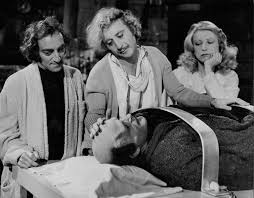
Movie Review: How did we Ever get through a Weekend without “Saturday Night” Live?

As history, “Saturday Night” is the ultimate exercise in “OK, Boomer” nostalgia for “the first generation to grow up on TV.”

As entertainment, Jason Reitman’s putting-on-a-show comedy about the chaotic 1975 opening night of “Saturday Night Live” is a breathless 109 minute sprint through the names and familiar (ish) faces scrambling to make something funny and “new” and get it on the air — live.

If you want to know who’s who, you kind of had to be there, or at least remember those “Not Ready for Prime Time Players.” The show just started its 50th season, after all. Sorry, Millennials.

But for those on its wavelength, the generations who saw it live or caught its landmark sketches and parody commericials via decades of reruns or streaming samples, it’s an immersive, memory-teasing delight.

Because there’s nothing quite like chaos roiling towards a make-or-break deadline for creating comic suspense, nothing like seeing the unruly mess that went on behind the scenes to make you appreciate just what it took to get this show on the air, at least some of which those making “Saturday Night Live” now still endure on a weekly basis.

The cast of the film is played by game but mostly under-heralded look-alikes. Cory Michael Smith is the young and already insufferably arrogant Chevy Chase. Ella Hunt captures Gilda Radner at her most winsome. Emily Fairn is coquettish, out-of-her-depth trouper Laraine Newman. Kim Matula is the damned funny “hot one,” Jane Curtin, Matt Wood is the volatile, impulsive and explosively funny John Belushi and Dylan O’Brien plays that Arctic blast of manic Canadian patter, Dan Aykroyd, the MVP of that original series.

The first clever stroke of the script (by Gil Kenan and Reitman) is to have Lamorne Morris, playing the lone Black cast member Garrett Morris (they’re not related) — older, an operatic tenor, R & B singer, actor and playwright — wryly stand apart from the cast. He smokes and asks everybody within earshot, but especially the short tyro in charge, Lorne Michaels (Gabriel Labelle), variations of that one existential question eating at him on this opening night.

“What am I doing here?”

The film sets Morris up as the “token Black guy,” a casting issue the series has wrestled with since its inception, and then gives the underrated Garrett the spotlight as one of the heroes of that opening night.

Labelle’s Lorne is overwhelmed with sketches, musical guests, parody commercials and stand-up comics, practically a whole season’s worth packed onto the lineup. He is storming around 30 Rock putting out fires, soothing egos and avoiding making the MANY necessary cuts as sets are being finished, rehearsals are going badly and “suits” are closing in.

An NBC “talent” excec (Willem Dafoe) is alternately bucking Michaels up and threatening his future, as it’s his business to ensure that Johnny Carson’s latest contract negotiations end happily and this series pilot is merely a ploy in that “Tonight Show” reruns scheme.

Michaels’ not-quite-ex-wife (Rachel Sennott, perfect) is sleeping with Aykroyd — her latest conquest — keeping Belushi mollified (he hasn’t signed his contract) and making the backstage trains run on time. But what last name will she be billed under in the credits?

Producer Dick Ebersol (Cooper Hoffman) is whining about advertisers fearing the “parody” commericals, and trying to jam live Polaroid camera ads into the cast’s hands the way they did them on “The Tonight Show.”

Host George Carlin (Matthew Rhys, ferocious) is already close to a stand-up “legend,” with the raging ego to match.

And writers (Al) Franken and Davis, Michael O’Donahue (Tommy Dewey) and stand-ups Billy Crystal and Valri Bromfield are begging for Michaels’ ear, trying to get something on the show as long-suffering director Dave Wilson (Robert Wuhl) and a Greatest Generation union crew copes with crashing light rigs, set and costume changes that have to happen in an instant and impertinant “punks” taking over Studio 8H and the National Broadcasting Company for the night.

Children’s television muppet creator Jim Henson (Nicholas Braun) is very out of place here, protesting every indignity the writers and cast members put his puppets through before rehearsal.

So many pieces of this story pass by at a blur that, like Michaels way back when, Reitman and Kenan struggle to thin this “piece of SNL lore” down to something easier to follow.

Did we really need to see insufferable TV legend and future “SNL” host Milton Berle (J.K. Simmons) and his infamous penis, whipped out to shut up Chevy Chase? Well, yes we do. It emphasizes the “old guard” that “SNL” would displace, once and for all.

And over-populating this maelstrom is kind of the point. Inventing this new thing meant throwing a lot of ideas from Lorne’s roundup of “orphaned comics” at the wall, on and off camera, and seeing what might stick.

“We can’t expect people to recognize something they’ve never seen before,” Michaels complains, extolling the “post-modern Warhol” absurdist nature of what they were trying. But some folks had seen “Monty Python’s Flying Circus” on PBS stations the previous year, so maybe we were ready after all.

The villains include a network censor as well as “Uncle Miltie” and network brass.

What will give fans of this first iteration of the long-running “SNL” their biggest thrills are the “heroes” set up here.

The wildly eccentric comic Andy Kaufman (Braun again) keeps wandering in and out of the building, in character. But when the chips are down, Andy serves up his Mighty Mouse lip-sync bit — “Here I come to save the DAAaaay!”

Chase’s ballooning ego may be stroked and stoked as network brass gives him “the tap on the shoulder” about there being a bright future for a funny “handsome Gentile” in this business. But he knows how to comically work a room full of (old white male) network affliliate managers, and when Lorne realizes he’ll never be the “on camera” guy and gives up “Weekend Update,” Chase steps in and makes it an instant institution.

Drug abuse aside, Belushi rises to the occasion, Aykroyd stops grabbing every woman in sight long enough to stand out as a star, and as a team player, wearing those short shorts for the ladies of the cast to harass in a famous “women construction workers” sketch.

Anarchic Mister Mike (O’Donahue) insults all the people who make the decisions, but the “Prince of Darkness” is humbled just before making that first-ever “live open” a memorable one.

And musical guest Billy Preston (an infectiously joyous Jean Batiste) and his band serenade in that first live audience, giving the crowd in-studio and at home that last piece of the goal here, to give viewers a taste of “a New York all-nighter” — a rock concert, lots of comedy and city-wise sex-and-drugs edge every Saturday night.

“Saturday Night” won’t be to every generation’s taste. The look-alike cast is generally good, if hardly substitutes for “the real thing” in some cases. But if you were “there,” or at least caught the show in those birthing years, it’s still cool  and it’s a lot of fun, with or without the stimulants.

Rating: R, fisticuffs, drug abuse, nudity, profanity and “sexual references”

Cast: Gabriel Labelle, Rachel Sennott, Lamorne Morris, Cory Michael Smith, Ella Hunt, Emily Fairn, Kim Matula, Dylan O’Brien, Willem Dafoe, Brad Garrett and J.K. Simmons.

Credits: Directed by Jason Reitman, scripted by Gil Kenan and Jason Reitman. A Sony/Columbia release.

Running time: 1:49

Posted in Reviews, previews, profiles and movie news | Tagged , , , , , , , , | Comments Off on Movie Review: How did we Ever get through a Weekend without “Saturday Night” Live?

Movie Review: Pharrell Williams tells his story in Legos — “Piece by Piece”

I’m not sure the world asked for a documentary on the rise of one-hat/one-big-hit wonder Pharrell Williams, much less one turned into a Lego animated spectacle.

But darned if it isn’t the most adorable, upbeat rendering of an Up-from-the-Projects musical biography one can imagine.

Virginia Beach native producer, musician, “beat” builder and R&B and pop star Williams is best known the world over for his smash hit “Happy.” “Piece by Piece” more or less builds towards that Biggest Break from his childhood fascination with Stevie Wonder, his grandmother finding the indifferent student’s true passion, buying him a snare drum as he repeated the seventh grade, through his first and only band — The Neptunes — and their rise to hip hop prominence while creating novel sounds for Jay-Z, Snoop Dogg, Kendrick Lamar and No Doubt.

He’s still working with his childhood collaborators, a family man captured playing with his kid in the bathtub and apparently a very nice guy.

“How do I serve this thing called life?” he wonders, repeating the message drilled into him by the music-encouraging granny.

That relatively drama-free narrative is elevated by its conversion to Lego animation, which renders everything in bubbly images and color tones that fit the exquisitely arranged and produced music that pours out of the score.

Using animation, we can get an idea of the synesthesia that impacts how Williams experiences music. He’s literally seeing colors while the rest of us just fall into the groove or grin at the playful lyrics and quirky way of using unusual sounds — a singer saying “What what what,” Pharrell doing mouth pops and clucks — that become the rhythm track to giant hits.

The “beats” Williams and his Neptunes partner Chad Hugo cooked-up for sale to other artists, then used in their own productions, are visualized as pieced-together Lego light cubes. Some are used right away. Others stored, their lights glimmering through the plastic boxes they’re stashed in.

Jetski rides to private jet flights and flyovers by the Norfolk-based Blue Angels Naval aviation team (a regular feature of the skies over Va. Beach) are rendered into Legos.

The inspiration for that novel approach apparently came from an early conversation Williams had with Neville (“40 Feet from Stardom”). In life and music, Williams opines, there’s “nothing new.” We’re all just rearranging the Lego blocks, trying to create something magical and different.

Sure, it’s a gimmick. But it’s playful, it works and suits this material to a T.

As our biography subject got his biggest break writing and singing a worldwide smash hit slapped onto the soundtrack of “Despicable Me 2,” it’s hard to imagine any other way of telling the life story of this much-more-than-one-hat-and-one-hit wonder.

Rating: As PG as any movie with Snoop Dogg in it gets.

Cast: The voices of Pharrell Williams, Morgan Neville, Snoop Dogg, N.O.R.E., Gwen Stefani, Timbaland, Missy Elliott, Jay-Z, Justin Timberlake and Kendrick Lamar.

Credits: Directed by Morgan Neville, scripted by Morgan Neville, Oscar Vazquez, Aaron Wickendon and Jason Zeldes. A Focus Features release.

Running time: 1:33

Posted in Reviews, previews, profiles and movie news | Tagged , , , , | Comments Off on Movie Review: Pharrell Williams tells his story in Legos — “Piece by Piece”

Movie Review: “Rumours” of a G-7…zombie assault?

When the zombie apocalypse comes, the political animals leading the Western democracies will be powerless to stop it.

That’s the big message of “Rumours,” a dry, fitfully amusing horror satire of the ineffectual, word-parsing diplomat-speech of G-7 leadership in the face of the “present crisis.”

Three directors from the Canadian avante garde — Guy Maddin, Evan Johnson (who also scripted) and Galen Johnson — who previously joined forces for “The Green Fog,” team up for this uneven “festival darling” of a comedy about national archetypes, useless talk and the perils of AI and masturbating “Bog People” (bodies buried in peat) come back to life.

Zombies aren’t what gather the leaders of France (Denis Ménochet), Britain (Nikki Amuka-Bird), Japan (Takehiro Hira), Canada (Roy Dupuis), Italy (Rolando Ravello and the United States (Charles Dance) to a summit hosted by the German PM (Cate Blanchett) in a remote German castle resort.

Their endless posing for photographs and the distractions of aides and the press aren’t helping them grapple with the “crisis,” which we gather is the real world dilemma of climate-change fueled mass migration.

The pedantic Frenchman, the officious German and Brit and the just-glad-to-be-here Japanese leader fret over getting started on the “Provisional Statement on the Present Crisis,” a “group of seven” pre-agreement agreement supporting “rules based multi-lateral order human rights” and demoaning “procrastination pitstops.”

Say again?

As the Italian’s a ditz, the American’s a sleepy, ancient patrician and the Canadian a depressed, horny moon-eyed romantic, we do wonder if anything at all will get done, not that their bland platitudes mean anything or drive change in the middle of an emergency.

An anthropoligist is digging up an emasculated and executed bog body nearby, and that’s our cue that something is about to distract these seven very human people from their gossip over who is going through a marriage crisis, who is about to step down, who slept with whom and what’s in the swag bags that these affairs always deliver.

Their phone service ends and the servants vanish and the coddled and cosseted leaders of the Free World Western democracies are forced to fend for themselves and organize their escape.

They’ve been attacked? “Protesters!” Well, “dark shadowy figures”

And they “attacked,” you say? “Well, loomed menacingly!”

All the brooding about which PM rejected which PM’s hopes of resuming their affair, of writing something that rivals the “perfect,” unifying language of the Maastrict Treaty, German tone-deafness over race and immigration will have to wait.

Only it doesn’t. Our Frenchman obsesses over words and phrases, and takes on know-it-all tones when he launches into discourges on anthropology.

An EU leader (Alicia Vikander) shows up, frantic and chattering away.

Might this be ancient Dargin, Circassian, Lezgian, etc, the French polymath and the Japanese linguist ponder?

“It’s SWEDISH. She’s speaking Swedish.”

There’s humor and even pathos in the aged American leader of the “world’s oldest democracy” as President Edison Walcott drops offhanded reference to the indiginities of aged manhood, now and among the bog people. No, Dance’s accent isn’t American, not even John Kerry patrician.

The Frenchman’s a tad cowardly and quick to lay stake to enfeebled, and becomes the dead weight the others haul around in a wheel barrow. A bit on the nose.

The French Canadian may have slept with every woman there, or perhaps he’ll just get around to them all eventually.

And the monsters? They’re a string of dick jokes and masturbation gags that are anything but “rock’n roll.”

The fiddling-while-Earth-burns nature of global “leadership” and their parade of useless and vacuous “statements” joke lands, and is then pounded repeatedly as almost all of these leaders, scrambling through a foggy forest at night, fearing bog zombies and a planet about to go up in flames, struggle to stay on task and come up with that “statement.”

As does the movie. It makes its one point, and everything else is — well — masturbation.

Rating: R, sexual situations, violence

Cast: Cate Blanchett, Nikki Amuka-Bird,
Denis Ménochet, Takehiro Hira, Roy Dupuis, Rolando Ravello, Charles Dance and Alicia Vikander.

Credits: Directed by Evan Johnson, Galen Johnson and Guy Maddin, scripted by Evan Johnson. A Bleecker Street release.

Running time: 1:44

Posted in Reviews, previews, profiles and movie news | Tagged , , , , , , , , | Comments Off on Movie Review: “Rumours” of a G-7…zombie assault?

Netflixable? Indian influencer cedes “CTRL” of her online life at her own peril

“CTRL” is a slick and melodramatic Indian variation of the “runaway computer/evil AI” formula, a tale that begins jaunty and jokey and staggers into sinister in the most heavy-handed ways.

Ananya Panday stars as Nella, a pretty young woman who has made a good living and by making herself Internet famous via her coupling with doting, tech-savvy boyfriend Joe (Vihaan Samat).

They’ve made their name and their lifestyle brand NJoy, offering glimpses into their polished, upbeat-for-the-camera personal lives financed by a product-endorsing lifetstyle.

“Manifest your dream, girls, MANIFEST it!”

But living life online has its pitfalls, as Ms. Makeup, Style and Relationship advice shows up to “surprise” Joe at a restaurant business meeting on their fifth anniversary. She, her camera operator and their online audience see him cheating.

It all comes apart as it turns out our foul-mouthed Internet icon knows little about how to make the only “living” she knows. Her editor and effects guru and biz manager was Joe. While we can assume, from camera placement, that she’s been bringing a videographer along on their exploits, we’re apparently meant to believe she’s at least doing the filming for their live-streaming lives.

Enter CTRL, a new AI assistant you can customize to your liking, a gadget that can run your social media business, edit, add effects and music and produce your many videos and even field offers from brands that covet the newly-single, jilted Nella, who makes victimhood part of her new brand thanks to #CheaterJoe.

She selects the flirty, corny “Bro” version of the AI and names him “Allen” (voiced by Aparshakti Khurana in the Hindi version of the film, which is in Hindi — with subtitles, or dubbed).

“I have to say I’m jealous of your eyelids,” he smirks and winks, “because they get to spend the whole night with you.”

Allen can take on all the tasks of running her biz and her life. He can even “erase” Joe from every image and video from her vast online life, at her request. So he does, and we see Joe reduced to pixels and vanish from shot after shot.

But Joe’s trying to make contact, even if Nella won’t have it. And when he disappears, she will be the last to know who’s behind it. But we do. We’ve seen “2001,” “MEgan,” and every evil AI film in between.

The film’s early acts are bubbly as we follow Nella’s rise and quick fall and chuckle at her obvious/doofus AI “boyfriend” who sets out to tidy up her life.

But the second half is more convoluted and more obvious, with endless explanations of the sinister forces in play behind that AI, and Joe’s connection to them. Multiple characters give long online “explanations” of what’s going on.

They stop “CTRL” dead in its tracks.

The better approach is always to underexplain, make the mystery part of the suspense. The genre and the plot here pretty much ordains that there’s little of either in “CTRL.” An engaging lead performance loses its urgency and its agency as Nella is practically a bystander in her own (unemotional, underplayed) tragedy.

To say nothing of Joe’s, which his shallow, narcissistic lover barely notes.

Rating: TV-MA, violence, profanity

Cast: Ananya Panday, Vihaan Samat and Aparshakti Khurana

Credits: Directed by Vikramaditya Motwane, scripted by Vipin Agnihotri, Vikramaditya Motwane, Avinash Sampath and Sumukhi Suresh. A Netflix release.

Running time: 1:39

Posted in Reviews, previews, profiles and movie news | Tagged , , , , , , , | Comments Off on Netflixable? Indian influencer cedes “CTRL” of her online life at her own peril

Movie Preview: Pierce Brosnan is an Ancient Irishman trying to get to a D-Day anniversary — “The Last Rifleman”

White haired, stooped by age and as Irish as he ever lets himself be, we’ve not seen the ex-James Bond like this before.

The late John Amos is in this one, with Jürgen Prochnow.

It looks and feels exceptionally sentimental, as any movie about that now almost-all-gone generation is sure to be.

Posted in Reviews, previews, profiles and movie news | Comments Off on Movie Preview: Pierce Brosnan is an Ancient Irishman trying to get to a D-Day anniversary — “The Last Rifleman”

Movie Preview: Liz Hurley’s a Mum who might have to pay the Pied “Piper”

Candyman movies, Slenderman thrillers, “It!” again and again.

Why not a modern day horrific Pied Piper? Stop giggling.

Why not, indeed? Puts Elizabeth Hurley on the scary screen roughly at the same as her ex, Hugh Grant, starring as The Devil in “Heretic.”

Posted in Reviews, previews, profiles and movie news | Comments Off on Movie Preview: Liz Hurley’s a Mum who might have to pay the Pied “Piper”