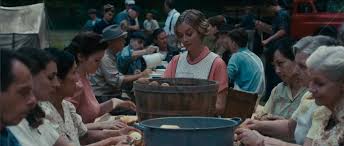
Classic Film Review: “The Killing Fields” (1984) at 40, Adventure, Heart and Horror in a High-Minded Epic

Some classic films can overwhelm you with the memories of when you saw them, of the era that created them and of the stars who gained their immortality in filming them.

“The Killing Fields” came out fresh enough on the heels of America’s long, tortured involvement in Southeast Asia’s Vietnam War to sting. But in sympathetically and skillfully telling a horrific story to come out of one corner of that conflict, it found hope and uplift, along with critical accolades and three Academy Awards.

The film’s editor (Jim Clark) and director of photography (Chris Menges) won Oscars, as did “amateur” supporting actor Dr. Haing S. Ngor. The Best Picture Oscar went to Milos Foreman’s film of “Amadeus.” Cinematic 1984 was a very good vintage.

British producer David Puttnam so embodied the “class” of that cinematic era — “Local Hero,” “The Mission,” and “Memphis Belle” were among his credits, and he won the Best Picture Oscar for producing “Chariots of Fire” — that he briefly became head of Columbia Pictures, emphasizing upscale, modest-budgeted and sometimes ambitious failures.

We’re treated to bristling performances by very young Sam Waterston and John Malkovich and fine work by Julian Sands (playing a journalist) and Craig T. Nelson, playing a true-believer military attaché determined to spin this debacle into a “win,” or at least a “not our fault” to the bitter end.

Supporting player Spalding Gray, a writer/actor playing a U.S. Consul in Phnom Penh, Cambodia, made a career out of his monologue/performance art piece “Swimming to Cambodia,” another version of a Cambodia/Vietnam/United States history lesson when it was made into a shockingly entertaining one-man show and film.

“Killing Fields” is a phrase coined by the subject of the saga — the interpreter, Cambodian in-country “fixer” and future photojournalist Dith Pran. It became worldwide, UN-sanctioned shorthand for genocide and the reactionary backwardness that drives it. Dith Pran came to the university I was attending to speak and gave a moving account of Cambodia’s fall to the Khmer Rouge. He was a man with a profound sense of mission about bearing witness and underlining the consequences of Superpower blundering in the Third World.

Forty years later, the film about his experience’s power to move is only slightly diminished. Producer Puttnam’s thing for solo artist electronic scores (partial, in this case) is the sole sour note here (unlike in “Chariot’s of Fire”) that dates the film, and not in a good way.

But the story is a true epic, a survival tale that can’t be trivialized by the cliche “a triumph of the human spirit.” Because “The Killing Fields” is all about mankind at its worst — dogmatic ideology callously applied to human populations and dogma enforced by callow, trigger-happy youth toting AK-47s and sporting red neckerchiefs.

Waterston plays Sydney Schanberg, the award-winning New York Times journalist who as depicted here, took every government/military run-around personally and more fully understood the adversarial relationship between the press and those being covered than pretty much anybody on a similarly high profile beat today.

Sydney is arrogant and bullying, badgering his “fixer” Dith Pran to arrange transport to an “accidental” U.S. bombing, seemingly insisting that the man stick with him to the bitter end and beyond as Nixon’s “Cambodian incursion” becomes a culture-crushing disaster. Yes, he offered and planned to get Pran and his family out of the county. But with a story to grab as the capital falls, Pran is by Schanberg’s side, interpreting in French and Khmer, hands clasped in near prayer as he begs for information, a boat ride, a pass through a checkpoint or for their very lives.

The Khmer Rouge aren’t impressed.

The script’s three act structure introduces the scene, the relationship and the dilemma of Cambodia’s collapse in ’74 and ’75 even as Nixon was resigning. The second act has Dith Pran holed-up with photographer Rockoff (Malkovich) and other journalists (Bill Paterson is a piano-playing Scot, Sands a fellow Brit, with South African playwright/actor Athol Fugard playing a doctor) at the French embassy.

We hear Pran’s wife’s warnings about what is to come and see him eschew a risky escape from civil warriors at war with “progress” itself — the “Year Zero” fanatics of the Khmer Rouge. We hear Sydney’s pleas, expectations and (wrong, as it turns out) and guesses about “the end” and how they’ll all get out.

The foreigners have a chance. An educated, multi-lingual Cambodian employee of foreigners? Pran is sure to be arrested, if not shot on the spot by the hotheated teens who do leader Pol Pot’s dirty work.

The third act covers Dith Pran’s enslavement by the new Cambodian order, hiding his education and street smarts, trying and trying again to escape across a forbidding, corpse-covered terrain (literal “Killing Fields”) under the cover of Vietnam’s brief war with Cambodia in the late ’70s.

The film’s indelible images are of Pran (Ngor) giving us all a taste of what “real” survival requires — objectifying lizards and stolen sucks of cow blood as the protein needed to keep him alive while the regime tries to work him and starve him to death, the caginess it takes to fool your captors about your true nature while at the same time convincing them of your usefulness to them.

A first act summary execution has maybe the most explicit shot-in-the-face effect the movies have ever produced, before or since. The beautiful country torn asunder by conflict, and a sea of extras — city dwellers enslaved on a vast hill-moving project by the civilization-hating Khmer Rouge — adds weight to the label “epic.”

Waterston lets us see tinges of guilt in the blustery, self-serving Schanberg, who wins awards even as he’s writing letters and making calls trying to get his right-hand-man out of a country that literally went dark after its conquest.

Malkovich is as focused and as nimble as we’ve ever seen him, a combat photographer whose instincts kick-in as he clicks away within seconds of the streetside blast that could have killed him.

And Ngor, a real life “Killing Fields” survivor himself (his wife and child died before getting out), lets us see the amateur beneath the performance, a non-actor playacting something not that far removed from his own escape from his renamed homeland — Kampuchea.

It’s still easy to see, in the beautiful celluloid-preserved sunsets, the gritty combat-zone street scenes and intimate framing and alternately emphatic and empathetic editing, why Menges and Clark won their Oscars.

Oscar nominated director Roland Joffé went on to make the Colonial South America epic “The Mission” and the “Oppenheimer” of its day, “Fat Man and Little Boy,” before overreaching with the Indian-set poverty-fighting Patrick Swaynze romance “City of Joy” punctured his balloon. He still works, but even the attempts at high-mindedness (“The Forgiven”) fall flat and fail to register on film fandom’s radar these days.

But he was at his very best on “The Killing Fields,” filming an epoch-defining cinematic classic that recreates that historic horror in “paradise” (Phuket, Thailand was where much of it was filmed) and making that Vietnam War allegory in three acts work — an American who “uses” whoever or whatever pawn is handy in that game of Cold War chess, who then “owes” something to someone he, like his country, used and then let fall to ruin.

Rating: R, graphic violence, profanity

Cast: Sam Waterston, Haing S. Ngor, John Malkovich, Craig T. Nelson, Athol Fugard, Bill Paterson, Spalding Gray and Julian Sands.

Credits: Directed by Roland S. Joffe, scripted by Bruce Robinson. A Warner Bros. release on Roku, Amazon, etc.

Running time: 2:21

Posted in Reviews, previews, profiles and movie news | Tagged , , , , | Comments Off on Classic Film Review: “The Killing Fields” (1984) at 40, Adventure, Heart and Horror in a High-Minded Epic

Movie Preview: “Bogart: Life Comes in Flashes”

This doc, narrated by Bogie’s son, comes close on the heels of a recent Bogie/Bacall biography I read and reviewed and promises an equally “intimate” portrait — using home movies, old interviews, etc.

Doesn’t appear all that deep and polished, kind of quick and dirty, but we’ll see.

Nov. 15 at a cinema near you.

Posted in Reviews, previews, profiles and movie news | Comments Off on Movie Preview: “Bogart: Life Comes in Flashes”

Movie Preview: “Ernest Cole: Lost and Found” celebrates a photographer who captured Apartheid as it Happened

Ernest Cole worked in South Africa, a little known photographer whose photos were seen the world over as blunt black and white documentation of Black life under Apartheid.

Maybe there’s a shot or two of Elon, Peter Thiel and other South African racists/fascists who fled when majority rule finally won the day there.

Maybe there’s a Palestinian Ernest Cole documenting what’s gone on in Israel pretty much since its founding, but especially in the Bibe epoch, in that Apartheid/Genocidal state.

Nov. 22, a documentary about Cole makes its way to cinemas.

Posted in Reviews, previews, profiles and movie news | Comments Off on Movie Preview: “Ernest Cole: Lost and Found” celebrates a photographer who captured Apartheid as it Happened

Netflixable? A woman pursued by a serial killer, and paralyzed — “Don’t Move”

Two things you can say for the Sam Raimi-produced thriller “Don’t Move” is that it sprints by — thrillers on the move have to — and that it’s part of a sub-genre that has proven a goldmine in decades past — a young woman imperiled and in the woods, chased by a psychotic.

But this isn’t “Rust Creek” or even “Alone,” and it wasn’t so much directed by two unknowns and scripted by two lesser-knowns. It was “produced,” a product, made to Netflix’s order and perhaps even Netflix’s specs. “Don’t Move” takes a while to make its first wrong moves, but when it does, it tumbles right off a cliff.

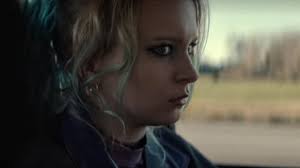
Which is how it begins — a morose young mother (former child star Kelsey Asbille of “One Tree Hill,” “Wind River” and TV’s “Yellowstone”) leaves her husband in bed and drives to the parkland cliff where her little boy fell to his death. Iris is ready to follow him into the abyss.

“The world takes what it wants. I wish it had taken me instead.”

But “Richard” (Finn Wittrock of “Unbroken” and TV’s “American Horror Story”) intervenes. He expresses sympathy, tells her about the Big Mistake in his life and talks her out of it. It’s only in the parking lot, where he’s parked entirely too close to her Prius for her to be able to get out, that she figures out she’s in mortal danger.

Waking up from being tased, she racks her brain for escape options. Hitting the emergency button on her smart watch doesn’t do it. And her driver, “Richard” (“Why do you keep calling me that?”) has all his bases covered.

“Please, go through the process. Everybody does.”

He’s sure she’s trapped. She remembers she never goes anywhere without a Swiss Army knife.

And we’re off — a petite, willowy woman with a lot of fight in her and a smirking, chiseled villain who appears to have all the advantages. That syringe he injected her with? It will immobilize her in a couple of minutes. It’ll last for an hour.

“I hope you find a good place to hide,” he bellows as she sprints off.

The problem-solving in this real-time T.J. Simfel/David White screenplay isn’t bad, just obvious. The foreshadowing is Screenwriting 101 level, the waypoints of this attempted escape pre-ordained, the finale over-the-top in ways that would never pass a medical board’s “fatal injury” review.

But Asbille is plucky and the pacing atones for some of the script’s sins.

What are they? You can contrive, but don’t give away your contrivances. Under-explain, don’t over-explain. Let the villain’s ploys be surprises, and don’t telegraph your victim’s counter-moves. Don’t introduce strangers into the mix just to kill them off, the way ALL these movies do. And keep the clock ticking in your “ticking clock” thriller.

“Don’t Move” avoids some pitfalls and tumbles into others, and whenever it does, it abandons suspense and just feels silly.

That’s how you end up with a thriller that doesn’t feel “real,” it just feels processed.

Rating: R, violence, profanity

Cast: Kelsey Asbille, Finn Wittrock and Moray Treadwell.

Credits: Directed by Brian Netto and Adam Schindler, scripted by T.J. Simfel and David White. A Netflix release.

Running time: 1:32

Posted in Reviews, previews, profiles and movie news | Tagged , , , , , | Comments Off on Netflixable? A woman pursued by a serial killer, and paralyzed — “Don’t Move”

Movie Preview: Oscar-winner Ke Huy Quan stars in “Love Hurts”

Quan (“Indiana Jones and the Temple of Doom,” “Goonies” and “Everything Everywhere All at Once”) co-stars with Ariana Dubose, Marshawn Lynch, Daniel Wu, Cam Gigandet, Sean Astin and Rhys Darby in this caper comedy set to open the week before Valentine’s Day.

We’ll see if former child star Quan, swept up as part of an Oscar-honored ensemble, can carry a picture in this scenario, with this sort of support.

Posted in Reviews, previews, profiles and movie news | Comments Off on Movie Preview: Oscar-winner Ke Huy Quan stars in “Love Hurts”

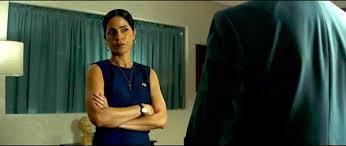
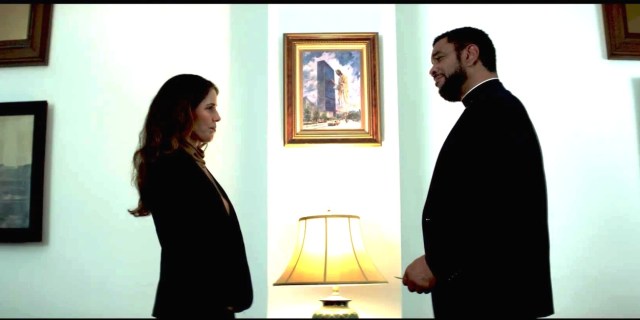
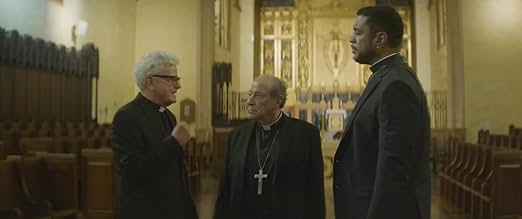
Movie Review: Ralph Fiennes tries to Herd Back-Stabbing Archbishops through a Papal “Conclave”

A pope dies and over 100 of his archbishops gather to politic, poor-mouth, backbite and backstab their way towards electing another in “Conclave,” a deliciously dark, well-acted and beautifully-filmed inside-Vatican-intrigues thriller.

Director Edward Berger (“All Quiet on the Western Front”), with screenwriter Peter Straughan adapting a Robert Harris novel, serves up a sumptuous pageant of ritual and tradition as the red-robed archbishops — captured with their whiter-than-white umbrellas in the Vatican City rain at one point — meet and vote, scheme and investigate, form alliances and wrestle with issues of faith, “liberalism” and a “Universal Church” that is losing favor and losing ground around the world, if not on the “stacked” U.S. Supreme Court.

It’s a thinking filmgoer’s film, and a darkly comic one as it exposes the mere mortals who act all too human as members of the ultimate elite, a gathering of serene majesty and self-importance, one almost guaranteed to tumble into melodrama.

Ralph Fiennes is Archbishop Lawrence, Dean of the College of Cardinals and one of the innermost inner circle at his bedside when the pope dies. He had hoped to resign from this position and take up his ongoing struggle with “belief” in a monastery or some such. Or so he keeps saying.  But he is “a manager,” the dead pope once told him. “Managers manage.”

That’s just what he is to do when the archbishops from near and far, some 108 of them, descend on Rome to pick a new pope, “sequestered” from the world, voting on paper ballots that are then burned after each round of voting until white smoke spills out of the chimney of the Sistine Chapel, telling the world that they’ve reached a decision.

It will take a two-thirds majority of archbishops to make that secret ballot selection, with all the ballots burned — evidence — letting the world believe something like a full consensus has been reached.

Lawrence is aligned with the liberals, like the just-passed-pope. They’re rallying around the American Aldo Bellini (Stanley Tucci). But the politicking Tremblay (John Lithgow) is playing the angles, out to grab the papal regalia and power for himself.

An archbishop from Africa (British TV star Lucian Msamati) is a popular choice among third world clerics.

And then there’s the conservative, chain-vaping Italian Tedesco (Sergio Castellitto of “Mostly Martha”) who’s of the Mel Gibson “Latin Mass,” take the church back to the pre-“Second Vatican Council” ultraconservative school, someone who “must be stopped,” the liberals all agree.

The dean must keep the peace and maintain the church’s image during this possibly fractious conclave. But right from the start, he’s tipped about the old pope discovering corruption in one of the candidates. The liberals’ agreed-upon champion Bellini insists he is “not fit” and has no interest in the papacy, even as he trots out the word “ambition” to decribe anyone who might stand in his way.

And a new “secret” archbishop has arrived and must be investigated, at least superficially, before he can be seated. Archbishop Benitez, played by screen newcomer Carlos Diehz, was appointed in secret and kept secret afterwords. Lawrence’s right-hand-man, bishop O’Malley (Brian F. O’Byrne) can’t find much about him. Maybe the pope kept this archibishop secret because of Benitez’s posting.

He is archbishop of Kabul, Afghanistan, right in the murderous heart of the most intolerant corner of Islam.

Isabella Rossellini plays the nun in charge of the army of churchwomen who work to keep this conclave fed, laundered and doing its duty. But scandal, scheming and petty mistrust writ large with the stakes so high threaten to upend it all.

“Although we sisters are supposed to be invisible, God has nevertheless given us eyes and ears.”

And outside, we hear, there are protests and bombings. Over what is never made clear.

The Oscar-winning Fiennes is in great form playing a conflicted man who must maintain decorum, and his temper, in the face of myriad challenges. He practically crumples his crucifix in fury at the end of each day’s test.

It is to the credit of the entire supporting cast that one and all hold his or her own with Fiennes and his magnificently internalized seething.

Tucci, Lithgow, O’Byrne and Rossellini each have their best roles in years and don’t disappoint. Casteillitto, Diehz and Msamati impress.

And Berger gives this all the kind of gravitas it deserves — a new church “direction” in a world turning away — even as he is letting in just enough air that the faithful and those critical of “The Church” can have a laugh at the arcane pageantry and human vindictiveness that all the pomp and circumstance in the world can’t paper over.

“The men who are dangerous are the ones who want it!”

I can’t stress enough how beautiful the images here are — crisp costumes in pristine settings embracing the ancient history, high art and timeworn rituals of this world and this process. The settings are striking and overwhelming, the shot selection, lighting and blocking are perfect.

A few films have taken us into the regal papacy under such conditions, with the 1968 epic “The Shoes of the Fisherman” being the first and most impressive that I recall. That film was a pre Pope John Paul appreciation of the Catholic Church’s position in the Cold War. In “Conclave,” it’s a reeling institution that can ill afford one more scandal after decades of bad press that is depicted, a church whose top tier officials ponder their faith and the buy-in that involves.

The finale turns dramatically melodramatic, suggesting the severest trial will produce the most radical changes and revealing who the most cunning manipulator of all might be. It’s enough of a jolt that you may laugh at the audacity of it, or the incredulity.

But “Conclave” is a deliciously immersive experience, a narrative that commands our attention and expects our speculation even if it maintains a distance that allows it all to seem out-of-step, surreal and even darkly humorous at its most extreme.

Rating: PG

Cast: Ralph Fiennes, Stanley Tucci, Isabella Rosselini, John Lithgow, Lucian Msamati, Sergio Castellitto, Carlos Diehz and Brian F. O’Byrne.

Credits: Directed by Edward Berger, scripted by Peter Straughan, based on a novel by Robert Harris. A Focus Features release.

Running time: 2:00

Posted in Reviews, previews, profiles and movie news | Tagged , , , , , , , | 1 Comment

Movie Review: Actress fights cancer, heartbreak and career setbacks, including “Your Monster”

What manner of miscalculated meshuggagh mashup is this?

“Your Monster” is a “personal demons” rom-com take on “Beauty and the Beast,” one with the beast willing to offer to “eat” the creep who jilted fair Laura when she was diagnosed with ovarian cancer.

“It would literally take like, two seconds!”

It’s not romantic. The comedy is thin, the frights meant to be jokes (cough cough) and the “monster” disappears for much of the later second act and earlier third one.

But it does have “In the Heights” singer and “Scream” and “Scream IV” screamer Melissa Barrera, so let’s see if we can find something other than her in this “anti-romantic comedy” to endorse.

That’s the spin actress turned first-time feature writer-director Carolina Lindy has given her movie. But movie critics review the movie, not the “director’s statement..” Well, those of us who know we’re being “spun,” anyway.

Barrera plays a not-ready-for-Broadway baby who’s put in five years with her playwright/paramour Jacob (Edmund Donovan), helping him write, polish and workshop the musical that could be his big break, “House of Good Women.”

As he’s taken suggestions and based the heroine, Laurie, on Laura, Jacob does the right thing and promises her the lead. It’ll be her “big break,” too.

But her getting diagnosed with The Big C kind of cuts into his creative process and “me” time. He drops her like a rotten potato. She’s left to weep on the shoulder of the Amazon delivery guy who refreshes her supply of Kleenex, and take comfort from her dizzy actress “ride or die” Mazy (Kayle Foster).

It’s at this low ebb, with the show entering auditions and Laura not invited, that the beast who lived under her bed and in her closet growing-up re-appears.

“You don’t remember me? At all?”

Nope, thus the screaming.

The ill-tempered monster tries to get her out of the house she grew up in — “I don’t do roommates!” — and failing that, instead sticks around to buck our gal up since she’s feeling low.

She insists that “I was just very helpful in the development process” of the show, but her Monster isn’t hearing it. She makes excuses for her ex, but he’s quick to give Jacob a new nickname — “Limp d–k f-ck-face!”

That’s what makes Laura summon up the guts to audition, shock Jacob and win the role…of understudy. That way she gets a front-row seat for his lust for his new leading lady (Meghann Fahy) and what she’s doing to Laura’s role and her show.

Ask any comic and they’ll tell you shock-value profanity is the weakest crutch in comedy. That’s too much of what the monster has going for him, that and a decent “Beauty and the Beast” mask perhaps leftover from the first Broadway production of the Disney musical. Sitcom vet Dewey (“Casual,” “The Mindy Project,” “Now We’re Talking”) registers under the mask. But not much.

What little chemistry our leads develop is tossed aside for “rehearsing the show” and follow-up visits to her bloodwork nurse and oncologist in the later acts.

None of this is supposed to make much sense, and it doesn’t. The leads are OK, but the limp supporting cast is confined to generic roles — bitchy co-stars, dopey stage manager of the play, vapid “bestie,” cheerfully unconvincing doctor, grumpy nurse.

They aim for a sort of “anti-romantic” “cute” that never gets past cloying.

Movies connect with viewers in a lot of ways, but for me, that never happened as the disparate elements are dully executed by themselves and never really work together. The “musical” is clunky, the romance unromantic and neither the nostalgia (your childhood fear) nor the “Allow yourself to be angry” messaging landed.

I laughed three times, maybe four. And whatever “charms” it reached for vanish for the attempted over-the-top finale, which left me cold and didn’t come close to making the sale about the “Embrace your inner rage” spin this is allegedly about.

Rating: R, sex, implied violence, profanity

Cast: Melissa Barrera, Tommy Dewey, Edmund Donovan, Meghann Fahy and Kayla Foster

Credits: Scripted and directed by Caroline Lindy. A Vertical release.

Running time: 1:39

Posted in Reviews, previews, profiles and movie news | Tagged , , , , , | Comments Off on Movie Review: Actress fights cancer, heartbreak and career setbacks, including “Your Monster”

It’s “Conclave” Sunday in America

A box office hit, and a packed house suggests a lotta people are skipping Sunday Mass in Durham., NC.

The lady yelling “It’s NOT a comedy” at the people  laughing at the wicked twists and backstabbing must be Leonard Leo’s cousin or some such.

Posted in Reviews, previews, profiles and movie news | Comments Off on It’s “Conclave” Sunday in America

Movie Preview: Keke and SZA have “One of Them Days”

A January working class “girls” comedy, this could find its niche and score in what is generally an Oscar holdover month with ONE horror/action or comedy hit breaking out amidst awards contenders.

Two Broke Girls trying to make the rent. One more time. Can Katt Williams help? Lil Rel? Janelle James?

Nepo Baby Maude Apatow might have some spare change. But nothing’s going to take away the nightmare of a plasma donation/sale gone wrong wrong wrong.

Posted in Reviews, previews, profiles and movie news | Comments Off on Movie Preview: Keke and SZA have “One of Them Days”

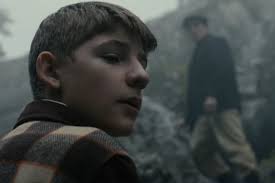
Movie Review: Little Boys on the Run “Beyond the Wasteland” of Macedonia

The child of about nine lives with his father in the forest, hidden from “the evil outside” world, off-the-grid, with hints that there might be no grid left.

They hunt and forage, set traps and makeshift alarms and hole-up in a Cold War era concrete bunker that’s seen better days. But where else would one ride out the Apocalypse?

Father (Sasko Kocev) has the glint of madness in his eyes as he teaches his son and limits his horizons. The boy (Matej Sivakov) reads from a battered picture book and imagines himself as “The Leaf Child,” “special.” He can don his headphones if the outside world gets to be too much.

But Dad’s biggest concern is that little Marko grows strong enough to chamber a round in the semi-automatic pistol he leaves the child with every day.

Dad listens to political Jeremaids (In Macodonian, with English subtitles) on a crackling shortwave radio. He drinks, and keeps handcuffs handy for when he does. The crazy eyes tell us he’s capable of violence and probably paranoid.

But I cannot overstate the disappointment that “Beyond the Wasteland,” titled “M” in its European release (after Marko’s hand tattoo) turns out to be just another “After the Zombie Apocalypse” thriller.

“‘M’ is for Marko, Mother,” and so on, the child recites. M is for “Macedonia,” too. Vardan Tozija’s survivalist thriller becomes an undead parable about humanity’s capacity for dehumanization and the dangers of anti-immigrant demagogues.

That doesn’t paper over the fact that it’s depressingly conventional in plot and genre. It’s just a Macedonian zombie movie, and no more ambitious than most of the other films that followed “Night of the Living Dead.”

Marko is already afraid of his father when he figures out that the world “outside” isn’t all evil. He stumbles across special needs child Miko (Aleksandar Nichovski) and his mother (Kamka Tocinovski).

The boys can sneak off and share toys (batteries last longer after the apocalypse than they do now). But Marko dare not reveal this to his Dad. We and he can guess how that will turn out.

Blood will be shed, children will flee and “the evil ones” will be confronted and (over) explained. The allegory is hammered home.

But even though it’s a good-looking film, and grim enough, even if there is some suspense despite story beats so cut-and-dried that they will surprise no one, even though the child star is impressive in this setting, “Beyond the Wasteland” never escapes its “Been there, seen that, got the allegory” burden.

Honestly, the cinema was almost zombied-out before “The Walking Dead,” and the symbolic, slow-walking horror isn’t any fresher now, after “Maggie” and “World War Z” and scores of other variations on families trying to survive zombies/children in Zombieland theme.

Rating: unrated, violence

Cast: Matej Sivakov, Sasko Kocev,
Aleksandar Nichovski and Kamka Tocinovski

Credits: Directed by Vardan Tozija, scripted by Darijan Pejovski and
Vardan Tozija. A Well Go USA release.

Running time: 1:39

Posted in Reviews, previews, profiles and movie news | Tagged , , , , | Comments Off on Movie Review: Little Boys on the Run “Beyond the Wasteland” of Macedonia