Next Interview: Questions for Chaz Ebert (Roger Ebert’s widow) and director Steve James re: “Life Itself”?

chAZI remember that Siskel & Ebert were the first guys to alert me to the wonders of the great basketball documentary “Hoop Dreams.”

So it’s fitting that Steve James, who directed it, did the interviews and directed the Ebert biographical documentary “Life Itself.”

James and Ebert’s widow, Chaz, guided the project through completion after Roger got too frail and then died before its completion.

I’m wondering how much Ebert “directed” the film, even in his weakened state, how they saw his outlook on life and on movies change as his health failed.

But you probably have questions of these two as well. Post them as comments and I will squeeze them into my Monday interviews with James and Mrs. Ebert.

Posted in Reviews, previews, profiles and movie news | Comments Off on Next Interview: Questions for Chaz Ebert (Roger Ebert’s widow) and director Steve James re: “Life Itself”?

Weekend Movies: Poor reviews for “Jersey Boys,” awful ones for “Like a Man Too”

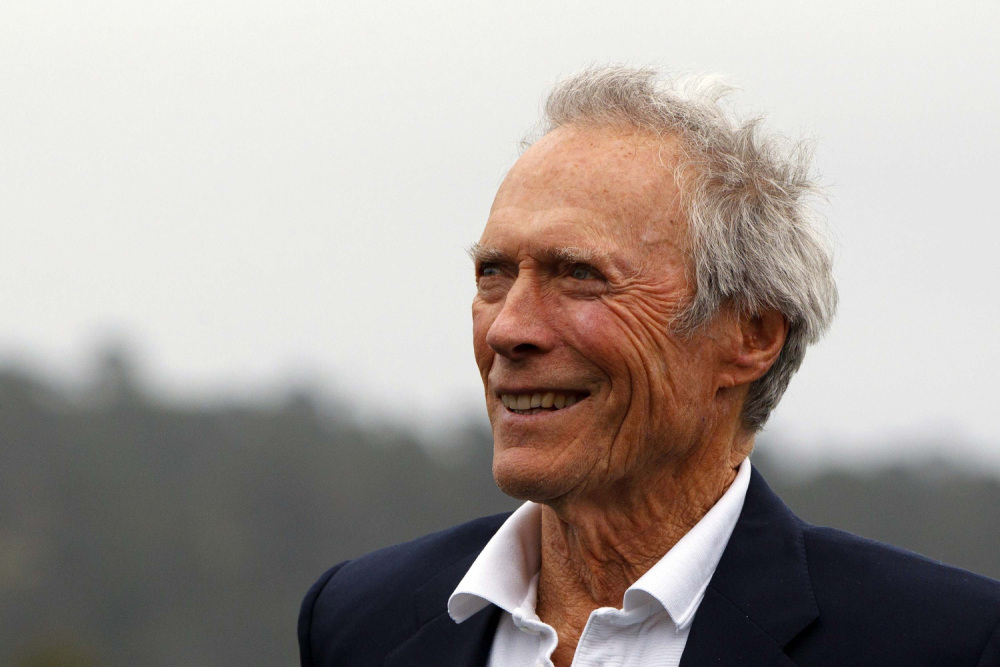
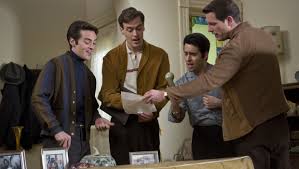
ImageOctogenarian Clint Eastwood’s take on the Broadway musical about Frankie Valli and the Four Seasons, “Jersey Boys,” isn’t generating much love from America’s movie critics.

With a no-star cast, songs fifty years past their pop expiration date (Don’t give me “They’re timeless,” because I’m not buying it) and a director who has never had the patience to give himself or inexperienced actors enough takes to generate empathy or a “performance”, and you’ve got a film I say is Clint’s worst as a director and the Metacritic meter and Tomatometer have deemed unworthy, by consensus.

It’s a shockingly old-fashioned script, corny, cliched, packed with stereotypes. But there are folks who get into that.

Could it be America’s movie critics just aren’t old enough to “get it”? Only time you’ll ever see me type that.

Eastwood cast that great character actor and hoofer, the ageless and beloved Christopher Walken, and then cuts away from him in the closing song-and-dance finale. The last but not the least clumsy bit of botchery from a director who is going through the motions. This is an old man’s movie, an old man who was never an artist of the Hitchcock/Lean/Kubrick/Ford pantheon, guys who still did good work into their dotage.

And who is the audience for this thing? People who grew up on the Four Seasons stopped going to the movies, by and large, when Miss Daisy said goodbye to Hoke. Musicals fans? I sense no audience at all. Predictions are for a $12 million opening, which suggests the end of the line for Clint’s Warner Brothers director career. “American Sniper” follows, but this leaves a sour taste.

And Clint, HOW do you make a movie about Doo Wop and early pop rock and not have a single black face in scenes from that era? Spike Lee looked like an ignorant jackass for complaining about the lack of black Marines on Iwo Jima (there were none, pretty much). He could have a field day with this, even if it feels like kicking an old man to say so.

Kevin Hart’s “Think Like a Man Too,” the sequel to the battle of the sexes comedy based on a Steve Harvey book, will be a real test of the comic’s drawing power. A pandering, obvious Vegas comedy with all the Vegas ingredients, it will please audiences more than it did critics, who ripped it for its lack of laughs and greater lack of original laughs.

“Third Person” suggests Paul Haggis still writes scripts that lure in good actors and big names — Liam Neeson, Olivia Wilde, Mila Kunis, James Franco, and Oscar winners Kim Basinger and Adrien Brody are in the cast. But the director’s interlocking “Crash” story gimmick is played, which is why this goes into limited release. Haggis is working his way down the Hollywood studio food chain, in terms of distributors. Pity.

Roman Polanski’s “Venus in Fur” is a little like his adaptation of the play “Death and the Maiden” — claustrophobic, stagey (theatrical). He cast his wife as the vamp/actress who teases and tempts a playwright/director (Polanski look alike Mathieu Amalric). So the kinkiness stands out in this movie about a casting call for a play about the guy whose name was the source of the term “Masochism.” Quite good.

“Coherence” is a stagey bit of no-budget sci-fi that opens in a few theaters and pleased other critics more than it did me.

“Le Chef” is a slight French food comedy that is inferior to Jon Favreau’s “Chef” in most ways, but isn’t bad. Light as a souffle, cute and corny. Jean Reno stars in that one, which goes into limited release.

Posted in Reviews, previews, profiles and movie news | Comments Off on Weekend Movies: Poor reviews for “Jersey Boys,” awful ones for “Like a Man Too”

Movie Review: Jean Reno stars in “Le Chef”

Image

The French culinary comedy “Le Chef” is not to be confused with the delicious and more substantial Jon Favreau farce “Chef,” in theaters at the same time. “Le Chef” is a 2012 French film, coincidentally released just as Favreau’s comedy rolls out in American cinemas.
But even if that confusion was intentional, a canny box office move to cash in with the older title, “Le Chef” is nothing to complain about. It’s merely a souffle, where “Chef” is more of a complete meal.
And both movies love food.
Jacky (Michael Youn, amusingly hyper) is a pushy perfectionist. He calls himself “le Mozart of the Kitchen,” but that cannot help him keep a job. He insults customers by correcting their blundering wine choices for his dishes, stuns working class Jaques who want steak or stew with prix fixe menus (butternut squash mousse) at dumpy diners and upsets the residents at a retirement home with his culinary wizardry. Old people love routine and fear change, you know. They hoot at him. Literally.
“I see too big,” he confesses (in French, with English subtitles).
That upsets his pregnant girlfriend (Raphaëlle Agogué), who wants a man she can depend on. He’s not even supposed to be cooking for the retirement community. He was hired to paint the windows, but peeking in, he saw the kitchen staff ruining sole, opened the window and just took over.
Famous chef Alexandre Lagarde (the delightful Jean Reno) has a different problem. He’s a brand name, with his flagship restaurant, Cargo Lagarde, cookbooks, a TV show and a place in a big frozen food and restaurant conglomerate.
He still has standards and an exacting palette. But “I feel no emotion,” he sighs. He’s old-fashioned, out of step with the “molecular gastronomy” of today. And if he loses a Michelin star at Cargo Lagarde, the bottom-line-obsessed boss of the company (Julien Boisselier, everything you want in a villain) will take the restaurant away from him, demote him to the provinces. The evil boss conspires to do just that.
Jacky and Alexandre could help each other out. They need to “meet cute.” So they do. And let the sparks fly as the perfectionists duel, the master chef is schooled in his own recipes and everybody teams up to save that all-important Michelin star.
Actor turned writer-director Daniel Cohen (“Les deux mondes”) keeps this fluffy nothing skipping along, pausing only to savor this or that delectable dish. The comedy is peopled with a winning supporting cast, a rainbow of (all male) line cooks and chefs named Moussa, Chang and Titi who pitch in, a swaggering, annoying British “molecular” star (James Gerard) who might replace Alexandre, and a dizzy Spanish expert (Santiago Segura) in that nitrogen and scent-obsessed culinary fad who drops in to help and lampoon the fad.
A bit of low comedy that works — Alexandre and Jacky disguise themselves as a Japanese couple (geisha and shogun is more like it) to scout out the Brit’s amusingly pretentious molecular restaurant with its “virtual calamari” and “sweetbread spaghetti” and strawberry eclair in a test tube.
But the knock the critics lay on Alexandre, that “he repeats himself” applies to the movie, in a way. There’s little surprising here, from the daughter Alexandre neglected while he was building his career to the “big meal” finale. But Cohen and crew keep it light and brisk and find food-centric laughs in all the right places. Youn is the very embodiment of foodie perfectionist, never more so than when Jacky gets dessert shoved in his face and naturally, takes a lick.
“Needs more praline.”
 Image
MPAA Rating: PG-13 for brief strong language
Cast: Jean Reno, Michel Youn, Raphaëlle Agogué, Julien Boisselier
Credits: Written and directed by Daniel Cohen . A Cohen Media Group release.
Running time: 1:25

Posted in Reviews, previews, profiles and movie news | Comments Off on Movie Review: Jean Reno stars in “Le Chef”

Movie Review: “Think Like a Man Too”

ImageSequels, as “22 Jump Street” joked, are always “the same, only worse.”
So any pretense of insight into the battle of the sexes and any real connection to stand-up comic turned self-appointed relationships expert Steve Harvey’s book, “Act Like a Lady, Think Like a Man,” is long forgotten in “Think Like a Man, Too,” the sequel to the surprise hit of two springs back.
Kevin Hart has become the break-out star of this ensemble, so “Too” is basically a star vehicle for the Manic Little Man — with Vegas as the playground for this “Bridesmaids” meets “The Hangover.”
This generally mild-mannered comedy sinks or swims on Hart’s back. And as one scene makes clear, Little Man can’t swim.
Our “Think Like a Man” couples head to Vegas where Candace (Regina Hall) and Michael (Terrence Jenkins) are getting married.
Cedric (Hart) has been mistakenly been named Best Man, and is spending every cent he’s got — and then some — for a bachelor party for the ages for Michael, with Dominic (Michael Ealy), “Zeke the Freak” (Romany Malco), Jeremy (Jerry Ferrara) and and Bennett (Gary Owen) along for the ride. Business executive Lauren (Taraji P. Henson) has set up a bachelorette party for Candace, Mya (Meagan Good), Kirsten (Gabrielle Union), Tish ( Wendi McLendon-Covey) and Sonia (La La Anthony). If only the groom’s overbearing mom (Jenifer Lewis) will let her.
Hart’s Cedric narrates the tale, which feebly grasps at basketball metaphors to “keep score” as the two ensembles head out into the Sin City night. Cedric nags the groom.
“You’ve got the rest of your life…to follow this woman around the grocery store,”
And he needles their posse for their lack of party prowess.
“I’m SICK of this NON-tourage.”
Introduce strains in the careers/lives of Chef Dominic and workaholic Lauren, baby-making efforts for “bossy” Kristen and stoner Jeremy, and Cedric’s own “we’re on a break” marriage.” Throw in some weak Vegas cameos (Floyd Mayweather, Drake) and assorted overly familiar gambling scenarios, a funny Ladies Lip Sync Bel Biv Devoe scene that is the film’s highlight, and a pretty good brawl in a strip club, and that’s about it.
We’re invited to laugh at the “Uncle” (silky smooth Dennis Haysbert) brought in to distract Michael’s obnoxious mother and begged to giggle at the recycled “Never say never in VEGAS, baby” zingers.
None of it’s fresh, and Hart’s finest moment comes way too early — a no-holds-barred recreation of Tom Cruise’s underwear dance from “Risky Business” — to justify building the movie around him.
Maybe the funniest gag is the actual Steve Harvey cameo, a backhanded slap at just how far one comic/radio host/game show host/author/self-help chat show counselor can take “selling out.” The answer — when your face is on a slot machine.
But if there’s one lesson we, if not this “Think” cast and crew can take from “Jump Street,” sequels can be “exactly the same.” They don’t necessarily have to be worse.

Image
MPAA Rating: PG-13 for crude sexual content including references, partial nudity, language and drug material
Cast: Kevin Hart, Gabrielle Union, Taraji P. Henson, Megan Good, Michael Ealy, Jenifer Lewis, Romany Malco, Dennis Haysbert
Credits: Directed by Tim Story, scripted by Keith Merryman and David A. Newman. A Screen Gems release.
Running time: 1:46

Posted in Reviews, previews, profiles and movie news | 6 Comments

Director and star say “Don’t call ‘Obvious Child’ an ‘Abortion Comedy'”

Image
Google the phrase “Abortion Comedy” and all the entries point you to one film — “Obvious Child.”

“Finally, a romantic comedy about abortion,” raves the Los Angeles Times, among others.

Then, there are the attacks — from the right wing blog Newsbusters, from CNS (the Christian News Service).

Followed by denials, which director Gillian Robespierre repeats, the moment the subject comes up.

“So many people have billed it as ‘an abortion comedy.’ We don’t really think that’s what it is. We hope we’re being very thoughtful about the jokes. You get to know our heroine, and any jokes that are made from Donna’s situation come from a place of love and playfulness, making life work.”

“Obvious Child” is about a smart, profane New Yorker who works in a leftist book store by day and tests the stand-up waters of the city’s alternative comedy scene as a monologist/stand-up comic by night. Donna, played by Jenny Slate, is in her late 20s, not really sure of who she is. But she does like to drink and, after being dumped by her boyfriend, gets drunk enough to have under-protected sex.

Sound familiar?

“There are many different ways a pregnancy story can play out,” Robespierre says. “We wanted to tell this one. We might have enjoyed ‘Juno’ or ‘Knocked Up,’ and there’s room for plenty of stories on this idea of an accidental pregnancy. But we thought this was the most honest way of treating it.”

Slate — like Robespierre, a New Yorker in her early 30s — is a character actress who has turned up in “This Means War” and “Parks & Recreation,” a voice actress who has lent her quirky sound to films such as “The Lorax” and TV shows like “Bob’s Burgers,” and a stand-up whose act Robespierre caught back in 2009.

“Donna does my sort of style of stand-up,” Slate says. “Even though the subject matter and the boundaries are a little different, she’s like me. She’s unaware of how much power she wields on the stage. She’s just very scattered about where she directs it.”

Donna’s “boundaries” include making light of her pregnancy predicament, joking around in the Planned Parenthood clinic where she goes looking for answers.

“”I would like an abortion, please. Sorry, that sounded like I was ordering in a drive-through!”

Slate says that like a lot of people in their late 20s, Donna “is still in the process of figuring out who she’s supposed to be.” Adult or not, she’s not ready for a baby. And in America, in reality, if not on TV or in most films, abortion is legal and an option for women. It’s not something “Juno” gives much thought to. And it’s never seriously discussed in “Knocked Up,” even though the heroine looked like Katherine Heigl and the guy who got her pregnant was Seth Rogen.

“I wanted to make a romantic comedy with a leading lady who was strong, who had all the best jokes, who was complex and vulnerable at the same time,” says Robespierre.”And we wanted, also, to present abortion as an option. A judgement-free option. It feels more true, in this situation.”

It’s an option someone like Donna, smart but “scattered,” prone to sharing her mistakes on stage in the golden age of social media and “over-sharing,” would consider, both director and star say. Even if most movies and TV shows steer clear of “the A-word” as subject matter.

“We don’t shy away from it,” Slate says. “We’re not afraid of the word ‘abortion.’ We understand the heaviness and weight to it in people’s lives. But it’s not a word that’s full of shame, judgement, or have any stigma to it.”

And “We don’t really make fun it,” her director insists. “So I wish people would stop calling ‘Obvious Child’ ‘The Abortion Comedy.’ That’s not what it is.”

Posted in Reviews, previews, profiles and movie news | Comments Off on Director and star say “Don’t call ‘Obvious Child’ an ‘Abortion Comedy'”

Weekend Box Office Final Figures: “Fault in Our Stars” fell off a cliff

The actual final figures for last weekend’s box office take showed that “22 Jump Street” did a little worse — $57 million as opposed to close to $60 — than earlier estimates had indicated.

And “How to Train Your Dragon 2” didn’t do what animated sequels do and light up the night, either. It did not open over $50 million after all.

But the eye opener in that top ten is “The Fault in Our Stars.” Apparently, there was no repeat business. And every teen girl in America obsessed with the novel, and those older adults who hide their reading habits, lost in “Young Adult” fiction, saw it opening weekend.

The fall-off, first to second weekend, wasn’t a better than average 40%, an average 50% or even a poor 60%. It was 70%. “Fault” took a Tyler Perry plunge. Ouch.

At least there won’t be a sequel.


Posted in Reviews, previews, profiles and movie news | Comments Off on Weekend Box Office Final Figures: “Fault in Our Stars” fell off a cliff

Movie Review: “Jersey Boys”

ImageWhatever charms turned the musical “Jersey Boys” into a Tony winning Broadway hit are sorely missed in Clint Eastwood’s tone deaf corpse of a movie. Late to the game, blandly cast and scripted with every Italian American cliche in the “How to Make Spaghetti” cookbook, it is Eastwood’s worst film as a director.
And it does Frankie Valli and the Four Seasons no great favors either, overselling their cultural significance, rendering their story in broad, tried and trite strokes.
“Jersey Boys” follows little Frankie Castelluccio (John Lloyd Young), son of a New Jersey barber, from his teens, training to follow in dad’s footsteps. But all the Italian-Americans in Belleville see bigger things for Frankie — whose voice could make him “bigger than Sinatra.”
If only he can get a break. If only he can stay out of trouble with his musician pal, Tommy DeVito (Vincent Piazza), a “two-bit hustler” who does break-ins and “fell off truck” thefts in between gigs.
Frankie is the gang’s look-out, signalling that the cops are coming by screeching “Silhouettes,” the doo-wop hit by The Rays.
Since this happens in 1951 and the song didn’t come out until 1957, that Frankie was plainly ahead of his time. Or Eastwood has turned careless with the details, like a little old man whose every article of clothing, from shirt to shoes, now fastens with Velcro.
The story arc — struggles to get a record deal, inspiration in the studio, breaking out on radio, then money troubles, internal strife, tragedy, etc. — is so over familiar that it lacks a single surprise. Recycling that corny DJ locks himself in the studio playing their first hit over and over again until the cops break down the door? “The Buddy Holly Story” did it better back when Gary Busey was thin.
Members of the group turn, mid-scene (mid-concert, sometimes) to the camera and narrate their story — Tommy, Frankie, Nick ( Michael Lomenda) and songwriting singer Bob Guadio (Erich Bergen). Characters talk with their hands, say “Hand to GOD” a lot and slip from English to Italian the way such characters did in Italian-American sitcoms of the last century.
But the music? Removed from their era, Valli’s adenoidal falsetto evokes a giggle, on first hearing. Try to listen to “Sherry,” the group’s screeching first hit, without laughing. But his range was always impressive, as was their longevity — 29 Top 40 hits spanning three decades.
The musical mixes up the songs’ order and exposes the tunes’ limitations. “My Eyes Adored You”, where the line “though I never laid a hand on you” was always creepy, gets turned into a lullaby Frankie sings to his little girl. And turns even creepier when it does.
The Eastwood film exposes the play’s antecedents. It is structured like “Mamma Mia!”, with hints of their most famous and recent hit, “December 1963 (Oh What a Night),” book-ending the “Buddy Holly Without the Plane Crash Story” plot.
Piazza, playing the annoying, overbearing goombah DeVito, is the only member of the group to make an impression. Christopher Walken, playing the benign (of course) mobster who watches over Frankie, is given little to do. Only Renee Marino, as the Italian spitfire who became Frankie’s first wife, threatens to animate this picture and give it the acting jolt it needs. But doesn’t.
“Jersey Boys” is such a poor reflection of Eastwood’s best work that that just when you think, “At least the musician in him does justice to the songs,” there’s a botched horn arrangement in “Can’t Take My Eyes Off of You.” Just when you think, “Well, there’s a big ensemble dance number coming, and he cast Christopher Walken,” he misses getting the famed dance man in the shot.
So the guy who made “Bird” has made the worst screen musical since “Rock of Ages.” And it’s little comfort knowing this won’t be his last film, or how he’s remembered. It just makes you fear he’ll end his directing career on an even worse note, 2015’s “American Sniper.”
Image
MPAA Rating: R for language throughout
Cast: John Lloyd Young, Vincent Piazza, Renee Marino, Christopher Walken, Erich Bergen, Michael Lomenda
Credits: Directed by Clint Eastwood, written by Marshall Brickman and Rick Elise, based on their stage musical. A Warner Brothers release.
Running time: 2:17

Posted in Reviews, previews, profiles and movie news | 17 Comments

Movie Review: “Third Person”

ImageThe Paul Haggis drama “Third Person” is, like his Oscar-winning “Crash,” a
series of interlocking stories. Each is fascinating , or at least interesting
its own right. Each is cast with more than capable actors.
Like “Crash,” the conceit that ties those tales together is a bit obvious.
And like “Crash,” it rambles on and on, unable or unwilling to develop an exit
strategy. His all-star-cast has to get its money’s worth, even at the expense of
the audience’s patience.
Liam Neeson is Michael, a married writer visiting Paris as a cure for
writer’s block, trying to carry on an affair would a would-be novelist, Anna
(Olivia Wilde). When he gets the call from the front desk announcing she’s shown
up, he puts us on our guard.
“Does she appear to be…armed?”
<Wilde is cast on-the-nose as a scary-sexy, insulting and mercurial careerist
possibly using this “old man” to further her aims. Anna toys with Michael, turns
him on and turns on him and never lets on which Anna he’s going to be dealing
with in a given scene. Meanwhile, he is fielding calls from a sad, knowing wife
(Oscar winner Kim Basinger) back home.
In Rome, Oscar winner Adrien Brody is shady Sean, a fashion espionage agent
(he steals designs) and an ugly American — the sort of arrogant jerk who
doesn’t fall for Italy’s charms. He expects everybody to speak English and serve
cold Budweiser.
“‘Bar Americain,’ and you don’t speak English,” he sniffs to a bartender too
obsessed with soccer to be bothered with him. “You understand the term,
‘irony?'”
By chance, he runs into a beautiful Gypsy (Moran Atias) and becomes tangled
up in her melodrama — a hustler who wonders, at every turn, if he’s being
hustled by an expert.
Mila Kunis is Julia, a broke New Yorker who can only find work as a hotel
maid, whose life has been wrecked by an accusation of child neglect/abuse. Maria
Bello is her irritated lawyer, the one whose appointments Julia keeps missing.
James Franco, an artist who paints without a brush and who lives a stunning
Frenchwoman (Loan Chabanal), is mixed up in it.
The Neeson-Wilde scenes have a playful, dangerous and sexual edge, thanks
largely to Wilde’s fearlessness and cocksure comic sensibilities and Neeson’s
deadpan reactions to her.
Sean, bouncing all over Italy with a woman he seems to both lust after and
pity (Gypsy discrimination) in a succession of different generations of Fiats
she apparently steals, is all those things that Brody does best — aloof and
cool, a little macho and very sarcastic. I love the way he refuses to meet Italy
on its own terms, even when Sean runs into that rare Italian who isn’t a coward,
a bigot or criminal. Do Sean a favor and it’s “Spasiba.” He thanks you in
Russian, just to irk you.
The Kunis/Bello/Franco tale is the most melodramatic and least satisfying,
but even it has a nice payoff.
Haggis lets us get way ahead of the characters and the figure out what the
title of this writerly tale — “Third Person” — has to do with the sometimes
illogical connections between stories. That’s not a problem. Dragging, dragging
dragging the tales out after he reaches a logical climax and something close to
a resolution with each is not.
A generous whittling down and he might have had something special, from sad
story to giddy one with a sad edge, a hustle with pathos and romance intercut
with the consequences of infidelity.
But “Third Person,” despite its rewards, wears out its welcome long before
the third act is through.

Image

MPAA Rating: R for language and some sexuality/nudity </P>
Cast: Liam Neeson, Olivia Wilde, Mila Kunis, James Franco, Adrien Brody, Kim
Basinger, Moran Atias
Credits: Written and directed by Paul Haggis. A Sony Pictures Classics
release.
<Running time: 2:17

Posted in Reviews, previews, profiles and movie news | 2 Comments

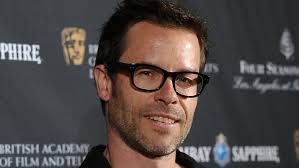
Guy Pearce dresses down and dirty, and scores with “The Rover”

ImageIt helps, when you’re a movie star, to be what they call “Movie Star Handsome.”
But don’t tell that to Guy Pearce. A leading man, oft-employed as a dashing cad (“The King’s Speech”) or chiseled villain (“Iron Man 3”), he still thinks of himself as a character actor.
“Vanity goes out the window,” he says. Especially in his latest film, “The Rover.” He plays a man whose car is stolen in a post-Apocalyptic Australia. The power grid is down. Water is at a premium. So bathing, shaving or wearing anything other than stained and torn shorts is not an option.
“With a film like this, to maintain the integrity of the character, I really let myself go,” Pearce, 46, says with a chuckle. “We get to be vain enough on the red carpet. I let that go, in between red carpets, any way. You get far enough out in the desert, it doesn’t matter.”
His character in the film seems cruel, monomaniacal and ruthless. All he wants is that stolen car. He doesn’t care who has has to shoot or make an alliance with to get it back.
“The most interesting characters, to me, are the ones that let me swim around in that middle ground, where you might feel the urge to like or root for somebody, but they won’t let you. Not right away. You root for them, but you don’t know why, exactly. This mystery man may be redeemable. But you can’t figure him out.”
Pearce is winning some of the best reviews in years for the film, for “a performance of pure controlled ferocity,” as Kenneth Turan wrote in The Los Angeles Times.
“You know so little about this guy for so much of the film,” Pearce says. “You get little hints, here and there, about who he is or was. And you kind of get why he has to get this car back. It’s a tough ask, to ask the audience to go all the way with you, to commit to the character, from beginning to end in this movie. I hope they buy in.”
Pearce, born in Britain-raised in Australia, was the “L.A. Confidential” star who didn’t turn into Russell Crowe. He had his shot, but 2002’s “The Time Machine” and other Hollywood efforts didn’t make him a superstar.
He had his dark years — drug addictions that he has spoken of, after he found the wherewithal to quit. And then he found his niche — leading roles in offbeat thrillers, such as “Memento,” chewy supporting roles in “Traitor,” “The Hurt Locker,” or “Factory Girl” where he did spot-on impersonation of Andy Warhol.
But co-starring in “The Rover” with Robert Pattinson of “Twilight” gave him a taste of what he missed.
“I don’t know if I’d be able to handle it as well as him,” Pearce says of Pattinson. “I’m certainly glad I avoided that, but I was never in a position where it was going to get that out of hand, for me. Some people naturally resonate a kind of energy that draws the crazy fans, and lots of them. Rob has that magnetism, and invites that sort of enthusiasm.
“But if you shoot deep enough in the Australian desert, they can’t find you. Rob got mobbed by the locals. There weren’t many of them. It was nice to see him enjoy the remoteness, the privacy and freedom that being that far away from the mobs gave him.”
Something about Australia has always suggested “end of days” in the movies. From “On the Beach” to “The Road Warrior,” the Outback has been a favorite vision of what the world will look like if the environment, the economy and civilization break down.
“The landscape, with its vast, barren open spaces, says the end is coming, or has already arrived, doesn’t it? When we think of civilization ending, life reaching some sort of environmental extreme, we think the deserts of Australia.”
But it’s not just the landscape. Many of those “End Times” films were actually created in Australia. Might something in the national character at work?
“Maybe we feel we’re pretty tough down there, and maybe we figure we’ll be the last ones standing when it all goes wrong,” Pearce says, laughing. “We do love our cars, love the long, empty roads. We’ve held out down there for a couple of hundred years OK. We’ll survive And we’ll have our cars with us.”
Image

Posted in Reviews, previews, profiles and movie news | Comments Off on Guy Pearce dresses down and dirty, and scores with “The Rover”

Movie Review: Polanski gets back to kinky with “Venus in Fur”

Image“Vanda” stumbles into the theater from off the street, drenched from a French cloudburst.
She curses, stumbles about, pleads. Can’t she get an audition?
Thomas, the adapter/director, has just gotten off the phone, griping to his fiancee that he cannot cast this new play. It needs “a woman.” These days, actresses “sound like ten year-olds on helium.”
But Vanda, all woman, isn’t who he had in mind. She’s in a bustier, black stockings and leather mini skirt. The play he’s casting, “Venus in Fur,” is based on a novel, “not the Lou Reed song.” Her resume is underwhelming. She doesn’t know what a “divan” (half-sofa) is when directed to it on stage. She’s gauche, snapping her gum as she dives into the huge stuff bag of costumes, makeup, what have you. Vanda dolled up like this because she was sure this piece was some sort of “S & M” thing.
No no, Thomas sputters, losing patience. This is “a great love story,” lovers “handcuffed at the heart.” Not “S & M porn.”
But the 1870 novel “Venus in Furs” was by Leopold von Sacher-Masoch. The author’s last name became the inspiration for the word “masochism.” So maybe she’s on the right track, even if he won’t hear it.
Roman Polanski’s film of David Ives’ play is claustrophobic and theatrical, a chamber piece that’s almost a filmed play. It’s just Vanda (Emmanuelle Seigner) and Thomas (Mathieu Amalric), on stage, doing an overlong audition that toys with issues of directorial control, class conflict and sexism.
It’s a playful riff on the material, starting with the casting. Amalric (“Quantum of Solace”) is as close to a French-speaking Polanski look-alike as there is. And Seigner is the director’s wife.
Seigner, who worked with Polanski on “Frantic” and co-starred in “The Diving Bell and the Butterfly” with Amalric, wears her years in the opening moments. Vanda got her S & M dog collar “from when I was a hooker,” she says. And we can believe it. Unsophisticated, out of her depth, unread, she exhausts Thomas’s sympathy by insisting on donning a costume she dragged with her, on doing vocal exercises before beginning, on dismissing the play that she says her agent just handed her.
“Symbolic?” she wonders, at every odd prop or moment. Especially the fur.
And then she strips off the eyelashes, dabs off some of the lip gloss and transforms. Thomas reads Severin, the male lead role, and is stunned by the fact that she knows his new play by heart. He is exasperated by her efforts to deconstruct the play, to infer that its kinkier moments have their roots in his own past.
And he is captivated. She flirts, teases and tempts him.
“Naked on stage?” she suggests as she starts re-staging the play. “For you, no extra charge.”
Polanski plays up the playful side to material that is not as remotely daring as it must have seemed when the novel was new. The camera moves as the characters slip back and forth from the play to their personal “reality” outside of the script. Seigner and Amalric show their own light touches as they slip back and forth, from positions of power — dominance — to submission.
As slight as “Venus” feels, it’s just titillating enough to matter, just twisted enough — Really, casting your wife and a guy who looks like you? — to suggest that even in his 70s, even with virtually no budget, Polanski can deliver a compelling walk on the kinky side.
 Image
 
MPAA Rating: unrated, with profanity, some nudity, mild violence
Cast: Emmanuelle Seigner, Mathieu Amalric
Credits: Directed by Roman Polanski, screenplay by David Ives and Roman Polanski, based on the David Ives play. A Sundance Selects release.
Running time: 1:32


Posted in Reviews, previews, profiles and movie news | 1 Comment