BOX OFFICE: “Moana 2” sails past “Moana 1,” “Wicked” clears $300 million, Kyle Mooney blows A24’s rep with “Y2K”

Disney’s “Moana 2” is on a pace to surpass the box office take of 2016’s more charming “Moana” by midnight Sunday. A 55-60% falloff from its opening extended weekend (just shy of $140 million over Thanksgiving) means a $52 million this weekend, with over $300 million in the bank by midnight Sunday.

Pent-up demand and name recognition allowed this middling cartoon to double Dreamworks’ more charming “The Wild Robot” less than $150 million take, which it earned by having family/animated cinema screens all to itself most of the fall.

This is why they make so many sequels, folks. A slick second film with only the barest hints of the heart and soul of the original one, and it’s making bank.

Deadline.com is reporting that “Wicked,” which has been out one week longer than the Polynesian animated (“NOT a princess”) musical, will also roll past $300 million by Sunday night, adding another $34.85 million.“Wicked” is much longer and has fewer showtimes per day as a consequence of that, so nobody’s crying about the bottom line with that one.

“Gladiator II” is cutting off its slice of the viewership, collecting another $12.4 million. No, it’s not great. But Denzel is in it and action fans have got to have something to go see.

“Pushpa 2: The Rule,” continues a strong run of hits imported for America’s large Indian diaspora, pulling in some $9.3 million on its opening weekend.

“Red One” underwhelmed when it opened but is sticking around long enough to recoup at least a decent chunk of its ill-intentioned budget, earning another $7 million, pushing it over $84 (It won’t clear $100 million, and it cost $250 million).

The re-release of Christopher Nolan’s 2014 sci-fi epic “Interstellar” managed $4.4 million playing in just 165 cinemas.

Kyle Mooney’s misguided, ill-timed “Y2K” may never have had a “right time” to be released. Perhaps the most amusing thing about it is that the classy boutique distributor A24 thought it might. It won’t earn more than $2.1 million, which means it has no prayer of earning back its tiny $15 million) budget.

Perhaps Jeff Bezos can be persuaded to buy it.

“Best Christmas Pageant Ever” added another $1.5, and stands at almost $35 million, probably heading towards a $40 million or so final total when it leaves cinemas.

“Werewolves” is opening to about $1.1 million worth of Frank Grillo fans, not even cracking the top ten.

“The Order” opened reasonably wide and only earned a measly $875K or so. The best new film of the weekend and right up there with “Heretic” and “Conclave” as among the best movies currently in cinemas, wasn’t able to crack the top ten.

Posted in Reviews, previews, profiles and movie news | Tagged , , , , , , , , | Comments Off on BOX OFFICE: “Moana 2” sails past “Moana 1,” “Wicked” clears $300 million, Kyle Mooney blows A24’s rep with “Y2K”

Movie Review: “Y2K,” back when the end was nigh

Why “Y2K?” Why now?

Seriously, WTF, Gen Y and Kyle Mooney?  Films? LOLs? Not on your life, A24 Films.

The ex-“SNL” player Mooney co-wrote, directed and co-stars in “Y2K,” a “horny teenager” comedy that aims to be a sort of Gen Y “Superbad” or “Can’t Hardly Wait” or any teen movie with a party. But it’s about as deep and um “funny” as Billy Joel’s Boomer nostalgia anthem “We Didn’t Start the Fire.”

No, making scores of pop culture references — “The Macarena,” AOL and “You’ve Got Mail,” video stores and their “garden of Earthly delights” (porn-packed) back rooms, Alicia Silverstone — does not constitute a “good song,” or viable a screenplay. It’s barely worthy an “SNL” sketch, one Lorne Michaels would have no doubt “cut for time.”

And then “Y2K” morphs into a “singularity” apocalypse, a “This is the End” with electronics run amok and bringing the world to the brink horror comedy.

It fails on pretty much every level, from the recycled cliches of teen party comedies — bullies, standing up to bullies, finally getting to know the cute/smart girl whose computer skills are already sharp enough to merit teen tech bro sexism — to the relationships set up ame the comic set pieces in that video store, at that party and in their school, which is where the machines will meet up to plot their end game for humanity.

Here’s what’s funny. New Zealand’s hobbit-born WETA Workshop cooked-up robots that computers, camcorders, skillsaws and the like DIY into the stumbling waffle-iron-footed beasts that kill humans. These walking, patchwork electronic sight gags round up survivors for “assimilation” into the tech dominated “future.”

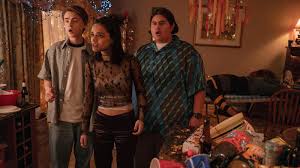
And another Kiwi export, that “Hunt for the Wilderpeople” kid Julian Dennison scores a few giggles as the sassy, rotund bestie to nerdy wallflower Eli, played by aging-out-of-child actor Jaeden Martel of “It,” “St. Vincent” and “Knives Out.”

They play the kids who try to warn their classmates of the danger that errupts at midnight at the not-that-wild teen party they’re attending.

“That’s like, racist against MACHINES!” is what they hear in response.

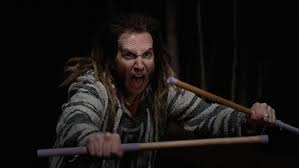
But events conspire to throw assorted punks, the video store clerk (Mooney himself, in dreads and dreadfully unfunny), the besties, Goth-punk Ash (Lachlan Watson) and exotically gorgeous Laura (Rachel Zegler of “West Side Story”) together in a sluggish scramble to survive New Millennium Eve.

The dialogue — that which isn’t mumbled-by-in-a-rush — is forgettably unquotable.

The nostalgia is very much a mixed bag, with those pop culture references from that era hammered home with the music of Chumbawumba, Harvey Danger and Blink 12, and with the film opening with President Bill Clinton updating the nation on Y2K eve on what a competent administration does to fix a possible major problem — by tackling it in advance.

Fred Durst makes an entrance. OK. Sure. Fine. Remember Limp Bizkit?

But did we really need to bring back that comic bad penny Tim Heidecker (playing Eli’s dad, with Silverstone as his mom)?

No. No we did not. Not under any circumstances. And if Heidecker’s who Mooney thought of or thinks is funny, I think I see the problem right there.

Rating: R, graphic violence, drug abuse, sexual situations, profanity

Cast: Jaeden Martel, Rachel Zegler, Julian Dennison, Alicia Silverson, Lachlan Watson, Kyle Mooney and Fred Durst

Credits: Directed by Kyle Mooney, scripted by Kyle Mooney and Evan Winter. An A24 release.

Running time: 1:31

Posted in Reviews, previews, profiles and movie news | Tagged , , , , | Comments Off on Movie Review: “Y2K,” back when the end was nigh

Movie Review: A Hungarian doctor discovers the need for antiseptics in the Oscar hopeful “Semmelweis”

The medical biopic“Semmelweis“would make a fine double feature paired with the recent Netflix medical history drama “Joy.”

Set a century apart, they’re both about a male-dominated medical profession struggling with issues of childbirth. “Joy” is about the long process of mastering in vitro fertilization, “curing childlessness,” as the scientists involved put it. “Semmelweis” is about a doctor obsessed with making “a woman’s burden” less deadly for mothers giving birth.

Hungary’s submission for consideration in the Best International Feature Oscar competition is about sexism in the patriarchy of the day, anti-Hungarian prejudice in the old Austro-Hungarian Empire, the awful mortality rate of women giving birth and an abrasive but heroic young doctor, Ignác Semmelweis, willing to rock the boat in pursuit of righteous results.

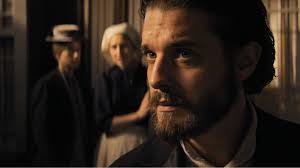
In 1847 the obstetrician/pathologist Dr. Semmelweis (Miklós H. Vecsei) has reached the pinnacle of his profession — treating patients and teaching at Vienna General Hospital. But he snaps at nurses, dismisses colleagues and fights fights fights for his patients.

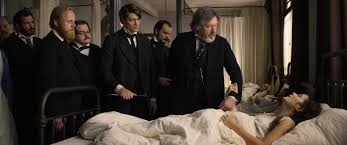
Because they’re still dying. “Puerperal Fever” is always the diagnosis.Well, HIS diagnosis.

His dissections of some of the women — the indigent ones — verify this. But the director of obstetrics, Professor Klein (László Gálffi), is still leading lectures where phases of the moon are considered part of the cause. This was decades before Louis Pasteur verified the “germ theory” that much of European medicine scoffed at in mid-century.

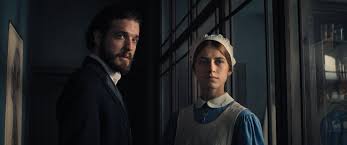
Iit’s not until a new nurse, Emma Hoffman (Katica Nagy), fresh out of the midwife teaching clinic across town, shows up that the doctor has a clue. The less-trained midwives and the physicians at her former clinic aren’t experiencing remotely the mortality rate of Klein’s clinic.

“What kind of ‘epidemic’ rages only INSIDE a clinic,” Semmelweis asks (in Hungarian with English subtitles)?

Director Lejos Koltai and screenwriter Balázs Maruszki tell this story in conventional, hero-villain fashion, with the doctor and his new favorite nurse struggling against Klein and his anti-Hungarian Austrians, who won’t even give him access to mortality records so that he can state the problem and START to search for a solution.

Semmelweis won’t be deterred. Trial and error, observation and cold, hard numbers are his primary tools. What’s the biggest difference between the two clinics? One does dissections, and the other is run mostly by midwives who don’t cut into cadavers. Maybe washing one’s hands and changing the linens occasionally isn’t enough.

Our story sets up Klein and a protege (Tamás Kovács) as our heavies, with Viennese officialdom as perhaps persuadable owing to the doctor’s public heroics, and introduces the stakes by throwing a hysterical and very pregnant homeless woman (Niké Kurta) at Semmelweis in the opening scene.

Even she knows what happens to pregnant women in this “house of death.”

“Semmelweis” is, like “Joy,” a sturdy and somewhat sentimental treatment of a serious piece of medical history. The performances can be strident, and some of the situations — this is slightly fictionalized history, remember — too melodramatic to accept at face value. I don’t see evidence of an Emma Hoffman in this history and one doubts that a coffin maker named Meyer looked at this clinic as a major profit center.

But the film is also a great reminder that science is a process, not a conclusion, and “Semmelweis” parallels that in showing us the missteps to gaining acceptance for germ theory and the idea that a little disinfectant — the RIGHT disenfectant — never hurt anybody.

Rating: unrated

Cast: Miklós H. Vecsei, Katica Nagy, László Gálffi,
Tamás Kovács

Credits: Directed by Lejos Koltai, scripted by Balázs Maruszki. A Bunyik Entertainment release.

Running time: 2:07

Posted in Reviews, previews, profiles and movie news | Tagged , , , , | Comments Off on Movie Review: A Hungarian doctor discovers the need for antiseptics in the Oscar hopeful “Semmelweis”

Documentary Preview: “Becoming Led Zeppelin”

The one apparent “drawback,” if one can call it that, to this doc is the “authorized” nature of this doc of a band not without its share of “lore” and controversy.

Morgan Neville (“Piece by Piece,” “20 Feet from Stardom,” etc.) didn’t make this Led Zep film. So don’t expect notoriety of a “Cocksucker’s Blues” variety from it.

Early reviews have been mixed, which suggests that maybe that missing candor from a truly “independent” filmmaker perspective hurts the finished product.

Considering the subject, though, the sound (IMAX release) and images are sure to have that chunky bottom we’ve come to expect from the heaviest of the heavy.

Feb. 7.

Posted in Reviews, previews, profiles and movie news | Comments Off on Documentary Preview: “Becoming Led Zeppelin”

Netflixable? The Postwar Poor in Italy ship their kids North on “The Children’s Train”

World War II put lots of children, all over the world, in mortal danger. Those families that could often put them on trains to escape it.

From the Kindertransport of Jewish children from Nazi controlled corners of Europe to the mass evacuations of British kids from the cities to the less-bombed north and rural parts of the country in Operation Pied Piper, with wealthier families sending them as a “Children’s Invasion” of Canada and even the U.S. to get them out of harm’s way, this became a familiar narrative and fact of life during the war years.

“The Children’s Train” tells a far less familiar story, that of the “Happiness Trains” that moved kids from war-torn, impoverished Southern Italy to homes in the wealthier, less fought-over or bombed north. If you’re wondering how you’ve never heard of it, consider that A) it was organized and run by women and B) they were acting under the aegis of the Italian Communist Party.

Director and co-writer Cristina Comencini’s film, based on a novel by Viola Ardone, is a sentimental (fictional) memoir, an adult concert violinist remembering how that evacuation from the South changed his life.

Violinist Amerigo (Stefano Accorsi) gets a phone call backstage before an ’80s concert performance. The call is from his mother. The news it brings is that his mother has died.

That puzzling statement, suggesting two “mothers,” and memories of the melody he’s playing in concert on this night take him back to his emaciated childhood (Christian Servone plays eight year-old Amerigo), pulling a “find me if you can” prank on his birth mother (Serena Rossi) in the middle of a German air raid shortly after the Allies and local partisans liberated the city.

Two years later, she still has one son — the other was killed in an air attack — and a husband allegedly “in America,” and she’s figured out she can’t keep Amerigo fed and clothed. He’s taught himself math, despite being yanked from school, by counting the number of people he passes who, unlike him, can afford shoes.

“Six, eight, ten…”

But there’s an evacuation on offer. And all the shrieking by the gossip-mongers, priests and “penguins” (nuns) about “selling your children to Russia” (in Italian or dubbed into English) where they’ll “be cooked in ovens” or have “their hands cut off” by the Bolsheviks can’t dissuade Antoinetta.

The local communist organizers are women and mothers like themselves. They’re sending a trainload to Modena, in the north. Not to Russia.

The kids are prone to panic and believe the rumors. In 1946 Europe, villains putting children in “ovens” wasn’t as far-fetched as it might seem today.

But whatever actions the occupying Allies and the Italian government might be considering, the communist mothers — and the sexist party leaders who act like they’re in charge — are doing something.

Amerigo and a couple of friends find themselves on such a train, freaking out at any hint that a single one of those rumors might be true (they’re relunctant to hold out their hands to have their transport number marked on them), stripping off donated jackets to toss out the windows to their mothers who will give them to the children left behind with them in Naples.

The kids are suspicious of the odd accents and language used by the northerners, and at the odd food they’re offered. “It’s moldy. POISON!” No, bambinos. That’s mortadella!

Amerigo finds himself in the care of a reluctant single woman. Derna (Barbara Ronchi) fought alongside the partisans, lost a lover in the war and soldiers on with the party’s business as an Apparatchik.

“Politics I know,” she grouses. “Parenting?”

Not her thing, Amerigo decides. But once he’s shed the last of his superstitions about this whole “transport” operation, he finds friends in this farm community, more of that mortadella he’s come to crave and kind words from Derna’s brother in the party (Ivan Zerbinati).

He’s a woodworker who notices the lad’s fascination with the violin.

The film is about the psychological struggle in young kids, thrown into an alien environment, drawn back to the world they know, despite everything it lacks, or determined to stay in their new homes with new families and now mothers for a better life.

Young Servone is quite good, and the character’s two mothers — Ronchi and Rossi — give us a fine contrast between officious and cold but warming-up and earthy and maternal but overwhelmed and losing hope. Any potential this tale has as a weeper rests with them, and a script that directs us to grab our hankies, and isn’t terribly subtle about it.

But if you can’t get sentimental about poor, starving kids and an emotional tug of war between two mamas, then sentiment just isn’t your thing.

This period piece serves up forgotten history and a post-war “fresh” ulititarian take on non-Soviet communism which perhaps only the Italians could manage.

Rating: TV-PG

Cast: Christian Servone, Barbara Ronchi, Serena Rossi, Ivan Zerbinati and Stefano Accorsi.

Credits: Directed by Cristina Comencini, scripted by Furio Andreotti, Giulia Calenda, Camille Duguay and Cristina Comencini, based on the novel by Viola Ardone. A Netflix release.

Running time: 1:46

Posted in Reviews, previews, profiles and movie news | Tagged , , , , | 1 Comment

Movie Preview: Gillian Anderson, Jason Isaacs are tested by life and a long walk along “The Salt Path”

Hiking, camping, sight-seeing, battered by the elements and homeless in the UK.

So…Dorset to Somerset it is. Coming soon, plainly not soon enough for me.

Posted in Reviews, previews, profiles and movie news | Comments Off on Movie Preview: Gillian Anderson, Jason Isaacs are tested by life and a long walk along “The Salt Path”

Movie Review: A Prodigal daughter comes home to find she’s been replaced — “You are Not Me”

The Spanish thriller “You Are Not Me” takes its sweet, creepy time getting around to stating the obvious.

Set and shot in rural Valencia, it’s about a doctor/daughter who’s come home for the holidays, bringing her wife and Black adopted baby all the way from Brazil, only to find that she’s been pretty much displaced by this strange woman from Eastern Europe, a refugee.

Whatever allegorical points might be made about human migration, race and acceptance of the first (out) gay person in the family are bathed in gloom and the overwhelming “Rosemary’s Baby” vibe of it all.

Aitana (Roser Tapias) wanted to make this a “surprise” visit. She and her Brazilian social worker wife Gabi (Yapoena Silva) and gurgling baby João just pop in at the hacienda where Aitana grew up.

A stranger, one of some “new friends” of her parents answers the door. The family’s “You should have called” (mostly in Spanish, with English subtitles) is underscored by brain-tumor paraplegic brother Saul’s (Jorge Motos) delight, with veiled warnings about something they “weren’t invited to.”

Hearing the older folks refer to her baby as “a chocolate bon bon” is bad enough. Finding a stranger in her old bedroom rattles Aitana further. Who is this Nadia (Anna Kurikka). Why is she in my bed? Why’d you put her pictures over mine in all these frames? And what’s the deal with trimming my old wedding dress for her?

Gabi tries to roll with the punches, but Aitana veers between outrage and barely molified fury. She must insist that they pack their bags and leave five times, not including father Justo’s (Alfred Picó) brusque “I’ll drive you to a hotel” offer on their arrival.

Aitana looks for clues and hallucinates nightmare scenarios. She finds herself locked in her room, and more than once. What’s going on here, and who are all these people showing up for a Christmas Eva party that used to be just a family affair?

Tapias manages a decent rendition of a meltdown in the lead role. But Aitana’s ongoing uncertainty and slowness to act gets to be frustrating.

The worst consequence of a movie that shows its cards, blending hints of the supernatural with the Spanish adoration of all things porcine, too early is the impatience the viewer develops for “When will SHE figure it out?” and “When will THEY admit what this is all about?”

But even taking that into account, co-writers/directors “You Are Not Me (Tú no eres yo)” Marisa Crespo and Moisés Romera struggle to keep this repetive, pokey thriller on the move. They’ve teamed up for years of short films, and that might have impacted their notion of how much plot and action you really need for a 100 minute thriller.

By the time what seemed inevitable early on becomes clear, I’d almost lost interest. Not quite, but almost.

Rating: unrated, violence, sex, nudity, profanity

Cast: Roser Tapias, Pilar Almería, Anna Kurikka, Yapoena Silva, Alfred Picó
Jorge Motos and Álvaro Báguena

Credits: Scripted and directed by Marisa Crespo and Moisés Romera. A Doppelganger release.

Running time: 1:39

Posted in Reviews, previews, profiles and movie news | Tagged , , , , , | Comments Off on Movie Review: A Prodigal daughter comes home to find she’s been replaced — “You are Not Me”

Movie Review: Palestine’s hope for Oscar recognition? “From Ground Zero” takes us inside Gaza

When tragedy hits artists, artists create. So when the civilians of Gaza were consumed by the conflict that ignited between Hamas and Israel, Palestinian artists — documentarians and diarists, influencers and animators — set out to describe their experience on film.

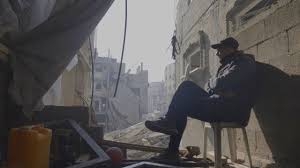
“From Ground Zero” is a 22 short film anthology consisting of everything from video selfies to mini dramas, documentary slices of life and sliced construction paper animation, all of it immersing the viewer in the horrors of struggling to survive in a war zone that has been widely declared an Israeli genocide.

In “Selfie,” a young woman writes a letter on the beach, a note to family abroad, detailing the daily struggle to survive. She’s living in a tent, lining up for a toilet and air dropped food. She lost her father and 17 relatives in the incessant bombing and shelling.

A motif is introduced in this opening short film — the omnipresent whine of drones swirling over the tiny strip of land Israel seems bent on ethnically cleansing.

Our “selfie” creator notes how most of her fellow Palestinians don’t want to flee, determined “not to relive the scenario of 1948.” That’s when Palestinian refugees first fled Arab-Israeli conflict, and when Israel first established its land-grabbing policy against Palestinian natives, and “the Palestinian (refugee) Problem” first entered the world’s consciousness.

“No Signal” captures a man straining to find his brother, buried in his bombed-to-ruin house. He enlists his tiny niece to call her dad’s cell, Omar, to help him know where to dig. She says she got through to him, but then her phone died.

Documentary segments mix with docu-drama as children show off their arms — where their names have been written in Sharpie by parents afraid they’ll be lost and unindentified “martyrs” as a result of the constant air attacks.

“Soft Skin” shows a school class enlisted in cutting out shapes — buildings, birds and people — in colored construction paper, animated to life by the filmmaker.

The overall effect is a portrait in stoicism, people of all ages screaming and fleeing attacks, mourning those lost, then pulling themselves together, determined to ride this horror out, to not let their attackers grab more land via genocide.

“You cannot bear to hear the news” on the radio (in Arabic with English subtiles) one stoic survivor shrugs. “But you can’t not listen to it, either.” That elusive “cease fire” that never seems to come could arrive at any moment, now that Netanyahu’s political aims (regime change to one with “no Israeli accountability” promised in Washington, Iran and Lebanon baited into the conflict).

As a final act of defiance, this gripping collage of conflict has been selected as Palestine’s entry in the Best International Feature competition for the 96th Academy Awards. “From Ground Zero” is daring, smart and quite good. But will Hollywood dare endorse it?

Rating: unrated

Credits: Scripted and directed by Aws Al-Banna, Ahmed Al-Danf, Basil Al-Maqousi, Mustafa Al-Nabih, Muhammad Alshareef, Sls Syon, Bashar Al Balbisi, Alaa Damo, Awad Hana, Amad Hassunah, Mustafa Kallab, Satoum Kareem, Mahdi Karera, Rabab Khamees, Khamees Masharawi, Wissam Moussa, Tamer Najm, Abu Hansa Nidaa, Damo Nidal, Mahmoud Reema, Etimad Weshah and Islam Al Zrieai. A Watermelon Pictures release.

Running time: 1:52

Posted in Reviews, previews, profiles and movie news | Tagged , , , , , , | Comments Off on Movie Review: Palestine’s hope for Oscar recognition? “From Ground Zero” takes us inside Gaza

Movie Review: A Boxer readies Body and Soul for the “Day of the Fight”

“Day of the Fight” is a sentimental and soulful “fight picture,” a movie that follows a former champ through every bit of personal business he feels he has to take care of before his “comeback” that night.

The actor-turned-director Jack Huston (“Ben-Hur,” “Mr. Mercedes”), of the acting and directing Huston clan, cast his debut feature with great care, shot it in black and white and turned it into an homage to every classic boxing picture that came before it.

There’s something about this genre that begs for cliches and tropes because the viewer needs them to validate the experience. Huston sets the tone with forlorn, hopeful tunes by Sixto Rodriguez and Jackson Frank. And when you’ve got Ron Perlman, Steve Buscemi, John Magaro and Joe Pesci playing the archetypal supporting parts, the familiarity of it all takes on a warmth that the brutal sport only achieves on the big screen.

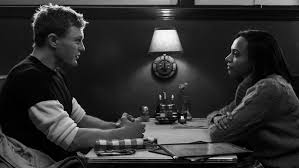
Michael C. Pitt of “Rob the Mob” and TV’s “Boardwalk Empire” plays “Irish Mike,” a former middleweight champ making a comeback. He’s a New Yorker living a hardscrabble life — working as a longshoreman, living in a spartan apartment and training with grumpy, grousing Stevie (Perlman).

Mike was the classic “always gets back up” tough guy in the ring. Now he’s got a comeback fight, an undercard bout with a contender.

But before he fight in “The Garden,” he’s got a day of stops — at the gym, at the shipyard, at his favorite take-out breakfast joint for a gulp of raw egg and hot chocolate from Tracy (Kaili Vernoff), a visit to a guy he grew up with (John Magaro) who became a priest and a stop by a private school to glance at the daughter (Kat Elizabeth Williams) whose mother (Nicolette Robinson of TV’s “The Affair”) doesn’t want him anywhere near her.

Mike’s got baggage, a rough childhood he recalls in flashbacks, a big mistake he made years ago that derailed his relationship, his career and his life. And that big mistake isn’t the only secret he’s carrying along on his rounds on this wintry day in the late ’80s.

His mother’s ring must be fetched and pawned. The cash will go to a dry-cleaner/bookie (Anatol Yusef) who, come what may, had better pay up if Mike’s long-shot bet wins.

“I got nothing, OK?” Mike pleads.

“All I got’s my word,” the bookie assures him. And that’s enough for Mike. It’s that kind of movie.

Setting his “big fight” melodrama in the late ’80s strips “Day of the Fight” down to the essentials. Little hype for fights, no cell phones, no chain restaurants, Mike listening to his music from mixtapes on his Walkman, New York (actually it was shot in New Jersey) at its post-’60s grungiest.

Pitt utterly inhabits this character, a mug who insists “I ain’t a monster. I CARE about things.” And the movie surrounding him — every character — cares about him.

Buscemi was born to play a longshoreman “pulling for ya” and Perlman’s the perfect cornerman. Magaro makes a fine version of the sort of priest such movies serve up, rarely found in real life — as foul-mouthed as his old pal, a friend and a man of flexible faith.

Robinson’s touching as “the one who got away,” a bartender and singer who sings and plays a spare, solo piano cover of “Have You Ever Seen the Rain” the night of the fight.

Pesci? He’s still capable of surprises, like when we hear him singing on an old LP, and later on the soundtrack.

Huston’s made his film with such care that the lack of other surprises hinders but never hobbles it.

“Day of the Fight” is a genre piece so evocative of other genre pieces that you don’t need to bother backtracking to see any version of “Body and Soul,” “Requiem for a Heavyweight,” “The Set-Up,” “The Fighter” or “Fat City” ever made, because there’s a taste of all of them in this simple, sad, single-day stroll through the life of a prize fighter who used to be somebody.

Rating: R, violence, nudity, profanity

Cast: Michael C. Pitt, Nicolette Robinson, Ron Perlman, Steve Buscemi, John Magaro and Joe Pesci.

Credits: Scripted and directed by Jack Huston. A Falling Forward release.

Running time: 1:45

Posted in Reviews, previews, profiles and movie news | Tagged , , , , , , , | Comments Off on Movie Review: A Boxer readies Body and Soul for the “Day of the Fight”

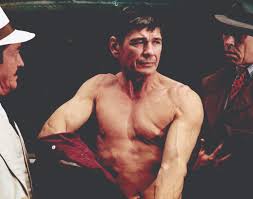
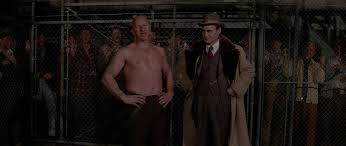
Classic Film Review: Bronson Brawls and an action auteur is born — Walter Hill’s “Hard Times” (1975)

There’s a gentility about “Hard Times,” a bare-knuckle brawling drama set during the Great Depression. It’s a genre piece populated with veteran character actors playing archetypes bound by their own code, playing their parts in a story so pre-ordained that “formulaic” doesn’t do it justice.

It’s a film of fists and fate, of Edward Hopper shot compositions and “anything goes” fights that can seem quaint in the ultra-violence of today. These hard men have their limits, lines that they won’t cross.

First-time feature director Walter Hill apprenticed under Peckinpah and John Huston, whom he wrote scripts for, and Norman Jewison, Peter Yates and Woody Allen, for whom he served as second assistant director on “The Thomas Crown Affair,” “Bullitt” and “Take the Money and Run.”

But when he made his first feature, it was Howard Hawks and an earlier generation of filmmakers that seemed his inspiration. He cast a who’s who of character players, some legends and some who would become regulars in his films. He sentimentalized unsentimental men and women in an unsentimental variation of “The Sting,” and showed a flare for action, violence and hardboiled dames and mugs who knew their way around a flinty line.

“What does it feel like to knock somebody down?”

“It makes me feel a helluva lot better than it does him.”

Charles Bronson is Chaney, a bit long in the tooth to be a broke hobo on the bum. But that’s what a Depression does.

“I don’t look past that next bend in the road.”

He stumbles across a “pick up fights” betting operator named “Speed” Weed, played by James Coburn, Bronson’s “The Magnificent Seven” and “The Great Escape” co-star.

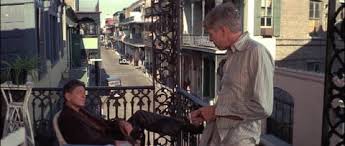
Speed is a hustler and a degenerate gambler. When Chaney pays off for him, he drags him “home,” to New Orleans where he has connections, associations and an ability to talk, borrow and stumble into debts with the wrong sorts of people.

With his poetic friend, a med school dropout Poe (Strother Martin of “Cool Hand Luke), a man with a “weakness for opium” who ruminates on the knuckles properly engineered for fistfights, mouthy Speed will fast-talk his way into loans from Mississipi Delta sharks (Felice Orlandi and Bruce Glover) and a challenge match with Mr. Old Money, Chick Gandil (Michael McGuire).

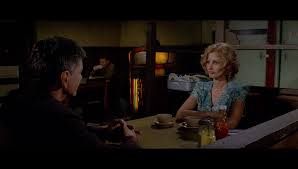
Chaney? He’d like to get to know the “fallen” woman Lucy he meets in an all-night diner, played by Mrs. Charles Bronson, Jill Ireland.

The plot is structured to lead up to “The Big Fight.” That comes at the midway point of the story, setting us up to see how these losers deal with sudden success or crushing failure. Everything that comes after could be an anticlimax. But of course there’ll be a second Big Fight.

Mid-’70s American cinema had the same sort of grit about it, thanks to the Nixon-Ford Recession, decaying cities and a “national malaise.” Casting older actors, up and down the line, gives the story a timeless, folk tale quality. Everybody cast-to-type here has a specific function in the plot. It’s to everybody’s credit that we don’t so much notice this as the film is playing a pick up on how virtually everybody involved, including the future Oscar winner Coburn, was never better.

Veteran stuntman and screen heavy Robert Tessier, has his best role ever as the bald, hulking fighter “Big Jim,” the brawler with the guts to point out the obvious — “Hey Pops, a little old for this, ain’t you?”

But Bronson was tailor made for this part, a man of few words, simple needs and not much interest in anything else. His scenes with Ireland are perfunctory, transactional with just a hint of softness. Chaney knows better than to get sentimental over Speed and Poe. Or does he?

Watch Bronson’s eyes in the simple but percussive fights. It’s not just ducking roundhouses and throwing haymakers — a lot of them to the ribcage (Hill famously improved on Hollywood’s dated fight-sound-effects library by simulating punches with a ping pong paddle on a leather sofa). Bronson lets us see fear, confusion and concern, even for brutes who taunt and would crippled Chaney if they could.

Hill artfully blocks, shoots, edits and stages fights in abandoned factories, warehouses and the deck of a freighter. Martin’s floridly poetic Poe, his hair dyed and his suit Southern white, is introduced attending a Black New Orleans’ church’s Sunday service.

“The Pentacostals present a number of — points of interest.

The river makes a beautiful backdrop for dips into Cajun culture for one bout, something Hill would dive into deeper for the National Guard Vietnam analogy “Southern Comfort” a few years later.

Genre pictures like “Hard Times,” cast with familiar faces put through their familiar paces, aren’t challenging cinema by any means. But they’re great comfort food, an amusing, engrossing and in the end satisfying experience.

Hill, like Hawks before him and John Woo after him, would go on to be damned good at delivering the goods in many such satisfying stories — “The Warriors” to “The Driver,” “48 Hours,” and “The Long Riders” to “Johnny Handsome,””Wild Bill” and “Last Man Standing.”

Rating: PG, fistfights, other violence, profanity

Cast: Charles Bronson, James Coburn, Jill Ireland, Michael McGuire, Margaret Blye, Robert Tessier, Felice Orlandi, Bruce Glover and Strother Martin.

Directed by Walter Hill, scripted by Bryan Gendoff, Bruce Henstell and Walter Hill. A Columbia release streaming on Tubi, et al

Running time: 1:34

Posted in Reviews, previews, profiles and movie news | Tagged , , , , , | Comments Off on Classic Film Review: Bronson Brawls and an action auteur is born — Walter Hill’s “Hard Times” (1975)