
Murderously misogynistic teen bros come for the “wrong” teen girls?
That’s what I’m picking up from the “Bystanders” trailer. This one made the round of the horror film fest circuit and drops on streaming Jan. 21.
Murderously misogynistic teen bros come for the “wrong” teen girls?
That’s what I’m picking up from the “Bystanders” trailer. This one made the round of the horror film fest circuit and drops on streaming Jan. 21.
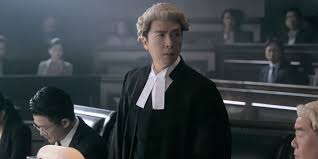

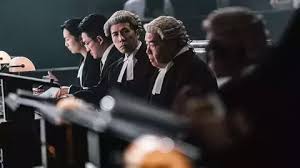
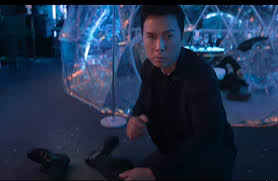
Martial arts icon Donnie Yen directs and stars in “The Prosecutor,” playing a two-fisted, idealistic Hong Kong cop turned prosecuting attorney.
Some of the most fantastic fights in recent screen history, choreographed by Takahita Ouichi and Donnie Yen Stunt Team leader Kenji Tanigaki, are what recommend this star vehicle for Yen, long a standout in action films from the East (“Ip Man” movies) and West (“Rogue One,” “John Wick 4”).
But it’s a talkative, convoluted tale that too often loses its way in Hong Kong’s (not People’s Republic) arcane, British-derived legal system.
“Stay strong and keep true” Detective Fok Zi Hu teaches his proteges (in Chinese with English subtitles). It’s been his motto and served him in his years on the force almost as well as his instincts, his deadly aim with a pistol and fists and feet of fury in a fight.
But Fok leaves his old team in the able hands of Lei Ging Wai (Michael Tin Fu Cheung) to pursue a law degree. Fok returns as a prosecutor, the guardian at the “last gate” for justice. In a crowded, crime-ridden city his chief prosecutor boss (Francis Ng) is more concerned with processing cases and cutting plea deals than “wasting time” on getting to the bottom of many cases.
And while Fok’s new mentor, Prosecutor Bao (Kent Chang) may appreciate his zeal and idealism, Bao’s faith that “Justice will prevail” because “heaven is on our side” seems naive.
All involved will be tested when a simple drug distrubution case comes to trial. A young man has been busted for, he says, taking delivery of a shipment of drugs dropped at his door. His aged grandpa (Kong Lau) insists on his innocence and disrupts court with his protests.
But two slick lawyers (Shirley Chan and Julian Cheung) with unknown employers have pushed the plea deal. Everybody is OK with it but Fok. Digging around, prodding the police and circumventing the seemingly compromised chief prosecutor, Fok kicks a hornet’s net of thugs, goons, international smugglers and corrupt lawyers as he snoops and punches his way to the truth.
The fights are epic, with Yen flying into action at swank mob-owned clubs, in alleys and on the subway. His boss Bao, struggling to keep all this legal, is sometimes a witness Fok’s fights.
“Fok’s beating up 100 people!” Bao shouts into his phone at one point. He’s not exaggerating…much. But he realizes that’s not the “call for backup” our prosecutor needs. “I mean, he’s being beaten up by 100 people!”
Over the decades Yen has graduated from supporting fighter roles in action films in Asia and Hollywood and become an icon of cool on the screen, with a crisp, clean acting style that stands out among Asian martial arts icons. He’s terrific in this part.
And as a director, he calls on the very best to stage his brawls and showcase still-formidable (at 60+) skills and physique.
But as a director, a little Eastwoodian “Is this scene/that novella of dialogue really necessary?” cutting was called for. “The Prosecutor” bogs down in pointless sequences where we see modern lawyers drag pushcarts of files into this or that office as part of their investigation. It talks us to death through setting and costume changes showing off the wealth and ruthlessness of the mob bosses and the thugs they send after our crusading prosectutor on foot, in SUVs and on trains.
The courtroom scenes drag between moments of melodrama, and what sets up as a lean loner’s hunt for justice talks us to death, bores us with clutter and undercuts the time the villain lawyers need to establish their worthiness as foes.
There’s also a hint of Chinese virtue signalling as the drug lords are mostly from other Asian cultures/races.
With “The Prosecutor” we come for Donnie Yen and for the fights, and if we’re studying Mandarin, to bone up on Chinese legal arcana. Because God knows there’s a lot of dialogue to this thing. But at some point, all that starts to feel superfluous and in the end, boring.

Rating: unrated, violence
Cast: Donnie Yen, Francis Ng, Shirley Chan, Julian Cheung, Kent Cheng, Michael Tin Fu Cheung and Kong Lau
Credits: Directed by Donnie Yen, scripted by Edmond Wong. A Well Go USA release.
Running time: 1:57
A teacher takes a shot at saving a troubled teen boy.
Jared Harris stars in this drama about a kid who may have to choose between running track, and a lifetime of trouble.
Jan. 24 is when “Brave the Dark” hits theaters.
Jan 24, Callum McGowan, Scout Taylor Compton, Jon Ceda and Stuart Thompson figure out if the Old Man of the Sea — and star of “Jaws” — should be heeded when it comes to scuba diving and sharks.
Could be fun.
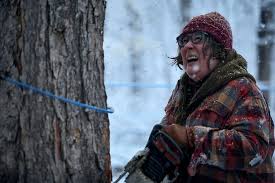


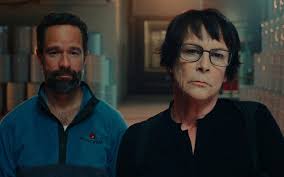
Margo Martindale, one of the grande dames of American character actresses, gets her best starring role in forever in “The Sticky,” a Quebec-set comedy about intrigues, betrayal, corruption and murder, all of it spinning around an infamous piece of Quebec history — the theft of brown gold, Canadian maple syrup, in mass quantities.
It’s bloody and it’s mean — pretty much nobody with a French Canadian accent comes off well, and “American” accents are all mobsters — and it’s laugh-out-loud hilarious at times.
A couple of screenwriters from “American Housewife,” Brian Donovan and Ed Herro, cooked up this dizzy, dark bit of fiction, “absolutely not the true story of the Great Canadian Maple Syrup Heist,” a credit before each episode reminds us. But who didn’t hear about the “real” heist at the time (2011/12) and laugh? I distinctly remember an NPR piece on it leaving me in stitches.
Martindale plays Ruth, a struggling maple tree-tapper trying to keep the farm and take care of her comatose husband at home. That’s hard, because a corrupt Quebecois father (Guy Nadon) and inherit-his-title son (Mickaël Gouin) run the local co-op/cartel (Association Érable du Québec) which weighs, stores and sells their sap for syrup, controlling both the price charged and how much the farmers there get for their tree-tapping labors.
Ruth struggles because the kingpin Leonard (Nadon) is determined to squeeze her out. That’s made her ill-tempered and foul-mouthed. Even the ever-placating son Leo (Gouin) of that kingpin can’t talk her out of doing things like sawing down a maple, dragging it through town with her truck, screaming obscenities and threats at Leonard as she does.
Ruth has ties to a frequent out of town visitor, Mike (Chris Diamantopoulos of “Red Notice” and “The Boys in the Boat”). And Mike’s a part of a Boston-based mob operation.
Mike’s the guy syrup warehouse guard Remy (Guillaume Cyr) approaches with a plan — steal a few barrels out of the $150 million hoard in the co-op’s warehouse. Mike sees dollar signs, and being from The States, has a pistol with a silencer, and isn’t shy about violence of any type.
The running gags in this series’ elaborately unraveling plot have to do with how nothing goes right, how Remy — nicknamed “Boo Radley” at one point — is nobody’s idea of a mastermind and Mike’s solution to every problem is terminal violence and how little patience co-conspirator Ruth has for all this.
“I can’t keep plannin’ around all the STUPID,” she bellows, between profane tirades. “What did I SAY about sayin’ dumb sh–?”
Schemes are advanced, evidence is planted and an out of town detective (Suzanne Clément) shows up to insult the local Sûreté du Québec cop (Gita Miller) and get to the bottom of this hick town’s first murder, and quick.
And sooner or later, with all this money on the table and Mike an impulsive liability, you just know somebody from Boston will have to come and “clean up your mess.” Bo is played with bravado and grand abandon by Oscar winner Jamie Lee Curtis, a producer on the series.
The laughs aren’t exactly fast and furious, but they do come at a fairly steady pace. The problem-solving and complications thrown into the scripts for these six episodes is fun.
“Sticky” is handicapped by a few shortcomings in the limited series format — a tendency to draw limited action into a series of cliffhangers, and the determination to leave things open-ended enough to set up more seasons of this oozing, supersweet “Ozark” variation, no matter how clumsy and unrealistically that’s handled.
But Martindale is in rare form, surrounded by a parade of supporting players portraying a lot of folks on a sliding annoying-hateful-vile scale. And the milieu, with fur trapping, mink farming (and killing) and a strip club that features a pretty good buffet, is an amusing place to visit, especially during a cold stretch during this winter of snow and ice and discontent.

Rating: TV 16+, violence, profanity, strip club scene
Cast: Margo Martindale, Chris Diamantopoulos, Guillaume Cyr, Gita Miller, Suzanne Clément, Guy Nadon and Jamie Lee Curtis.
Credits: Created by Brian Donovan and Ed Herro. An Amazon Prime release.
Running time: 6 episodes @ 30 minutes each


Making art in the middle of the apocalypse is the literal and figurative ethos of “Grand Theft Hamlet,” one of the cleverest “What can we do during lockdown?” pandemic picture projects.
A couple of British actors — Sam Crane and Mark Ooosterveen –– stared into the same gutting void of everybody who was unable to work during the pandemic lockdowns. As they killed some time meeting in the online gamescape of “Grand Theft Auto,” they stumbled into the Vinewood (Hollywood) Bowl setting of that Greater L.A. killing zone. And like actors since the beginning of time, thought they’d put on a play.
As they wander and ponder this brilliant conceit, they wrestle with whether to attempt casting, setting and directing this play amidst a sea of first-person shooters/stabbers/run-you-over-with-their car. They face fascinating theatrical problem solving. How DO you make art and recruit an online in-the-game audience for Shakespeare in a world of self-absorbed, bloody-minded avatars, some of whom stumble upon their efforts and ignore their “Please don’t shoot me” pleas?
Crane and Oosterveen, both white 40somethings Brits, grapple with “what people are like in here,” as in “people are violent in the game.” VERY violent. But “people are violent in Shakespeare.” Pretty much “everybody dies in ‘Hamlet,'” after all.
Putting on a play in the middle of a real apocalypse set in a CGI generated apocalypse is “a terrible idea,” Oosterveen confesses (in avatar form). “But I definitely want to try to do it.”
Crane, struggling with the same mental health issues tens of millions faced during lockdown, enlists his documentary filmmaker wife Pinny Grylls to enter the game and film all this.
And as their endeavors progress, through trial and many many deaths (“WASTED,” the game’s graphics remind you), everybody interested in their idea trots out favorite couplets from Shakespeare as “auditions.” They round up “actors” from all over (mostly Brits, though), they remind us of the power of Shakespeare’s words.
“To be, or not to be, that is the question. Whether ’tis nobler in the mind to suffer The slings and arrows of outrageous fortune, Or to take arms against a sea of troubles And by opposing end them. To die—to sleep…”
Dodging would-be gamer/killers and recruiting others, they will see how a marriage can be strained by work or video game addiction and fret over the futility of it all.
The film, co-scripted and directed by Crane and Grylls, with Crane playing Hamlet, and narrated and somewhat driven by Oosterveen, who portrays Polonius, is a mad idea but a great gimmick, one that occasionally transcends that gimmick.
We’re reminded of the visual sophistication of CGI landscapes — they try out a lot of settings, and use more than one, a scene staged on top of a blimp, seaside for a soliloquy. The limitations of jerky-movement video game characters, lips-moving but not syncing up to dialogue, are just as obvious.
And if all the gamescape’s “a stage, and all the men and women merely players,” some folks — MANY folks — need to buy better headset microphones. The distorted audio and staticky dynamic range of such gear spoils a lot of the dialogue.
In a production where the words matter as much as this, as “acting” in avatar form is a catalog of limitless limitations, one becomes ever more grateful that the film is a documentary of the “making” of a “Grand Theft Auto” “Hamlet,” and not merely the play. Because inventive settings and occasional murderous “distractions” aside, that leaves a lot to be desired.

Rating: R, video game violence, profanity
Cast: The voices/avatars of Sam Crane,
Mark Oosterveen, Pinny Grylls, Jen Cohn, Tilly Steele, Lizzie Wofford, Dilo Opa, Sam Forster, Jeremiah O’Connor and Gareth Turkington
Credits: Scripted and directed by Sam Crane and Pinny Grylls, based on “Hamlet” by William Shakespeare. A Mubi release.
Running time: 1:29
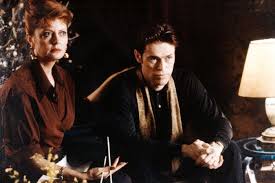
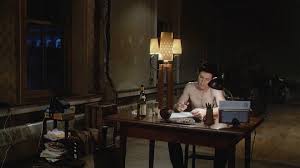

Paul Schrader, the screenwriter of “Taxi Driver” and “The Last Temptation of Christ” and writer-director of “Cat People,” “American Gigolo” and “Light of Day” never really went away. But this most spiritual, Calvinist and cerebral filmmaker had his years in the wilderness.
Making a movie with Brett Easton Ellis and Lindsay Lohan (“The Canyons”) is as close to a trial by Satan as the cinema gets.
Every longtime fan had reason to hope he’d have the comeback that “First Reformed” afforded. For some, it was “Mishima” or “Hardcore” or “Afflication” that was the basis of that faith. For me, his serene, sinister classic “Light Sleeper” (1992) was the form I hoped he’d recapture.
It’s about upscale drug dealing in Manhattan, with an ex-addict/dealer (Willem Dafoe) writing and narrating his daily life and musings about his limited “future,” about guilt and responsibility in a brutally amoral and classist city where only the classiest are the clients of Ann (Susan Sarandon), Robert (David Clennon) and John “Jack, Johnny” LeTour (Dafoe).
A rich and connected Barnard College coed overdoses, and all of a sudden the cops might be noticing who this trio are, and what they’re selling.
LeTour — a made-up name — is our narrator and title character, a “Light Sleeper” who patrols the city in a Town Car, a well-turned out “delivery boy” with a pass through every VIP rope and every upscale apartment lobby to serve the well-heeled,. “White drugs for white people” Ann chortles.
LeTour can’t sleep. So he fills notebooks with his musings about his sleeplessness.
“It’s worse when I’m off,” he narrates. “I just walk and walk.”
He’s uncertain about his future, and emulating his flakey boss (Sarandon), he visits a psychic (Mary Beth Hurt) for direction. She tells him “A woman close to you, she will betray you.”
He doesn’t trust Ann, and neither do we. But he’s got a fresh distraction. He’s spotted an ex (Dana Delany) in town. She’s years sober. He’s two years “clean.” And her protests notwithstanding, LeTour attempts to ingratiate himself back into her good graces. He’s got a million questions about where she’s been and what she’s doing.
“I don’t want you to know about my life.”
Schraeder immerses us in this world, letting the camera settle on Dafoe’s face as he rides and rides and stops and makes warm exchanges, even looking out for clients who seem to be entering a death spiral.
“I’m not gonna put you in the emergency room.”
LeTour has a conscience. His silences and his writing, even if he tosses each notebook he fills, makes him seem soulful. Will Marianne let this reminder of her addicted past back into her life?
A very young Sam Rockwell plays a fellow dealer. David Spade, fresh off “Saturday Night Live,” plays a chatterbox coke customer. Victor Garber (“Titanic,” TV’s “Alias,” many other series) plays a rich and trusted European expat client, Tis.
Schraeder gets at the terminal allure of drugs and the romance of addiction in scenes where LeTour tries to reconnect with barely-sober Marianne. Addicts only remember “the good times.”
“I envy you,” she sighs. “Convenient memory is a gift from God.”
That relationship is the sentimental soul of “Light Sleeper.” But the brittle connection between LeTour and Ann is the heart of the movie. He’s paranoid. She’s charming, but self-serving and smart enough to know she’s got to have a Plan B. Might LeTour’s destruction be a part of that?
I saw this movie on my first trip to New York, and what’s striking about it now is its unerring grasp of that era, the character of the city then — laws flouted, the well-connected always connecting, an Orthodox Jew not judging Ann or allowing a guilty thought as he counts her cash for her, shortcut-taking cops, the trash-piles of a sanitation workers’ strike cluttering familiar, grungy and underlit streets.
It’s a near perfect snapshot of New York at the end of the Reagan Era, in the middle of the cocaine boom, when crack had flooded the downmarket, bringing in customers that Anna, LeTour and Robert would never cater to.
Delany, Sarandon, Clennon and Garber make sharp, lived-in impressions.
But Dafoe, high on the list of best actors never to win an Oscar, was at his very best in this portrait of a loner who starts to take stock of “the life” at 40. This is a nuanced portrait of a not-wholly-recovered addict who has let street smarts displace his ambition and education, a guy whose options and horizons are so limited he thinks consulting a psychic will offer a way out.
No wonder he can’t sleep.

Rating: R, violence, drug abuse, sex, nudity, profanity
Cast: Willem Dafoe, Susan Sarandon, Dana Delany, David Clennon, Sam Rockwell, Jane Adams, Victor Garber and Mary Beth Hurt.
Credits: Scripted and directed by Paul Schraeder. A Seven Arts/New Line release on Tubi, other streamers.
Running time 1:43
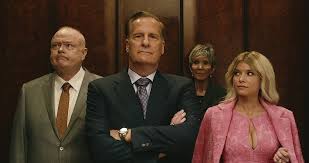


Tom Wolfe’s darkly comic 1998 novel “A Man in Full” comes to the screen, courtesy of another king of ’80s and ’90s entertainment, TV writer/producer David E. Kelley.
The book, uneven but page-turning trash encompassing Wolfe’s favorite themes — class, race, wealth and how sex and media and myth weave through them — becomes an R-rated spectacle of exaggerated characters, egos and situations in the hands of the prolific creator of TV’s “L.A. Law,” “Ally McBeal,” “Big Little Lies” and the TV versions of “Presumed Innocent,” “The Lincoln Lawyer” and “Mr. Mercedes.”
Kelley updates the book, trying to give it present-day currency as we see a blustery big talker facing the consequences of being a showboating braggart and perpetually over-extended builder and businessman.
Jeff Daniels gives full value, as always, playing a larger-than-life Atlanta developer whose reputation, career and business of juggled excesses is about to crash to the ground. As it is a handful of vindictive, resentful bankers who bring him down, the story enters the realm of fantasy, as America knows how compliant bankers enable bungling gamblers just like this. They’re not in the business of punishing them. Those guys don’t face consequences, even in Tom Wolfe’s “Vanity Fair” era America.
Charlie Croker was a Georgia Tech football star back in the last millennium, the “Sixty Minute Man” in the backfield of a national championship team. He’s parlayed that fame into a “Man Who Built Atlanta” empire.
Now in his 60s, with an ex-wife (Diane Lane) and a “trophy wife” (Sarah Jones of TV’s “For All Mankind”) half his height and half his age, drawlin’ Charlie Croker has his name on the biggest building in the Capital of the South, his crown jewel, Atlanta’s Concourse. He’s got a 29,000 acre ranch/plantation/game preserve he’s named TurpMtine and a portfolio that dominates Atlanta’s skyline.
And when we meet him, an overmatched, foul-mouthed and furiously jealous younger banker (Tom Pelphrey of “Ozark” and “Iron Fist”) and his blunt, hardass superior (the estimable Bill Camp) have him in a big bank boardroom where they’re going for a full-fledged emasculation.
Testicles are the big talk in this big talking man’s world, and Charlie’s aren’t just in a vice. He’s in the hole for over $800 million to just this one bank. Others are also holding hundreds of millions in bad paper over Charlie’s toppling businesses and Gulfstream Jet over-extended lifestyle.
This “Man in Full” has his manhood on the line as he schemes to fend off the wolves and keep up appearances in “his” town.
The city’s Black mayor (William Jackson Harper of “Midsommer” and TV’s “The Good Place”) is facing electoral defeat at the hands of a MAGA conservative with a shady past, a man who happens to be a former teammate of Charlie’s.
Charlie’s lawyer (Aml Ameen, who played Martin Luther King, Jr. in “Rustin”) was a Morehouse classmate of the mayor, and finds himself tested by both men’s crises, and in over his head in court defending the husband (Jon Michael Hill) of Charlie’s secretary (Chanté Adams), who gets in trouble for resisting an unjust arrest.
The divorced, late model BMW-driving banker Raymond Peepgrass (Pelphrey) has his own legal and financial issues, a patrimony suit by a Finnish sex worker. He’d like nothing more than sticking it to Charlie, and Charlie’s ex-wife (Lane), just not in the same way.
And that ex-wife’s beauty-icon pal (Lucy Liu) has her own testy relationship with Charlie and past connections that tie her to his difficulties, and the mayor’s.
I listened to the book on tape (read by a drawling David Ogden Stiers) on a cross country road trip when “A Man in Full” came out, and all that stands out in the memory is of the novel’s lurid thoroughbred “siring” scene, something delivered in all its sordid glory here.
Kelley does entirely too much to emasculate what was admittedly an inferior book to Wolfe’s “A Bonfire of the Vanities,” thinning out the manly outdoorsman/horseman/sportsman activities from our “full” man. But Daniels gives us the essence of the character, a poseur who would hate to be thought of as the embodiment of the put-down, “All hat and no cattle” he credits Georgia for coining about showboats like himself.
Lane gives the series a touch of heart and a few moments of fire.
But as Kelley plays up the court case, with its smirking biased judge (Anthony Heald) and the life threatening Fulton County Jail consequences that the stoic victim of an unjust system, Conrad (Hill), faces, it’s easy to see why Kelley focused on what he knows best — legal proceedurals. He’s out of his depth with most everything else.
Wolfe got “the South,” even if he wasn’t able to wrestle all the issues and threads of the culture into his bulky, researched but cartoonishly broad novel.
The performances — Camp is at his most venomous here — are what we cling to, as the narrative isn’t coherent and believable enough to cliff-hanger us through all six episodes.
But if this hits enough eyeballs, maybe Netflix will take a stab at turning Wolfe’s greatest novel — “Bonfire” — into a series. God knows that deserved better than the miscast, botched “blockbuster” that Brian De Palma, Tom Hanks, Bruce Willis and Melanie Griffith gave us in 1990.

Rating: TV-MA, violence, explicit sex, profanity
Cast: Jeff Daniels, Diane Lane, Aml Ameen, Tom Pelphrey, Chanté Adams, Jon Michael Hill, William Jackson Harper, Lucy Liu and Bill Camp.
Credits: Created and scripted by David E. Kelley, directed by Regina King and Thomas Schlamme, based on the novel by Tom Wolfe. A Netflix release.
Running time: 6 episodes @45-50 minutes each


“American Meltdown” is a comic buddy picture that taps into the deep well of Millennial angst and grievance about a “system” that is finally so broken it doesn’t work for them. At all.
Like a lot of fiction and op ed essays about the large and maligned generation, it’s very much in the eye of the viewer — this perception that these mid-20s to late30somethings are either the first to figure out American capitalism, culture and politics is “rigged,” or simply the first to considering giving up trying to fix it.
It’s an indie film that reminds us there’s talent out there that mainstream distributors haven’t embraced — in front of and behind the camera. And fittingly enough for the subject generation, “Meltdown” feels self-satisfied but incomplete, with a finale that plays like a pulled-punch.
Jacki Von Preysing makes her feature film debut as Olivia, an interior designer who learns she needs to take “90 days off” so that her scummy “blame the unions” (there are none) employer (Bella Shaw) can avoid paying her “full time” wages, with benefits, and on the same day comes home to see that her SoCal rental house has just been ransacked.
Broke, blamed for the break-in by the lazy, dismissive Millennial cop (Shaun Boylan) and her creeper corporate landlord (Clayton Farris), in a house she can’t afford since her inheritance baby beau (Christopher Mychael Watson) ditched her for “an influencer,” on a “background check” waitlist for a job driving for one of those predatory rideshare services, Olivia’s delusions of The American Dream are tattered.
She stumbles into this photographer under a pier on the beach, who snaps a picture that makes her look like someone’s who’s died, or just given up. Then shutterbug Marí (Nicolette Sweeney) chases Olivia down and returns the wallet “you dropped.” As it’s not the right wallet, and the right one and the wrong one, both in Marí’s possession, are empty of cash, Olivia needs to look past “super sketchy” apologies and see the pickpocket for who she really is.
Unlike Olivia, Marí has dropped off the capitalism hamster-wheel, living hand-to-mouth, off-the-grid and in a van in the desert. When she’s in town, prowling this or that beach or street scene, she “only” steals “from those who deserve it.”
As the cop IDs Olivia as “Bougie,” we understand Marí’s mistake. She thought Olivia had money and takes pity on her when she realizes otherwise. And “sketchy” or not, Olivia could use a little company right now — for binge drinking, and for companionship in the tony and now scary house Olivia is afraid to sleep in alone.
An unlikely friendship drifts towards “partnership” as the movie hints at a big crime to come. Olivia is interviewed by a detective (DeMorge Brown) in the aftermath of that event, viewed in flashbacks as the script reconstructs the nature of Olivia and Marí’s relationship.
Olivia is passive. Marí seeks revenge or some form of rough justice. Olivia despairs at her plight — calmly.
“What’s the use of being calm,” Marí’ wants to know” “ANGRY people get s–t done!”
The leads and supporting players are make believable characters out of one and all. But writer-director Andrew Adams leaves out connecting scenes that would make the abrupt shifts of setting and attitude less jarring.
Expressions of generational angst and rage register. But while some seem rational and justified, others come off as “Ok Boomer” cant from folks who deserve at least some of the “entitled,” impatient and (intellectually and physically) “lazy” labeling and abuse tossed at them by their elders.
No matter where your birthday falls on the generational dividing line, “American Meltdown” never quite shakes the “letdown” it seems destined to become.
Sharper contrasts in the character’s arcs were called for, maybe a few pickpocket and anarchist politics lessons from the van-dweller jarring Ms. Buys-in into questioning her faith in a system that either denies her dreams, or is to blame for her having those dreams in the first place.
Whatever its failings, “American Meltdown” should inspire others to tackle this subject at this point in time. Because as bad as things might seem to Millennials and those coming up after them, something tells the rest of us that these will soon be the “good old days” for those who don’t consciously work, shop, vote and fight to change the future they so despair of facing.

Rating: TV-16+ (profanity)
Cast: Jacki Von Preysing, Nicolette Sweeney, Shaun Boylan, Clayton Farris, DeMorge Brown and Bella Shaw.
Credits: Scripted and directed by Andrew Adams. An MPX release on Amazon Prime.
Running time: 1:22

“Winter Storm Blair,” the drama queens at The Weather Channel call it — Looking at you, Meryl Cantore.
Bad weather means no internet. No screener links, no Netflix or Prime or 🍏 work.
And the Biden Administration’s “Build Back Better” bring rural America fibre optic cable/high speed internet initiative is just a mile or so from us as the snow falls. Maybe next week.
Dish TV it is, maybe a TCM classic later. But FXX just dropped “The French Dispatch” followed by Broadbent, Mirren and Goode in”The Duke.” An aging gadfly steals a painting in the classist ’60s UK. Liked it then, perfect day to watch it again.



