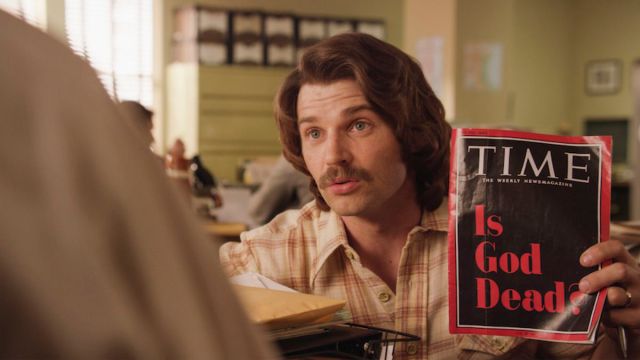
Dry, unemotional and — considering the subject matter — uninspiring, Lee Strobel’s “The Case for Christ” is a faith-based drama about one atheist’s research-driven conversion to Christianity.
It’s got a great hook. An accomplished, skeptical journalist investigates the “case” for Jesus dying on the cross and rising from the dead as a means of turning his just-found-Jesus wife away from religion. If it “really happened,” well…
But the film, based on Strobel’s book, is so emotionally flat and slow that it forces you to pick up on its ridiculous circular logic and pick apart the half-hearted “reporting” and questioning its hero undertakes. The “case” he makes is all rhetorical tricks aimed at the gullible, and seriously unconvincing.
In the film, Strobel (Mike Vogel of “The Help” and TV’s “Under the Dome”) is a rising star at the 1980s Chicago Tribune, top dog on the paper’s reporting on Ford’s exploding gas-tank econo-box, the Pinto. He even got a book out of it.
At a celebratory dinner, his daughter (Haley Rosenwasser) almost chokes to death. A nurse, dining at the restaurant, intervenes.
But don’t credit Nurse Alfie Davis (L. Scott Caldwell). “Jesus” did it, she insists. And Mrs. Strobel (one-and-only “Swimfan” Erika Christiansen) believes her. She doesn’t believe in coincidences, or in the odds that a crowded restaurant in any big city would have one person who knows the Heimlich maneuver.
Lee cannot accept her rejection of their shared atheism. And taking guidance from a fellow skeptic on the newspaper staff (Brett Rice) and an editor/believer (Mike Pniewski), decides to follow the edict taped to the newsroom wall.
“If your mother says she loves you, check it out.”
And then he makes his first misstep. He lets the believer on staff define the parameters of the story. Debunk the Resurrection, “and the whole thing falls like a house of cards,” he is told. So that’s where he hunts.
“Experts” throw figures like “there were 500 different witnesses” to the dead Jesus returning to life, according to “ancient texts.” Unlike Homer’s “The Iliad,” (a spurious comparison), there are thousands of those texts, all hearsay dating from some time after the events described. And while the movie has Strobel blurt out “Just because I write something and bury it in dirt doesn’t make it true,” and pays lip service to whether they’re “reliable” eyewitness accounts (all women) or not, that’s a weaselly way of avoiding the hard questions.
The movie Strobel explores assorted skeptic hypotheses, the favorite “skeptic arguments” cited by Christian apologists. The “Swoon Theory” (Jesus wasn’t dead, he fainted and woke up) takes a whipping, courtesy of a doctor/scientist (Tom Nowicki of “The Blind Side”). “Mass psychosis” among these witnesses is dismissed by a famous psychologist (Oscar winner Faye Dunaway).
And Dr. Waters doesn’t leave it there (or consider, for instance, the “mass psychosis” of thousands who testify that they’ve been abducted and probed by aliens). Do you have Daddy issues, she wants to know? Because all the great skeptics (as defined by the movie’s Christian apologists) did! Attack the fellow asking the hard questions, why don’t you?
Well, sure, Strobel says. He’s semi-estranged from his dad (Robert Forster). And the “arrogant” reporter, given to drinking and flying off the handle about sharing his wife with Jesus, is about to wreck his marriage over this as well. That’s a favorite trope of the “angry” corner of faith-based cinema, the “angry” committed atheist.
But what’s any of that got to do with rounding up the provable and separating it from the un-provable or provably false?
A parallel story follows Strobel’s blundering into a crime story where he reached his conclusion before thoroughly finishing the reporting. That’s one of the ways he convinces himself that he’s been looking at this Christianity thing all wrong, that “mind already made up” thing.

But that’s not logical. Reporters make mistakes, but botching that story doesn’t “prove” the false conclusion of another. And “The Case for Christ” is riddled with such fallacious reasoning. The mini-debates here sound like versions of the climate change “debate,” where one side is operating with facts and the other is forever barking, “case CLOSED,” based on this or that not-quite-germane theory or assertion or gut feeling.
“Case” is a movie built of straw men. That’s a classic propaganda/PR trick where you win an argument by defining the other point of view according to your own prejudices. Goebbels, O’Reilly and Limbaugh are famous for this. False equivalencies and phony syllogisms abound.
The film makes astute, unimpeachable observations about people who find Jesus in times of crisis — a tragedy or near tragedy or a big mistake (See Colson, Chuck).
But Strobel’s book and the movie based on it limit the parameters of the debate in an effort to fix the outcome of that debate. Strobel’s pre-Internet hunt for experts is circumscribed. He maintains that as a reporter they were telling him what he didn’t want to hear. Balderdash. These are cherry-picked authorities. The man made a fortune and built a family business out of this “Case,” but pointing that out isn’t fair, is it? See how that works?
There are plenty of modern scientist debunkers, but the best his fellow skeptic/editor/mentor can toss out is Bertrand Russell? I was shocked the movie waited almost two hours before trotting out that favorite Christian apologist of them all, C.S. Lewis, an academic who knew a good fairytale when he read one, or published one.
Vogel’s performance lacks spark, or much of anything beyond a lovely 1980 vintage mane of hair. Christiansen seems a little lost, searching for the pathos of this woman. She manages scenes calling for a scolding tone, but nothing with any heart built into it pays off. The Jon Gunn (“Like Dandelion Dust”) direction is perfunctory, by-the-numbers and slack.
The historical Jesus is fascinating to many, and each reference and tidbit discovered about his real life by legitimate, credentialed researchers adds to the picture that a book pieced together from oral histories, written and re-written and edited by committee hundreds of years after his death falls short of delivering.
Let’s leave The Council of Nicea out of this, shall we? No sense muddying the waters. Strobel was a reporter, used to dealing with editors at one of America’s most reactionary newspapers and seeing texts altered by committee, compromised, changed to fit expediencies of what is known or what will get you sued. He never made the leap to “They were this political religious group compiling this book hundreds of years after the events depicted in it, based on oral traditions altered and finagled to fit dogma?”
The mists of time conceal much, which benefits every religion (save Scientology and Mormonism). Faith is meant to fill in the blanks that hard, factual truths leave can’t reveal. Biblical literalists trip over this time and again. Why waste energy and credibility trying to “prove” that which cannot be proven and has never been duplicated in recent (more documentable) history? The Shroud of Turin? Seriously? If your faith is strong, why try to twist “facts” to make these homilies, life lessons and sermons more than they provably are?
The tropes it trots out, the arguments it repeats, the circular logic that it relies on, make the movie feel like one we’ve already seen. “The Case for Christ” won’t convert any critical thinker, but more disappointingly, it fails as faith-based entertainment. It’s a heartless house of cards built to defend a house of cards, with meek-inheriting-the-Earth acting in the bargain.

MPAA Rating: PG for thematic elements including medical descriptions of crucifixion, and incidental smoking
Cast: Erika Christiansen, Robert Forster, Faye Dunaway, Rus Blackwell, Tom Nowicki
Credits: Directed by Jon Gunn, script by Brian Bird, based on the Lee Strobel book. A Pure Flix release.
Running time: 1:52






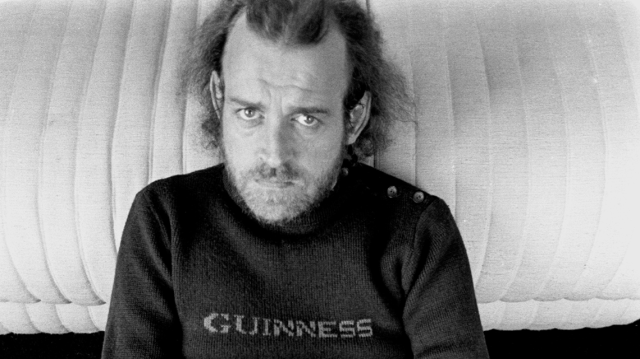
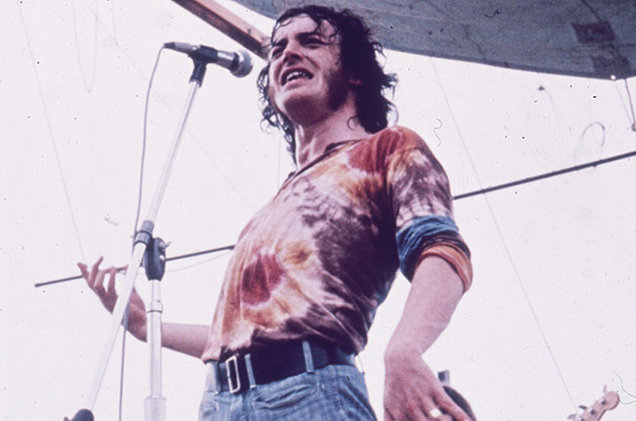 The film’s best tour guide through the Cocker epoch is hometown friend and long time bandmate Chris Stainton, who remembers the origins — he composed Cocker’s first English hit, “Marjorine,” which Joe wrote the lyrics to.



 April is shaping up as its usual placeholder in terms of the Hollywood box office. Big summer movies are just a week or so away, animation and kids’ fare is dominating, and the older audience was thrown a bone this weekend in “Going in Style.”
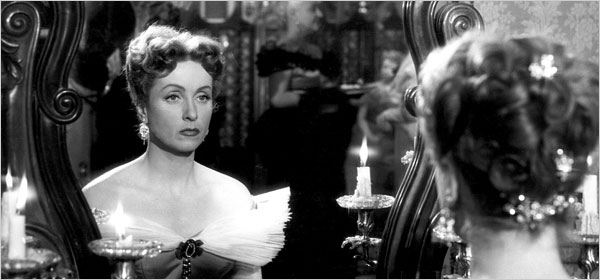
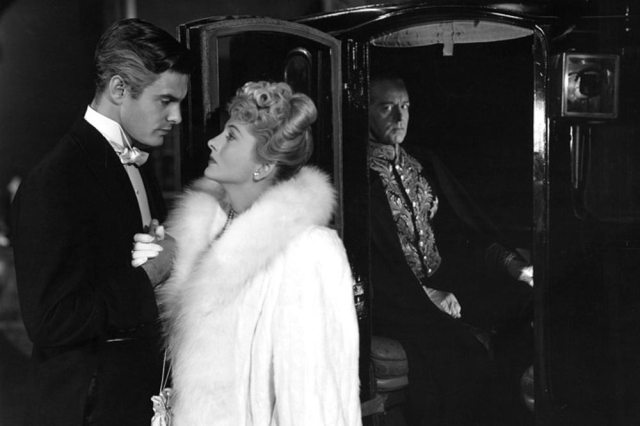
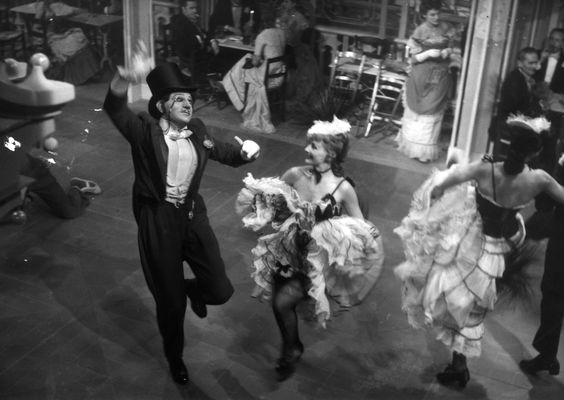 Every so often I stumble across one I haven’t seen, and instantly recognizing its origins, I’m drawn in. TCM recently ran “Le Plaisir,” a postcard pretty conceit rounding up three clever stories by Guy de Maupassant. Nightlife scenes capture a fury of activity and smokey atmosphere, a church funeral in the last episode is practically a Dutch Master painting with its use of skylights stained glass (in a black and film) and candles.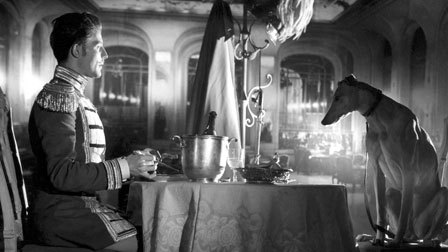

 Movie Nation