Movie Review: Cross-cultural romance runs up against “The Big Sick”

big1

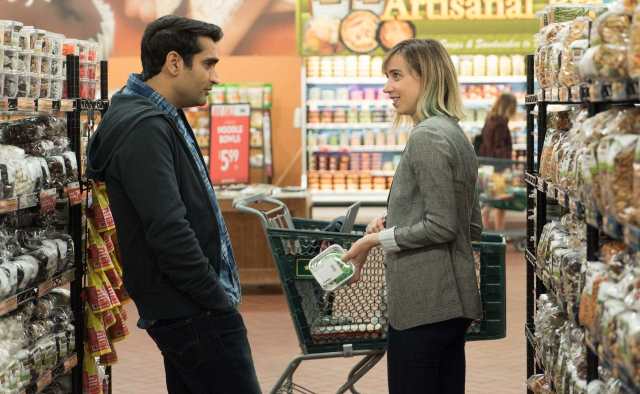
It’s not a fatal failing in “The Big Sick” that its star, co-writer and inspiration, Pakistani-American comic Kumail Nanjiani, isn’t the funniest thing in it.

He almost is, right up until Holly Hunter and Ray Romano arrive, delivering the seemingly effortless laughs that Nanjiani’s strained deadpan can’t quite manage. As consolation, he was the big laugh in “Mike and Dave Need Wedding Dates,” so somebody owed him an upstaging or two.

But this Judd Apatow production, culled from Nanjiani’s life, career and love, isn’t really about the laughs. It’s a culture-clash farce with dramatic overtones, a romantic dramedy about arrested development and how the intensity of a life-threatening illness focuses the mind, sets priorities and makes the timid brave and Peter Pans (most stand-ups) into men.

Nanjiani plays Kumail, a struggling Chicago stand-up whose act underlines why he’s struggling. Yes, he’s got cute Pakistani “fish out of water” jokes, history lessons and the like. His family of ex-pats have moved to America determined to keep Pakistan and Islam in their hearts and traditions, and are good for some material.

But he’s not truly “exposing” himself up there. He’s a little too content to “Didya ever notice?” He’s happy to diss his fellow wannabes and trot out a pen and a napkin, writing out “This is your name in Urdu” to any woman in the club whose attention he fancies.

Emily, played by the big-eyed and adorable Zoe Kazan, gives him a “Does this move work?” And an “I’m not really dating right now.” But still, they connect. No, the chemistry isn’t setting-off-sparks stuff. Kazan makes it plausible, even if Nanjiani is low-heat and the obstacles set up for them are strictly Culture Clash Comedy 101.

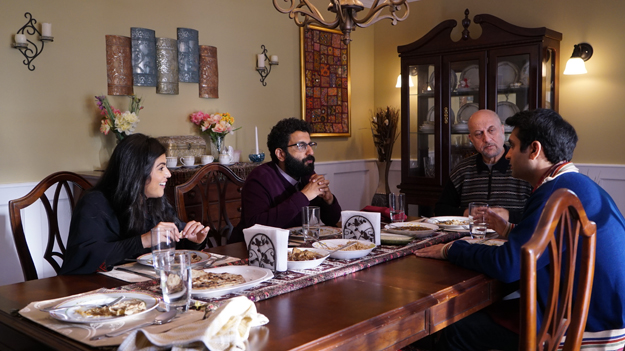
As in his family (Zenobia Shroff plays his mother, Anupam Kher his mother, Adeel Akhtar his married, judgmental brother) would NEVER approve of this romance. They are Muslims, and the only coupling Kumail should be thinking about is with whatever young Pakistani woman his mother trots in front of him at family dinners to pave the way for an arranged marriage. 

And truthfully, Kumail is at a make-or-break point in his showbiz dream. The real Nanjiani is 39, and on stage his middling act is no distraction from how much older he looks than most of his “peers” (Aidy Bryant of “Saturday Night Live” among them). It’s Montreal Comedy Festival showcase or bust, or as Mom would have it, now or never, in the form of “LSATS,” so that he can get into law school and stop “shaming the family” with his career and lifestyle choices.

Not standing up to his family doesn’t bode well for a budding romance. It’s what kills it. But that’s where “The Big Sick” turns, on a dime, into a moving melodrama. Emily gets sick, and even though they’ve broken up Kumail is summoned to her bedside.

The medical emergency, which has her comatose, forces him to make decisions on her behalf and inform her parents (Hunter and Romano), who aren’t all that keen on having him around.

Big3big2

The meat of the movie isn’t so much in the awkward moments of romance in the making, it’s in the adult fears and power struggles over decisions about someone who might die, and might die thinking Kumail is the same indecisive, gutless bust of a stand-up (and Uber driver) she broke up with.

Nanjiani inserts a hint of immigrant judgement, daring to question why his family would come to America for “opportunities” for themselves and for him, and yet cling to the backwardness they were allegedly leaving behind. He addresses the “cliche” of men of color coming to America and pursuing the “white woman” ideal. But still succumbs to it himself.

The pressure, to find someone and “relax” once that life hurdle is cleared, is cleverly expressed and viewed from a totally alien (to Westerners) point of view. Arranged marriage or not, we all feel it.

Left unsaid is the patriarchal idiocy of a system that hurls a string of women — with varying degrees of beauty, wit, ambition and prospects — at a guy limited  in all those regards, and HE gets to choose.

The Oscar-winning Hunter is still a spitfire on screen, generating pathos, fury and big laughs in the space of a few moments. We know Romano’s impeccable comic timing, the slow goofy drawl that makes the simplest punchlines pay off. What’s shocking is how perfect he is at playing serious, a fragile, flawed and forgiving man who is willing to accept help from a guy his daughter told him broke her heart.

Nanjiani is a generally pleasant and somewhat believable center to all this, and his flat acting (“Silicon Valley” did nothing but encourage this) is only thrown into sharp relief by the dazzling turns around him. Any reviewer who calls this “effortless” isn’t seeing him sweat, or squirming in the seat at scenes such as the stretch of playing the umpteenth movie comedy “meltdown in the drive-thru” moment, a scene worth editing out, one of several.

Because the picture also suffers from Apatow-itis — it outstays its welcome, reaches a “conclusion” a couple of times before the actual finale, which feels tacked on. Whatever you get when Judd signs on as a producer to your film, tough-love editing is never part of the deal.

But “The Big Sick” makes good use of some vintage Nanjiani 9/11 comebacks, some winning (if not new) backstage backbiting comedy club observations and marvelous, heartfelt work by three great actors who carry their leading man and his overlong, not-a-million-laughs “personal” story across the finish line.

2half-star6

MPAA Rating:R for language including some sexual references

Cast:  Kumail NanjianiZoe Kazan, Holly Hunter, Ray Romano

Credits:Directed by  Michael Showalter, script by  Emily V. GordonKumail Nanjiani. An Amazon Studios/Lionsgate release.

Running time: 2:00

Posted in Reviews, previews, profiles and movie news | Comments Off on Movie Review: Cross-cultural romance runs up against “The Big Sick”

Movie Review: Will anyone survive a trek to “Killing Ground”?

killing1

Lean and relentless, patient and pitiless, “Killing Ground” is the sort of thriller that gives horror movies a good name.

It’s a reminder that the scariest things we see on the screen aren’t necessarily supernatural — they’re dangers we face from the human predators among us.

It’s an Australian version of the “Camping Trip to Hell” genre. A young couple (Harriet Dyer, Ian Meadows) head into the wilds of New South Wales to set up a tent near Gungilee Falls.

Fans of this genre will recognize the conventions — the “no cell service,” guy fumbling with a folding map (practically unheard of in the digital age), the stop at a convenience store where they encounter…THE THREAT.

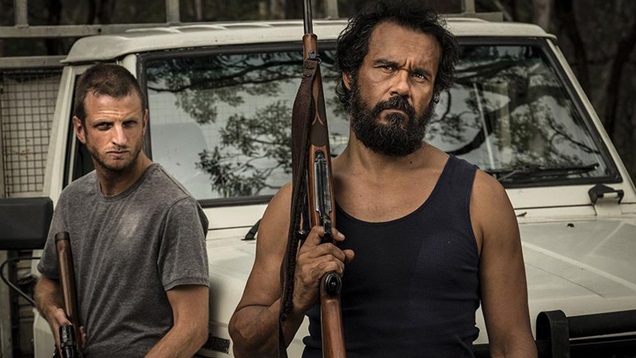
That would be German, played by Aaron Pedersen, born to be a heavy. Bearded, glowering, with a gun-racked pick-up and a menacing pit bull caged in back, he suggests Ian and Sam go somewhere other than the falls, as their Mazda 3 lacks 4 wheel drive.

German, of course, has a running mate, a homely, sniggering creep (Aaron Glenane) who loves guns and the woods as much as he does.

There’s another car and tent at Sam and Ian’s preferred riverside beach. A family of four is there. No worries, plenty of room.

But the creeps, we’ve seen, have marked the teenage girl (Tiarnie Coupland) in that clan, pushing a stroller with her toddler/brother in it.

Then writer-director Damien Peters breaks formula in increasingly surprising and merciless ways. Time isn’t linear. We’re seeing two separate events. Something bad happened here, and something worse is about to.

Peters don’t pussyfoot around with his foreshadowing. We see a cell phone kept as a souvenir and destroyed “because what happens in the woods STAYS in the woods.”

Ian, we learn, is a doctor, and takes the time to explain the various tools on the Swiss Army knife he gives to Sam. And Sam? She’s the one who proposes to Ian.

Peters takes his time setting everything up, feeds us a diet of dread and then hits us with a genuinely hair-raising image — the couple, walking back to their car, concerned about what might be happening, and in the background, the toddler following them and toppling to the ground.

killing2

Suspense rises with each excruciating fork in the story’s path, each brutal encounter with rural rubes with guns. Peters loses points for the formula, mercilessly mocked in “Tucker & Dale Vs. Evil,” and with every banal “It’ll be OK” bit of dialogue, but gains points back with with every sinister variation he slaps into it.

After “A Cry in the Dark,” you’d think Aussies would be leery of packing a tent off into the bush. “Killing Ground” should remind them, and us, that there are greater dangers than dingoes eating your baby.

2half-star6

MPAA Rating:  unrated, with graphic violence, sexual assault

Cast: Harriet Dyer, Ian Meadows, Maya Stange, Aaron Pedersen, Aaron Glenane

Credits:Written and directed by Damien Power. An IFC Midnight release.

Running time: 1:30

Posted in Reviews, previews, profiles and movie news | Comments Off on Movie Review: Will anyone survive a trek to “Killing Ground”?

Box Office: “Spider Man” close to $120, “Despicable” passes “Cars 3”

boxHuge opening weekend for the umpteenth “Spider-Man” movie, “Spider-Man: Homecoming.” Thursday night and Friday numbers point to a $125 opening, per Deadline.com. 
A $50 million Friday for the film, adding the webslinger to the Marvel/Avengers universe, points to an opening surpassing the $100-110 predicted opening.

“Baby Driver” is holding over half its audience, still, $13 million  is less than the $15 million predicted, but no worries.

“Transformers: The Last Knight” is plummeting. “Despicable Me 3″ is already past “Cars 3” in the summer animation sweepstakes.  Pixar should take this as a warning. 

“47 Meters Down” will clear $40 million by next weekend. “The Beguiled” will be out of the top ten by next weekend.

And “The Big Sick” cracked the top ten despite only being on under 400 screens nationwide.

Posted in Reviews, previews, profiles and movie news | Comments Off on Box Office: “Spider Man” close to $120, “Despicable” passes “Cars 3”

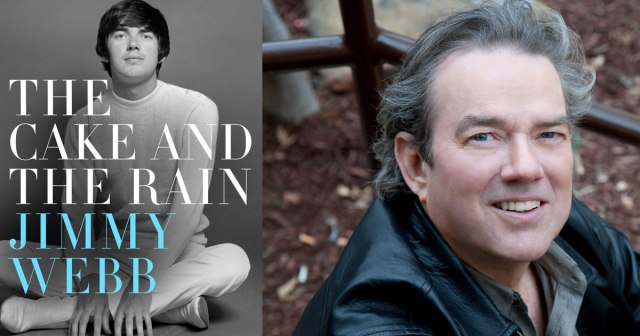
Book Review: Songwriter Jimmy Webb recalls the good, the bad and the hilarious years in “The Cake and the Rain”

jim

I’ve read enough performing arts memoirs to build a two story house, with a wall of books to fence in the dogs in the back yard.

But I can’t recall one that was as laugh-out-loud hilarious as Jimmy Webb’s. Then again, the dude wrote “MacArthur Park,” and stood in a studio control room while famed drunk and non-singer Richard Harris did take after take, unable to NOT sing “MacArthur’s Park.” So I should have expected it.

Webb had a great burst of a run in pop music (adult contemporary/country) songwriting, from about 1965-71. His “By the Time I Get to Phoenix,” “Didn’t We,” “Wichita Lineman” and “Up Up and Away” were fixtures in the ’60s.

And ask any DJ (me included, college jobs) who worked in country, pop, disco, oldies or “lite rock” radio which tune to slap on when one is having a digestive tract emergency, and “MacArthur Park” will come up. Right up there with “American Pie” among radio-friendly epics whose running time (over seven minutes for “Park”) can cover bathroom breaks of any length.

Webb doesn’t over-explain the song, with its obscure lyrical bombast, but it’s in here — the high school crush who worked, as an adult, in an office building across from LA’s MacArthur Park, the sheet cake they bought that got rained on, literary antecedents and poetic image-memories rolled into one ambitious overkill of a pop single.

Harris made it a hit. Then Waylon Jennings. Then Donna Summer did a fierce disco version. Waylon again.

Webb weaves this tale of his salad (and drugs, sex and rock’n roll) days with short chapters recounting his preacher-daddy childhood, abortive college career, first attempts at arrangements and songwriting. And there are all these anecdotes — with the odd zinger slipped in.

The guy who came up with the original Monterrey Pop Festival, the precursor to Woodstock, Glastonbury, Altamonte, Live Aid, was brutally screwed out of his planned event by John Philips of The Mamas and Papas, and Papa John’s record label owner/promoter Lou Adler. Poor Benny Shapiro’s house burned down when he refused to turn the show over to those two. And history records a little karmic payback — the Mamas and Papas closed the concert, after Otis, after Jimi — and bombed. Webb was there, playing piano and a single “chime” (tubular bell) with Johnny Rivers.

A member of the Mamas, a close friend of Webb’s, claimed to him and a couple of other intimates that she was the first person to come upon the Manson Family’s massacre at Sharon Tate’s house.

John Lennon, during his “lost weekend” debauch with Harry Nilsson, was a drug-addled, entitled jerk who needed Webb’s help out of assorted jams, and couldn’t be bothered to thank him. And he was merely the SECOND biggest jerk among the Fabs.

All along the way, through the high-end cars, the married women as lovers, the drugs and the humiliations, Webb confides in and takes advice from The Devil, his running partner in those years, an actual character in the book.

Webb owns up to the crummy stuff he did, and the impact drugs had on his life and his work. And then he makes his exit just as the days of songwriters who weren’t great singer songwriters (James Taylor & Co.) fell out of fashion.

“The Cake and the Rain” is a “naming names” stitch, and Webb imitates the voices of his famous pal-turned-resentful “I want more of the money” collaborator Richard Harris, all Irish bluster and “Come, we’ll make a great record, Jimmywebb!” to Elvis, Sinatra and Louis Armstrong. Webb argues for a re-evaluation of Webb’s fellow “square” (not a word he uses, but the way he and other young artists who bought into the ancient hierarchy of show business pre-“Summer of Love”), Johnny Rivers, the guy who gave Webb his big break. Maybe someday Rivers, and Webb himself, will be “cool” again.

A terrific short remembrance of The Good Life/The High Life as one lived it in the ’60s. Why review the book on MovieNation? This would make a helluva-fun bio-pic, sillier and bubblier than the Brian Wilson one, “Love and Mercy.”

Posted in Reviews, previews, profiles and movie news | Comments Off on Book Review: Songwriter Jimmy Webb recalls the good, the bad and the hilarious years in “The Cake and the Rain”

How big will Spider-Man’s box office “Homecoming” be?

spider1It’s a proven brand, which is why Sony and Marvel keep coming back to “Spider-Man.” Three different incarnations of the franchise in 15 years? He’s Wolverine, with a paper-boy-next-door appeal, no matter who is playing the spider-bitten webslinger this time around.

Reviews have been generally good. It earned a 73 on the nuanced, fine-graded metacritic scale, and “Citizen Kane” marks on the “rotten or not” simpler Rottentomatoes system. I’m not much of a fan, but I’m in the minority, though not as small a minority as the fanboys would like.

But how much will the Tom Holland/no-name-director “Spider-Man: Homecoming” earn on this, it’s opening weekend? Hitting 4400 screens at once, not so long that it’ll limit the number of screenings each day (though 2:22 is pushing it).

Box Office Mojo is predicting a robust post-July 4 $110 million opening.

The Box Office Guru is figuring $102 million, when the last showing Sunday night has been tallied. Word of mouth probably won’t hurt it, as audiences are being given something a little different — no “origin” story this time. And as summer movies are calculated thrill rides, the big effect scenes should play — even if most of them are just like every other comic book movie’s action beats.

But with most of the summer’s other over-sequeled franchises under-performing, one does wonder if these predictions aren’t setting the bar too high. Is there pent up demand for more Robert Downey Jr., a new Spidey (again) and Michael Keaton as a genuinely scary small-business owner/arms dealer/Vulture bad guy? We’ll see.

“Baby Driver” is figure will hold a lot of audience, even if “Homecoming” sucks most of the oxygen out of the cinemas.
“Beguiled” could call out of the top ten. “The Big Sick” is opening somewhat wider and could cash in as alternative programming.


Posted in Reviews, previews, profiles and movie news | Comments Off on How big will Spider-Man’s box office “Homecoming” be?

Movie Review: Gutsy Citizen Journalists Document ISIS Crimes in “City of Ghosts”

ghosts1

In the “civilized” West, we carp at politicians, take to social media and — if we have the time — pick up a placard and politely march in protest if our government isn’t heeding “the will of the people.”

And our still-free press reports it.

We cannot even begin to fathom the courage it takes to do any of the above in places where freedom is but a dream, where inhumanly pitiless fanatics will kill you on the mere suspicion that you’d raise a voice or document their murders and other crimes.

“City of Ghosts” is about young men with the guts to report the unreportable, the “rape” and murderous ISIS occupation and destruction of Raqqa, Syria.

The collective known as RBSS, “Raqqa is Being Slaughtered Silently,” are students, a math teacher, an older guy known as “uncle,” all willing to hide a camera, capture murders and round-ups of random “suspects,” children kidnapped to serve The Islamic State in the Levant, taught to kill by taking a knife to teddy bears. These intrepid reporters  then write eye-witness accounts, upload their video to the web, where TV networks from Al Jazeera to ABC broadcast them and sing their praises for documenting the horrors of the aptly-named Islamo-fascism at its ugliest.

Filmmaker Matthew Heineman (“Cartel Land”) follows Aziz, Mohamad, Hamoud and others as they face death, at home and even after fleeing to exile in Turkey or Germany.

They vary in age, but the youngest of them admit “Danger has a special taste.”

Collectively, they resolve to “Turn the spotlight” on their beleaguered city, one just remote enough to be chosen as “capital” of the new “Islamic State.” They critique ISIS recruiting videos (which grow in sophistication), ridicule ISIS stumbles and defeats and “tell the world the truth” about conditions in their town.

Cries from Syria - Still 1

“We punched a hole in the darkness,” they declare, and as the film is framed within a ceremony where their efforts are honored by the world’s journalists as the most significant reporting going on right now, you’d have to agree.

Heineman and the RBSS watch the horrors that ISIS itself documents as propaganda, often stunned by the recognition that some of those being executed are neighbors they know, or worse, family who are being killed because ISIS knows who RBSS is and is targeting the reporters and their families.

They are middle class college kids (and a math teacher, and other educated middle class colleagues) who self-funded their efforts, slipping from safe house to safe house, furtively photographing — often with just cell-phones — writing and uploading their stories, hunted all the time by the fanatics in black.

The RBSS believe that “whoever holds the camera is stronger” than those with AK-47s, but that’s a hard sell as the film forces us the see mass executions, brutal roundups and posted online death threats.

As ISIS inspired attacks range from Paris to Orlando, the RBSS reporters see their work gain attention as a world that has “ignored” their city finally awakens to the monstrous danger.

It takes nothing away from Heineman’s movie knowing that the battle to re-take Raqqa is entering its last stages, with the organized ISIS of territorial holdings and mass enslavements and genocide finally on the ropes. Will any of the devout Muslim RBSS members in exile leave the comfort and culture-shocking “freedoms” of Berlin, London or New York and “go home” when that happens? Probably not important either.

The evil ISIS “idea” is still out there, attracting the disenfranchised, promising power and revenge.  And one can only hope there’s a press as free and as brave as these folks still around to warn us about it.

3stars2

MPAA Rating: R for disturbing violent content, and for some language
Credits: Directed by  Matthew Heineman. An Amazon Studios/IFC release.
Running time:1:32


Posted in Reviews, previews, profiles and movie news | Comments Off on Movie Review: Gutsy Citizen Journalists Document ISIS Crimes in “City of Ghosts”

Movie Review: Laughs and fresh insights are rare in “Person to Person”

person1

There’s a genre of indie films that once was only recognized by film festival directors and hardcore film festival-goers.

A “film festival movie” is just interesting enough — by virtue of cast, location, themes or the occasional “one big scene” — to get into film festivals. Most would never see the light of day outside of that circuit, unless they had that one or two big enough names in the cast to be marketed to lesser cable networks or home video. Netflix changed that model, and now more of these slight but slightly worthy dramedies and comedies and intimate romances have a chance to find an audience.

Hey, everybody’s favorite streaming service can’t get by with just anime and Bollywood fare, the go-to Netflix filler these days.

“Person to Person” fits this template, an inconsequential multi-character comedy that had just enough going for it to attract Michael Cera, Abbi Jacobson (“Broad City”), Philip Baker Hall, Isiah Whitlock Jr. and Michaela Watkins.

By “just enough going for it” I mean that writer-director Dustin Guy Defa wrote at least one half-meaty scene for most of the roles, and he was shooting in New York, where most of these actors live. Never under-estimate the value of convenience when you’re trying to cast your indie comedy.

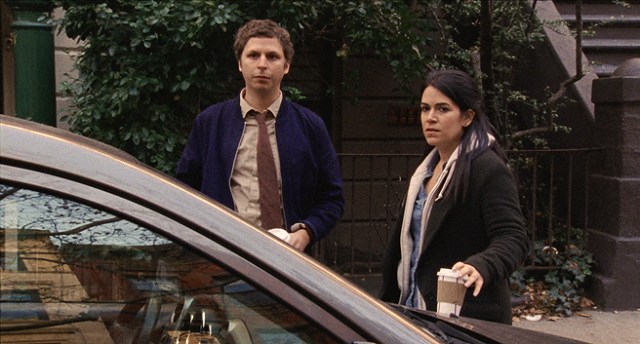
Cera plays a socially awkward newspaper reporter/photographer inexplicably sending this freelancer/intern/utterly-unfit-to-do-the-job shrinking violet (Jacobson) into the investigation of a wife (Watkins, who did a year on “SNL”) who might have murdered her husband.

“Go with your instinct,” the too flirtatious/too gutless to do his own reporting Phil tells his protege.

“My instinct is to quit this job, run away and go home.”

A clocksmith (Hall) figures into this story, as does the clocksmith’s pal (Whitlock).

A too-smart, too articulate, ever-overthinking bi-curious teen (Tavi Gevenson) hangs out with her promiscuous pal after school, trying to get into the spirit of boy-chasing and makeout sessions.

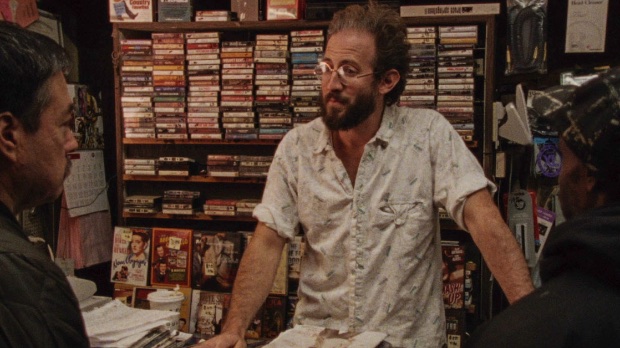
And then there’s Ben (Bene Coopersmith), an avid vinyl collector, trader and dealer letting a friend, Ray (George Sample III) stay on his couch after a painful breakup. Ray posted naked pictures of his feckless ex — Marsha Stephanie Blake of “Orange is the New Black” — on the internet, and now he’s just waiting for her polite but no-nonsense brother (Okieriete Onaodowan) to come break his legs. 

person2

Writer-director Defa manages a few engaging exchanges, smart scenes and running gags. Mild-mannered Ben frets over his wardrobe choice for the day.

“Am I supposed to be wearing this shirt?”

He’s scraping by, and any money he picks up goes to courting his single-mom girlfriend. He commutes the cheapest way possible — by bike — circulating in his small world of LP aficionados.

Then we see him crossed in his efforts to buy a rare Charlie Parker “red vinyl” LP,  and the enraged tiger comes out, with Guy treating us to a silly bicycle low-speed chase through the boroughs.

None of it adds up to much, with Guy shortchanging every single story and every interesting character by breaking away from those stories and characters for less interesting digressions and the characters who inhabit them.

About the best you can say for “Person to Person” is that Guy got it made, he sold it and he’ll probably get another shot at making a movie within the arcane world of record collecting, but not one about New York journalists competing on a salacious story or too-old-to-play teens talking their sexual curiosity to death.

2stars1

MPAA Rating: Unrated, with violence, adult situations, profanity

Cast: Michael Cera, Abbi Jacobson, Tavi Gevensen, George Sample III, Bene Coopersmith, Philip Baker Hall, Isiah Whitlock Jr.
Credits: Written and directed by Dustin Guy Defa. A Magnolia release.
Running time: 1:24


Posted in Reviews, previews, profiles and movie news | Comments Off on Movie Review: Laughs and fresh insights are rare in “Person to Person”

Movie Review: Kubrick’s driver tells all — well, not really — in “S is for Stanley,” now on Netflix

Stanley1

Journalists love the device we call “the telling anecdote.” It’s a simple quote, gathered for a story, that reveals much about the subject of that story in just a few sentences.

For instance, many of us who write about film collect tidbits from those who worked with director Stanley Kubrick, the genius who made “Dr. Strangelove,” “2001,” and “The Shining.” Here’s one of mine.

The late John Ireland, who played a sidekick gladiator in Kubrick’s Kirk Douglas vehicle, “Spartacus,” described how Kubrick got the facial expressions for the scene where Ireland, Woody Strode and Douglas, as gladiators about to enter the arena to fight to the death, sit in the closed cage that opens into the ring.

“Only genius I ever worked for,” Ireland recalled, a fact that was most obvious shooting the scene in question. “Rather than just talking and talking and doing retakes, he stopped everything and sent an assistant out to fetch a record and a record player. It was “Love for Three Oranges” (by Prokofiev).

“He gets us back into position, rolls camera, and starts the record. Now, I’ve heard it before and I’m remembering where I’ve heard it. Kirk has heard it, too, but he’s kind of gritting his teeth that the whole shoot (Douglas produced) was halted to go get the record.

“And Woody? He’d never heard it. He wasn’t sure what he was supposed to get out of it and has a little panic, concern.

“That’s all registered, without dialogue, just on our faces and in our eyes.”

Ireland, whom I was interviewing before his appearance at an old cowboy actor’s convention, leaned back and smiled.

“THAT’s genius. ”

And that anecdote is better than any in “S is for Stanley,” the Italian-made documentary based on the 30 years onetime race car driver, mechanic and jack of all trades, Emilio D’Alessandro spent as Kubrick’s driver, helper, personal assistant and even, at times, location scout.

As a taxi driver, he once got a can of film to Kubrick on a snowy British night when no other cabs were running in olde London Towne. Kubrick had an assistant look him up (He read newspaper clippings about Emilio’s promising racing career) and hired him — for life — the very next day.

Emilio is not a professional raconteur nor a particularly deep thinker, not a guy who could or would comment on his boss’s artistry. As Kubrick ran him ragged, micro-managing everything from prop deliveries to film sets to caring for, medicating and grooming the man’s cats, dogs and donkey, Emilio never had time to get around to watching the movies which his indentured servitude helped facilitate. And as I say, anybody who’s ever mentioned Kubrick to an Ireland, Nicole Kidman, Vincent D’Onofrio, Matthew Modine or Spielberg has gotten something more telling out of them.

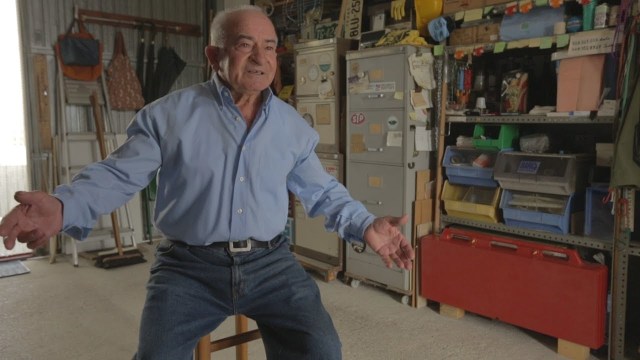
D’Alessandro also makes a humdrum, monotonous interview subject, droning on in labored English as he talks to the camera (and director) in the garage in Cassino, Italy, where he retired.

But Emilio D’Alessandro saved — if not everything, a LOT — from his decades with Stanley. And those typed memos — filled with typos, many concluded with “tear this note up” — and vast sea of hand-written letters (signed “S” for “Stanley”), some personal and almost tender, others pedantic, obsessive and detail-fixated — are a treasure trove for anybody, especially journalist and filmmaker Alex Infascelli.

A dozen written rules greeted any new employee in the Kubrick Kingdom.

“If you turn it on, turn it off. If you break it, repair it…If you borrow it, return it. If you move it, put it back…If it doesn’t concern you, don’t mess with it.”

Kubrick had to be “on the spectrum,” as they say, “Stanley-splaining” (copyright pending) EVERYthing — cat medicine dosages, jacket zippers he needed repaired, never leaving a single detail on ANYthing up to chance. His memos, orders and requests (whisky, jumbo shrimp) reflect this, as do his years-in-the-making, layered and densely packed with mise-en-scene films. (See “Room 237,” or read my review of it.)

Emilio expresses, decades after Kubrick’s death, how exhausting this beloved boss could be. He lets a little twinkle into his eyes when relating how Kubrick could not understand how any employee, or daughter under his roof, would ever want to leave and crave a little distance from him.

Steven Spielberg has often talked of Kubrick’s way of interrogating even his equals in the film world (he regarded Spielberg as perhaps his most close approximation) in  relentless, hours-long phone calls, picking their brains utterly clean.

But God forbid you — as Federico Fellini once did after such a grilling — ask Stanley a question. “What are you doing next?” Emilio smirks at how he, as on-the-phone translator, had to finesse the self-absorbed and insanely secretive Kubrick’s impulse to abruptly hang up — on Federico Freaking Fellini!

stanley2

The conversations with Emilio mostly just reinforce, with delicacy and omissions of REAL dirt about Kubrick’s on-set tyranny, the picture of Kubrick that many others have painted over the years.

But the notes, generously sampled in D’Alessandro and Infascelli’s book and film, are must-see for any Kubrick “completist.” Here is the man who prepared for a film of Napoleon (never made) more meticulously than Napoleon prepared for war, a filmmaker who, in pulling together “AI” years removed from the state of the art in film special effects, interrogated his new “friend” Spielberg without pity, trying to figure out how to create a robot who looked like a real boy (Haley Joel Osment). Spielberg ended up making the film on Kubrick’s behalf after Stanley died.

“S is for Stanley” is not a particularly compelling piece of cinema. But it does fill in a few more blanks in the Stanley psyche profile. And Emilio D’Alessandro, who got his own life back as Stanley reached the end of his, has his memories (guarded) and his mementos, and his own place within the Kubrick legend, thanks to them.

2half-star6

MPAA Rating: unrated, PG-worthy

Cast: Emilio D’Alessandro, Janette Woolmore, Alex Infascelli

Credits:Directed by Alex Infascelli, script by Alex InfascelliVincenzo Scuccimarra . A RatPac Documentary release.

Running time: 1:18

Posted in Reviews, previews, profiles and movie news | Comments Off on Movie Review: Kubrick’s driver tells all — well, not really — in “S is for Stanley,” now on Netflix

A feminist critic offers up an old school Spielberg appreciation

It’s not meant to be the definitive biography of Steve Spielberg. And veteran critic Molly Haskell pays plenty of homage to Joseph McBride’s date-by-date, deep background and thorough recent (conventional) biography of the filmmaker.

What Haskell has taken on, courtesy of Yale University Press’s “Jewish Lives” series (I prefer the label “Jews in Action,” but that’s just me.) is a close-reading of Spielberg’s filmography. “Steven Spielberg: A Life in Films” revisits the movies and filters them through the lenses of Freudian criticism, feminist criticism and gossip.

haskellSo she’s all over his “shrieking woman” characters, fathers not cut out for fatherhood, refusing to grow up morphing into fathers mistakenly idealized by their sons. She charts Spielberg’s assorted father figures — his own dad, he seemed to think, was remote, unavailable — Lew Wasserman to Steve Ross, Kubrick to Billy Wilder.
And she recaptures Kate Capshaw’s asingle-minded pursuit of becoming Mrs. Spielberg, in ways only a feminist critic can get away with.

Offhanded shots include her take on the Spielberg producer/collaborator Frank Marshall’s escape from “Twilight Zone” justice. The blood on that set was on his hands just as it was John Landis’s, but Marshall simply left the country and could not be even half-heartedly investigated.

There’s astute, deconstructive criticism of “Close Encounters,” “E.T.,” “Empire of the Sun,” “AI” and “Amistad,” with Haskell scratching her head over the unjust pounding she (and many others) gave him for such efforts as “The Color Purple” and the like. Haskell is hard on the Indiana Jones films, appreciative of “Saving Private Ryan” and determined to rescue the reputation of “Empire of the Sun” and “Amistad.”

Haskell also takes us back to a Golden Age of Movie Criticism in her own admissions, reactions and agendas. There was a time when heavyweight critics would position themselves as Freudians (psychological takes on movies, based on what we know about those who wrote and directed them), feminists, deconstructionists, Semioticians (films interpreted through symbolic imagery) and so on.

If there’s ever a bio-pic, “Life of Spielberg,” Haskell’s book — connecting this scene to that childhood event — would make the best source material to start with. Sure, it’s got the usual Haskell head-scratching takes on this or that film, and the odd boner (a “Chinese battleship” named “Petrel” isn’t sunk in “Empire of the Sun.” China hasn’t had a “battleship” since oh, the 15th century. HMS Peterel was the ship sunk, in reality, book and film.

But the book is useful, too, in reminding us that great directors are artists, often pounding the same nail (childhood traumas, Judaism, the lure of science fiction’s night sky) over and over again. Great directors make great movies, with the occasional great blunder or miscalculation. Spielberg has managed, over five decades in film, to deliver heartfelt, thought-provoking and witty blockbusters and serious pictures blessed with those same virtues, letting them carry their weight lightly.

A fun, short book to read in a summer of billion dollar hits whose shelf lives are as suspect as the lightweights studios put in charge of them, just to keep the trains running on time.


Posted in Reviews, previews, profiles and movie news | Comments Off on A feminist critic offers up an old school Spielberg appreciation

Movie Review: “War for the Planet of the Apes”

war1

I saw “War for the Planet of the Apes” some weeks ago, when it was screened for most critics. And I’ve been mulling it, and my not-quite-repellent response to it ever since.

Because whatever one feels about the new touchstone for digitally-created hairy animals (apes) and the motion-capture suit “performances” this final film in the latest Apes saga represent — and it’s impressive, but not worthy of the hype — the movie is a serious downer.

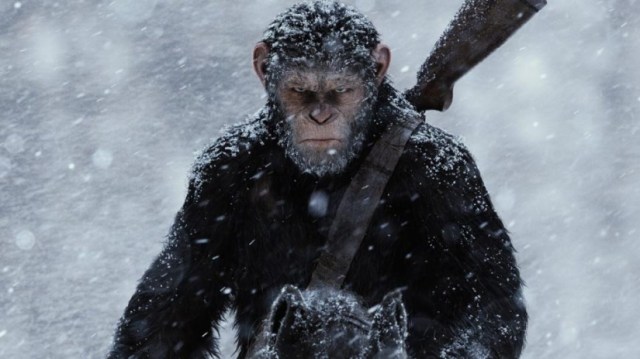
Bleak, grim, symbolic and dark, it presents a vision of America that is depressing if you think about it. And the film’s bland dialogue and formula quest/test narrative, told wholly from the apes’ point of view, force you to think about it, no matter how pretty the monkeys riding horses through the snow might be.

Escape? This is sci-fi at its most dystopian. If I want to immerse myself in a celebration of America’s decline as a civilization, I turn on cable news, preferably Fox, the network owned by the same studio that produced this film.

Molly Haskell’s summation of the conflicted loyalties engendered by “A.I.” related in the new book, “Steven Spielberg: A Life in Films,” captures how I felt about “Apes”

“We are invited to witness our demise almost as a consummation devoutly to be wished.”

Sorry, that’s not for me.

Aside from that, the saga has lost that “Fear of a Black/Yellow Planet” metaphor of the original Pierre Boulle novel or the first films to come from it. But it’s still a movie with a message, that revenge and violence are a cycle civilization can overcome if individuals can learn that lesson.

If only the humans were the ones learning it.

Caesar (Andy Serkis) hasn’t lost his perma-scowl. He’s trying to keep his tribe safe in the woodlands of northern California. But the last remnants of the American military won’t have it. Ambushes, counter-ambushes and massacres are the products of this guerrilla (and gorilla) war.

There are turncoat apes helping the humans, the equivalent of collaborationists in a POW picture and Native American “scouts” working for the cavalry in Westerns.

But Caesar has seen beyond tit for tat. He is Chief Joseph of the Nez Perce, and his version of “I will fight no more forever” is “The killing will stop.” No, it’s not poetic. None of the dialogue here is.

Showing mercy to human captives will force their fanatical, desperate commander (Woody Harrelson) to change his view of the apes whose revolt ripped America apart.

“He will see we are not savages.”

Fat chance.

war2

The Colonel (Harrelson) has ventured too far into the heart of darkness for enlightenment. Whatever his true motivations, he is hunting “King Kong,” his army’s code-name for Caesar, the first ape to learn to talk. And when he grabs Caesar’s son and heir (Another “Chosen one?”), Caesar must set out to save the child. Forget his “Apes…TOGETHER” mantra. This is a select mission for him and a couple of aides.

It is on that journey, leading up to a finale that is borrowed from every World War II commando picture (and a lot of James Bond thrillers) that Caesar maybe senses the consequences of the ape uprising and the viral catastrophe (human made) that it heralded.

Director Matt Reeves (“Cloverfield,” “Let Me In,” “Dawn of the Planet of the Apes”) and his production design team perfect their depiction of a post-civilization America, wood and stone and snowy greys — apes as Apaches on horseback vs. the last chopperloads of gas for the army. It’s a film dark in appearance, darker in tone.

The apes, both the speaking Caesar and empathetic, expressive other featured simian characters — Maurice, Cornelius from the original “Apes” movies, and “Bad Ape,” the comic relief voiced by Steve Zahn — look photo-real and move with greater dexterity than ever. Sure, the super-human stuff has to be animated in because 50ish actors in mo-cap suits don’t have gorilla or chimpanzee strength and skills.

But the apes are also counted on to deliver “performances” here which, I’m sorry, don’t add up to that. They’re fine in action scenes, and the soulful eyes are expressive. But the animation lacks the body language and facial muscled nuance that actors have in generating emotion.

Which is something the picture, as a whole, sorely lacks as well.

It’s got the dark tone and brand recognition that promise great success at the box office. But this lacks the weight of “Logan,” the wit of “Guardians of the Galaxy” or the attempts at warmth seen in most any sci-fi blockbuster outside of the plastic “Transformers” franchise. The slack pace, somber story and meandering-between-action-beats scenes make it something of an impressive glum and glummer bore.

I was reminded of similar smashes that might have a momentary resonance within the culture. Think of the pent-up demand, and finally-diverse cast of characters of “The Force Awakens” promised that got fans worked up — but which fail to sustain the breathless “Me TOO” rave reviews that greeted its release, or even make a mark on the collective memory.  This summer has been packed with sequels like that.

“War for the Planet of the Apes” is as downbeat a popcorn picture as “Logan,” but the differences are marked, those between a movie you just watch, and one that makes you ponder your life, your world and your attitudes. It’s the difference between seeing and absorbing.

To me, it’s just another “Jurassic World,” technology and production design on a whole new plane, story, dialogue and characters that we’ve seen before (too often), the entire hyped and over-rated enterprise half-forgotten before it hits Netflix.

2stars1

MPAA Rating: PG-13, for sequences of sci-fi violence and action, thematic elements and some disturbing images

Cast: Digitized Andy Serkis, Judy Greer and Toby Kebbell, with Woody Harrelson. Amiah Miller

Credits: Directed by Matt Reeves, script byMark Bomback and Matt Reeves . A -20th Century Fox release.

Running time: 2:20

Posted in Reviews, previews, profiles and movie news | 20 Comments