

Telling the full story of Ukraine’s tortured history as a subservient state to Russia, then the U.S.S.R., and more recently Russia again would take a mini series. So “Bitter Harvest” zeroes in on the most infamous Evil Empire crime against Ukrainians.
It’s an historical drama set during Holodomor, the Stalin-made famine that killed millions of Ukrainians in the 1930s. It was genocide, a crime against humanity.
Young Yuri (Max Irons) is a boy with an artistic bent growing up in a Ukrainian village between the World Wars. All he wants out of life is to draw or write, and to be with his childhood love, Natalka (Samantha Barks), and to leave his rural town for the big city of Kiev.
But Ukraine was and is “the breadbasket of Europe.” And Uncle Joe Stalin (Gary Oliver) has other plans. Collectivize, ship your grain, livestock, fruit and vegetables to Moscow, or starve.
A nervous adviser pleads that “this will mean the death of millions,” but Stalin is unmoved. “Who will know?”
Thus begins the Sovietization of the region. A ruthless regiment of the Red Army, led by the sadistic Commisar Sergei (Tamer Hassen) shows up, beats and bullies the large landowners whom everybody works for.
And Sergei’s Cossack grandfather (Terence Stamp) and father (Barry Pepper, in an elaborate Cossack haircut) take up arms.
“No one can ever take away your freedom,” Grandpa, a former general nicknamed “The Wold Boar,” intones. “Remember that.”

Yuri is an artsy disappointment to him. But as the slaughter to force compliance begins, the boy must choose between the artistic life and love he dreamed of and the reality of one of the worst genocides in history.
Writer-director George Mendeluk conjures up a pastoral idyll of harvest greens and golds, followed by the mayhem of mass murder and resistance. “Bitter Harvest” coasts along on a story arc so conventional — Natalka’s virtue threatened, Yuri’s decision to fight — that you’ll swear you’ve seen this before in dozens of Hollywood films set in Occupied Europe, or elsewhere.
And while Stamp always gives fair value and Hassen makes for a marvelous villain, young Irons (“The Woman in Gold”) never rises above bland, giving a colorless performance that rests on his good looks and his surname (he’s Jeremy’s son) and little else. There’s no spark, no heat or passion here.
It’s an important subject, and a timely one, given Russia’s designs on re-occupying Ukraine and a new U.S. president who doesn’t seem to mind that.
But “Bitter Harvest” never amounts to more than a colorful misfire, a picture with much of the pageant of the period, but little of the roiling passions that dominate politics in the Breadbasket of Europe, even today.

MPAA Rating: R for violence and disturbing images
Cast: Max Irons, Samatha Barks, Terence Stamp, Barry Pepper, Tamer Hassan
Credits:Directed by George Mendeluk, script by and George Menduluk, A Roadside Attractions release.
Running time: 1:43
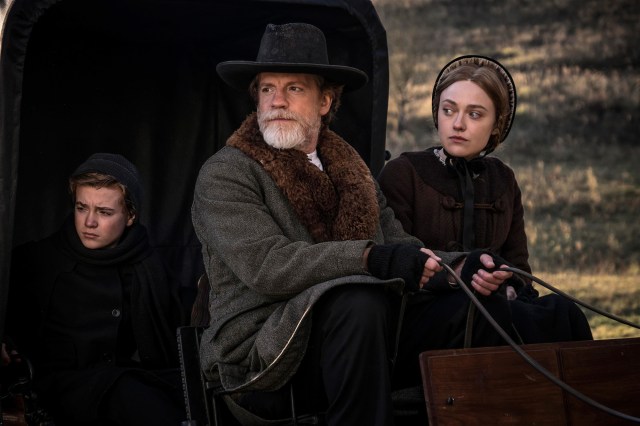
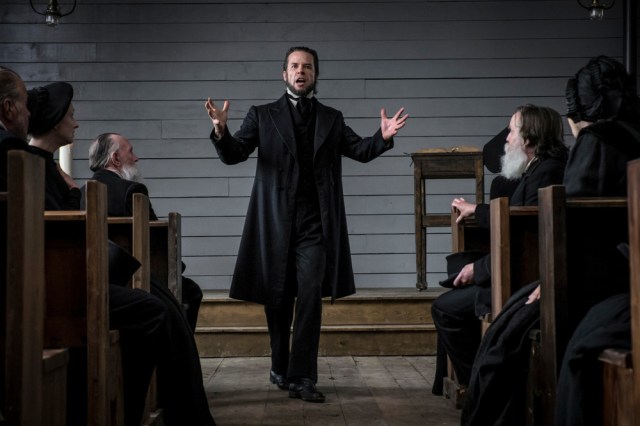 Pearce takes to the omnipresent crack-shot preacher/tormentor with his usual relish. But there’s no pleasure in this monster, or in the fight against him. Fanning doesn’t give us anything more than her usual inadequate reactions to every situation, the curse of her adult acting career. Carla Juri and Vera Vitali, playing hookers, make stronger impressions.

 “Fifty Shades Darker,” the “Fifty Shades of Grey” sequel,
 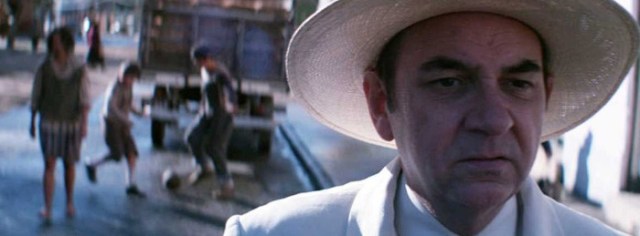 The Great Poet played his part, almost too well.
 Peluchoneau is as Neruda imagines him, an officious fop to be toyed with, led hither and yon all over Chile in a merry but deadly chase. For while Neruda is in genuine fear for his safety and his friends are frantic to get him out of the country, he is also determined to make a game of it, to entertain the people and rally them to his cause.





 Julia experiences the horror first-hand, is warned away from watching the tape by Holt, but plunges into the nightmare he and others are living and the mystery their somewhat-clever professor hasn’t quite solved.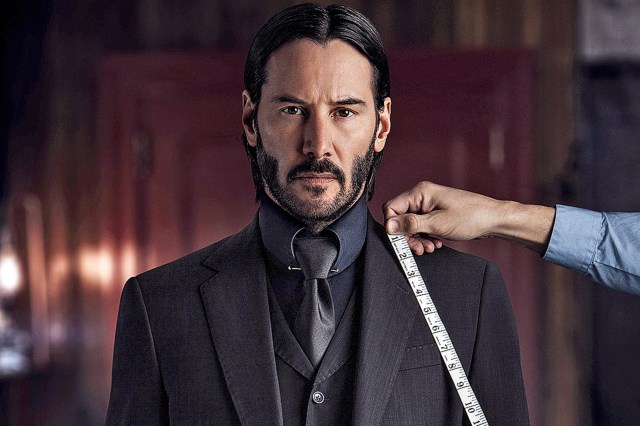
 Reeves is stoic and focused and his adept, showboat gun handling has hints of TV cowboys of the ’50s, though his line-readings are as stiff as ever. Oscar winning singer/rapper Common doesn’t give us much in his scenes as Wick’s chief rival, the man hunting him down. They’re both overly concerned with the epic fight choreography they must master. At times, the overdone staging reveals itself as Reeves or Common can be seen waiting for the other’s next stage punch or lunge before throwing theirs. Jump cuts suggest the action is sped up for the actors’ benefits.


 Lockhart finds himself trapped there, in a robe, “drinking plenty of (medicinal spring) water” and taking “vitamins” by eye dropper — like everyone else. But he’s suspicious and in control of enough of his wits that the torpor of the patients, all the water cures and “off limits” (written in German) signs for wings of this castle-turned-spa make him hunt for answers.
 Movie Nation