Movie Review — “Bombshell: The Hedy Lamarr Story”

hedy2

The most interesting “little known fact” about the lady Hollywood sex symbol Hedy Lamarr is this secret life she led, at least briefly, as an inventor.

It all but dominated her obituaries when she died in Jan. of 2000, including the one I wrote in the city where she died (Casselberry, Fla., suburban Orlando).

In short, Hedy, legendary screen beauty, “Delilah” to Victor Mature’s “Samson” in “Samson and Delilah,” invented the cell phone.

Not really, of course. But during World War II, the Hitler-hating Austrian and patriotic Hollywood starlet came up with the idea of “frequency hopping,” the technology that allows cell phones to skip from tower to tower, that encodes various military communications, and patented it.

That fact takes up a sizable portion of the revealing new documentary portrait of her, “Bombshell: The Hedy Lamarr Story,” and Lamarr would appreciate that. Already notorious when she arrived in Hollywood for having starred in the sexually explicit “Ekstace” (“Ecstasy”), she always wanted the world to know she was a lot more than just a very pretty face.

She was all but marked for life by Charles Boyer, who chose her as his co-star in “Algiers” (1938) and labeled her by stating the obvious, in character and on screen.

       “You’re beautiful. That’s easy to say. I know that other people have told you. But what I’m telling you is different, see? For to me you’re more than that.”

Veteran PBS producer turned producer-director Alexandra Dean’s film is built on a couple of phone interviews Lamarr did with a Forbes Magazine writer,  Fleming Meeks, after Lamarr had withdrawn from public life (“Closing the door,” Garbo called it.). She agreed to the interviews in an effort to secure her inventing legacy, something the U.S. Government (which never paid her for using the patent) and the tabloid press never did.

But her children and grandchildren appear, her biographers, and even Mel Brooks, who immortalized her later life status as both legendary screen beauty and pop culture punchline by naming Harvey Korman’s villain in “Blazing Saddles” after her.

“That’s HEDLEY.”

hedy1

Lamarr never got around to actually writing her autobiography, disowning a salacious “as told to” book “My Life as a Woman.” Married six times, dating everyone from Howard Hughes to John F. Kennedy, lusted after by generations, Hedy Kiesler did enough living for three or four women of her era.

It’s said she was “the most beautiful woman” ever to grace the silver screen. It’s also said she inspired Walt Disney’s artists as they created “Snow White.” A Vivien Leigh beauty with a Dietrich/Bergman accent, she had a few memorable roles in film, making movies under the thumb of MGM’s Louis B. Mayer.

She was an early adapter to the idea of an actress producing her own films, a pioneering star whose influence on age-defying plastic surgery endured long after it started to go wrong, a textbook sufferer of the Studio System’s restrictions, workload and tendency to drug its stars with stimulants to keep the Dream Factory going.

And through it all, she was the very model of glamour, not that she embraced that.

“Any girl can be glamorous,” she famously quipped. “All she has to do is stand still and look stupid.”

Dean’s “American Masters” style documentary tracks Lamarr’s career, her standing up to Mayer when he was on the hunt for European talent (Lamarr generally denied her Jewish heritage), fleeing the Nazis, that he could hire cheap.

Her films are sampled, suggestions of the ways she was ill-used within the system, whatever talent she had squandered by a studio that only saw her one way — as a sex symbol.

Her many connections to influential men — Howard Hughes equipped her inventing lab, J.F.K. pursued her — are mostly skimmed over.

But it’s that tinkering, an untrained chemist who came up with the idea for freeze-dried Coca-Cola for the troops, and the unschooled engineer who dreamed up that frequency-hopping scheme which she envisioned as a way to make Navy torpedoes radio-controlled and unjammable by their targets, that dominates the film.

And Lamarr would just love that. The movies, with few exceptions, are forgettable. Her many TV appearances (a “Merv Griffin Show” interview with Woody Allen cracking wise with her is sampled) a fading memory.

But every few years, something like “Bombshell” comes along to remind us, as we look up her credits on IMDb on our iPhone or Droid, that we should never under-estimate the great beauties among us. A lot of them are a lot more than just a pretty face.

3stars2

MPAA Rating: unrated, nudity, substance abuse discussion

Cast: Hedy Lamarr, Mel Brooks, Diane Kruger, Robert Osborne, Peter Bogdanovich, Jeannine Basinger, Fleming Meeks

Credits: Written and directed by Alexandra Dean. A Kino Lorber release.

Running time: 1:28

Posted in Reviews, previews, profiles and movie news | Comments Off on Movie Review — “Bombshell: The Hedy Lamarr Story”

Holiday Weekend Box Office: “Coco” hits, “Man Who Invented Christmas” does not

boxThe projected numbers for a rare animated musical from Pixar, the studio’s best film since “Inside Out,” have swung back and forth between $70 and $76 million since its late Tuesday opening.

Now it’s looking like the film, critically-adored and earning an A+ exit-poll rating from filmgoers, will hit $71. Saturday will tell the tale.

“Justice League” is holding just under half its last weekend totals, and will pull in $57 million or so, when all the counting is done early Monday AM. That will put it over $170 million, well on its way to $275 or so, domestic.

“Coco” will face competition before Christmas when “Ferdinand” opens. The new “Star Wars” picture will similarly finish off “Justice League.”

“Wonder” has another strong weekend in store, over $22 million since Wed. It’s being treated, by its studio, as an Oscar contender (nope) now.

Ditto “Roman J. Israel, Esq.,” a critically-dismissed effort built around Denzel Washington, who always gives Oscar-level value in performance. It’s on a lot of screens, and couldn’t even crack the top ten.

“The Man Who Invented Christmas” has convinced few that it is the period piece to take the aged parents to when visiting over the holidays. A $2600 per screen average on opening week means it’ll be gone before Xmas. Decent reviews should have helped. A period piece is a hard sell, and the marketing seems botched on this one.

Unlike the proper choice for that take mom/granddad etc to the movies, “Murder on the Orient Express,” which is headed towards a $14 million weekend and should reach $100 million within 10 days and thus ensure the sequel that it teases in its finale (“Death on the Nile”).


Posted in Reviews, previews, profiles and movie news | Comments Off on Holiday Weekend Box Office: “Coco” hits, “Man Who Invented Christmas” does not

Movie Review: A Canadian Gets in Over his Head with “The Pirates of Somalia”

pirates2

Leave it to a Canadian to find humor in the horrors of the endless strife in perpetually poor Somalia.

But Jay Badahur was nothing if not an optimist when he, as aspiring journalist with no training and just “an obsession with Google Maps,” an “All the President’s Men” poster on the walls of his basement apartment in his parents’ Toronto house and a piece of advice from a retired war correspondent (Al Pacino, in mild “hoo-hah”).

Go where nobody else goes. Get a book going, and do stringer reporting work to support yourself.

“Nobody else” was going to Somalia in 2008. And since Badahur (Evan Peters of “American Horror Story,” Quicksilver in the “X-Men” franchise) “wrote a paper on it, once, in school, that’s where he convinces his parents (Melanie Griffith and Russell Posner) he must go meet “The Pirates of Somalia.”

The humor in Bryan Buckley’s film comes from Badahur’s haplessness. His previous job was reporting on supermarket product placement trends, and that didn’t even pay him enough to afford a decent voice recorder.

But Somalia has a small circle of power, and contacts with a Somali radio host set him up. The radio guy happens to be the president’s son.

With the aid of a quizzical guide and “fixer,” Badahur hopes to make contact with pirates and in the process, bring Somalia’s plight and potential to a Western world that lost interest sometime after “Blackhawk Down.”

Peters brings a gee whiz braggadocio to Badahur, upon arrival. He makes this “on the job training” transition fun to watch. The guy figures out the right questions to ask. Eventually.

But as his beard grows and he slowly learns to ropes — every local who agrees to meet him expects a gift of “khat,” the local hallucinogen — we see a growing desperation.

Badahur is on a budget, and can’t nail down a big interview, can’t get on board a hijacked ship to talk to hostages, can’t get anybody’s attention back home. Money and time are running out, and the khat is making him a little manic in the process.

The real delight here is Barkhad Abdi, the “I am captain now” pirate of “Captain Phillips.” He plays Abdi, the fixer, a local English speaker/translator whose fate is increasingly tied to the clumsy, exaggerating his status Canadian who doesn’t have a book deal or even an outlet willing to carry his stories about this former “nation of poets” (They used to say that about Vietnam, too, Jay boy.) whose waters have been fished out by industrial western and Asian trawling fleets, turning fishermen into pirates.

Abdi has a light way with a joke, and a hint of fear behind his eyes as he starts to realize this reckless kid is going to be unable to pay the bribes he’s already promised those who agree to meet him.

null

Writer-director Buckley, who transitioned from popular TV commercials to features (“The Bronze”), does only a passable job of of ratcheting up the tension of Badahur’s various dangerous encounters. The script’s flirtation with a “Last King of Scotland” romantic interest in one pirate warlord’s newest wife (the beguiling Sabrina Hassan) feels like fiction, even if it falls under the “true” part of this “inspired by a true story.”

The South African desert locations give us a nice flavor of the small Somali cities and towns where Badahur begins his quest.

It’s just that the picture’s tone and incidents don’t justify its two hour running time. There’s too much footage of the kid stuck in his sweaty, rented room, scoping out the pirate lord’s wife in the market, trying to figure out a way out of his dilemma.

But “The Pirates of Somalia” has a plucky –Dare I say it, “Canadian?” — optimism that shines through, even when things are at their direst and the clock is ticking on this kid’s crazy gamble that he can make a name for himself in a place no media organization, or media consumer, cared about before he arrived.

2half-star6

MPAA Rating: Unrated, with violence, substance abuse

Cast:  Evan Peters, Barkhad Abdi, Al Pacino, Melanie Griffith, Russell Posner

Credits:Written and directed by Bryan Buckley, based on the book by Jay Badahur.

An SP Releasing release.

Running time: 1:56


Posted in Reviews, previews, profiles and movie news | Comments Off on Movie Review: A Canadian Gets in Over his Head with “The Pirates of Somalia”

Movie Review: An Israeli family’s Fate is tied up in the “Foxtrot”

foxtrot1

“Foxtrot” is a mordant allegory of military service, generational guilt and the wrenching grief of losing a child, an Israeli drama that could have been dreamed up by Samuel Beckett.

A tale told in three acts connected by the dance and the military communications abbreviation for the letter F — “Foxtrot” is a critically-hailed, governmentally-condemned movie whose portrait of the Israeli Defense Forces (IDF) is as unflattering at any picture to ever come out of that country.

In Samuel Maoz’s film, that harsh judgment is first encased in a velvet glove. Soldiers knock on an affluent family’s door. The wife (Sarah Adler) faints, but there’s a team of three seemingly prepared angels of death, messengers ready to catch her before she hits the floor, to sedate her and get straight to the business of calming her husband.

Their son is dead.

The great Israeli actor Lior Ashkenazi (“Big Bad Wolves,””Footnote”) is Michael, a man numbed by shock. The soldiers talk about how they’ll take care of everything. The funeral procession will begin at 1, the cortege will arrive at the cemetery at 1:40, the rabbi “tear your shirt,” you the father will read “the second mourner’s kaddish.”

You don’t have to learn the son was from a family of atheists to be chilled by the theocratic efficiency, the state’s imposition of its will upon this singularly horrific event in a family’s life. They even take Michael’s phone to set it to remind him to “drink plenty of water.”

Michael? He’s stunned into silence. The rabbinical “funeral officer” suggests an anecdote might be nice for the funeral.

“You know, a little smile can help you cope.”

As Michael wanders, alone, to tell his demented mother the news and then weep in solitude in the bathroom, we see the utterly deflating nature of grief. He is gutted.

And then, he is enraged. He’s just irked that the funeral officer doesn’t want him to see the body. Just wait until the news arrives that, well shoot, they mixed up their Jonathan Feldmans. His son isn’t dead after all.

His family cannot contain his fury. The Army can’t either.

That’s when writer-director Maoz (the suburb lost tank crew thriller “Lebanon” was his) changes point of view, and we visit the remote outpost where bored would-be artist Jonathan (Yonaton Shiray) guards a checkpoint.

The five soldiers there live in a shipping container that is slowly sinking into the mud. Quagmire symbolism was rarely so overt.

They defend a derelict van, which holds their communications, a gutted water tower and a single-pole gate which they raise, every so often, to let camels pass through.

Palestinians driving this way? They’re for the young men to silently search, intimidate and humiliate — standing in the rain with their hands up (in formal wear).

There’s a touch of “Waiting for Godot” in these lost souls, doing a dirty job in a muddy place named “Foxtrot.” They swap anecdotes, demonstrate (not really) the dance that their checkpoint is named for and seem to regard the whole affair as a prison sentence, a form of purgatory or at least bad karma.

foxtrot2

Maoz’s film, in Hebrew and German with English subtitles, paints a portrait of a perpetual state of “war,” and the bureaucracy that comes along with that. But as it shifts back and forth between checkpoint and a family back home in crisis, between harrowing arguments and animated (graphic novel-style) pieces of family lore, we see a present cursed by a past and the charges leveled by one spouse upon another when tragedy strikes.

It’s a somber film with flashes of wit, with funereal pacing and long, poignant close-ups that let the players — especially Ashkenazi and Adler — let us see there’s more than what we see on the surface, just with a look.

And it’s a lacerating backhanded compliment at the military theocracy that may look like a comforting nanny state but which is really most interested in control — of occupied people, of the occupying troops, their families’ grief and the way all this is presented to the world.

3half-star

MPAA Rating: R for some sexual content including graphic images, and brief drug use

Cast: Lior Ashkenazi, Sarah Adler, Yonaton Shiray

Credits: Written and directed by Samuel Maoz. A Sony Pictures Classics release.

Running time: 1:48

Posted in Reviews, previews, profiles and movie news | Comments Off on Movie Review: An Israeli family’s Fate is tied up in the “Foxtrot”

Movie Review: Your Friends List is Awash in “People You May Know”

people2

The impersonal, easily-hoaxed nature of our digital existence is lightly sent up in “People You May Know,” a romance set in the age of Google.

It’s a Facebook/Snapchat/Twitter zeitgeist film built around “What can we really know about a person when it’s so easy to fake us out?” It benefits from a smart, sassy script and winning performances from assorted pretty young things who star in it.

Jed, our 30ish hipster hero (Nick Thune) is a photo editor par excellence, a master at manipulating images, and doing it on deadline.

“Standard six-pack,” one editor begs, of a swimsuit model whose ad photos don’t quite measure up. “Blue eyes instead of green…And I need his junk to be bigger.”

Jed can accommodate that. His roomy, pricey New York loft suggests he’s the best at it.

But thinking of dating him? That could be tricky. He’s invisible online. “I never saw the point” of Facebook, Twitter, Instagram, etc.

So he takes a tentative first step or two. And since his hobby is ingeniously inserting himself into other’s images — he has a studio, a high-end camera and all the shading, shaping, manipulating software in the world at his disposal — he parks himself in a few pictures he finds online.

One of them is of the pop star (and scandal-magnet) Usher Raymond. Jed makes himself Usher’s running mate during a wild Vegas weekend in one shot. And Instagram blows up.

That’s when the icy beauty he sees each day at the coffee shop, Tasha (Halston Sage) finally notices him. She’s already observed that he’s “a gentleman.” But now, as a social media marketer — part of a company that uses “influencers” to sell things via hashtags, product placement and being in the most marketable place at the right time — she sees Nice Guy Jed as a way of proving something to her boss (Carly Chaikin).

Tasha will turn Jed into a phenomenon.

“I’m interested in celebritization.”

Meanwhile, there’s this frustrated actress Jed used to pine for. Franky (Kaily Smith Westbrook) settled for a suburban, married life as a realtor, with community theater on the side. She’s unhappy about what she gave up. And when a one-time acting colleague and party girl (Gillian Alexy) drags her back to the city for a party a new “influencer” like Jed is parked in, they reconnect.

Writer-director Sherwin Shilati peoples “People” with a modeling agency of beautiful young actors, from Thune (“Dave Made a Maze”) and that born-to-play-a-mean-girl-blonde, Sage ( “Before I Fall”), to Westbrook, Chaikin (“Mr. Robot”), Ian Harding (as Franky’s husband) and Nicholas Rutherford, who plays Jed’s snarky-funny Gay Best Friend, the one who advises him to “Clooney Charm” this woman as “I’m your closest friend, you are NOT that exciting” as he is teaching him the pleasures of “Rifting” (playing the VR game Oculus Rift).

The far darker “Ingrid Goes West” (starring the Princess of Dark Comedy, Aubrey Plaza) covered some of the same ground, people creating “virtual lives” that overshadow their real ones. Jed’s tech-savvy Luddite is a forlorn observer of a lonely city made even lonelier by people’s social media/smart-phone fixation.

people1

Millennials makes sharp observations about being the last generation to straddle the analog/digital divide, how one cannot date someone “without Googling him,” and the depressing pressure that Facebook and Instagram create, assuring everyone that you’re having a better time than you are, that your life is more fun that theirs.

All those baby pictures, humbragging about “vacations in Bali.”

“Don’t forget all those marathons people are running.”

The film’s hipsters profess a nostalgia for the way things were before smart phones, which can grate. Sentiment is unseemly in the young. The conveniently failing marriage bit sours the picture in ways that only serve the plot. And while there are laughs and tart observations, it doesn’t have the satiric punch the material demands (which “Ingrid Goes West” delivered).

But Shilati, working from a Michael Mohan story, has fired another warning shot across a disconnected, undiscriminating culture’s bow about the pitfalls of all this connectivity, creating all this “relative deprivation” (envy) as it magnifies our loneliness.

2half-star6

MPAA Rating: unrated, with adult situations, profanity

Cast: Nick Thune, Halston Sage, Kaily Smith Westbrook, Nicholas Rutherford, Carly Chaikin

Credits:Written and directed by Sherwin Shilati. An Orcharard release.

Running time: 1:32

Posted in Reviews, previews, profiles and movie news | Comments Off on Movie Review: Your Friends List is Awash in “People You May Know”

Holiday Box Office: Can “Coco” clip “Justice League?”

cocoThe bad news surrounding Pixar chief John Lasseter probably won’t dampen enthusiasm for the studio’s Mexican musical romp “Coco.”

Even if the brand itself is tarnished, in the long run.

But is its appeal broad enough, demographically, for it to become a world beater, outside of Mexico?

It’s an English language (Spanglish, sort of) tale El Dia de los Muertos, and while it broke records in Mexico, and there’s a huge Hispanic population in the US and some prints of the film in Spanish are available in several markets, will the audience that is largely behind the success of the “Fast and Furious” films contribute to “Coco” becoming a blockbuster?

Deadline.com notes that “Coco,” the latest Pixar toon to begin a dominating box office run, is running a few million behind Disney’s “Moana” of last year. It’s on track for a $47-50 million weekend (not epic for Pixar) and a $70 million or so take from its late Tuesday opening (5 and a half days).

That’s as of Wednesday. Saturday will tell the bigger story, with Thursday/Friday ticket sales sure to be huge.

It’s not that far removed from the 2014 “Book of Life” cartoon about the same general subject. “Coco” is better, the best Pixar pic in years. But Pixar has lost animated bragging rights to Disney Animation, both of which John Lasseter oversees.

“Justice League” is expected to have another weekend, perhaps big enough to challenge “Coco” in the $63-70 million/five day totals. That would be a great second weekend take for Warners, which saw an underwhelming opening for their answer to “The Avengers.”

“Wonder” is performing well, “Lady Bird” and “Three Billboards Outside of Ebbing, Missouri” are gaining screens and moving into the top ten.

No word if “The Man Who Invented Christmas” is cracking the ten. Not yet, anyway.


Posted in Reviews, previews, profiles and movie news | Comments Off on Holiday Box Office: Can “Coco” clip “Justice League?”

Pixar’s John Lasseter: Another Hollywood “Inappropriate” Hugger?

cocoWhen I saw the trending headline “Lasseter Takes Leave of Absence Over Missteps,” my first thought was “On no, Disney/Pixar’s pre-releasing testing suggests ‘Coco’ will flop.”

And then, of course, the mind runs to how that could be? It’s their best film in years. Sure, you could pummel John Lasseter over the cynical toy-selling “Cars” movies — entirely his baby — the weak sequels, the general “Pixar’s lost its touch” over the last few movies. Or maybe Disney’s market research suggested nobody wants to take the kids to watch a sympathetic cartoon about Mexicans in Trump’s America.

But that is skipping past the obvious. Lasseter, it seems, is another Hollywood mogul whose position of power allowed him (he thought) the privilege of “inappropriate” hugs of employees and others in his presence.

The Hollywood Reporter broke this latest scandal, tipped that Lasseter has a habit of holding hugs, whispering in ears and “invading the space,” which sounds a lot more power trippy than sexual.

“I especially want to apologize to anyone who has ever been on the receiving end of an unwanted hug or any other gesture they felt crossed the line in any way, shape, or form,” he writes. “No matter how benign my intent, everyone has the right to set their own boundaries and have them respected,” Lasseter wrote in an internal email The Reporter obtained.

A Disney spokesperson said in a statement, “We are committed to maintaining an environment in which all employees are respected and empowered to do their best work. We appreciate John’s candor and sincere apology and fully support his sabbatical.”

The memo has arrived at the same time as an investigation by the Hollywood Reporter into complaints about Lasseter’s behavior. “You’d hug him and he’d whisper in your ear, a long time,” a former insider said. “He hugged and hugged and everyone’s looking at you. Just invading the space.”

That’s a bit vague. Strong-arming, threatening men? Women? Coming on to either?

The scuttlebut has been that actress/writer Rashida Jones, working with a partner on scripting “Toy Story 4” (Ugh, really?) quit the film over Lasseter’s grabbing/groping behavior. She denies it, but it’s out there.

“Coco” opens tomorrow, and is delightful. But like everything else out of America’s movie capital, it opens under a cloud. Lasseter didn’t direct it, but he OKs everything Pixar touches. Including his own touching, apparently.

Lasseter’s appearance on this season’s “Jay Leno’s Garage” TV show had me wondering if he was looking at retirement — just in terms of how he presented himself there (a train collector, like Walt, an animation with a great legacy, like Walt, etc).

Now this.

Posted in Reviews, previews, profiles and movie news | Comments Off on Pixar’s John Lasseter: Another Hollywood “Inappropriate” Hugger?

Movie Review: “The Disaster Artist” Gives His All, and Still makes an Awful Movie

disaster1

Everything James Franco has done with his life, his work and his fame up until now reveals its purpose in “The Disaster Artist.”

Backing into stardom, passing himself off as a polymath — acting, writing fiction, directing, taking classes here, teaching classes there — the posse of pals he’s stayed friends with, even the coy games Franco plays with his sexuality, all bear fruit in this deftly-executed appreciation of the film that would replace “Plan Nine From Outer Space” as “the worst film ever made.”

Franco directs, stars and rounds up legions of Hollywood friends and acquaintances for this comic dissection of how Tommy Wiseau‘s “The Room” was made — and why. And he concocts an impersonation of the mysterious, delusional fanatic who wrote, directed starred-in and financed that fiasco that is so spot-on, he dares compare scenes from “The Room” with his recreations for “The Disaster Artist” before the closing credits.

The genius of Franco’s performance, capturing the off-camera bravado, the refusal to listen to reason from cast and crew, the bullying on the set and the tin-eared English-as-a-second-language screenwriting, is that Tommy was the only one who didn’t see any of this.

And watch the other actors playing the awful actors in the film — Josh Hutcherson, Dave Franco, Zac Efron and especially the leading lady of “The Room,” played here by Ari Graynor. They cannot tamp down their skill-set to hide their camera-wise charisma.

Franco as Wiseau? He just lumbers on, a man of undetermined age, origins or finances, a clueless fool who has to be told how to embrace his fiasco and profit from it, as if he was in on a multi-million dollar joke he accidentally played on himself all along.

“Disaster Artist” captures the relationship between Wiseau and his co-star and pal, Greg Sestero (Dave Franco). They meet in acting class, where Sestero is challenged, “Do you even WANT to be an actor?” by the teacher, played by a testy Melanie Griffith. But Wiseau, long dyed-black locks flowing over his multi-belted marching band uniform (with pirate shirt) jacket and leather rocker pants, harbors no doubts. Dressed like a cast-off from Prince and the Revolution, he is “fearless.”

And he is truly awful. To hear him “do the Shakespeare,” to howl through Stanley Kowalski’s “Stelllaaaaaaaa” from “A Streetcar Named Desire” (by “The Tennessee Williams”) is to know terrible acting on sight.

Tommy and Greg become inseparable. Greg’s best efforts are getting him nowhere, despite his good looks and ready smile. Tommy, told he’s “a natural villain” by one teacher (Bob Oedenkirk), isn’t hearing it. He has to be shouted down during an attempted mid-dinner “audition” for a producer (Judd Apatow, wickedly mean), who informs him that “Just because you want it, doesn’t mean it will happen” for him.

“Not in a MILLION YEARS!”

Tommy isn’t dissuaded.

“And after that?”

He will hurl his way-over-40 body and Slavic accent at a movie that he and Greg will make together. He will write, direct and produce and star in it. The equipment rental company (Hannibal Burress and Jason Mantzoukas) cannot talk him into doing the smart thing, renting the gear he’ll need for the film. No, Tommy will buy it.

Casting the actors and hiring the crew (Seth Rogen is the sarcastic, “Whatever dude” script supervisor who becomes de facto assistant director) with demented how-to-play-the-scene instructions and simple gut feelings isn’t smart either.

“I have VISION!”

And playing a part in a romantic melodrama without knowing the vernacular of film or American English well enough only deepens our sense that he’s disconnected from reality. With all the money he seems to have to throw at this, he’s too nutty to spend it wisely, his reasons for doing the whole project boiling down to trying to impress his American actor friend.

What Franco and friends were going for here is another “Ed Wood,” but “Disaster Artist” isn’t about sweet but untalented people living in a collective delusional dream. Tommy seems to be the only one truly lost on his “planet.”

One Hollywood spin on the story is the way the crew is presented in this film about a film. They’re as professional as the situation will allow, especially in the early days of the shoot — arguing, shouting down his bad behavior but still taking his money.

Watch “The Room.” tell me you cannot feel the contempt of the crew, the greed of the equipment folks (who also rented him soundstages) in every frame. It’s an ugly, incompetent film, and their “I’ll take this idiot’s money” hatred is only diluted by their certainty that this garbage will never see the light of day.

disaster4

It’s not touching the way “Ed Wood” was, and slapping a handful of stars (Kristen Bell) and Hollywood heavyweights (J.J. Abrams) in the opening,  singing the praises of the warped vision of “The Room,” distances us from the characters as much as the lengthy closing-credits scene-by-scene comparisons of “The Room” and Franco & Co.’s detailed recreation of those scenes.

It’s more clever than brilliant, more respectfully mocking than affecting, and it allows us to step back and consider the wisdom of the whole enterprise — hurling legions of stars and lots of Hollywood cash at a movie about making a really bad — though not the “worst ever made” — motion picture.

But as with “The Room,” Franco lets us believe that his Tommy, the director and star, is utterly convinced of the worthiness of the cause and utterly sold on telling this, the greatest story that should never have been told.

3stars2

(Read Roger Moore’s review of “The Room” here.)

MPAA Rating: R for language throughout and some sexuality/nudity

Cast: James Franco, Dave Franco, Seth Rogen, Zac Efron, Ari Graynor, Alison Brie, Josh Hutcherson

Credits:Directed by James Franco, script by Scott Neustadter, Michael H. Weber. An A24 release.

Running time: 1:43

Posted in Reviews, previews, profiles and movie news | Comments Off on Movie Review: “The Disaster Artist” Gives His All, and Still makes an Awful Movie

HBO Documentary Review — “The Newspaperman: The Life and Times of Ben Bradlee”

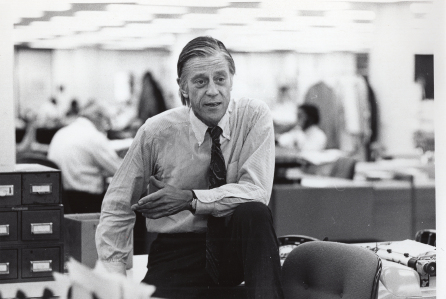
ben1

It’s hard to make any movie about newspapering these days without it feeling like a wallow in nostalgia.

So with “The Newspaperman,” the new documentary about Ben Bradlee, the iconic editor of The Washington Post, director John Maggio doesn’t even try. His portrait of Bradlee, a giant from the Watergate era Washington Post, captures the windswept romance of a swaggering crusader who oversaw the newspaper that brought down what we used to regard as the corrupt presidential administration in American history.

The film, premiering on HBO Dec. 4, has memories of “The Good War” and the glamour of Camelot and the tension of exposing the military’s cynical desire for and conduct of the Vietnam War by publishing “The Pentagon Papers,” also the subject of this Christmas’s feature film, “The Post.”

Maggio, a mainstay of the PBS documentary series “American Experience,” may have taken the easy way out, building his film around Bradlee reading his own memoir “A Good Life” (he died in 2014). But how else was he going to capture the chain-smoking, fast-talking champion of “the truth?” Why NOT let him narrate his own story?

I mean, Jason Robards, who spun Bradlee into a crusty, cocksure icon for Democracy in the classic real history thriller “All the President’s Men,” died 17 years ago, so he wasn’t available.

A native Bostonian of middle class roots, like FDR a polio survivor, a Navy veteran who fell for Hitchcock’s “Foreign Correspondent” and proceeded to make himself one (for Newsweek), Bradlee married three times in an age when that just wasn’t done, expressed the barest hints of remorse at the children and families he left behind, sized-up his reporters and kept them on task and focused as the Post went after “The Watergate Plumbers” and every tainted member of the Nixon Administration who had a hand in their hiring, creation and cover-up, all the way to the president himself.

“I don’t think he ever had a moment’s guilt in his life,” PBS veteran Jim Lehrer opines.

Maggio was interested in Bradlee’s college-years attachment to a 20 year psychological study of Harvard men like Bradlee, how he could have been identified, straight out, as a stereotypical “alpha male,” a man the Navy taught “I liked sizing other men up.”

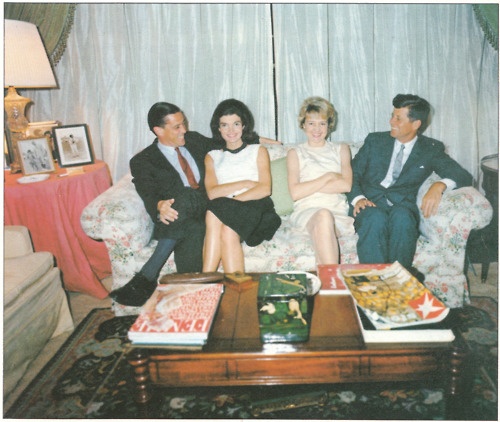
But the director, like the rest of us, is most fascinated by Bradlee’s years-long attachment of John F. and Jackie Kennedy, hobnobbing with them from the time Kennedy was new to Congress and Bradlee was finding his place, then with Newsweek in Washington.

jfk4

Like the rest of reportorial Washington, Bradlee had some knowledge of Kennedy’s personal failings. But like most other reporters of his day, he kept his fellow Bostonian’s secrets, at least until Kennedy was president, and then assassinated.

His peers, his employees (Woodward and Bernstein are here, David Remnick, Bradlee’s widow Sally Quinn, Tina Brown, Henry Kissinger) and others talk about how “utterly inappropriate” that connection was — vacations together, sailing excursions. But different times, different mores, different rules. The documentary’s fixation on this era throws it somewhat out of balance, and having Bradlee give so much of “his” version of his life via the audio book readings undercuts the film at times.

It wasn’t until a few years after the Kennedy assassination that Bradlee was given the reins of the Post, “a second-rate provincial newspaper” in an age when the D.C. air “was thick with lies,” and turned it into the Washington institution it remains to this day.

Not that his hubris didn’t knock the paper down several pegs in the ’80s. The Janet Cooke made-up-stories debacle was merely the most public. I distinctly recall him brushing off criticism during a 1980s NPR interview with Bob Edwards, using his seat-of-the-pants hiring of a new movie critic (of course I’d remember that) with an “I think he’s terrific.”

The very young critic was quietly shoved out the door, under a cloud (using his journalistic access to peddle his scripts) within the year.

But the personality traits that the W.T. Grant Foundation study identified, “ability to adjust to changing realities” served Bradlee well enough through it all.

With “Newspaperman,” Maggio has given us an old school blustery, brilliant, competitive and righteous icon in the flesh, and not just the caricatures popular culture (J. Jonah Jameson and Perry White in comic books) has long fed us.

How are you going to truly understand the upcoming Oscar contender “The Post” (Tom Hanks plays him there, too nice?) without watching “The Life and Times of Ben Bradlee”? Here is something like the full measure of the man without Hollywood spin.

Bluff, arrogant, self-righteous, sure. But when your mistress is “the truth,” how could you be otherwise?

Which is why even though he didn’t live to see it or have any say over its coinage, you have to figure the truth-hunting Bradlee would love the Post’s new motto — “Democracy Dies in Darkness.” It’s just his style.

3stars2

MPAA Rating: unrated, profanity, adult themes

Cast: Ben Bradlee, Bob Woodward, Carl Bernstein, Tom Brokaw, Sally Quinn, Jim Lehrer

Credits:Directed by John Maggio, script by Benjamin C. Bradlee. An HBO Films release.

Running time: 1:29

Posted in Reviews, previews, profiles and movie news | Comments Off on HBO Documentary Review — “The Newspaperman: The Life and Times of Ben Bradlee”

Movie Review: Germany’s Best Foreign Language Oscar contender, “In the Fade”

fade1

If it weren’t for the subtitles, you might be fooled into waiting for the usual Hollywood twists and turns tailored for an American audience.

But “In the Fade” is German, a terrorist thriller, courtroom drama and soul-searching plunge into grief, and Germany’s selection for contention in the Best Foreign Language Film Oscar race.

Hollywood twists and Hollywood endings don’t figure into it.

Diane Kruger, the German actress whose best work is often far way from Hollywood (She was Helen in “Troy”) is Katja, a woman we meet on her wedding day.

She’s got her share of tattoos and piercings. More than her share. And the fellow she’s marrying? He’s in prison. But love finds a way.

And Katja and Nuri (Numan Acar) build a life, after his sentence. A Turkish Kurd, he’s a professional translator in a country with a lot of Turkish ex-pats. She raises their beautiful little boy.

Until that fateful day when a bomb goes off at Nuri’s office. Their son was there with him. And Katja’s cries notwithstanding, the police warn her away. “They’re no longer people,” they assure her (in German, with English subtitles). Just “body parts.”

fade1

The shock of this loss is quickly shoved aside, ever-so-politely, to make way for the investigation. She is stunned at how quickly her husband and their lives together become suspect.

“Was he Muslim? Was he ‘politically active?‘”

Nein and NEIN, Katja insists. He wasn’t dealing drugs again, either. “Nazis” did this. And eventually, the cops agree.

The film’s second act is the trial of the young Aryans accused of committing the crime, a showcase for the differences between German justice and American (the victim and her attorney sit with the prosecution, and participate, for starters).

And the third act is about the aftermath of that trial, Katja’s struggle between grief and rage, all to try and fill the vast empty spot the murderers — called terrorists everywhere but perhaps in the current White House — left in her heart.

Denis Moschitto, as a sympathetic but steely attorney, and the scary Johannes Krisch (as counsel for the Nazis) impress. But it’s Kruger’s picture, riveting as a character drowning in despair — sometimes, literally. She slashes her wrists at one awful moment where she might slip beneath the water turns crimson with her blood. Kruger gives Katja moments of fury, but many more of deflated despair.

Director/co-writer Fatih Akin, who did the German culinary comedy “Soul Food,” treats the material in the most straightforward manner imaginable. He doesn’t let technique get in the way of the rising rage of losing someone, only to be put on the defensive by police willing to leap to prejudiced conclusions. Still, the picture plays as a bit dull and frustrating, at times. It could have used more pizzazz, a few bigger twists.

The surprises come in the investigation, in court and in that aftermath, where “Hollywood” twists present themselves as possibilities, but are never submitted to.

Like life after a murder, there is no “happy” ending, no thrilling feeling of justice served. “In the Fade” is that rare thriller which finds more to mull over in the culture clash — within Germany, within the Turkish expatriate community, and between German justice and American expectations, between German storytelling and Hollywood endings.

3stars2

MPAA Rating: unrated, violence, drug abuse, profanity

Cast: Diane Kruger, Denis Moschitto, Numan Acar, Samia Muriel Chancrin, Johannes Krisch

Credits:Directed by Fatih Akin, script by Fatih Akin and Hark Bohm. A Magnolia release.

Running time: 1:45

Posted in Reviews, previews, profiles and movie news | Comments Off on Movie Review: Germany’s Best Foreign Language Oscar contender, “In the Fade”